China is looking to light up the vast potential of its "night economy" with the capital city, Beijing, leading the way in transforming its nightlife into a vibrant "prime time" for spending by blending the city's historic charm with modern methods to boost consumption.
As the country embraces a new phase of development, the booming night-time economy is seen as a key indicator of urban vitality and quality of life, and various local districts are now looking to tap into the appetite for consumer spending once the sun goes down.
One of the most most bustling areas after-dark in Beijing is the Zhongguancun Art Park. Located in Haidian District, it is home to more than 70 retail and dining outlets, many of which are opening their first stores in the city.
Featuring a wide range of international trendy brands -- from cultural boutiques and perfume shops to toy stores -- the complex offers consumers a comprehensive shopping experience late into the night.
The mall has also sought to "bring the park indoors," with a rooftop garden and a sunken courtyard plaza bathed in warm lighting, creating a relaxed, garden-like atmosphere for evening visitors.
"I'm here for dinner tonight and have only explored a small part so far. It feels quite diverse and pretty spacious -- basically, it has everything. I plan to continue looking around to see what else there is," said a local consumer named Li Jiahe.
Meanwhile, on the other side of the city in Tongzhou District, another night-time attraction has popped up to delight visitors.
Located along the Tongzhou section of the Grand Canal -- the world's longest man-made waterway which is also inscribed on the UNESCO World Heritage List -- the new Moon River Town has ignited the night-time economy with an open-air night market where visitors can stroll, shop, and enjoy the scenery.
The market's mouthwatering food court features over 100 stalls offering flavors from across China, with seasonal dishes updated monthly.
The cultural zone displays a range of handmade floral crafts, toys, and accessories featuring intangible cultural heritage. Together with the town's eye-catching art sculptures, themed bars, and open-air performances, it forms an ideal leisure destination to warm up the cold winter nights.
"Our town is currently divided into five major zones, including a cultural and creative exhibition zone, antique and collectibles zone, food zone, music square zone, and so on. The offerings also cover cultural and creative products, antiques, intangible cultural heritage items, books, food, trendy toys, and more," said Quan Ping, manager of the Moon River Town's night market.
Meanwhile, another much-visited destination in the capital is the Solana Lifestyle Shopping Park, situated on the banks of the Liangma River in Chaoyang District. It seamlessly blends lakeside views, cultural tourism, shopping, and dining experiences, and dazzles after dark with luminous installations reflecting across the water, making it a favorite nighttime spot for both locals and tourists alike.
Experts have noted the growing scale of China's night-time economy in recent years, which is now estimated to be worth more than 50 trillion yuan (over 7 trillion U.S. dollars).
Beijing's night economy has seen substantial growth since 2022, with signs of its emergence even in some suburban areas," said Wei Xiang, a professor at the Business School of the University of Chinese Academy of Social Sciences.
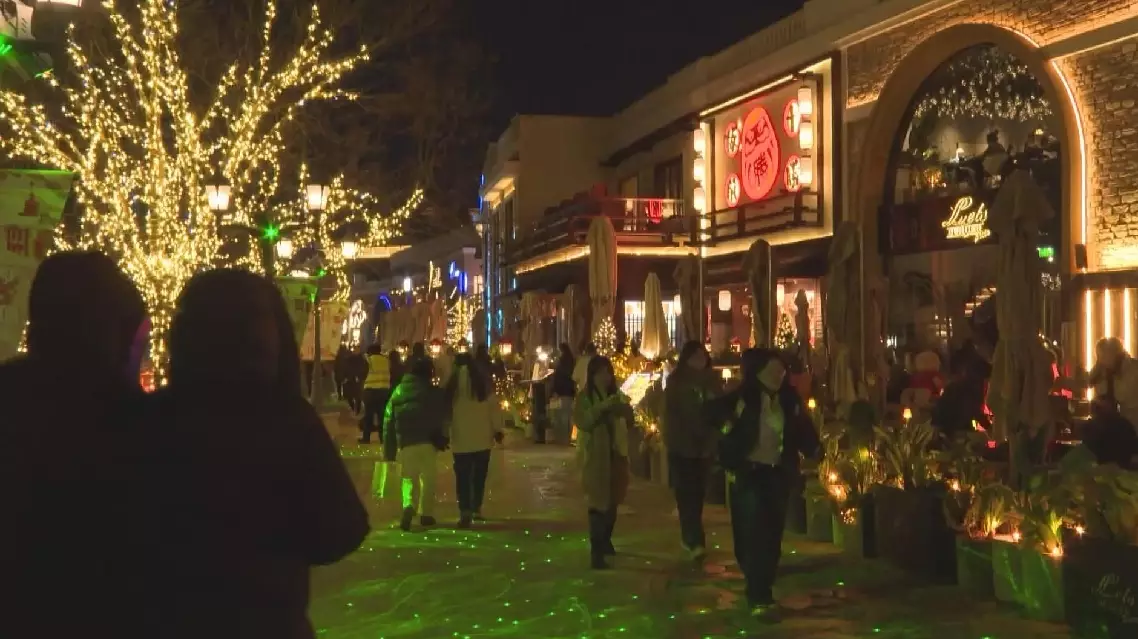
Night-time economy thrives in Beijing as more consumers head out after-dark
A charismatic Chinese influencer is again leading the biggest winter party at northeast China's Harbin Ice-Snow World, as he whips up a carnival atmosphere among the enthusiastic crowds who have converged on China's "ice city".
Jiang Kedong, known by his online moniker of "Brother Left and Right", is playing a central role as the main host of the colorful performances taking place at the Harbin Ice-Snow World, the world's largest ice-and-snow theme park.
Jiang is one of the most passionate ambassadors of Harbin and has become a hugely popular character online as he shares his love for his hometown.
"I used to have 200 followers. Now I've got 680,000. Many people consider me an internet celebrity, and say that I've put an entire city on the map. But honestly, I don't think this is true. It was the city that got noticed first, and then people happened to find me here. So, the city's popularity has been good for me," said Jiang.
As night falls, the huge Harbin Ice and Snow World, which spans the size of 140 football fields, transforms into a wondrous fairyland after-dark.
And as the venue's tireless host, Jiang's mission is to fire up more than 50,000 tourists over and over again, every single day, keeping them warm amid the frigid temperatures.
"Why dance in winter? It's a new idea we came up with. The sun's set, you're covered in sweat in a cool breeze. It feels refreshing. This is the romance of Harbin. Those coming from southern China might have even more fun here than indoors. It's so much fun," said Jiang.
China has seen interest in ice and snow sports steadily grow in recent years, with the 2022 Beijing Winter Olympics further igniting people's passion. And for those who wish to pursue their love for winter sports, China's northeast is the prime spot, with the coldest weather and the best snow.
Traveling to the famous "ice city" of Harbin to experience the joy of ice and snow has become the hottest topic on social media during the winter months. Hotels and guesthouses have been fully booked out well in advance, while the streets overflow with tourists during this peak season.
Once a major industrial powerhouse in China, Harbin was a place where steel roared and machines never stopped. Even in the harshest winter, smokestacks still billowed warmth, as the fire of industry drove away the cold. But since the 1990s, with the slow transformation of industries, the northeastern region seemed to have become considered as China's "Rust Belt".
Revitalizing the northeast region has been a national strategy for over two decades. The key to reinventing northeast China lays in promoting its notorious snow and ice, the very elements that seemed like the greatest barriers to its development.
"Harbin's success is being celebrated across the Northeast. The joy is heartfelt. We'd been ignored for so long. Now that our moment has come, we'll do all we can to show off our city, Harbin. It's a must," said Jiang.
The attraction's popularity has soared beyond belief, with Jiang saying he and his team are now welcoming more visitors in an average day during this ongoing winter season as they did during the entire week-long Chinese New Year holiday of previous years.
Back in 2012, the entertainment team at the ice and snow park consisted of just eight people, but has now expanded to around 40 in order to keep up with the demand and the skyrocketing visitor numbers.
Looking ahead, the ever-energetic Jiang says the goal is to keep pushing forward and keep the party going, even as some claim Harbin has already peaked.
"I'm a single snowflake in a field of snow. I just happen to have been caught in the spotlight. As long as I am able, and as long as this stage and the audience need me, I'll keep doing it," he said.
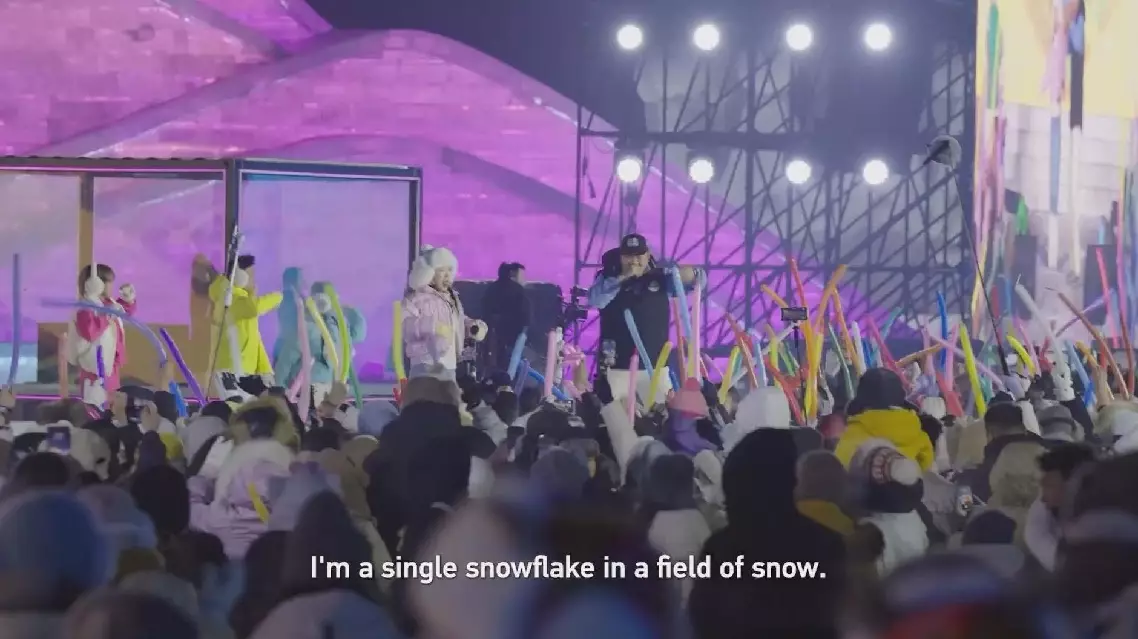
Charismatic online star warms up crowds in China's "ice city" of Harbin