South China's Guangdong is seeing a surge in winter tourism, as visitors from around the world flock to the province, drawn by its mild climate, supportive travel policies, and increasingly diverse tourism experiences.
One of Guangdong's most popular winter attractions is its hot springs. Just an hour's drive from Guangzhou city proper, Conghua District is home to what are known as the "rare hot springs", naturally rich in radon, which is believed to offer health benefits. For many visitors, these natural, mineral-rich waters provide a welcome escape from colder temperatures.
Guangdong is home to many hot spring resorts. And the business model is clearly evolving. They are not just selling the views, they are selling the whole experience.
Dusit Devarana Hot Springs and Spa is China's first hot spring joint venture, backed by state-owned investors and run by a premium resort group from Thailand.
"It's peaceful, the air is clear, the water is nice — it feels like Southeast Asia," said Mrs. Ye, a tourist in the resort.
That Southeast Asian influence is evident in both the service and the Northern Thai-style architecture, with custom-made decorations imported straight from the Land of Smiles.
For travel agencies, a warm winter is reshaping demand — with families and group travel leading the way.
Tourists now prefer hotels with shared spaces for gatherings, said Che Qianhui, marketing director of local travel agency Day Day Holiday. Government consumption vouchers are also driving demand, Che said. The top voucher offers 300 yuan off a 1,500-yuan purchase, including some hotels — and they're usually snapped up within five minutes, she added.
The resort is expected to receive large crowds during the upcoming Spring Festival, which falls on February 17, 2026.
"During the Spring Festival, we expect occupancy between 90 and 100 percent. Over the New Year holiday, our rooms were fully booked, with more than 700 visitors to the hot springs every day. We've added family activities and cultural experience offerings, moving beyond a simple health retreat. About 70 percent of new revenue now comes from regions north of the Yangtze River in China, and there are also international visitors from Europe, the Middle East, and Africa," said Shao Yingda, general manager of Dusit Devarana Hot Springs and Spa in Conghua.
To attract more tourists, Guangdong has issued 20 million yuan (2.9 million U.S. dollars) in vouchers. The wider ripple effect could generate around 200 million yuan in total economic activity.
However, vouchers and promotions can only go so far. Across China — and around the world — traditional tourism destinations face the same challenge: how to stay fresh, stand out from similar offerings, and remain competitive over time. That puts the focus on policy design, sustainability, and how to attract international visitors.
"Globally, when per capita GDP surpasses 10,000 U.S. dollars, it enters a leisure stage. Yet many tourism products still focus on traditional sightseeing. International tourists cannot simply be seen as an extension of domestic travelers. Domestic and international travelers have different needs, and destinations must offer customized, in-depth experiences to compete globally," said Li Yaoqi, professor and director of the Cultural and Tourism Consumption Research Center of Sun Yat-sen University.
With growing policy support for both domestic and international travel, this winter is shaping up to be more than just a seasonal getaway. It's also a test of how tourism adapts to changing demand.
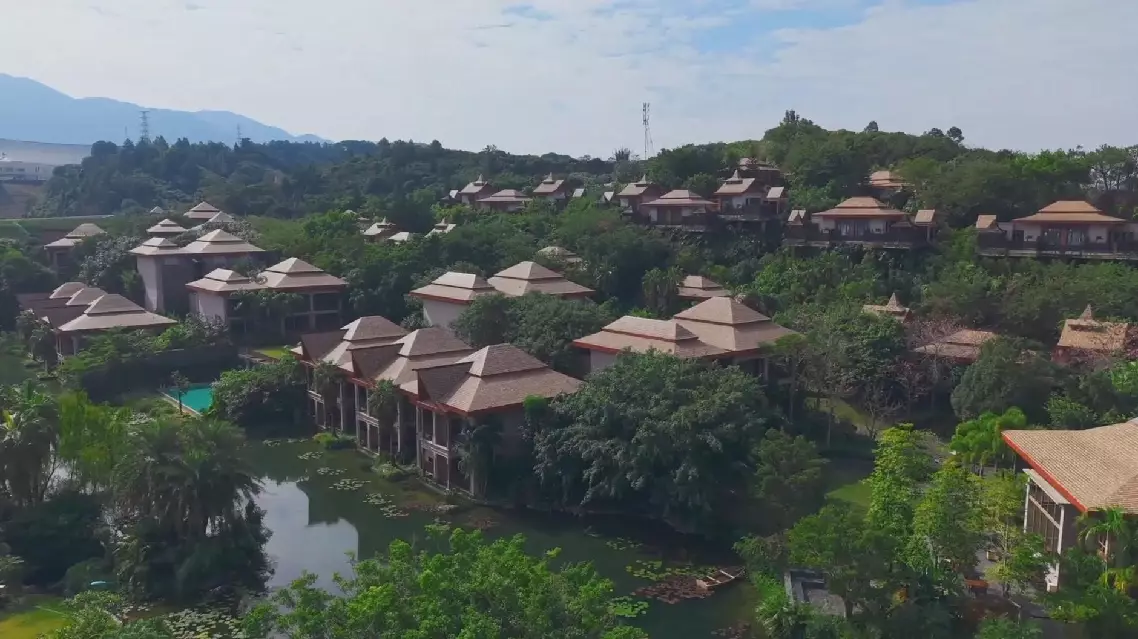
Mild climate, policy support, new experiences attract more tourists worldwide to Guangdong
A charismatic Chinese influencer is again leading the biggest winter party at northeast China's Harbin Ice-Snow World, as he whips up a carnival atmosphere among the enthusiastic crowds who have converged on China's "ice city".
Jiang Kedong, known by his online moniker of "Brother Left and Right", is playing a central role as the main host of the colorful performances taking place at the Harbin Ice-Snow World, the world's largest ice-and-snow theme park.
Jiang is one of the most passionate ambassadors of Harbin and has become a hugely popular character online as he shares his love for his hometown.
"I used to have 200 followers. Now I've got 680,000. Many people consider me an internet celebrity, and say that I've put an entire city on the map. But honestly, I don't think this is true. It was the city that got noticed first, and then people happened to find me here. So, the city's popularity has been good for me," said Jiang.
As night falls, the huge Harbin Ice and Snow World, which spans the size of 140 football fields, transforms into a wondrous fairyland after-dark.
And as the venue's tireless host, Jiang's mission is to fire up more than 50,000 tourists over and over again, every single day, keeping them warm amid the frigid temperatures.
"Why dance in winter? It's a new idea we came up with. The sun's set, you're covered in sweat in a cool breeze. It feels refreshing. This is the romance of Harbin. Those coming from southern China might have even more fun here than indoors. It's so much fun," said Jiang.
China has seen interest in ice and snow sports steadily grow in recent years, with the 2022 Beijing Winter Olympics further igniting people's passion. And for those who wish to pursue their love for winter sports, China's northeast is the prime spot, with the coldest weather and the best snow.
Traveling to the famous "ice city" of Harbin to experience the joy of ice and snow has become the hottest topic on social media during the winter months. Hotels and guesthouses have been fully booked out well in advance, while the streets overflow with tourists during this peak season.
Once a major industrial powerhouse in China, Harbin was a place where steel roared and machines never stopped. Even in the harshest winter, smokestacks still billowed warmth, as the fire of industry drove away the cold. But since the 1990s, with the slow transformation of industries, the northeastern region seemed to have become considered as China's "Rust Belt".
Revitalizing the northeast region has been a national strategy for over two decades. The key to reinventing northeast China lays in promoting its notorious snow and ice, the very elements that seemed like the greatest barriers to its development.
"Harbin's success is being celebrated across the Northeast. The joy is heartfelt. We'd been ignored for so long. Now that our moment has come, we'll do all we can to show off our city, Harbin. It's a must," said Jiang.
The attraction's popularity has soared beyond belief, with Jiang saying he and his team are now welcoming more visitors in an average day during this ongoing winter season as they did during the entire week-long Chinese New Year holiday of previous years.
Back in 2012, the entertainment team at the ice and snow park consisted of just eight people, but has now expanded to around 40 in order to keep up with the demand and the skyrocketing visitor numbers.
Looking ahead, the ever-energetic Jiang says the goal is to keep pushing forward and keep the party going, even as some claim Harbin has already peaked.
"I'm a single snowflake in a field of snow. I just happen to have been caught in the spotlight. As long as I am able, and as long as this stage and the audience need me, I'll keep doing it," he said.
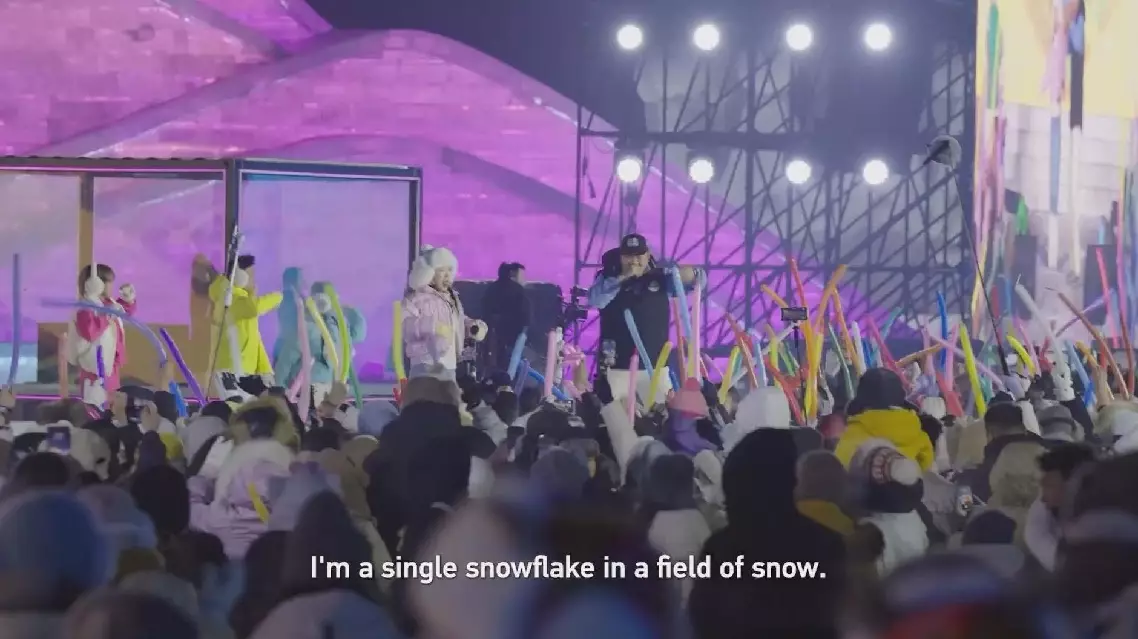
Charismatic online star warms up crowds in China's "ice city" of Harbin