Skip to Content Facebook Feature Image

These are the 66 global organizations the Trump administration is leaving

News

These are the 66 global organizations the Trump administration is leaving
News

News

These are the 66 global organizations the Trump administration is leaving

2026-01-08 09:26 Last Updated At:09:51

WASHINGTON (AP) — The Trump administration says it's going to depart 66 international organizations, nearly half them affiliated with the United Nations.

Many focus on climate, labor, migration and other issues the Trump administration has categorized as catering to diversity and “woke” initiatives.

Here is a list of all the agencies that the U.S. is exiting, according to the White House:

— 24/7 Carbon-Free Energy Compact

— Colombo Plan Council

— Commission for Environmental Cooperation

— Education Cannot Wait

— European Centre of Excellence for Countering Hybrid Threats

— Forum of European National Highway Research Laboratories

— Freedom Online Coalition

— Global Community Engagement and Resilience Fund

— Global Counterterrorism Forum

— Global Forum on Cyber Expertise

— Global Forum on Migration and Development

— Inter-American Institute for Global Change Research

— Intergovernmental Forum on Mining, Minerals, Metals, and Sustainable Development

— Intergovernmental Panel on Climate Change

— Intergovernmental Science-Policy Platform on Biodiversity and Ecosystem Services

— International Centre for the Study of the Preservation and Restoration of Cultural Property

— International Cotton Advisory Committee

— International Development Law Organization

— International Energy Forum

— International Federation of Arts Councils and Culture Agencies

— International Institute for Democracy and Electoral Assistance

— International Institute for Justice and the Rule of Law

— International Lead and Zinc Study Group

— International Renewable Energy Agency

— International Solar Alliance

— International Tropical Timber Organization

— International Union for Conservation of Nature

— Pan American Institute of Geography and History

— Partnership for Atlantic Cooperation

— Regional Cooperation Agreement on Combating Piracy and Armed Robbery against Ships in Asia

— Regional Cooperation Council

— Renewable Energy Policy Network for the 21st Century

— Science and Technology Center in Ukraine

— Secretariat of the Pacific Regional Environment Programme

— Venice Commission of the Council of Europe

— Department of Economic and Social Affairs

— U.N. Economic and Social Council, or ECOSOC — Economic Commission for Africa

— ECOSOC — Economic Commission for Latin America and the Caribbean

— ECOSOC — Economic and Social Commission for Asia and the Pacific

— ECOSOC — Economic and Social Commission for Western Asia

— International Law Commission

— International Residual Mechanism for Criminal Tribunals

— International Trade Centre

— Office of the Special Adviser on Africa

— Office of the Special Representative of the secretary-general for Children in Armed Conflict

— Office of the Special Representative of the Secretary-General on Sexual Violence in Conflict

— Office of the Special Representative of the Secretary-General on Violence Against Children

— Peacebuilding Commission

— Peacebuilding Fund

— Permanent Forum on People of African Descent

— U.N. Alliance of Civilizations

— U.N. Collaborative Programme on Reducing Emissions from Deforestation and Forest Degradation in Developing Countries

— U.N. Conference on Trade and Development

— U.N. Democracy Fund

— U.N. Energy

— U.N. Entity for Gender Equality and the Empowerment of Women

— U.N. Framework Convention on Climate Change

— U.N. Human Settlements Programme

— U.N. Institute for Training and Research

— U.N. Oceans

— U.N. Population Fund

— U.N. Register of Conventional Arms

— U.N. System Chief Executives Board for Coordination

— U.N. System Staff College

— U.N. Water

— U.N. University
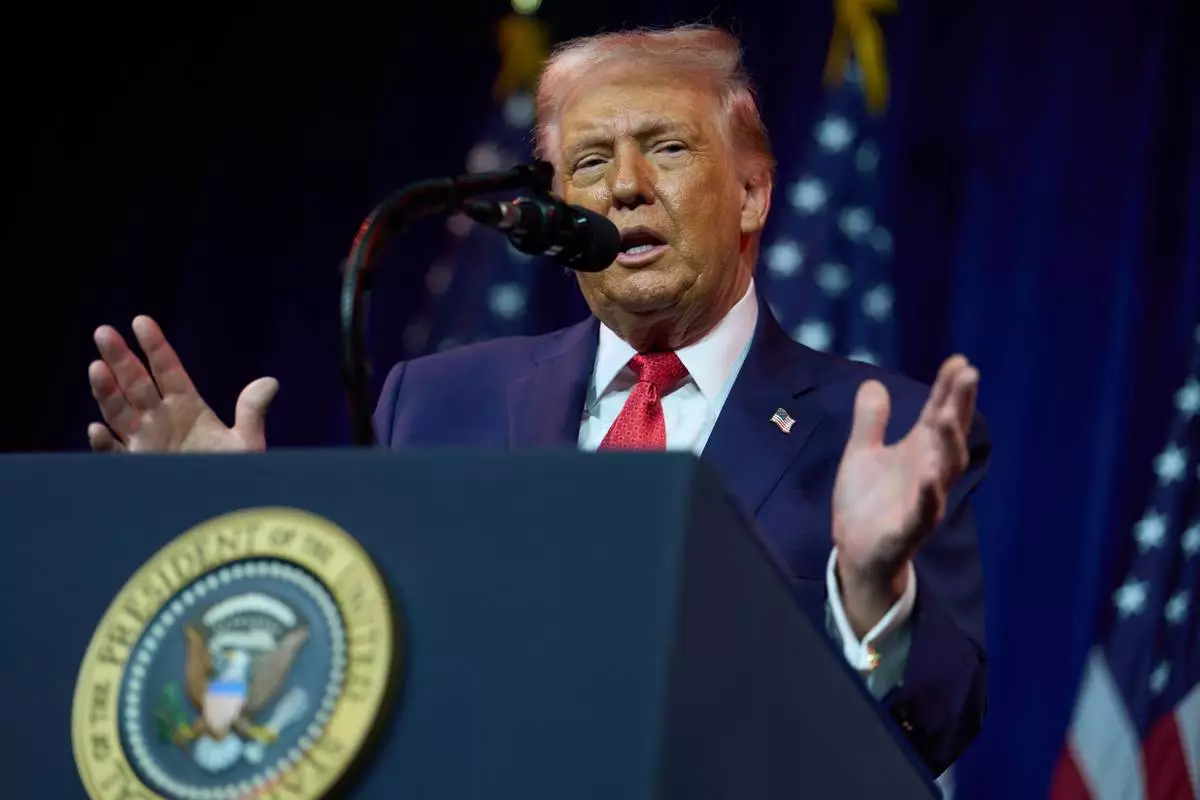
President Donald Trump speaks to House Republican lawmakers during their annual policy retreat, Tuesday, Jan. 6, 2026, in Washington. (AP Photo/Evan Vucci)
President Donald Trump speaks to House Republican lawmakers during their annual policy retreat, Tuesday, Jan. 6, 2026, in Washington. (AP Photo/Evan Vucci)
WASHINGTON (AP) — Defense Secretary Pete Hegseth said Thursday that he will allow service members to carry personal weapons onto military installations, citing the Second Amendment and recent shootings at bases across the country.

In a video posted to X, Hegseth said he is signing a memo that will direct base commanders to allow requests for troops to carry privately owned firearms “with the presumption that it is necessary for personal protection.”

He said any denial of a service member's request must be explained in detail and in writing.

“Effectively, our bases across the country were gun-free zones,” Hegseth said. “Unless you're training or unless you are a military policeman, you couldn't carry, you couldn't bring your own firearm for your own personal protection onto post.”

Questions about why service members lacked access to weapons have often emerged following shootings on the nation's military bases. Such shootings have ranged from isolated events between service members to mass casualty events, such as the shootings by an Army psychiatrist at Texas’ Ford Hood in 2009 that left 13 people dead.

Hegseth cited some of the events in his video, including a shooting that injured five soldiers at Fort Stewart in Georgia last year. Officials said the shooter, an Army sergeant who worked at the base, used his personal handgun before he was tackled by fellow soldiers and arrested.

“In these instances, minutes are a lifetime,” Hegseth said. “And our service members have the courage and training to make those precious, short minutes count.”

Defense Department policy has prohibited military personnel from carrying personal weapons on base without permission from a senior commander, with strict protocol for how the firearms must be stored.

Typically, military personnel must officially check their guns out of secure storage to go to on-base hunting areas or shooting ranges, then check all firearms back in promptly after their sanctioned use. Military police are often the only armed personnel on base, outside of shooting ranges, hunting areas or in training, where soldiers can wield their service weapons without ammunition.

Tanya Schardt, senior counsel at the Brady gun violence prevention organization, said in a statement that Defense Department leaders and the military’s top brass have opposed relaxing the current policy, which was originally enacted under President George H.W. Bush.

Schardt noted that most active duty service members who die by suicide do so with a weapon they own personally, not one military-issued, and argued that there will “undoubtedly be an increase in gun suicide and other gun violence.”

While fewer American service members died by suicide in 2024, the suicide rates among active duty troops overall still have gradually increased between 2011 and 2024, according to a Pentagon report released Tuesday.

“Our military installations are among the most guarded, protected properties in the world, and they’ve never been ‘gun-free zones,’” Schardt said. “If there is a problem with violent crime on these installations, then the Secretary of Defense has an obligation to alert the American people and describe how he’s working to prevent that crime.”

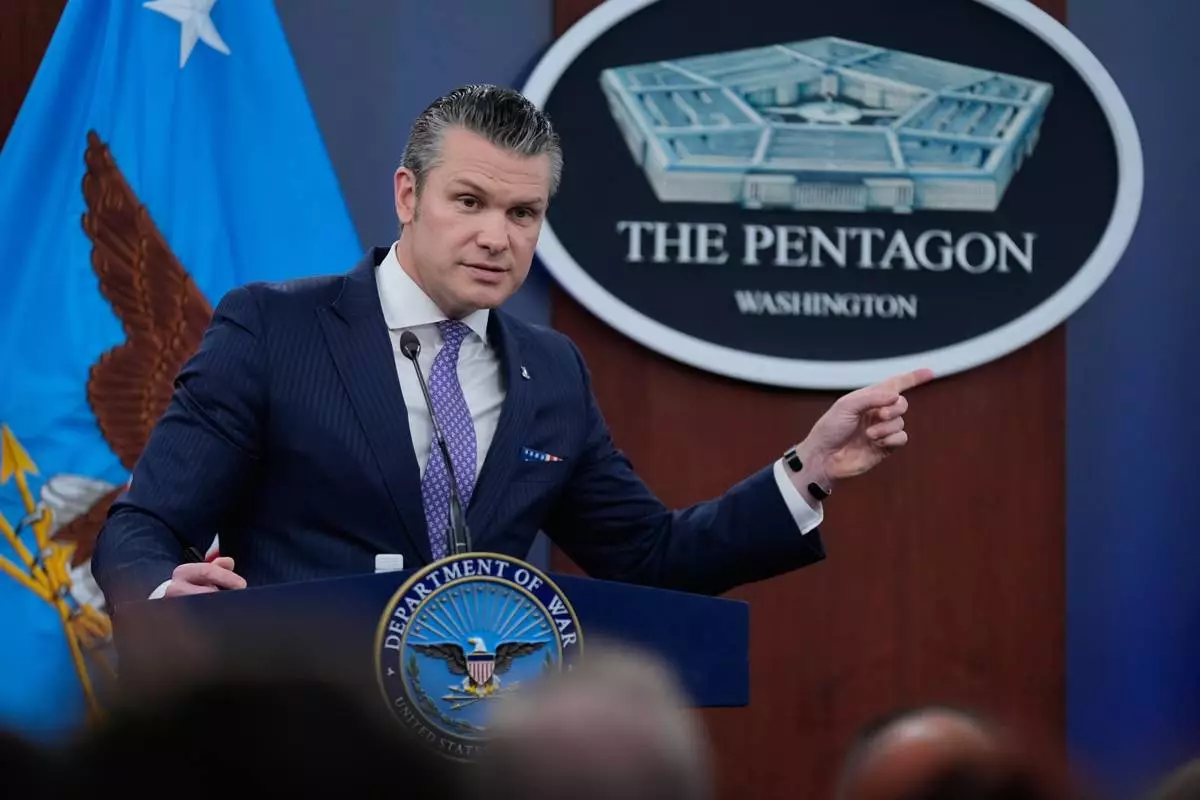
Defense Secretary Pete Hegseth speaks to members of the media during a press briefing at the Pentagon in Washington, Tuesday, March 31, 2026. (AP Photo/Manuel Balce Ceneta)

Defense Secretary Pete Hegseth speaks to members of the media during a press briefing at the Pentagon in Washington, Tuesday, March 31, 2026. (AP Photo/Manuel Balce Ceneta)

Recommended Articles