BANGKOK (AP) — The United States, which played a major role in ending border clashes last year between Thailand and Cambodia, will be providing $45 million in aid packages to the two Southeast Asian countries to help ensure regional stability and prosperity, a senior U.S. State Department official said Friday.
U.S. Assistant Secretary of State for East Asian and Pacific Affairs Michael DeSombre made the announcement in an online media briefing in Thailand's capital, Bangkok, where he was meeting with senior Thai officials to discuss the implementation of last October’s ceasefire, also known as the Kuala Lumpur Peace Accord.
Longstanding competing claims to territory along the Thai-Cambodian border was the root cause of the fighting.
“The restoration of peace at the Thai-Cambodian border opens new opportunities for the United States to deepen our work with both countries to promote regional stability and advance our interests in a safer, stronger and more prosperous Indo-Pacific,” DeSombre said.
On Saturday, he's scheduled to hold discussions with top officials from Cambodia in the country's capital, Phnom Penh.
The United States “will be providing $15 million for border stabilization to help communities recover and to support displaced persons; $10 million in demining and unexploded ordinance clearance operations; and $20 million for initiatives that will help both countries combat scam operations and drug trafficking, among many other programs,” DeSombre said.
Details of the aid packages were still under discussion, he said.
China said it has provided about $2.8 million in emergency humanitarian aid to help Cambodians displaced by the fighting. Thai Prime Minister Anutin Charnvirakul said Beijing made the same offer of assistance to Thailand, and that it was under consideration by his government.
The United States and China have competed for influence in Southeast Asia for at least a decade. Cambodia is a close ally of Beijing, and while Thailand has long and close ties with Washington, they are widely seen as loosening in recent years.
The fighting in July and December displaced hundreds of thousands of people in Thailand and Cambodia and killed about 100 soldiers and civilians. Land mines left over from decades of civil war in Cambodia are a continuing problem, while Thailand claims newly laid mines in frontier areas were responsible for wounding its patrolling soldiers in about a dozen incidents last year.
Online scams originating in Southeast Asia, especially from Cambodia and Myanmar, are major transnational crime problems that have swindled billions of dollars from victims around the would.
U.S. assistance to the countries of Southeast Asia and other parts of the world for humanitarian and development programs was severely cut last year when the Trump administration shut down the U.S. Agency for International Development, or USAID.
Cambodia and Thailand initially clashed for five days in late July before agreeing on a preliminary ceasefire. Malaysian Prime Minister Anwar Ibrahim at the time pressed for an unconditional ceasefire, but there was little headway until U.S. President Donald Trump intervened. Trump said that he warned the Thai and Cambodian leaders that Washington wouldn't move forward with trade agreements if hostilities continued.
The ceasefire was formalized in more detail in October at a regional meeting in Malaysia that Trump attended.
New fighting broke out early last month, but the Thai and Cambodian defense ministers signed a new pact on Dec. 27, vowing to implement the October agreement.
“We are very focused on pursuing peace in and around the world,” DeSombre told journalists. “President Trump is a president of peace, and really believes that peace is critical to economic growth and prosperity.”
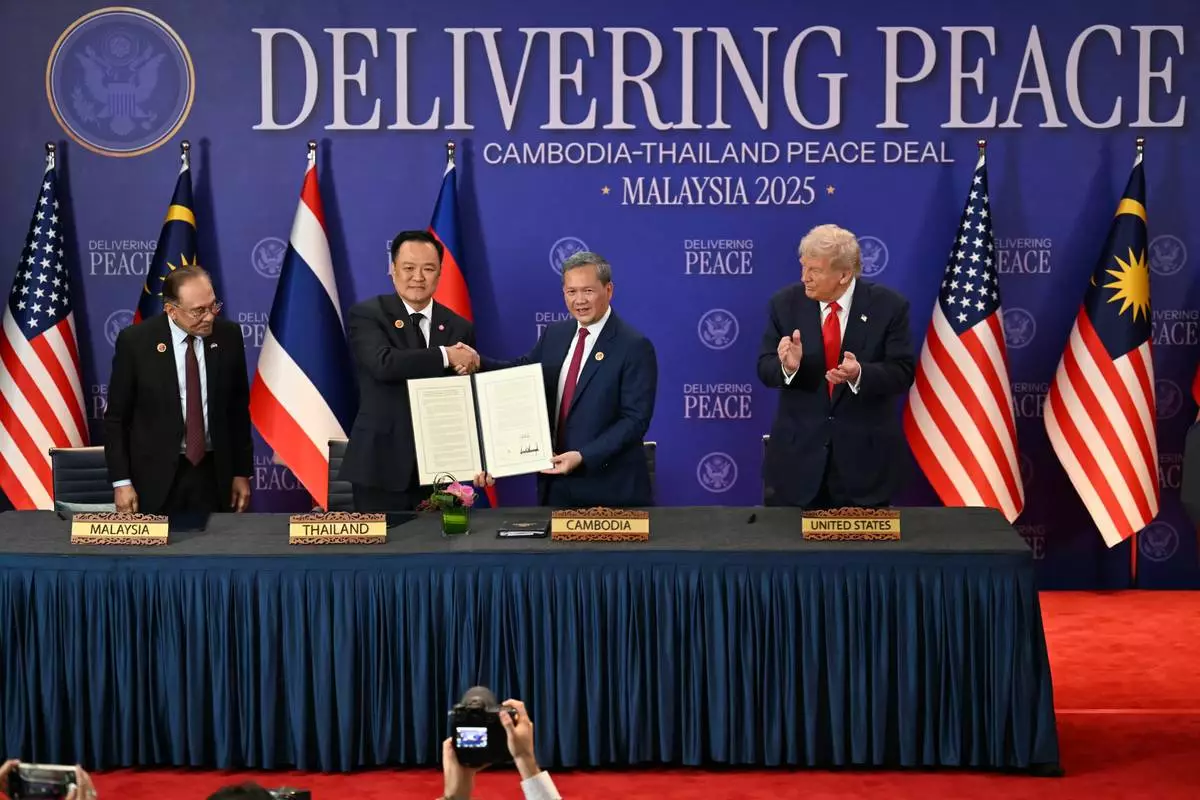
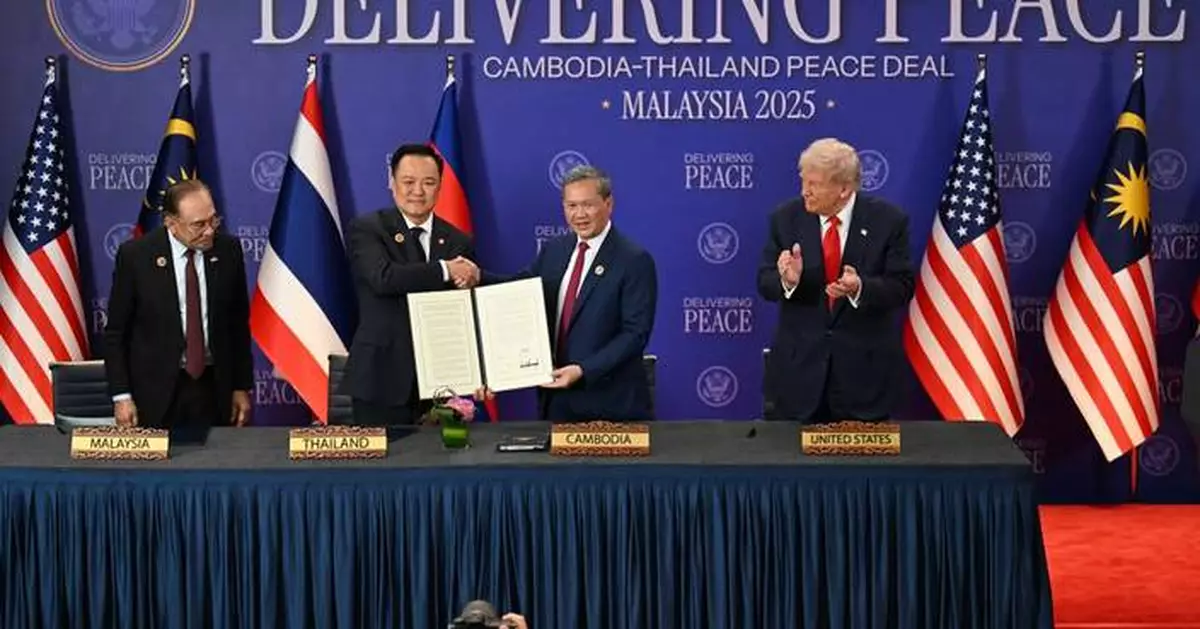
FILE - Malaysia's Prime Minister Anwar Ibrahim, left, and U.S. President Donald Trump, right, watch as Thailand's Prime Minister Anutin Charnvirakul, second left, and Cambodia's Prime Minister Hun Manet hold up a document after the ceremonial signing of a ceasefire agreement between Thailand and Cambodia on the sidelines of the 47th Association of Southeast Asian Nations (ASEAN) summit in Kuala Lumpur, Malaysia, on Oct. 26, 2025. (Mohd Rasfan/Pool Photo via AP, File)
NEW YORK (AP) — U.S. stocks are ticking higher Friday following a mixed report on the U.S. job market, one that may delay another cut to interest rates by the Federal Reserve but not necessarily slam the door on it.
The S&P 500 rose 0.2% in early trading and was nearing its all-time high set earlier in the week. The Dow Jones Industrial Average was up 147 points, or 0.3%, as of 9:35 a.m. Eastern time, and the Nasdaq composite was virtually unchanged.
Treasury yields were mixed in the bond market after the U.S. Labor Department said employers hired fewer workers in total during December than economists expected, though the unemployment rate improved and was better than expected. It reinforced the belief that the U.S. job market may be in a “ low-hire, low-fire” state.
While the overall data was mixed, the improvement in the unemployment rate was enough to get traders to ratchet back their expectations for a cut to interest rates at the Fed's next meeting at the end of this month. Traders are now forecasting just a 5% chance of that, down from 11% a day before, according to data from CME Group.
But they’re still forecasting a high likelihood that the Fed will cut at least twice this upcoming year. Whether they’re correct carries high stakes for financial markets. Lower interest rates can goose the economy and push up prices for investments, though they also can worsen inflation at the same time.
“Until the data provide a clearer direction, a divided Fed is likely to stay that way,” according to Ellen Zentner, chief economic strategist for Morgan Stanley Wealth Management. “Lower rates are likely coming this year, but the markets may have to be patient.”
After the report, the yield on the 10-year Treasury held at 4.19%, where it was late Thursday. It tends to track expectations for longer-term economic growth and inflation. But the two-year Treasury yield, which more closely tracks forecasts for what the Fed will do with short-term interest rates in the near term, ticked up to 3.50% from 3.49%.
On Wall Street, power company Vistra soared 14.6% to help lead the market after signing a 20-year deal to provide electricity to Meta Platforms from three of its nuclear plants. Big Tech companies have been signing a string of such deals to electrify the data centers powering their moves into artificial-intelligence technology.
Oklo jumped 12% after saying it also signed a deal with Meta Platforms that will help it secure nuclear fuel and advance its project to build a facility in Pike County, Ohio.
They helped offset a 1.6% drop for General Motors. The auto giant said it will take a $6 billion hit to its results for the last three months of 2025 related to its pullback from electric vehicles. That’s on top of the $1.6 billion in charges GM took in the prior quarter. Fewer tax incentives and easier fuel-emission regulations have been eating into demand for EVs.
WD-40 tumbled 13.7% after reporting a weaker profit for the latest quarter than analysts expected. Chief Financial Officer Sara Hyzer said the soft numbers were primarily because of timing issues, not weaker demand from end customers, and the company stood by its financial forecasts for the upcoming year.
In stock markets abroad, indexes rose across much of Europe and Asia.
The French CAC 40 rose 1%, and Japan’s Nikkei 225 jumped 1.6% for two of the world’s bigger gains. In Tokyo, Fast Retailing, the fashion company behind Uniqlo, jumped 10.6% after its quarterly operating profit surged about 34% year-on-year. It revised its full-year forecasts upward.
AP Business Writers Chan Ho-him and Matt Ott contributed.
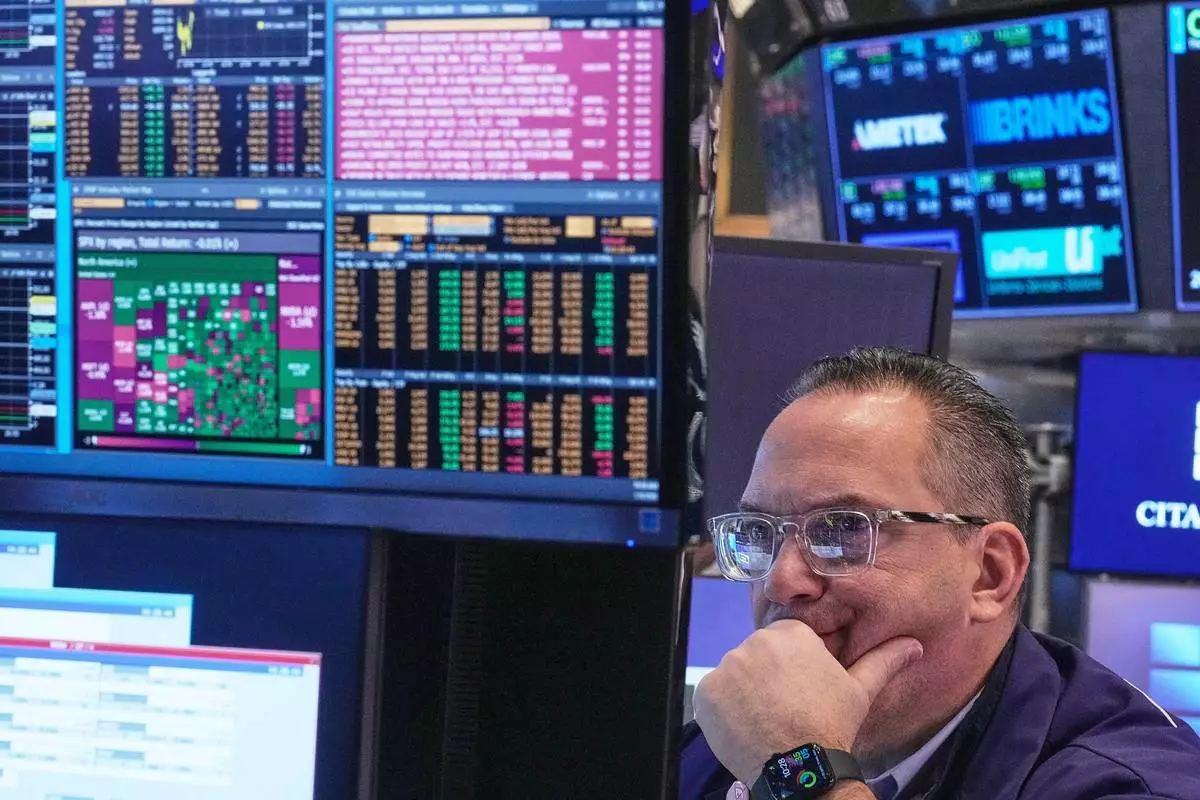
Specialist Anthony Matesic works on the floor of the New York Stock Exchange, Thursday, Jan. 8, 2026. (AP Photo/Richard Drew)
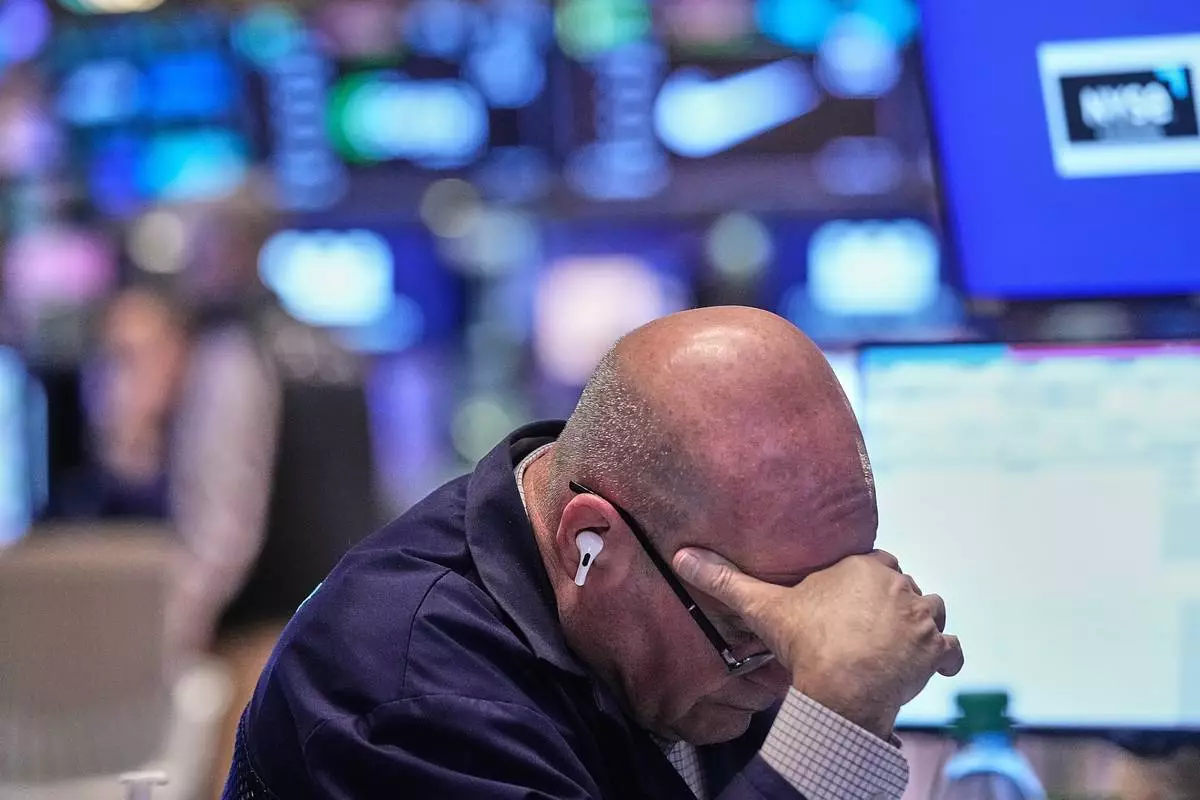
Trader Anthony Confusione works on the floor of the New York Stock Exchange, Thursday, Jan. 8, 2026. (AP Photo/Richard Drew)
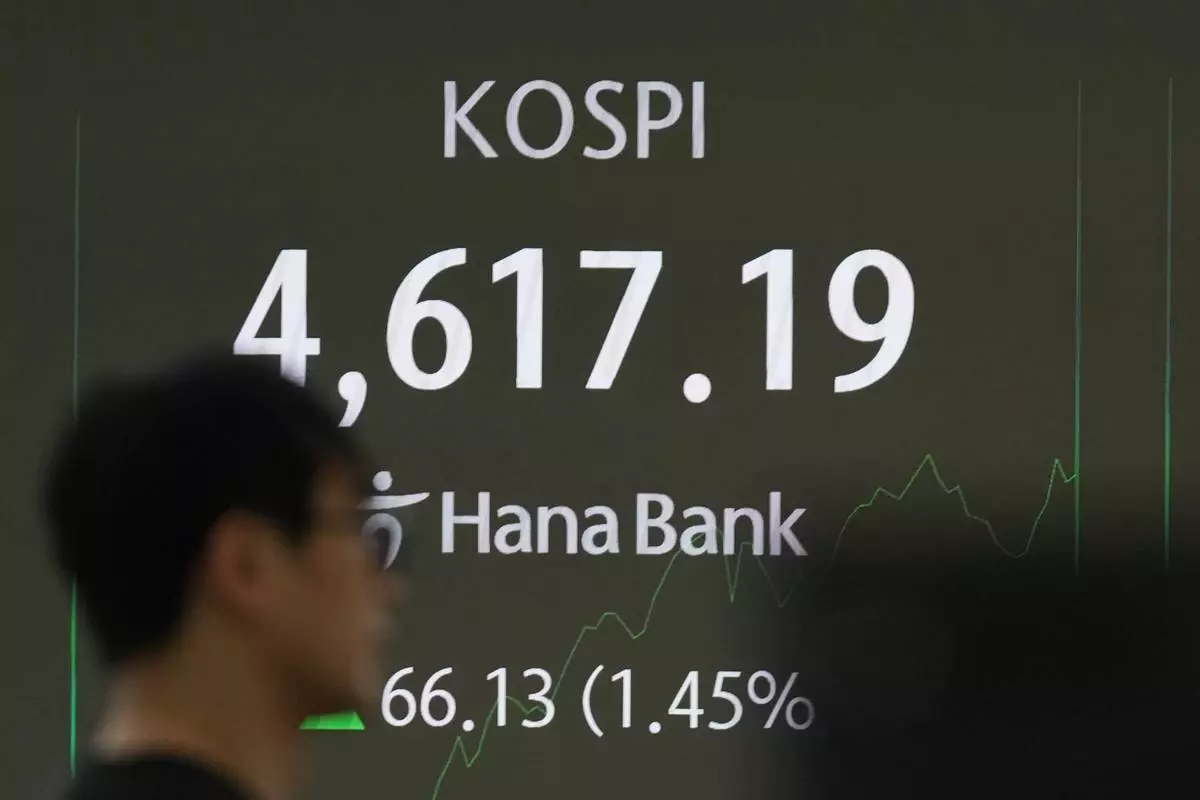
A dealer walks past near a screen showing the Korea Composite Stock Price Index (KOSPI) at a dealing room of Hana Bank in Seoul, South Korea, Thursday, Jan. 8, 2026. (AP Photo/Lee Jin-man)
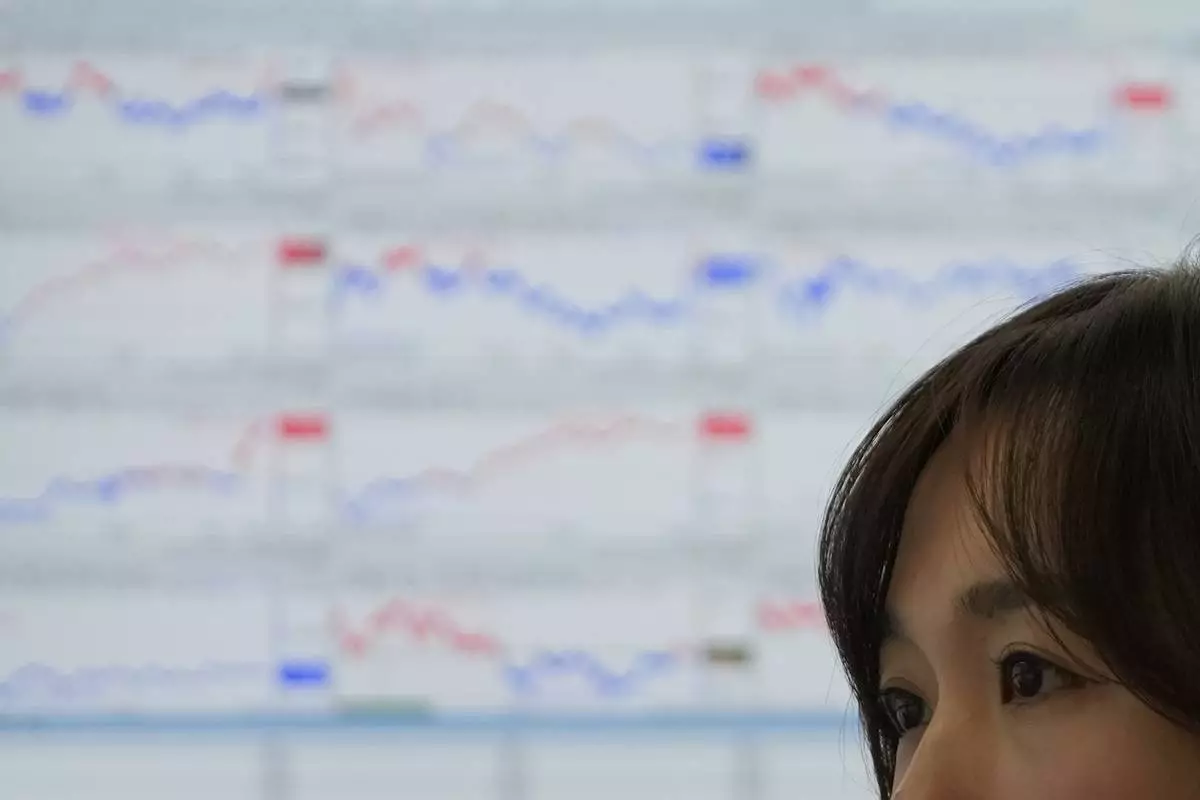
A dealer watches computer monitors at a dealing room of Hana Bank in Seoul, South Korea, Thursday, Jan. 8, 2026. (AP Photo/Lee Jin-man)
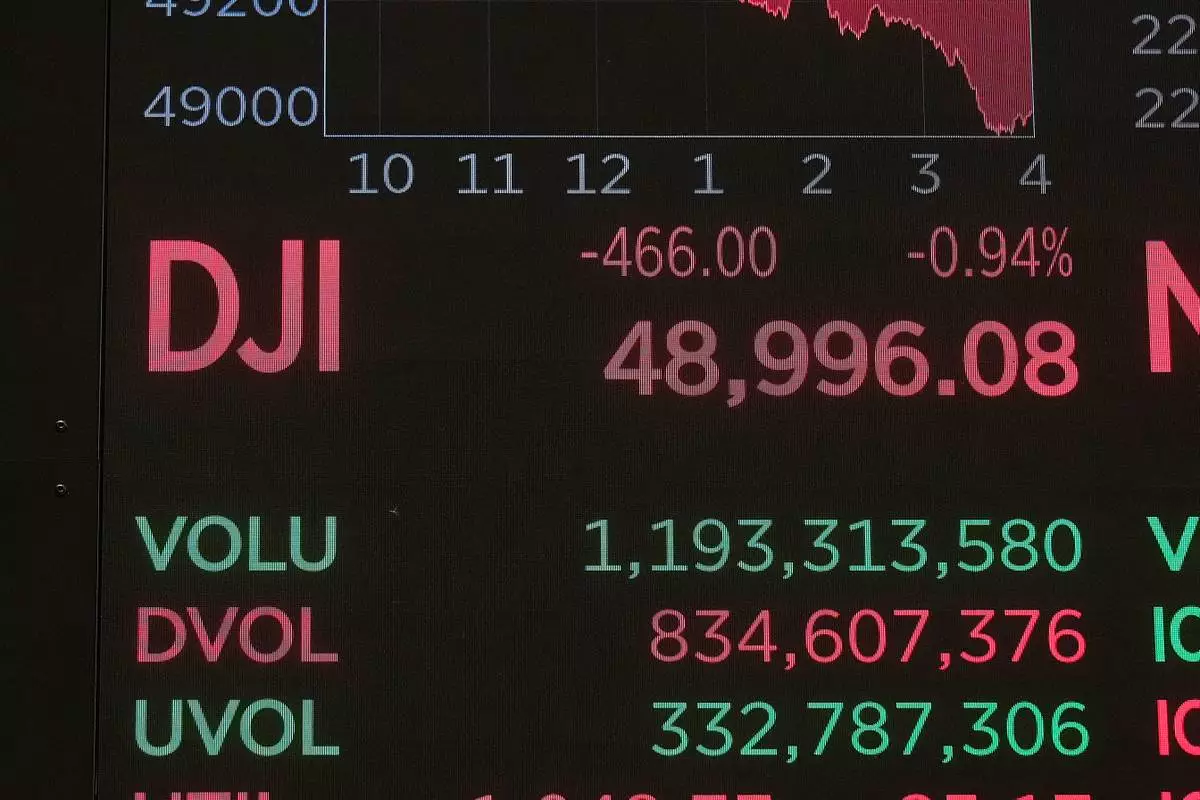
A board above the trading floor of the New York Stock Exchange displays the closing number for the Dow Jones industrial average, Wednesday, Jan. 7, 2026. (AP Photo/Richard Drew)
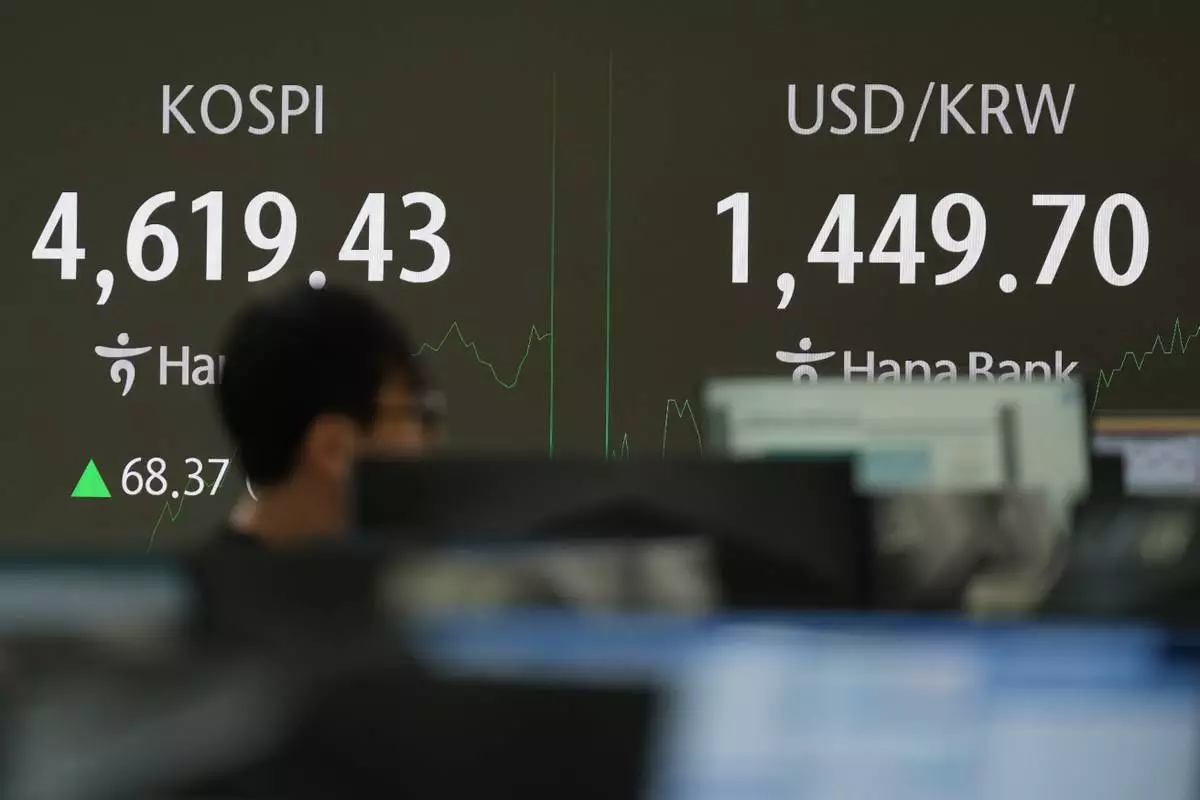
A dealer walks past near the screens showing the Korea Composite Stock Price Index (KOSPI), left, and the foreign exchange rate between U.S. dollar and South Korean won at a dealing room of Hana Bank in Seoul, South Korea, Thursday, Jan. 8, 2026. (AP Photo/Lee Jin-man)
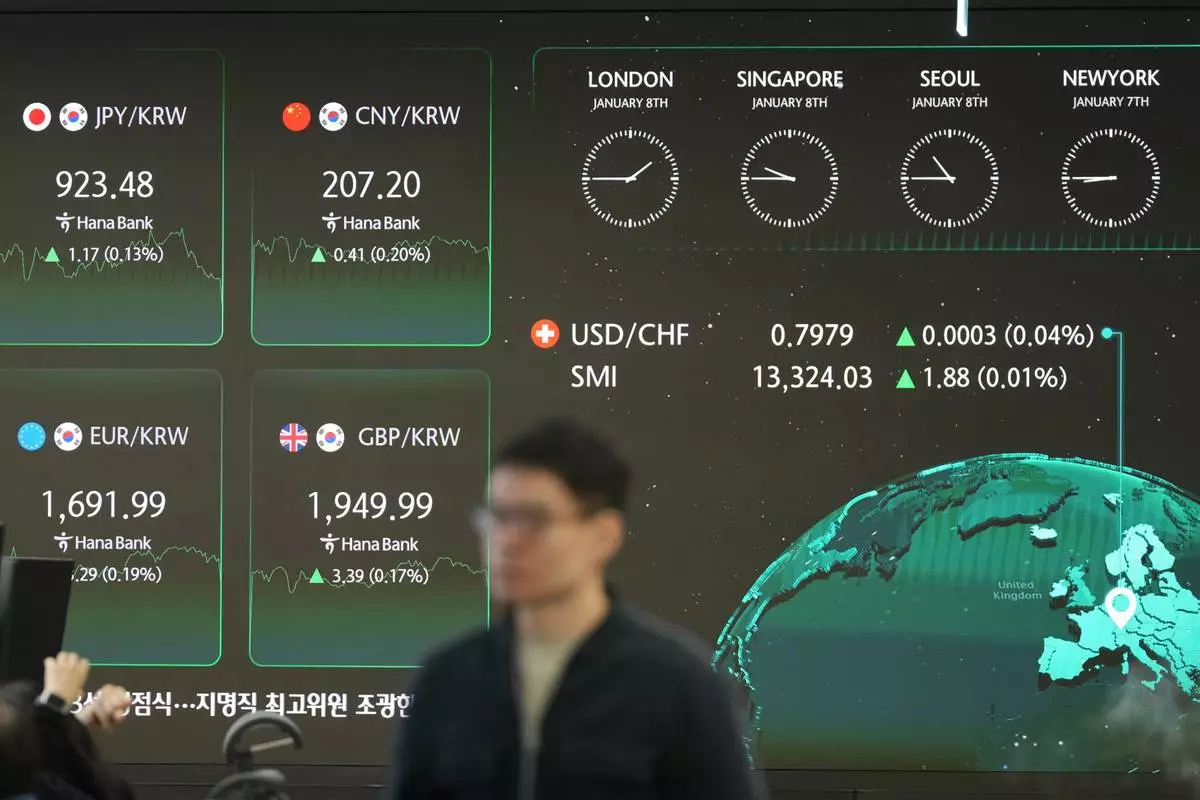
A dealer walks past near the screens showing the foreign exchange rates at a dealing room of Hana Bank in Seoul, South Korea, Thursday, Jan. 8, 2026. (AP Photo/Lee Jin-man)