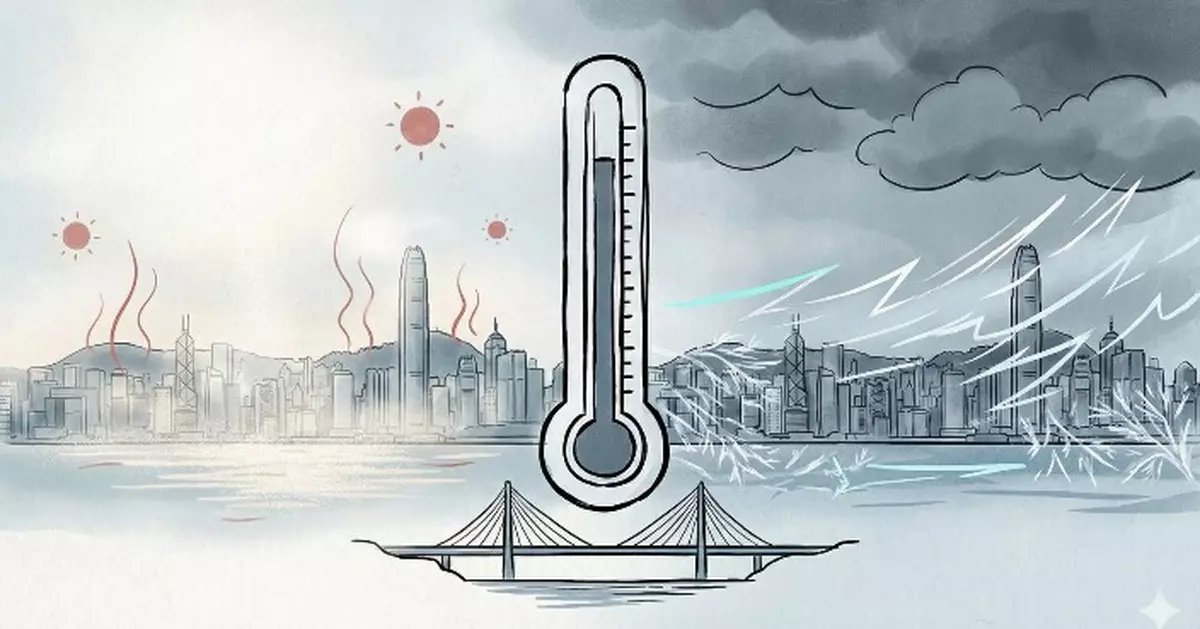
The year's weather 2025 - a stormy 2025
Globally, 2025 is on track to be the second or third warmest year on record according to the World Meteorological Organization's preliminary assessment. Over the Arctic and Antarctica, sea-ice extent remained well below average during the year. In particular, the Arctic annual maximum sea-ice extent was the lowest in the satellite record. Extreme weather events affected many parts of the world in 2025, including heatwaves in East Asia, Europe, and the eastern Mediterranean; severe droughts in southwest Asia and the Amazon basin; severe flooding triggered by extreme rainfall in South Asia, western Nigeria, the Democratic Republic of the Congo, the Eastern Cape of South Africa, and Texas in the United States; and severe damages and heavy casualties inflicted by tropical cyclones in the Philippines, China, Vietnam, Thailand, Myanmar, Mozambique, Madagascar, the Caribbean, Malaysia, and Indonesia. Rampant wildfires, exacerbated by high temperatures, dry and windy conditions, also wreaked havoc in Europe, the Republic of Korea, and California in the United States.
Sea surface temperatures in the central and eastern equatorial Pacific were near normal from January through October 2025, then lingered between below normal and near normal in November and December 2025.
In Hong Kong, with all 12 months warmer than usual, including the record-breaking monthly mean temperature in October, 2025 was the sixth warmest year on record, with the annual mean temperature reaching 24.3 degrees, 0.8 degrees above the 1991-2020 normal (Note 1). The annual mean maximum temperature of 27.1 degrees and the annual mean minimum temperature of 22.4 degrees were respectively one of the fifth highest and one of the sixth highest since records began in 1884. There were 53 very hot days (Note 2) and 54 hot nights (Note 3) in Hong Kong in 2025, both ranking the third highest on record. There were also four extremely hot days (Note 4), ranking one of the fifth highest on record.
The lowest temperature recorded at the Observatory in the year was 10.6 degrees on January 27. The number of cold days (Note 5) in the year was six days, 9.2 days less than the 1991-2020 normal. Moreover, this was also the first time that no Cold Weather Warning was in force in November and December in a year since the Cold Weather Warning System commenced operation in 1999.
While the accumulated rainfall recorded in the first half of the year was only 444.4 millimetres, the fifth lowest on record for the same period, with outbreaks of heavy rain during July to September, the annual total rainfall in 2025 was 2 558.7 millimetres, about 5 per cent above the 1991-2020 normal of 2 431.2 millimetres. The rainfall was concentrated during July to September, and the total rainfall during these three months contributed more than 80 per cent of the annual rainfall. There were 16 Red Rainstorm Warnings and five Black Rainstorm Warnings, breaking the respective highest annual numbers on record. The number of days with thunderstorms reported in Hong Kong was 37 days in 2025, 5.3 days less than the 1991-2020 normal.
With the relative humidity well below normal in the first half of the year and in November, the annual mean relative humidity of 73 per cent in 2025 was 5 per cent below the normal of 78 per cent and on par with 1963 as one of the lowest on record since 1947. The low humidity in 2025 is mainly attributed to the drier-than-usual northeast monsoon over southern China from January to April and in November. The stronger-than-normal and more westward extending subtropical ridge in May and June, which suppressed the precipitation in Hong Kong, also contributed to the relatively drier weather in these two months.
A total of 35 tropical cyclones occurred over the western North Pacific and the South China Sea in 2025, more than the long-term (1961-2020) average of about 30. There were 14 tropical cyclones reaching typhoon intensity (Note 6) or above during the year, similar to the long-term average of about 15, and five of them reached super typhoon intensity (with maximum 10-minute wind speed of 185 kilometres/h or above near the centre). In Hong Kong, 14 tropical cyclones necessitated the issuance of tropical cyclone warning signals, more than double the long-term average of about six in a year, the highest annual number since 1946. The Hurricane Signal No. 10 was issued twice in the year during the passages of Typhoon Wipha in July and Super Typhoon Ragasa in September, tying the previous record in 1964. The No. 8 Gale or Storm Signal was issued during the passage of Severe Tropical Storm Tapah in September.
The record-breaking number of tropical cyclones affecting Hong Kong in the year is mainly attributed to higher-than-normal sea surface temperature over the western North Pacific and the more westward extending subtropical ridge during the summer and autumn, which favoured the tropical cyclones over the western North Pacific and the South China Sea moving towards the northern part of the South China Sea, increasing the chance that they would affect the coast of southern China, including Hong Kong.
Detailed description of the weather for individual months is available on the Monthly Weather Summary webpage:www.weather.gov.hk/en/wxinfo/pastwx/mws/mws.htm
A detailed version of the year's weather for 2025 with some significant weather events in Hong Kong is available at:www.weather.gov.hk/en/wxinfo/pastwx/ywx.htm
Note 1: Climatological normals for the reference period of 1961-1990, 1971-2000, 1981-2010 and 1991-2020 are available at: www.weather.gov.hk/en/cis/normal.htm. Climatological normals of 1991-2020 are referenced in the text unless otherwise stated.
Note 2: "Very hot day" refers to the condition with the daily maximum temperature equal to or higher than 33.0 degrees.
Note 3: "Hot night" refers to the condition with the daily minimum temperature equal to or higher than 28.0 degrees.
Note 4: "Extremely hot day" refers to the condition with the daily maximum temperature equal to or higher than 35.0 degrees.
Note 5: "Cold day" refers to the condition with the daily minimum temperature equal to or lower than 12.0 degrees.
Note 6: Information on the classification of Tropical Cyclones is available at: www.weather.gov.hk/en/informtc/class.htm.
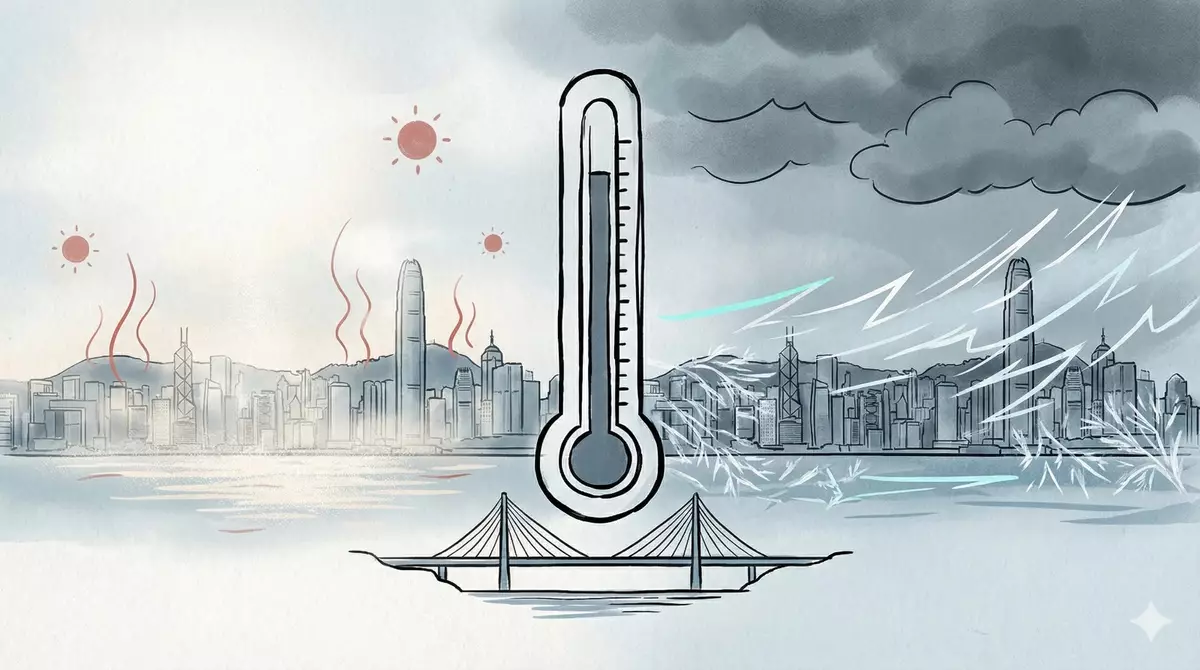
Source: AI-created image