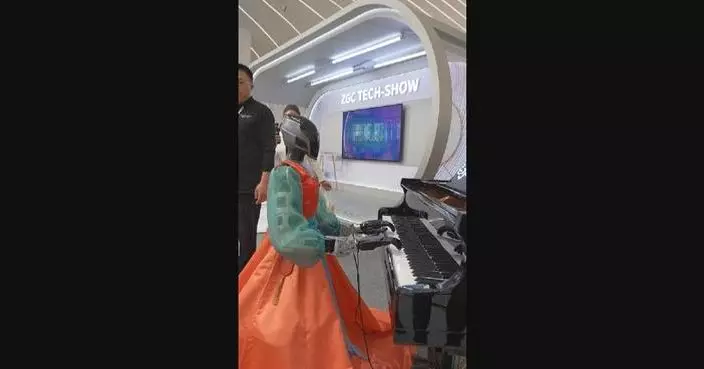
Futuristic humanoid robots are taking center stage at the ongoing 2026 Consumer Electronics Show (CES) in Las Vegas, as developers show off the increasing physical prowess of their creations and discuss ways to integrate them into the general workforce.
The annual show, considered the world's premier technology event, opened on Tuesday, attracting thousands of exhibitors from more than 155 countries and regions, according to organizers.
Alongside a host of innovations, including a number of AI-powered products and prototypes, the emergence of increasingly advanced humanoid robots and their impressive mobility has been catching the attention of attendees.
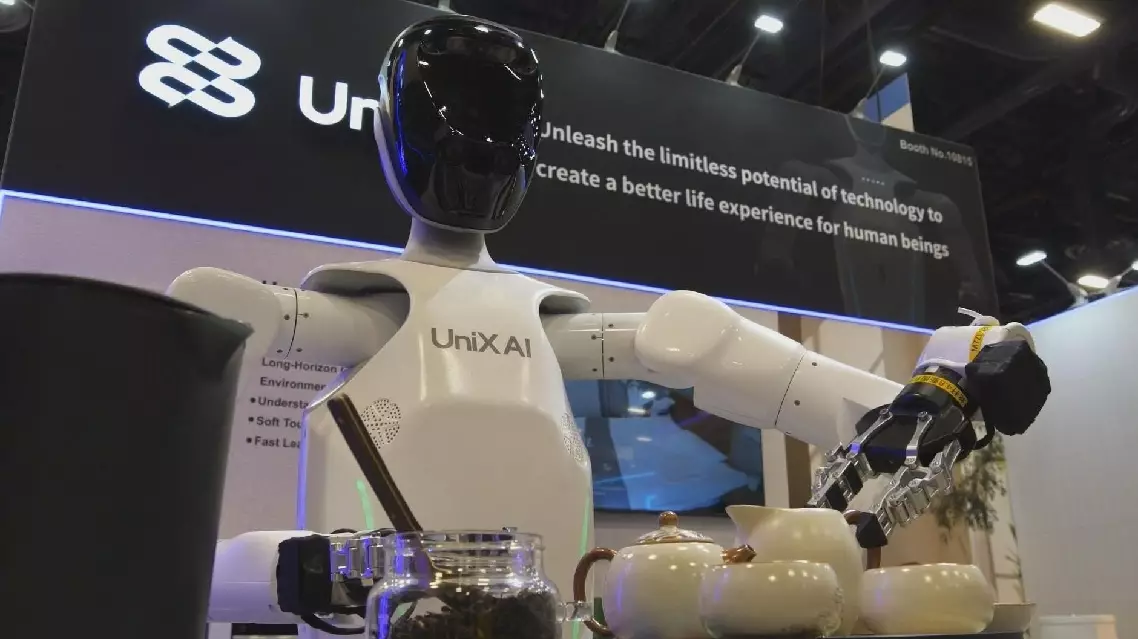
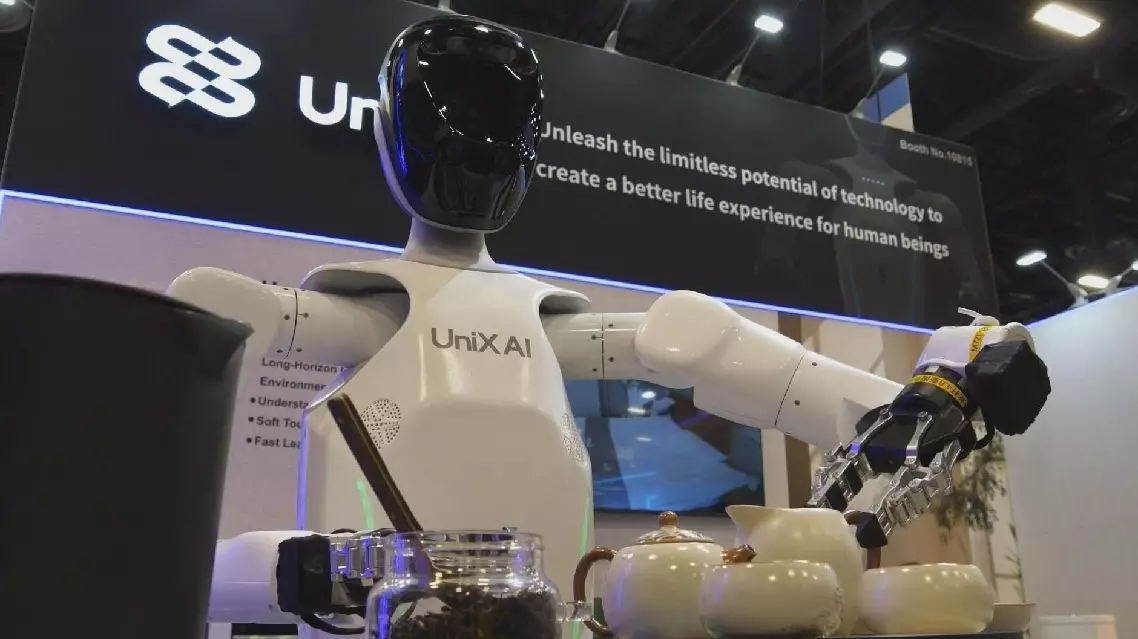
One of the most eye-catching robots on show is 'Wanda', which is capable of carrying out a number of household tasks from handling dishes, making beds and doing the laundry, to even brewing traditional Chinese tea and mixing drinks. It has been developed by Chinese company UniX AI, which says it is delivering more than 100 of these humanoids to clients every month.
Fred Yang, the firm's founder and CEO, said Wanda has already shown it can be deployed effectively in the hospitality sector.
"The applications are mainly in the hotel [industry] and the security scenario. So in the hotel, for now, we can already finish like 50 (percent) to two-thirds of whatever the cleaner in the hotel can already do," he said.
Yang said the humanoid has arms with eight degrees of freedom, giving it greater flexibility and allowing it to replicate fine motor skills.
However, he admitted that their robots aren't yet perfect, noting that the bright lights in the expo hall affect Wanda's precision in pouring tea. Yang said efforts are underway to further improve the robot's accuracy and precision, and to enable it to adapt to the different environments it may encounter in the real world.
"The ultimate goal is always going into the home, because the customer side is the largest market in the world. I believe we do have some challenges facing different rooms because different rooms have different layouts, different stuff and whatever. So, I think going into the hotel is kind of an intermediate step," he said.
Meanwhile, leading U.S. company Boston Dynamics is proudly demonstrating its next generation 'Atlas' robot in public for the first time at this year's CES.
The new, fully-electric Atlas was first announced in 2024, after the firm retired its previous hydraulic model that had been in development for several years.
The more fluid movement of the new incarnation was clear to see during this debut appearance at the tech show, as it demonstrated autonomous skills and the ability to unload racks with the guidance of a human tele-operator trainer.
Brian Ringley, Boston Dynamics' Distinguished Product Manager, said Atlas can lift a weight of up to 30 kilograms, and is already performing real work in factories belonging to Hyundai, the firm's parent company.
"We are pursuing tasks that are difficult for people to do, that are exhausting for them to do and also that are understaffed currently. So, these are roles where factories actually can't produce enough or reach the efficiency levels they need to, because they simply cannot hire the workforce to do that. We are going to augment that workforce," he said.
Amid concerns that the development of these humanoids could threaten people's jobs, Ringley stressed the company is studying human and humanoid robot collaboration carefully as the nature of work continues to evolve.
"I think people should be welcoming them as a productivity enhancer and kind of free those people up. Robots also create types of jobs -- the way that these robots are trained, the way that these robots will be managed," he said.
Potential role of humanoid robots in workforce showcased at top tech event in Las Vegas
Potential role of humanoid robots in workforce showcased at top tech event in Las Vegas