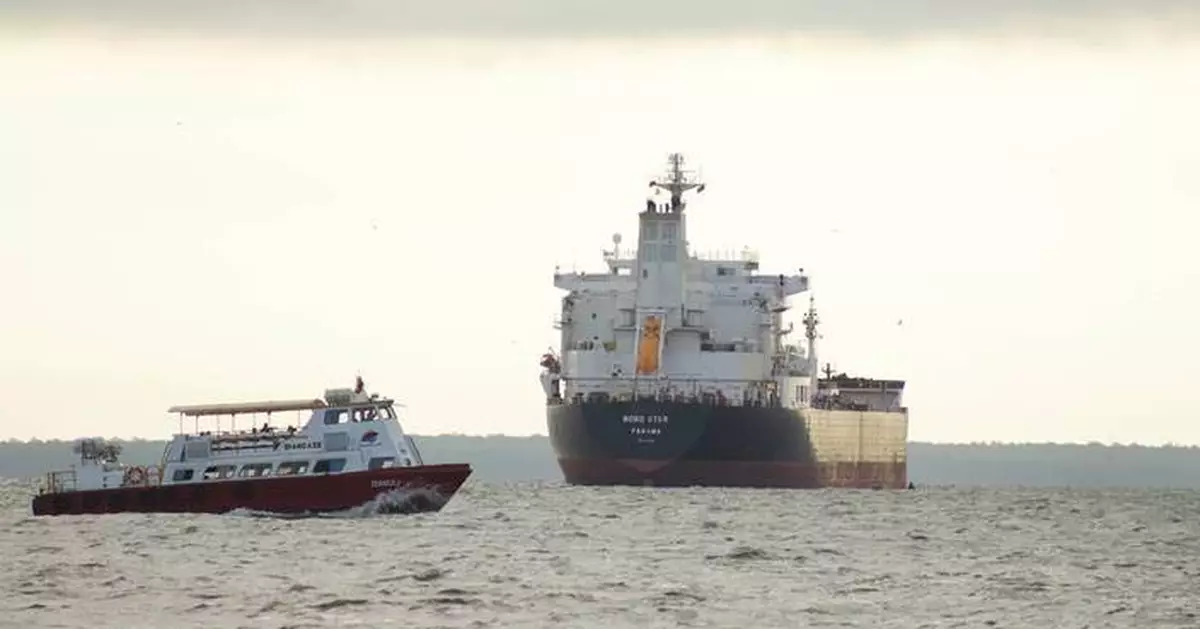
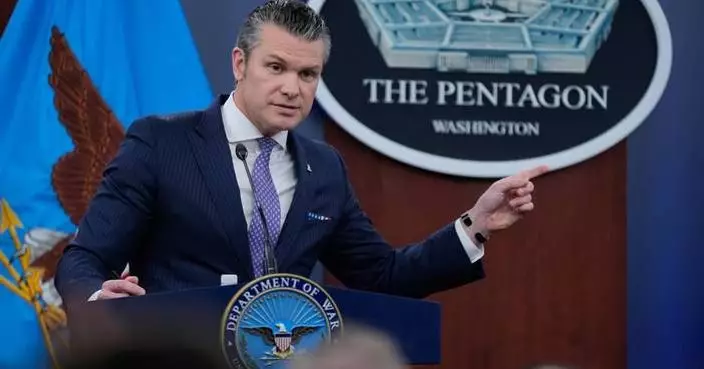
LONDON (AP) — The U.S. seizure of a Venezuela-linked oil tanker in the North Atlantic was seen by some as the unilateral action of an America-first government with scant regard for other countries' views. Britain calls it an example of trans-Atlantic cooperation in support of international rules.
The U.K. government argues that the interception of the vessel by American special forces backed by British sea and air support, alongside a U.S. pledge of security guarantees for Ukraine, vindicate Prime Minister Keir Starmer’s efforts to keep Trump from abandoning America’s European allies.
Others say that is wishful thinking, as the U.S. capture of President Nicolás Maduro and Trump’s renewed desire to acquire Greenland put Starmer’s bridge-building efforts under potentially intolerable strain.
“The U.K. is trying hard to find positive things to say about all this,” Bronwen Maddox, director of international affairs think-tank Chatham House, said Thursday. “The tanker gives governments like Keir Starmer’s a way to support the U.S. without supporting everything it’s doing.
“You can see the dilemma: The U.K. and Europe don’t want to provoke Trump and the administration, which might put at risk first the defense of Ukraine and second the defense of Europe and third their trade deals,” Maddox said. “But they’re torn, because they also want to stand up for principles.”
Debriefing British lawmakers on the ship seizure, Defense Secretary John Healey insisted that the U.K. and the U.S. remain “the closest possible defense and security allies.” NATO, he added, “is stronger now, larger now and more united now” than ever before.
U.S. officials said the seizure of the merchant vessel Bella 1 – and a second tanker intercepted in the Caribbean – are part of its operations to take control of Venezuela’s oil following Maduro’s ouster.
Healey had a different emphasis, framing the interception of the ship as it headed toward Russia as action to support Ukraine and tackle the “shadow fleet” of decrepit tankers used by Russia and Iran to evade international oil sanctions.
“Last year, it was estimated that Russia sold up to $100 billion from sanctioned oil, money which is directly funding attacks against Ukrainian citizens,” Healey said. “We owe it to Ukrainians to step up on these shadow operations, and we are.”
Since Trump’s return to office a year ago, European nations including the U.K. have struggled with how to deal with a president who has slapped tariffs on trading partners, quit international organizations and derided NATO, the bedrock of Euro-Atlantic security for more than 75 years.
France’s President Emmanuel Macron on Thursday lamented that the United States is “gradually turning away from some of its allies and freeing itself from the international rules.”
Starmer continues to emphasize the positive. The center-left prime minister has made it a key goal to keep on Trump’s good side, and to keep Trump onside with Europe over Ukraine.
He has refrained from direct criticism, despite strong political pressure to condemn Trump’s attacks on London Mayor Sadiq Khan, criticism of British immigration policy and $10 billion lawsuit against the BBC. He has declined to criticize the toppling of Maduro, stressing that the U.K. supports international law without saying whether the U.S. attack broke it.
British officials pointed to the Trump administration’s commitment at a conference in Paris this week to provide security guarantees for Ukraine after a future ceasefire as a concrete result of its approach. Healey said those guarantees “could not be more important.”
Leslie Vinjamuri, president of the Chicago Council on Global Affairs, said Starmer has "done a pretty good job in a very complicated situation where the U.K. clearly needs to depend on the U.S.
“It’s very tactical on the part of the U.K.,” she said. "Grab the United States where you can to demonstrate that you’re on the same page, that you are useful.
"That’s pragmatic politics. That’s realism."
But not all differences can be papered over. Trump’s insistence that acquiring Greenland, a semiautonomous Danish territory, is essential for U.S. security has forced the British leader into a position at odds with the president.
Starmer has said repeatedly this week that “only Greenland and the Kingdom of Denmark” can decide the future of the vast Arctic island.
Starmer spoke to Trump late Wednesday and “set out his position on Greenland,” the prime minister’s office said in a terse summary of the call. It did not say how Trump responded.
Maddox said that Trump’s proposal “to seize the sovereign territory of a European country, a NATO member” is so egregious that Starmer’s “dance of keeping under the radar begins to look not just ridiculous but self-defeating.“
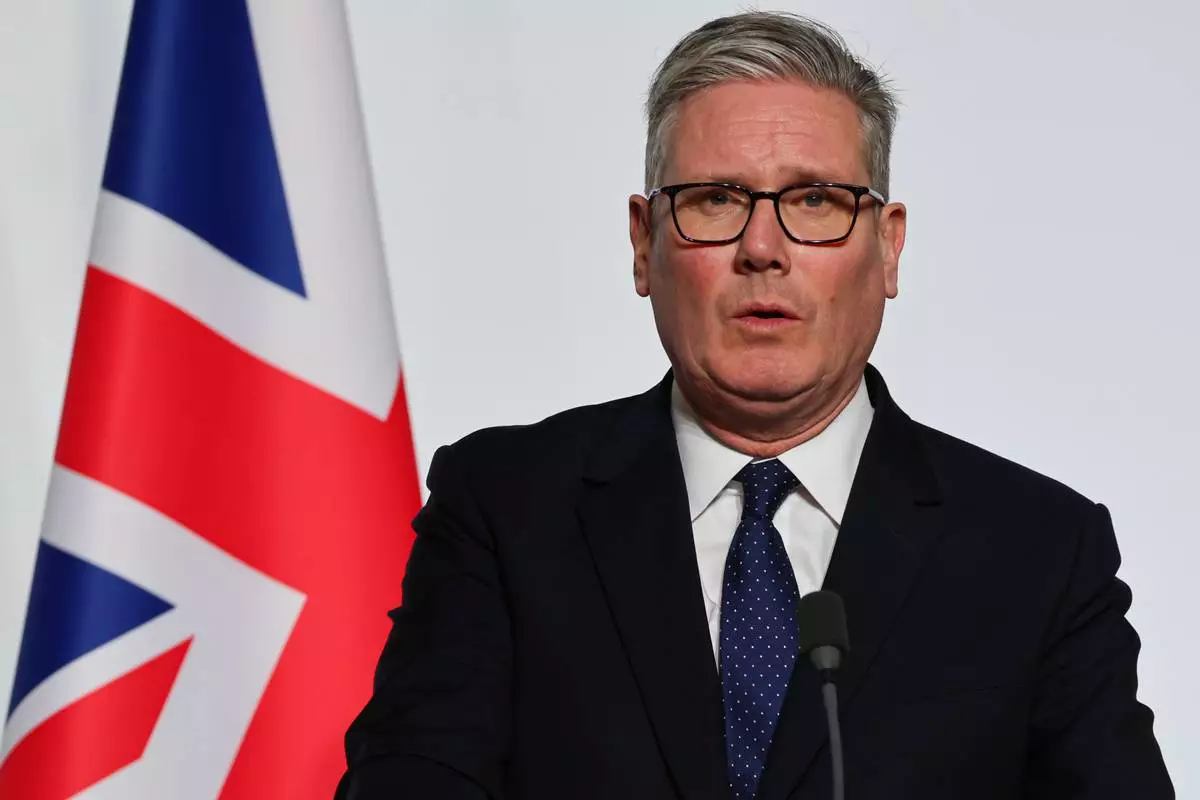
Britain's Prime Minister Keir Starmer delivers a speech upon the signing of the declaration on deploying post-ceasefire force in Ukraine during the 'Coalition of the Willing' summit on security guarantees for Ukraine, at the Elysee Palace in Paris Tuesday, Jan 6, 2026. (Ludovic Marin, Pool photo via AP)
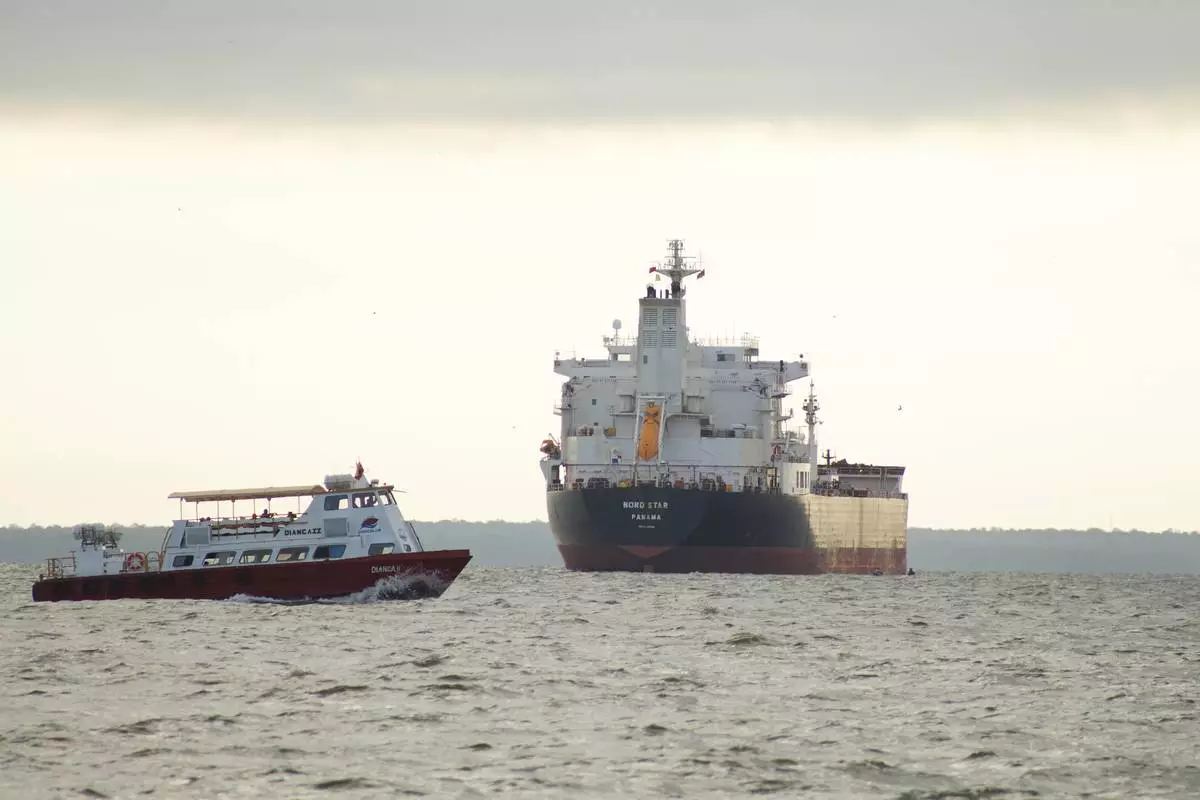
A boat sails past the oil tanker Nord Star, Panama, on Lake Maracaibo, Venezuela, Wednesday, Jan. 7, 2026. (AP Photo/Edgar Frias)
CAPE CANAVERAL, Fla. (AP) — NASA’s Artemis II astronauts fired their engines and blazed toward the moon Thursday night, breaking free of the chains that have trapped humanity in shallow laps around Earth in the decades since Apollo.
The so-called translunar ignition came 25 hours after liftoff, putting the three Americans and a Canadian on course for a lunar fly-around early next week. Their Orion capsule bolted out of orbit around Earth right on cue and chased after the moon to nearly 250,000 miles (400,000 kilometers) away.
It was the first such engine firing for a space crew since Apollo 17 set out on that era’s final moonshot on Dec. 7, 1972. NASA said that preliminary reports indicate it went well.
NASA had the Artemis II crew stick close to home for a day to test their capsule’s life-support systems before clearing them for lunar departure.
Now committed to the moon, the Artemis II test flight is the opening act for NASA’s grand plans for a moon base and sustained lunar living.
Commander Reid Wiseman, pilot Victor Glover, Christina Koch and Jeremy Hansen will dash past the moon then hang a U-turn and zip straight home without stopping on land. In the process, they will become the farthest humans have ever traveled from Earth, breaking the Apollo 13 distance record set in 1970. They also may become the fastest during their reentry at flight’s end on April 10.
Glover, Koch and Hansen already have made history as the first Black, the first woman and the first non-U.S. citizen to launch to the moon. Apollo’s 24 lunar travelers were all white men.
To set the mood for the day’s main event, Mission Control woke up the crew with John Legend’s “Green Light” featuring Andre 3000 and a medley of NASA teams cheering them.
“We are ready to go,” Glover said.
Mission Control gave the final go-ahead minutes before the critical engine firing, telling the astronauts that they were embarking on “humanity’s lunar homecoming arc” to bring them back to Earth.
Koch replied: “With this burn to the moon, we do not leave Earth. We choose it.”
The next major milestone will be Monday’s lunar flyby.
Orion will zoom 4,000 miles (6,400 kilometers) beyond the moon before turning back, providing unprecedented and illuminated views of the lunar far side, at least for human eyes. The cosmos will even treat the Artemis II astronauts to a total solar eclipse as the moon temporarily blocks the sun from their perspective.
While awaiting their orbital departure earlier Thursday, the astronauts savored the views of Earth from tens of thousands of miles high. Koch told Mission Control that they can make out the entire coastlines of continents and even the South Pole, her old stomping ground.
“It is just absolutely phenomenal,” radioed Koch, who spent a year at an Antarctic research station before joining NASA.
NASA is counting on the test flight to kickstart the entire Artemis program and lead to a moon landing by two astronauts in 2028. Orion’s toilet may need some design tweaks before that happens.
The so-called lunar loo malfunctioned as soon as the Artemis crew reached orbit Wednesday evening. Mission Control guided astronaut Koch through some plumbing tricks and she finally got it going, but not before having to resort to using contingency urine storage bags.
Controllers also managed to bump up the cabin temperature. It was so cold earlier in the flight that the astronauts had to dig into their suitcases for long-sleeved clothes.
The contingency urine bags came in handy later in the day. Mission Control ordered the crew to fill a bunch of the empty bags with water from the capsule’s dispenser. A valve issue arose with the dispenser following liftoff, and NASA wanted plenty of drinking water on hand for the crew in case the problem worsened. The astronauts used straws and syringes to fill the pouches with more than 2 gallons (7 liters) worth before pivoting to the moon.
The Associated Press Health and Science Department receives support from the Howard Hughes Medical Institute’s Department of Science Education and the Robert Wood Johnson Foundation. The AP is solely responsible for all content.
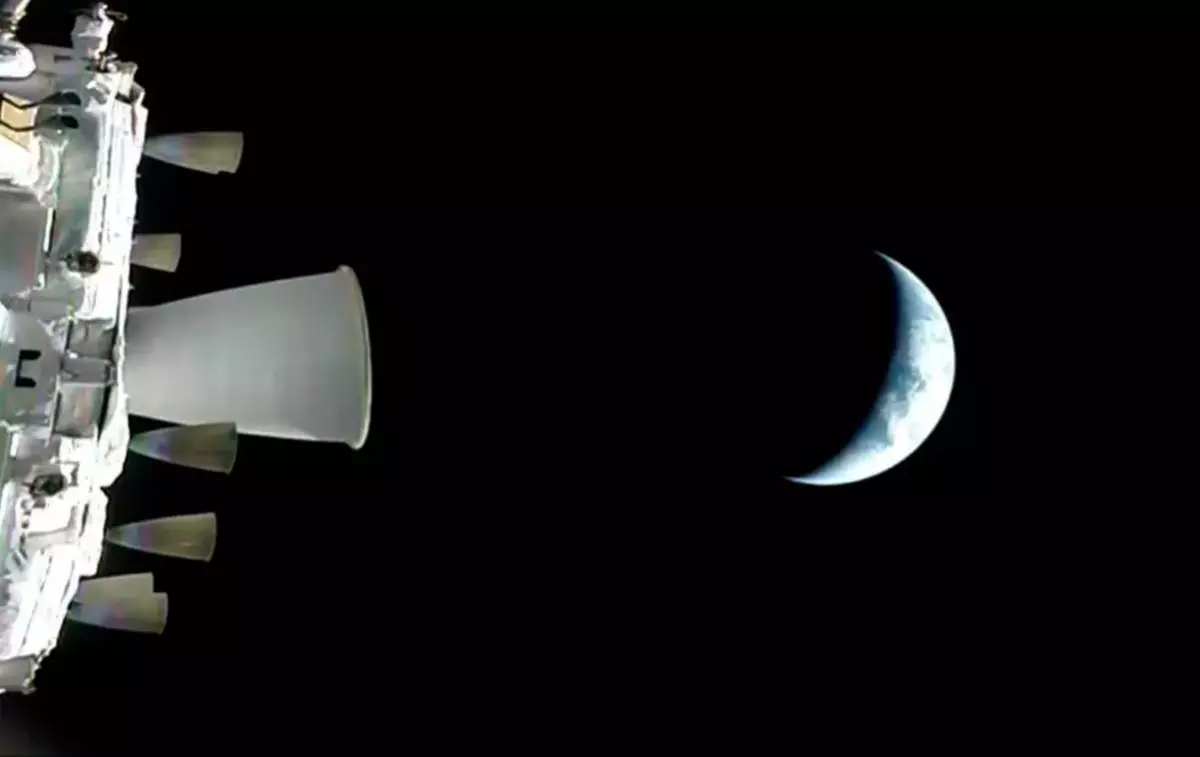
In this photo provided by NASA, a view of the Earth from NASA's Orion spacecraft as it orbits above the planet during the Artemis II test flight, on Thursday, April 2, 2026. (NASA via AP)
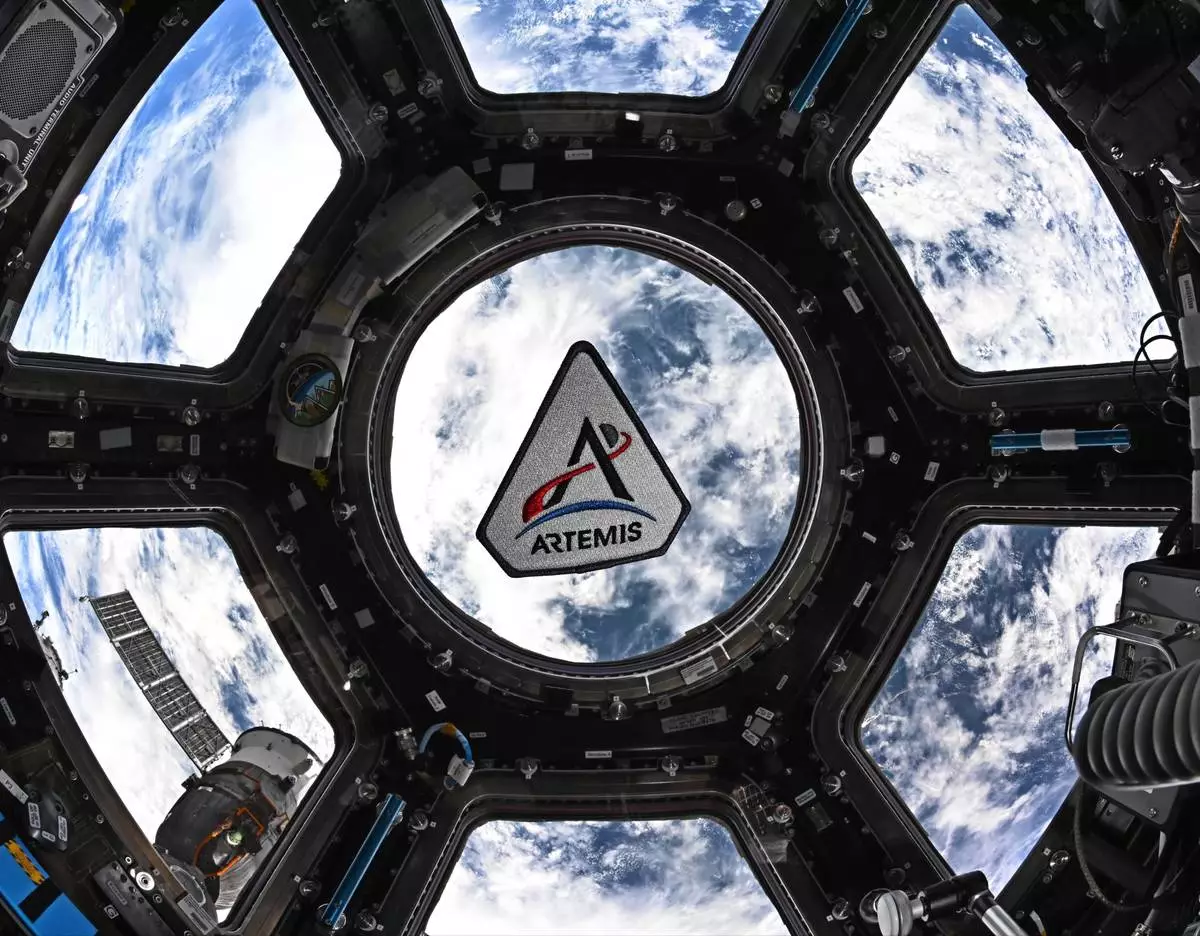
In this photo provided by NASA, an Artemis program patch floating in the International Space Station's cupola, on March 30, 2026. (Jessica Meir/NASA via AP)

Spectators view NASA's Artemis II moon rocket launch from the A. Max Brewer Bridge, Wednesday, April 1, 2026, in Titusville, Fla. (AP Photo/Phelan M. Ebenhack)
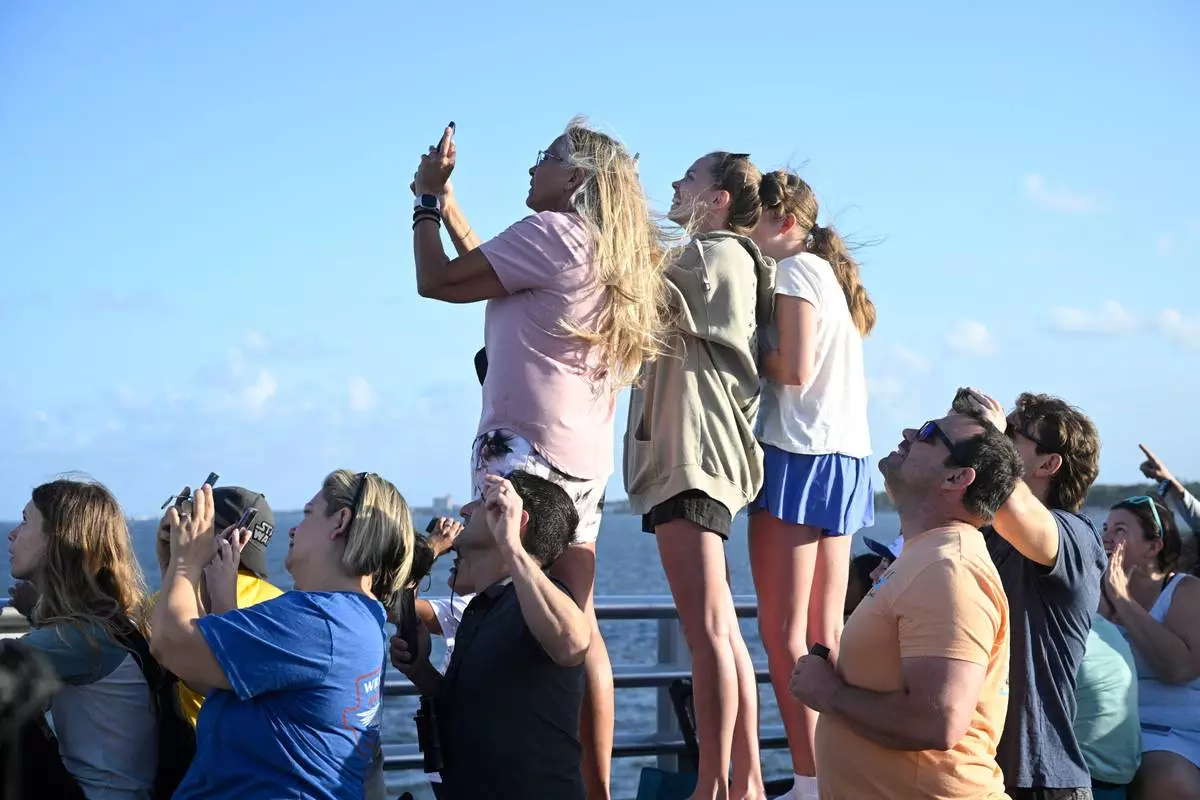
Spectators view NASA's Artemis II moon rocket launch from the A. Max Brewer Bridge, Wednesday, April 1, 2026, in Titusville, Fla. (AP Photo/Phelan M. Ebenhack)
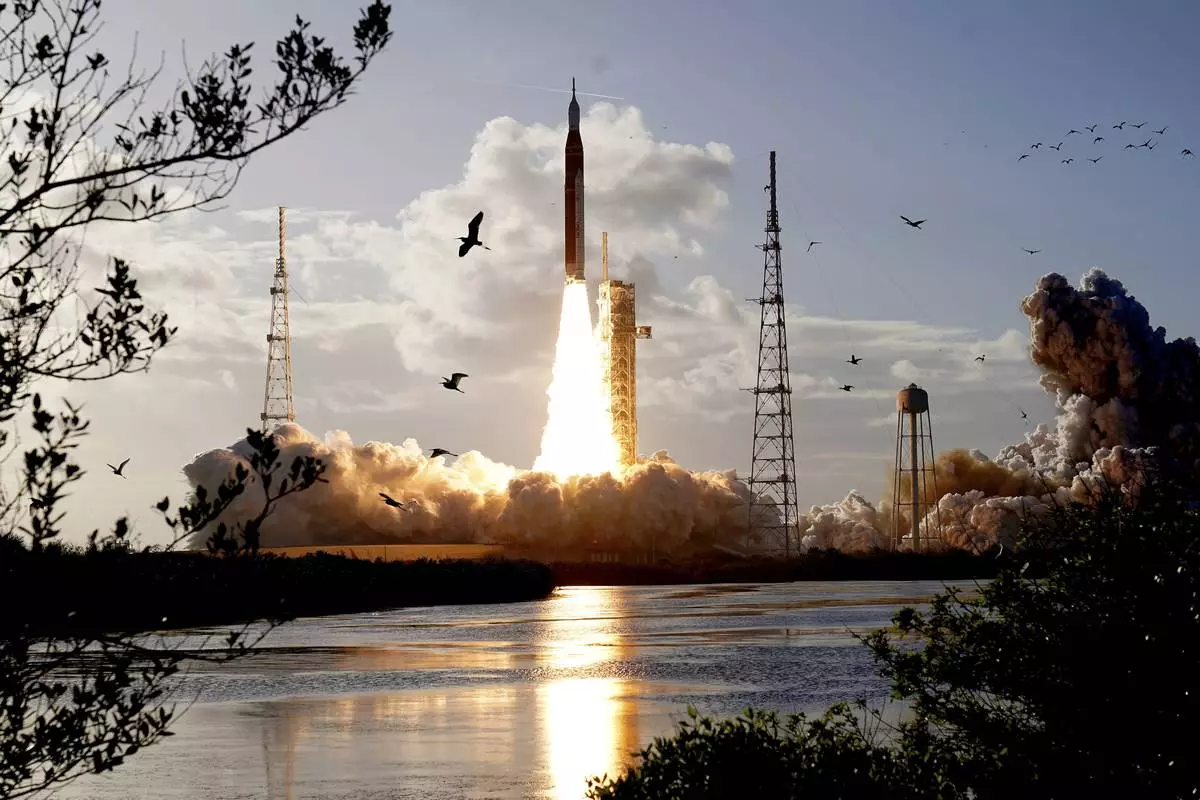
NASA's Artemis II moon rocket lifts off from the Kennedy Space Center's Launch Pad 39-B Wednesday, April 1, 2026, in Cape Canaveral, Fla. (AP Photo/Chris O'Meara)
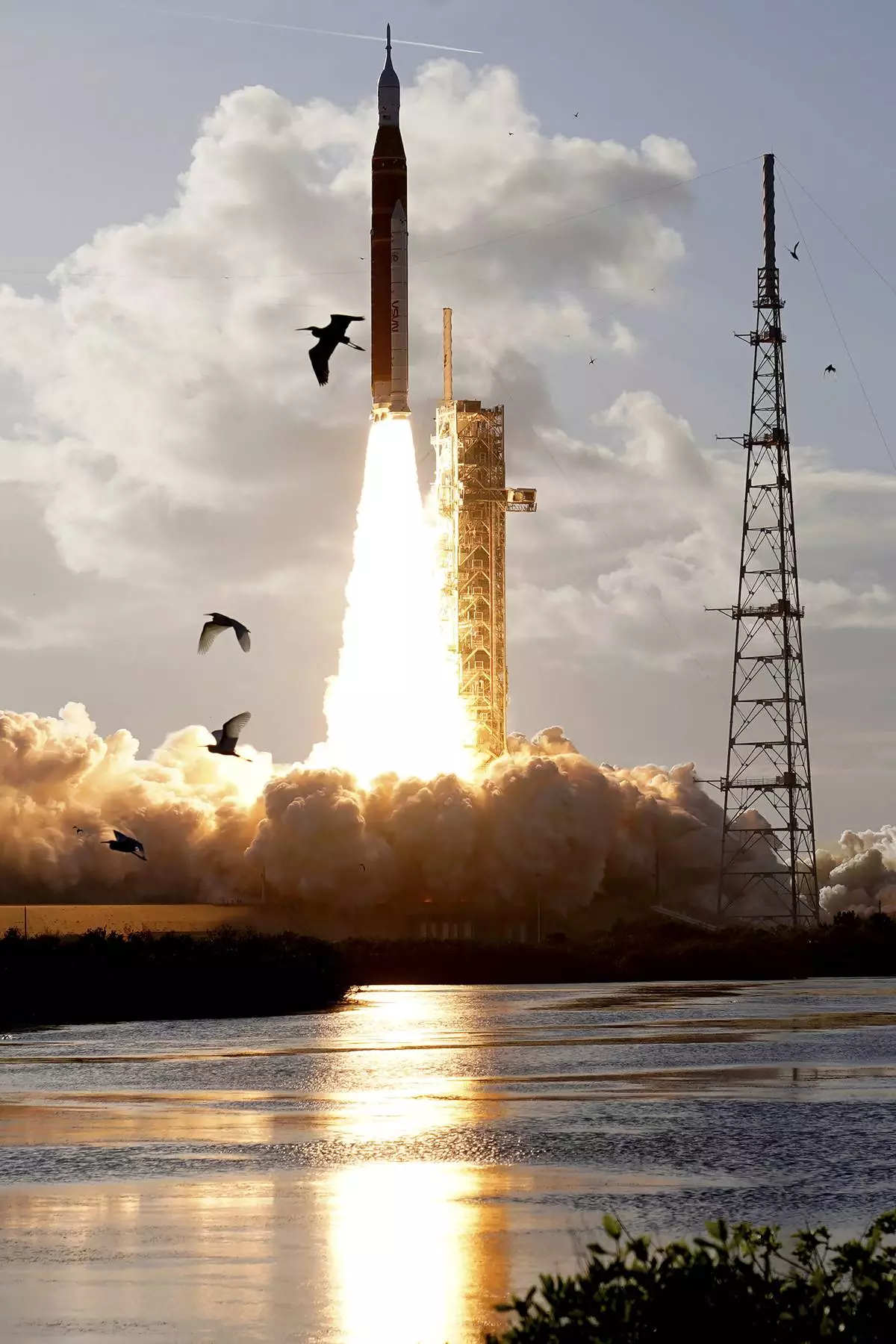
NASA's Artemis II moon rocket lifts off from the Kennedy Space Center's Launch Pad 39-B Wednesday, April 1, 2026, in Cape Canaveral, Fla. (AP Photo/Chris O'Meara)
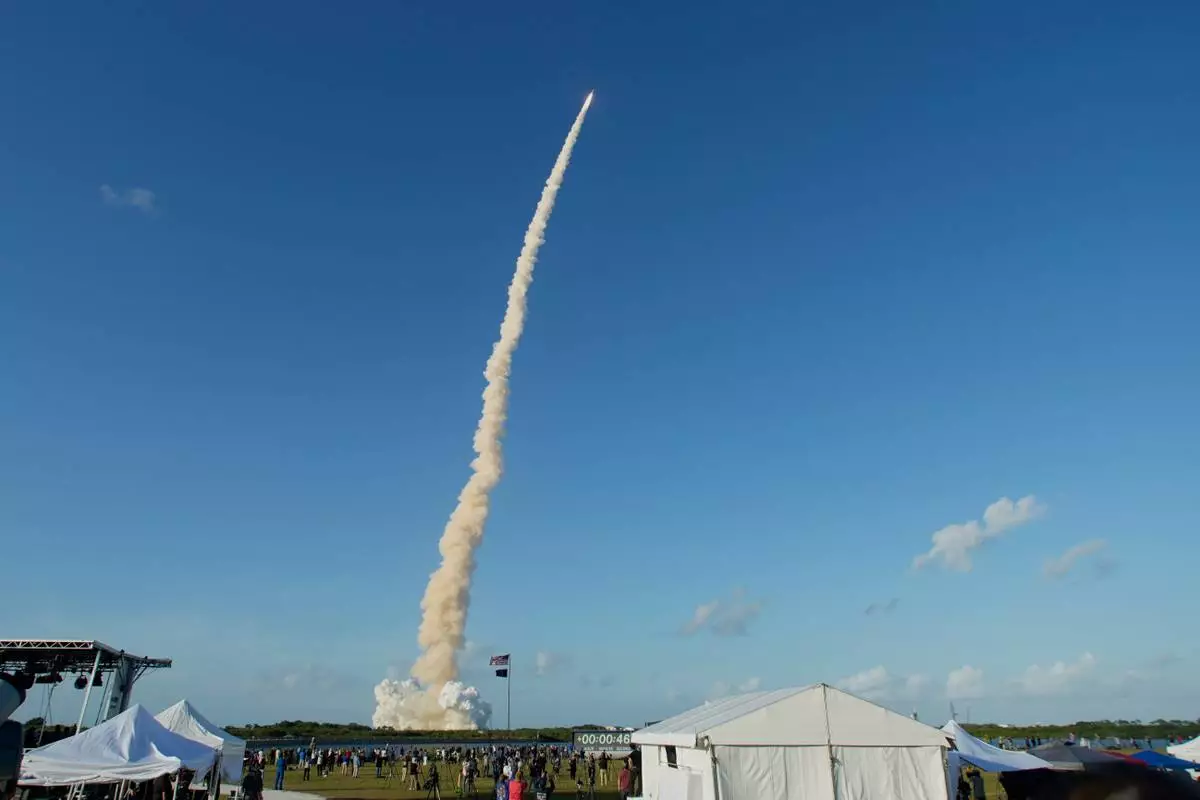
NASA's Artemis II moon rocket lifts off from the Kennedy Space Center's Launch Pad 39-B Wednesday, April 1, 2026, in Cape Canaveral, Fla. (AP Photo/John Raoux)