LRC issues report on Cyber-Dependent Crimes and Jurisdictional Issues (with photo/video)
The following is issued on behalf of the Law Reform Commission:
The Law Reform Commission of Hong Kong (LRC) today (January 9) published a report on Cyber-Dependent Crimes and Jurisdictional Issues, recommending the introduction of a new piece of bespoke legislation on cybercrime to cover five types of cyber-dependent crimes, i.e. crimes that can be committed only through the use of information and communications technology devices, where such devices are both the tool for committing the crimes and the target of the crimes. The report represents the first part of the LRC's study on cybercrime on which the LRC's Cybercrime Sub-committee issued a consultation paper in July 2022.
The five cyber-dependent crimes are illegal access to program or data, illegal interception of computer data, illegal interference with computer data, illegal interference with computer system, and making available a device, program or data for committing a cyber-related crime (or possessing such device, program or data for the purpose of making it available). The Sub-committee, chaired by Mr Derek Chan, SC, has studied the current laws in Hong Kong and the corresponding legislation in a number of other jurisdictions, namely Australia, Canada, England and Wales, the Chinese Mainland, New Zealand, Singapore and the United States of America.
At present, different computer-related offences are covered in the Crimes Ordinance (Cap 200) (CO) and the Telecommunications Ordinance (Cap 106) (TO), and some are outdated. This is unlike other jurisdictions mentioned above, which have all provided for the five cyber-dependent crimes and their related jurisdictional issues either by enacting bespoke cybercrime legislation or dedicating a part of their codified law to cybercrime.
The responses to the consultation paper have been taken into account by the LRC in formulating the final recommendations in the report. The LRC has further observed the guiding principles of balancing the rights of netizens and the interests of persons in the information technology industry against the need to protect the public's interest and right not to be disturbed or attacked when using or operating their computer system.
Some of the main final recommendations in the report are:
(i) Unauthorised access to program or data without lawful authority should be a summary offence (Access Offence). The defendant's knowledge that the access is unauthorised is one of the key mental elements of this offence. An aggravated form of the offence arises if the unauthorised access is accompanied by an intent to carry out further criminal activity. Apart from a general defence of reasonable excuse, specific defences are recommended to permit unauthorised access made for a range of specific purposes, including cybersecurity purposes, the protection of the interests of vulnerable persons (i.e. children under 16 and mentally incapacitated persons), as well as genuine educational, scientific and research purposes.
(ii) Unauthorised interception of computer data carried out for a dishonest or criminal purpose should be an offence. This offence would protect both private and non-private communications, and would apply to data generally, including metadata (i.e. information about a communication), data in transit and data momentarily at rest during transmission, and would therefore offer better protection to communications by members of the public than the existing section 27(b) of the TO, which is predicated on a telecommunications context. As "for a dishonest or criminal purpose" represents a high evidential threshold, it would not be necessary to provide any specific defence or exemption for professions or genuine businesses that intercept or use computer data in the ordinary course of their operation.
(iii) By transposing the existing provisions regarding "misuse of a computer" in sections 59(1A), 60 and 64(2) of the CO into the new cybercrime legislation, illegal interference with computer data and computer system should be offences (Interference Offences), subject to a general defence of reasonable excuse. Since access to program or data normally precedes interference with computer data or computer system, interference with computer data or computer systems for cybersecurity purposes should be a specific defence in addition to the two lawful excuses specified in the existing section 64(2) of the CO (which also apply to the Access Offence).
(iv) Knowingly making available a device, program or data (or a part thereof) for committing a cyber-related crime (or knowingly possessing such a device, program or data for the purpose of making it available) should be an offence. This offence would apply so long as the primary use of the device, program or data, determined objectively, is to commit a cyber-related offence, regardless of whether or not it can be used for any legitimate purposes. The aggravated form of the offence would occur if the perpetrator intends that the device, program or data be used (whether by himself or another person) to commit a cyber-related offence. To avoid over-criminalisation, a general defence of reasonable excuse and specific defences for cybersecurity, educational, scientific and research purposes are recommended. Further specific defences that cater to the operation of internet service providers, hosting service providers and automated technology are also available.
(v) In line with the international norm, Hong Kong law should provide for the extra-territorial application of the five proposed cyber-dependent offences. Hong Kong courts should have jurisdiction in a case where connections with Hong Kong exist. This includes cases where the perpetrator's act has caused or may cause serious damage to Hong Kong, or where the victim was physically present in Hong Kong at the time when the offence was committed.
(vi) As the severity of the harm caused by cybercrime has a wide range, each of the five proposed cyber-dependent offences has two maximum sentences in general, one applicable to summary convictions (two years' imprisonment) and the other to convictions on indictment (14 years' imprisonment). An exception is the aggravated form of the Interference Offences involving a danger to life (e.g. interference with a railway signal system). The proposed maximum penalty for it is life imprisonment, which is consistent with that of the aggravated offence of criminal damage already prescribed under the current CO.
The report and its executive summary can be accessed on the website of the LRC at www.hkreform.gov.hk. Hard copies are also available on request from the Secretariat of the LRC at 9/F, Champion Tower, 3 Garden Road, Central, Hong Kong.

LRC issues report on Cyber-Dependent Crimes and Jurisdictional Issues (with photo/video) Source: HKSAR Government Press Releases
FEHD releases fourth batch of gravidtrap indexes for Aedes albopictus in May
The Food and Environmental Hygiene Department (FEHD) today (May 21) released the fourth batch of gravidtrap indexes and density indexes for Aedes albopictus in May, covering 12 survey areas, as follows:
District |
Survey Area |
May 2026 |
First Phase Gravidtrap Index |
First Phase Density Index |
Eastern |
Shau Kei Wan and Sai Wan Ho |
9.1% |
1.4 |
Islands |
Tung Chung |
2.0% |
1.0 |
Kowloon City |
Hung Hom and To Kwa Wan |
6.7% |
1.5 |
Tai Po |
Tai Po East |
2.2% |
2.0 |
Tai Po West |
15.5% |
1.0 |
Tuen Mun |
Tuen Mun South |
9.1% |
1.4 |
District |
Survey Area |
May 2026 |
Area Gravidtrap Index |
Area Density Index |
Central and Western |
Kennedy Town and Shek Tong Tsui |
16.8% |
1.3 |
Eastern |
Chai Wan |
15.4% |
1.0 |
North Point and Quarry Bay |
18.9% |
1.4 |
Southern |
Aberdeen and Ap Lei Chau |
20.8% |
1.7 |
Sha Tin |
Sha Tin Town Centre and Fo Tan |
18.3% |
1.4 |
Tsuen Wan |
Tsuen Wan Town |
6.9% |
2.3 |
The fourth batch of gravidtrap indexes for Aedes albopictus in May includes First Phase Gravidtrap Indexes covering six survey areas and Area Gravidtrap Indexes covering six survey areas. Among which, six survey areas recorded gravidtrap indexes above 10 per cent, while Aberdeen and Ap Lei Chau in Southern District recorded a gravidtrap index above 20 per cent. Meanwhile, the gravidtrap indexes of six survey areas, namely Kennedy Town and Shek Tong Tsui in Central and Western District; North Point and Quarry Bay in Eastern District; Shau Kei Wan and Sai Wan Ho in Eastern District; Aberdeen and Ap Lei Chau in Southern District; Tai Po East in Tai Po District; and Tuen Mun South in Tuen Mun District, have recorded a decrease as compared to the indexes recorded in the last survey period, reflecting the progress of relevant mosquito control work.
With reference to the data from the past few years, the gravidtrap indexes start to rise from April or May every year. The actual timing and extent of the rise are affected by factors like weather conditions and rainfall. The average temperature and rainfall recorded in April this year were higher than those in the same period last year, creating favourable conditions for mosquito growth and breeding. As a result, the rise in gravidtrap indexes occurred earlier this year. With the increase in rainfall in May, the gravidtrap indexes are expected to rise further.
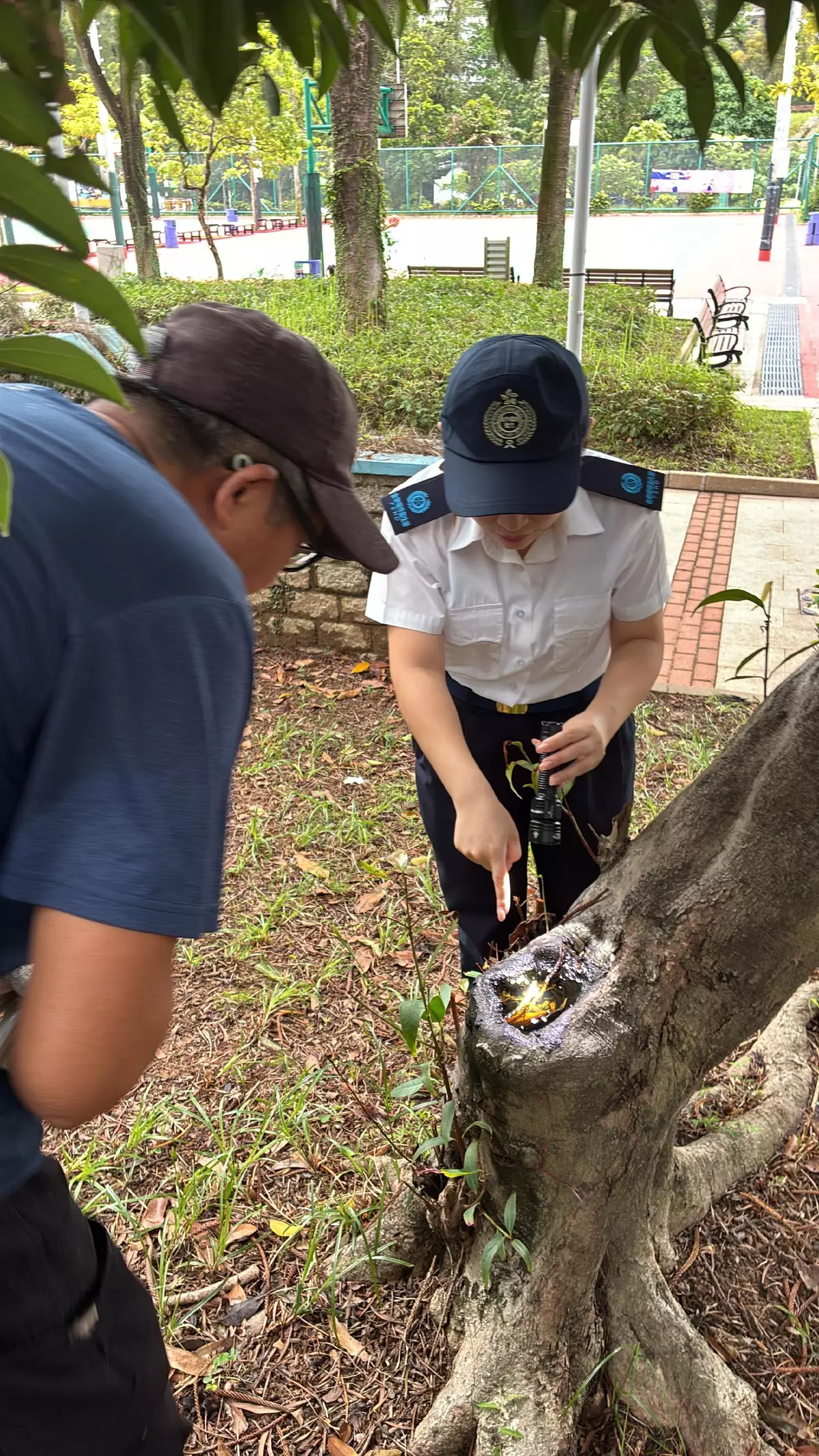
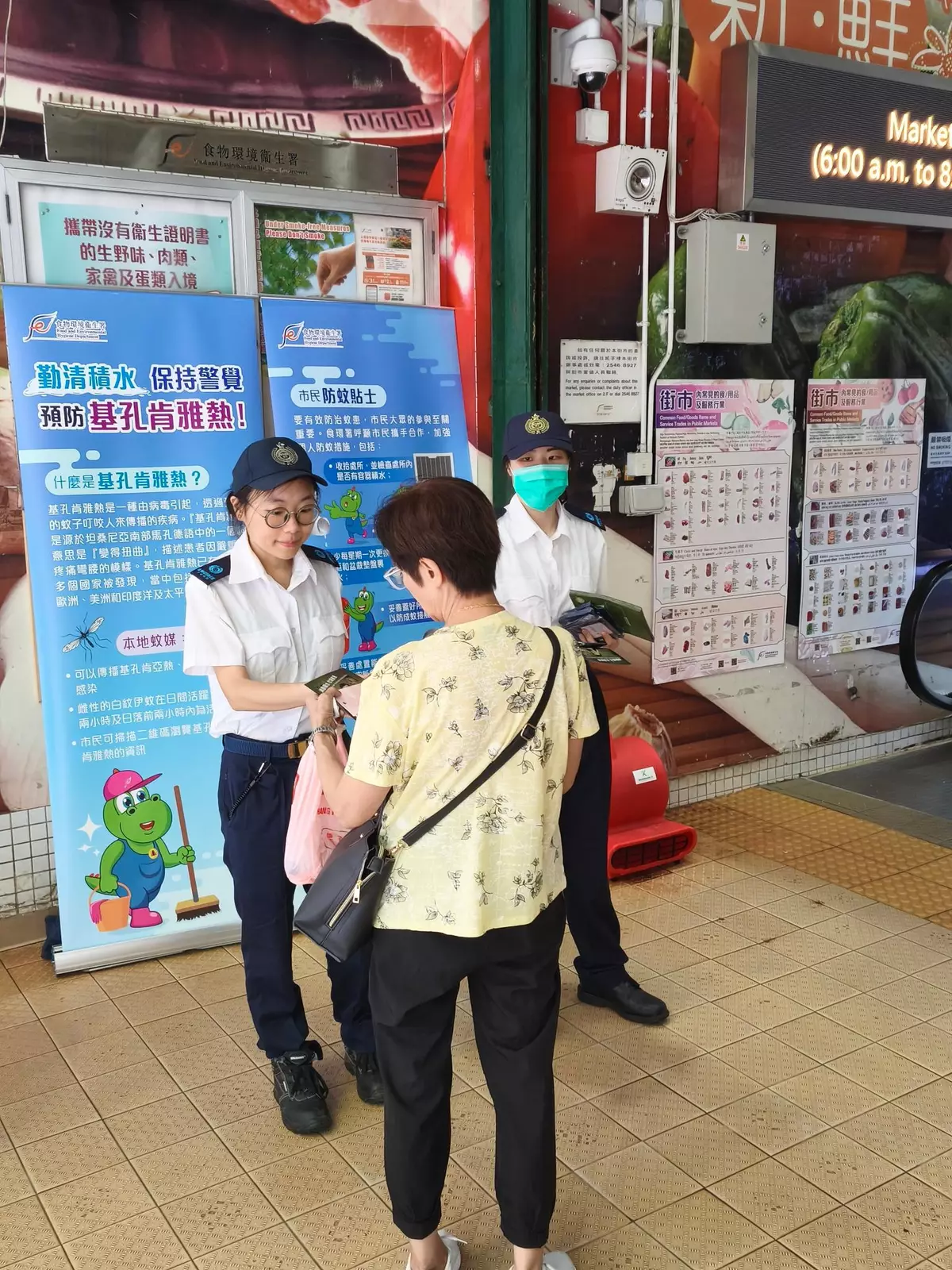
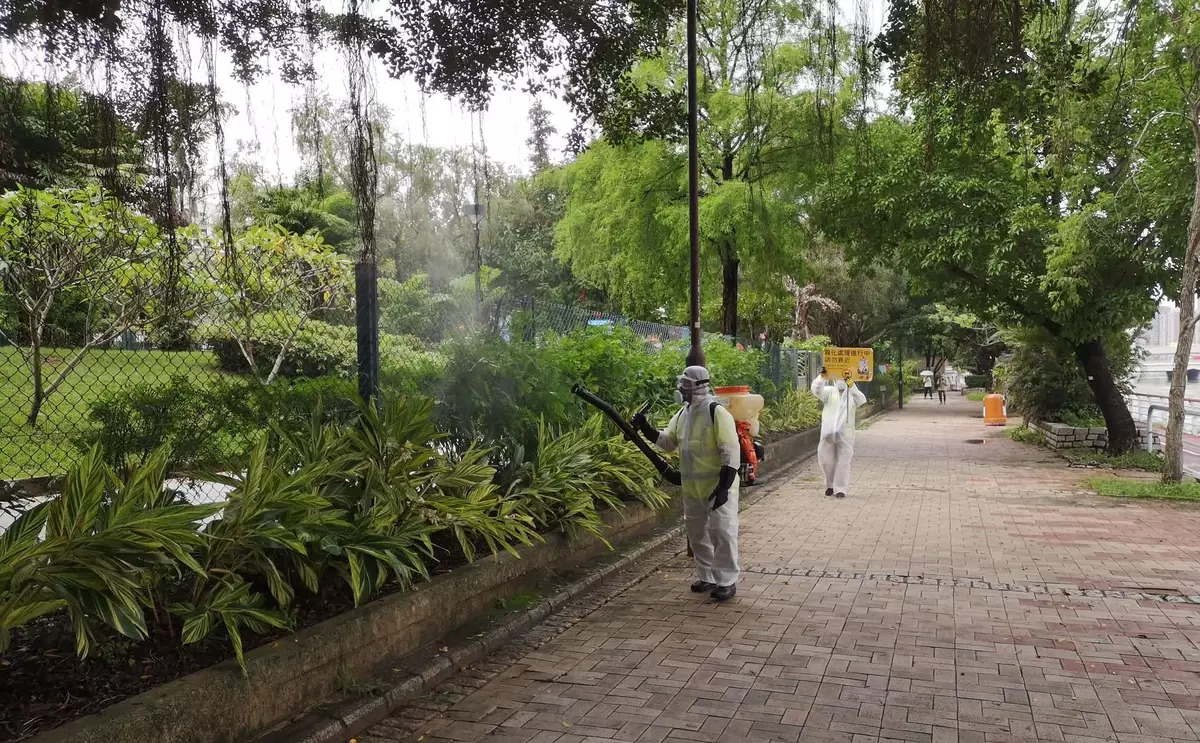
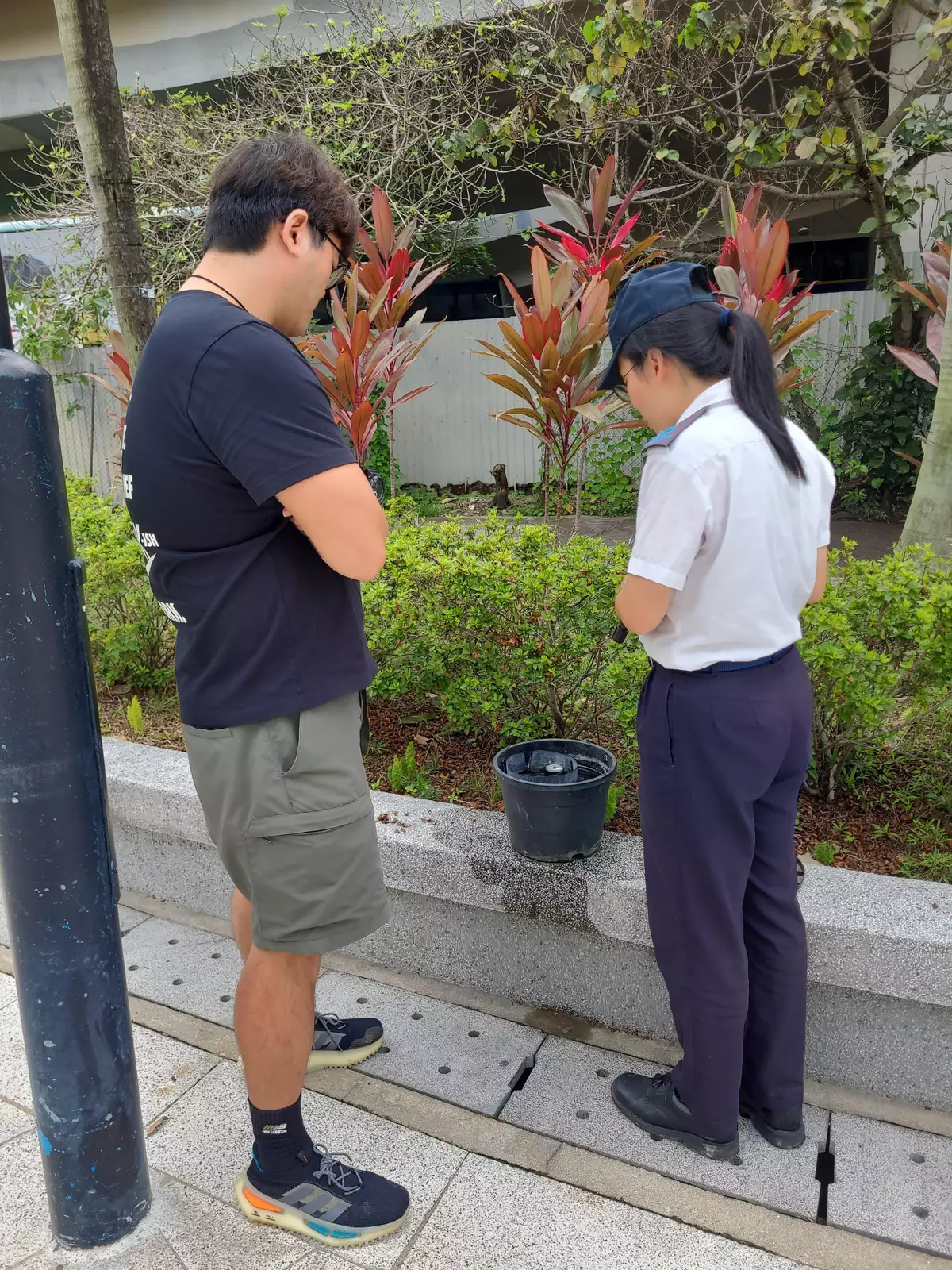
For survey areas which recorded indexes exceeding 10 per cent, in accordance with the mechanism implemented by the FEHD in response to the chikungunya fever (CF) situation (i.e. strengthening mosquito control work in areas with a gravidtrap index between 10 per cent and 20 per cent, instead of 20 per cent or above under the original mechanism), the FEHD is collaborating with relevant departments and stakeholders to identify locations with high mosquito infestations and carry out intensive and targeted mosquito control measures. The FEHD has initiated two prosecutions against the relevant construction site contractors following the discovery of mosquito breeding at construction sites in Tai Po District and Southern District. Moreover, following the discovery of stagnant water or stagnant water containers in a park, a construction site, a private housing estate, a clinic and a private premises in Tai Po District, Central and Western District, as well as Southern District, the FEHD has issued five statutory notices to the responsible persons-in-charge, requiring the clearance of such items within a specified timeframe. The FEHD, the relevant departments and stakeholders are following up on the mosquito control work, and will also organise exhibitions, distribute leaflets and posters, and notify residential estates that have subscribed to the gravidtrap Rapid Alert System, advising property management agents and residents to stay vigilant and work together in taking mosquito prevention and elimination measures. In addition, the FEHD will strengthen the monitoring of the gravidtrap index in the areas to review the effectiveness of the mosquito control work.
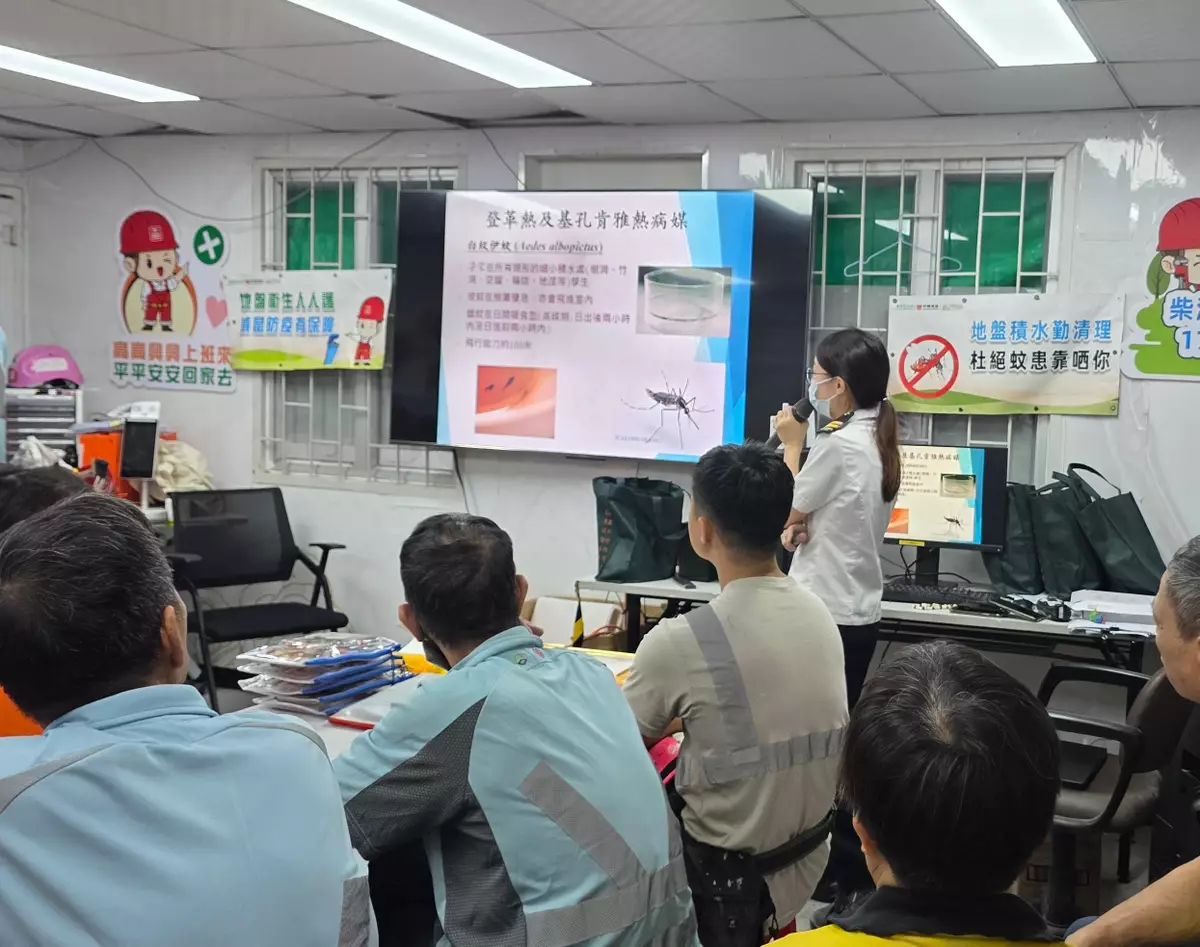
Public participation is crucial to the effective control of mosquito problems. The FEHD appeals to members of the public to continue to work together in strengthening personal mosquito control measures, including:
tidy up their premises and check for any accumulation of water inside the premises;
remove all unnecessary water collections and eliminate the sources;
check household items (those placed in outdoor and open areas in particular), such as refuse containers, vases, air conditioner drip trays, and laundry racks to prevent stagnant water;
change water in flower vases and scrub their inner surfaces thoroughly, and remove water in saucers under potted plants at least once a week;
properly cover all containers that hold water to prevent mosquitoes from accessing the water;
properly dispose of articles that can contain water, such as disposable meal boxes and empty cans; and
scrub drains and surface sewers with alkaline detergent at least once a week to remove any mosquito eggs.
Starting in August 2025, following the completion of the surveillance of individual survey areas, and once the latest gravidtrap index and the density index are available, the FEHD has been disseminating relevant information through press releases, its website and social media. It aims to allow members of the public to quickly grasp the mosquito infestation situation and strengthen mosquito control efforts, thereby reducing the risk of CF transmission.
Following recommendations from the World Health Organization and taking into account the local situation in Hong Kong, the FEHD sets up gravidtraps in districts where mosquito-borne diseases have been recorded in the past, as well as in densely populated places such as housing estates, hospitals and schools to monitor the breeding and distribution of Aedes albopictus mosquitoes, which can transmit CF and dengue fever. At present, the FEHD has set up gravidtraps in 62 survey areas of the community, with a surveillance period of two weeks. During the surveillance period, the FEHD will collect the gravidtraps once a week. After the first week of surveillance, the FEHD will immediately examine the glue boards inside the retrieved gravidtraps for the presence of adult Aedine mosquitoes to compile the Gravidtrap Index (First Phase) and Density Index (First Phase). At the end of the second week of surveillance, the FEHD will instantly check the glue boards for the presence of adult Aedine mosquitoes. Data from the two weeks of surveillance will be combined to obtain the Area Gravidtrap Index and the Area Density Index. The gravidtrap and density indexes for Aedes albopictus in different survey areas, as well as information on mosquito prevention and control measures, are available on the department's webpage (www.fehd.gov.hk/english/pestcontrol/dengue_fever/Dengue_Fever_Gravidtrap_Index_Update.html#).
FEHD releases fourth batch of gravidtrap indexes for Aedes albopictus in May Source: HKSAR Government Press Releases
FEHD releases fourth batch of gravidtrap indexes for Aedes albopictus in May Source: HKSAR Government Press Releases
FEHD releases fourth batch of gravidtrap indexes for Aedes albopictus in May Source: HKSAR Government Press Releases
FEHD releases fourth batch of gravidtrap indexes for Aedes albopictus in May Source: HKSAR Government Press Releases
FEHD releases fourth batch of gravidtrap indexes for Aedes albopictus in May Source: HKSAR Government Press Releases