Skip to Content Facebook Feature Image

After Venezuela frees 1% of prisoners, families and activists strain to stay hopeful

News

After Venezuela frees 1% of prisoners, families and activists strain to stay hopeful
News

News

After Venezuela frees 1% of prisoners, families and activists strain to stay hopeful

2026-01-10 07:30 Last Updated At:07:40

GUATIRE, Venezuela (AP) — A day after Venezuela ’s government pledged to free what it described as a significant number of prisoners, a local human rights group said only nine people had been released, or just over 1% of the citizens and foreigners it says are detained in the country for political reasons.

Relatives of the detainees — a combination of activists, journalists and political opponents of the ruling party — spent all Friday waiting outside prisons across the country, hoping they might see their loved ones walk free.

Footage of prisoners being released and reunited with their tearful families spread online, prompting celebration from Venezuela’s now-sidelined opposition movement and lifting spirits in the country now led by the former loyalists of ex-President Nicolás Maduro.

As of late Friday, five Spanish citizens, two political activists and two high-profile members of the opposition had been freed.

The government has not identified or offered a count of the prisoners being considered for release, leaving rights groups scouring for hints of information and families to watch the hours tick by with no word. President Donald Trump has hailed the release and said it came at Washington's request.

An impromptu support group formed outside El Rodeo prison, a notorious facility in the town of Guatire, around an hour east of Caracas.

Dozens of people waiting for news of loved ones gathered to share food, Wi-Fi service, coffee and phone chargers. As the day wore on, doubts mounted. Hope mixed with frustration, then despair. Some family members were briefly and visibly overcome with emotion. Others moved to comfort them.

Many, like Noirelys Morillo, said they'd wait as long as it took — even if it meant sleeping in an open field outside the prison complex Friday night.

“We’re going to stay here until we receive him,” said Morillo, who drove 10 hours to El Rodeo with her mother in hopes of seeing her brother released after five months behind bars.

Like many other inmates, he was accused of terrorism, detained without evidence and held incommunicado. After his disappearance, Morillo and her family worked their own sources to find out where he was being held.

“My nephew keeps asking about his dad, and we don’t know what to tell him anymore," she said from outside El Rodeo. “The first few days we told him he was on vacation.”

Foro Penal, an advocacy group for prisoners based in Caracas, said that by Friday morning it had only documented the release of nine of the 811 people it says are detained in Venezuela for “political reasons.” The Venezuelan government denies the existence of political prisoners.

In a video message on social media, former opposition candidate Edmundo Gonzaléz, who ran against Maduro in the tumultuous 2024 presidential election, hailed the releases and urged those still waiting to “stay strong.”

“It deeply gladdens me to see the embrace of those who have already been able to reunite,” he said.

Among those still waiting was his daughter Mariana Gonzalez, whose husband was arrested a year ago on his way to drop off their young children at school. She still doesn't know where he is detained, and went to El Rodeo on Thursday and Friday searching for information on his whereabouts — to no avail.

Under Maduro, Venezuela imprisoned opposition figures and foreign citizens to use as negotiating chips with other countries, experts say.

The latest releases were widely seen as a sign that interim President Delcy Rodríguez is willing to cooperate with the U.S. — even as much remains unclear.

Human rights groups said the release of just nine people was not nearly enough.

“Freedom cannot remain in statements: it must materialize in verifiable facts,” read a statement from Justice, Encounter, and Forgiveness, a Venezuelan advocacy group.

Shakira Ibarreto arrived to El Rodeo Friday morning for a pre-scheduled prison visit with her father, Miguel Ibarreto, a former police officer who has spent years cycling in and out of detention on the common and widely criticized charge of plotting to overthrow the government.

The first thing she noticed as they sat down to talk: Her father wasn't even aware that the powerful leader he was accused of opposing had been captured and whisked away by U.S. forces to face federal charges of drug-trafficking in New York.

“At first, I was scared to tell him because I wasn’t sure what they could do to me. Then I summoned up the bravery,” Ibarreto, 33, said. “I told him everything, every single thing that was happening in Venezuela right now.”

Miguel Ibarreto listened quietly, the shock registering on his face. He said none of the prisoners knew anything of the seismic shifts underway just outside the facility's walls. Usually state TV is running on a loop, but prison guards had abruptly turned it off earlier this week, he said, rushing to tell other prisoners the news.

From inside, Ibarreto heard a burst of applause and shouts of joy.

Even as her father remained locked up late Friday, Ibarreto said she was still holding out hope.

"We didn’t feel this hope and this feeling a week ago. Two weeks ago," Ibarreto said. "We’ve been at this for years."

Janetsky reported from Mexico City. Associated Press writer Isabel DeBre in Buenos Aires, Argentina, and photojournalist Matias Delacroix contributed to this report.
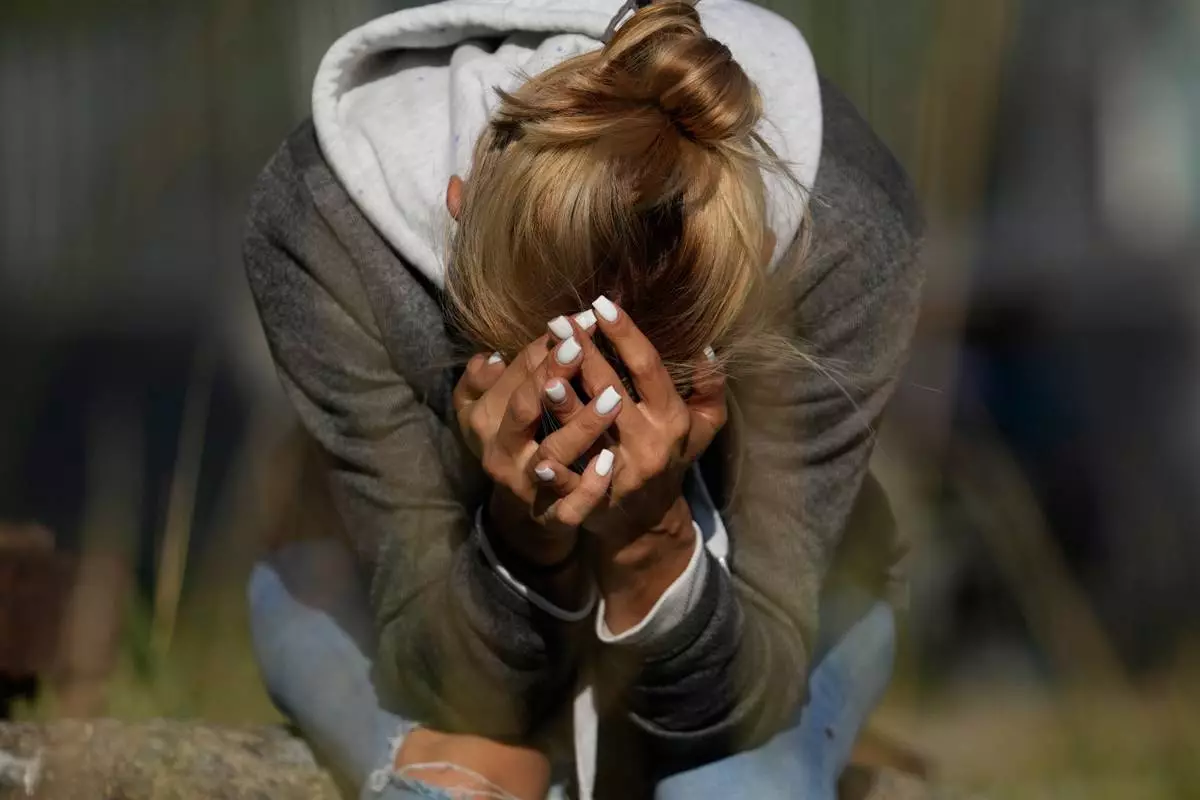
Jacklin Ibarreto, whose father Miguel Ibarreto is detained, waits outside the Rodeo I prison in Guatire, Venezuela, Friday, Jan. 9, 2026, after National Assembly President Jorge Rodriguez said the government would release Venezuelan and foreign prisoners. (AP Photo/Matias Delacroix)
Jacklin Ibarreto, whose father Miguel Ibarreto is detained, waits outside the Rodeo I prison in Guatire, Venezuela, Friday, Jan. 9, 2026, after National Assembly President Jorge Rodriguez said the government would release Venezuelan and foreign prisoners. (AP Photo/Matias Delacroix)

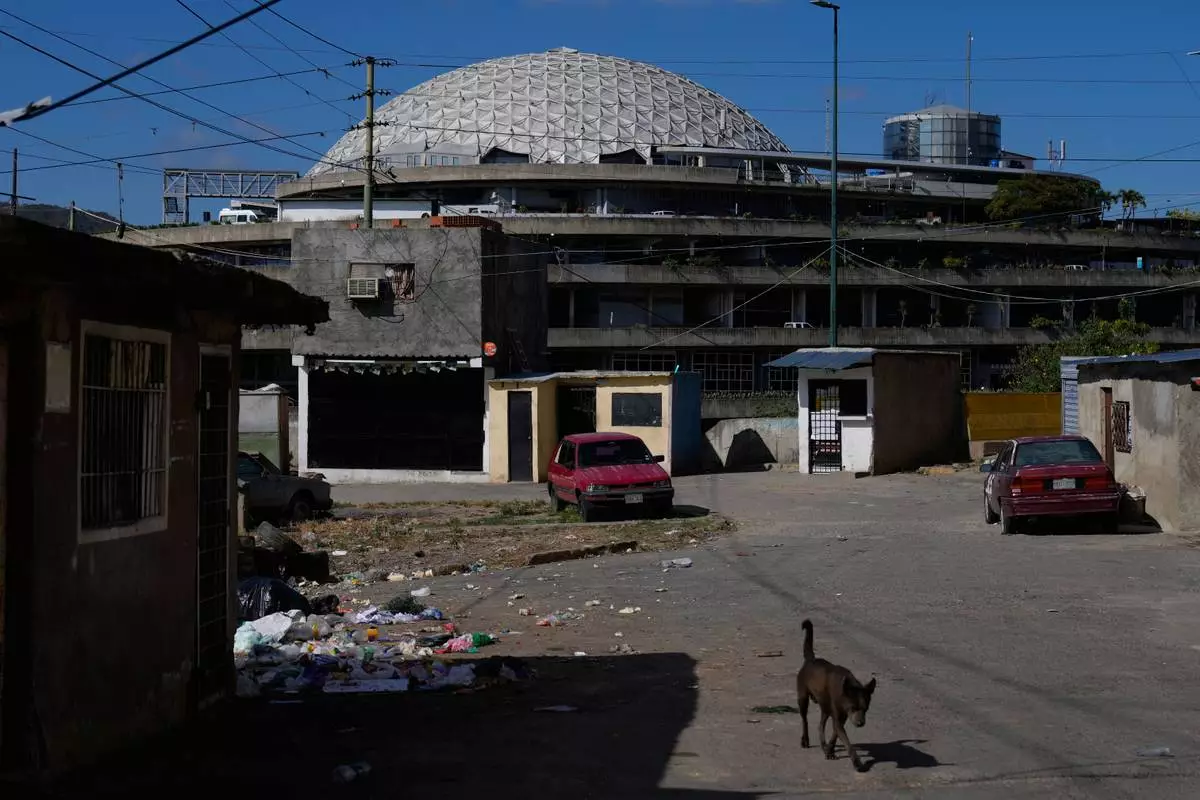
El Helicoide, the headquarters of Venezuela's intelligence service and detention center, stands in Caracas, Venezuela, Friday, Jan. 9, 2026, after National Assembly President Jorge Rodriguez said the government would release Venezuelan and foreign prisoners. (AP Photo/Ariana Cubillos)

El Helicoide, the headquarters of Venezuela's intelligence service and detention center, stands in Caracas, Venezuela, Friday, Jan. 9, 2026, after National Assembly President Jorge Rodriguez said the government would release Venezuelan and foreign prisoners. (AP Photo/Ariana Cubillos)

Shakira Ibarreto leaves the Rodeo I prison after visiting her father, Miguel Ibarreto, in Guatire, Venezuela, Friday, Jan. 9, 2026, after National Assembly President Jorge Rodriguez said the government would release Venezuelan and foreign prisoners (AP Photo/Matias Delacroix)
Shakira Ibarreto leaves the Rodeo I prison after visiting her father, Miguel Ibarreto, in Guatire, Venezuela, Friday, Jan. 9, 2026, after National Assembly President Jorge Rodriguez said the government would release Venezuelan and foreign prisoners (AP Photo/Matias Delacroix)
NEW YORK (AP) — Stocks shook off an early stumble to finish with slim gains on Wall Street Thursday and close out their first winning week since the start of the Iran war.

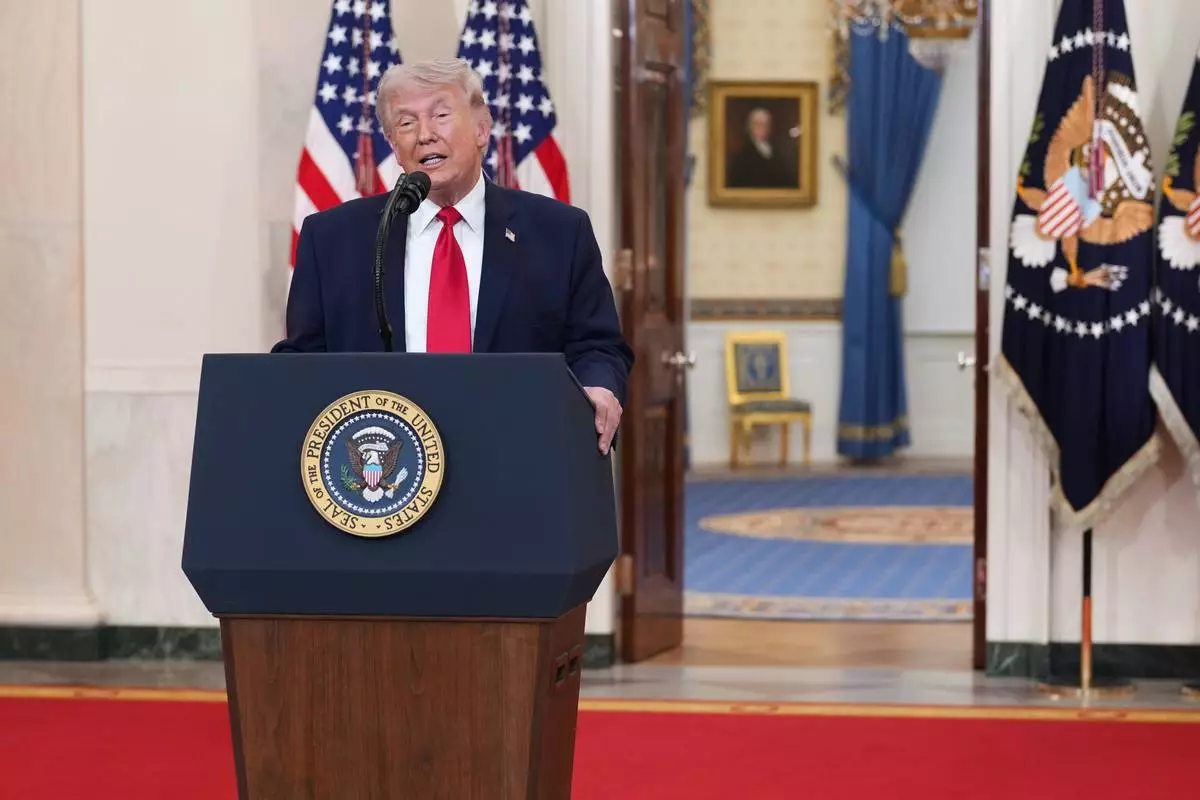
The early decline for stocks was driven by a surge in oil prices following a national address late Wednesday from President Donald Trump. He vowed the U.S. will continue to attack Iran and failed to offer a clear timetable for ending the conflict in the Middle East. Oil prices eased slightly during the day, but still remain elevated well above $100 per barrel.

The S&P 500 rose 7.37 points, or 0.1%, to 6,582.69. Several days of solid gains this week helped the benchmark index notch a 3.4% gain for the week. That’s the first weekly gain since the conflict started for index at the heart of many 401(k) accounts. Stock markets will be closed for Good Friday.

The Dow Jones Industrial Average fell 61.07 points, or 0.1%, to 46,504.67. The Nasdaq composite rose 38.23 points, or 0.2%, to 21,879.18. Both indexes also notched weekly gains.

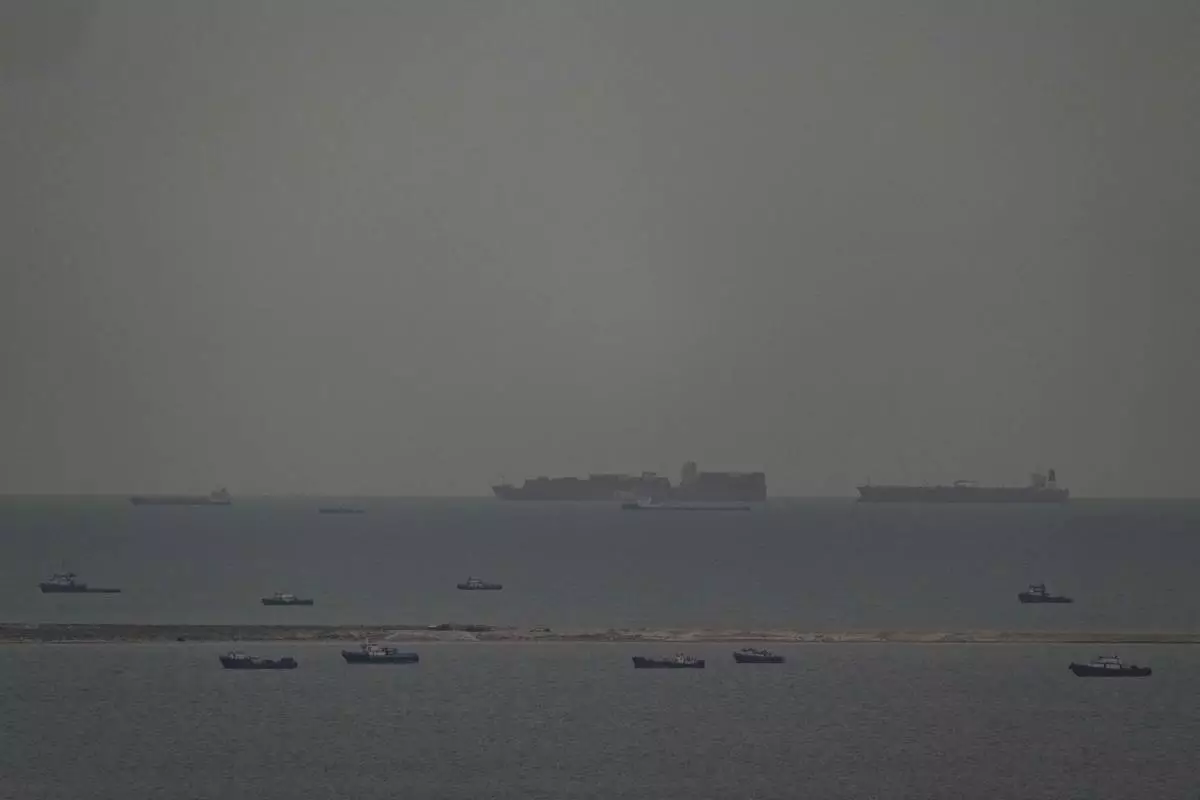
A barrel of U.S. crude oil rose 11.3% to $111.54, though prices rose close to $114 at one point during the day. The price of Brent crude, the international standard, jumped 7.8% to $109.03 per barrel. Crude oil prices have been the main force behind the sharp swings for stocks globally. Shipping traffic has been severely curtailed in the Strait of Hormuz, where a fifth of the world’s traded oil passes through during peacetime.

Crude oil prices had been sliding back toward $100 per barrel prior to Trump’s address on Wednesday. The U.S. only relies on the Persian Gulf for a fraction of the oil it imports, but oil is a commodity and prices are set in a global market. A disruption anywhere affects prices everywhere.

Stocks have been broadly sliding since the war began, with indexes often rising and falling sharply along with statements from Trump about the direction of the war. Just on Monday, the S&P 500 briefly neared a 10% drop from its record, a steep-enough fall that professional investors have a name for it: a “correction. The index gained ground Tuesday and Wednesday on hope that the war could end soon.

“For markets, a prolonged conflict increases the risk of sustained pressures on inflation, global growth, interest rates, and equity valuations,” wrote Adam Turnquist, chief technical strategist for LPL Financial, in a note to investors.

Airlines and other travel-related companies were among the biggest losers on Thursday. United Airlines fell 3% and Carnival shed 3.5%.

Tesla fell 5.4% after a report showing that sales over the past three months fell short of analysts' expectations.

Several big technology stocks gained ground to help counter losses elsewhere in the market. Intel jumped 4.9% and Advanced Micro Devices rose 3.5%.

Treasury yields remained relatively steady in the bond market. The yield on the 10-year Treasury fell to to 4.30% from 4.32%.

Wall Street is worried that higher energy prices are adding to already stubbornly high inflation. Rising fuel prices take a bigger chunk out of consumers' wallets in several ways. Directly, gasoline prices in the U.S. have surged 36 percent from a month ago to average $4.08 per gallon, according to the auto club AAA.

Indirectly, rising fuel prices tend to make a wide range of services and goods more expensive. Flights become more expensive as airlines raise ticket prices to offset rising fuel costs. Consumer goods become more expensive as shipping and transportation costs rise.

Inflation has been stubbornly above the Federal Reserve's 2% target. The war and its corresponding surge in energy prices effectively pushes inflation higher and that has dashed hopes for the Fed to cut interest rates. Wall Street had hoped for the central bank to cut rates in order to help offset a weakening job market. Lower interest rates could help stimulate the economy by lowering borrowing costs, but they also risk worsening inflation.

Traders came into 2026 forecasting several cuts to the Fed's benchmark interest rate, which influences rates for mortgages and other loans. They are now expecting the benchmark rate to remain steady this year.

The war has also caused an anomaly of sorts in the oil market. Brent crude oil futures are typically priced higher than those for U.S. crude oil, but the war flipped that on its head. Because of the supply constraints, the sooner a buyer needs a barrel of oil, the more they’ll have to pay. Right now, the most actively traded futures contract for U.S. crude oil is for delivery in May, while the Brent futures contract is for delivery in June. That shorter timeframe is why U.S. crude is trading for more than Brent.

Tom Kloza, chief energy adviser at Gulf Oil, points out that a buyer who needs oil immediately will pay about $3 to $5 a barrel above the futures price for U.S. crude and an even steeper premium for Brent.

Associated Press journalists Chan Ho-Him and Matt Ott contributed to this report.

Fishing boats dot the sea as cargo ships, in the background, sail through the Arabian Gulf toward the Strait of Hormuz off the United Arab Emirates, Friday, March 27, 2026. (AP Photo)

Fishing boats dot the sea as cargo ships, in the background, sail through the Arabian Gulf toward the Strait of Hormuz off the United Arab Emirates, Friday, March 27, 2026. (AP Photo)

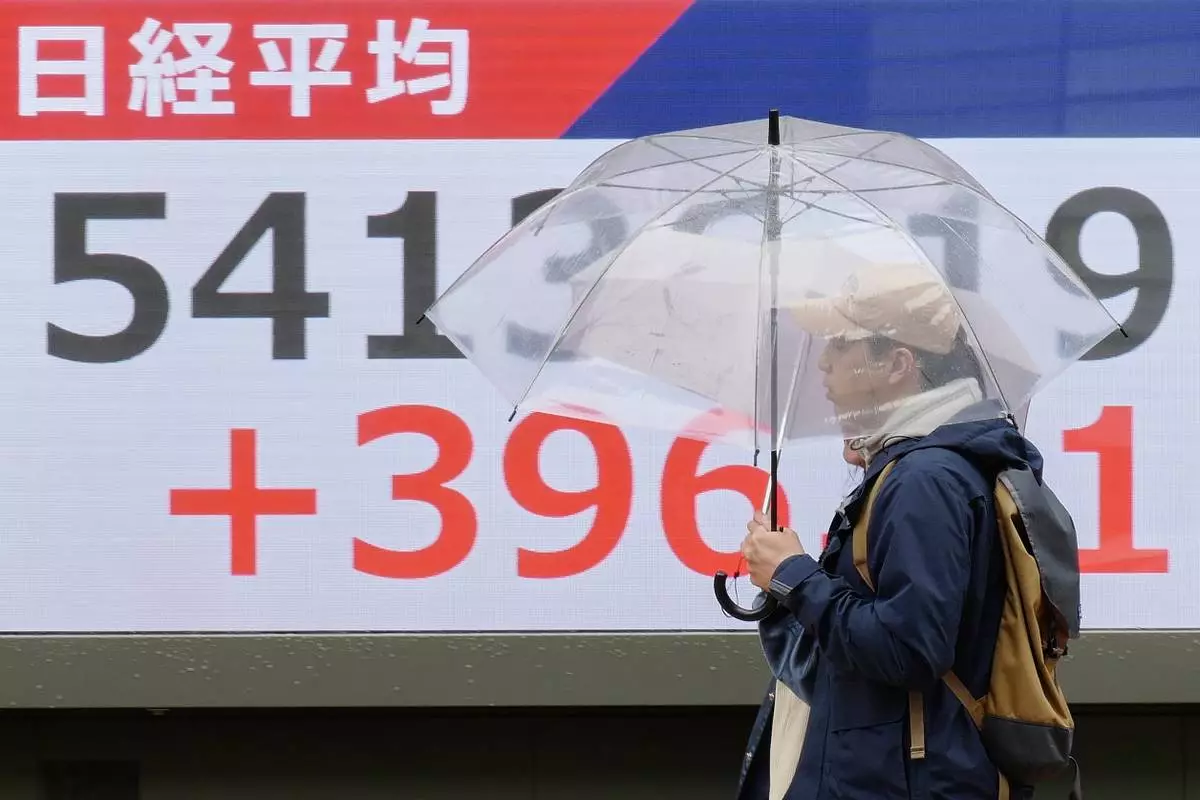
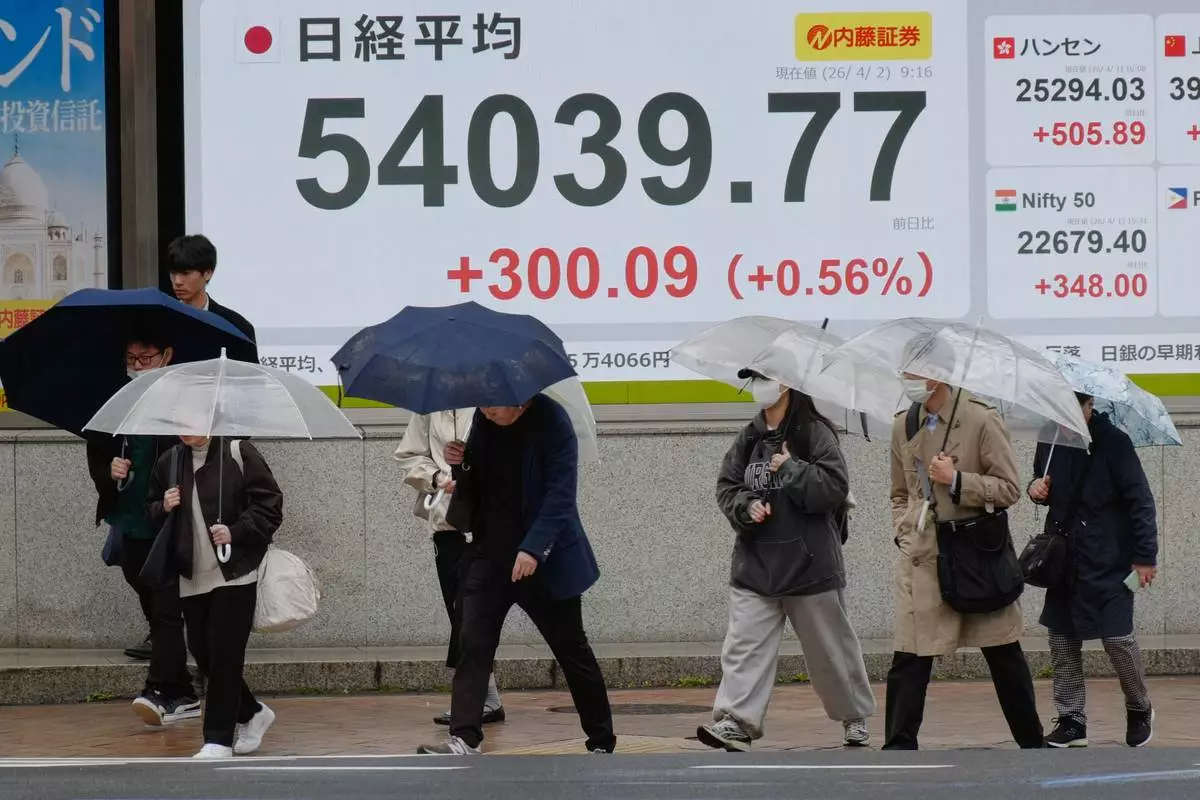
Perople walk in front of an electronic stock board showing Japan's Nikkei index at a securities firm Thursday, April 2, 2026, in Tokyo. (AP Photo/Eugene Hoshiko)

Perople walk in front of an electronic stock board showing Japan's Nikkei index at a securities firm Thursday, April 2, 2026, in Tokyo. (AP Photo/Eugene Hoshiko)

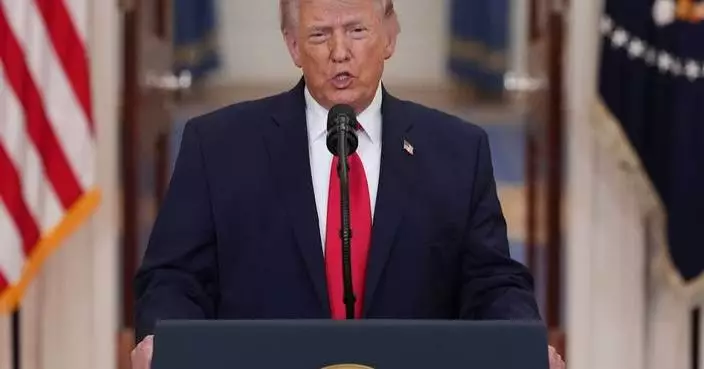
President Donald Trump speaks about the Iran war from the Cross Hall of the White House on Wednesday, April 1, 2026, in Washington. (Doug Mills/The New York Times via AP Pool)

President Donald Trump speaks about the Iran war from the Cross Hall of the White House on Wednesday, April 1, 2026, in Washington. (Doug Mills/The New York Times via AP Pool)

Persons walk in front of an electronic stock board showing Japan's Nikkei index at a securities firm Thursday, April 2, 2026, in Tokyo. (AP Photo/Eugene Hoshiko)

Persons walk in front of an electronic stock board showing Japan's Nikkei index at a securities firm Thursday, April 2, 2026, in Tokyo. (AP Photo/Eugene Hoshiko)

Recommended Articles