ANN ARBOR, Mich. (AP) — A March Madness masterpiece might be on tap.
Get your popcorn, kick up your feet and get ready for what shapes up to be an epic showdown in the Final Four nightcap on Saturday night.
Michigan and Arizona, top-seeded teams in the NCAA Tournament after being at or near the top of the AP Top 25 all season, will face off with a spot in the championship game on Monday night at stake.
The nation's top two teams in KenPom rankings will be on the same court at the Final Four for just the second time since 2015.
Michigan was favored on Thursday by 1 1/2 points against Arizona and was a slight favorite over the Wildcats to win the national title, according to BetMGM Sportsbook. Connecticut and Illinois will meet in the first game Saturday night in Indianapolis.
The Wolverines and Wildcats, who are a combined 71-5, are not used to playing in closely contested games. Since the tournament’s expansion to 64 teams in 1985, this is the first Final Four matchup with teams that won each of their four previous games by double digits.
And as the point spread suggests, the game looks like it will be up for grabs.
Michigan averages 87.7 points, barely a point more than Arizona scores per game. The Wildcats allow 68.8 points a game, eight-tenths of a point less than the Wolverines give up a game.
Here's a look at some of the matchups:
Michigan opened the season scoring 69 points in the first half of a 121-78 win over Oakland and didn't cool off.
The Wolverines are the first team to score 90-plus points in four double-digit wins in the NCAA Tournament. They have scored 381 points entering the Final Four, trailing just Kentucky's 388 points in 1993 and Oklahoma's 387 in 1988.
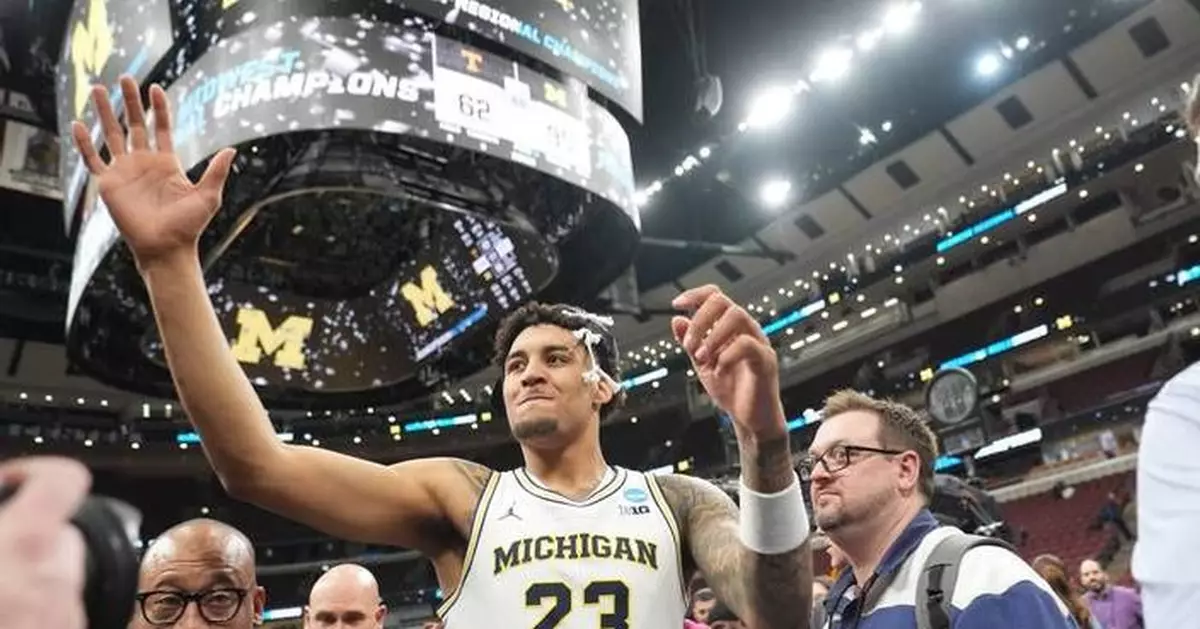
Michigan star Yaxel Lendeborg, an Associated Press All-America player, has 20-plus points in three straight games, including a 27-point performance against Tennessee in the regional final.
Five of his teammates are scoring in double figures and a sixth is averaging 9.5 points on a pass-happy team.
Arizona, likewise, is very balanced offensively.
Brayden Burries and Jaden Bradley, honorable mention AP All-America players, combine to average nearly 30 points a game as part of a starting lineup with five double-digit scorers. Seven players in the regular rotation have scored at least 20 in a game, and eight players have shared or led the team in scoring in a game this season.
The Wildcats ranked No. 4 nationally in paint points during the regular season at 42.7 per game and were 360th of 365 Division I teams by attempting just 16 3-pointers per game, seven fewer than the average team.
Pounding the ball inside also helps them get to the line. Arizona is shooting 18-plus more free throws than opponents in the tournament.
Arizona’s size has been an advantage all season, but Michigan also has length in the frontcourt.
The Wildcats' defense is anchored by 7-foot-2 Motiejus Krivas, an adept shot blocker, and he will likely square off with 7-foot-3 center Aday Mara.
Arizona also has 6-8 freshman Koa Peat and 6-8, 250-pound reserve Tobe Awaka to create problems for opponents. The Wildcats' guards are big and agile, able to play aggressively up top because of the size behind them.
Coach Tommy Lloyd wants the Wildcats to play tough defense without fouling — something they've succeeded at, making more free throws than opposing teams have attempted.
Michigan turns defense into offense, pressuring the ball all over the court to cause turnovers and trigger its fast break.
Mara has 100 blocks, setting a single-season record, and the team has blocked at least eight shots in each of its four games in March Madness. Morez Johnson, a 6-9 forward, and Lendeborg have combined to block 70 shots to give the team three players to protect the rim.
The Wolverines also throw an array of traps at teams, forcing turnovers that allow them to turn up the tempo.
Both coaches might be high on North Carolina's wish list to replace fired coach Hubert Davis.
Lloyd spent 21 years as an assistant at Gonzaga, helping coach Mark Few turn the Zags from a mid-major from eastern Washington no one had heard of into a national powerhouse. He has been excellent at making adjustments, allowing the Wildcats to turn close games at halftime into lopsided wins as they did by overcoming a seven-point halftime deficit to beat Purdue 79-64 in the Elite Eight.
Michigan coach Dusty May had made the most of the transfer portal, plucking players out of it in each of his two years to remarkably rebuild a program that lost a school-record 24 games two years ago before firing former Fab Five player Juwan Howard.
May's staff looks for players who like to pass, believing it's an unselfish characteristic that paves the way to be a good teammate. The former student manager at Indiana under Bob Knight is making his second trip to the Final Four as a head coach, following Florida Atlantic's improbable run in 2023.
Awaka and sharpshooter Anthony Dell’Orso were starters last season, but shifted to bench roles with the influx of talent on the roster.
Awaka makes the most of his 21 minutes per game by grabbing rebounds and providing a physical presence. He leads Arizona with 9.1 rebounds per game and his offensive rebounding percentage of 20% leads the nation.
Dell’Orso had some midseason struggles, but regained his shooting touch late in the season, providing a huge lift when he enters the game.
Freshman Dwayne Aristode is one of the most athletic players on the team and can score in bunches as he did when he made 6 of 9 3-pointers in an 18-points performance against Northern Arizona.
Trey McKenney, a freshman guard, nearly averages double figures as Michigan's top player off the bench.
If Elliot Cadeau's allergic reaction limits his playing time, McKenney or senior Roddy Gayle would see more action. Gayle, who is in his second season with the Wolverines after two years at Ohio State, averages seven-plus points a game.
May said Cadeau, who averages 10.2 points and 5.8 assists, is “fine" after being driven to Indianapolis by a Michigan staffer.
Will Tschetter provides depth in the frontcourt and is one of two holdovers, along with starting guard Nimari Burnett, from Howard's final season.
The Wildcats seem to play better when there’s more at stake or in the face of adversity. Arizona opened the season with a six-point win over reigning national champion Florida and took down a gauntlet of ranked opponents the rest of the season.
Bradley has been a superb point guard in his third season at Arizona, orchestrating the offense while making big plays at the big moments. He’s had a knack for taking over in tight games and hit a difficult game-winning jumper at the buzzer in Arizona’s win over Iowa State in the Big 12 Tournament semifinals.
Lendeborg seems to be getting better every game and the point forward has a chance to cap his remarkable story, which includes playing just 11 games of high school basketball and validating his mother's belief that he could be a college basketball player.
The Wolverines have been relatively relaxed and loose all season, dancing together to pop songs when they warm up for games and celebrating teammates — particularly seldom-used reserves when they get a chance to play — during games.
AP Sports Writers John Marshall and Josh Dubow contributed.
AP March Madness bracket: https://apnews.com/hub/ncaa-mens-bracket and coverage: https://apnews.com/hub/march-madness
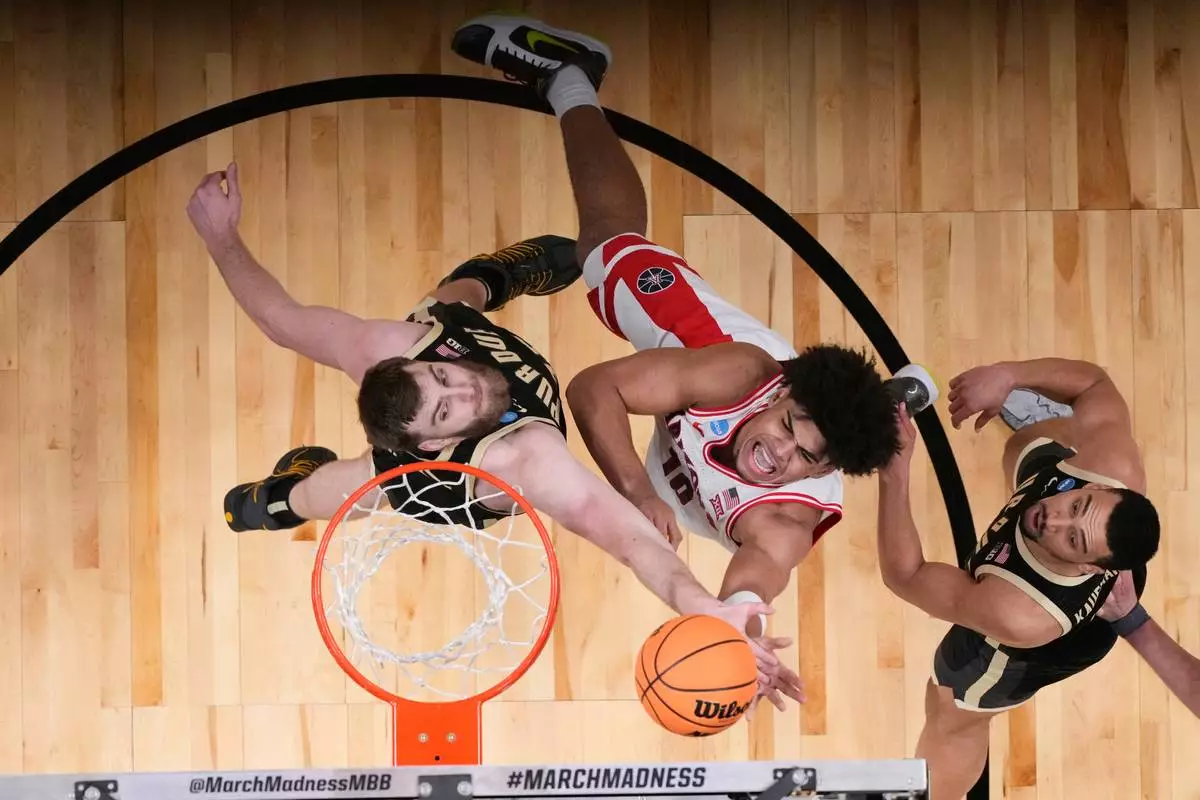
Arizona forward Koa Peat, center, shoots past Purdue center Oscar Cluff, left, during the second half in the Elite Eight of the NCAA college basketball tournament, Saturday, March 28, 2026, in San Jose, Calif. (AP Photo/Godofredo A. Vásquez)
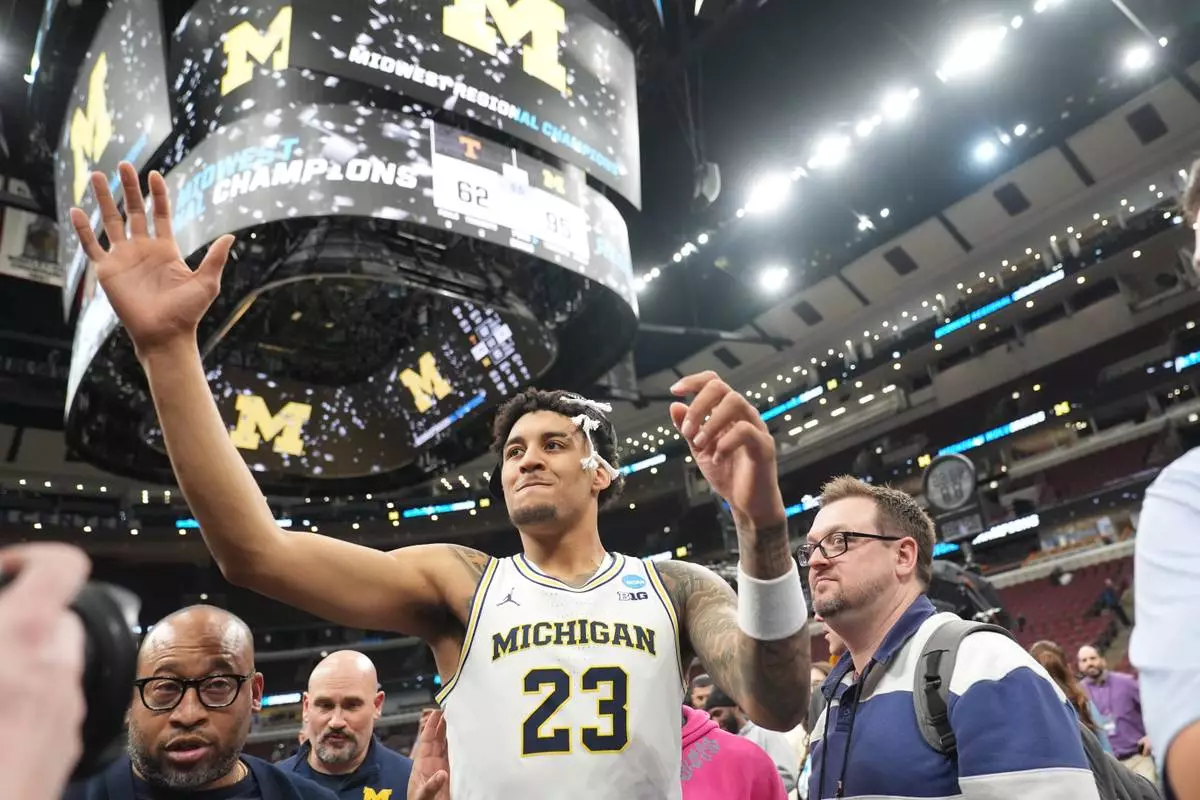
Michigan's Yaxel Lendeborg (23) celebrates after defeating Tennessee in the Elite Eight of the NCAA college basketball tournament, Sunday, March 29, 2026, in Chicago. (AP Photo/Erin Hooley)