Business leaders from both China and the United States welcomed closer cooperation between tech companies from both sides at the just-concluded 2026 Consumer Electronics Show (CES) held in Las Vegas, saying that the increasing connections are helping enterprises develop and expand markets.
Running from Tuesday to Friday, CES 2026 is the world's premier technology event. The annual show attracted thousands of exhibitors from more than 155 countries and regions, according to the U.S. Consumer Technology Association, the organizer of CES.
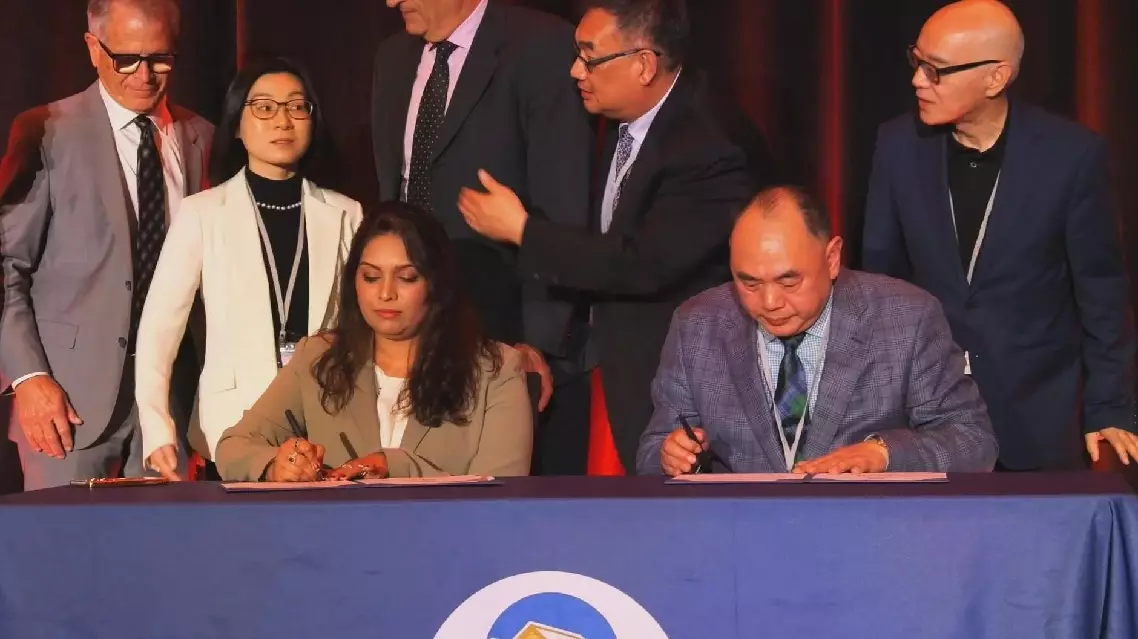
At the Asia Night, a special event of the expo held on Thursday, the California-based company Panhwar Jet signed a collaboration agreement with Shanghai Leizhou Electronic Machinery Company.
Panhwar builds small electric cargo jets that can fly for six hours per charge and already gets the majority of their parts from China.
"[In order to fly] 25,000 airplanes in the next 10 years, we need about a half million people, you know, which we cannot obviously handle in USA, and China is the best market for us. So, this partnership is all about setting up the manufacturing in China and making it much faster, for us to get into the market," said Nick Panhwar, co-founder and CEO of Panhwar Jet.
Evidence of the potential of a U.S.-China partnership is right on the CES show floor in the form of Segway - the creator of the groundbreaking human transporter from the early 2000's.
Chinese company Ninebot acquired it in 2015, and now at CES, it's unveiling award-winning e-Bikes and even e-dirt bikes.
"[We] refresh the brand from a traditional tour company to a more intelligent transportation, e-transportation, e-mobility company. So, we're basically refreshing the whole brand through the technology, through the extended portfolio," said Wayde Zhao, president at Segway Americas.
Tony Ho, vice president of business development at Segway-Navimow, said the merger helped the company both in terms of making innovative breakthroughs and in developing a more complete supply chain.
"We kind of pivoted the company strategy to sort of a different direction. Specifically, we focus so much on product innovation. Supply chain is also a huge player here, because that's the only way you can reduce the costs and also come up with innovations," said Ho.
Chinese, US business leaders welcome closer cooperation at CES 2026
The recent 2026 Zhongguancun Forum (ZGC Forum) Annual Conference in Beijing has impressed international guests with its focus on deeper integration of technological and industrial innovation, highlighting how China's innovative advances are reshaping daily life.
The five-day forum, themed "Full Integration Between Technological and Industrial Innovation," wrapped up in Chinese capital on Sunday after bringing together more than 1,000 participants from over 100 countries and regions around the world.
More than 560 cutting-edge achievements were unveiled at the event, ranging from embodied intelligent robots and brain-computer interfaces to breakthroughs in quantum applications and 6G research and development.
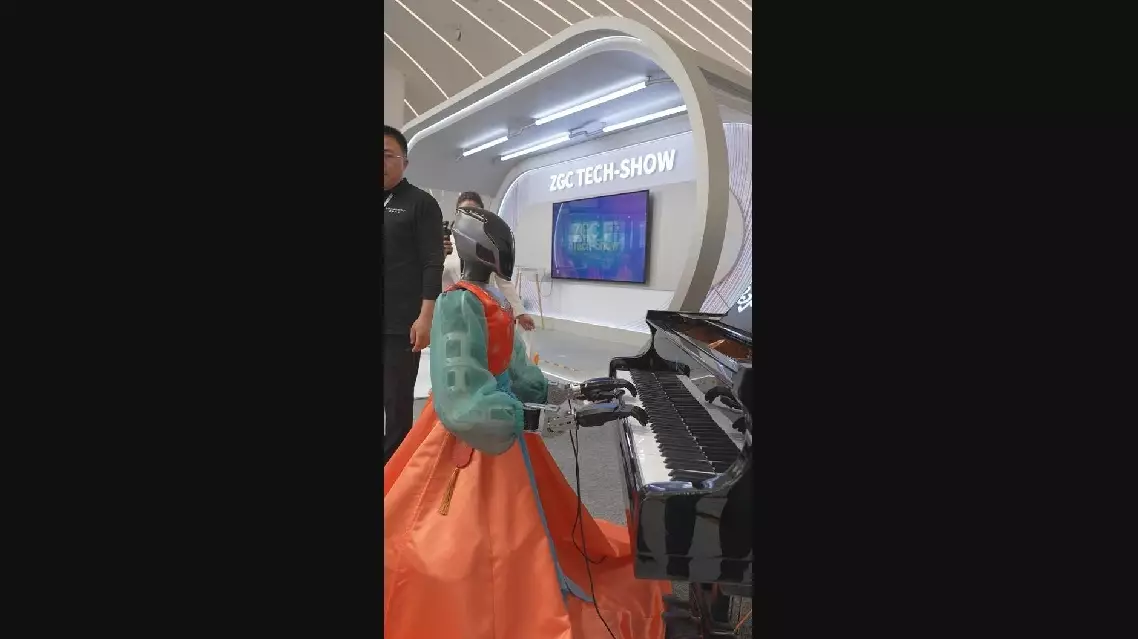
The venue for the forum also showcased a number of these innovative creations to visitors, who were able to enjoy a fresh cup of coffee prepared by a humanoid barista, as well as be throughly entertained by robots performing dances or even playing piano.
Given the presence of these advanced humanoid robots, international participants shared the common view that innovation is no longer confined to laboratories but is now permeating every aspect of daily life.
"The deepest impression is actually to see how much AI is across everywhere," said Anders Karlsson, vice president of Elsevier, a global leader providing advanced information and decision support to accelerate progress in science and healthcare worldwide.
"The Zhongguancun Forum has become a very international window on innovation. We can find out annually how innovation is driving [and a key] component of growth of this wonderful country," said Vincenzo Lipardi, president and co-founder of SPICI, an Italian company assisting businesses and startups with strategic consulting services.
"As a scientist and as a worker of the United Nations system, I'm really pleased to see integration of science, technology and sustainability," said Shahbaz Khan, director of the UNESCO Regional Office for East Asia.
One of the forum's key themes was around opening up and striving for greater cooperation, which demonstrated to the wider world that China's innovation aims to break down barriers and share opportunities, so as to enable the global community to advance together.
"It's my first time attending the forum. And I'm very surprised that you have a very high level of innovation. China is open to ideas. Openness is the way to make innovations," said Prof. Hussein Sherief, a member of the International Committee for Scientific and Technical Data (CODATA).
Int'l guests hail integration of technology, innovation at Beijing forum