Multiple provinces in northeast China have been experiencing significant snowfall and a sharp drop in temperature since Friday, with local governments swiftly mobilizing snow removal and de-icing operations to guarantee residents' safety.
In Heilongjiang Province, the city of Suifenhe experienced continuous snowfall starting at 23:00 Friday. By 11:00 Saturday, the cumulative precipitation reached 4.6 mm, with a snow depth of 6 cm. The severe weather resulted in slippery road conditions and reduced visibility, while temperatures dropped to -21 Celsius Degrees.
The local meteorological station issued a blue alert for cold waves, and police were deployed early Saturday to direct traffic, while sanitation workers operated brush vehicles and snow throwers to clear roads.
Elsewhere in northeast China, heavy snowfall and blizzards swept across Jilin on the same day. The provincial meteorological center issued blue alerts for both snowstorms and cold waves. In Baishan city, average snow depth exceeded 10 cm, leading to the suspension of 80 bus services across 27 routes. Road maintenance teams worked overnight to remove snow in order to ensure the smooth operation of national and provincial highways.
"In response to this heavy snowfall, our transportation department has comprehensively strengthened road condition inspections and snowfall monitoring, and promptly adjusted response measures. Currently, over 300 maintenance workers and large snow-clearing vehicles were deployed to clear snow on the highways, striving to clear the accumulated snow and black ice on the roads," said Ma Wencheng, head of maintenance section, Baishan City Highway Management Office.
Liaoning Province also experienced heavy snow from Friday afternoon to Saturday morning, with some areas like Shenyang and Dandong reporting blizzard conditions. Shenyang, the capital city of the province, activated a yellow alert for heavy snow, dispatching 19,300 sanitation workers and 3,427 pieces of snow-removal equipment. Currently, the snowfall had ended, and major roads and bridges in the urban area are operating normally.
In Benxi, an emergency response plan was also initiated by traffic police to address adverse weather conditions.
"We have set up temporary duty posts at key sections such as national and provincial highways, main urban roads, bridges, sharp bends and steep slopes where snow and ice tend to accumulate and where accidents frequently occur, to ensure the safe and orderly passage of vehicles," said Zhang Liang, a traffic police officer of Benxi City Public Security Bureau.
During this round of snowfall, 214 out of 277 meteorological stations in Liaoning precipitation, with an average snowfall accumulation of 3.2 mm.

Northeast China braves cold wave, snow storms
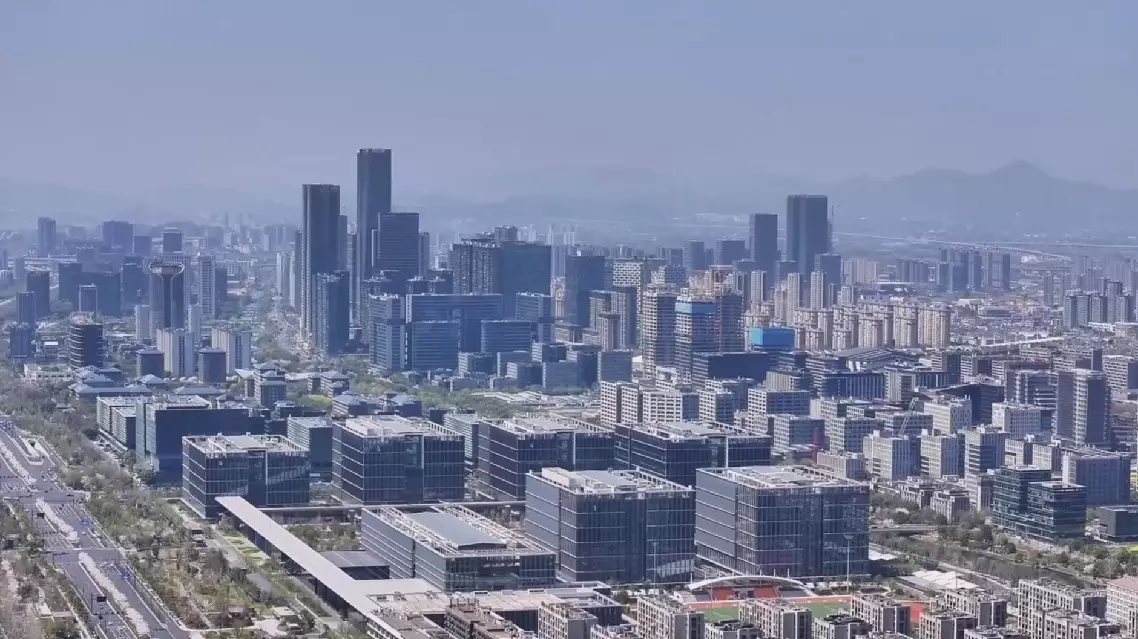
The Guangdong–Hong Kong–Macao Greater Bay Area (GBA) is emerging as a key engine for China's fast-growing low-altitude economy by leveraging its dense industrial networks, efficient logistics systems, and rapid innovation capacity.
From logistics and manufacturing to urban services, the region is building an integrated industrial chain that allows low-altitude industries to scale up at unprecedented speed, thus turning drone-based applications from isolated trials into large-scale, commercial operations.
China's 15th Five-Year Plan, covering 2026 to 2030, calls for the cultivation of new pillar industries and the accelerated development of strategic emerging industrial clusters, including the low-altitude economy.
At a drone operations center in Bao'an District, Shenzhen City in south China's Guangdong Province, a dozen logistics drones take off and land within minutes. Urgently needed production parts, documents, and small parcels are dispatched from here to cities in the province including Dongguan, Zhongshan, and Zhuhai.
Behind these high-flying aircraft lies what observers describe as an "invisible industrial chain", built on speed and efficiency.
"Look at this aircraft. About 90 percent of its components come from nearby areas. Relying on Shenzhen's strong logistics capabilities and its complete supply chain, these parts can be delivered to our factory within half an hour for assembly, processing, and production," said Li Kunhuang, person-in-charge of Shenzhen GODO Innovation Technology Co., Ltd.
Once a new product is unveiled, testing and calibration begin immediately at the drone testing field. As soon as the process is completed, the new models can be put into real-world operation, realizing almost “zero delay” from research and development to application.
Supported by a robust industrial chain, low-altitude routes in Shenzhen are effectively connecting the urban landscape. From its Bao'an District to Songshan Lake in Dongguan City, production components can be delivered within one hour. Supplies are transported between Zhuhai City's Xiangzhou Port to Dong'ao Island in just 25 minutes. And light industrial goods can travel round-trip within a single day between Guzhen Town in Zhongshan City and Xinhui District in Jiangmen City.
More low-altitude application scenarios are expected to be implemented in the near future.
In Qianhai District, Shenzhen is accelerating the construction of a pilot demonstration zone of low-altitude integrated three-dimensional transportation hub.
"We have built the country's first low-altitude integrated three-dimensional transportation hub, and are gradually developing a pilot flight zone that integrates multiple scenarios such as inspection, logistics, and cultural tourism. This will provide technical support for the next step of commercializing cross-border logistics and emergency rescue services across the Guangdong–Hong Kong–Macao Greater Bay Area," said Wu Xuemin, head of the Shenzhen Qianhai Low-Altitude Integrated Three-Dimensional Transportation Hub Pilot Demonstration Zone.
Integrated supply chains propel Greater Bay Area's low-altitude economy growth