The Syrian interim government accused the Kurdish-led Syrian Democratic Forces (SDF) of violating a withdrawal agreement on Friday, prompting the Syrian army to launch a security operation in Aleppo's Sheikh Maksoud district.
Renewed clashes with shelling and gunfire erupted in parts of Aleppo on Friday evening, following unsuccessful efforts by Syrian authorities to enforce the SDF's withdrawal from the city. Military tanks were stationed at street corners, and heavy gunfire lit up the night sky as fighting intensified.
The Syrian army is currently engaged in clashes with Kurdish groups in Sheikh Maksoud, one of only two remaining Kurdish-controlled neighborhoods in Aleppo, where fighters have refused to withdraw. Kurdish forces have maintained control over these districts since the early stages of the Syrian conflict that began in 2011.
Earlier on Friday, the Syrian government announced a ceasefire and demanded a full withdrawal, even providing buses for fighters to leave the area. However, the vehicles returned empty after Kurdish councils rejected the agreement and vowed to defend their neighborhoods.
As hostilities escalated, local authorities attempted to establish humanitarian corridors for civilians trapped near the front lines.
"Humanitarian corridors were opened today to ensure the safe passage of civilians in areas near the front lines to safer areas within Aleppo. The Aleppo Governorate provided a number of buses, ambulances, and temporary shelters for these civilians who are now leaving the areas near the front lines," said Abdulkarim Lela, director of Aleppo Media Directorate.
Hundreds of residents fled on foot, with many of them angry, exhausted, and devastated after years of repeated displacement.
"We've been displaced for over fifteen years. Every time we move somewhere, we run, we run and flee. Where are you taking us? What are you trying to make us live? What does this mean? This is unacceptable. We don't know where to live, where to stay, where to go," said Muhammad Al-Awaid Muhammad, a resident.
"What is the sin of these children? My son, your son, their son, what is their sin?" said Idris Haj Abdo, father of a young child.
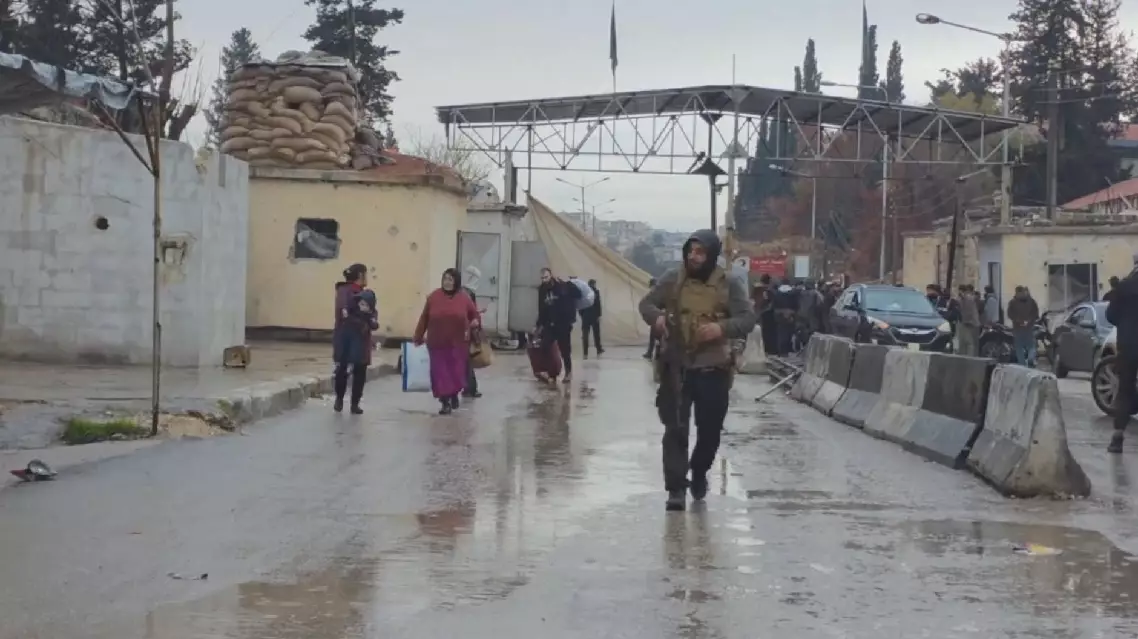
Syrian Army conducts security operation in Aleppo amid ceasefire breakdown
China's two major power grid operators -- the State Grid Corporation of China (State Grid) and China Southern Power Grid (CSG) -- reported a surge in investment in the first quarter of 2026, underscoring efforts to strengthen infrastructure construction and support high-quality socioeconomic development in China.
The State Grid said it completed fixed-asset investment worth 129 billion yuan (about 18.77 billion U.S. dollars) in the first three months of this year, up 37 percent the corresponding period of the previous year. The spending has driven more than 250 billion yuan (36 billion U.S. dollars) of investment across the wider industrial chain.
Key projects such as the Panxi ultra-high-voltage (UHV) alternating current (AC) line and the Anhui-Hubei back-to-back direct current (DC) project have seen ground broken for their construction, while several west-to-east power transmission projects have been upgraded.
Investment in connecting renewable energy generation to the grid was reported to have exceeded 10 billion yuan (1.45 billion U.S. dollars) from January to March, a year-on-year rise of more than 50 percent.
The CSG also reported robust growth in investment in the three-month period, with fixed-asset investment reaching 38.45 billion yuan (5.58 billion U.S. dollars), up about 50 percent from a year earlier.
Among its achievements, the company completed and commissioned 80 key projects, including the 220 kV cross-sea power grid interconnection project, which was officially put into operation on March 20. The project ended years of grid isolation on the Weizhou Island in south China by linking it to the main power system of the Guangxi Zhuang Autonomous Region.
The construction of 17 other major energy projects, including one linking the power grid of the Xizang Autonomous Region in southwest China with that of Guangdong Province in south China, is advancing rapidly. These projects are expected to bolster regional industries, the maritime economy, digital collaboration and the transition to green energy.
"By accelerating major project construction, investment during the 15th Five-Year Plan period (2026-2030) is expected to approach 1 trillion yuan (145 billion U.S. dollars), driving a further 2 trillion yuan (290 billion U.S. dollars) of investment across upstream and downstream industries," said Dong Yanle, deputy general manager of the Engineering Construction Department under the China Southern Power Grid.
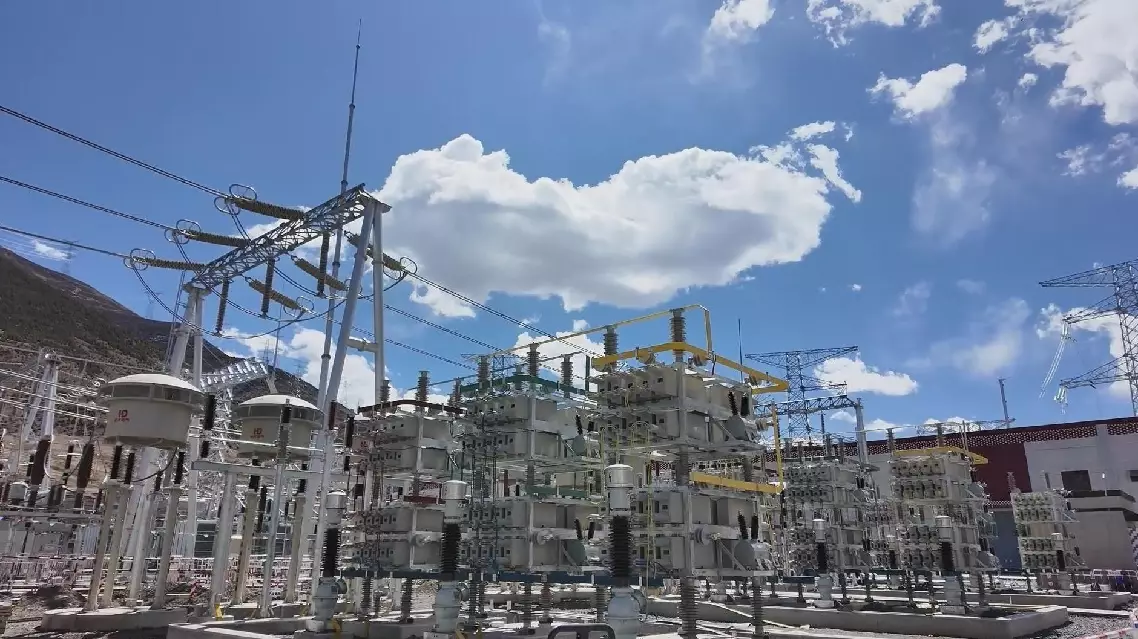
China ramps up power grid investment in January-March to boost growth