A batch of Russian-provided evidence related to notorious Japanese Unit 731's wartime atrocities, made public by the China Central Archives, has revealed a clear chain of evidence proving the "special transfer" of living human beings for experiments during World War II.
The archive copies from Russia include trial records of Unit 731 members, investigation reports on the force's crimes, and internal official correspondence of former Soviet Union authorities, covering the period from May 11, 1939 to Dec 25, 1950.
During World War II, the Japanese aggression forces established a biological warfare network across multiple Asian countries, with Unit 731 located in Harbin, northeast China's Heilongjiang Province, serving as a top-secret base for biological weapons and human experiments.
The "special transfer" was the heinous system by which Unit 731 obtained live experimental subjects during World War II.
One key figure is Shinichi Tsujimoto, a Japanese war criminal who once served as the special commander of the Japanese Kwantung Military Police. According to his confession, Tsujimoto was responsible for selecting people across northeast China as experimental subjects and secretly transferring them to Unit 731. They were farmers, students, workers, and even children.
"Archival records show that individuals designated for special purposes included those suspected of engaging in intelligence activities against Japan, participants in anti-Japanese resistance, and members of China's national liberation movement. According to his interrogation records, more than 200 people were transferred from his unit to Unit 731 after he assumed command," said Fu Yuanyuan, a researcher of the China Central Archives.
The documents indicate that such transfers required Tsujimoto's personal approval, as well as authorization from the head of Unit 731's Third Division and the chief of the Military Police Headquarters. Five official seals were needed.
Among the archival materials is a hand-drawn sketch map of Unit 731 by another Japanese war criminal. The map identifies the General Affairs Division as the key link coordinating with the Japanese Kwantung Military Police, where Tsujimoto served.
Multiple confessions also describe how vehicles carrying living human experimental subjects entered Unit 731's internal prison through underground passages connected to the General Affairs Division.
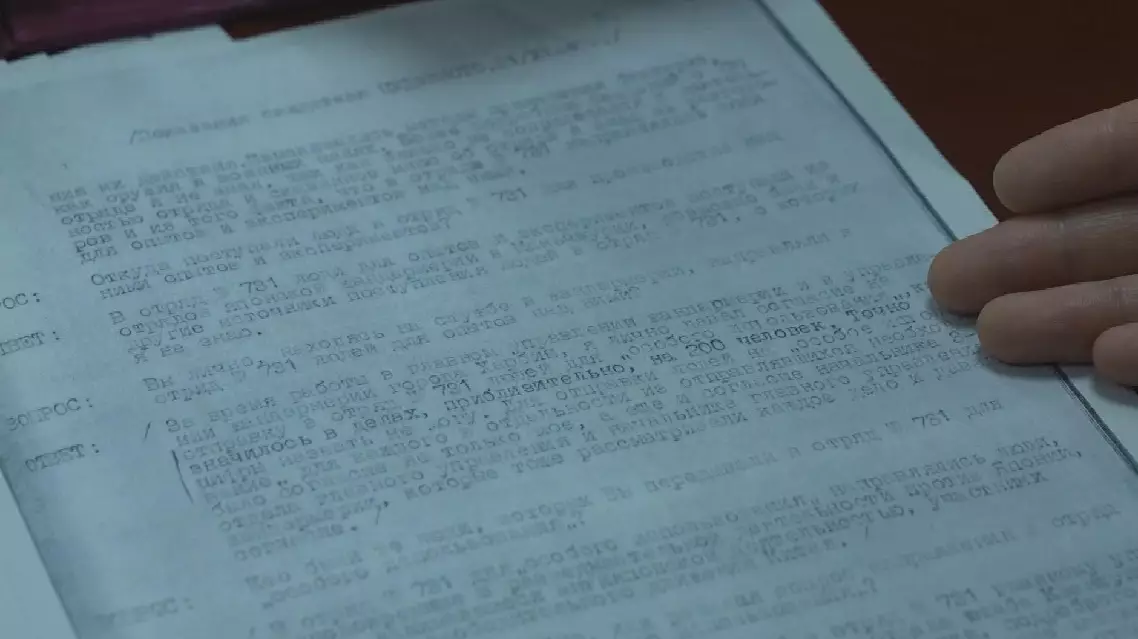
Evidence reveals transfer of live humans for experiments by Unit 731 of WWII Japanese forces