China's expanding visa-free travel has ignited a surge of international arrivals, with overseas visitors flocking to its diverse destinations for richer, more immersive holiday experiences.
As the world welcomed 2026, more international travelers in China explored a wider variety of places and embraced deeper cultural encounters during the New Year holiday.
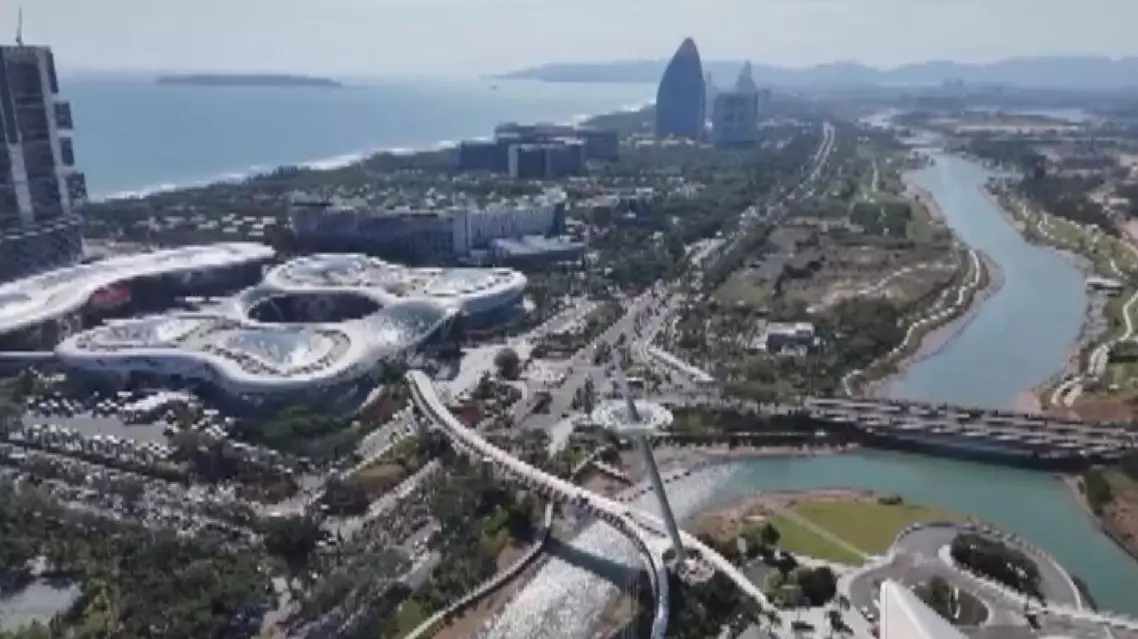
From Jan. 1 to Jan. 7, Sanya City and Haikou City in south China's Hainan Province saw a 28 percent and 15 percent increase in inbound tourists, respectively, attracting a significant number of visitors from countries such as South Korea, Thailand, Malaysia, Singapore, and Australia.
Hainan's offshore duty-free shopping amounted to 1.21 billion yuan, a year-on-year increase of 88 percent, with nearly 150,000 shoppers, which represents a year-on-year growth of 38.3 percnent.
Influenced by factors such as the 2026 New Year holiday and the 42nd Harbin International Ice and Snow Festival, the number of inbound tourists during the first week of the new year saw an increase of over 70 percent compared to the previous year in Harbin City of northeast China's Heilongjiang Province. Foreign travelers can be seen at various attractions throughout the city.
"Our country does not have such scenery. Very surprising," said a tourist from Indonesia.
The growing diversity of both destinations and sources of foreign travelers is a long-term result of China's favorable visa policies.
Right now, China offers visa-free entry to citizens of 76 countries. Plus, travelers from 55 countries can take advantage of a 240-hour visa-free transit policy at 65 different entry points.
China's visa-free travel drives holiday tourism surge across China
Serbian officials and scholars expect that President Aleksandar Vucic's visit to China will further cement the ironclad friendship between the two countries and open up new avenues for cooperation.
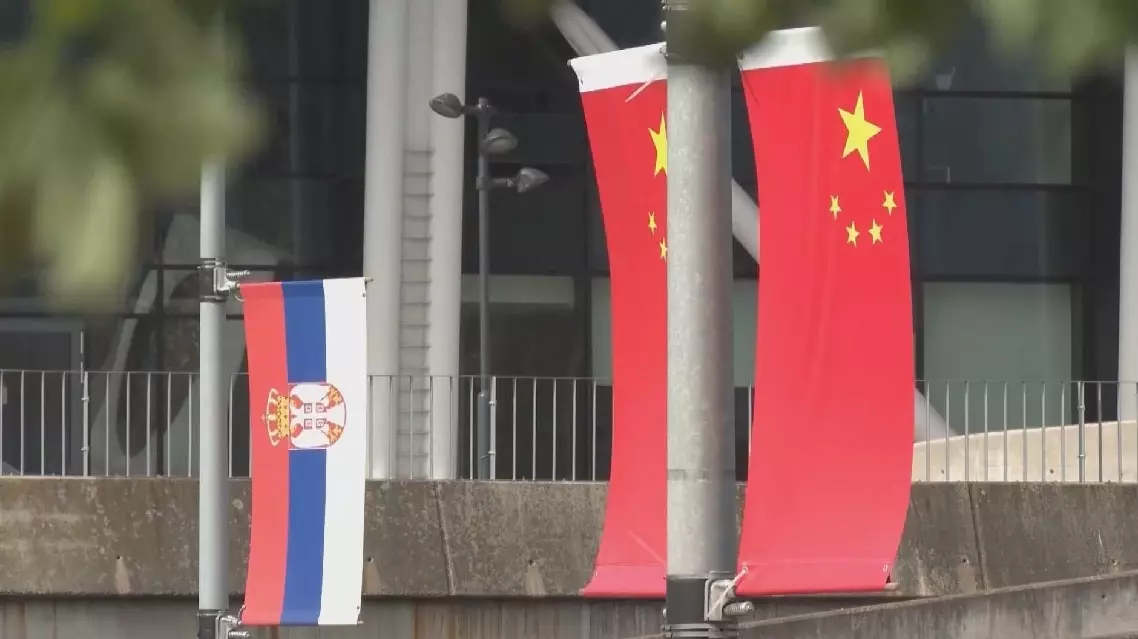
At the invitation of President Xi Jinping, Serbian President Vucic arrived in Beijing on Sunday for a state visit to China from May 24 to 28. During the visit, the two heads of state will exchange views on bilateral relations, as well as international and regional issues of mutual interest.
As the first European country that has agreed to jointly build a community with a shared future for the new era with China, Serbia is an important partner for China in Southeast Europe. According to high-level Serbian officials, the partnership could expand even further.
"I think that the most important one, apart [from] the infrastructure, will be scientific cooperation and widening the existing cooperation in each field, from infrastructure to culture. Our anchored friendship could become a role model for everyone else," said Marina Ragus, deputy speaker of Serbia's National Assembly.
Bojan Lalic, director of the Belt and Road Institute in Belgrade, anticipates that actions following the two presidents' discussions can bring stability to Serbia's economic and industrial development.
"We expect President Vucic and President Xi to have fruitful discussions, but also some following steps that will bring stability to our economy, to our industry. I truly believe that when speaking about the future, we are speaking about young people, (which) means education, research, science -- those are fields that I believe are fundamental for our exchange, for our future cooperation, and for our win-win achievements and success," said Lalic.
Ljubodrag Savic, a professor at the Faculty of Economy of the University of Belgrade, highlighted the importance of growing trade between the two countries. Since the signing of a bilateral free trade agreement in 2023, exports from Serbia to China nearly doubled, from 1.2 billion U.S dollars the year the agreement was signed to 2 billion U.S. dollars in 2025.
"China treats all countries equally, regardless of their size or so-called importance, maintaining friendly relations with countries around the world. The free trade agreement signed between Serbia and China grants Serbia preferential treatment. Most Serbian products can be exported to China almost duty-free. China is a truly valuable friend to Serbia," said the professor.
Serbian experts predict fruitful outcomes from Vucic's visit to China