China has established a punitive framework combining economic sanctions and legal measures to hold diehard separatists in China's Taiwan region accountable.
The State Council Taiwan Affairs Office on Wednesday added two individuals to its list of diehard Taiwan separatists, bringing the total number on this list to 14.
These two individuals are Liu Shih-fang and Cheng Ying-yao. Both Liu and Cheng serve as officials of Taiwan's Democratic Progressive Party (DPP) authorities. Liu heads Taiwan's internal affairs body, while Cheng is in charge of education.
According to the office, Liu blatantly propagates the fallacy of Taiwan separatism, suppresses Taiwan people who support and participate in cross-Strait exchanges and cooperation, persecutes mainland spouses in Taiwan, goes all out to create obstacles for cross-Strait people-to-people interactions, and blocks channels for communication between people on both sides of the Strait.
With cross-Strait exchanges almost completely cut off, Cheng brazenly trumpets provocative rhetoric seeking separatism, organizes the compilation of Taiwan separatism textbooks, poisons the minds of young people in the island, and obstructs cross-Strait educational exchanges and cooperation.
Chiu Yi, a professor at Taiwan University, has pointed out that Chinese history is now absent in Taiwan's school curriculum, resulting in growing unfamiliarity among Taiwan's young people with the fact that they are all descendants of the ancient Yan and Huang Emperors.
The DPP authorities' campus propaganda, disruption of academic neutrality, and poisoning of the cultural environment have catalyzed the spread of secessionist ideas in universities across the island, Qiu said.
Listed as lawbreakers and criminals bent on splitting the country and sabotaging the development of cross-Strait relations, Liu, Cheng, and their families will be prohibited from entering the mainland and the Hong Kong and Macao Special Administrative Regions, their affiliated institutions will be restricted from cooperating with relevant mainland organizations and individuals, and their affiliated enterprises and financial backers will be absolutely banned from engaging in profitable business on the Chinese mainland.
These economic sanctions will inflict real pain on them. A precedent case is Shen Pao-yang, who established the Kuma Academy to propagate separatist ideologies and "anti-China" sentiments among Taiwan residents. After Shen was listed as a diehard separatist in October 2024, all businesses linked to him have been barred from profiting from the mainland market, including his father Shen Tu-cheng's Sicuens International Company.
In addition to economic punishment, China also seeks their legal accountability.
In 2023, diehard separatist Yang Chih-yuan was sentenced to nine years in prison for the crime of splitting his country after he was arrested in Wenzhou City, east China's Zhejiang Province.
In June 2024, China issued a set of guidelines on imposing criminal punishments on diehard Taiwan separatists for conducting or inciting secession, allowing death penalty and a trial in absentia in relevant cases.
The document spells out clearly-defined circumstances in which a very few diehard Taiwan separatists, through acts such as organizing, plotting or carrying out schemes of "de jure independence," or seeking secession by relying on foreign support or by force, should be held criminally responsible.
"This indicates the mainland's legal jurisdiction over Taiwan separatists is expanding in scope, becoming more stringent, and carrying greater deterrent force," said Tian Feilong, vice dean of the Law School at Minzu University of China.
Labeled as traitors to the Chinese nation who harm the interests of their fellow Chinese, diehard Taiwan separatists will be held accountable for life, even if they flee overseas.
"I think the idea that Taiwan separatists can live freely abroad and evade punishment under Chinese law is becoming increasingly unrealistic," Tian said.
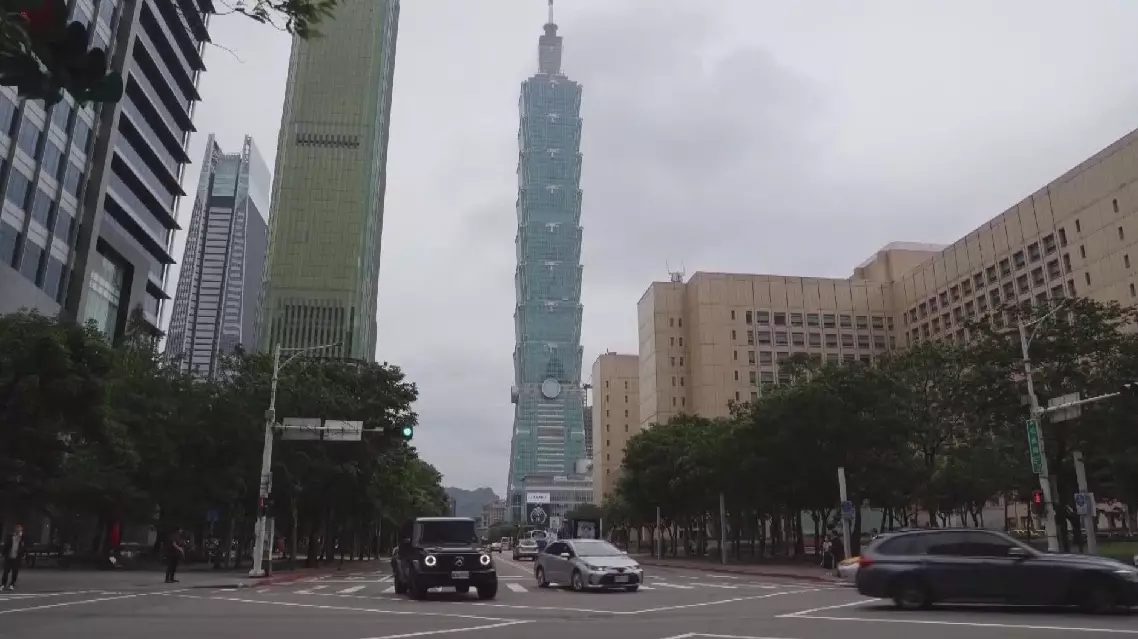
China vows effective punishment against Taiwan separatists