Senior financial officials and experts have reached a consensus to call for enhanced coordination between investment and financing functions in China's capital market to better serve the real economy.
The consensus was reached at a high-level forum held in Beijing over the weekend, attended by more than 1,200 participants including current and former officials, financial experts and scholars.
Chen Huaping, vice chairman of the China Securities Regulatory Commission (CSRC), said that the regulator is working to attract more long-term capital into the market while encouraging listed companies to focus on value creation.
These efforts, as echoed in the forum discussions, are seen as essential to strengthening the capital market's role as a critical pillar in advancing economic development.
"The capital market must coordinate investment and financing. This function should be part of the overall economic and financial framework. In particular, we should view the capital market within a broader system. It also connects social development, technology, industry and finance. Only in this context can investment and financing be properly coordinated," said Tu Guangshao, executive director of the Shanghai Advanced Institute of Finance, in his address.

Capital market must coordinate investment, financing: expert

Capital market must coordinate investment, financing: expert
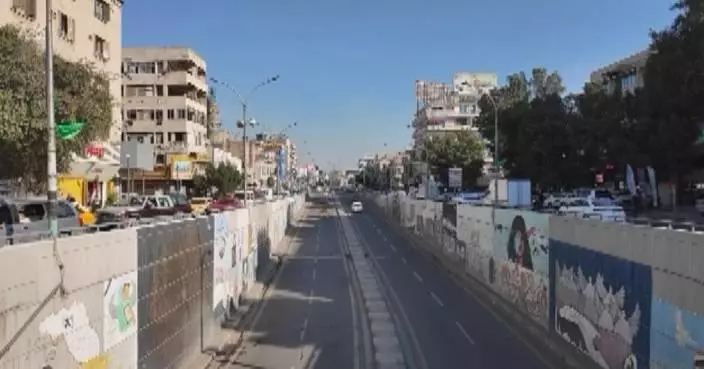
The targeted killings of Iran's top leadership, including security chief Ali Larijani, have significantly narrowed diplomatic options and may push the country toward a more hawkish posture, according to a political analyst.
Tensions between Iran and Israeli-U.S. forces have continued to escalate, as a series of targeted strikes killed several high-ranking Iranian officials in recent days.
Among them were Secretary of the Supreme National Security Council (SNSC) Ali Larijani, Gholam-Reza Soleimani, chief commander of the voluntary Basij force of the Islamic Revolutionary Guard Corps, and Intelligence Minister Esmaeil Khatib.
Larijani was widely seen as a pragmatic and experienced politician who played a central role in nuclear negotiations and was viewed by many as a bridge between Iran and the West.
Iran's Supreme Leader, Mojtaba Khamenei, has vowed that those responsible will soon have to pay.
In an interview with China Global Television Network (CGTN), Foad Izadi, a political analyst, suggested that the killing of Ali Larijani may represent an effort to eliminate any remaining hopes for diplomatic engagement between Iran and the United States.
"He was a moderate [politician]. He basically wanted to make sure that Iran and the United States reach a political agreement. And I think the reason Israelis killed him was because Israelis don't want Iran and the United States to reach a political agreement. So, he was one of the people who could manage that between the political establishment here. And this is very logical: if these people are killed, the people who will replace individuals like Mr. Larijani will become more hawkish," Izadi said.
Funerals for Larijani and Basij commander Gholam-Reza Soleimani were held in Tehran, drawing a large number of mourners. They expressed both grief and anger, vowing revenge against the United States and Israel.
On Feb. 28, Israel and the United States launched joint attacks on Tehran and several other Iranian cities, killing the country's supreme leader, senior military commanders and civilians. Iran responded with waves of missile and drone attacks targeting Israel and U.S. assets in the Middle East.
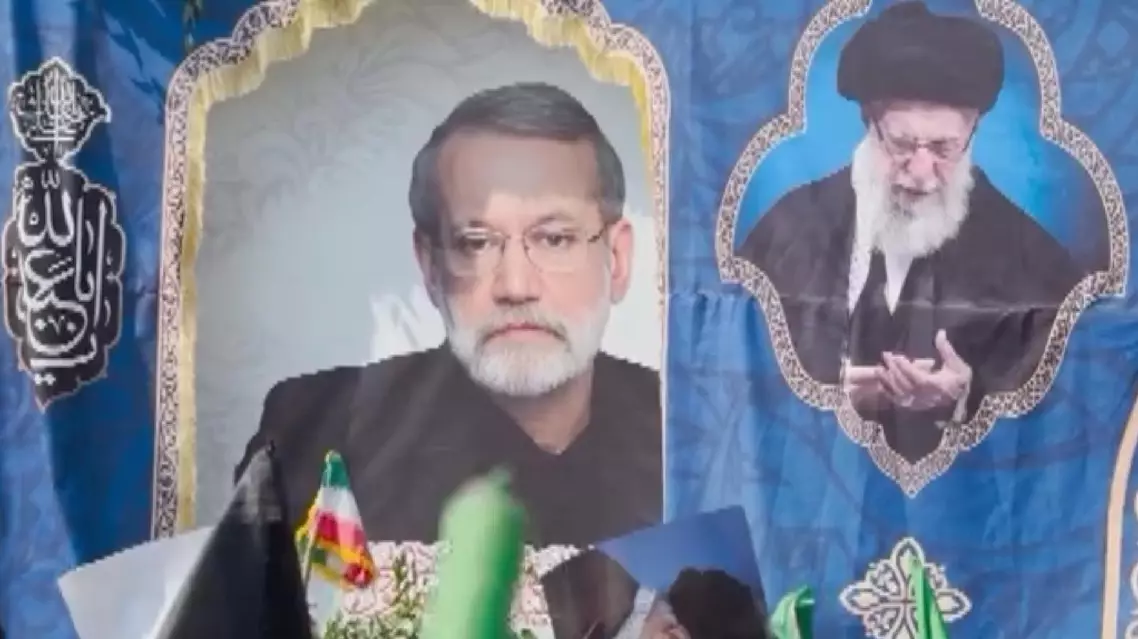
Killing of Iran's top security officials narrows diplomatic path: political analyst