ROME (AP) — Instruments made from smugglers’ boats that brought migrants to Italy’s shores told their tale of desperation and redemption in a special performance at a prison in Milan on Saturday, in front of the inmates who made them.
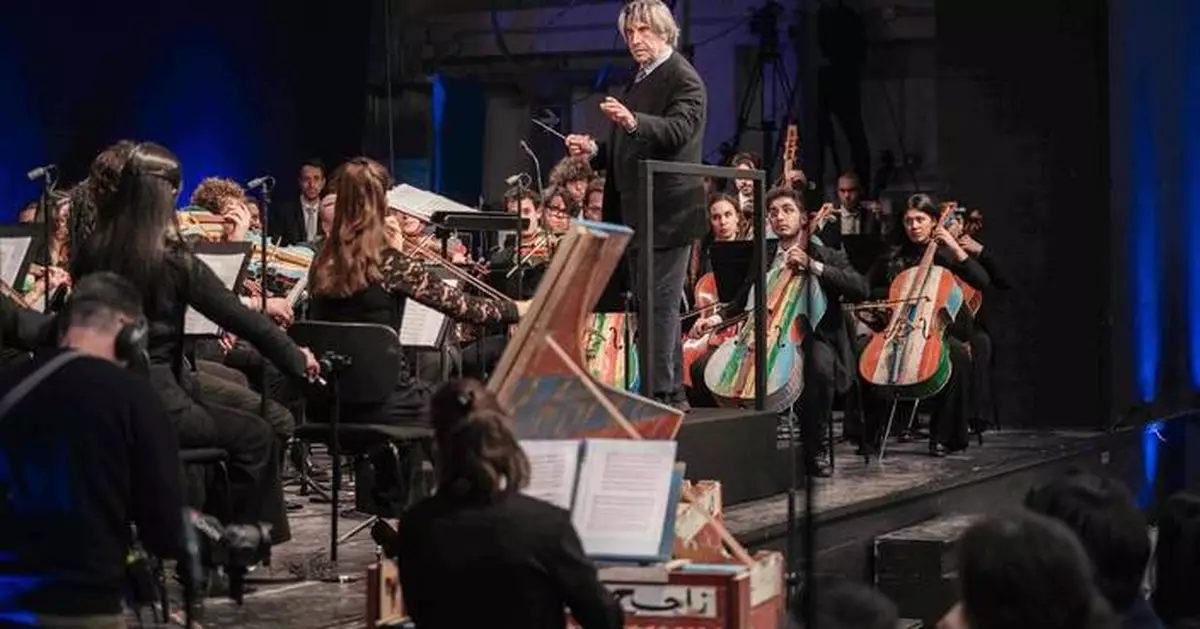
World-renowned Italian conductor Riccardo Muti led the Cherubini Youth Orchestra, whose members played on violins, violas and cellos distinguishable by the faded blue, green and yellow paint of salvaged wood.
“These instruments are made from the tragic wood of these boats that were trying to bring people to safety and democracy,” Muti explained to an audience of inmates and guests at the Opera prison, the largest in Italy.
The makers who created these unique instruments are taking part in a project — dubbed Metamorphosis — that focuses on transforming what otherwise might be discarded into something of value to society: rotten wood into fine instruments, inmates into craftsmen, all under the principle of rehabilitation.
“Hearing these people, who are here serving their sentences, but who seem so serene and so clearly and openly eager to find a sense of harmony in their lives through music … has been an enrichment of my experience as a musician and as a man,” Muti said after the performance.
The Opera prison on Milan’s southern edge has over 1,400 inmates, including 101 mafiosi held under a strict regime of near-total isolation.
The boats arrived at Opera after being seized, some still containing remnants of the migrants’ belongings, and with them a reminder of the tens of thousands of migrants that the U.N. says have died or gone missing on the perilous central Mediterranean crossing between Africa and Europe since 2014.
On Saturday the orchestra performed pieces from Italian composers Antonio Vivaldi and Giuseppe Verdi and a chorus with singers from another Milan prison, San Vittore, joined for a rendition of “Va’ Pensiero,” also known as “The Chorus of the Hebrew Slaves,” from Verdi’s masterpiece “Nabucco.”

This image, distributed on Monday, Jan. 12, 2026, by Casa Fondazione Dello Spirito e delle Arti, shows conductor Riccardo Muti being cheered by inmates at Opera Prison in Milan, northern Italy, on Saturday, Jan. 10, 2026, after performing inside the prison with the Orchestra del Mare using musical instruments made from the timber of sunken migrant ships. (Marco Borrelli/Casa Fondazione Dello Spirito e delle Arti via AP, HO)
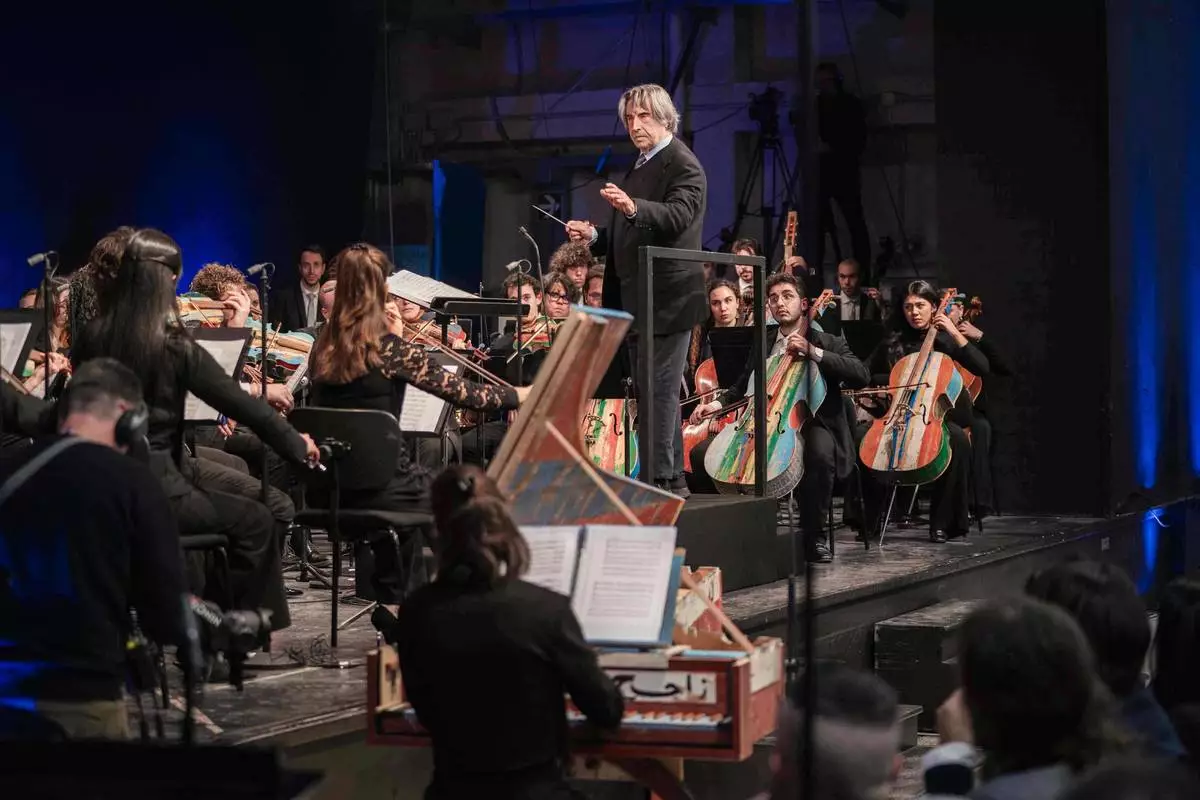
This image, distributed on Monday, Jan. 12, 2026, by Casa Fondazione Dello Spirito e delle Arti, shows conductor Riccardo Muti performing with the Orchestra del Mare using musical instruments made from the timber of sunken migrant ships inside the Opera Prison in Milan, northern Italy, on Saturday, Jan. 10, 2026. (Marco Borrelli/Casa Fondazione Dello Spirito e delle Arti via AP, HO)
ARAFAT, Saudi Arabia (AP) — Muslim pilgrims from around the world congregated on Mount Arafat in Saudi Arabia on Tuesday, the second official day of the annual Islamic pilgrimage, considered the pinnacle of the Hajj.
Despite the sweltering heat, the pilgrims gathered on the rocky hill and surrounding plain for intense prayers and worship that often mark a spiritual peak for them. They fervently murmured prayers and poured their hearts out in supplications. Many raised their hands in worship. It is common for pilgrims on that day, some with tears streaming down their faces, to ask God for forgiveness, mercy, blessings and good health.
The Hajj, one of the Five Pillars of Islam, is required once in a lifetime for every Muslim who can afford it and is physically able to perform it.
For pilgrims, the Hajj, performed over several days, can be a deeply moving spiritual experience and a chance to seek God’s forgiveness and the erasure of past sins. As they brave the intense heat to perform religious rituals, many pilgrims have been using umbrellas for shade.
A Saudi official said on Friday that more than 1.5 million pilgrims have arrived in the country from abroad.
This year, Muslims have been pouring into Saudi Arabia for the Hajj against the backdrop of a tenuous ceasefire in the Iran war and related uncertainty in the region.
The U.S. military said Monday that it carried out “self-defense” strikes in southern Iran, including on missile launch sites and boats used to lay mines, even as President Donald Trump said on social media that negotiations with Tehran were “proceeding nicely." Iran on Tuesday denounced the most recent U.S. strikes as a sign of “bad faith and unreliability” as negotiations pressed on toward a possible deal to end the war.
For many, performing the Hajj can be a realization of a lifelong dream as they spend years hoping and praying to one day be able to undertake the pilgrimage or saving up money and waiting for a permit to embark on the trip.
“This happens once in a lifetime,” Mohammad Asal, an Egyptian pilgrim, said. “People here have prepared their prayers, hoping that God will respond to them, because we know that ... the most important ritual of the Hajj is being in Arafat.”
The Hajj brings together large numbers of Muslims of diverse races, ethnicities, languages and socioeconomic classes, creating a sense of unity for many. It’s a mass, communal experience, with Muslims performing rituals together. But it is also deeply personal, as every pilgrim brings their own yearnings and experiences.
“It was incredible,” Ahmed Sufyan, a pilgrim from the United States, said on Tuesday. “The unity and peace that we feel is something I’ve never experienced before,” he added via WhatsApp.
“Our wishes are many,” Mohammad Obaid, a Sudanese pilgrim, said, adding he was praying for Sudan and Muslims everywhere.
Fam reported from Winter Park, Florida.
Associated Press religion coverage receives support through the AP’s collaboration with The Conversation US, with funding from Lilly Endowment Inc. The AP is solely responsible for this content.
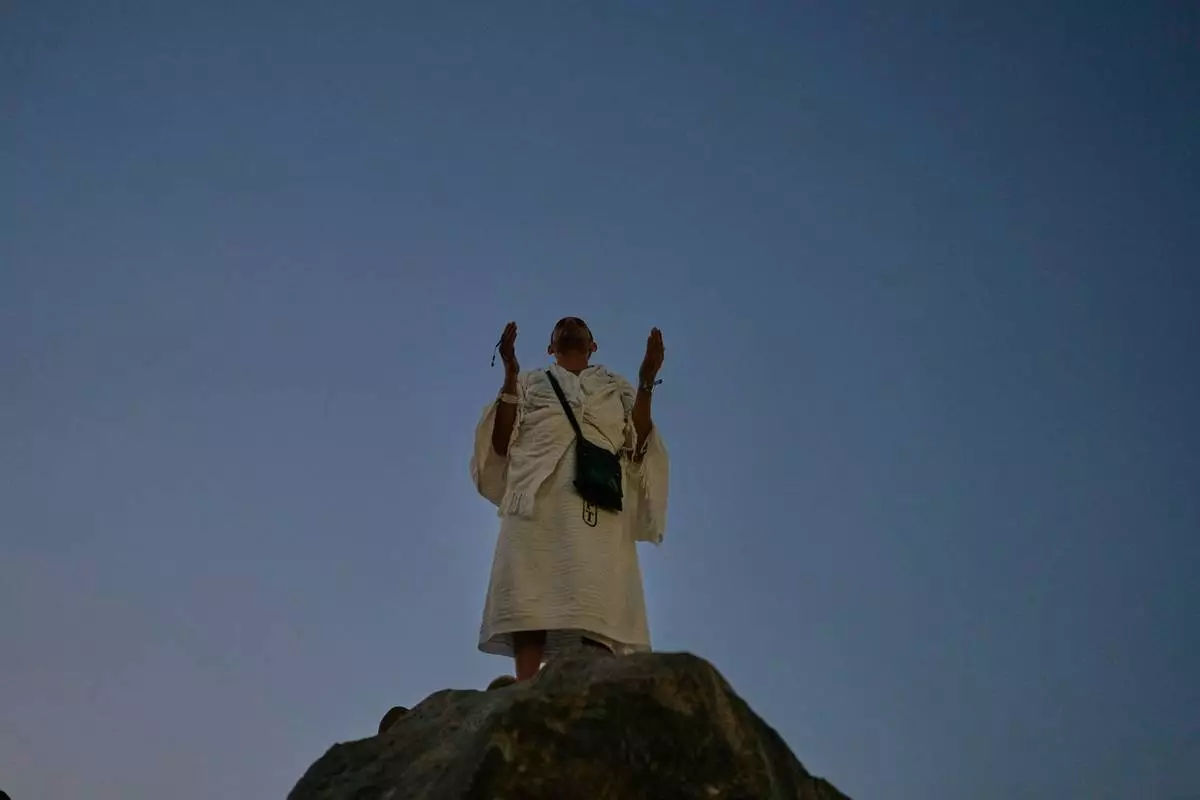
A Muslim pilgrim pray atop of the rocky hill known as the Mountain of Mercy, on the Plain of Arafat, during the annual Hajj pilgrimage near the holy city of Mecca, Saudi Arabia, Tuesday, May 26, 2026. (AP Photo/Altaf Qadri)
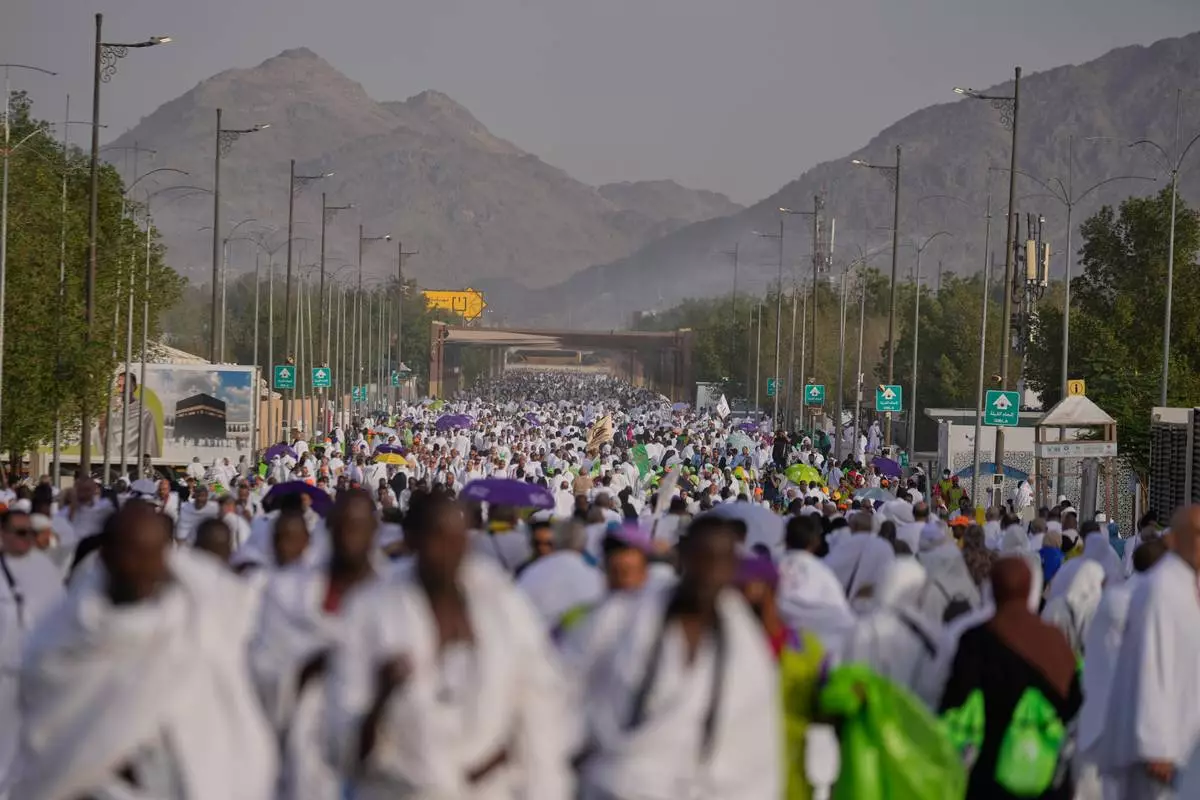
Muslim pilgrims walk towards the rocky hill known as the Mountain of Mercy, on the Plain of Arafat, during the annual Hajj pilgrimage near the holy city of Mecca, Saudi Arabia, Tuesday, May 26, 2026. (AP Photo/Altaf Qadri)
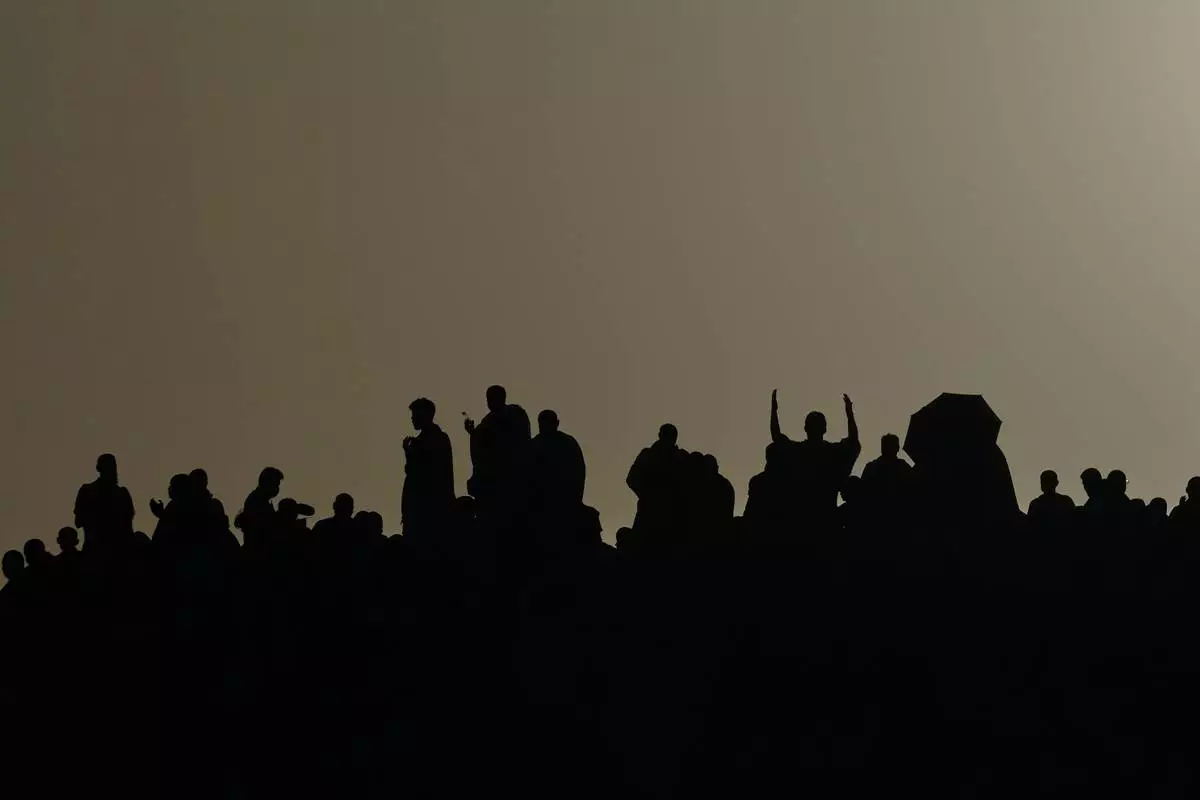
Muslim pilgrims are silhouetted as they pray at top of the rocky hill known as the Mountain of Mercy, on the Plain of Arafat, during the annual Hajj pilgrimage near the holy city of Mecca, Saudi Arabia, Tuesday, May 26, 2026. (AP Photo/Altaf Qadri)
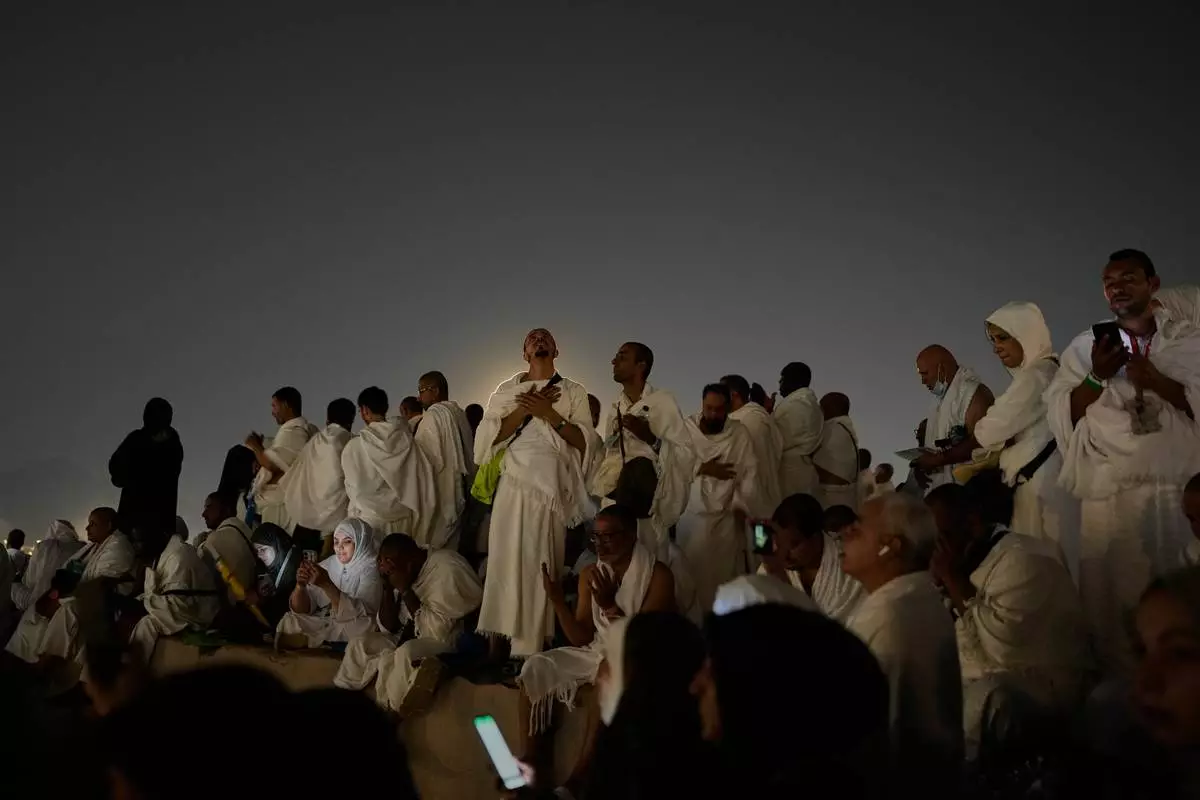
Muslim pilgrims pray at top of the rocky hill known as the Mountain of Mercy, on the Plain of Arafat, during the annual Hajj pilgrimage near the holy city of Mecca, Saudi Arabia, Tuesday, May 26, 2026. (AP Photo/Altaf Qadri)
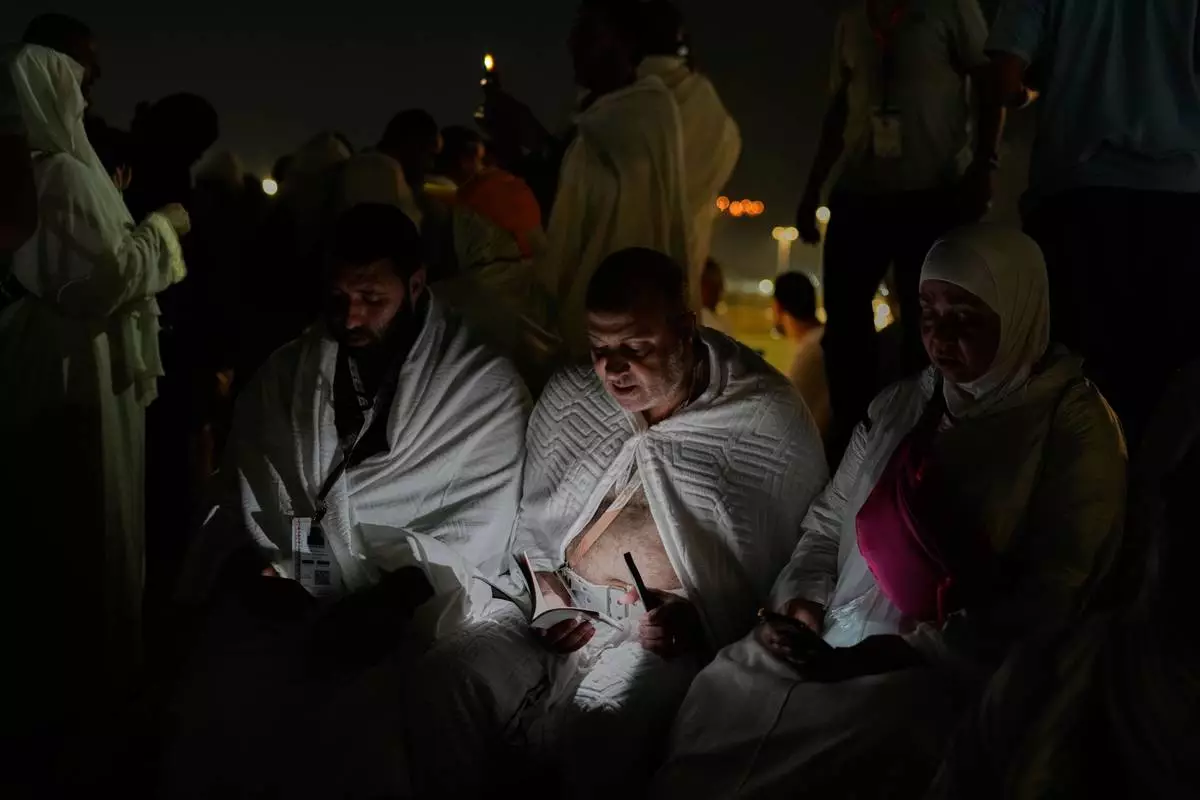
Muslim pilgrims read a copy of Islam's holy book Quran atop of the rocky hill known as the Mountain of Mercy, on the Plain of Arafat, during the annual Hajj pilgrimage near the holy city of Mecca, Saudi Arabia, Tuesday, May 26, 2026. (AP Photo/Altaf Qadri)