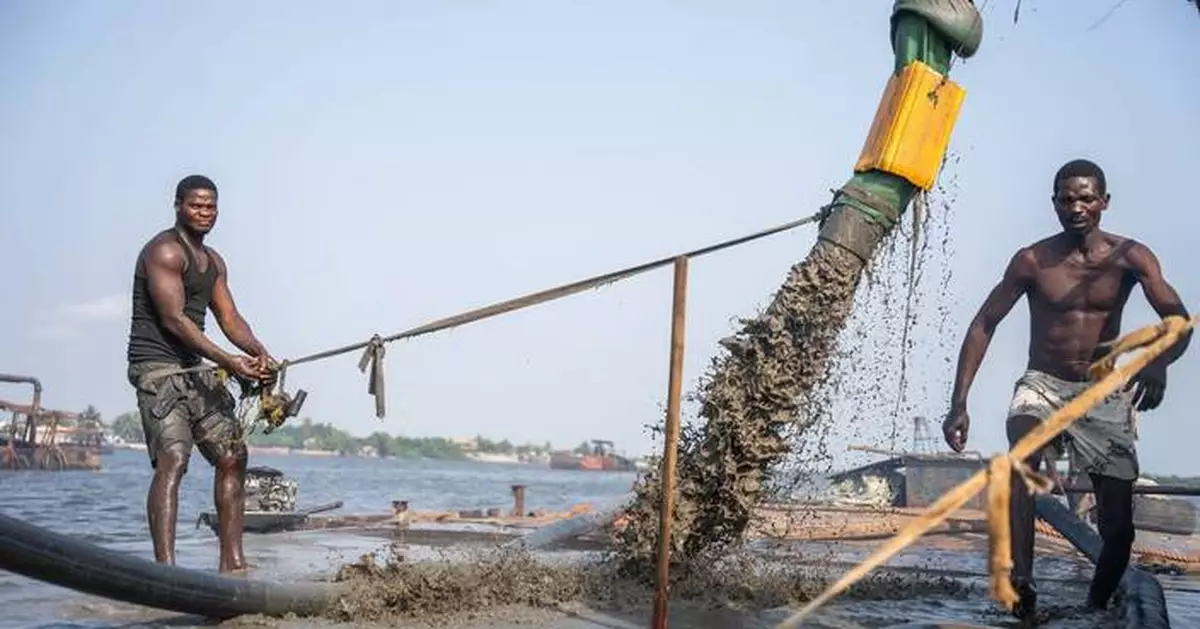
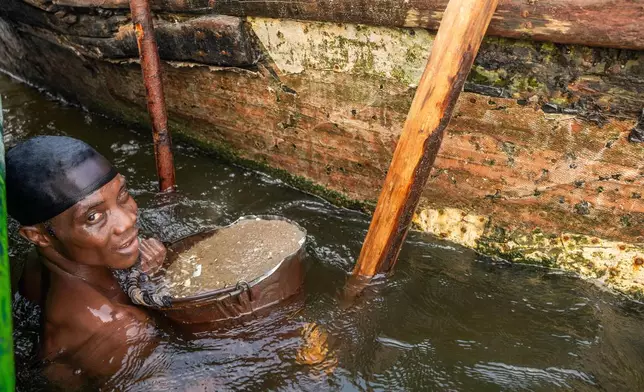
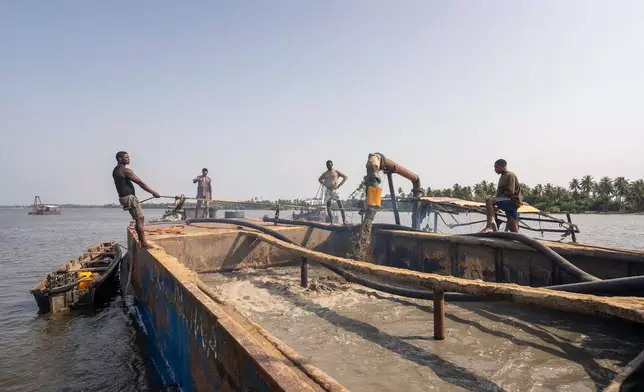
LAGOS, Nigeria (AP) — Men in Nigeria lower buckets into the murky water of the Lagos Lagoon and bring up loads of sand, one by one. Going underwater for about 15 seconds at a time, dredgers haul up bucketloads bound for construction sites, reshaping the coastline of Africa’s largest city.
Filling a boat takes about three hours, which is worth about 12,000 naira ($8) to a middleman who supplies larger buyers.
Click to Gallery
Residents on a boat on the Lagos Lagoon on Saturday, Dec. 6, 2025. (AP Photo/Grace Ekpu)
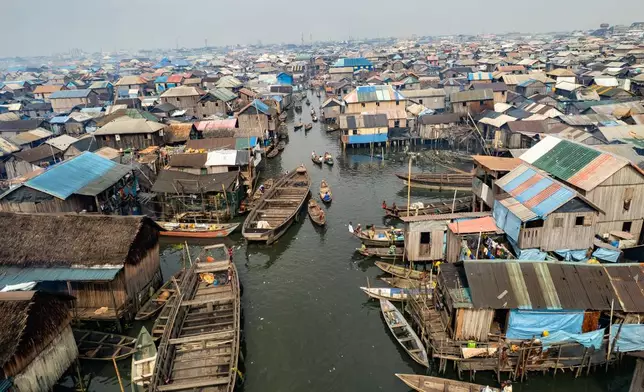
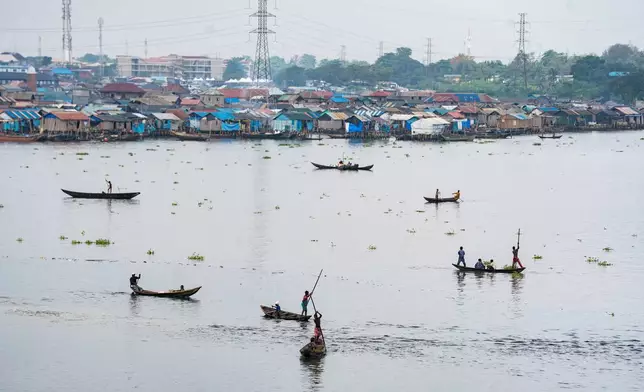
Aerial view of Makoko, one of Lagos' oldest fishing communities where dredging barges operate close to homes built on stilts on Saturday, Dec.13, 2025. Residents say the encroachment has destroyed fishing grounds and put many out of work. (AP Photo/Grace Ekpu)
Worker shovels up freshly extracted sharp sand from a dredging transporter in Ibeshe, Lagos, Nigeria, on Saturday, Dec. 6, 2025. (AP Photo/Grace Ekpu)
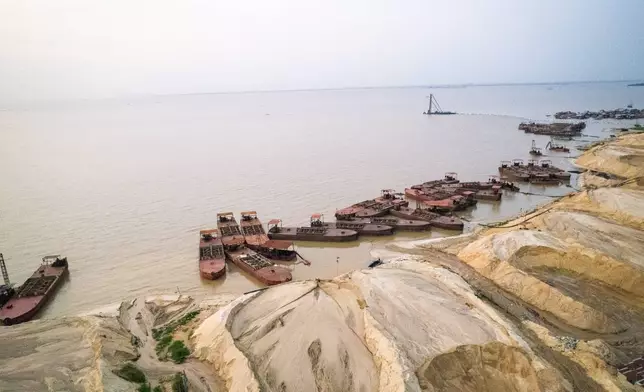
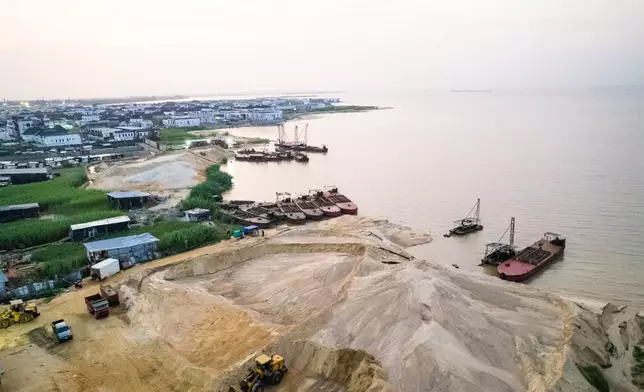
Aerial view of heaps of sand and dredging equipment in the busy Ajah area of Lagos, Nigeria, on Saturday, Dec. 6, 2025. Lagos is in constant construction. Roads, bridges and housing estates are rising daily on reclaimed waterfronts as the city's rich displace many of its poor. (AP Photo/Grace Ekpu)
One of thousands of local dredgers diving for sand to support his household on Saturday, Dec. 13, 2025. He said he and his partner earn about 12,000 naira ($8) each per boatload, selling to a middleman who supplies larger buyers. (AP Photo/Grace Ekpu)
Sand extraction in progress on Lagos waters, Saturday, Dec. 6, 2025. (AP Photo/Grace Ekpu)
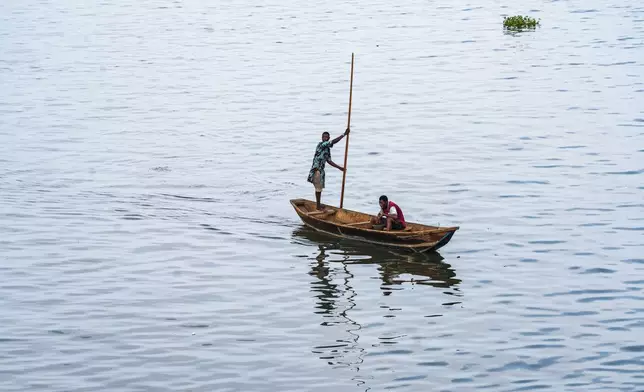
Fishermen in the lagoon in Lagos, Nigeria, on Saturday, Dec. 6, 2025. (AP Photo/Grace Ekpu)
Worker shovels up freshly extracted sharp sand from dredging transporter in Ibeshe, Lagos, Nigeria, on Saturday, Dec. 6, 2025. (AP Photo/Grace Ekpu)
Aerial view of heaps of sand and dredging equipment in the busy Ajah area of Lagos, Nigeria, on Saturday, Dec. 6, 2025. (AP Photo/Grace Ekpu)
Sand extraction in progress in Lagos waters, Saturday, Dec. 6, 2025. (AP Photo/Grace Ekpu)
Dredgers and local traders say the price of sand, crucial for making concrete, has risen steadily.
The changes to the lagoon are unmistakable. What was once an open stretch of water is increasingly broken up by sandy patches, narrowing channels, and reshaping currents that support thousands of fishermen.
—
This is a photo gallery curated by AP photo editors.

Residents on a boat on the Lagos Lagoon on Saturday, Dec. 6, 2025. (AP Photo/Grace Ekpu)

Aerial view of Makoko, one of Lagos' oldest fishing communities where dredging barges operate close to homes built on stilts on Saturday, Dec.13, 2025. Residents say the encroachment has destroyed fishing grounds and put many out of work. (AP Photo/Grace Ekpu)

Worker shovels up freshly extracted sharp sand from a dredging transporter in Ibeshe, Lagos, Nigeria, on Saturday, Dec. 6, 2025. (AP Photo/Grace Ekpu)

Aerial view of heaps of sand and dredging equipment in the busy Ajah area of Lagos, Nigeria, on Saturday, Dec. 6, 2025. Lagos is in constant construction. Roads, bridges and housing estates are rising daily on reclaimed waterfronts as the city's rich displace many of its poor. (AP Photo/Grace Ekpu)

One of thousands of local dredgers diving for sand to support his household on Saturday, Dec. 13, 2025. He said he and his partner earn about 12,000 naira ($8) each per boatload, selling to a middleman who supplies larger buyers. (AP Photo/Grace Ekpu)

Sand extraction in progress on Lagos waters, Saturday, Dec. 6, 2025. (AP Photo/Grace Ekpu)

Fishermen in the lagoon in Lagos, Nigeria, on Saturday, Dec. 6, 2025. (AP Photo/Grace Ekpu)

Worker shovels up freshly extracted sharp sand from dredging transporter in Ibeshe, Lagos, Nigeria, on Saturday, Dec. 6, 2025. (AP Photo/Grace Ekpu)

Aerial view of heaps of sand and dredging equipment in the busy Ajah area of Lagos, Nigeria, on Saturday, Dec. 6, 2025. (AP Photo/Grace Ekpu)

Sand extraction in progress in Lagos waters, Saturday, Dec. 6, 2025. (AP Photo/Grace Ekpu)
DIBBINE, Lebanon (AP) — Israel’s air force struck different parts of southern Lebanon on Friday, and its military issued evacuation warnings for nine villages, including one that has been spared much of the destruction and has sheltered thousands of people displaced by the three-month war.
The Israeli strikes killed nine people in six locations in southern Lebanon, the state news agency reported.
Meanwhile, the new warnings forced hundreds of families to flee the village of Anqoun and the area of Aarnaya, on the edge of the predominantly Christian community of Maghdoucheh, near the southern port city of Sidon. Elsewhere, people began to return to their homes to survey the aftermath of fighting between Israeli forces and the Hezbollah militant group.
Wide parts of the south have already been devastated by the war. An Associated Press team traveling in the south Friday saw multiple villages in ruins, including Dibbine, near Marjayoun town, from which Israeli troops withdrew a day earlier.
It was the first time Israeli troops pulled out of an area in southern Lebanon since the latest Israel-Hezbollah war began in early March. U.N. peacekeepers and Lebanese troops were at an entrance of Dibbine, clearing rubble and opening roads.
But the Lebanese army set up barbed wire at one of the entrances, preventing residents from returning yet.
At least one family arrived to search the rubble of its home along the road leading to the village, while the owner of a petrol station in Dibbine looked at his destroyed property and called village residents to report on the destruction he saw from behind the barbed wire.
Israel had warned Lebanese residents against returning to villages in the south, saying the area is still a combat zone.
The current ceasefire agreement calls for Lebanon’s armed forces to take control of security zones in Lebanon from which the militants would be banned. But the latest deal between Israel and the Lebanese government has been rejected by Hezbollah, which demanded a complete Israeli withdrawal from Lebanon.
Lebanese Parliament Speaker Nabih Berri, a strong ally of Hezbollah who has been acting as a mediator on behalf of the group, echoed the militants' demands. In his first comments since the agreement was announced Wednesday in Washington, Berri said that he accepts Hezbollah’s withdrawal from the areas south of the Litani River as long as it coincides with the withdrawal of Israeli troops from southern Lebanon.
The river, about 30 kilometers (20 miles) north of the border with Israel, forms the boundary of a 2006 U.N.-established buffer zone in which Hezbollah is banned. Israeli troops have pushed far past the river into southern Lebanon.
Berri added in a written statement that the ceasefire should be “complete and comprehensive,” without any exceptions for land, sea or air, and “without bulldozing and demolishing everything that exists.” He was referring to wide areas that have been demolished by Israeli troops.
The war in Lebanon, where Israeli forces have seized large swaths of the south since March 2, threatens efforts to end the Iran war and reopen the Strait of Hormuz, a globally important conduit for oil, natural gas, fertilizer and other commodities.
Iran has demanded that any lasting truce extend to Lebanon. Israeli Prime Minister Benjamin Netanyahu, who faces elections later this year, wants to press ahead with Israel’s offensive until Hezbollah no longer poses a threat.
In Iran developments, American forces boarded a sanctioned oil tanker linked to the Islamic Republic in the Indian Ocean, the U.S. military said Friday.
U.S. Indo-Pacific Command posted on X that the forces boarded the MT Davina, without offering details. U.S. forces around the world have sought to prevent Iran from profiting off its oil and other goods. They have been directed to stop ships tied to Tehran or those suspected of carrying supplies that could help its government.
The U.S. Navy has imposed a blockade of Iran’s ports as part of an effort to force Tehran to open the strait and accept a deal to extend a tenuous ceasefire in the war.
Nearly three hours after Friday's evacuation warnings were issued by the Israeli military’s Arabic spokesperson, Israeli warplanes struck the Lebanese villages, including Anqoun. About 2,500 people displaced by the fighting were sheltering in Anqoun, the Lebanese news agency NNA reported.
Shrapnel and pieces of missiles were seen in the rubble of homes lining the road into Dibbine. Israeli troops entered the village weeks ago for the first time and were engaged in heavy clashes with Hezbollah fighters in the area. The troops returned this week, before withdrawing Thursday.
The road to Dibbine was dotted with villages entirely emptied of residents and destroyed by Israeli strikes, including Khiam. But no Israeli troops were visible from the road.
Nearby Christian villages were largely untouched, and many of their residents decided to stay. The strategic Beaufort castle, captured by Israel last week, appeared in the distance, with a flag of the Israeli Golani Brigade. Smoke from strikes around the nearby Nabatiyeh city billowed above.
Israeli troops have seized around a fifth of Lebanon, pushing further into the country’s south than at any time since the end of Israel’s 1982-2000 occupation. The latest declared ceasefire came about through U.S.-brokered talks between Israel and Lebanon’s government, which accuses Hezbollah of dragging the country into war and had made efforts to disarm it before the latest hostilities.
On Thursday night, an airstrike in the southern city of Tyre killed three and wounded seven people, including three children and two women, the Health Ministry said.
In northern Israel on Thursday, drone alert sirens sounded in several border communities, including a town where Netanyahu had met earlier with local officials. The Israeli military later said the sirens were triggered by attempts to intercept several drones that hit near soldiers in southern Lebanon. No injuries were reported.
More than 3,500 people have been killed in Lebanon since the war began. The fighting has killed at least 29 Israeli soldiers and three civilians.
Associated Press writers Bassem Mroue in Beirut and Ben Finley in Washington contributed to this report.

A view of Beaufort Castle, southeast Lebanon, Friday, June 5, 2026. (AP Photo/Hussein Malla)
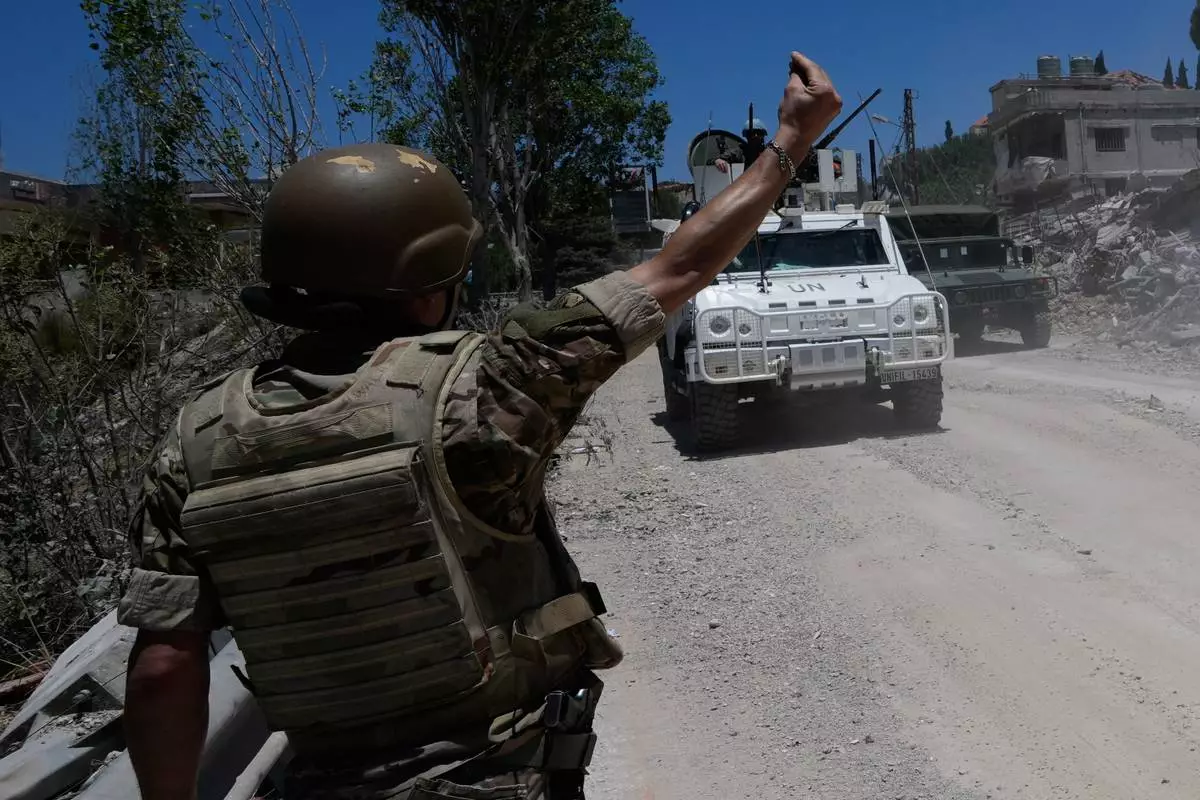
A Lebanese soldier gestures in front of a Spanish U.N peacekeeper vehicle Dibbine village, southeast Lebanon, Friday, June 5, 2026, a day after Israeli forces withdrew following clashes with Hezbollah fighters. (AP Photo/Hussein Malla)
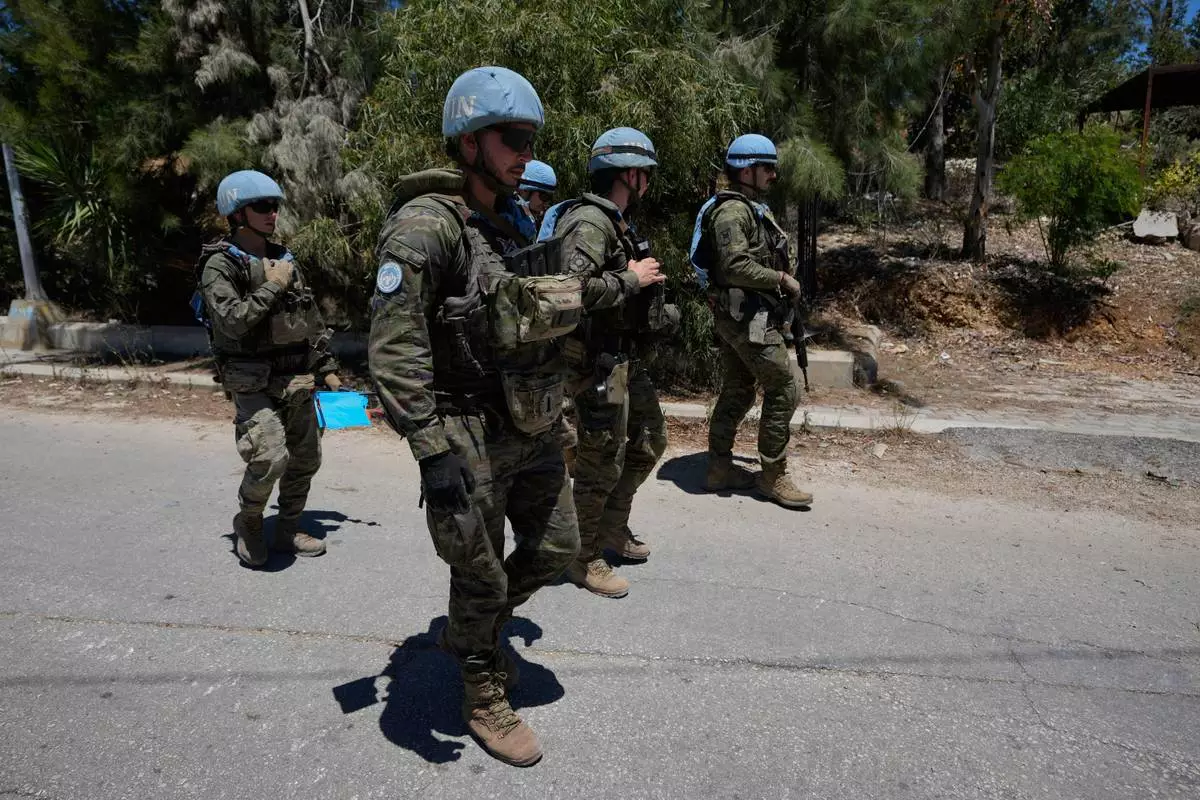
Spanish U.N peacekeepers patrol at an entrance of Dibbine village, southeast Lebanon, Friday, June 5, 2026, a day after Israeli forces withdrew following intense clashes with Hezbollah fighters. (AP Photo/Hussein Malla)
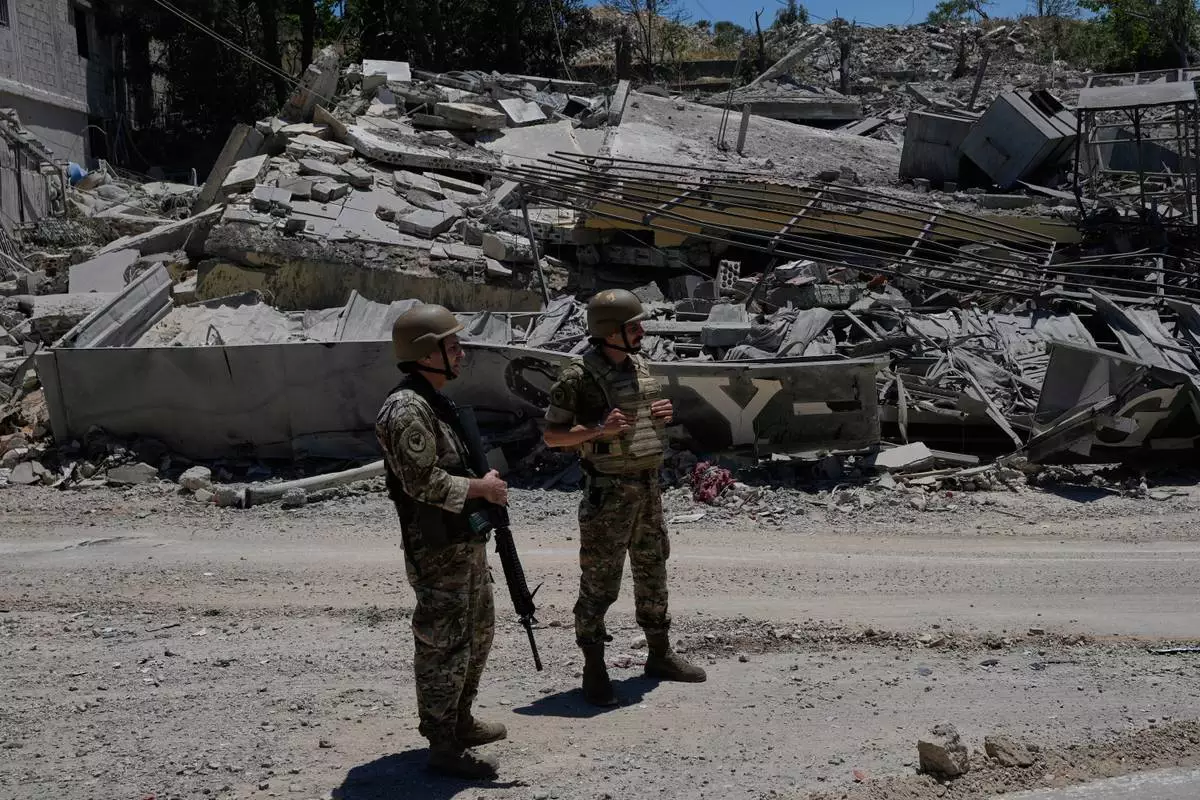
Lebanese army soldiers stand in front of a house that was destroyed in the recent clashes between Hezbollah fighters and Israeli troops in Dibbine village, southeast Lebanon, Friday, June 5, 2026, a day after Israeli forces withdrew. (AP Photo/Hussein Malla)
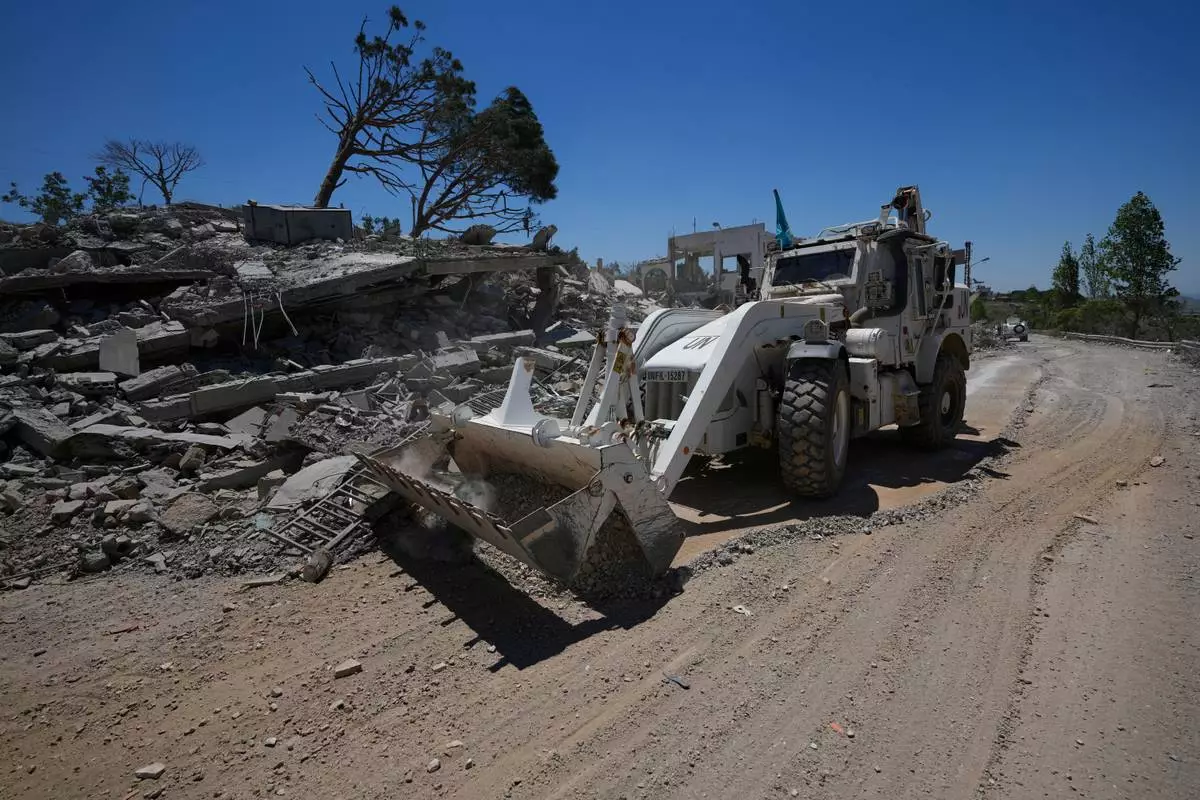
A bulldozer for the Spanish U.N peacekeeper opens a road in front of a house that was destroyed in the recent clashes between Hezbollah fighters and Israeli troops in Dibbine village, southeast Lebanon, Friday, June 5, 2026, a day after Israeli forces withdrew. (AP Photo/Hussein Malla)
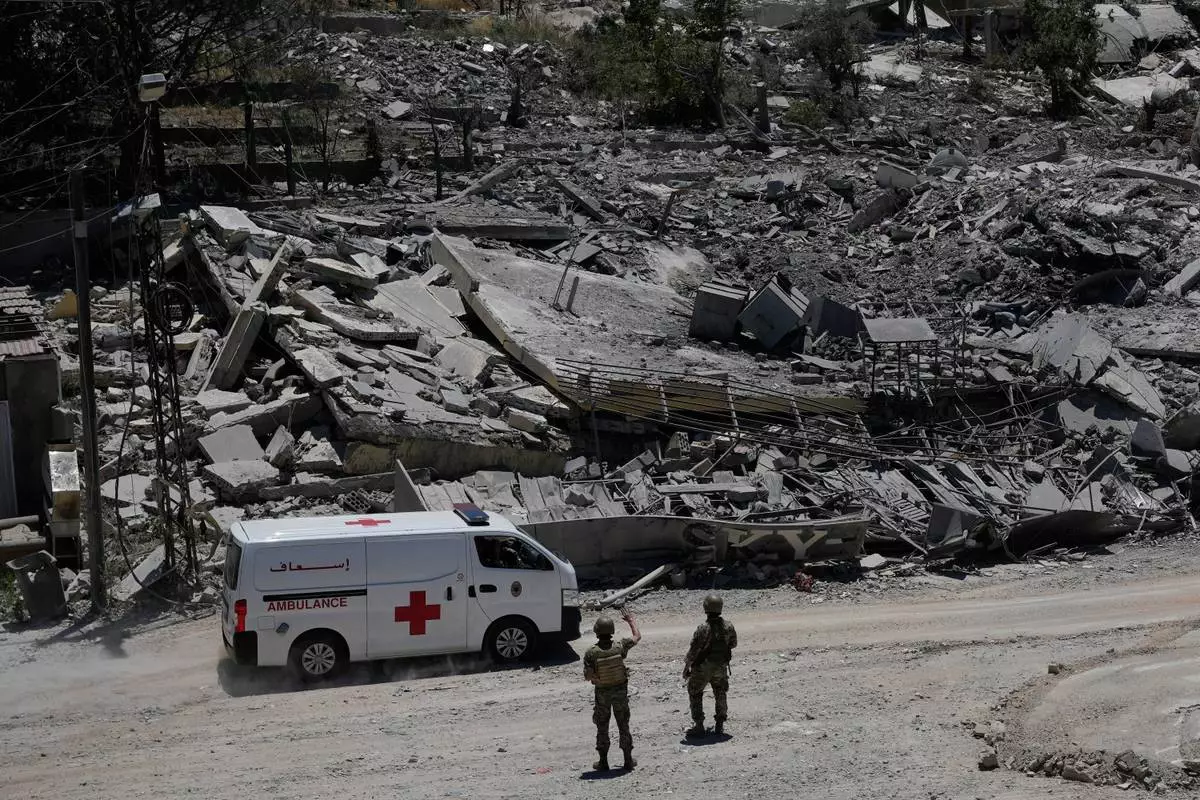
Lebanese soldiers deploy at a road in front of destroyed houses in Dibbine village, southeast Lebanon, Friday, June 5, 2026, a day after Israeli forces withdrew following clashes with Hezbollah fighters. (AP Photo/Hussein Malla)
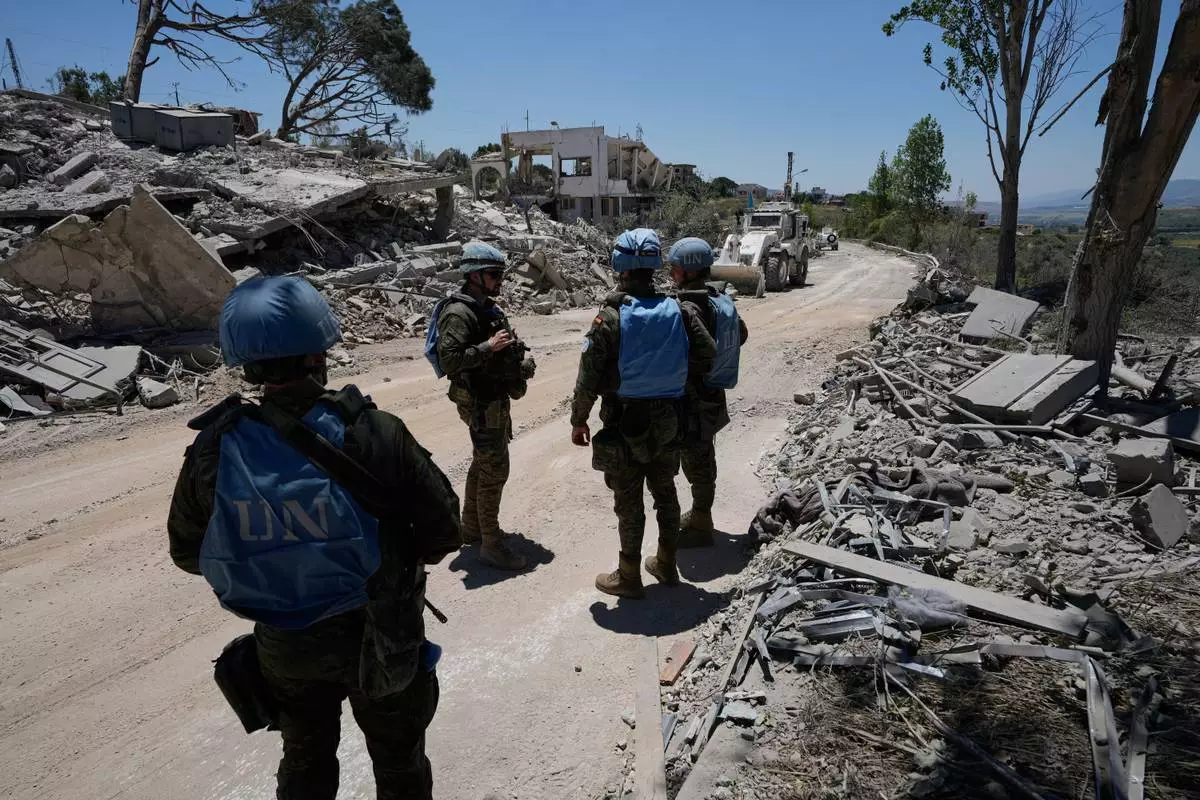
Spanish U.N peacekeepers deploy at a road in Dibbine village, southeast Lebanon, Friday, June 5, 2026, a day after Israeli forces withdrew following intense clashes with Hezbollah fighters. (AP Photo/Hussein Malla)
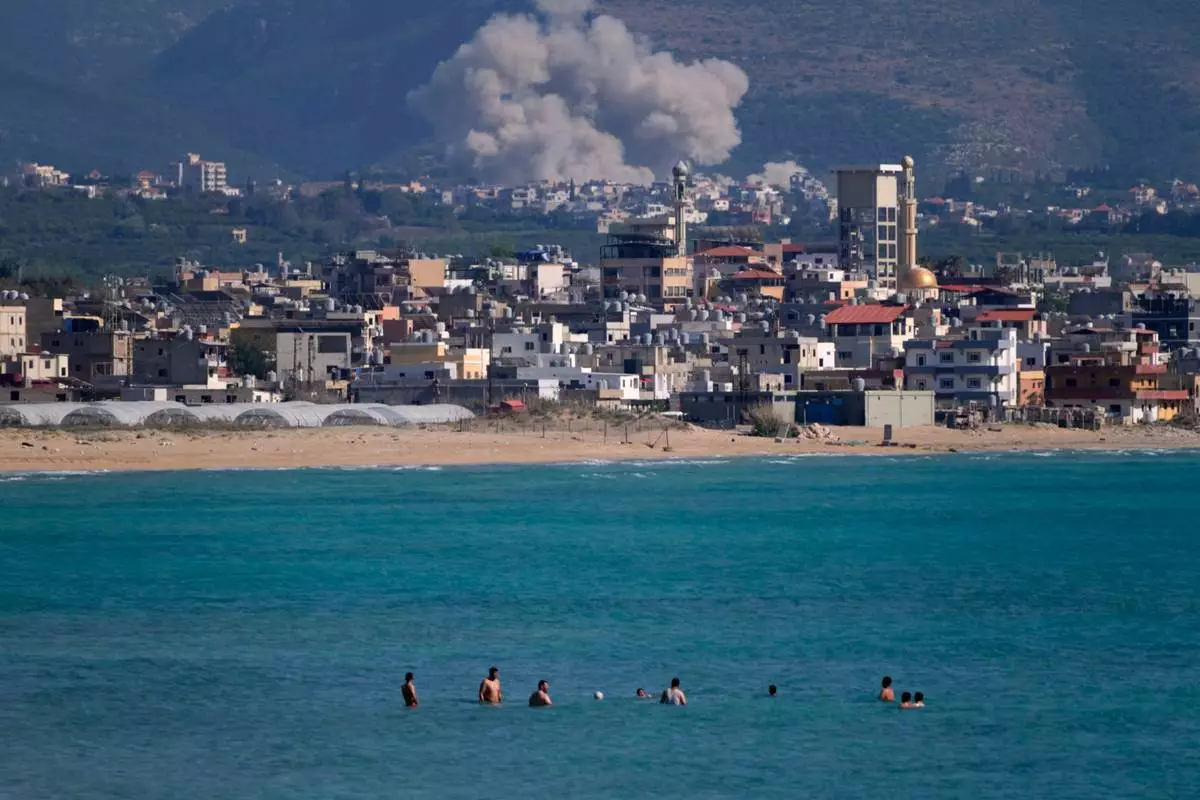
People swim on a public beach as smoke, background, rises from an Israeli airstrike that hit the Qlaileh village, seen from the southern port city of Tyre, Lebanon, Tuesday, June 2, 2026. (AP Photo/Mohammed Zaatari)
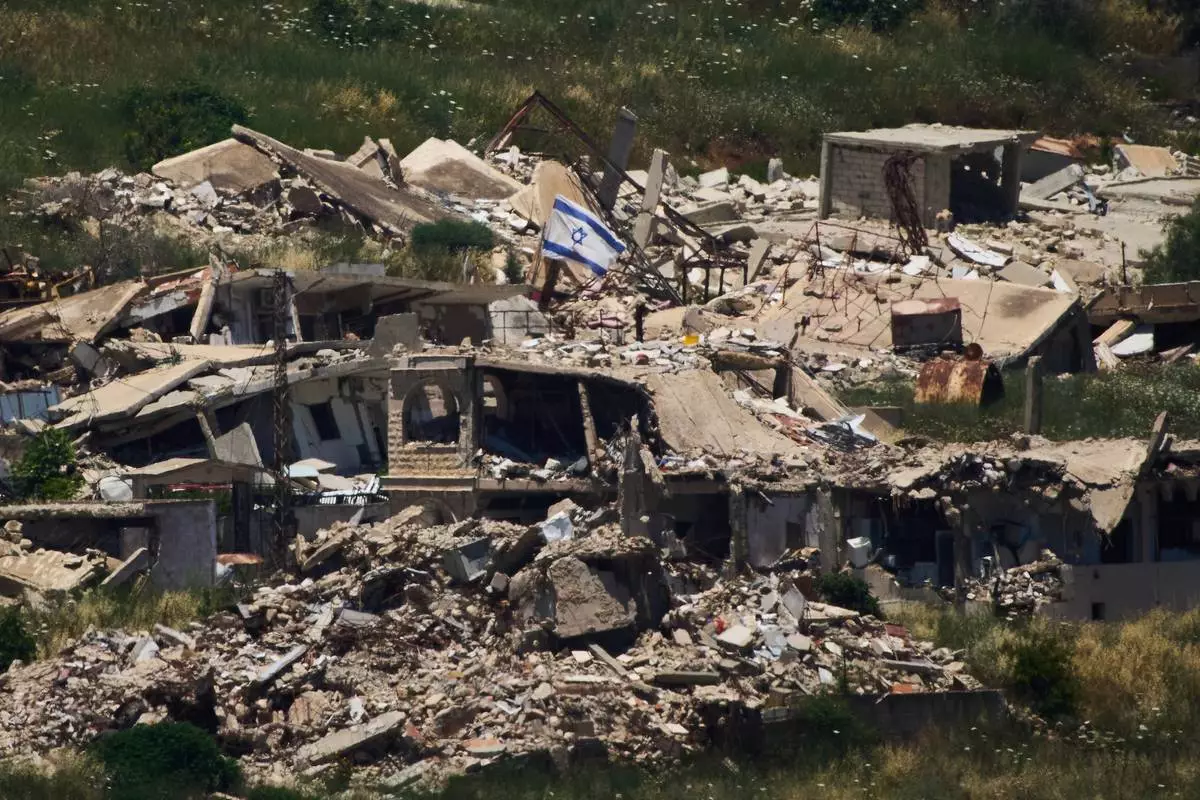
An Israeli flag hangs on a destroyed building in southern Lebanon as seen from northern Israel, Thursday June 4, 2026. (AP Photo/Ariel Schalit)