Multiple states across Brazil have been gripped by an intense heatwave in recent days, prompting local authorities to issue weather alerts and urging residents to take precautions, with the high temperatures forecast to continue.
Southeastern states including Sao Paulo, Rio de Janeiro, and Minas Gerais have been experiencing the most extreme heat, with temperatures climbing to a sweltering high of 40.8 degrees Celsius in Rio de Janeiro on Monday.
Authorities across the country have been sending out weather warnings, with residents being advised to avoid prolonged outdoor activities and medics reminding people to take measures to ensure they stay hydrated.
"[You have to] drink plenty of water, use a fan. There is not much you can do to escape it, really. It is absurdly hot," said Ana Flavia, a local resident in Sao Paulo.
"With this change in temperature and the excessive heat, we see a lot of cases of dehydration," said Tiago Foliate Pitirilo, a doctor from the city's Hospital Sao Camilo.
The sweltering heat may be around for a while more, according to experts, who say higher water temperatures in the Pacific Ocean mean Brazil is likely to face more frequent heatwaves this year.
"The ocean forecast indicates that in the second half of the year we will have a warmer Pacific Ocean. This allows us to infer that the number of heat waves in 2026 may be higher than last year, when the Pacific Ocean was cooler," said Marecelo Seluchi, a meteorologist from Brazil's National Center for Monitoring and Alerts for Natural Disasters (CEMADEN).

Brazil in midst of heatwave with more extreme temperatures expected

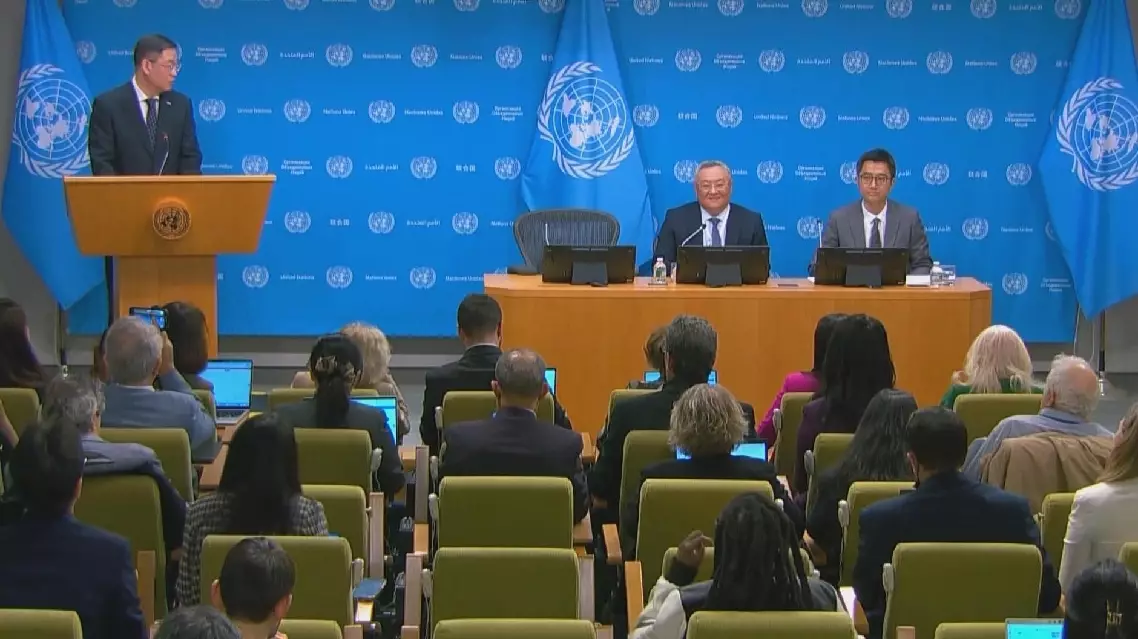
China has made new progress in the high-quality development of its marine economy, with the ocean increasingly serving as a new driver of growth, Minister of Natural Resources Guan Zhi'ou said in Beijing on Thursday.
Guan briefed the media on China's new achievements in marine development, utilization and protection in a ministerial interview after the closing meeting of the fourth session of the 14th National People's Congress (NPC), China's top legislature, in Beijing.
"In 2025, the gross ocean product exceeded 11 trillion yuan (about 1.60 trillion U.S. dollars), accounting for 7.9 percent of GDP. Industries such as shipbuilding and offshore engineering equipment, offshore wind power, and marine fisheries rank among the top in the world. Marine drugs independently developed by China accounted for 28 percent of the global market share, while output value from marine energy and seawater desalination continued to expand. In order to make our ocean more beautiful and better protect the marine environment, we have always been committed to strictly controlling new land reclamation from the sea, with the retention rate of natural coastline exceeding 35 percent. The mangrove area has reached 4.75 million mu (about 316,666.67 hectares), maintaining a continuous growth momentum. We established the Huangyan Dao national nature reserve to strengthen the protection and restoration of important ecosystems such as coral reefs," he said.
Guan said China's blue circle of friends continues to expand. The country has become one of the first signatories to the agreement on marine biodiversity conservation, and has signed blue economy cooperation agreements with more than 50 countries and international organizations, while also conducting joint polar and ocean scientific expeditions with multiple countries.
Those achievements demonstrate not only industrial expansion, but also a stronger emphasis on ecological stewardship and openness to international cooperation, and the next stage will focus on consolidating existing gains while aligning with the goals and tasks set out in the 15th Five-Year Plan (2026-2030), the minister said.
"On the basis of consolidating the above achievements, we will, in accordance with the goals and tasks set out in the 15th Five-Year Plan (2026-2030), accelerate the high-quality development of the marine economy. In practice, we will place greater emphasis on innovation-driven growth by launching and implementing major national science and technology programs to comprehensively enhance deep-sea sensing, exploration and development capabilities. We will pay more attention to efficient coordination by further optimizing the spatial layout of major bays through integrated land-sea planning and building new growth poles. Industrial upgrading will be stepped up by vigorously developing emerging sectors such as deep-sea equipment and the blue medicine bank and fostering new engines of growth," Guan said.
"We will also place more emphasis on harmony between people and the sea, carefully safeguard blue sea and silver beaches, and make cruise travel and sea fishing new trends in cultural tourism consumption. More attention will be paid to win-win cooperation by expanding marine cultural exchanges to build a community with a shared future for the ocean," he said.
China continues to advance high-quality development of marine economy: minister