A Chinese envoy to the United Nations on Monday called on all parties concerned to the Ukraine crisis to uphold peace, dialogue and solidarity to promote a political solution to the crisis. Sun Lei, China's deputy permanent representative to the United Nations, stated at a UN Security Council open meeting that the Ukraine crisis, which has been lasting for nearly four years, is at a critical stage of negotiation and resolution.
The window for negotiations has opened and the dawn of peace lies ahead. However, the ground war continues, and the situation remains complex and severe, according to Sun.
China calls on the relevant parties to follow the principles of no spillover of the war, no escalation of fighting and no fire-stoking by any party, and to earnestly protect civilians and civilian facilities, so as to create conditions for a political solution to the crisis, Sun noted.
China calls on the relevant parties to pull in the same direction, continue to build consensus, properly address each other's security concerns, and reach a comprehensive, lasting, and binding peace agreement as soon as possible to eliminate the root causes of the conflict, Sun said.
China opposes any party using the crisis as an excuse to impose illegal unilateral sanctions and suppress normal economic and trade exchanges, and also opposes taking the crisis as an opportunity to divide the world and create closed and exclusive bloc confrontation, Sun said.
"China's position on the Ukraine issue has been very clear and consistent. We have always adhered to promoting peace talks and pushing for a political solution to the crisis. We have been relentlessly creating conditions and building consensus for peace. We have maintained close communication with Russia, Ukraine, and other parties concerned, actively carried out shuttle diplomacy, and initiated the 'Friends of Peace' group for the Ukraine Crisis. We have continuously voiced our calls for peace, built consensus for peace, and promoted peace efforts," he said.
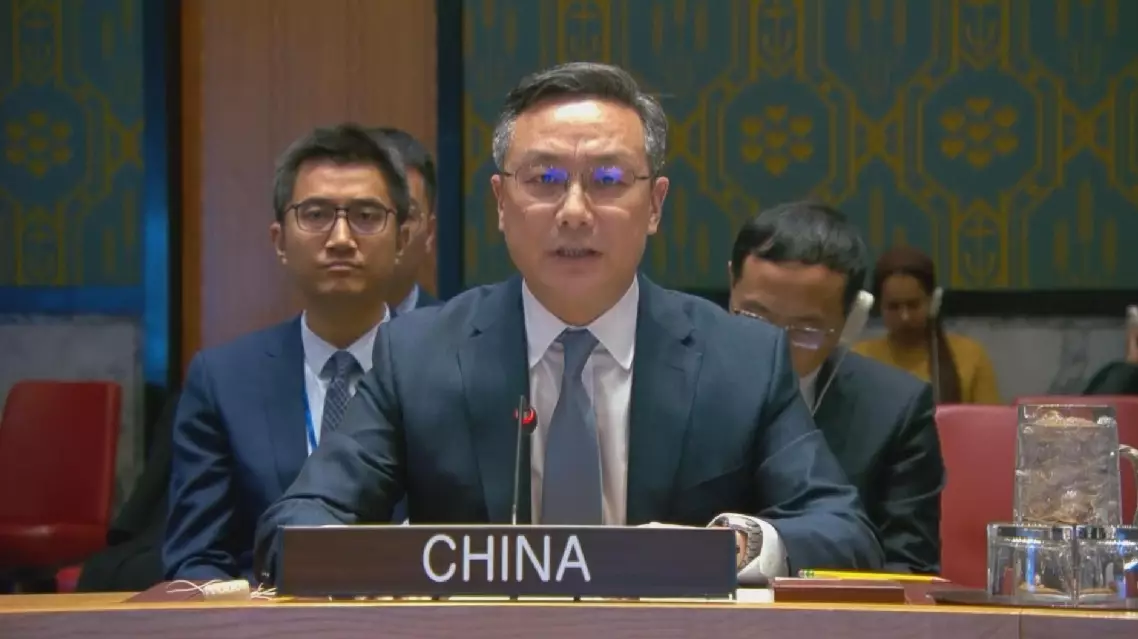
Chinese envoy calls for peace, dialogue, unity on Ukraine issue
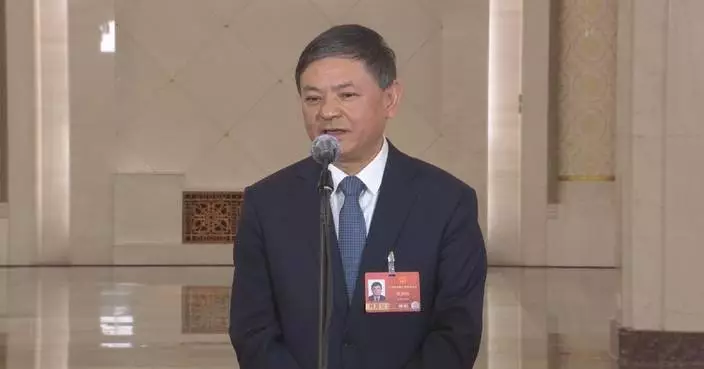
Smart technologies have reshaped China's ecological and environmental monitoring system, Huang Runqiu, minister of Ecology and Environment, said Thursday in Beijing on the sidelines of the fourth session of the 14th National People's Congress(NPC).
"Regarding ecological and environmental monitoring, we have been promoting the digitalization, informatization, and intelligentization of the entire monitoring process in recent years, reshaping the ecological and environmental monitoring system. For instance, in water environment monitoring and sampling, we have used intelligent drones which can quickly locate sampling points, collect samples accurately, return rapidly, and they are safe and reliable, improving work efficiency by over 70 percent. They are particularly advantageous for sampling during flood seasons and in remote areas," Huang told the press.
"In terms of environmental sample analysis, we have developed 'lights-out laboratories' in recent years. As the name suggests, these labs operate without lights and are unattended. Through robotic arms, robots, and intelligent management systems, they achieve full-process automation and intelligence from sample handover, testing, and analysis to report generation. This has significantly enhanced work efficiency, increasing it by more than eightfold compared to traditional labs. More importantly, it reduces human interference, human error, and even data falsification," he said.
Thanks to the improved ecological and environmental supervision capabilities, the number of environmental violation cases nationwide has decreased from 130,000 five years ago to 43,000 last year, representing a decline of 68 percent, Huang said.
The minister said China has already applied environmental DNA technology in the biodiversity monitoring work.
"In the field of biodiversity monitoring, monitoring aquatic organisms remains a weak point. However, significant progress has been made in recent years as we have developed environmental DNA technology. Although this chip is very small in size, it contains DNA detection information for aquatic organisms, including the finless porpoise and the Chinese sucker, from 19 state-controlled sections in the Jiangsu segment of the Yangtze River. The results showed that over the past five years, more than 20 species of aquatic organisms have increased in this river section, fully demonstrating the tangible effectiveness of the ten-year fishing ban in the Yangtze River," Huang said while showing a chip to reporters.
The 14th NPC, China's national legislature, concluded its fourth session on Thursday.
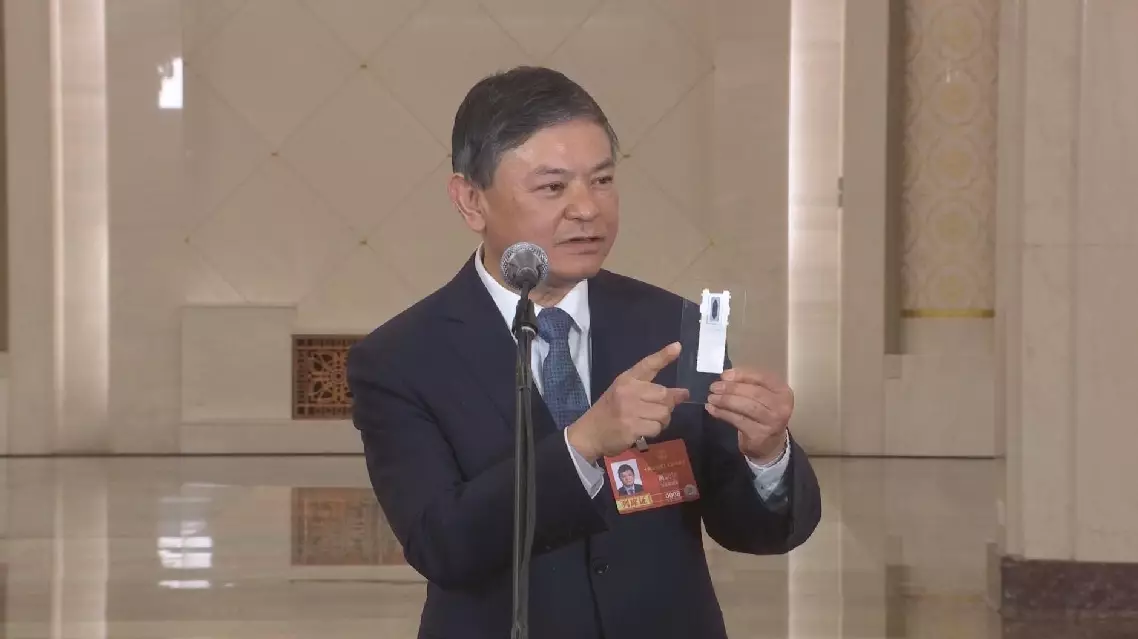
Smart technologies reshape China's ecological, environmental monitoring system: minister