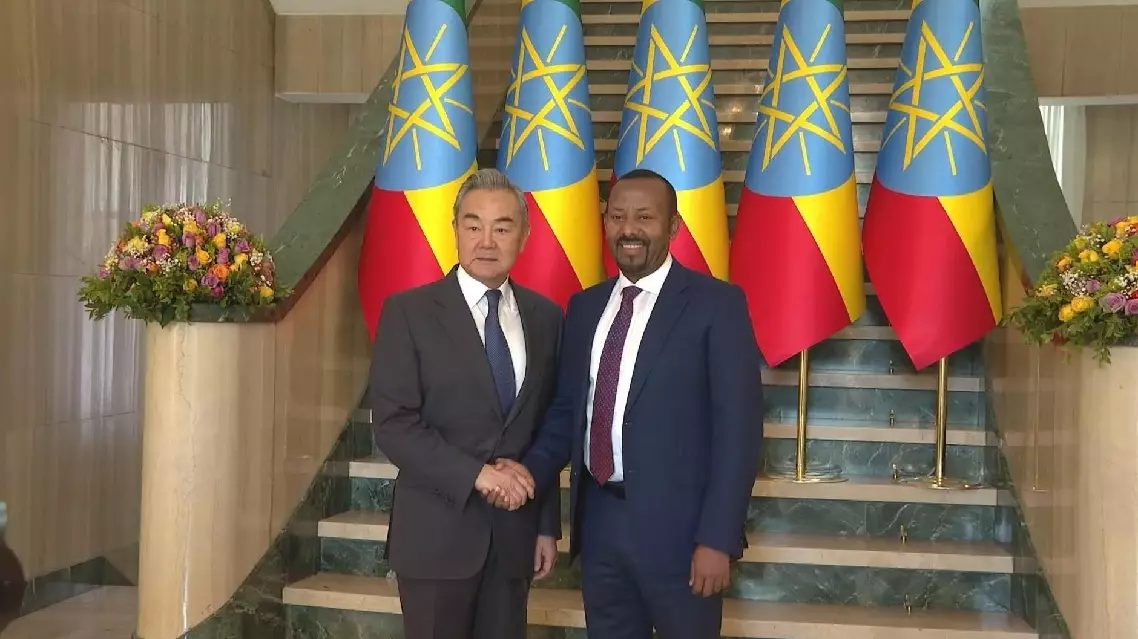
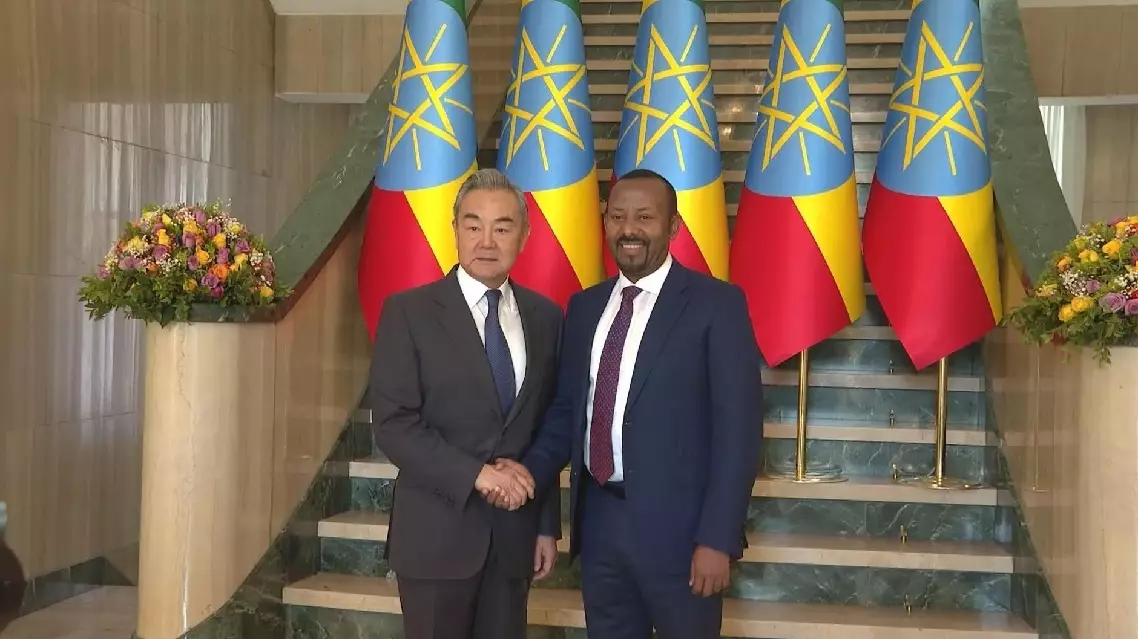
Chinese Foreign Minister Wang Yi said Monday that it is the opportune time for China and the African Union (AU) to enhance strategic mutual trust and deepen strategic cooperation.
Wang, also a member of the Political Bureau of the Communist Party of China Central Committee, made the remarks in an interview with Chinese media after concluding his visits to the AU headquarters, Ethiopia, Tanzania and Lesotho.
China and the AU, as the largest developing country and the continental body with the largest number of developing countries respectively, should work together to address current challenges, not only to safeguard the legitimate rights and interests of China and Africa, but also to contribute their respective part to world peace and development, Wang said.
As this year marks the 70th anniversary of launching diplomatic relations between China and African countries, Wang said the China-Africa Year of People-to-People Exchanges, a showcase of the achievements of China-Africa cooperation, will bring together youth, culture, media and other sectors through nearly 600 exchange activities, covering various fields of China-Africa exchanges, he added.
Wang said that he was pleased to see the new achievements in Africa's development during his visit and that China's huge market will provide broader opportunities for Africa's development.
He called on the international community to pay more attention to and increase investment in Africa.
Wang voiced China's readiness to work with African countries to build institutionalized platforms and support them in actively exploring successful paths that meet their actual needs, benefit the general public and fully leverage their own resource endowments.
Only when China and Africa join hands to move towards modernization can the world achieve modernization. Without the modernization of Africa, there will be no modernization of the world, Wang said.
Since the successful convening of the Beijing Summit of the Forum on China-Africa Cooperation in September 2024, both sides have worked together to push for the implementation of its outcomes, Wang said. So far, over 90 percent of the goals have been achieved or have made positive progress, he added.
Wang said that during his visit, he briefed the African side on the recommendations for formulating the 15th Five-Year Plan adopted at the Fourth Plenary Session of the 20th Central Committee of the Communist Party of China. He said that China will continue to be the engine of global growth and is also willing to be a booster for Africa's development and revitalization.
African leaders applaud China's development achievements and expect Chinese modernization to benefit Africa, he added.
Wang said that during the visit, African friends have all reiterated their commitment to the one-China principle and voiced their support for China's efforts to achieve national reunification.
Chinese FM says it's opportune time for China, AU to enhance strategic mutual trust, cooperation
Chinese FM says it's opportune time for China, AU to enhance strategic mutual trust, cooperation