Skip to Content Facebook Feature Image

Senseair launches next-generation CO2 sensor featuring 75% smaller size and SMD-solderability for demand-controlled HVAC systems

News

Senseair launches next-generation CO2 sensor featuring 75% smaller size and SMD-solderability for demand-controlled HVAC systems
News

News

Senseair launches next-generation CO2 sensor featuring 75% smaller size and SMD-solderability for demand-controlled HVAC systems

2026-01-13 21:33 Last Updated At:21:50

TOKYO--(BUSINESS WIRE)--Jan 13, 2026--

Senseair, Swedish subsidiary of Asahi Kasei Microdevices, has developed the “S12 CO 2 ” as a next-generation CO 2 sensor for demand-controlled ventilation (DCV) in zero-energy buildings andbattery-powered indoor air quality (IAQ) monitoring. The new model is approximately 75% smaller in volume than its predecessors and can be used as a surface-mount device (SMD) on circuit boards while maintaining high accuracy and low power consumption. This enables sensor integration in applications where installation was previously difficult. Senseair has already begun sample distribution and plans to initiate mass production in 2026.

This press release features multimedia. View the full release here: https://www.businesswire.com/news/home/20260113717957/en/

In recent years, legal frameworks to enhance the energy efficiency of buildings have become stricter worldwide. Particularly within the EU, the Energy Performance of Buildings Directive adopted in 2024 requires new buildings to comply with the zero-emission standard. These buildings have very low energy needs, which are largely covered by onsite and nearby renewable energy sources. This legislation will come into effect for new public buildings by 2028 and for all other new buildings by 2030.

To contribute to achieving this zero-emission level for buildings, intelligent DCV systems are emerging as a highly effective alternative to conventional temperature-controlled ventilation. DCV systems automatically adjust the ventilation based on CO 2 levels, thus enabling both reduction in energy consumption and comfortable IAQ. However, DCV systems require the installation of CO 2 sensors across the entire building, and constraints in design and installation space have so far proved to be major challenges.

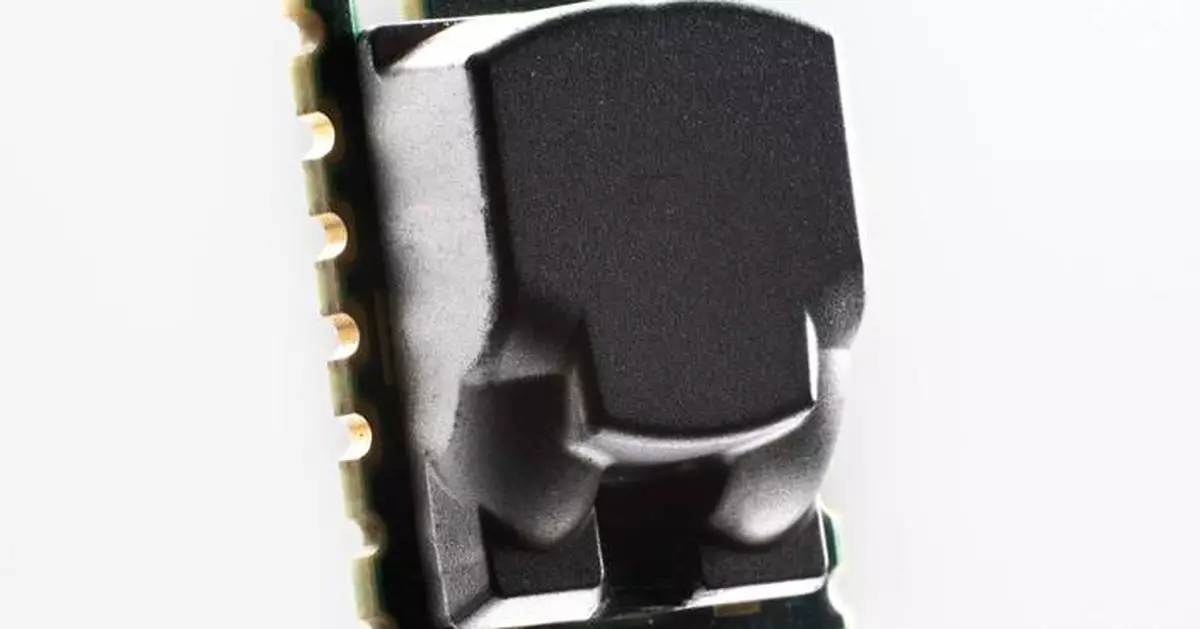
Senseair’s new “S12 CO 2 ” sensor features a redesigned structure based on the company’s NDIR (non-dispersive infrared absorption) sensor technology. With a measurement range of 400 – 10,000 ppm and an accuracy of +/- (30 ppm + 3% of reading), the new sensor maintains the performance of its predecessor CO 2 sensors, “Sunrise” and “Sunlight,” but comes with a significantly smaller packaging size of 18 mm × 15 mm × 7 mm. This compact size enables the effective use of available space. It enables SMD reflow surface mounting on circuit boards, offering a discreet and elegant installation in air conditioning equipment or wall-mounted monitors without compromising design aesthetics.

Compliant with global building standards

For the retrofit market, where cable installation is often challenging, the Senseair “S12 CO 2 ” sensor offers the same ultra-low power consumption as the “Sunrise” and “Sunlight” sensors. Its energy efficiency, SMD-solderable design, and compact size enable sleek, battery-powered CO 2 monitors that allow easy installation with a wide degree of freedom.

The “S12 CO 2 ” sensor will be deployed for IAQ monitoring in building energy management systems (BEMS) within office buildings and commercial facilities, primarily in Europe, North America, and Asia. Further application fields include air conditioning units and heat exchangers in the residential sector.

Like its predecessors, the “S12 CO 2 ” sensor will comply with globally recognized standards, including ANSI/ASHRAE Standard 62.1-2022 Addendum d, RESET Grade B, and WELL Building Standard® (WELL v2™), ensuring worldwide relevance and impact.

About Senseair

Senseair is a gas sensor manufacturer specializing in CO 2, alcohol, and refrigerants. With over 30 years of experience of NDIR technology, Senseair has become a market leader within the field. Headquartered in Delsbo, Sweden, Senseair has been part of the Asahi Kasei Group since 2018.

About Asahi Kasei Microdevices Corporation (AKM)

AKM, a Japan-based company, operates an electronic components business as a member of the Asahi Kasei Group’s Material sector. AKM provides customers with unique products by combining the compound semiconductor technology used in magnetic sensors with the ASIC/analog circuit technology used in silicon semiconductors. AKM’s unique products and solutions are featured across a wide range of markets, including mobile communication devices and consumer products, as well as automotive electronics devices, household equipment, and industrial equipment. Additional information is available at https://www.akm.com/global/en/.

About Asahi Kasei

The Asahi Kasei Group contributes to life and living for people around the world. Since its foundation in 1922 with ammonia and cellulose fiber business, Asahi Kasei has consistently grown through the proactive transformation of its business portfolio to meet the evolving needs of every age. With more than 50,000 employees worldwide, the company contributes to sustainable society by providing solutions to the world’s challenges through its three business sectors of Healthcare, Homes, and Material. For more information, visit https://www.asahi-kasei.com/.

Asahi Kasei is also dedicated to sustainability initiatives and is contributing to reaching a carbon neutral society by 2050. To learn more, visit https://www.asahi-kasei.com/sustainability/.
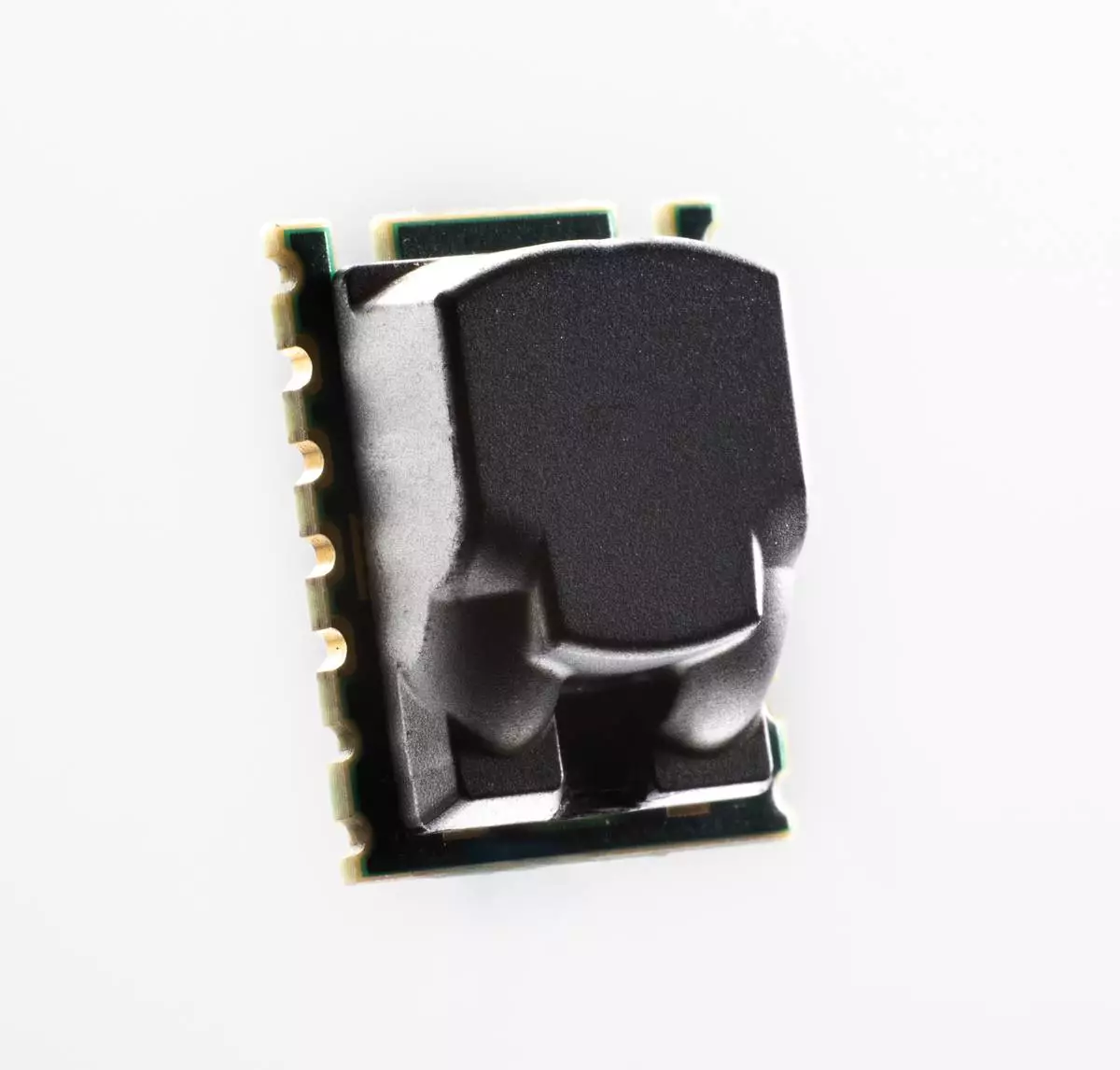
Senseair's S12 CO2


Senseair's S12 CO2

WASHINGTON (AP) — Inflation declined a bit last month as prices for gas and used cars fell, a sign that cost pressures are slowly easing.

Consumer prices rose 0.3% in December from the prior month, the Labor Department said Tuesday, the same as in November. Excluding the volatile food and energy categories, core prices rose 0.2%, also matching November's figure.

Even as inflation has eased, the large price increases for necessities such as groceries, rent, and health care have left many American households feeling squeezed, turning “affordability” issues into high-profile political concerns.

THIS IS A BREAKING NEWS UPDATE. AP’s earlier story follows below.

WASHINGTON (AP) — Inflation likely remained elevated last month as the cost of electricity, groceries, and clothing may have jumped and continued to pressure consumers' wallets.

The Labor Department is expected to report that consumer prices rose 2.6% in December compared with a year earlier, according to economists' estimates compiled by data provider FactSet. The yearly rate would be down from 2.7% in November. Monthly prices, however, are expected to rise 0.3% in December, faster than is consistent with the Federal Reserve's 2% inflation goal.

The figures are harder to predict this month, however, because the six-week government shutdown last fall suspended the collection of price data used to compile the inflation rate. Some economists expect the December figures will show a bigger jump in inflation as the data collection process gets back to normal.

Core prices, which exclude the volatile food and energy categories, are also expected to rise 0.3% in December from the previous month, and 2.7% from a year earlier. The yearly core figure would be an increase from 2.6% in November.

In November, annual inflation fell from 3% in September to 2.7%, in part because of quirks in November's data. (The government never calculated a yearly figure for October). Most prices were collected in the second half of November, after the government reopened, when holiday discounts kicked in, which may have biased November inflation lower.

And since rental prices weren't fully collected in October, the agency that prepares the inflation reports used placeholder estimates that may have biased prices lower, economists said.

Inflation has come down significantly from the four-decade peak of 9.1% that it reached in June 2022, but it has been stubbornly close to 3% since late 2023. The cost of necessities such as groceries is about 25% higher than it was before the pandemic, and other necessities such as rent and clothing have also gotten more expensive, fueling dissatisfaction with the economy that both President Donald Trump and former President Joe Biden have sought to address, though with limited success.

The Federal Reserve has struggled to balance its goal of fighting inflation by keeping borrowing costs high, while also supporting hiring by cutting interest rates when unemployment worsens. As long as inflation remains above its target of 2%, the Fed will likely be reluctant to cut rates much more.

The Fed reduced its key rate by a quarter-point in December, but Chair Jerome Powell, at a press conference explaining its decision, said the Fed would probably hold off on further cuts to see how the economy evolves.

The 19 members of the Fed’s interest-rate setting committee have been sharply divided for months over whether to cut its rate further, or keep it at its curent level of about 3.6% to combat inflation.

Trump, meanwhile, has harshly criticized the Fed for not cutting its key short-term rate more sharply, a move he has said would reduce mortgage rates and the government's borrowing costs for its huge debt pile. Yet the Fed doesn't directly control mortgage rates, which are set by financial markets.

In a move that cast a shadow over the ability of the Fed to fight inflation in the future, the Department of Justice served the central bank last Friday with subpoenas related to Powell's congressional testimony in June about a $2.5 billion renovation of two Fed office buildings. Trump administration officials have suggested that Powell either lied about changes to the building or altered plans in ways that are inconsistent with those approved by planning commissions.

In a blunt response, Powell said Sunday those claims were “pretexts” for an effort by the White House to assert more control over the Fed.

“The threat of criminal charges is a consequence of the Federal Reserve setting interest rates based on our best assessment of what will serve the public, rather than following the preferences of the President,” Powell said. “This is about whether the Fed will be able to continue to set interest rates based on evidence and economic conditions—or whether instead monetary policy will be directed by political pressure or intimidation.”

FILE -American Giant clothing is displayed at the company's showroom in San Francisco, April 17, 2025. (AP Photo/Jeff Chiu, File)

FILE -American Giant clothing is displayed at the company's showroom in San Francisco, April 17, 2025. (AP Photo/Jeff Chiu, File)

FILE -A cashier rings up groceries in Dallas, Aug. 28, 2025. (AP Photo/LM Otero, File)

FILE -A cashier rings up groceries in Dallas, Aug. 28, 2025. (AP Photo/LM Otero, File)

Recommended Articles