KAMPALA, Uganda (AP) — President Yoweri Museveni and his political opponents in Uganda held their final rallies on Tuesday before an election that authorities will oversee with soldiers in the streets — deployments that have alarmed opposition figures who see signs of the authoritarianism they want to do away with.
The Uganda Communications Commission on Tuesday directed mobile internet providers to temporarily suspend services less than 48 hours before the election, citing misinformation, electoral fraud and incitement of violence. Restoration of internet services will only be done after the commission issues a notice to providers, according to a letter to the internet companies.
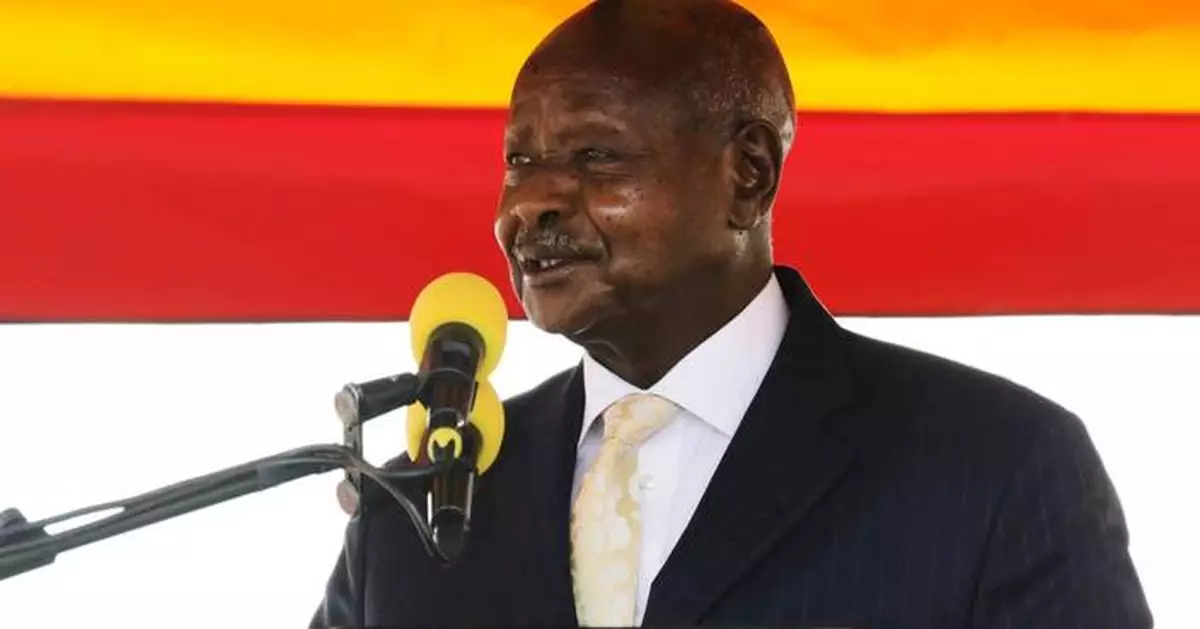
Museveni, Africa’s third-longest governing president, seeks a seventh term to extend his time in office into a fifth decade after Thursday’s election. His main opponent is the singer-turned-politician best known as Bobi Wine, whose real name is Kyagulanyi Ssentamu.
Six other candidates are running for president in the East African nation of roughly 45 million people. Electoral authorities say there are 21.6 million registered voters.
Museveni “will likely retain power in forthcoming polls," Brussels-based nongovernmental organization International Crisis Group said recently.
Ugandan authorities began deploying troops on Saturday in parts of the capital, Kampala, with armored trucks spreading into different parts of the city and soldiers patrolling the streets.
Military spokesman Col. Chris Magezi said that the deployment was meant to deter violence, rejecting concerns that the mobilization was anti-democratic.
“No cause for alarm,” Magezi said. “However, we do not take threats of violence during the election period by some political actors and their supporters lightly.”
Museveni and Wine are reprising their rivalry from the previous election in 2021, when Wine rattled authorities with a bold quest for leadership that appealed to mostly young people in the urban areas. With voter turnout of 59%, Wine secured 35% of the ballots against Museveni’s 58%, the president's smallest vote share since his first electoral campaign three decades ago.
The prominence of the opposition leader has since grown. The 43-year-old Wine appears to have kept much of his base intact in parts of eastern Uganda as well as the metropolitan area around Kampala, where he has held boisterous rallies while wearing a flak jacket and helmet to protect himself from gunfire.
Museveni, 81, has a loyal following across northern Uganda and his western home region. His supporters credit him with restoring relative peace and stability in a country that is home to hundreds of thousands of refugees fleeing violence elsewhere.
Wine told The Associated Press in a recent interview that he and his supporters have been attacked by security forces that used tear gas and sometimes even bullets, allegations repeated by Amnesty International.
Museveni has spoken disparagingly of Wine, calling him as unpatriotic and an agent of foreign interests. Wine rejects the charges.
Many in Uganda's governing party, known as the National Resistance Movement, have suggested that Museveni would never hand power to Wine if the challenger won the election.
Museveni campaigned under the banner of “protecting the gains,” a term some see as misguided, because it evokes concerns about largesse from rampant official corruption. Others also perceive a measure of force in the slogan, suggesting power isn't negotiable.
“I was born when Museveni was in power,” said 37-year-old Farouk Mugaya, who operates a passenger motorcycle in Kampala. “They have had enough time to protect the gains. I want to see change.”
Mugaya said that he plans to vote in his hometown of Iganga in eastern Uganda even though he's not optimistic about the outcome.
“I don’t want to say they rigged the vote when I was just there and didn’t vote,” he said. “I want to say they stole the vote when I also voted.”
Others who spoke to the AP said they want the next government to prioritize job creation, with unemployment a major issue for voters seeking change.
“Uganda is very hard. Getting money is not easy,” said Denis Oraku, a mason who works at a construction site just outside Kampala.
Despite relative peace, Oraku said, “we have no jobs.”
Museveni first took power by force as the leader of the guerrilla army fighting to restore democratic rule after a period of civil war and the cruel dictatorship of Idi Amin. He has been elected six times since 1996, nearly all of those polls marred by allegations of rigging and interference by the security forces.
Some critics say removing Museveni from power through elections remains difficult, but the aging president's authority has become increasingly dependent on the military led by his son, Muhoozi Kainerugaba.
Kainerugaba is a four-star general who sparked controversy as the author of social media posts widely seen as offensive, including comments about invading neighboring Kenya and an offer of cattle as a dowry to wed the Italian prime minister.
Kainerugaba also said that he expects to succeed his father as president, raising concerns over family rule undermining democracy.
“Time is not on his side,” analyst Robert Kabushenga said on a popular podcast, speaking of Museveni. “For the first time he is actually, really an outsider. Why? Because he doesn’t represent the future.”
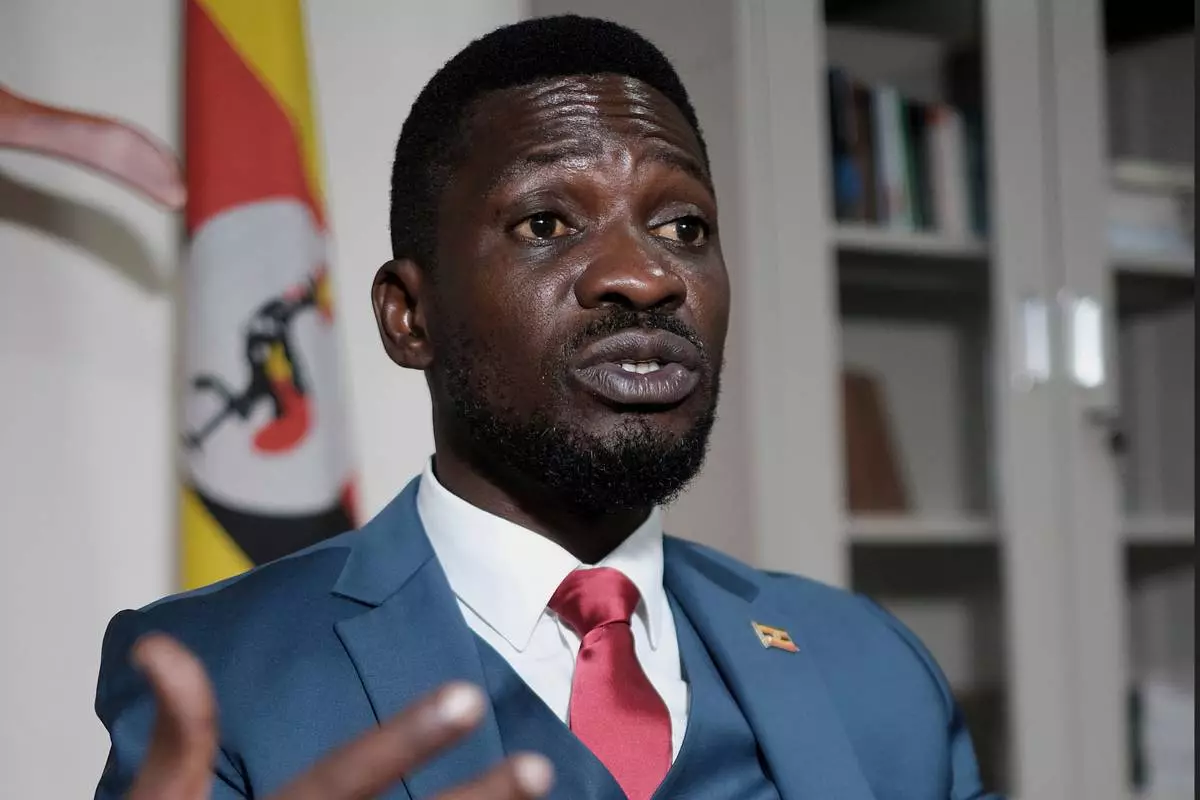
FILE - Ugandan singer, politician, and opposition figure Bobi Wine speaks to The Associated Press at his political party office (National Unity Platform) in Kampala, Uganda, Thursday, July 24, 2025. (AP Photo/Hajarah Nalwadda, file)
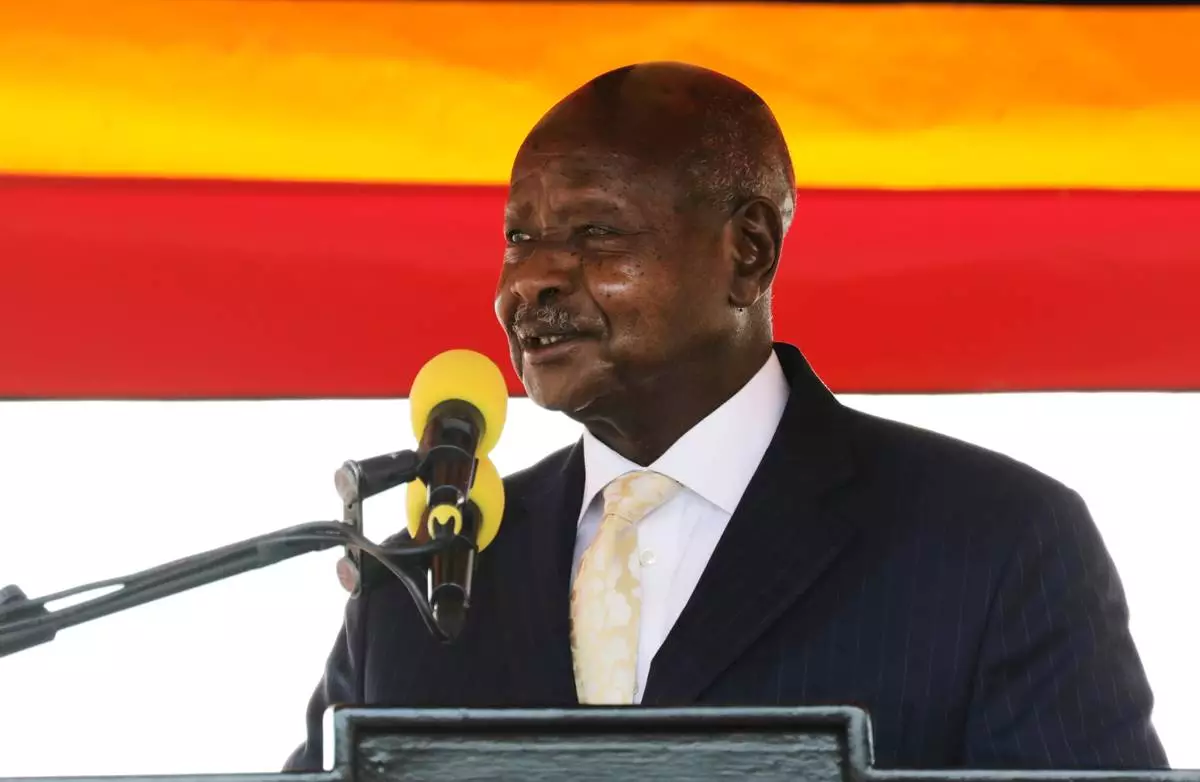
FILE - Ugandan President Yoweri Museveni speaks during the 60th Independence Anniversary Celebrations, in Kololo, Uganda, Sunday Oct. 9, 2022. (AP Photo/Hajarah Nalwadda, file)
DUBAI, United Arab Emirates (AP) — The death toll from nationwide protests in Iran spiked Tuesday to at least 2,000 people killed, activists said, even as Iranians made phone calls abroad for the first time in days after authorities severed communications during a crackdown.
The number of dead, as reported by the U.S.-based Human Rights Activists News Agency, dwarfs that in any other round of protest or unrest in Iran in decades and recalls the chaos surrounding the country's 1979 Islamic Revolution. These demonstrations, which began in anger over Iran's ailing economy, soon targeted the theocracy, particularly 86-year-old Supreme Leader Ayatollah Ali Khamenei.
The toll may put increased pressure on U.S. President Donald Trump to act after he warned Iran he might intervene militarily to protect peaceful demonstrators. Iran's foreign minister has signaled that communication remains open with Washington, but acknowledged the gaps between the nations remain vast.
The activist group said 1,847 of the dead over more than two weeks of protests were protesters and 135 were government-affiliated. Another nine children were killed, and nine civilians it said were not taking part in protests also were killed. It said over 16,700 people had been detained.
With the internet down in Iran, gauging the demonstrations from abroad has grown more difficult. The Associated Press has been unable to independently assess the toll. Iran’s government hasn’t offered overall casualty figures.
Iranians' calls gave a glimpse of life after being cut off from the outside world Thursday night.
Witnesses described a heavy security presence in central Tehran, burned-out government buildings, smashed ATMs and few passersby. Meanwhile, people remain concerned about what comes next, including the possibility of strikes after Trump said he could possibly use the military to defend peaceful protesters. Trump also has said Iran wants to negotiate with Washington.
“My customers talk about Trump’s reaction while wondering if he plans a military strike against the Islamic Republic,” said shopkeeper Mahmoud, who gave only his first name out of concerns for his safety. “I don’t expect Trump or any other foreign country cares about the interests of Iranians.”
Reza, a taxi driver who also gave just his first name, said protests remain on many people's minds. “People — particularly young ones — are hopeless but they talk about continuing the protests,” he said.
Several people in Tehran were able to call The Associated Press on Tuesday morning and speak to a journalist there. The AP bureau in Dubai, United Arab Emirates, was unable to call those numbers back. The witnesses said text messaging still was down and that internet users in Iran could connect to government-approved websites locally but nothing abroad.
Anti-riot police officers, wearing helmets and body armor, carried batons, shields, shotguns and tear gas launchers, according to the witnesses. Police stood watch at major intersections. Nearby, the witnesses saw members of the Revolutionary Guard's all-volunteer Basij force, who similarly carried firearms and batons. Security officials in plainclothes were visible in public spaces as well.
Several banks and government offices were burned during the unrest, they said. Banks struggled to complete transactions without the internet, the witnesses added.
However, shops were open, though there was little foot traffic in the capital. Tehran's Grand Bazaar, where the demonstrations began Dec. 28, was to open Tuesday. However, a witness described speaking to multiple shopkeepers who said the security forces ordered them to reopen no matter what. Iranian state media had not acknowledged that order.
The witnesses spoke on condition of anonymity for fear of reprisal.
It also appeared that security service personnel were searching for Starlink terminals as people in northern Tehran reported authorities raiding apartment buildings with satellite dishes. While satellite television dishes are illegal, many in the capital have them in their homes and officials broadly had given up on enforcing the law in recent years.
On the streets, people also could be seen challenging plainclothes security officials, who were stopping passersby at random.
State television also read a statement about mortuary and morgue services being free — a signal some likely charged high fees for the release of bodies amid the crackdown.
Khamenei, in a statement carried by state TV, praised the tens of thousands who took part in pro-government demonstrations nationwide on Monday.
“This was a warning to American politicians to stop their deceit and not rely on traitorous mercenaries,” he said. “The Iranian nation is strong and powerful and aware of the enemy.”
State TV on Monday aired chants from the crowd, which appeared in the tens of thousands, of “Death to America!” and “Death to Israel!” Others cried out, “Death to the enemies of God!” Iran’s attorney general has warned that anyone taking part in protests will be considered an “enemy of God,” a death-penalty charge.
Iranian Foreign Minister Abbas Araghchi, speaking to the Qatar-funded satellite news network Al Jazeera in an interview aired Monday night, said he continued to communicate with U.S. envoy Steve Witkoff.
The communication “continued before and after the protests and are still ongoing," Araghchi said. However, “Washington’s proposed ideas and threats against our country are incompatible.”
White House press secretary Karoline Leavitt said Iran’s public rhetoric diverges from the private messaging the administration has received from Tehran in recent days.
“I think the president has an interest in exploring those messages,” Leavitt said. “However, with that said, the president has shown he’s unafraid to use military options if and when he deems necessary, and nobody knows that better than Iran.”
Trump announced Monday that countries doing business with Iran will face 25% tariffs from the United States. Trump announced the tariffs in a social media posting, saying they would be “effective immediately.”
Trump believes exacting tariffs can be a useful tool in prodding friends and foes on the global stage to bend to his will.
Brazil, China, Russia, Turkey and the United Arab Emirates are among economies that do business with Tehran.
Trump said Sunday that his administration was in talks to set up a meeting with Tehran, but cautioned that he may have to act first as reports of the death toll in Iran mount and the government continues to arrest protesters.
“I think they’re tired of being beat up by the United States,” Trump said. “Iran wants to negotiate.”
Iran, through the country’s parliamentary speaker, warned Sunday that the U.S. military and Israel would be “legitimate targets” if Washington uses force to protect demonstrators.
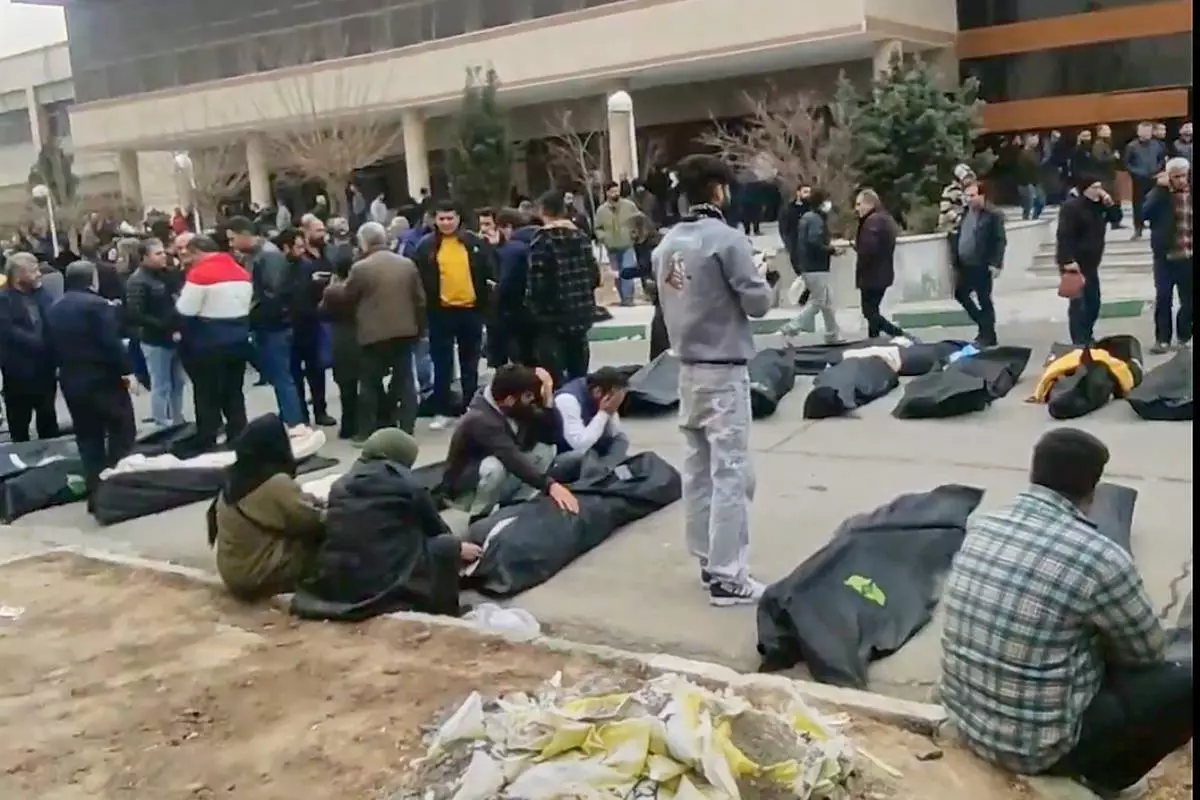
This frame grab from videos taken between Jan. 9 and Jan. 11, 2026, and circulating on social media purportedly shows images from a morgue with dozens of bodies and mourners after crackdown on the outskirts of Iran's capital, in Kahrizak, Tehran Province. (UGC via AP)
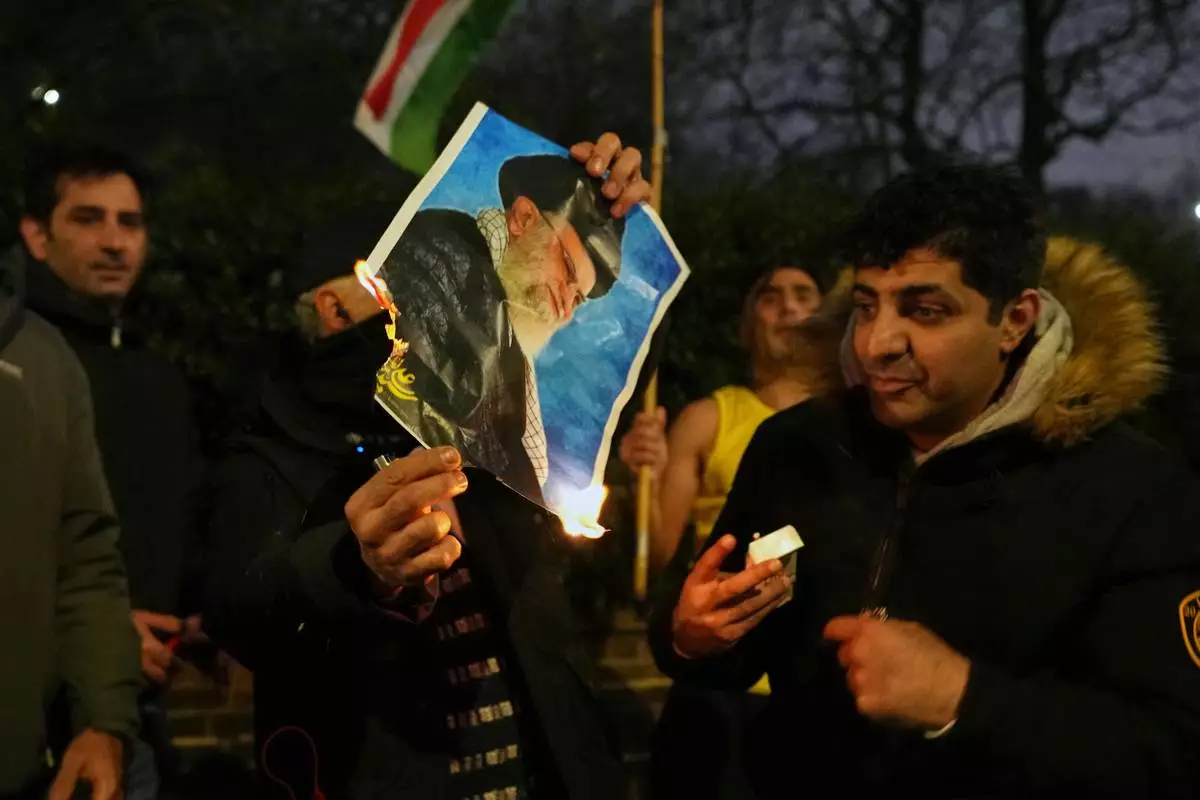
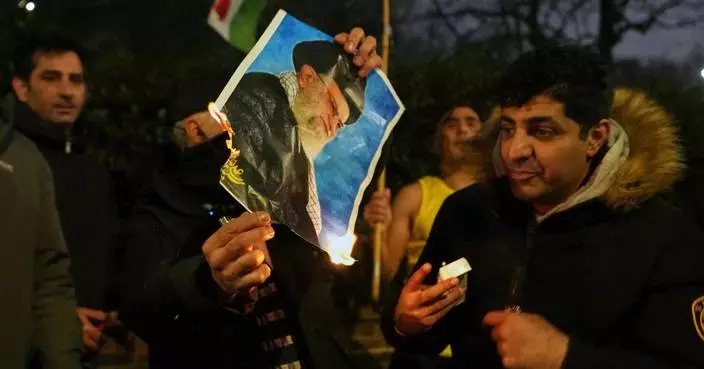
A picture of Ayatollah Ali Khamenei is set alight by protesters outside the Iranian Embassy in London, Monday, Jan. 12, 2026. (AP Photo/Alastair Grant)
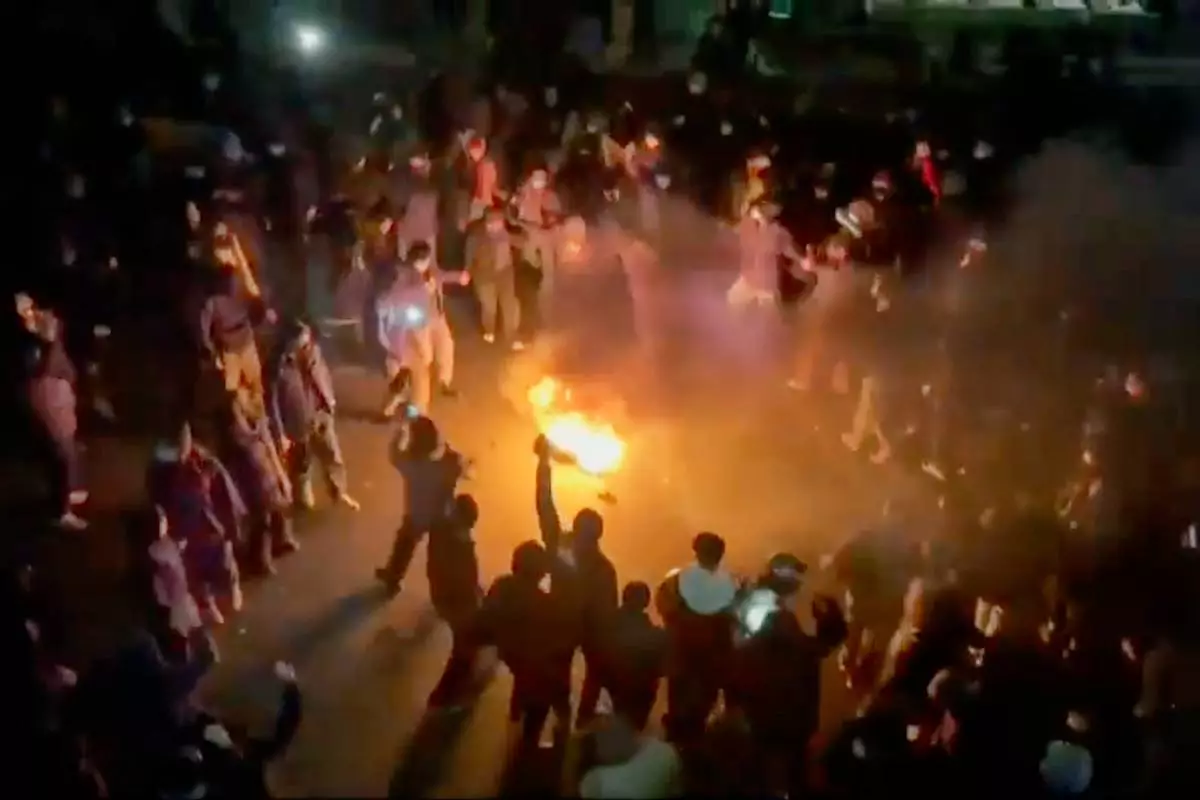
In this frame grab from footage circulating on social media shows protesters dancing and cheering around a bonfire as they take to the streets despite an intensifying crackdown as the Islamic Republic remains cut off from the rest of the world, in Tehran, Iran, Friday, Jan. 9, 2026.(UGC via AP)
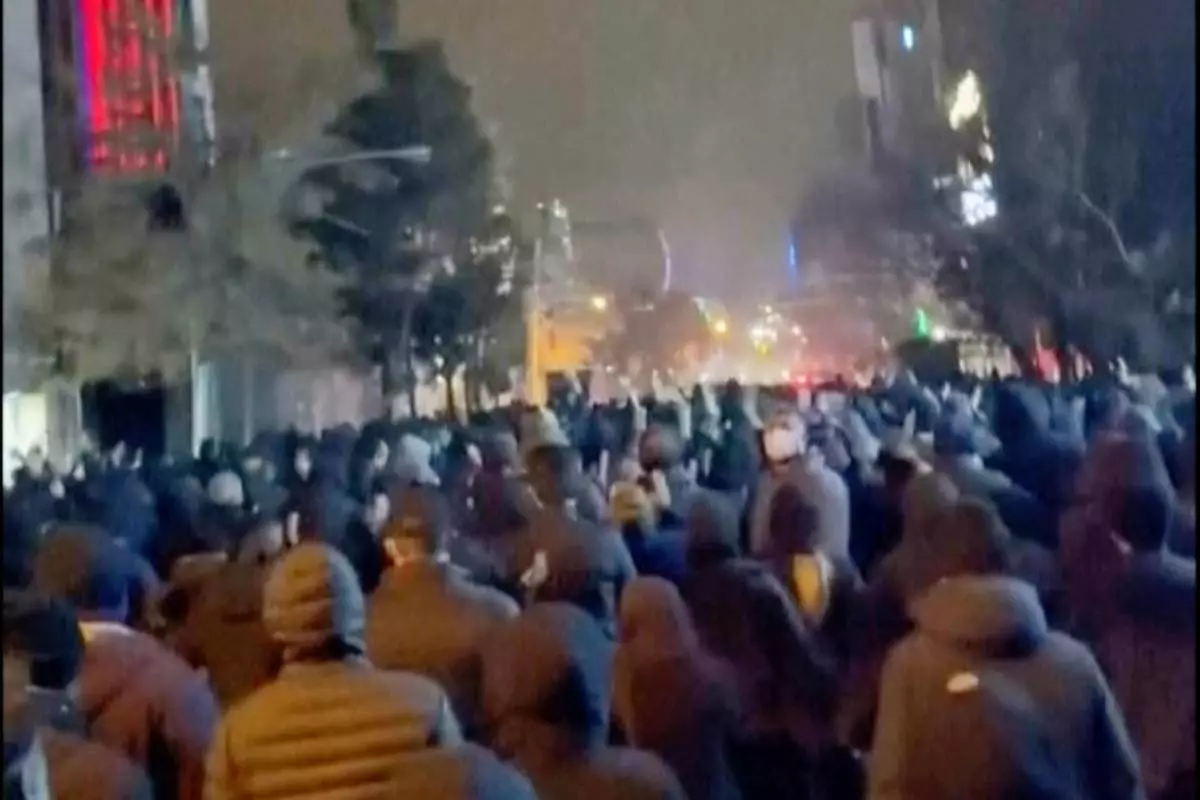
In this frame grab from footage circulating on social media from Iran showed protesters once again taking to the streets of Tehran despite an intensifying crackdown as the Islamic Republic remains cut off from the rest of the world in Tehran, Iran, Saturday Jan. 10, 2026. (UGC via AP)
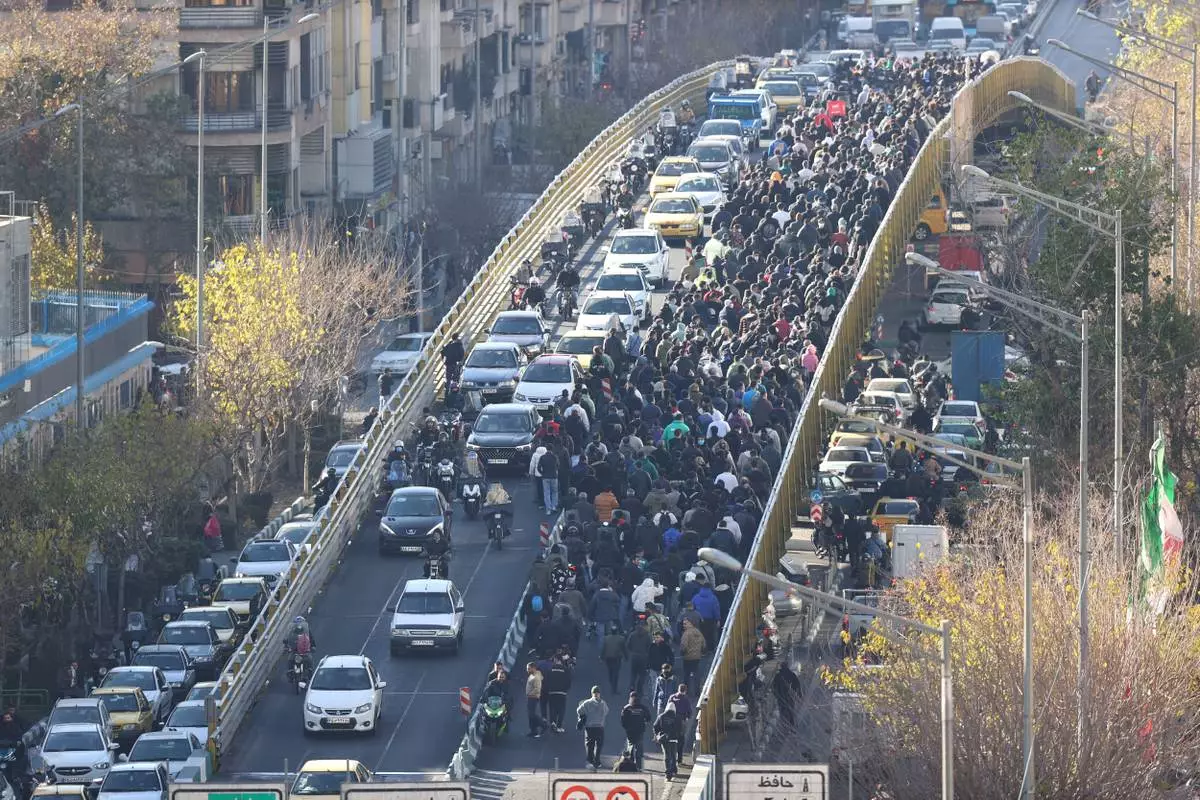
FILE - Protesters march on a bridge in Tehran, Iran, on Dec. 29, 2025. (Fars News Agency via AP, File)