WASHINGTON (AP) — The Democratic National Committee will spend millions of dollars to cement control of voter registration efforts that have traditionally been entrusted to nonprofit advocacy groups and individual political campaigns, a shift that party leaders hope will increase their chances in this year's midterm elections.
The initiative, being announced on Tuesday, will begin in Arizona and Nevada with at least $2 million for training organizers. It's the first step in what could become the DNC's largest-ever push to sign up new voters, with a particular focus on young people, voters of color and people without college educations. All of those demographics drifted away from Democrats in the last presidential race, which returned Republican Donald Trump to the White House.
Click to Gallery
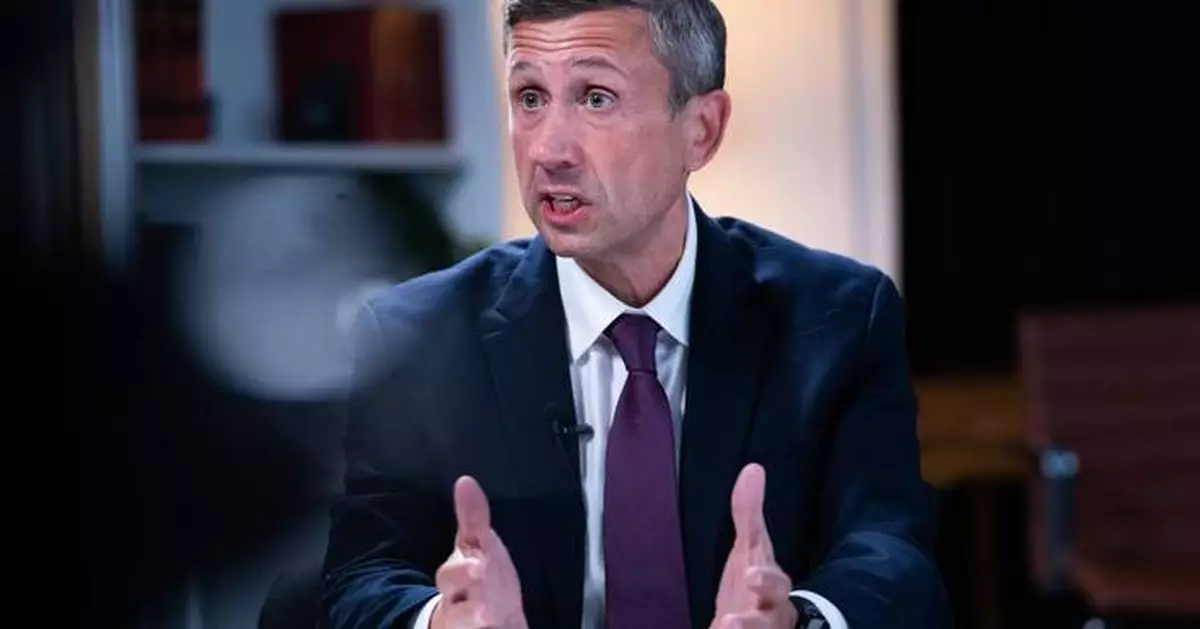
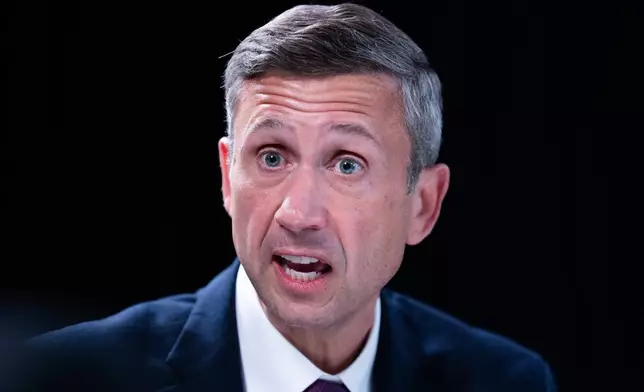
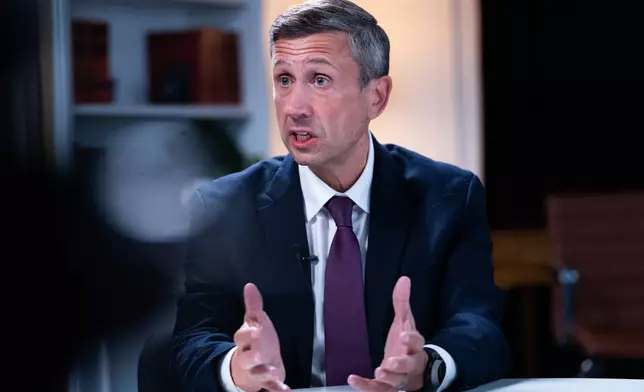
Democratic National Committee chair Ken Martin speaks during an interview with The Associated Press at DNC headquarters, Monday, Jan. 12, 2026, in Washington. (AP Photo/Allison Robbert)
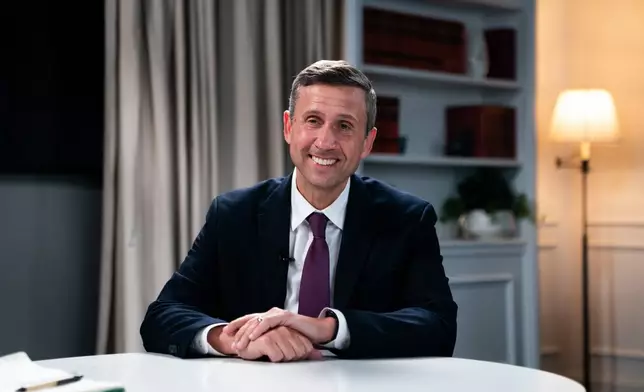
Democratic National Committee chair Ken Martin poses for a photo during an interview with The Associated Press at DNC headquarters, Monday, Jan. 12, 2026, in Washington. (AP Photo/Allison Robbert)
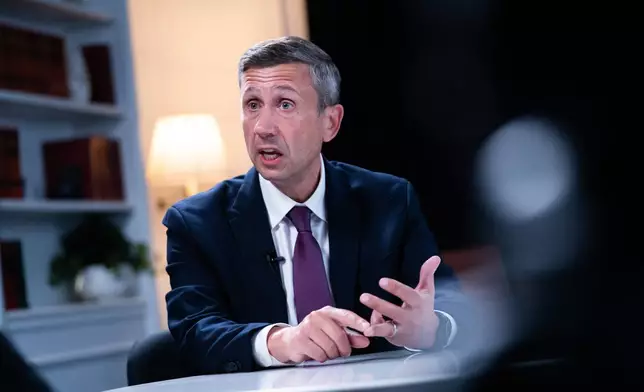
Democratic National Committee chair Ken Martin speaks during an interview with The Associated Press at DNC headquarters, Monday, Jan. 12, 2026, in Washington. (AP Photo/Allison Robbert)
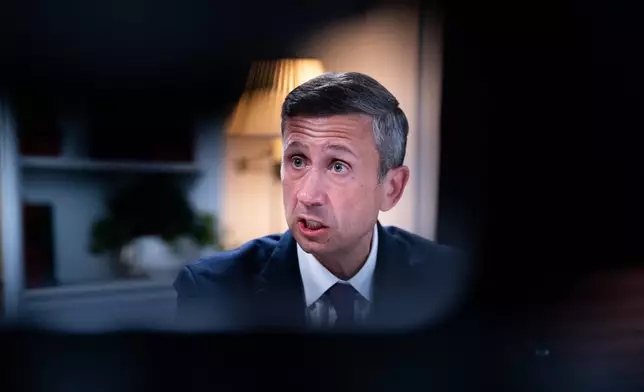
Democratic National Committee chair Ken Martin speaks during an interview with The Associated Press at DNC headquarters, Monday, Jan. 12, 2026, in Washington. (AP Photo/Allison Robbert)
Democratic National Committee chair Ken Martin speaks during an interview with The Associated Press at DNC headquarters, Monday, Jan. 12, 2026, in Washington. (AP Photo/Allison Robbert)
“It’s a crisis. And for our party to actually win elections, we have to actually create more Democrats,” DNC Chair Ken Martin said in an interview with The Associated Press.
Martin added that “we need all hands on deck, not just the outside groups,” as the party tries to win back control of Congress and break Republicans' unified control in Washington.
Democrats have spent decades relying on advocacy organizations and civic groups to register voters, but those efforts are generally required by law to be nonpartisan. Party leaders want a more explicitly partisan approach like the one used by Republicans, who have relied less on outside groups to register and mobilize their voter base.
Martin said allied nonprofits are “really important partners” that have “done amazing work to actually get people engaging in their democracy.”
"But in this moment right now, given the significant disadvantage that we have and the advantage the Republicans have, we actually have to do more,” he said.
The DNC initiative aims to reach non-college-educated young voters by recruiting organizers from a wide array of backgrounds, like gig economy workers and young parents, who have often been overlooked in the party’s grassroots efforts. Democrats hope that organizers' own perspectives and experiences will help party strategists learn how to connect with Americans in blue-collar roles who are disaffected with politics, whom the party fears it has lost touch with in recent elections.
“I think it’s incredible that Democrats are actually investing in reaching Democratic voters who have been left behind,” said Santiago Mayer, founder of Voters for Tomorrow, a progressive political youth group that is collaborating with the DNC. “We got killed on persuasion in 2024, and I think this is a really important step, fixing it and ensuring that we do not have a repeat of that in 2026."
The program will kick off with dozens of videos from lawmakers, activists and party leaders across the country. Democrats hope to boost enthusiasm for the program through interstate party competitions throughout the year.
The White House dismissed the fellowship as a facade for the party's political troubles.
“This is fake. They are broke. In debt. Been losing voter registration in every state in the union since 2024. We call this ‘PR,'” James Blair, a deputy White House chief of staff and the former political director for Trump's 2024 presidential campaign, wrote about the program on X.
If successful, the investments will provide a foundation that Democrats can rely upon beyond the fall midterm elections.
“This is a critical piece of the infrastructure that we’re building to actually not only win the moment in ’26 but to win the future," Martin said. “For us to put ourselves in a position to win in ’28 and ’30 and ’32, we actually have to keep doing this work and do it consistently.”

Democratic National Committee chair Ken Martin speaks during an interview with The Associated Press at DNC headquarters, Monday, Jan. 12, 2026, in Washington. (AP Photo/Allison Robbert)

Democratic National Committee chair Ken Martin poses for a photo during an interview with The Associated Press at DNC headquarters, Monday, Jan. 12, 2026, in Washington. (AP Photo/Allison Robbert)

Democratic National Committee chair Ken Martin speaks during an interview with The Associated Press at DNC headquarters, Monday, Jan. 12, 2026, in Washington. (AP Photo/Allison Robbert)
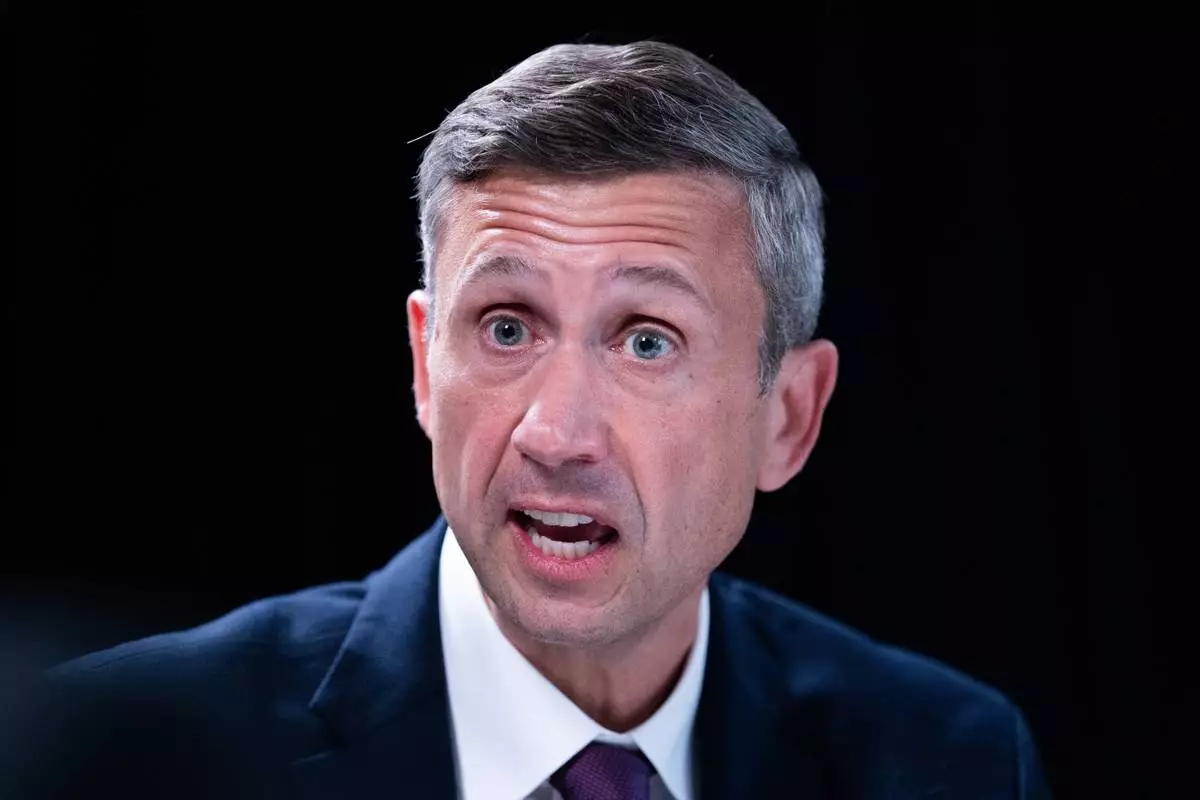
Democratic National Committee chair Ken Martin speaks during an interview with The Associated Press at DNC headquarters, Monday, Jan. 12, 2026, in Washington. (AP Photo/Allison Robbert)
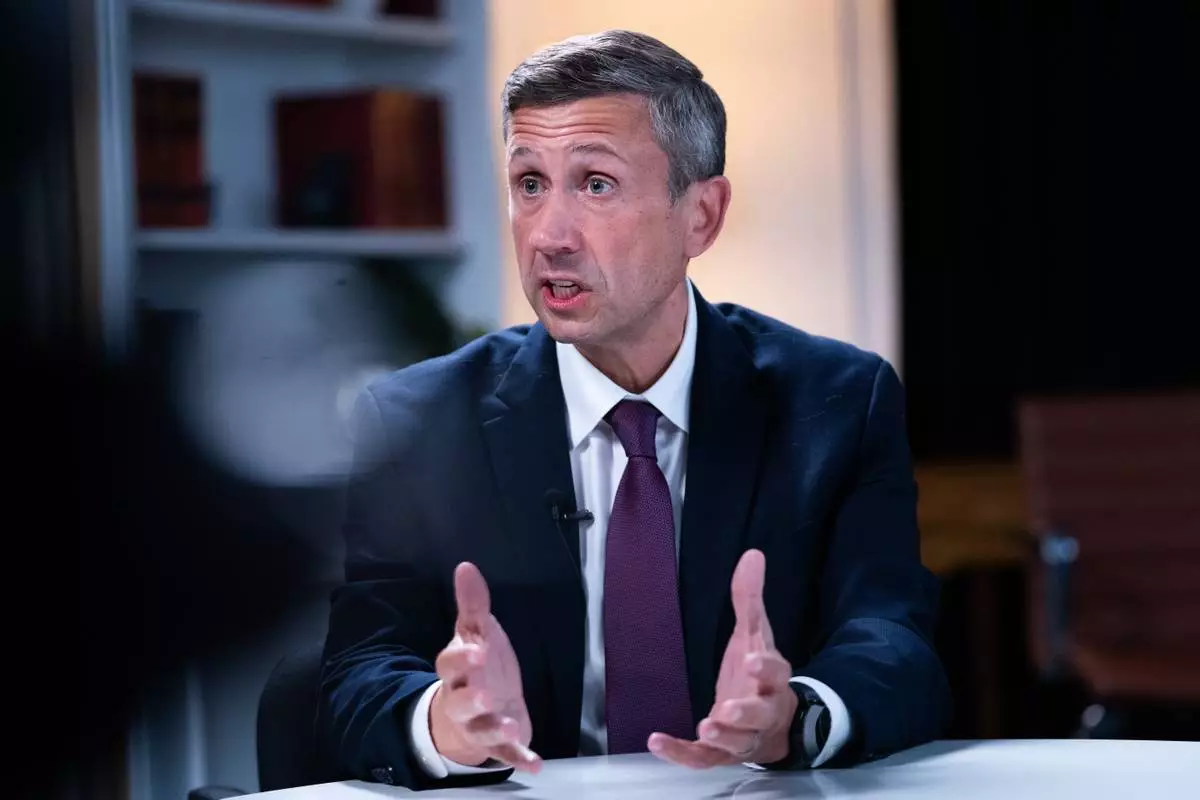
Democratic National Committee chair Ken Martin speaks during an interview with The Associated Press at DNC headquarters, Monday, Jan. 12, 2026, in Washington. (AP Photo/Allison Robbert)
NEW YORK (AP) — Up until this week, Wall Street has generally benefited from the Trump administration’s policies and has been supportive of the president. That relationship has suddenly soured.
When President Donald Trump signed the One Big Beautiful Bill into law in July, it pushed another significant round of tax cuts and also cut the budget of the Consumer Financial Protection Bureau, at times the banking industry's nemesis, by nearly half. Trump’s bank regulators have also been pushing a deregulatory agenda that both banks and large corporations have embraced.
But now the president has proposed a one-year, 10% cap on the interest rate on credit cards, a lucrative business for many financial institutions, and his Department of Justice has launched an investigation into Federal Reserve Chair Jerome Powell that many say threatens the institution that is supposed to set interest rates free of political interference.
Bank CEOs warned the White House on Tuesday that Trump’s actions will do more harm than good to the American economy. But in response, Trump did not back down on his proposals or attacks on the Fed.
BNY Chief Executive Officer Robin Vince told reporters that going after the Fed’s independence “doesn’t seem, to us, to be accomplishing the administration’s primary objectives for things like affordability, reducing the cost of borrowing, reducing the cost of mortgages, reducing the cost of everyday living for Americans.”
“Let’s not shake the foundation of the bond market and potentially do something that could cause interest rates to actually get pushed up, because somehow there’s lack of confidence in the Fed’s independence,” Vince added.
The Federal Reserve’s independence is sacrosanct among the big banks. While banks may have wanted Powell and other Fed policymakers to move interest rates one way or another more quickly, they have generally understood why Powell has done what he's done.
“I don’t agree with everything the Fed has done. I do have enormous respect for Jay Powell, the man,” JPMorgan Chase CEO Jamie Dimon told reporters Tuesday.
Dimon's message did not seem to resonate with President Trump, who told journalists that Dimon is wrong in saying it’s not a great idea to chip away at the Federal Reserve’s independence by going after Chair Jerome Powell.
“Yeah, I think it’s fine what I’m doing,” Trump said Tuesday in response to a reporter’s question at Joint Base Andrews after returning from a day trip to Michigan. He called Powell “a bad Fed person” who has “done a bad job.”
Along with the attacks on the Fed, President Trump is going after the credit card industry. With “affordability” likely to be a key issue in this year’s midterm elections, Trump wants to lower costs for consumers and says he wants a 10% cap on credit card interest rates in place by Jan. 20. Whether he hopes to accomplish this by bullying the credit card industry into just capping interest rates voluntarily, or through some sort of executive action, is unclear.
The average interest rate on credit cards is between 19.65% and 21.5%, according to the Federal Reserve and other industry tracking sources. A cap of 10% would likely cost banks roughly $100 billion in lost revenue per year, researchers at Vanderbilt University found. Shares of credit card companies like American Express, JPMorgan, Citigroup, Capital One and others fell sharply Monday as investors worried about the potential hit to profits these banks may face if an interest rate cap were implemented.
In a call with reporters, JPMorgan’s Chief Financial Officer Jeffrey Barnum indicated the industry was willing to fight with all resources at its disposal to stop the Trump administration from capping those rates. JPMorgan is one of the nation's biggest credit card companies, with its customers collectively holding $239.4 billion in balances with the bank, and having major co-brand partnerships with companies such as United Airlines and Amazon. JPMorgan also recently acquired the Apple Card credit card portfolio from Goldman Sachs.
“Our belief is that actions like this will have the exact opposite consequence to what the administration wants in terms of helping consumers,” Barnum said. “Instead of lowering the price of credit, it will simply reduce the supply of credit, and that will be bad for everyone: consumers, the broader economy, and yes, for us, also.”
Even the major airline and hotel partners who partner with banks to issue their cards were also not pleased with the White House's push to cap interest rates.
“I think one of the big issues and challenges with (a potential cap) is the fact that it would actually restrict the lower end consumer from having access to any credit, not just what the interest rate they’re paying, which would upend the whole credit card industry,” said Ed Bastion, CEO of Delta Air Lines, to analysts on Tuesday. Delta has a major partnership with American Express, and its co-brand credit card brings in billions of dollars in revenue for Delta.
Trump seemed to double down on his attacks on the credit card industry overnight. In a post on his social media platform Truth Social, he said he endorsed a bill introduced by Sen. Roger Marshall, R-Kansas, that would likely cut into the revenue banks earn from merchants whenever they accept a credit card at point-of-sale.
“Everyone should support great Republican Senator Roger Marshall’s Credit Card Competition Act, in order to stop the out of control Swipe Fee ripoff,” Trump wrote.
Trump told reporters Tuesday that he was not going to back down the credit card interest rate issue.
“We should have lower rates. Jamie Dimon probably wants higher rates. Maybe he makes more money that way,” Trump said.
The comments from Wall Street are coming as the major banks report their quarterly results. JPMorgan, the nation’s largest consumer and investment bank, and The Bank of New York Mellon Corp., one of the world’s largest custodial banks, both reported their results Tuesday with Citigroup, Bank of America, Wells Fargo and others to report later this week.

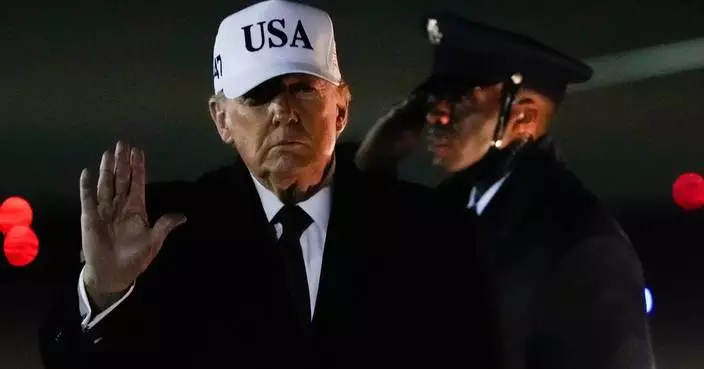
President Donald Trump arrives at Joint Base Andrews, Tuesday, Jan. 13, 2026, in Joint Base Andrews, Md. (AP Photo/Evan Vucci)
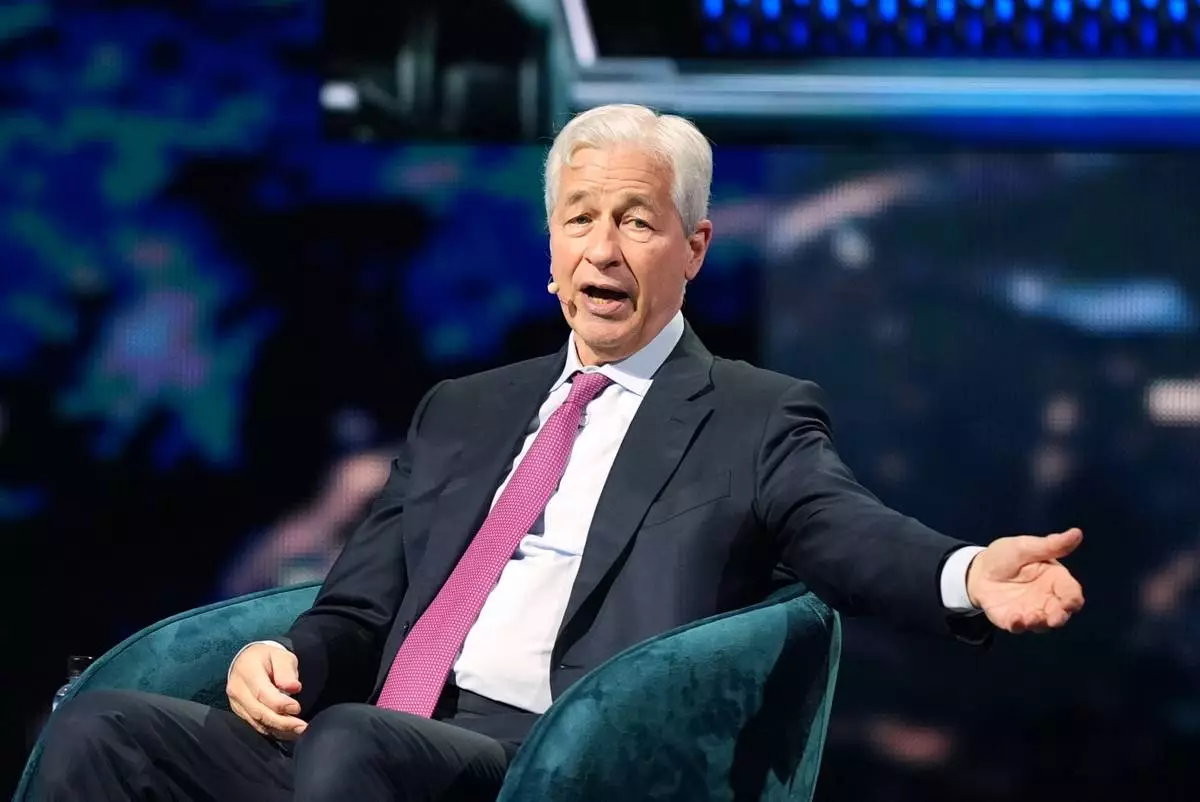
FILE - Jamie Dimon, CEO of JPMorgan Chase, speaks at the America Business Forum, Thursday, Nov. 6, 2025, in Miami. (AP Photo/Rebecca Blackwell, file)