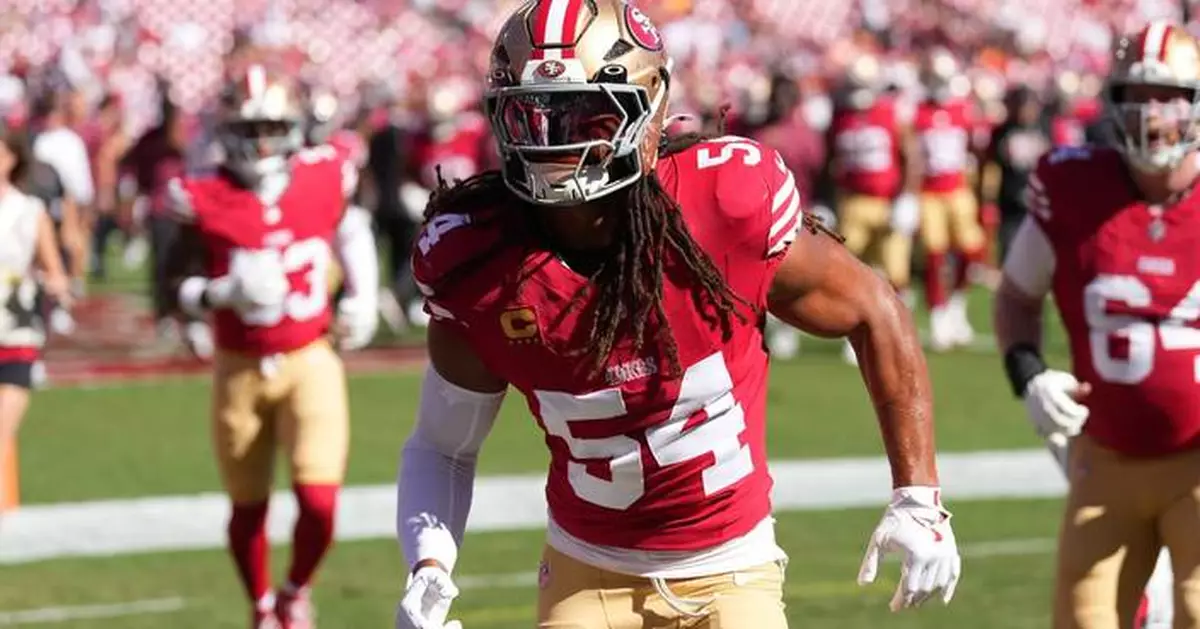
SANTA CLARA, Calif. (AP) — The San Francisco 49ers are opening the practice window for star linebacker Fred Warner with the hope that he could return if the team reaches the NFC title game.
Warner has been out since breaking and dislocating his right ankle in a loss at Tampa Bay on Oct. 12, with coach Kyle Shanahan initially describing it as a season-ending injury.
But Warner has been rehabbing since then and even was able to run on a side field last week during practice. Now he will be back officially at practice as the 49ers prepare to play Seattle in the divisional round on Saturday night and could return if San Francisco wins.
“We’re not doing much so he’ll walk through out there with us today and things like that, but hoping he can be ready for next week,” Shanahan said Tuesday.
Warner's presence on the practice field even for a walkthrough provided an emotional lift for the 49ers.
“For someone who really set the standard here, I would do anything to play with him again this year,” defensive tackle Kalia Davis said. “We want him back out there.”
Eric Kendricks is currently manning Warner's spot at middle linebacker after backup Tatum Bethune got hurt but wasn't ready to talk about what Warner's possible return would do for the team.
“We’re aren’t going to talk about next week, right? We’ve got Seattle,” Kendricks said. “We’ve got to beat Seattle. Let’s pump our brakes. We have to beat Seattle this week. .. This is what meaningful football is all about.”
The 49ers have made it this far despite losing their top two defensive players to injuries early in the season, with defensive end Nick Bosa going down with a season-ending knee injury in Week 3 and Warner getting hurt in Week 6.
Warner has been pushing to make a return and if he can, that would provide a needed boost. But Shanahan said the final decision will be in the hands of the team doctors.
“If he feels good and tells me he’s good, I’m probably going to think he is and trust him to get out there,” Shanahan said. “But you can't always think with your heart and emotionally. So you ask doctors where he’s at, all the things that these guys have to pass, just protocols that we have in with just sprinting and jumping and things like that. He’s got to hit all those before we feel it’s safe.”
But Shanahan added that as soon as the doctors clear Warner, "obviously it’ll be zero decision on my part.”
Warner had been a first-team All-Pro three straight seasons from 2022-24 and made the squad in 2020. His 947 career tackles are the second most for the team, behind Patrick Willis’ 950, as far as records go back to 2000.
Warner had missed only one game in his eight-year career before this injury, sitting out in 2021 with a hamstring injury. He played most of last season with a broken bone in his ankle and still earned All-Pro honors.
Warner signed a three-year extension worth $63 million in the offseason, keeping him under contract with the team through the 2029 season.
In other injury news, safety Ji'Ayir Brown (hamstring) and Luke Gifford (quadriceps) all would have been unable to practice had the team held a session. Receiver Ricky Pearsall (knee), linebacker Dee Winters (ankle), guard Dominick Puni (ankle) and defensive lineman Keion White (groin, hamstring) all would have been limited.
Shanahan also said tight end George Kittle is set to have surgery on his ruptured Achilles tendon on Wednesday. Kittle went on injured reserve Tuesday and tight end Brayden Willis was signed from the practice squad.
AP NFL: https://apnews.com/hub/nfl
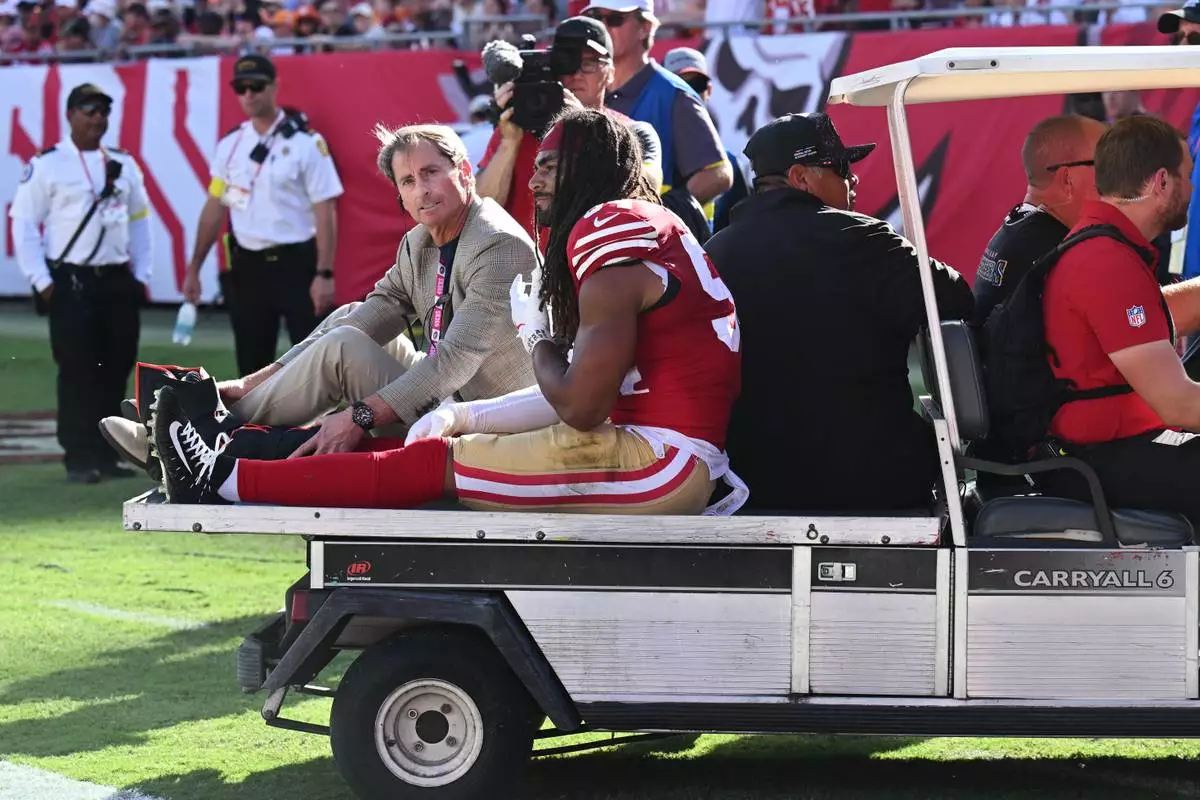
FILE - San Francisco 49ers middle linebacker Fred Warner is carted off the field during the first half of an NFL football game against the Tampa Bay Buccaneers in Tampa, Fla., Oct. 12, 2025. (AP Photo/Jason Behnken, File)
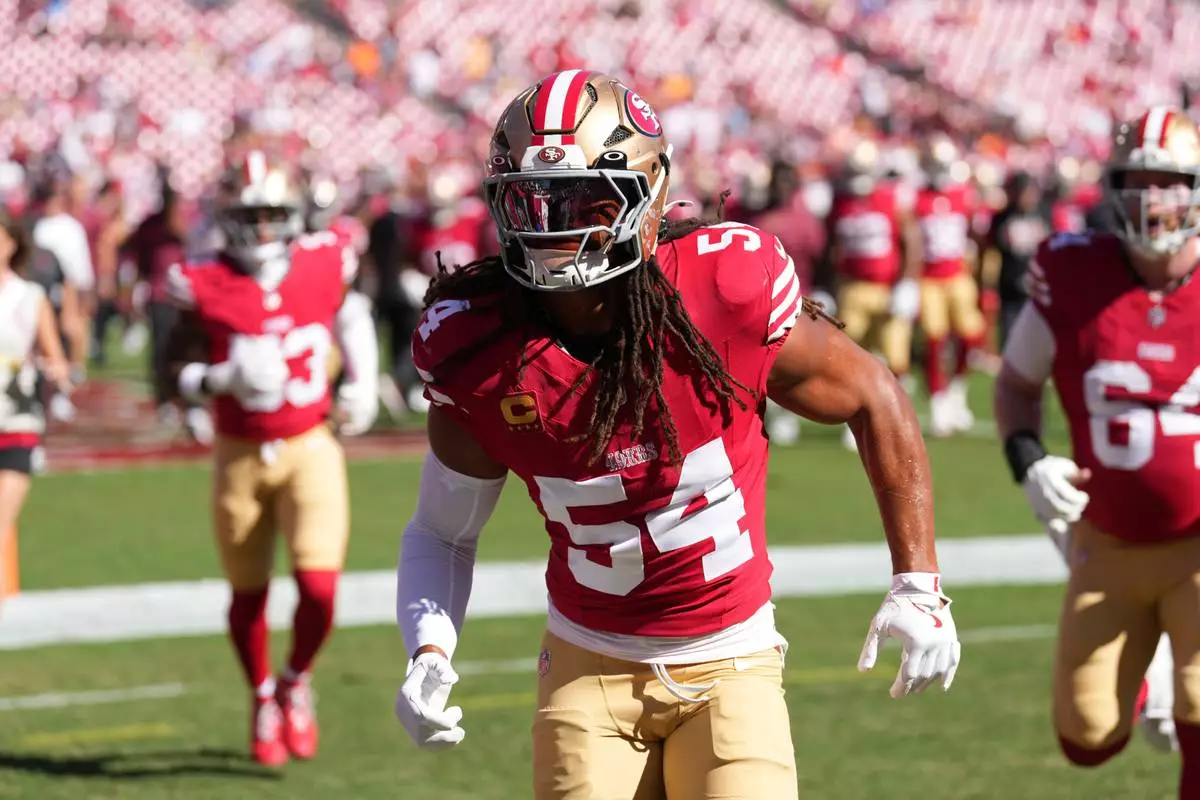
FILE - San Francisco 49ers middle linebacker Fred Warner (54) runs to the locker room after pregame warm-ups before an NFL football game against the Tampa Bay Buccaneers on Oct 12, 2025, in Tampa, Fla. (AP Photo/Peter Joneleit, File)
HAVANA (AP) — Cuba held recent talks with the U.S. government, President Miguel Díaz-Canel said Friday, marking the first time that the Caribbean country confirmed such speculation.
Díaz-Canel said in a speech that the talks “were aimed at finding solutions through dialogue to the bilateral differences between our two nations. International factors facilitated these exchanges.”
He didn't elaborate on those factors, or provide any details about the talks.
The White House didn't return an immediate request for comment on the talks with Cuba.
Díaz-Canel said that no petroleum shipments have arrived on the island in the past three months, which he blamed on a U.S. energy blockade. He said that Cuba is running on natural gas, solar power and thermoelectric plants, and that the depletion of fuel oil and diesel forced two power plants to shut down and has limited the generation of power at solar parks.
Cuba’s western region was hit by a major blackout last week, leaving millions without power.
He said that Cuba, which produces 40% of its petroleum, has been generating its own power, but that it hasn’t been sufficient to meet demand.
The Cuban leader said that the lack of power has affected communications, education and transportation, and that the government has had to postpone surgeries for tens of thousands of people as a result.
“The impact is tremendous,” Díaz-Canel said.
He said that more than 115 bakeries across the island have been converted to run on firewood or coal.
Díaz-Canel said that 955 solar panels have been installed in rural homes and social centers, and that more solar systems will come online before the end of March that will add 100 megawatts to Cuba’s crumbling electric grid.
“Even with everything we’re putting together, we still need oil,” he said.
Díaz-Canel noted that production output also has dropped.
“Without energy, no country can produce at normal levels," he said. "All of this has meant making adjustments to employment.”
Last month, Cuba implemented austere fuel-saving measures.
Díaz-Canel said that the purpose of the talks was to identify “bilateral problems that require solutions based on their severity and impact” and find solutions to them.
The president said that the aim was “to determine the willingness of both parties to take concrete actions for the benefit of the people of both countries. And in addition, to identify areas of cooperation to confront threats and guarantee the security and peace of both nations, as well as in the region.”
He said that Cuba is willing to carry out the process on the basis of equality and respect for the countries’ political systems and for Cuba’s “sovereignty and self-determination.”
Critical oil shipments from Venezuela were halted after the U.S. attacked the South American country and arrested then President Nicolás Maduro.
The most recent blackout was blamed on a broken boiler at a thermoelectric plant that forced the shutdown of Cuba's power grid.
Authorities have noted that some thermoelectric plants have been operating for more than three decades and receive little maintenance given the high cost. U.S. sanctions also have prevented the government from buying new equipment and specialized parts, officials say.
After his speech, Díaz-Canel took questions from a select group of state reporters.
The questions focused mostly on Cuba’s deepening crises, but one reporter asked about the recent shooting of a Florida-flagged boat in Cuban waters in which four of 10 Cubans from the U.S. were killed after the government accused them of opening fire on local troops.
A fifth suspect later died from his injuries, according to the Cuban government.
Díaz-Canel said that FBI officials would visit Cuba soon as both countries continue to share information on the incident.
The five other suspects have been detained and face terrorism charges.
Díaz-Canel spoke just a day after the Ministry of Foreign Affairs announced it would release 51 prisoners in a move that stems from a spirit of goodwill and close relations with the Vatican.
“It is a sovereign practice, no one imposes it on us,” Díaz-Canel said of the upcoming release. “It responds to our humanistic vocation."
Dánica Coto reported form San José, Costa Rica.
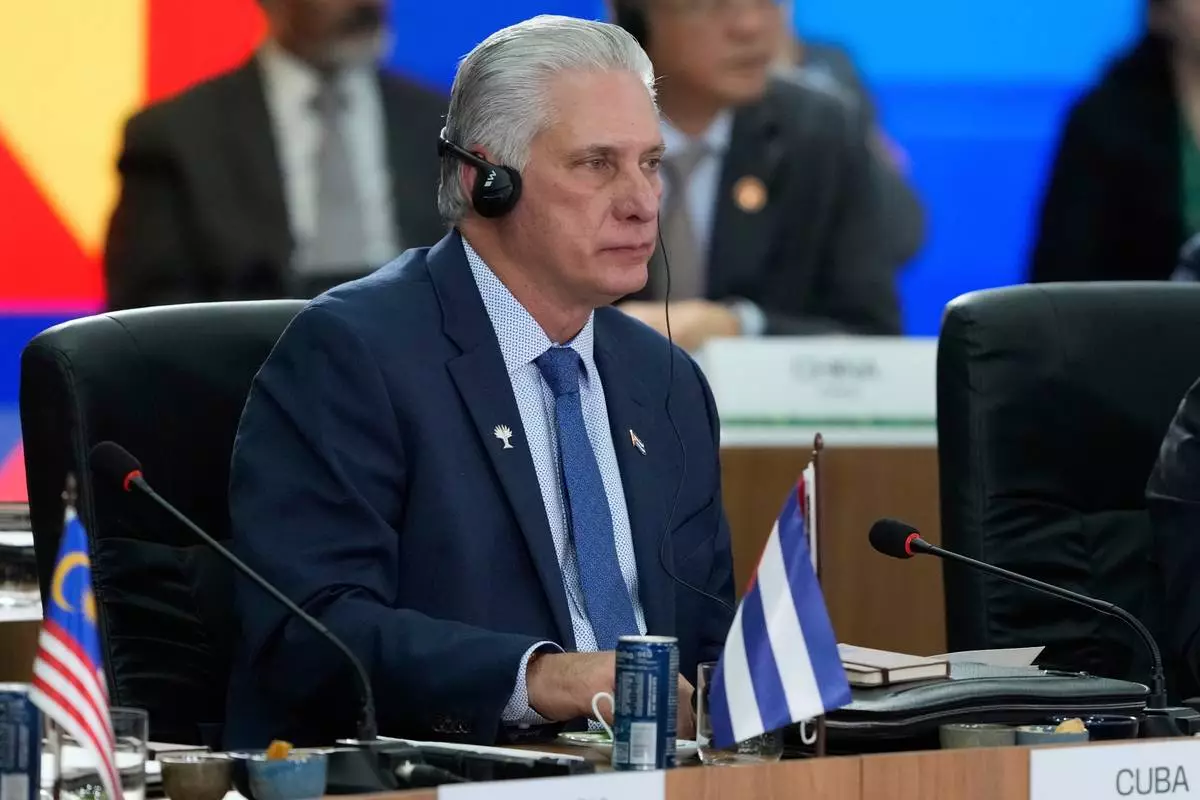
FILE - Cuba's President Miguel Diaz-Canel attends the 17th annual BRICS summit in Rio de Janeiro, July 6, 2025. (AP Photo/Eraldo Peres, File)