NUUK, Greenland (AP) — Greenlanders in the capital city of Nuuk are going about their daily lives as U.S. President Donald Trump continues his push for U.S. control of Denmark's territory. Read about what Greenlanders have to say about it.
This is a photo gallery curated by AP photo editors.
Click to Gallery
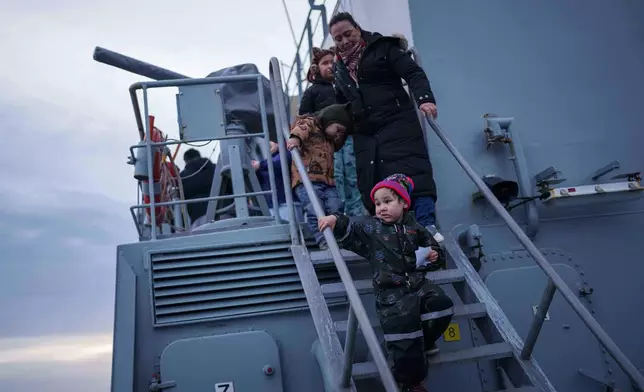
A mother with her children walk on stairs of a naval vessel during a public day in Nuuk, Greenland, Saturday, Jan. 24, 2026. (AP Photo/Evgeniy Maloletka)
People wait at a bus station with posters of President Donald Trump and Jeffrey Epstein in Nuuk, Greenland, on Saturday, Jan. 24, 2026. (AP Photo/Evgeniy Maloletka)
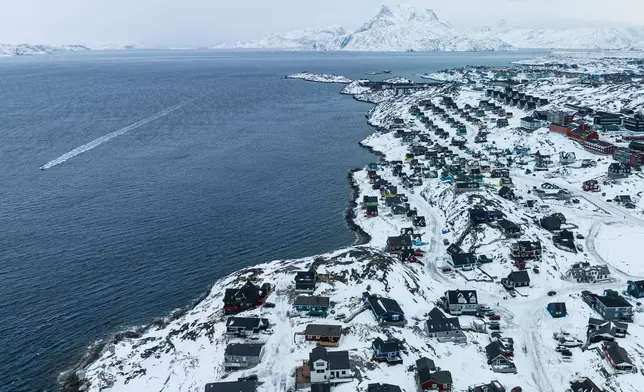
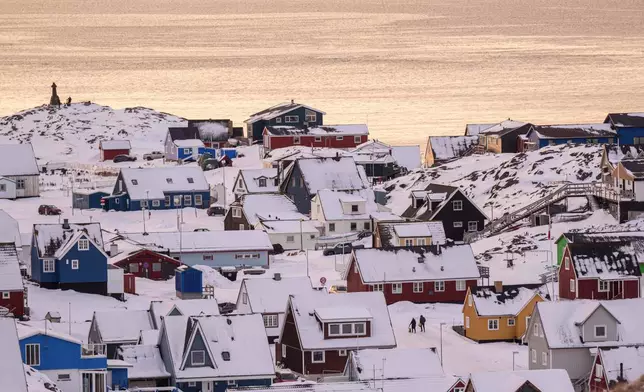
Houses are seen near the coast of a sea inlet of Nuuk, Greenland, on Saturday, Jan. 24, 2026. (AP Photo/Evgeniy Maloletka)
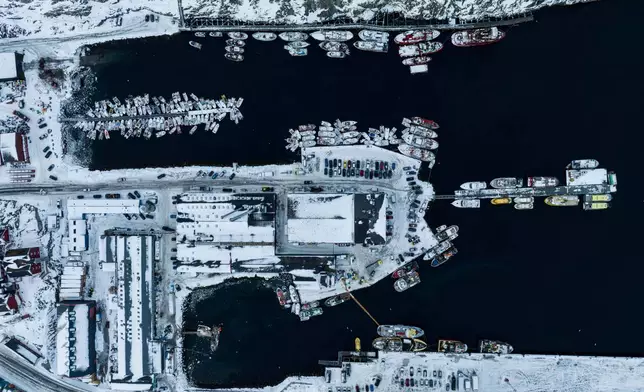
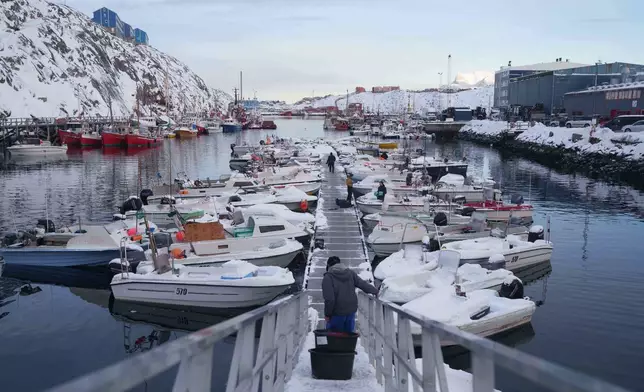
Seen from above, boats are docked at the harbour of Nuuk, Greenland, on Thursday, Jan. 22, 2026. (AP Photo/Evgeniy Maloletka)
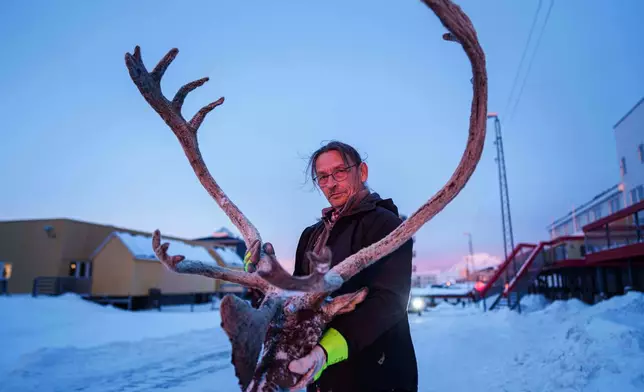
John Hansen, 61, holds a reindeer's head with antlers in Nuuk, Greenland, on Wednesday, Jan. 21, 2026. (AP Photo/Evgeniy Maloletka)
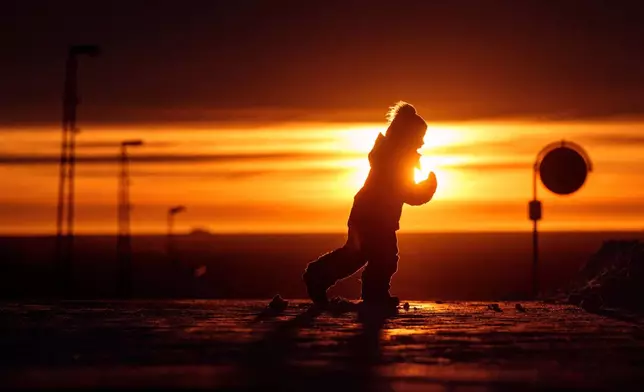
A boy runs across a street at a sunset in Nuuk, Greenland, on Wednesday, Jan. 21, 2026. (AP Photo/Evgeniy Maloletka)
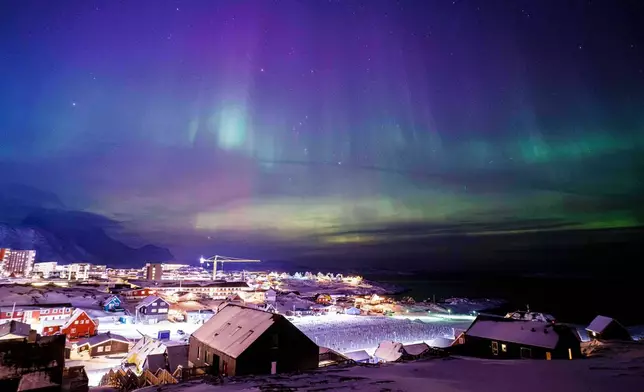
Aurora borealis, also known as the northern lights, is seen in the sky above Nuuk, Greenland, Tuesday, Jan. 20, 2026. (AP Photo/Evgeniy Maloletka)
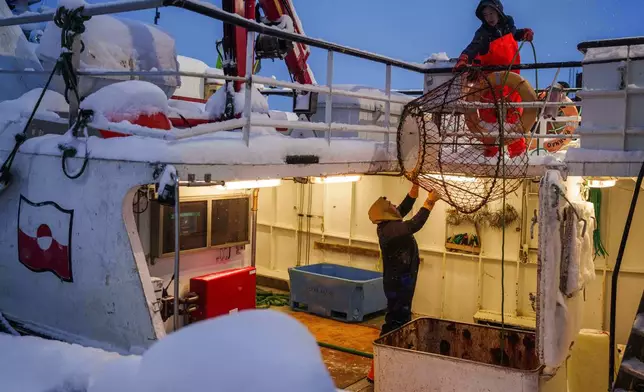
Fishermen load crab trap into a boat at the harbour of Nuuk, Greenland, on Monday, Jan. 19, 2026. (AP Photo/Evgeniy Maloletka)
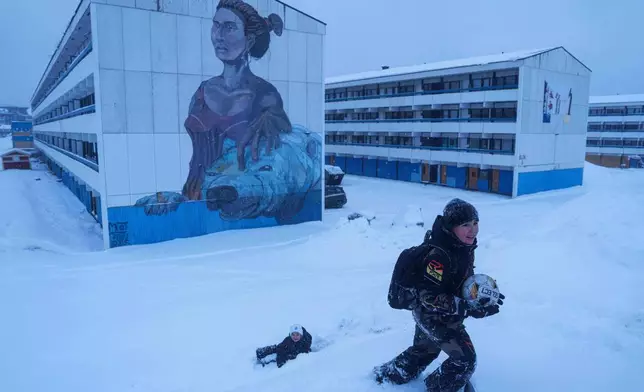
Boys play with a ball in the snow in Nuuk, Greenland, Monday, Jan. 19, 2026. (AP Photo/Evgeniy Maloletka)
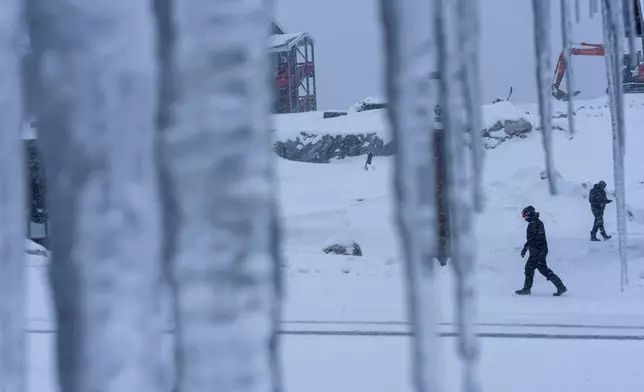
People walk through the snow in Nuuk, Greenland, Monday, Jan. 19, 2026. (AP Photo/Evgeniy Maloletka)
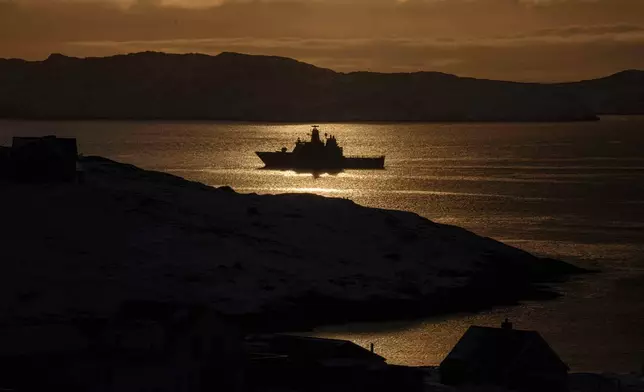
Military vessel HDMS Knud Rasmussen of the Royal Danish Navy patrols near Nuuk, Greenland, on Thursday, Jan. 15, 2026. (AP Photo/Evgeniy Maloletka)
A man cuts seal meat at the market in Nuuk, Greenland, Wednesday, Jan. 14, 2026. (AP Photo/Evgeniy Maloletka)
Fishermen arrive at the harbour of Nuuk, Greenland, Wednesday, Jan. 14, 2026. (AP Photo/Evgeniy Maloletka)
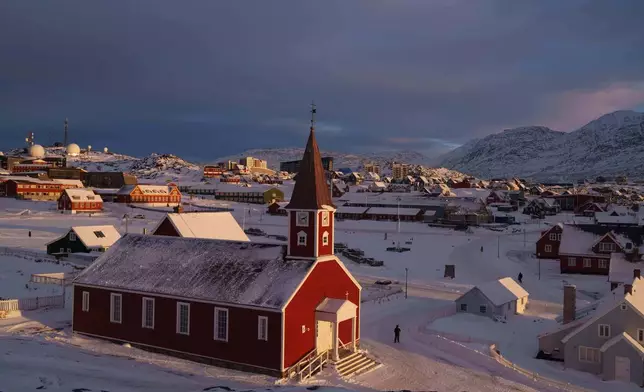
A man walks near the church in Nuuk, Greenland, on Wednesday, Jan. 14, 2026. (AP Photo/Evgeniy Maloletka)
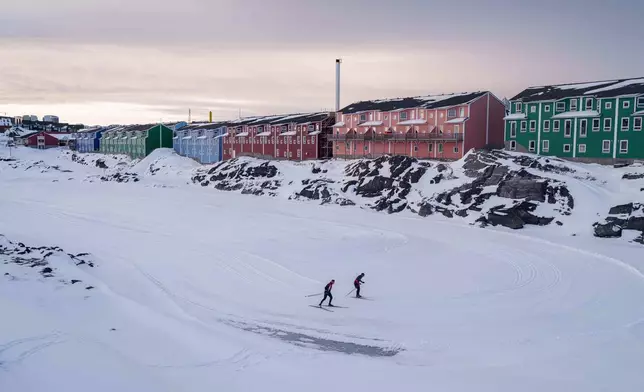
Cross-country skiers train in Nuuk, Greenland, Wednesday, Jan. 14, 2026. (AP Photo/Evgeniy Maloletka)
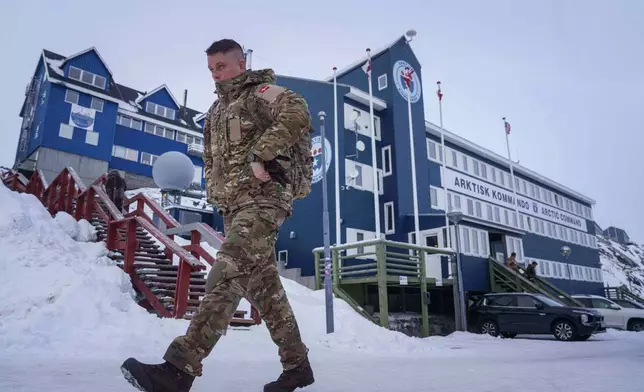
A Danish serviceman walks in front of Joint Arctic Command center in Nuuk, Greenland, on Friday, Jan. 16, 2026. (AP Photo/Evgeniy Maloletka)
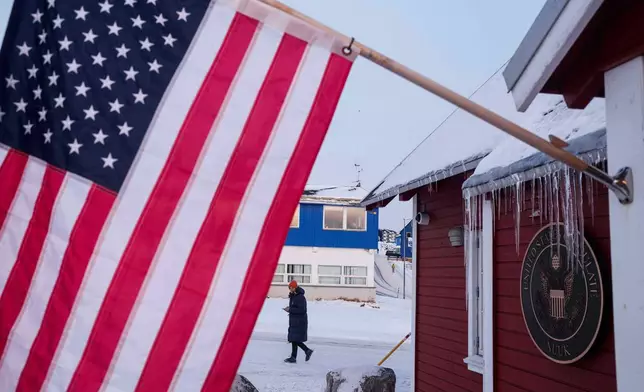
An American flag is displayed on the facade of the US consulate in Nuuk, Greenland, Wednesday, Jan. 14, 2026. (AP Photo/Evgeniy Maloletka)
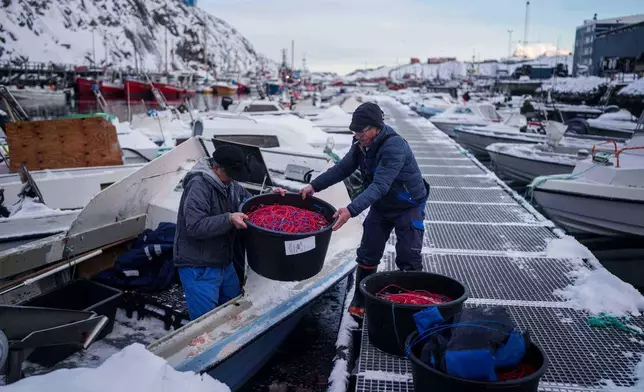
Fishermen load fishing lines into a boat in the harbor of Nuuk, Greenland, Wednesday, Jan. 14, 2026. (AP Photo/Evgeniy Maloletka)
People walk on a street in Nuuk, Greenland, Wednesday, Jan. 14, 2026. (AP Photo/Evgeniy Maloletka)
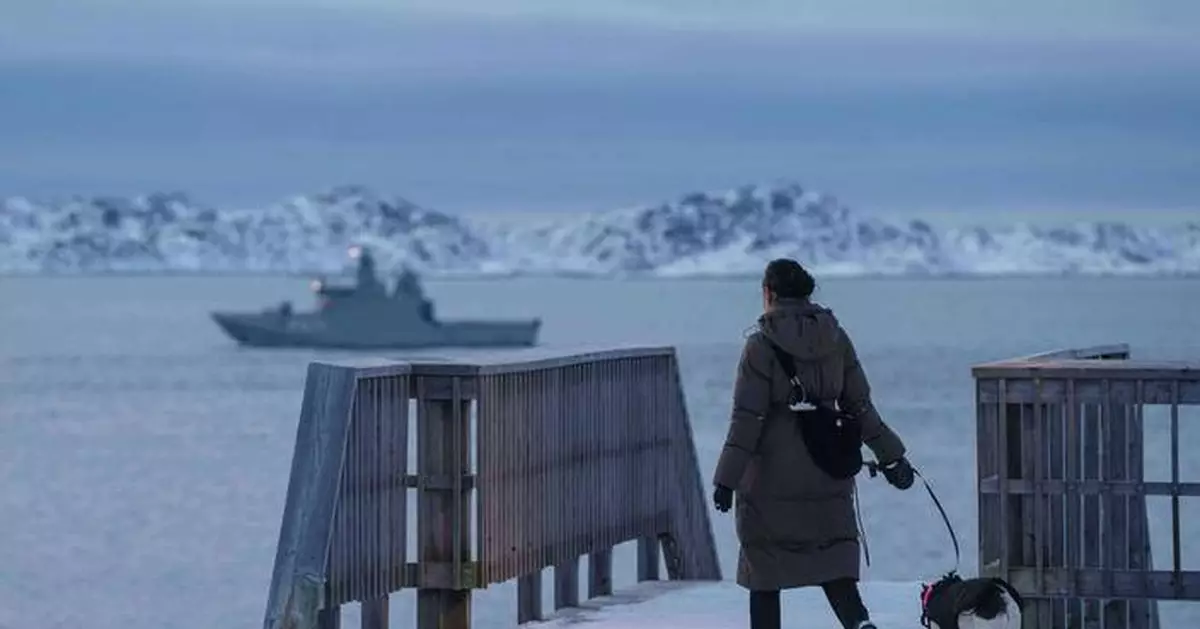
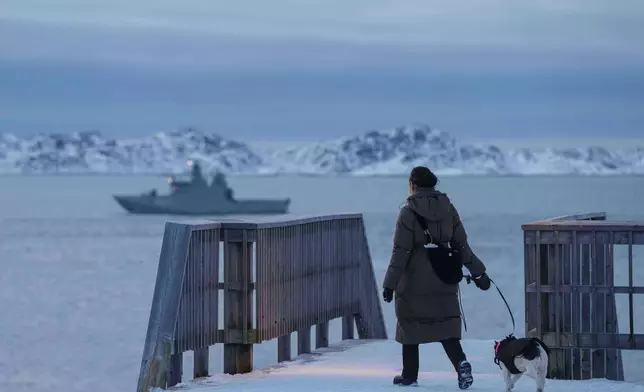
A woman walks with her dog in Nuuk, Greenland, on Thursday, Jan. 15, 2026. (AP Photo/Evgeniy Maloletka)
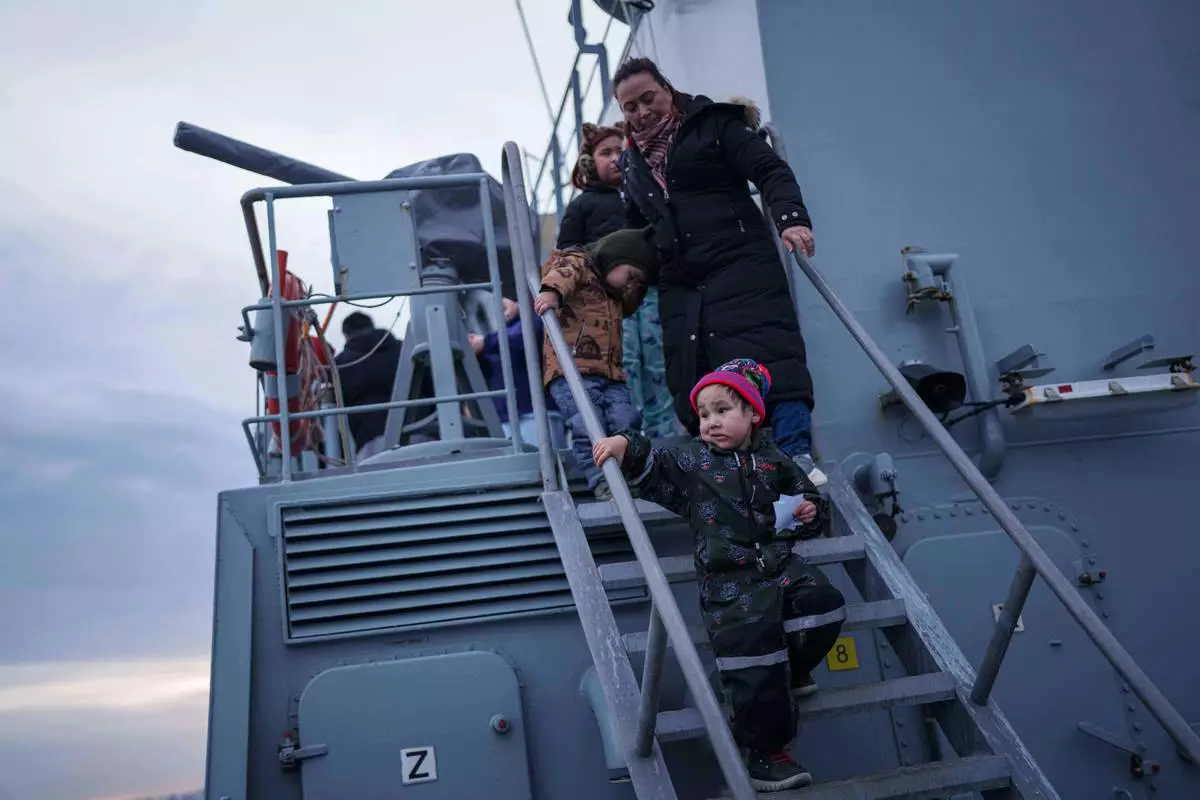
A mother with her children walk on stairs of a naval vessel during a public day in Nuuk, Greenland, Saturday, Jan. 24, 2026. (AP Photo/Evgeniy Maloletka)
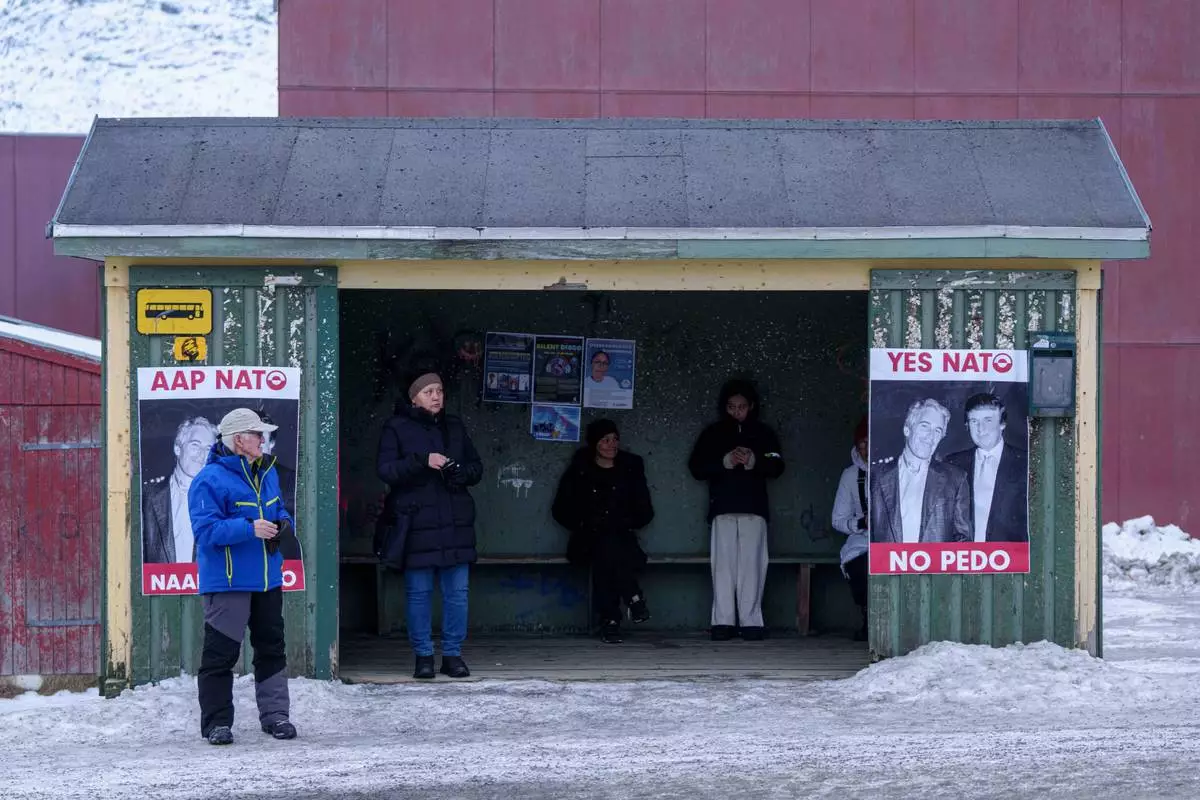
People wait at a bus station with posters of President Donald Trump and Jeffrey Epstein in Nuuk, Greenland, on Saturday, Jan. 24, 2026. (AP Photo/Evgeniy Maloletka)
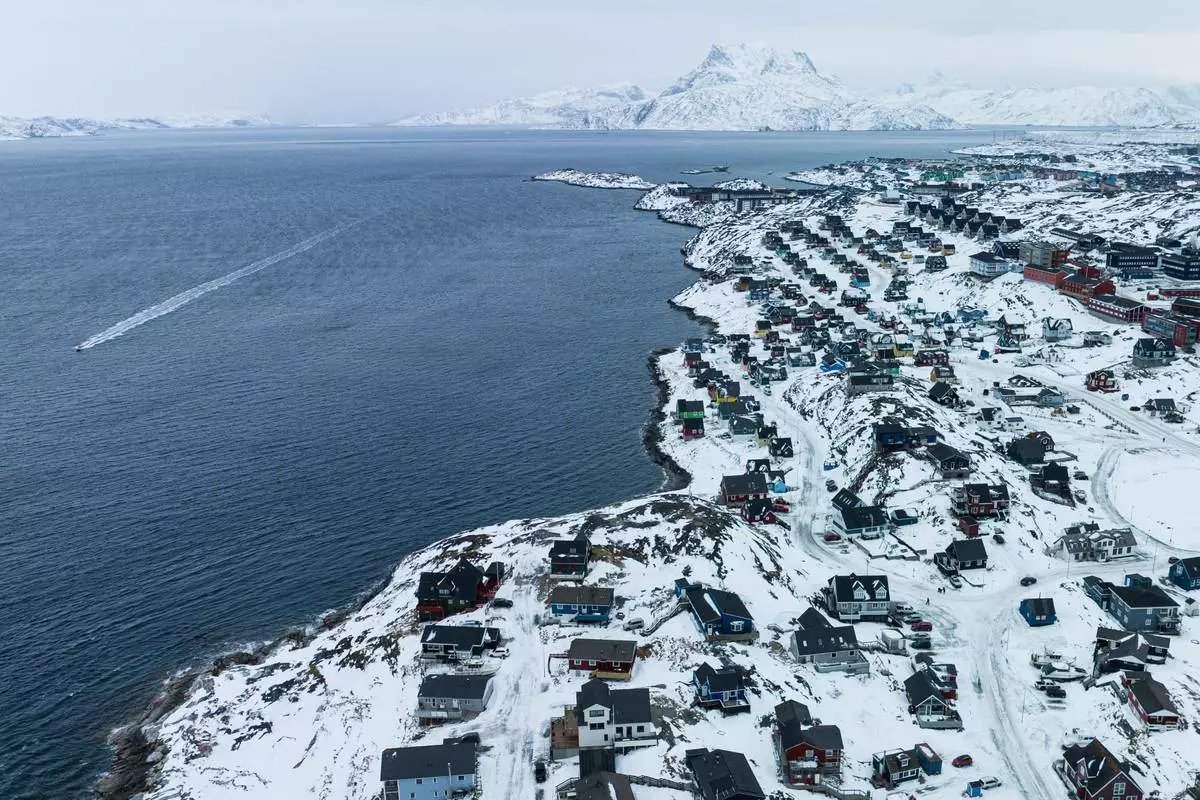
Houses are seen near the coast of a sea inlet of Nuuk, Greenland, on Saturday, Jan. 24, 2026. (AP Photo/Evgeniy Maloletka)
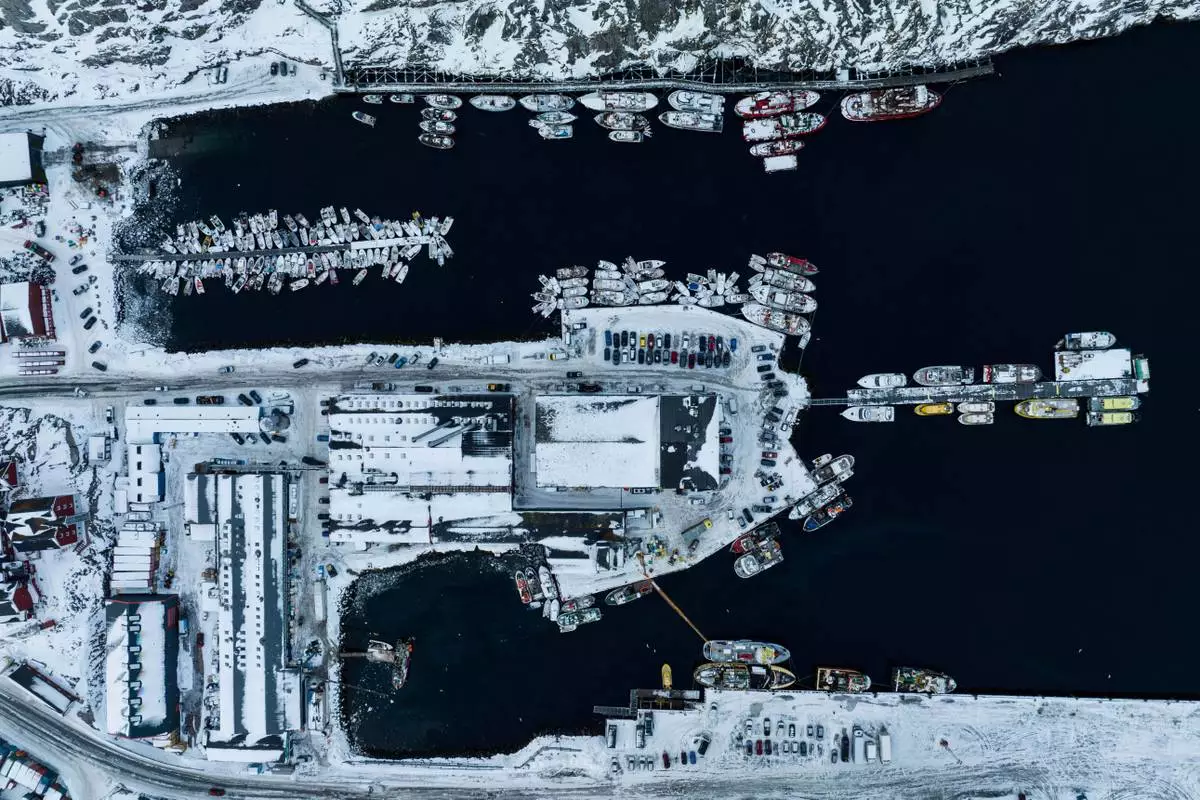
Seen from above, boats are docked at the harbour of Nuuk, Greenland, on Thursday, Jan. 22, 2026. (AP Photo/Evgeniy Maloletka)
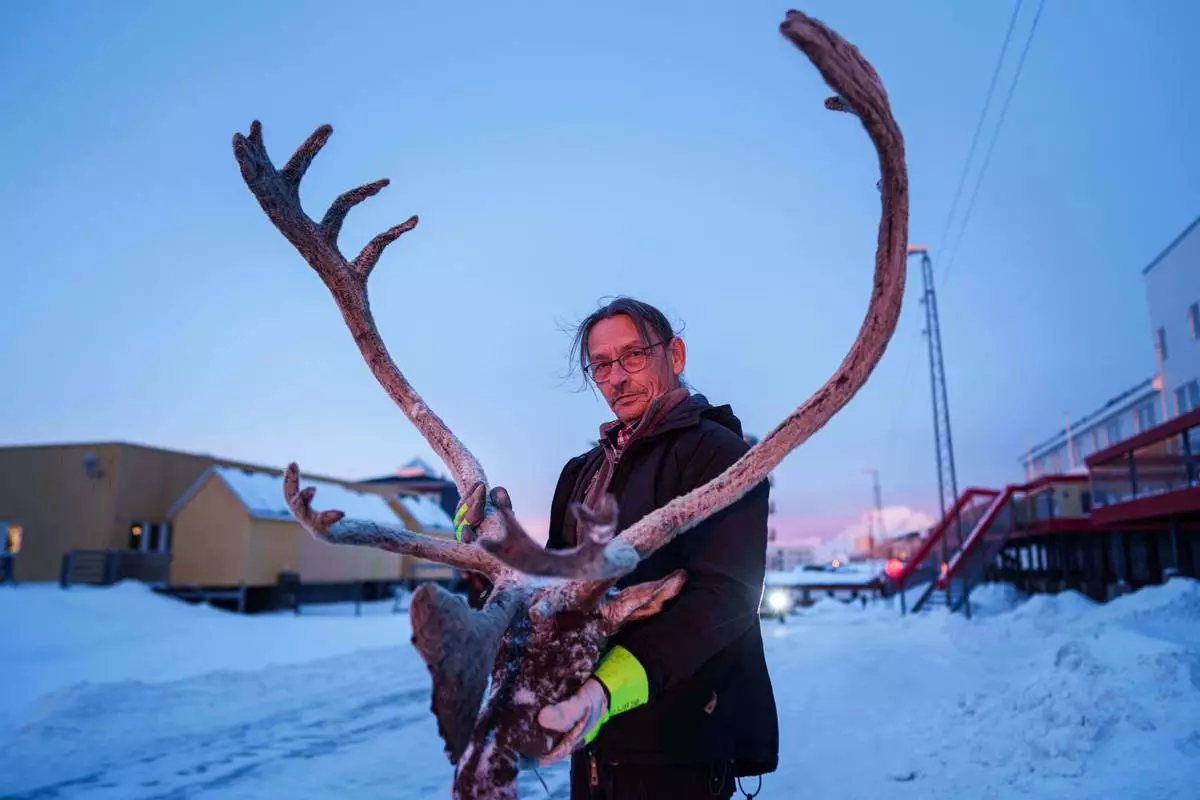
John Hansen, 61, holds a reindeer's head with antlers in Nuuk, Greenland, on Wednesday, Jan. 21, 2026. (AP Photo/Evgeniy Maloletka)
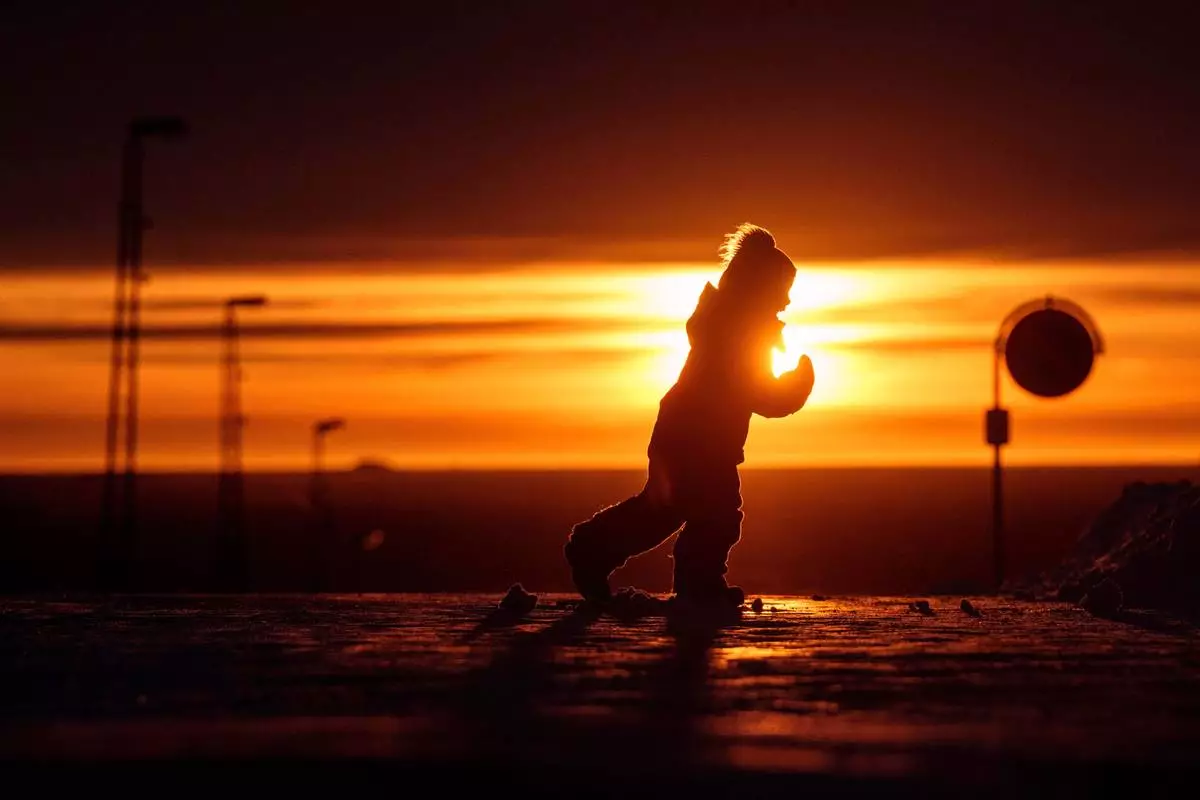
A boy runs across a street at a sunset in Nuuk, Greenland, on Wednesday, Jan. 21, 2026. (AP Photo/Evgeniy Maloletka)
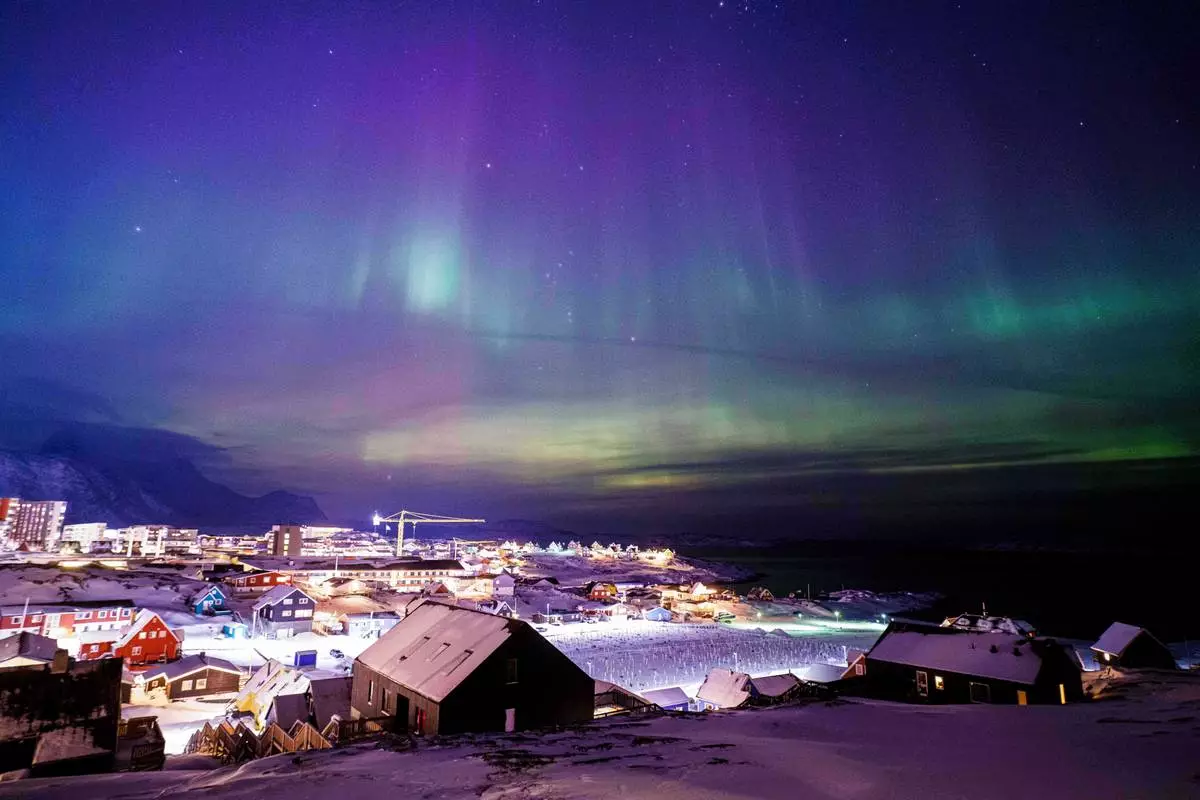
Aurora borealis, also known as the northern lights, is seen in the sky above Nuuk, Greenland, Tuesday, Jan. 20, 2026. (AP Photo/Evgeniy Maloletka)
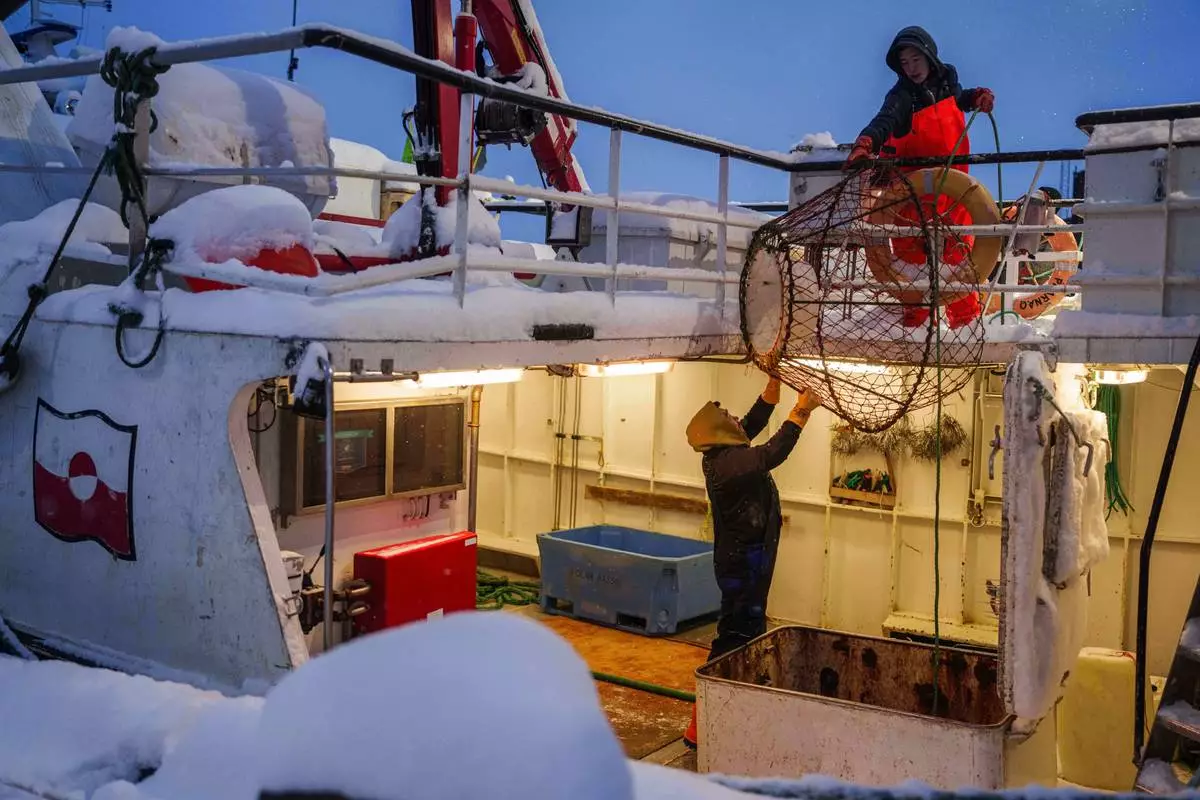
Fishermen load crab trap into a boat at the harbour of Nuuk, Greenland, on Monday, Jan. 19, 2026. (AP Photo/Evgeniy Maloletka)
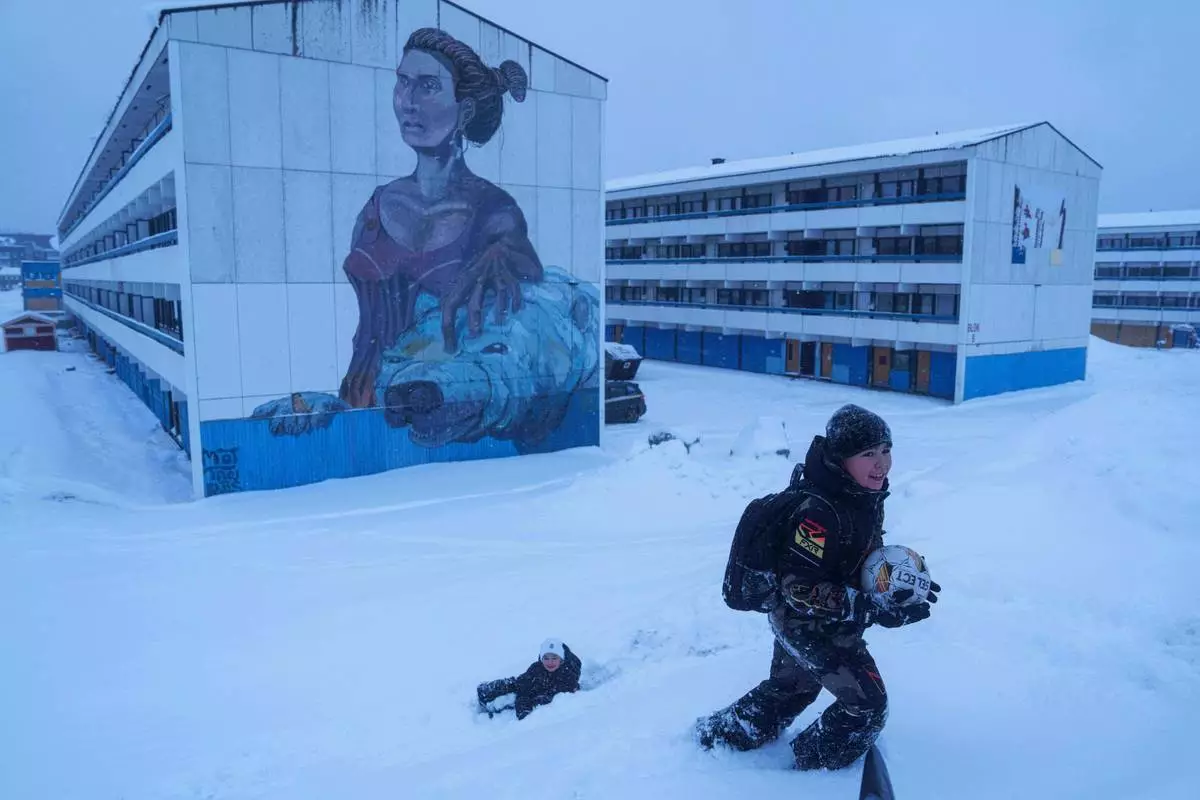
Boys play with a ball in the snow in Nuuk, Greenland, Monday, Jan. 19, 2026. (AP Photo/Evgeniy Maloletka)
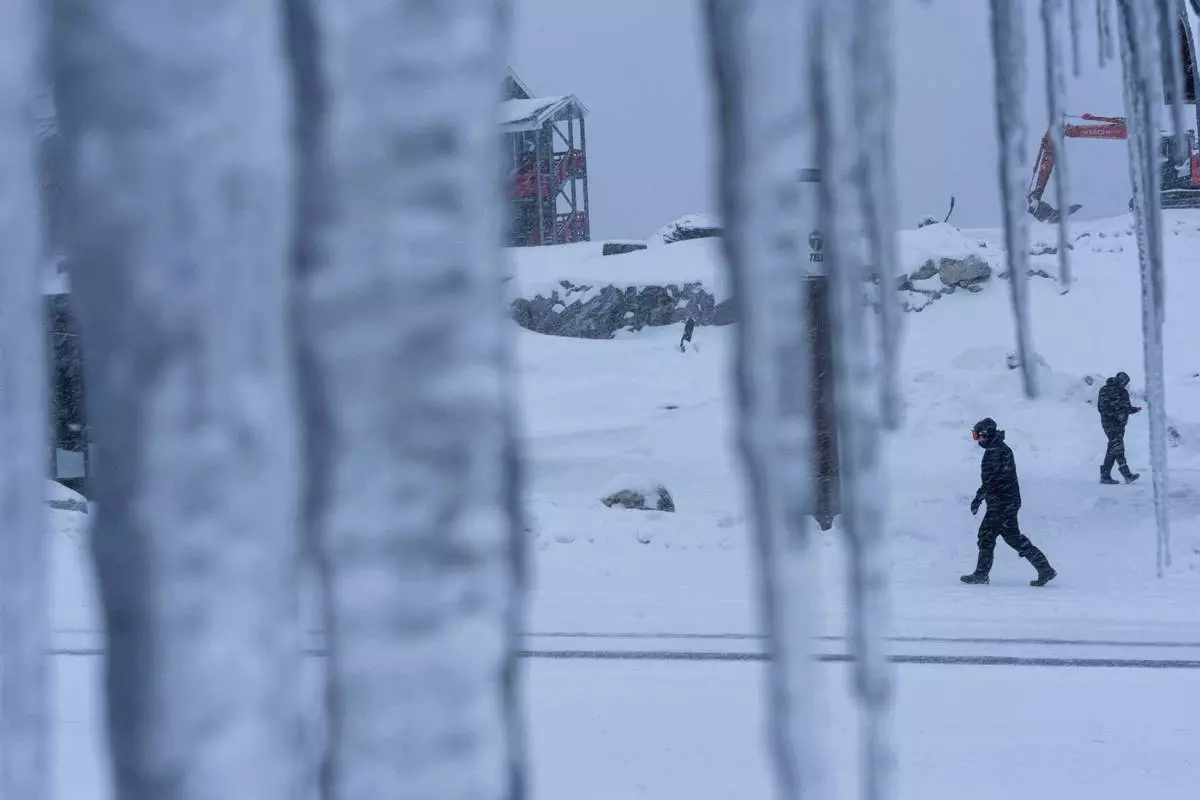
People walk through the snow in Nuuk, Greenland, Monday, Jan. 19, 2026. (AP Photo/Evgeniy Maloletka)
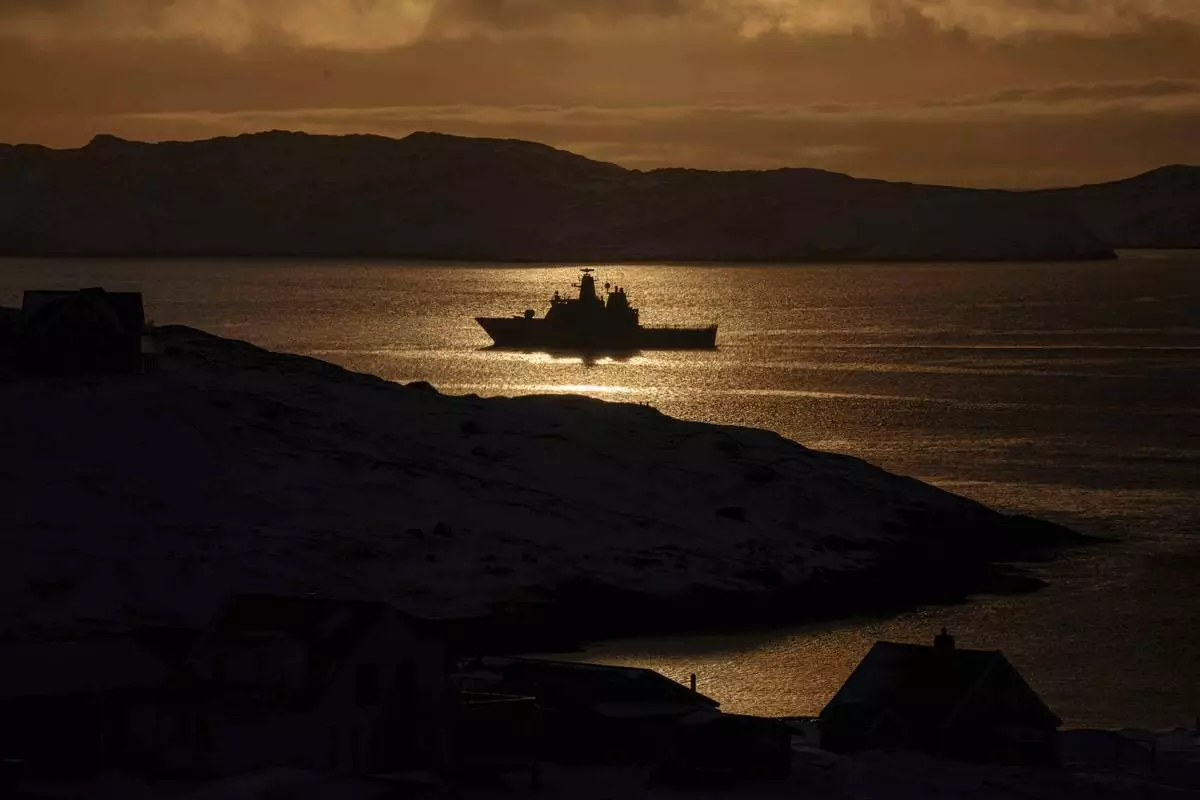
Military vessel HDMS Knud Rasmussen of the Royal Danish Navy patrols near Nuuk, Greenland, on Thursday, Jan. 15, 2026. (AP Photo/Evgeniy Maloletka)
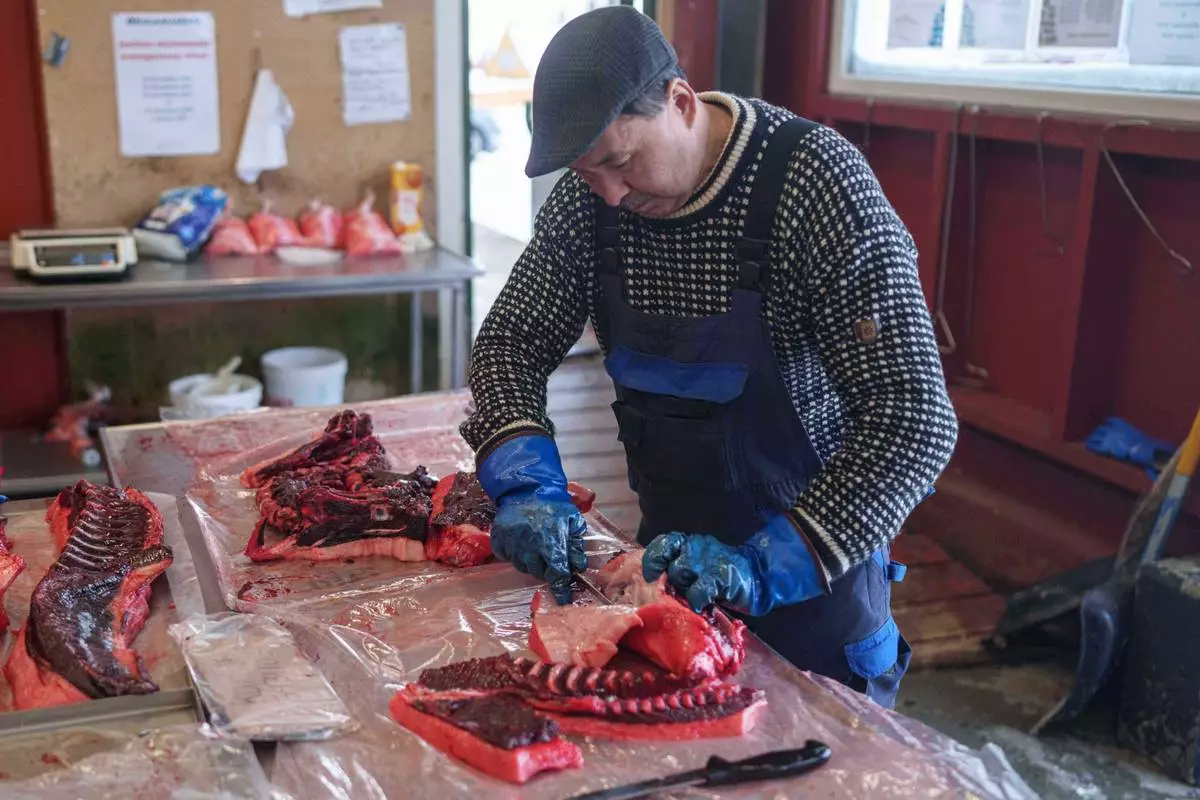
A man cuts seal meat at the market in Nuuk, Greenland, Wednesday, Jan. 14, 2026. (AP Photo/Evgeniy Maloletka)
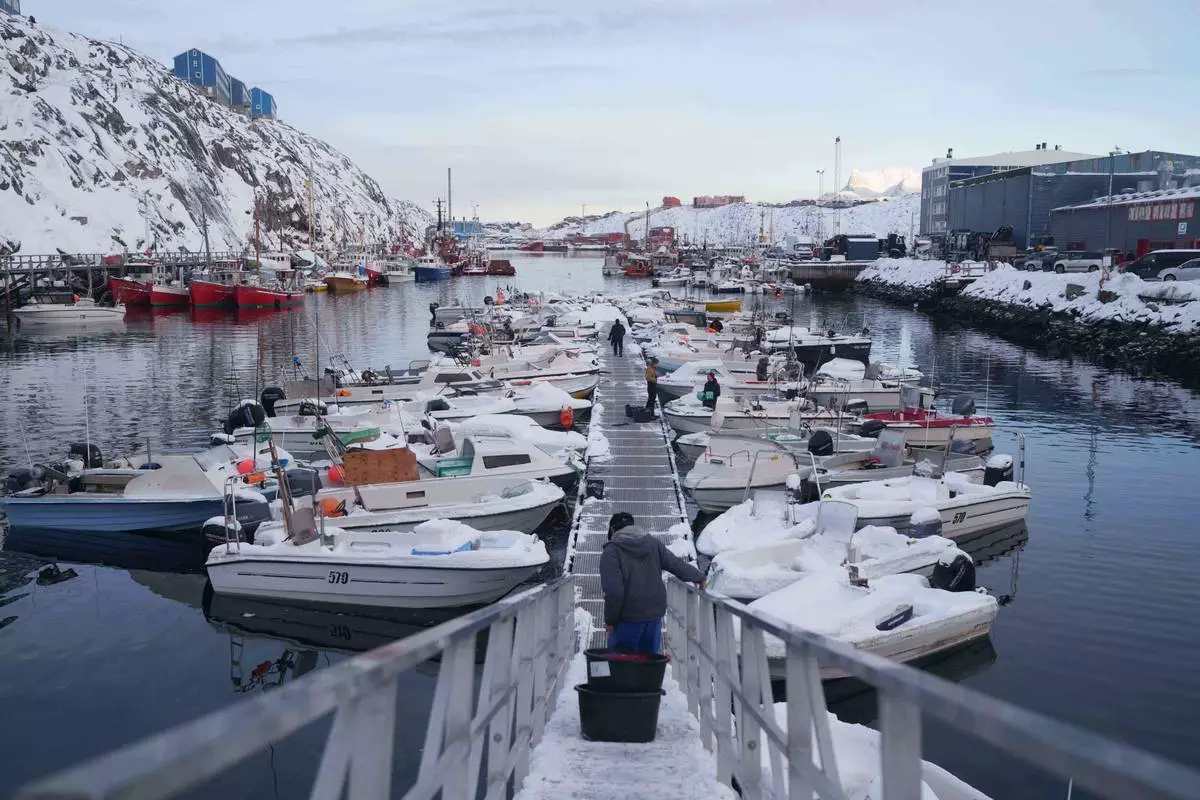
Fishermen arrive at the harbour of Nuuk, Greenland, Wednesday, Jan. 14, 2026. (AP Photo/Evgeniy Maloletka)
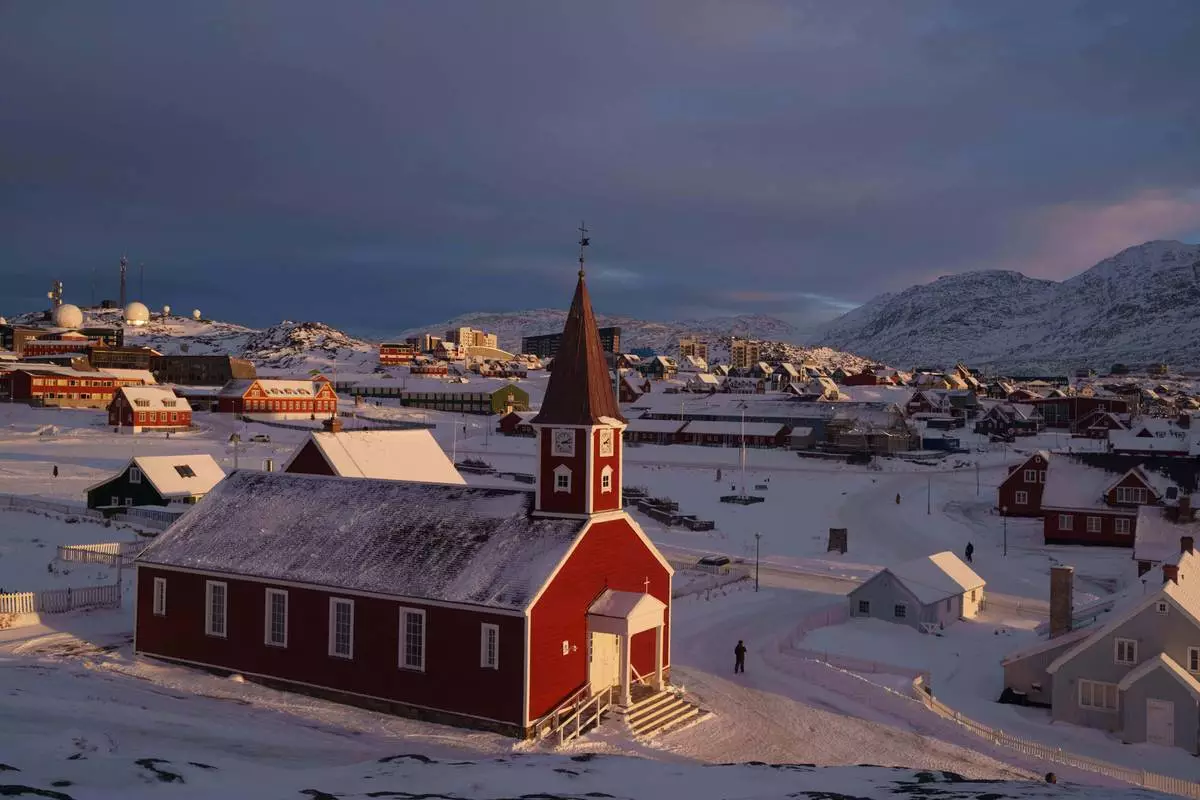
A man walks near the church in Nuuk, Greenland, on Wednesday, Jan. 14, 2026. (AP Photo/Evgeniy Maloletka)
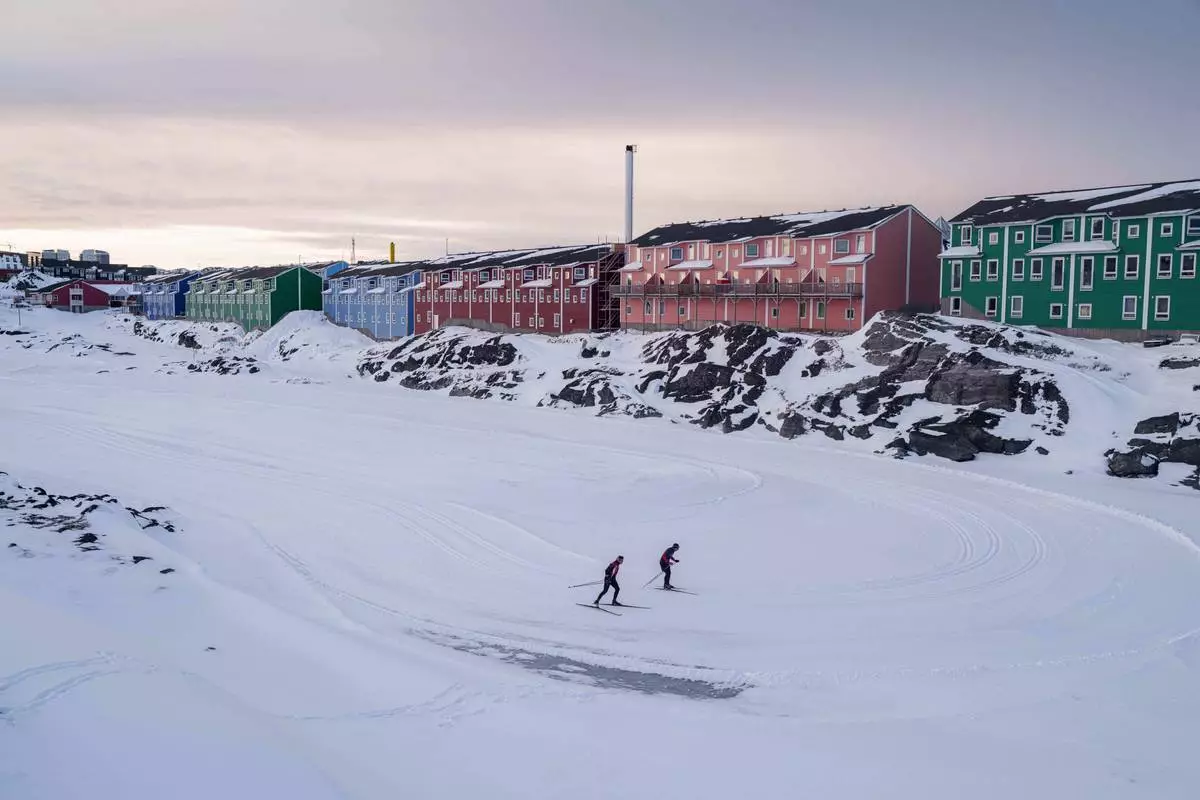
Cross-country skiers train in Nuuk, Greenland, Wednesday, Jan. 14, 2026. (AP Photo/Evgeniy Maloletka)
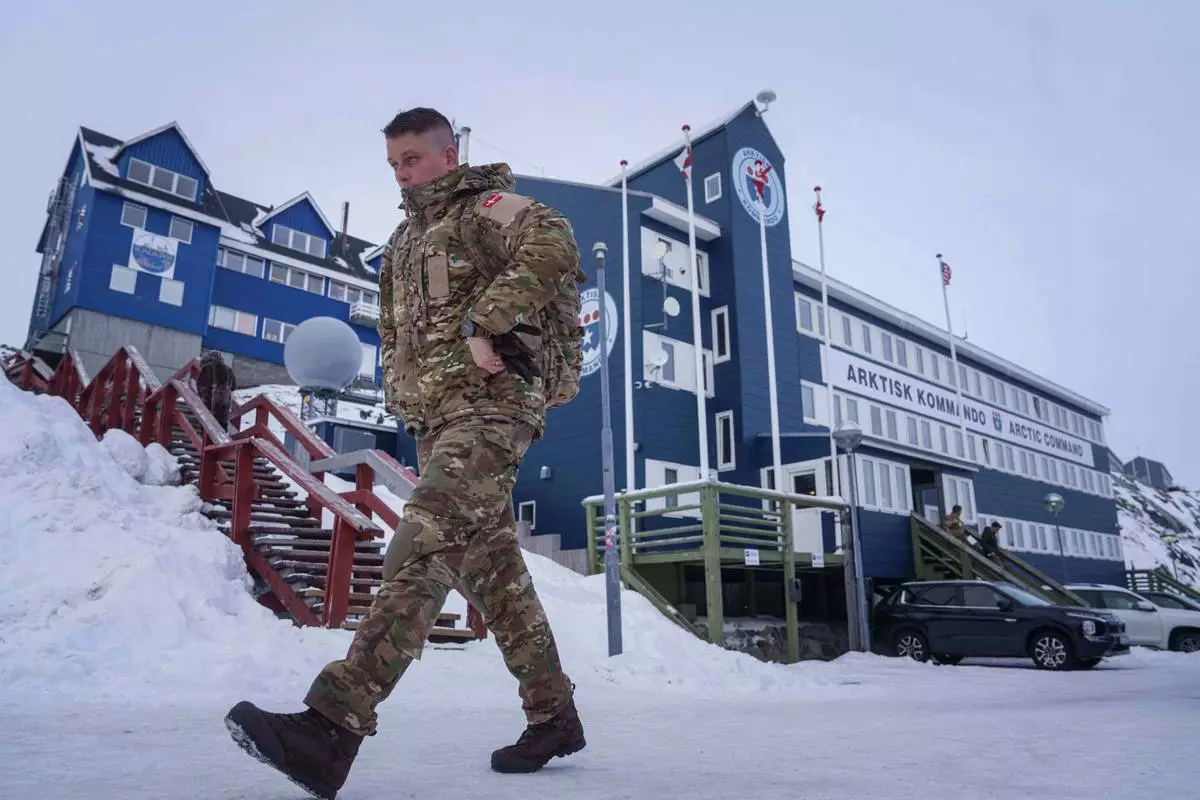
A Danish serviceman walks in front of Joint Arctic Command center in Nuuk, Greenland, on Friday, Jan. 16, 2026. (AP Photo/Evgeniy Maloletka)
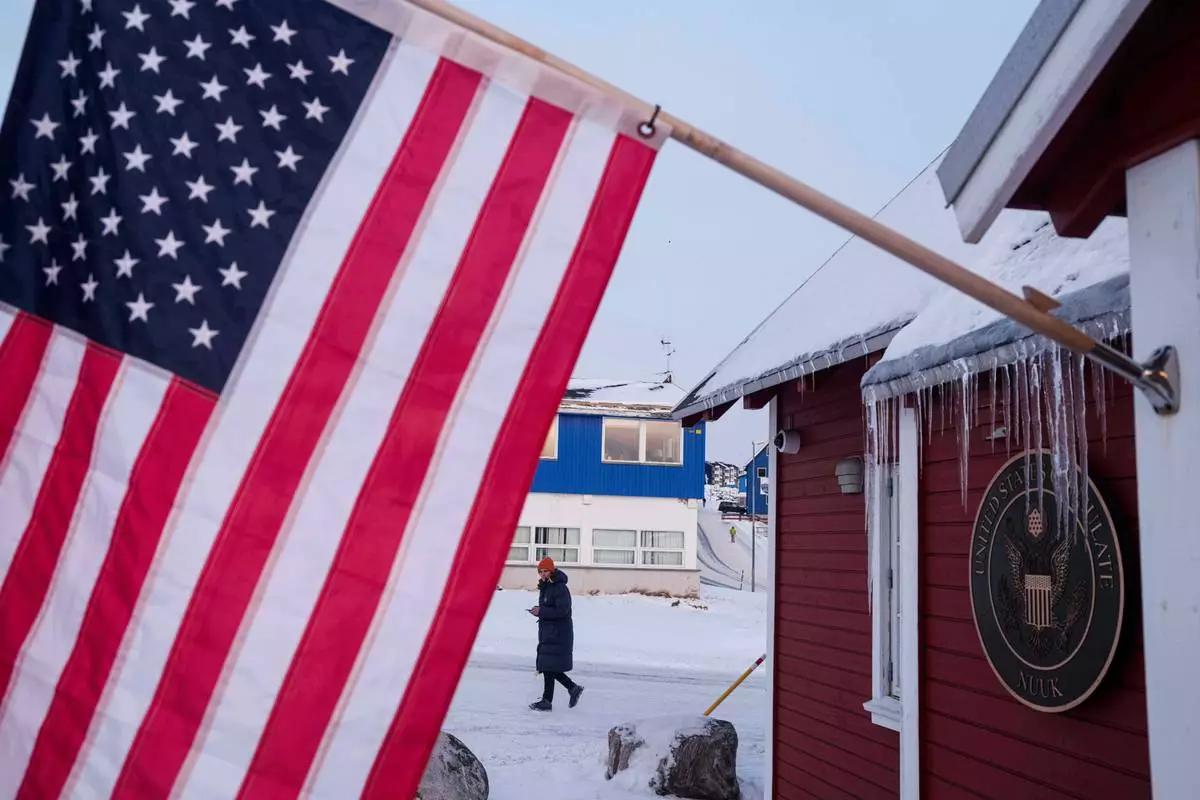
An American flag is displayed on the facade of the US consulate in Nuuk, Greenland, Wednesday, Jan. 14, 2026. (AP Photo/Evgeniy Maloletka)
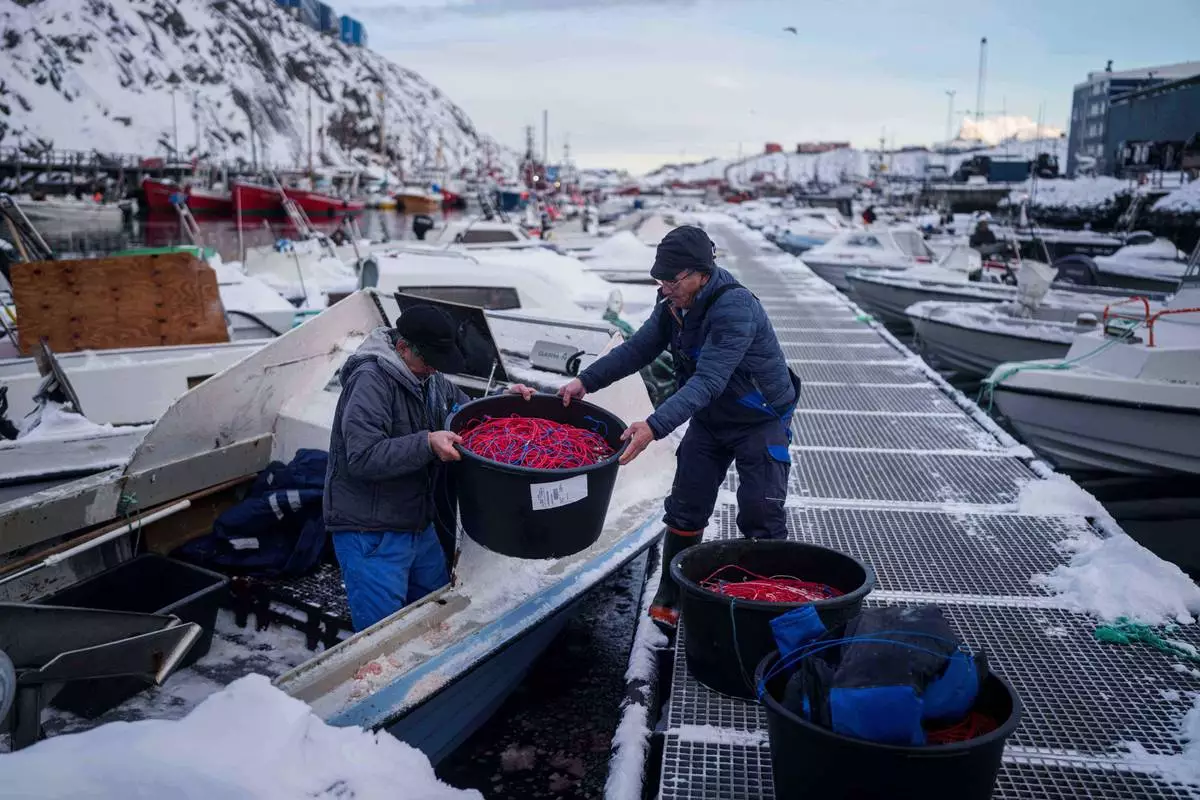
Fishermen load fishing lines into a boat in the harbor of Nuuk, Greenland, Wednesday, Jan. 14, 2026. (AP Photo/Evgeniy Maloletka)
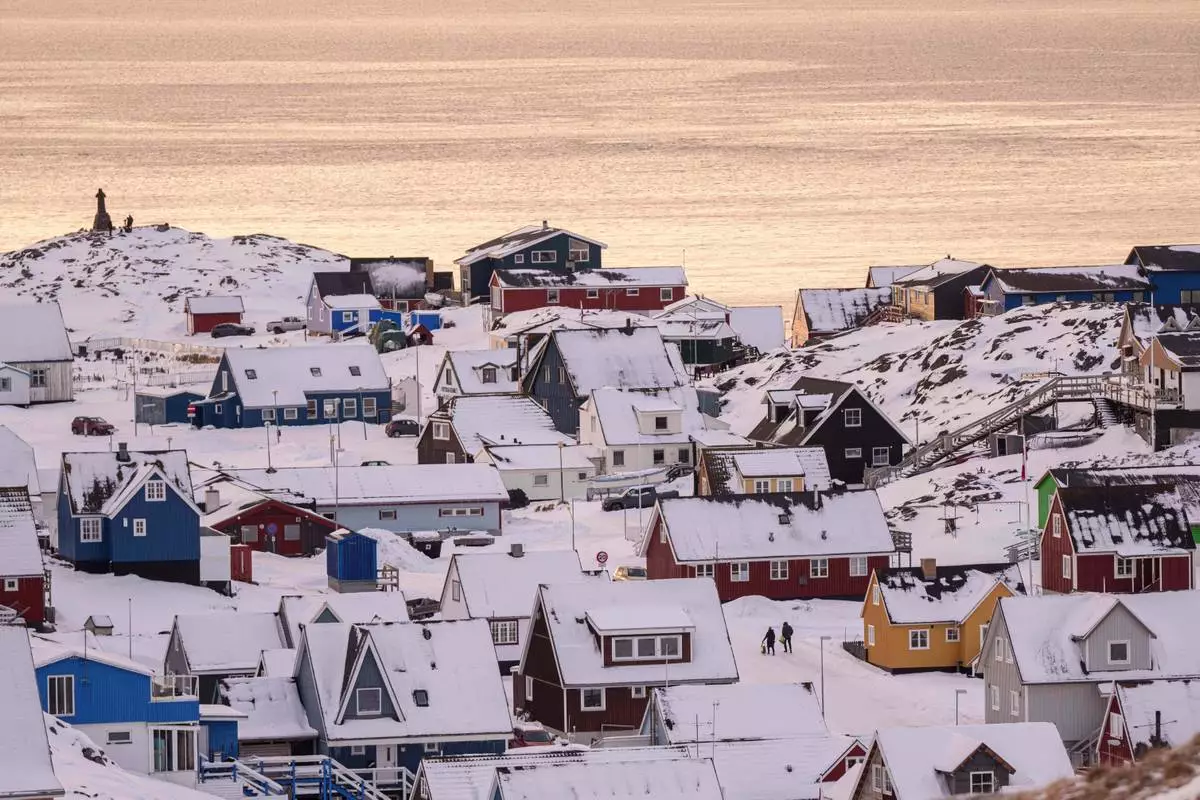
People walk on a street in Nuuk, Greenland, Wednesday, Jan. 14, 2026. (AP Photo/Evgeniy Maloletka)
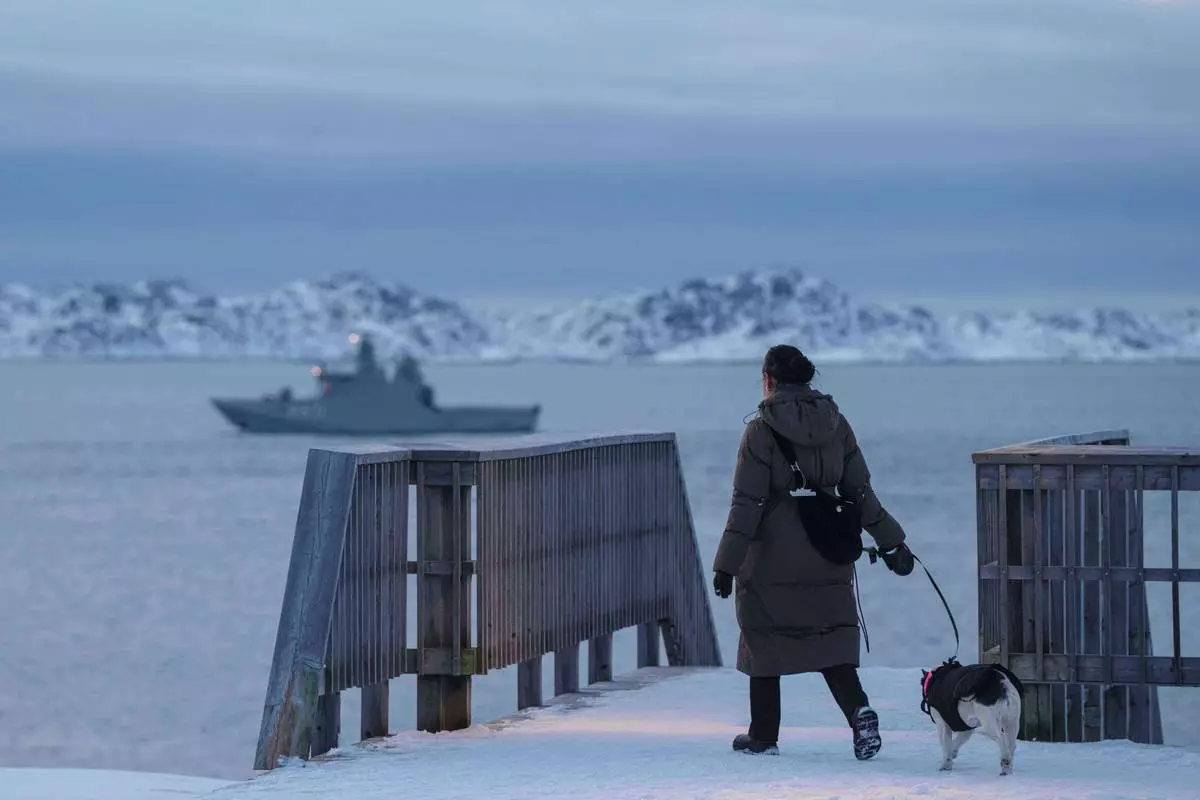
A woman walks with her dog in Nuuk, Greenland, on Thursday, Jan. 15, 2026. (AP Photo/Evgeniy Maloletka)
PARIS (AP) — Sipping tea every night is working wonders for Maja Chwalinska.
The Polish player became just the second qualifier to reach a Grand Slam singles final in the Open Era when she beat Diana Shnaider of Russia 7-6 (4), 6-4 on Thursday.
The 24-year-old Chwalinska can match Emma Raducanu’s title run at the 2021 U.S. Open when she plays Russian teenager Mirra Andreeva in Saturday's final at Roland Garros.
Nothing will change Chwalinska's routine for the biggest match of her life.
“I’m going to drink my tea,” she said.
Chwalinska and Raducanu, according to stats provider Opta, stand alone among men and women in having reached a major singles final from the qualifying rounds since the Open Era began in 1968.
“I feel like I am in a bubble, I don’t know what’s going on,” Chwalinska said. “After the tournament it will be time to process it: breathe in, breathe out.”
Besides the tea, she might watch some tennis "because I’m a tennis freak.”
She said her favorite player growing up was Swiss great Roger Federer, then Spanish clay-court ace Rafael Nadal. Now it's 24-time major winner Novak Djokovic.
“I'm just very grateful that I was growing up during this era,” she said. "Sometimes I come back to these old matches and I watch them play, and it feels like poetry.”
Chwalinska sealed victory on her first match point with a powerful forehand winner down the line, then fell back with both hands on her face. She then sat on her chair and panted heavily, her face buried into a towel.
“I honestly don’t know what was going on in my head,” she said. “I was just in such a shock.”
Chwalinska's run saw her advance through three qualifying rounds to enter the main draw and play in just her third Grand Slam. Her best result at a major before this was the second round at Wimbledon in 2022. Polish countrywoman Iga Swiatek has won the French Open four times.
The 19-year-old Andreeva reached her first Grand Slam final by beating Marta Kostyuk 6-1, 6-3 earlier Thursday on Court Philippe-Chatrier.
Andreeva had reached the semifinals here two years ago, but this is Chwalinska’s first semifinal anywhere at WTA tour-level.
Chwalinksa has dropped only one set in her nine matches, including qualifying, and has bulldozed her way past four top-50 players in the main draw.
Her ranking will rocket from No. 114 to No. 14 if she wins the tournament, according to the WTA.
Her bank balance will also get a significant boost. Chwalinksa's total prize money heading into Roland Garros was $864,030 and by reaching the final she gets 1.4 million euros about ($1.6 million); and 2.8 million euros ($3.25 million) if she wins on Saturday.
A neat drop shot and lob gave her set point in the tiebreaker, and she clinched the first set when Shnaider’s backhand went wide.
Shnaider had a medical timeout after the seventh game of the second set. She flexed her left leg as she lay on her back, and dropped her serve in the ninth game, giving Chwalinksa a chance to serve for the match.
“All the kudos to Maja. She played amazing," Shnaider said. “She moves incredible on the court, she covers a lot. Even if you think that you won the point, she’s there.”
Andreeva could see even the smallest details on the ball.
“I was seeing the little hairs on the ball when I was tossing or playing (shots),” Andreeva said. “I was really, really focused today.”
Andreeva, who is seeded No. 8, also converted her first match point when serving for the victory.
She clearly feels comfortable at the French Open, which she describes as a “cozy” tournament because she sees familiar faces every year, and enjoys her time in Paris.
“I really like to walk around the city, to go into those little restaurants on the street,” she said. “I also speak a little bit of French, so I try to sometimes talk to people in French.”
There was no post-match handshake between Andreeva and Kostyuk — and the Ukrainian walked off quickly, turning only to wave and blow kisses to the crowd.
They had separate photos taken before the match as they each stood next to two children on their respective side of the net. Usually the players pose for the same photo, standing right next to each other by the net.
Kostyuk and countrywoman Oleksandra Oliynykova have spoken out during the tournament about the impact Russia's invasion of Ukraine is having on their country.
The No. 15-seeded Kostyuk said defeat won't linger given how much support she felt from fans.
“This is something I will carry with me forever,” she said. “I feel like this is the highlight of my tournament."
The semifinal began at shortly after 3 p.m. with an open roof, like on Wednesday when beaten quarterfinalists Aryna Sabalenka and Anna Kalinskaya complained of swirling wind on Chatrier and said the roof should have been closed.
It was closed toward the end of the second set of Thursday's semifinal, offering Kostyuk better conditions for her clay-court game. But her 16-match winning streak on clay ended.
AP tennis: https://apnews.com/hub/tennis
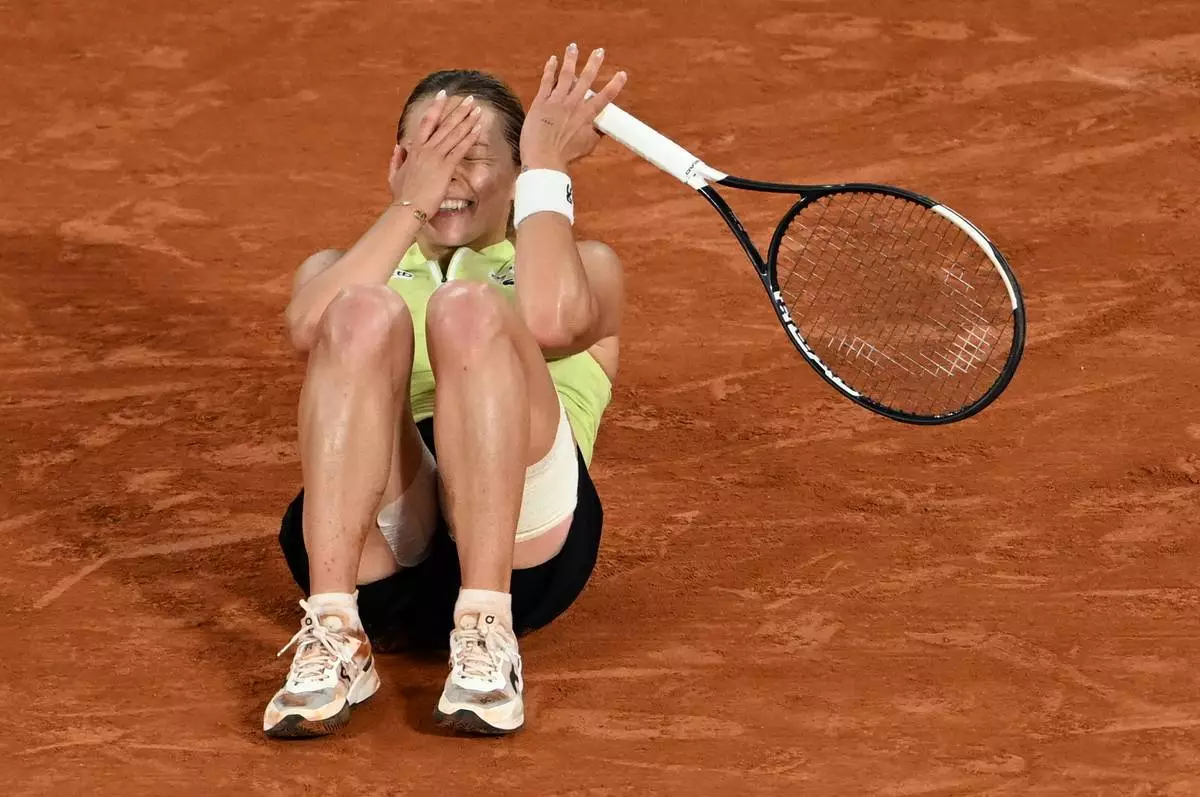
Poland's Maja Chwalinska reacts after winning the semifinal tennis match against Russia's Diana Shnaider at the French Open in Paris, Thursday, June 4, 2026. (AP Photo/Emma Da Silva)
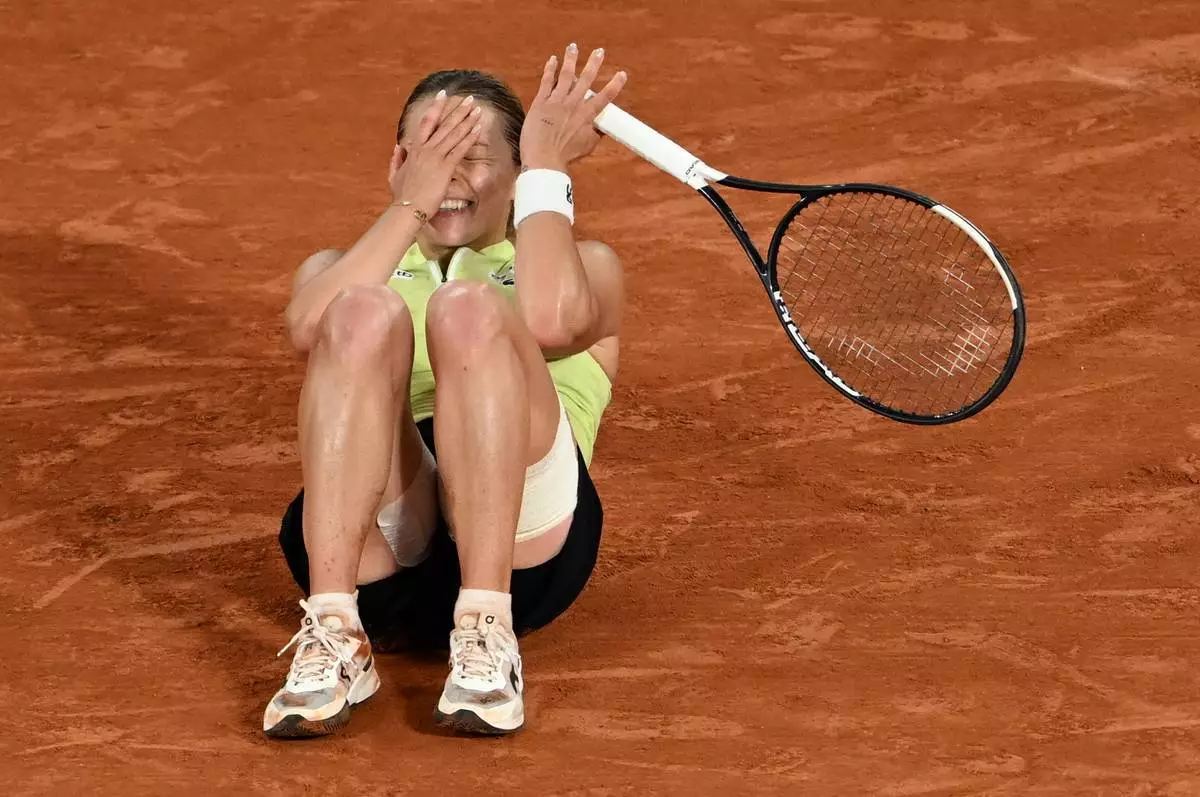
Poland's Maja Chwalinska reacts after winning the semifinal tennis match against Russia's Diana Shnaider at the French Open in Paris, Thursday, June 4, 2026. (AP Photo/Emma Da Silva)
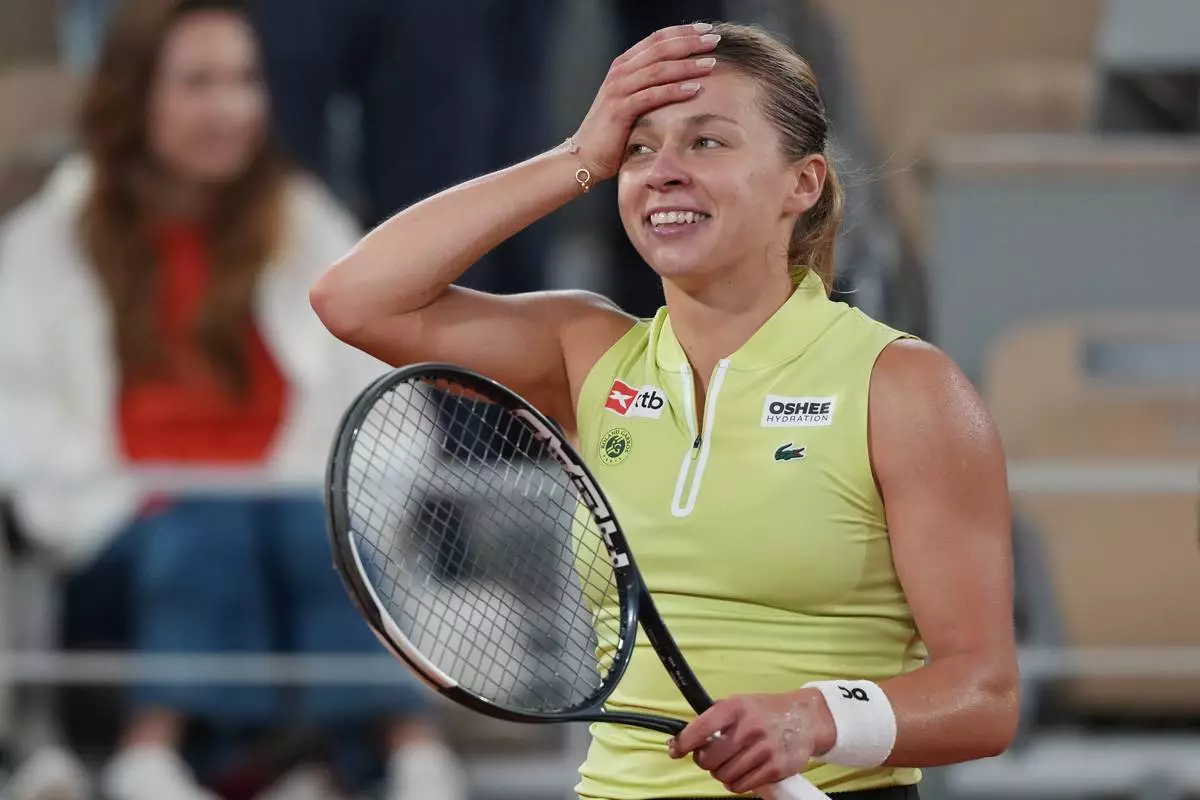
Poland's Maja Chwalinska react after winning during the semifinal tennis match against Russia's Diana Shnaider at the French Open in Paris, Thursday, June 4, 2026. (AP Photo/Thibault Camus)
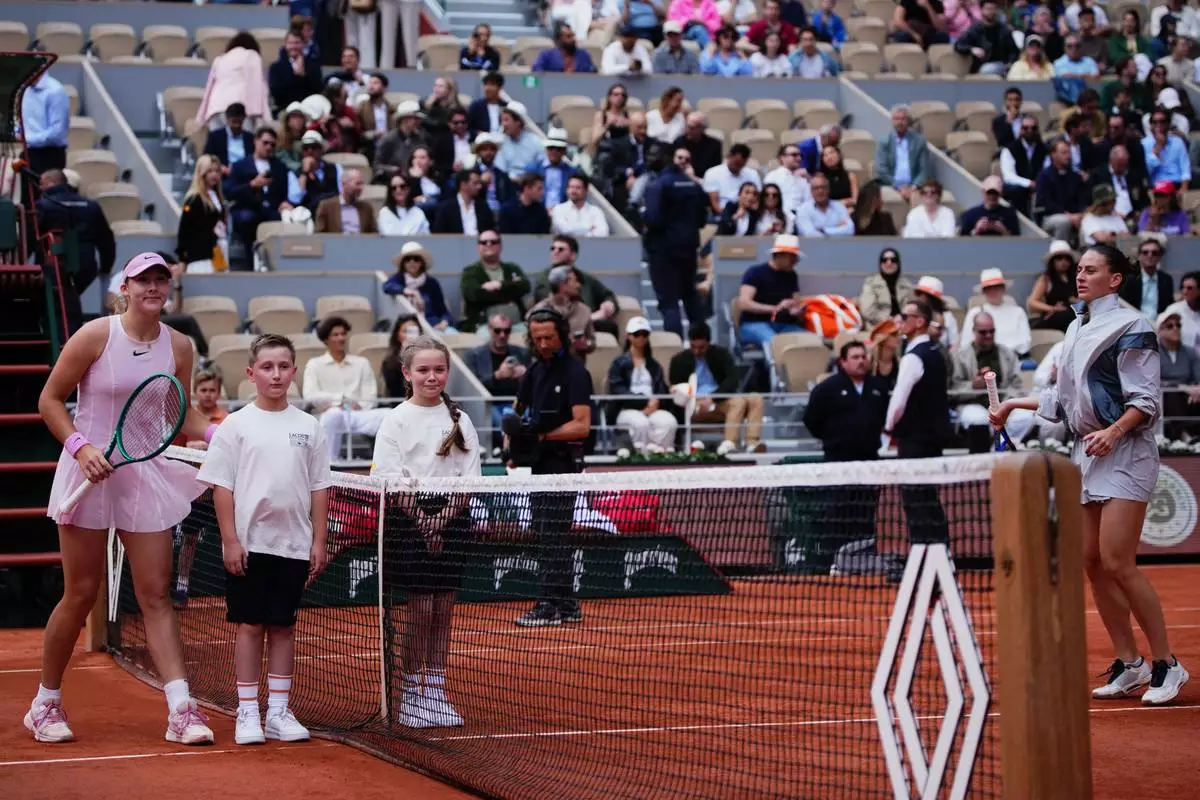
Russia's Mirra Andreeva poses with children while Ukraine's Marta Kostyuk refused to join before the semifinal tennis match at the French Open in Paris, Thursday, June 4, 2026. (AP Photo/Christophe Ena)
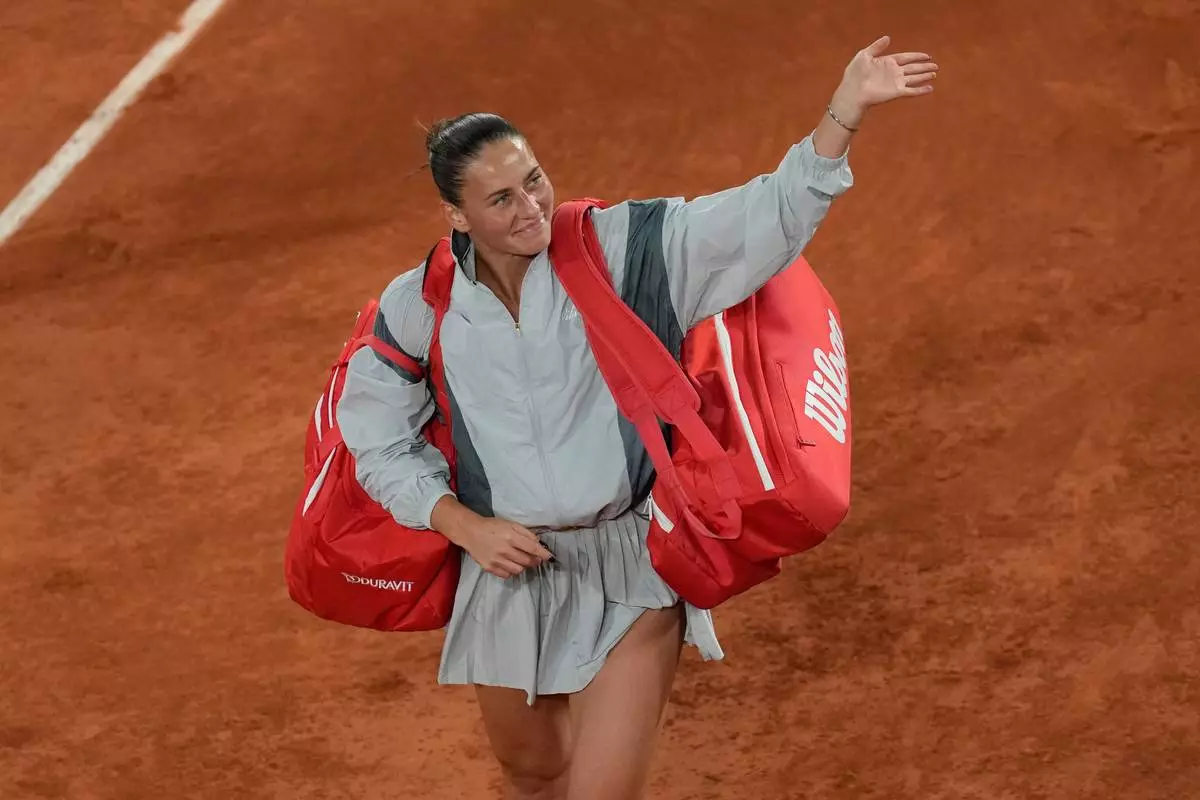
Ukraine's Marta Kostyuk walks off the court after the semifinal tennis match against Russia's Mirra Andreeva at the French Open in Paris, Thursday, June 4, 2026. (AP Photo/Christophe Ena)
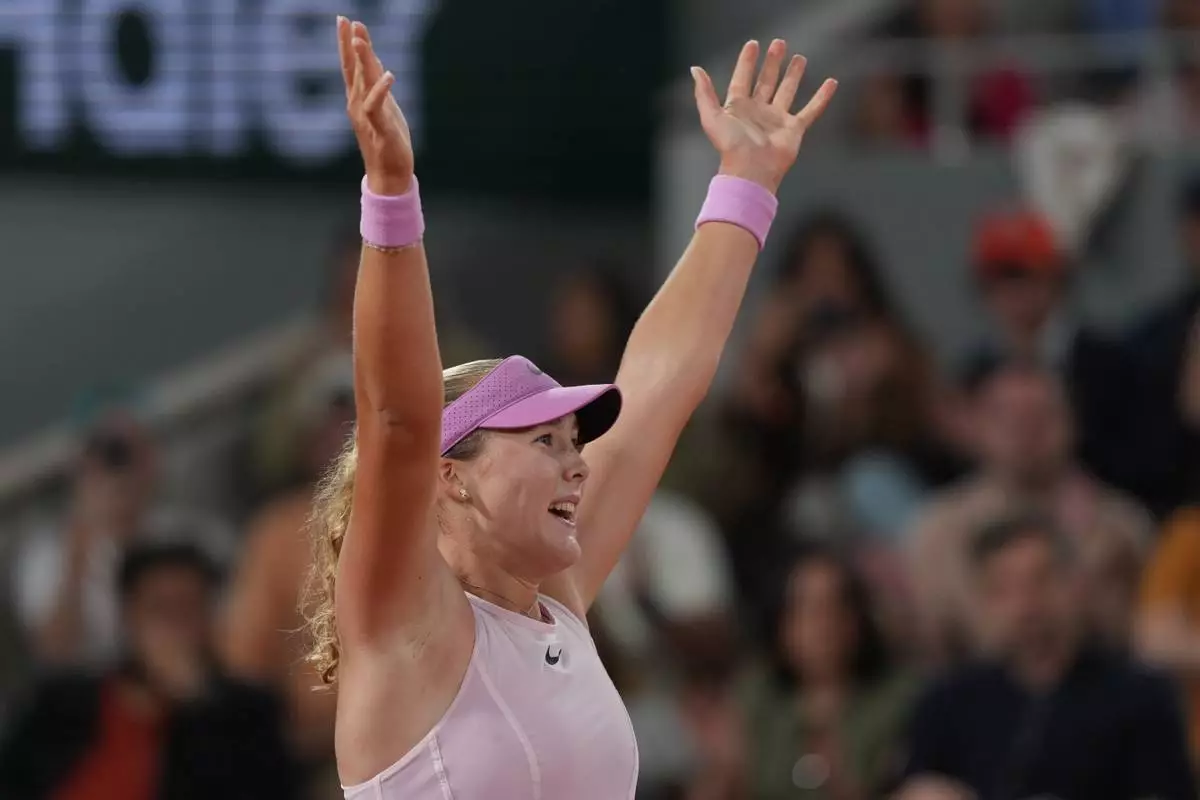
Russia's Mirra Andreeva reacts after winning during the semifinal tennis match against Ukraine's Marta Kostyuk at the French Open in Paris, Thursday, June 4, 2026. (AP Photo/Thibault Camus)
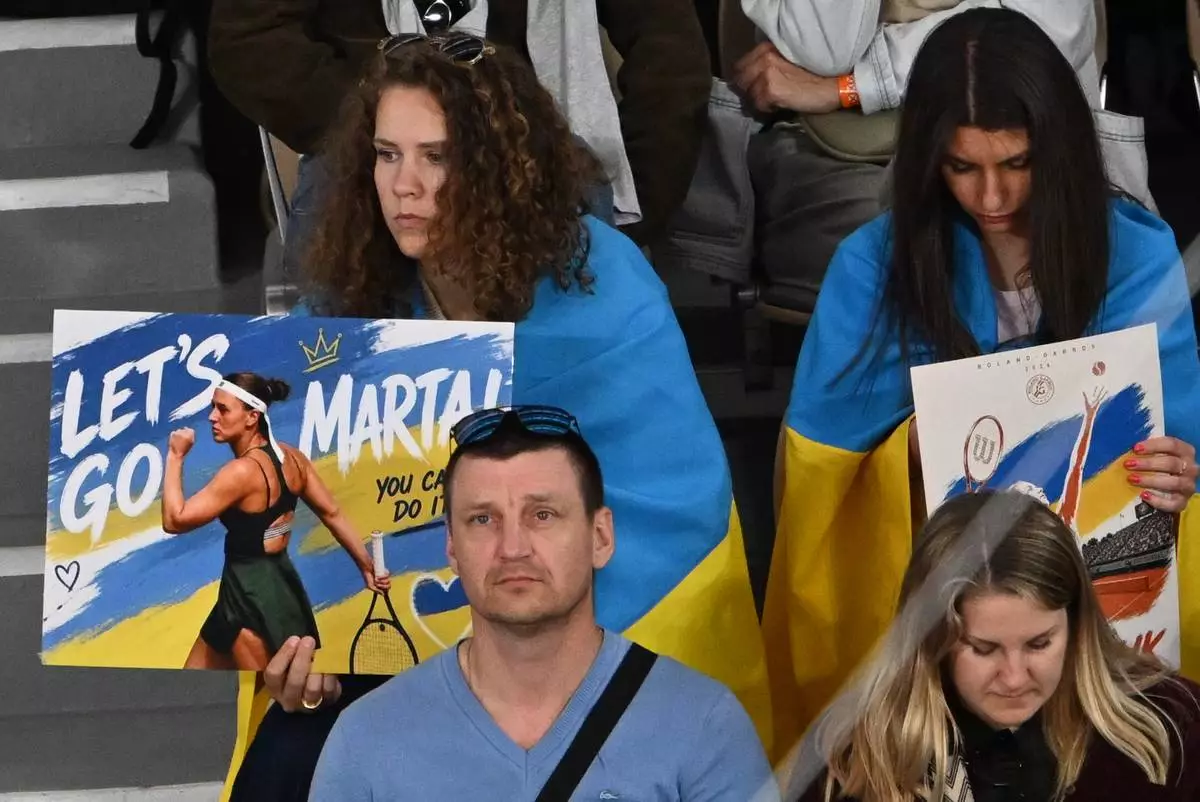
Fans supprtUkraine's Marta Kostyuk during the semifinal tennis match against Russia's Mirra Andreeva at the French Open in Paris, Thursday, June 4, 2026. (AP Photo/Emma Da Silva)
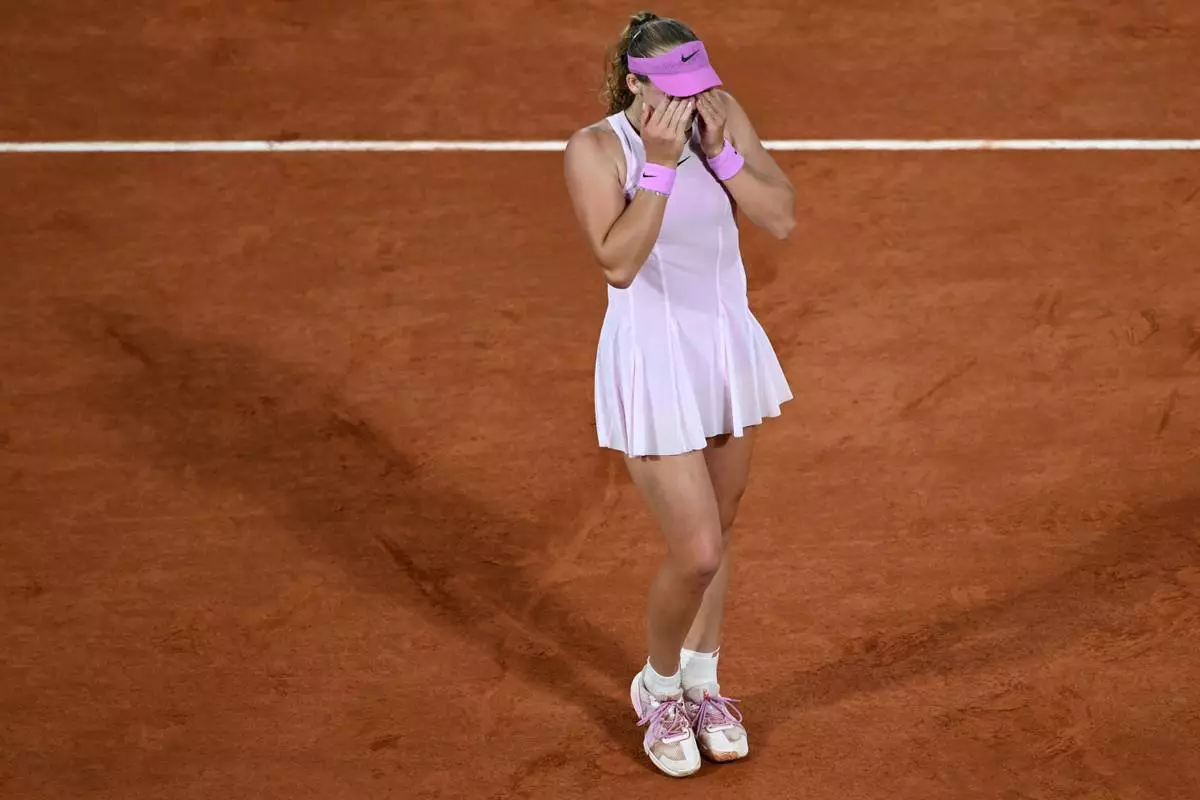
Russia's Mirra Andreeva reacts after winning the semifinal tennis match against Ukraine's Marta Kostyuk at the French Open in Paris, Thursday, June 4, 2026. (AP Photo/Emma Da Silva)
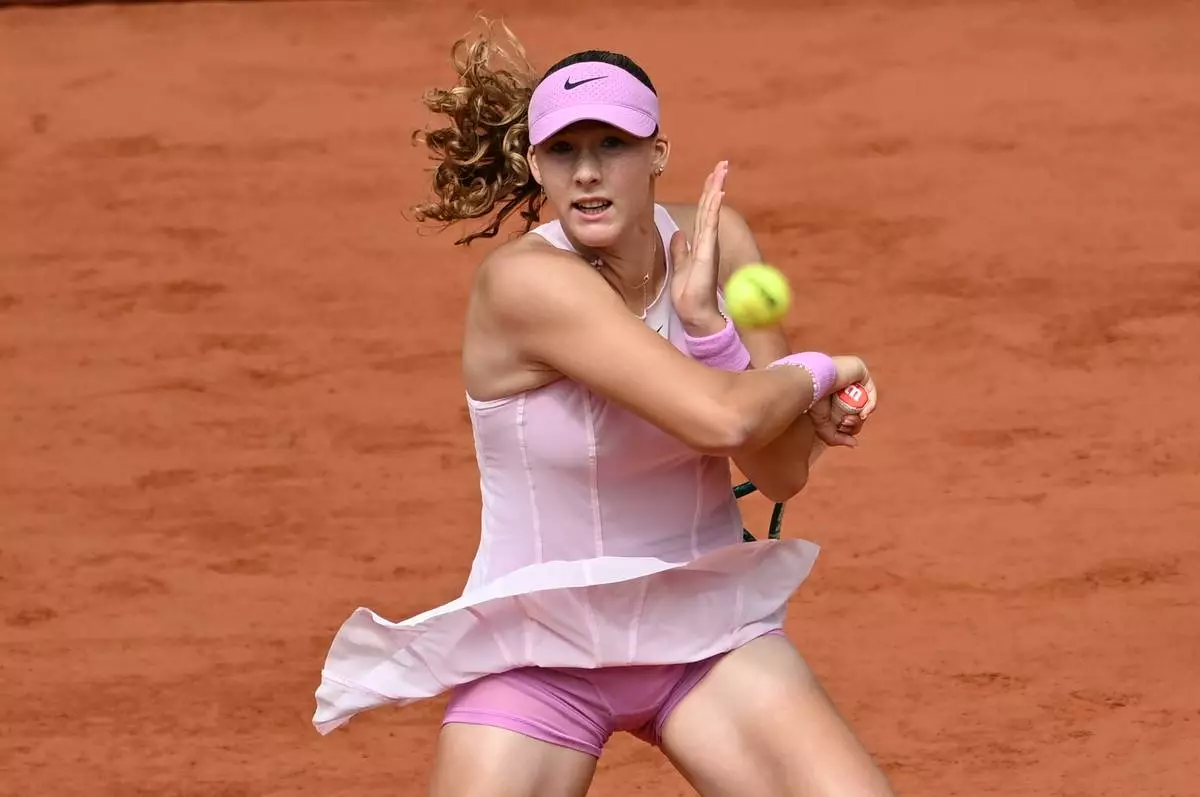
Russia's Mirra Andreeva returns to Ukraine's Marta Kostyuk during the senifinal tennis match at the French Open in Paris, Thursday, June 4, 2026. (AP Photo/Emma Da Silva)
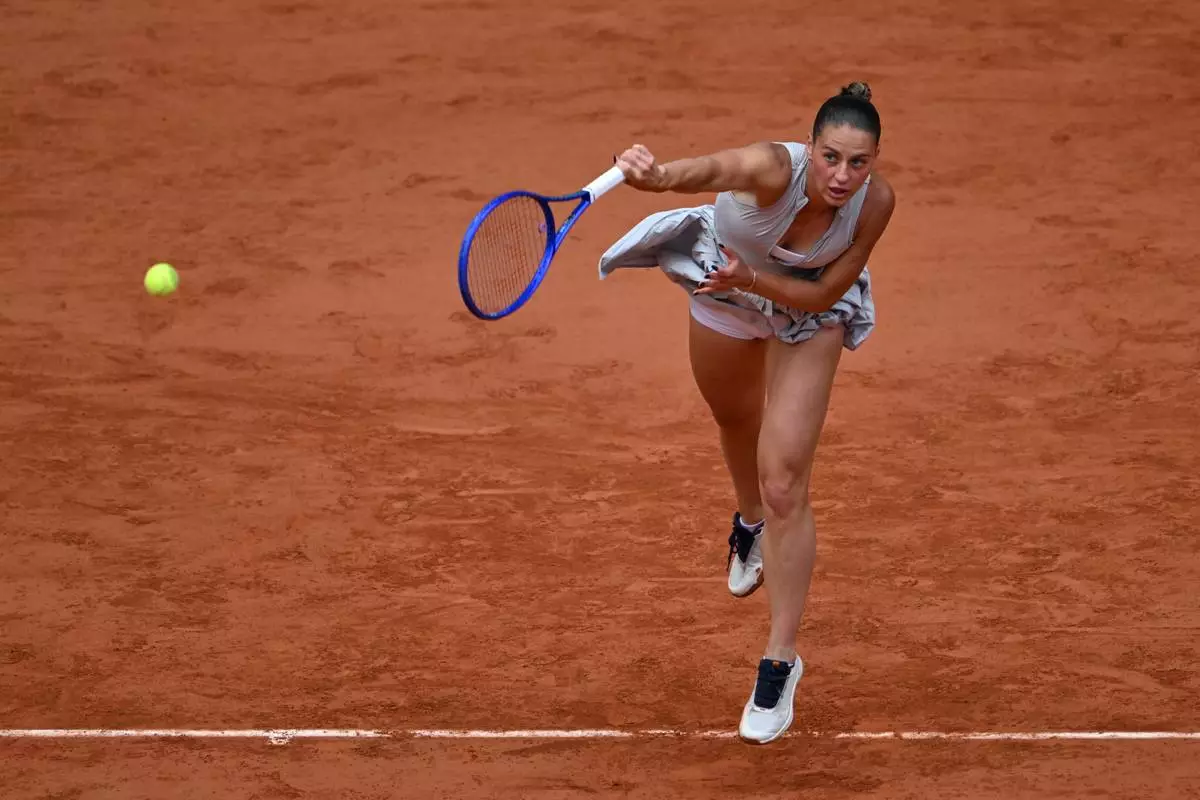
Ukraine's Marta Kostyuk serves to Russia's Mirra Andreeva during the semifinal tennis match at the French Open in Paris, Thursday, June 4, 2026. (AP Photo/Emma Da Silva)
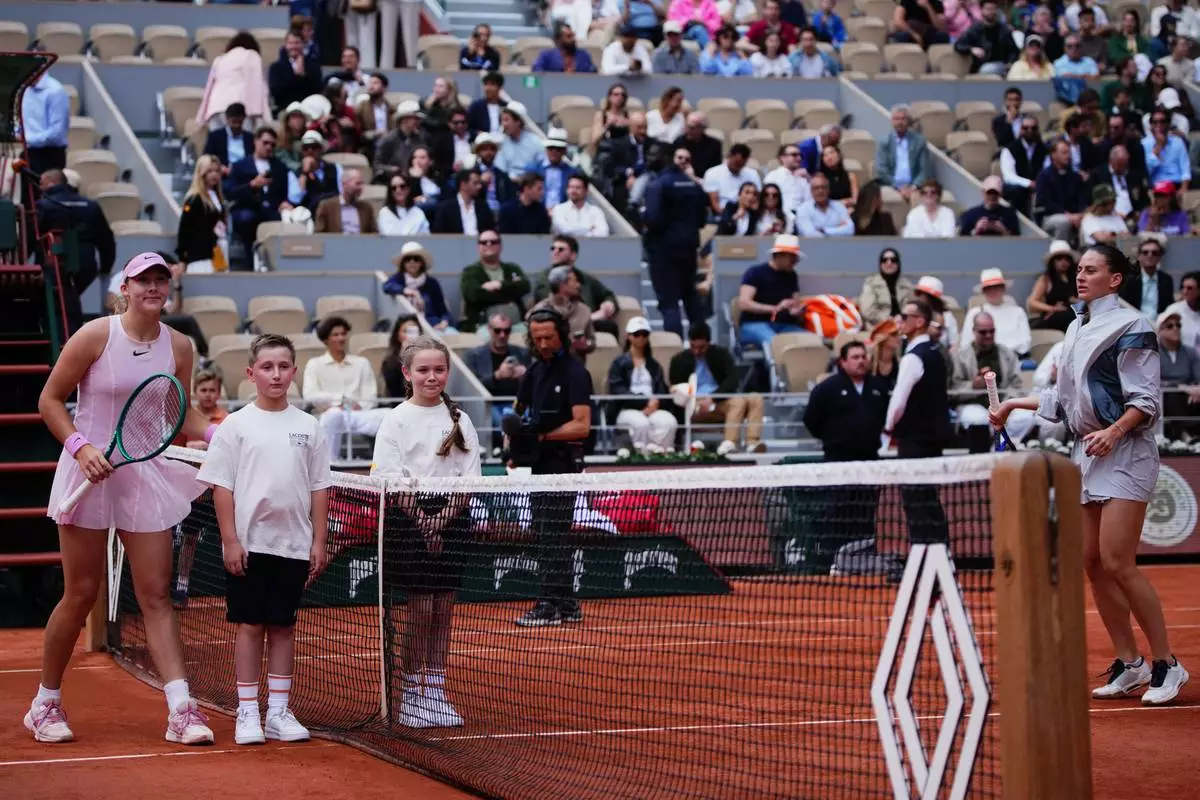
Russia's Mirra Andreeva poses with children while Ukraine's Marta Kostyuk refused during teh senifinal tennis tennis match at the French Open in Paris, Thursday, June 4, 2026. (AP Photo/Christophe Ena)