MINNEAPOLIS (AP) — Rows of businesses stood shuttered inside a sprawling complex of Somali businesses on a recent afternoon.
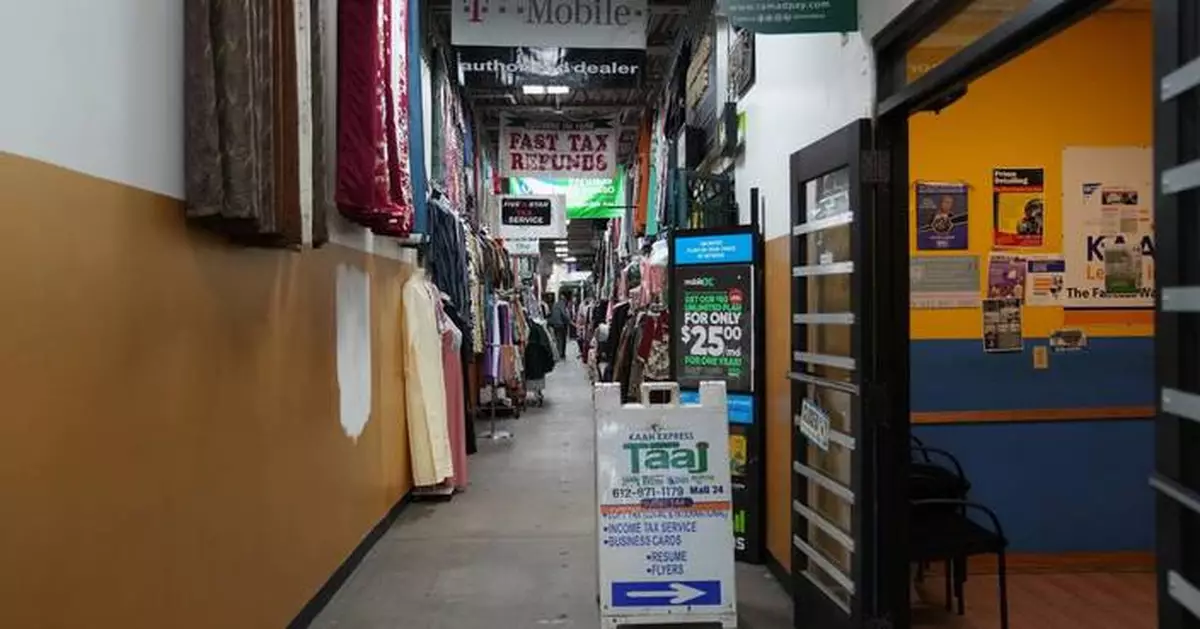
Karmel Mall in south Minneapolis contains more than a hundred small businesses in suites offering everything from clothing and food to insurance and accounting services. On Thursday, the noisy hallways inside lay quiet, save for occasional chatter between neighboring vendors. The smell of fried food still wafted from the bakeries, the central heating hummed and the sound of Quran recitation flowed quietly from some shops.
But many sellers sat alone in their clothing stores, waiting for the occasional customer to walk by. Everyone is afraid of federal immigration agents, business owners said. Sellers and customers, citizens and noncitizens. Some don’t bother opening shop because they aren’t expecting any customers.
“It’s been like this for three weeks now,” said Abdi Wahid, who works at his mom’s convenience store in the mall. “Everywhere it’s all been closed up, all the stores.”
Karmel Mall is an economic hub for the area’s Somali population, which is the largest in the U.S. But it also features housing, a mosque and Quran classes, serving as a robust community center for the area.
The economic impact of the Trump administration's “Operation Metro Surge” stretches beyond the Somali community: many immigrants are on edge, afraid to go to work or leave their homes amid the immigration crackdown.
But President Donald Trump has made the Somali community a special target of his deportation rhetoric after recent government fraud cases in Minnesota in which a majority of defendants had Somali roots. Since December, Trump has made numerous jabs at the community, calling them “garbage” and saying “they contribute nothing."
Wahid said early afternoons at the family business once meant 15 to 20 customers. These days, it’s tough to get one.
Wahid is a citizen, but he said the fear extends beyond just immigrants. Citizens are also scared of coming in, especially following the killing of Renee Good and the ICE raid at Roosevelt High School in south Minneapolis.
“I think that caused a lot of people to not even want to come,” he said, because they could be targeted “just because of their race.”
Homeland Security assistant secretary Tricia McLaughlin said in a statement that law enforcement uses “reasonable suspicion” to make arrests under the fourth amendment.
“A person’s immigration status makes them a target for enforcement, not their skin color, race or ethnicity,” she said.
Upstairs, Bashir Garad runs Safari Travel & Accounting Services. Not only has the crackdown in Minneapolis meant he's lost almost all his customers, but his existing clients are canceling upcoming trips because they’re worried they won’t be let back into the country.
“They see a lot of unlawful things going on in the city," he said. “They look at something bad, and then they think some bad things may happen to them.” The majority of his clients are East African, and nearly all are U.S. citizens. They still hesitate to travel.
“The government is not doing the right thing,” he said. “If there’s a criminal, there’s a criminal. Regardless, there are ways to find the criminal, but to marginalize the community’s name, and a whole people, that is unlawful.”
Ibrahim Dahiye, who sells electronics, said winter always used to be slow, “but now it’s totally different. No one comes here. All the stores are closed, few are open.”
Since the crackdown began, Dahiye said his business is down $20,000 monthly, and he’s now pooling funds to make rent.
He said he's lost most of his customers. His employees are too frightened to come to work. He tapped his jacket pocket, saying he keeps his passport on him at all times.
“I don’t know what we can do,” Dahiye said. “We believe in Allah, but we can’t do anything.”
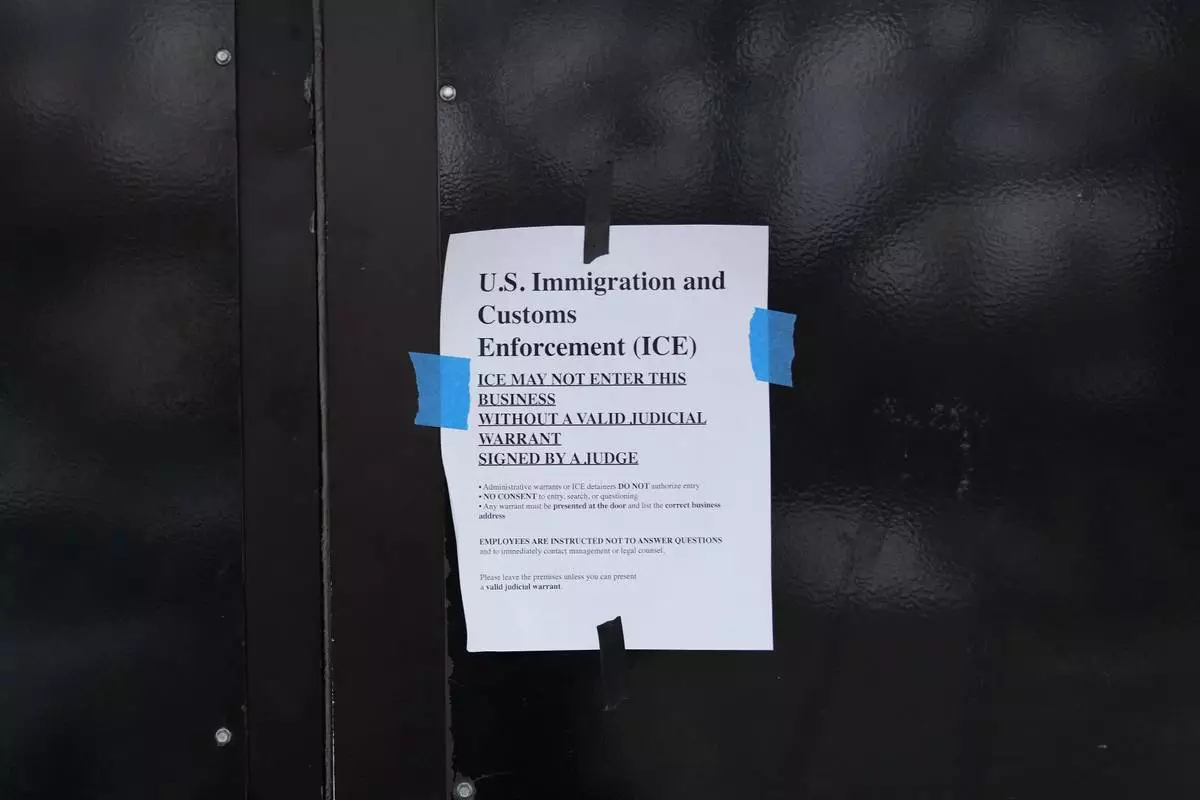
A sign is taped to the outside of the 24 Somali Mall in Minneapolis, Thursday, Jan. 15, 2026. (AP Photo/Abbie Parr)
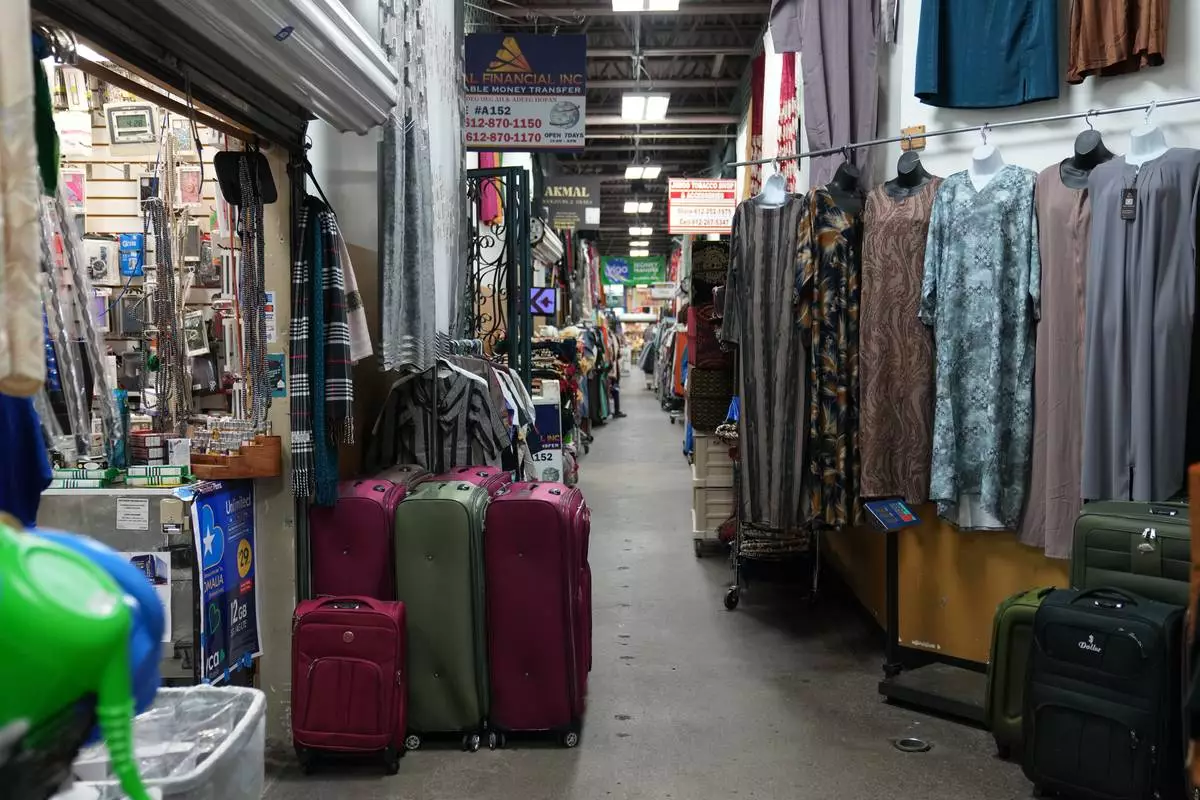
A view of the 24 Somali Mall in Minneapolis, Thursday, Jan. 15, 2026. (AP Photo/Abbie Parr)
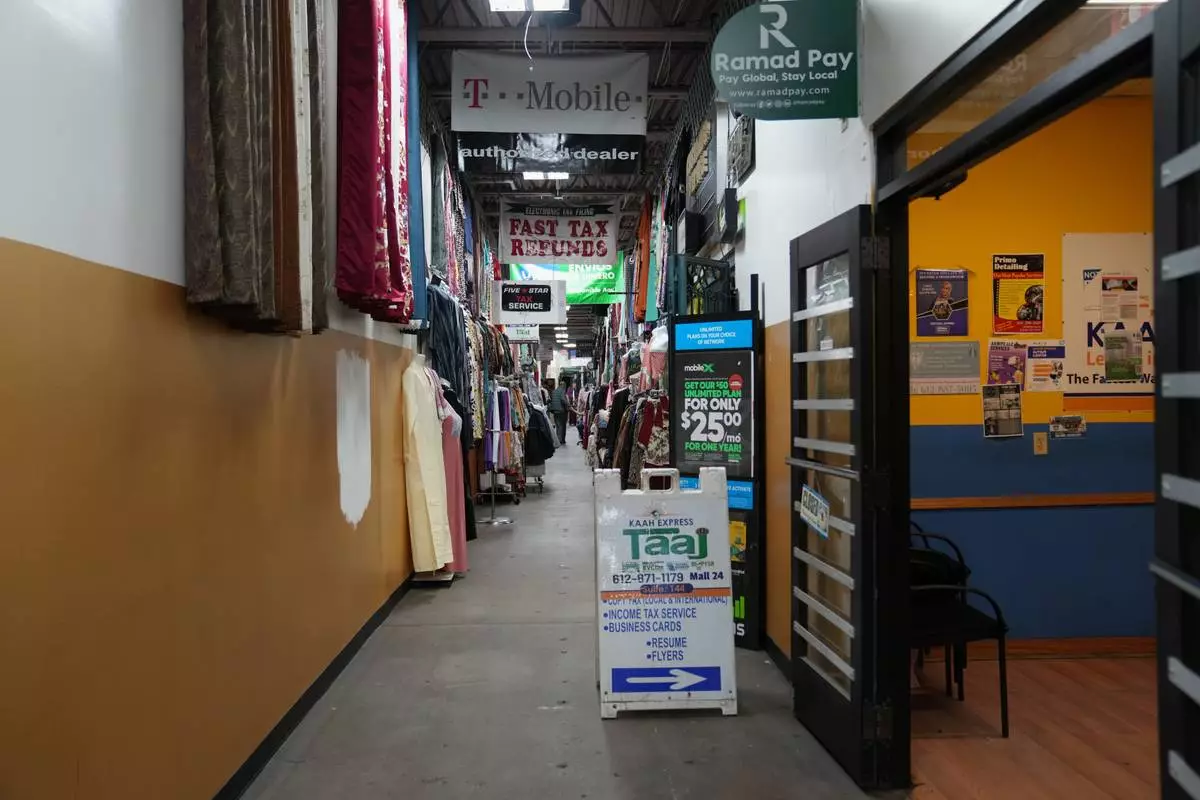
A view of the 24 Somali Mall in Minneapolis, Thursday, Jan. 15, 2026. (AP Photo/Abbie Parr)
IMBERSAGO, Italy (AP) — The ferry glides from one bank of northern Italy's Adda River to the other, guided by a cable and pulled by currents, offering harried commuters five minutes of serenity and an alternate route now that a bridge closure has backed up traffic.
Called “Leonardo’s Ferry,’’ the mechanism of the so-called reaction ferry was designed five centuries ago and immortalized by the Renaissance genius himself in a drawing preserved in Windsor Castle's Royal Collection outside of London.
It is the last remaining of its kind along the Adda River, which extends from the Alps to the Po River in the Lombardy region.
“This is a mean of transport that has been here for 500 years and has always connected the two banks of the Adda,” said Massimo Zoia, one of the volunteer ferrymen who operates the vessel. “And now it has returned to its original purpose: connecting two populations living on different banks of a river."
Despite its name, it remains unclear whether Leonardo himself actually designed the ferry. What is certain, however, is that he sketched it in 1513, as part of his famed studies of waterways, including Milan's canal system. Leonardo was one of history’s greatest polymaths, filling notebooks with designs across a range of disciplines, including flying machines that wouldn't be realized for centuries.
The ferry’s operating principle is as simple as it is ingenious, and entirely environmentally friendly.
“The river pushes us downstream. We have a cable that binds us, and by breaking down the forces, according to the parallelogram rule, which we study in high school, the force is broken down and one part becomes resistance and the other we use for lateral movement,” Zoia said.
“The rudder is used to adjust the inclination of the ferry so that it better absorbs the stream that hits us and makes us move,” he said.
The ferry is run by the town of Imbersago, and runs to the town of Villa d’Adda on the other side. It came close to disappearing in 2023, when its operator gave up the concession. Determined to save it, Imbersago Mayor Fabio Vergani obtained a ferryman’s license himself and, together with the local tourism association, assembled a team of volunteers.
Since 2024, they have primarily transported weekend visitors from one bank of the Adda to the other.
But they added commuter service this spring after a nearby bridge was closed for maintenance to help ease traffic congestion. It now runs from 7 a.m.-7 p.m., with a two hour lunch break at noon. Passengers pay 1.50 euros (about $1.75) if they are on foot, 2 euros ($2.30) with a bicycle, 2.50 euros ($2.88) with a motorbike and 3.50 (around $4) for a car.
Gianpaolo Graffagnino lives in Villa d’Adda and works on the other side of the river. He has started biking to work, using the ferry as a shortcut.
“Right now this is the fastest system, but above all the nicest because you get three minutes of peace,” he said.
Mauro Carnati drove his Maserati onto the ferry to bring his daughter to school on the other side, avoiding a long detour caused by the bridge closure.
“It’s true that we spend a little money, and it’s not possible every day, but the romance and added value of the Adda and the ferry are truly amazing. It makes for a better start to the day,” he said.
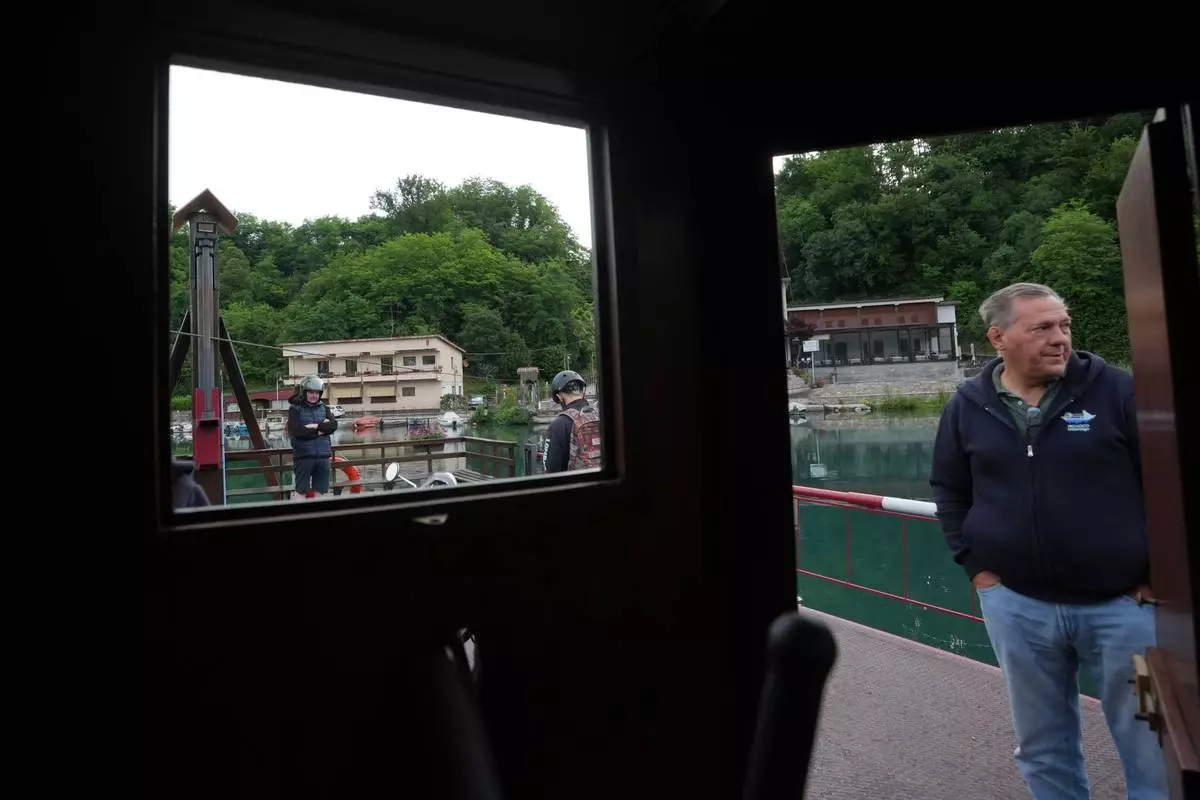
Worker Venanzio Lavelli stands as commuters board the “Da Vinci Ferry,” a hand-operated ferry based on a design sketched by Leonardo da Vinci in the 15th century, on the Adda River between the provinces of Lecco and Bergamo, in Imbersago, Italy, Thursday, June 4, 2026. (AP Photo/Luca Bruno)
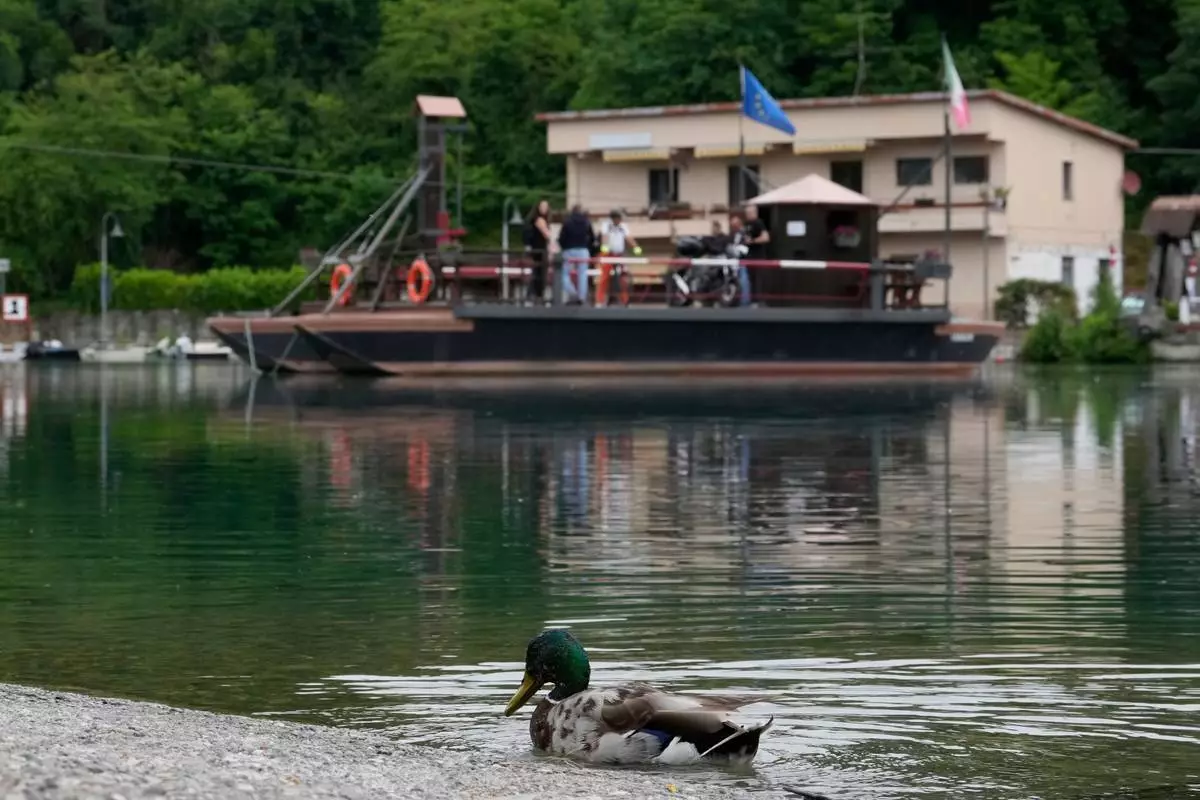
Commuters board the “Da Vinci Ferry,” a hand-operated ferry based on a design sketched by Leonardo da Vinci in the 15th century, on the Adda River between the provinces of Lecco and Bergamo, in Imbersago, Italy, Thursday, June 4, 2026. (AP Photo/Luca Bruno)
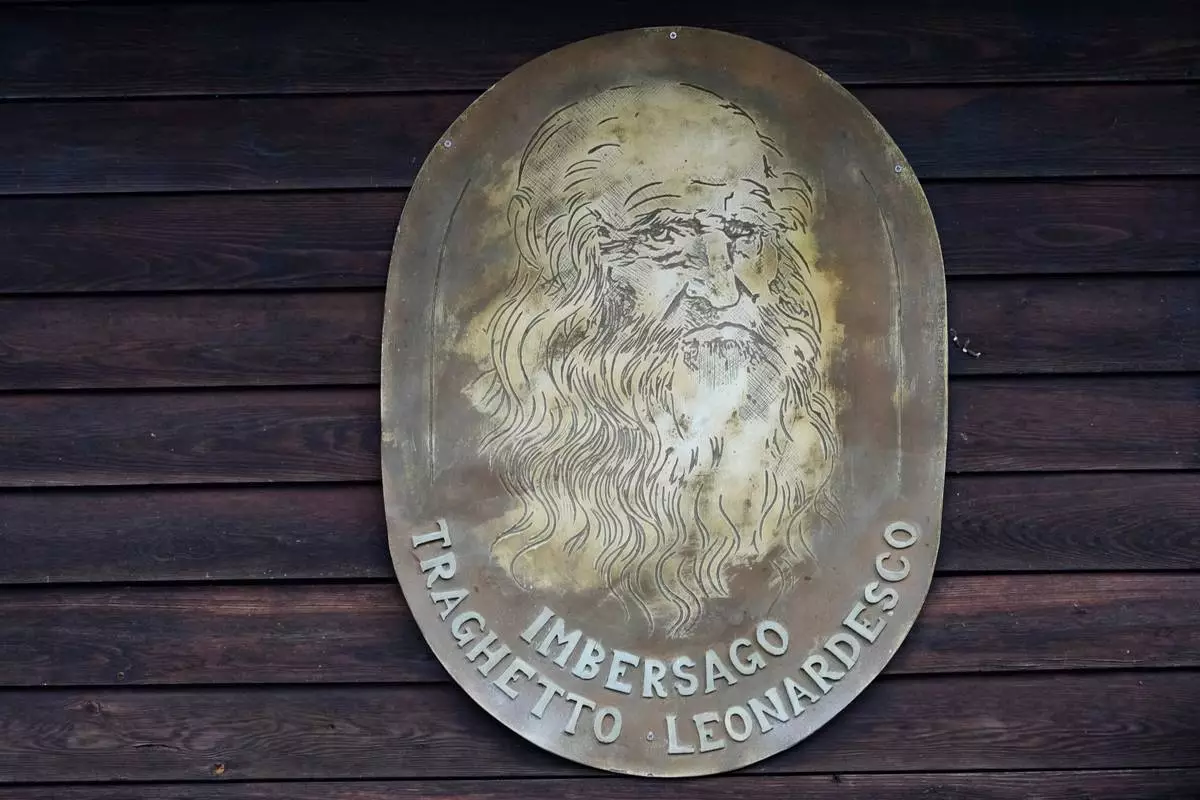
An effigy of Leonardo da Vinci hangs on the dock of the “Da Vinci Ferry,” a hand-operated ferry based on a design sketched by Leonardo da Vinci in the 15th century, on the Adda River between the provinces of Lecco and Bergamo, in Imbersago, Italy, Thursday, June 4, 2026. (AP Photo/Luca Bruno)
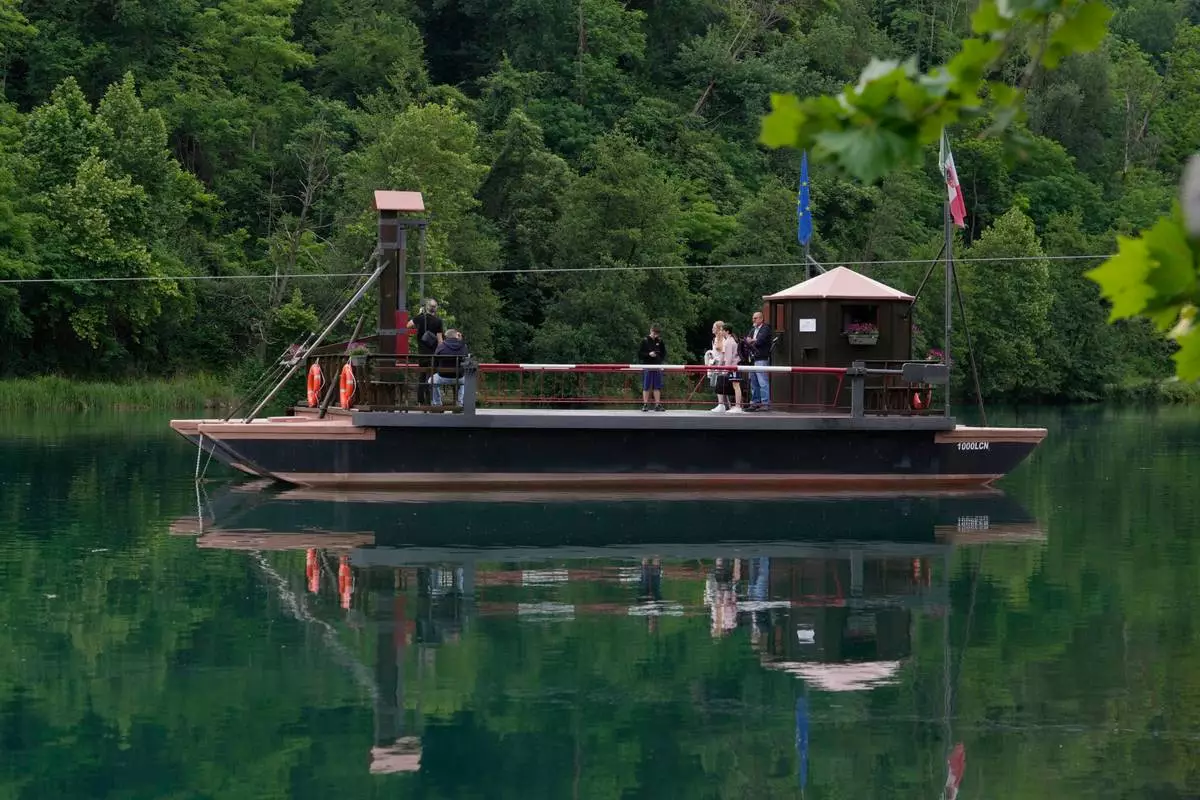
Commuters board the “Da Vinci Ferry,” a hand-operated ferry based on a design sketched by Leonardo da Vinci in the 15th century, on the Adda River between the provinces of Lecco and Bergamo, in Imbersago, Italy, Thursday, June 4, 2026. (AP Photo/Luca Bruno)
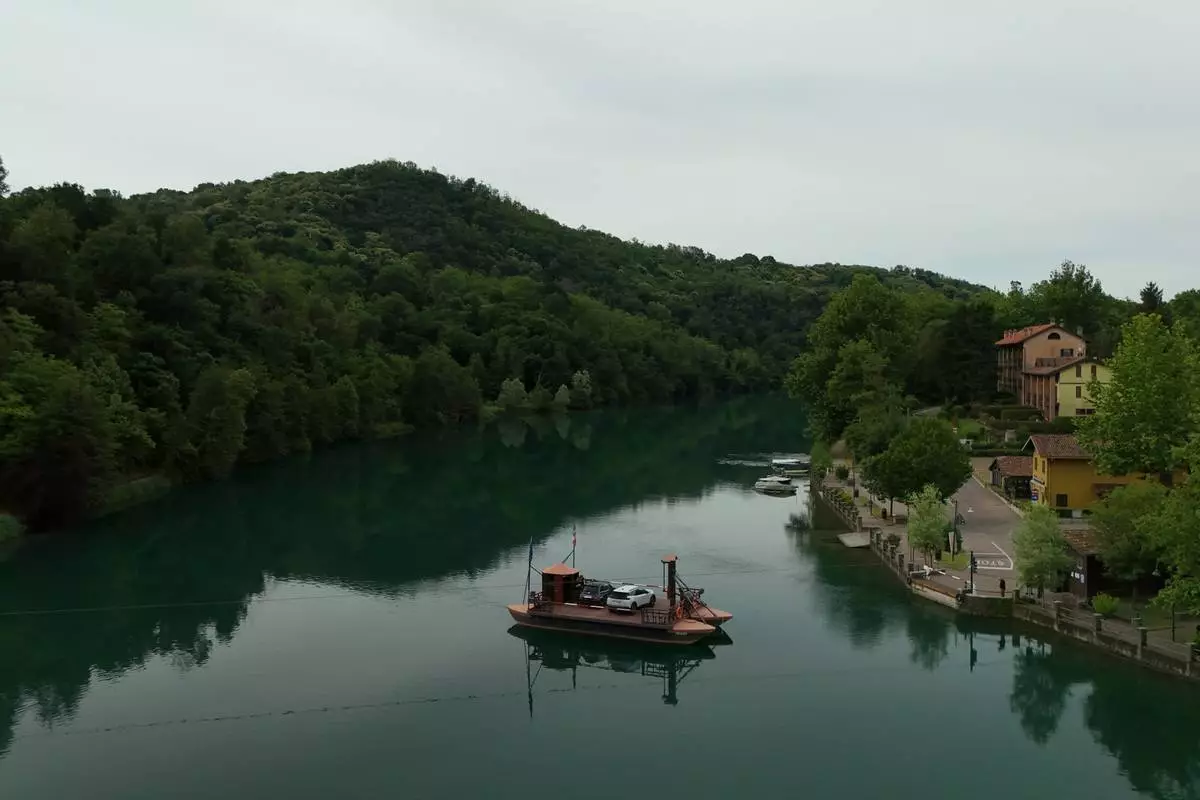
Commuters board the “Da Vinci Ferry,” a hand-operated ferry based on a design sketched by Leonardo da Vinci in the 15th century, on the Adda River between the provinces of Lecco and Bergamo, in Imbersago, Italy, Thursday, June 4, 2026. (AP Photo/Luca Bruno)