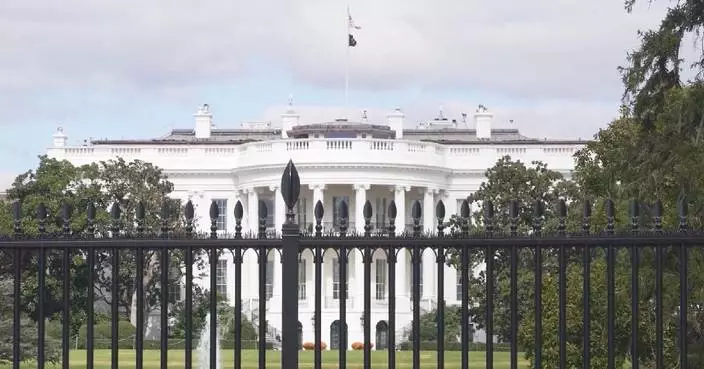
U.S. President Donald Trump's threat to impose new tariffs on eight European countries unless Denmark accepts a deal over Greenland has drawn swift rebukes from Nordic capitals and major European leaders, and fueled calls for an EU-level response.
In a social media post on Saturday, Trump said the United States would levy a 10-percent tariff from Feb 1 on goods from Denmark, Norway, Sweden, France, Germany, Britain, the Netherlands and Finland. He warned the rate would rise to 25 percent on June 1 and remain in place until a deal is reached for the "complete and total purchase" of Greenland.
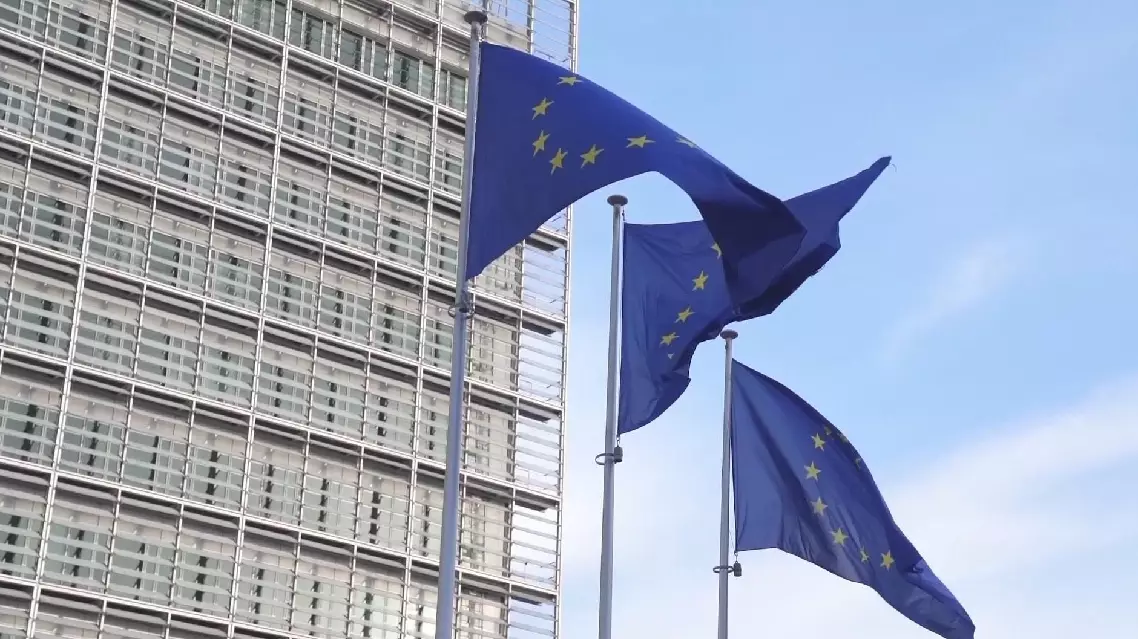
At the European Union (EU) level, European Commission President Ursula von der Leyen and European Council President Antonio Costa warned in a joint statement that tariffs linked to Greenland would undermine transatlantic ties and risk a "dangerous downward spiral."
They stressed that territorial integrity and sovereignty are fundamental principles of international law, and said Europe would remain "united, coordinated, and committed to upholding its sovereignty."
The episode has also reignited debate over whether the EU should activate stronger defensive trade tools, including the bloc's so-called "bazooka," the Anti-Coercion Instrument (ACI), and has further complicated the politics surrounding EU-U.S. trade arrangements in the European Parliament.
Bernd Lange, chair of the European Parliament's Committee on International Trade, urged the European Commission to launch the ACI immediately, calling Trump's tariff threat "unbelievable" and "a new dimension" in the use of tariffs as a political weapon.
Lange said the U.S. step would amount to another breach of the political EU-U.S. tariff and trade deal agreed in Scotland in July 2025, adding that the European Parliament would revisit the issue with political groups next week.
Cyprus, which holds the EU's rotating presidency, said late Saturday it had called an emergency meeting for Sunday, with ambassadors from the EU's 27 member states set to convene to coordinate next steps.
Leaders of major European countries signaled a tougher posture should Washington move ahead with the measures.
British Prime Minister Keir Starmer said it was "completely wrong" to apply tariffs on allies for pursuing collective security within the North Atlantic Treaty Organization (NATO), adding that Britain would raise the issue directly with the U.S. administration and reiterating that Greenland's future should be decided by Greenlanders and Danes.
Calling the tariff threat "unacceptable," French President Emmanuel Macron said on his X account that Europeans would respond in a united and coordinated manner should the measures be confirmed.
He said that France is committed to the sovereignty and independence of nations, adding that it was on this basis that France has decided to take part in the military exercise organized by Denmark in Greenland.
German government spokesman Stefan Kornelius said the federal government was coordinating closely with European partners and that an appropriate response would be decided jointly in due course.
Nordic leaders were among the first to push back, stressing that disputes between allies should be handled through dialogue rather than pressure.
Danish Foreign Minister Lars Lokke Rasmussen said he was surprised by the tariff threat and noted Denmark was in close contact with the European Commission.
Swedish Prime Minister Ulf Kristersson rejected the tariff as "blackmail," saying Sweden will not allow itself to be blackmailed and arguing the matter should be handled at EU level.
Norwegian Prime Minister Jonas Gahr Store called the threats "unacceptable" in comments to national news agency NTB, saying that threats have no place among allies and reiterating Norway's support for the sovereignty of the Kingdom of Denmark.
Minister of Foreign Affairs of Norway Espen Barth Eide said that NATO agrees to strengthen security in Greenland, but tariffs have no place in that issue.
Finnish President Alexander Stubb said issues among allies are best resolved through discussion, not pressure, warning that tariffs could harm transatlantic relations and trigger a dangerous downward spiral.
Greenland, the world's largest island, is a self-governing territory within the Kingdom of Denmark, with Copenhagen retaining control over defense and foreign policy. The United States maintains a military base on the island. Since returning to office in 2025, Trump has repeatedly expressed a desire to "obtain" Greenland.
Trump's tariffs threat over Greenland sparks EU pushback