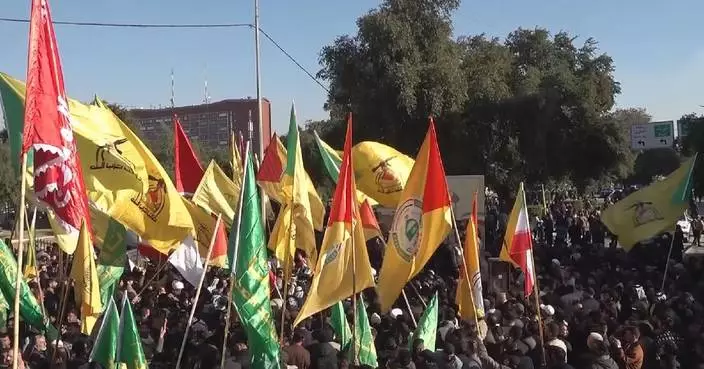
Calm has been restored in Iran after recent protests swept the country, but a drop in commercial activities has been recorded due to public concern about possible U.S. military actions against the country.
Protests erupted since late December in several Iranian cities over the sharp depreciation of the rial. Initially held peacefully, the protests gradually became violent, leading to casualties and damage to public property, mosques, government buildings, and banks, especially on Jan. 8 and 9, for which Iranian authorities have blamed the United States and Israel.
Over recent days, U.S. President Donald Trump has repeatedly threatened potential military action against Iran under the pretext of supporting protesters. Iran, in turn, has consistently warned the U.S. against interfering in its internal affairs and inciting "riots and terrorism" within the country.
In the capital Tehran, customer traffic has declined in commercial blocks, due to concerns over possible U.S. strikes.
The U.S. military threats against Iran have drawn significant international attention. In recent phone conversations between Iranian Foreign Minister Seyed Abbas Araghchi and his counterparts in other countries, such as Egypt, Qatar, Pakistan, and Türkiye, all parties have emphasized the need to jointly maintain regional stability.
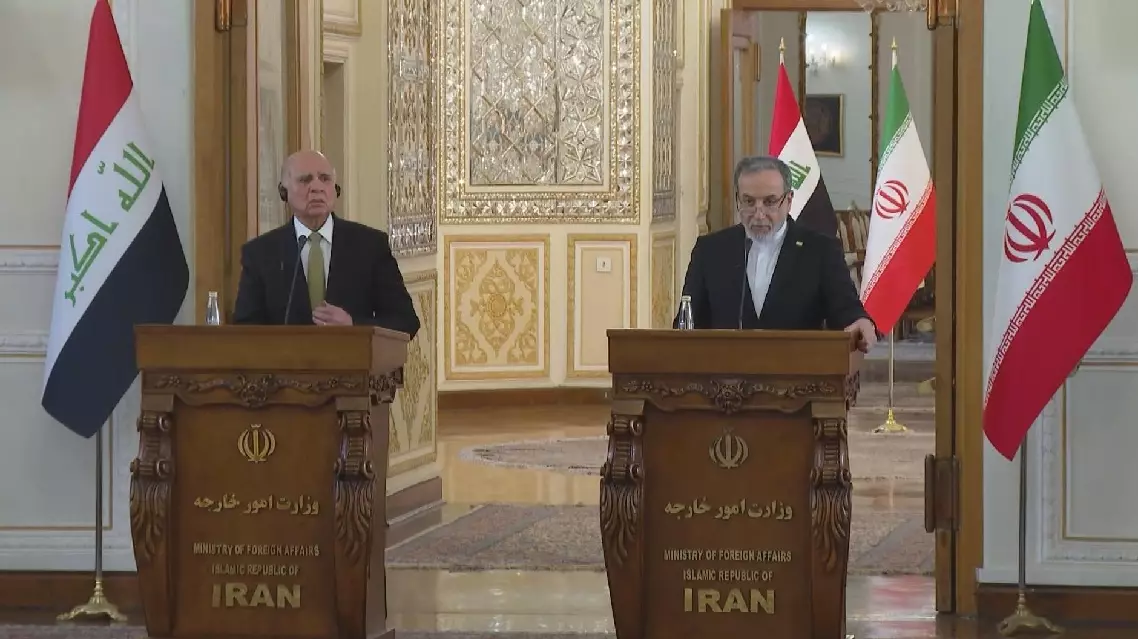
On Sunday, Araghchi met with visiting Iraqi Foreign Minister Fuad Hussein in Tehran.
During a joint press conference, Araghchi said that the U.S. troops' withdrawal from the Iraqi Ayn al-Asad Airbase signifies the strengthening of the Arab state's independence and sovereignty, while Hussein said he believed that the security of Iraq and Iran is intertwined with that of the region, and agreed to continue consultations with Iran to counter regional challenges.
Also on Sunday, Iran's Foreign Ministry spokesman Esmaeil Baghaei said at a regular press briefing that the U.S. has consistently been the instigator of tensions from the Persian Gulf to the Gulf of Mexico. "It is the U.S., not Iran, that has consistently fueled these tensions," he said.
The spokesman emphasized that Iran will demonstrate its strength and unwavering resolve, and will not allow any force to engage in acts of aggression against it.
On the same day, Mohammad Seraj, member of the Iranian parliament's social commission, announced that access to global Internet would be fully restored across the country on Monday or by Tuesday at the latest, according to the Khabar Foori news website.
Iran imposed severe restrictions on access to the global Internet and suspended SMS on Jan. 8. On Saturday morning, the SMS messaging was restored.
Calm restored in Iran, but U.S. threats raise public concerns