Skip to Content Facebook Feature Image

Hainan's free trade port sees business, consumption growth after launch of special customs operations

China

China

China

Hainan's free trade port sees business, consumption growth after launch of special customs operations

2026-01-19 16:57 Last Updated At:18:07

One month after China's southern island province of Hainan launched its island-wide customs closure, officials report strong growth in trade, duty-free shopping, tourism, and investment in the island as the Hainan Free Trade Port (FTP), the world's largest FTP by area.

On Dec 18, 2025, the entire island, covering more than 30,000 square kilometers, was designated a special customs zone.

Under this two-tiered special customs system, goods and people can move more freely between Hainan and areas beyond China's customs borders, referred to as "the first line," while standard customs controls apply between Hainan and the Chinese mainland, "the second line." Within the island, the circulation of goods and services faces fewer restrictions.

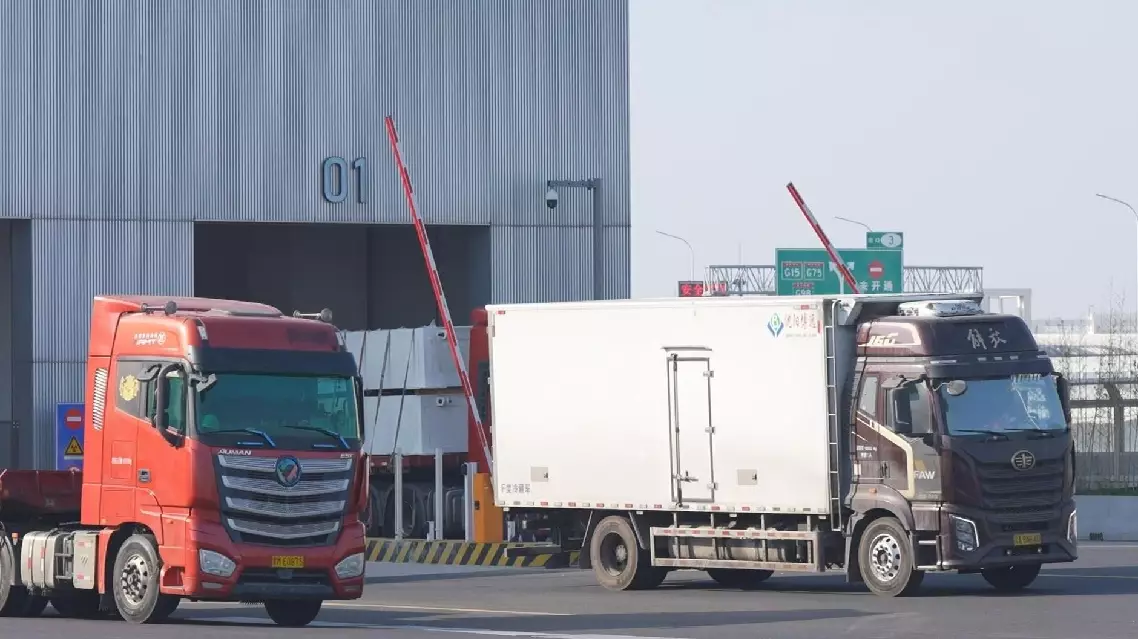
A "second line" port in the provincial capital city of Haikou has expanded to handle the increasing trade volume boosted by the island-wide special customs operations, with local authorities saying that since Dec 18, 2025, about 2,500 to 2,600 trucks have been transporting goods at the port every day.

Smart inspection systems now allow vehicles to clear customs in under two minutes, according to Haikou Customs.

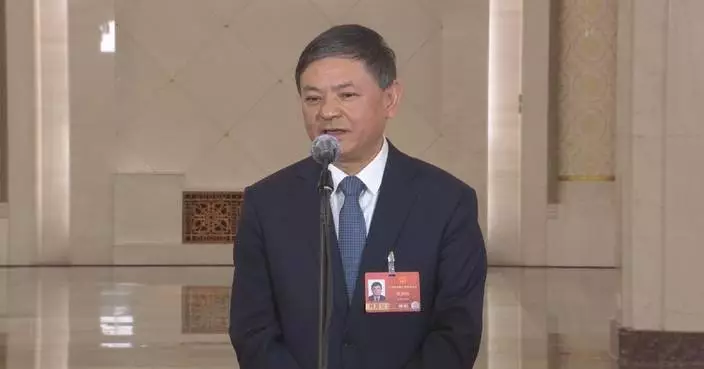
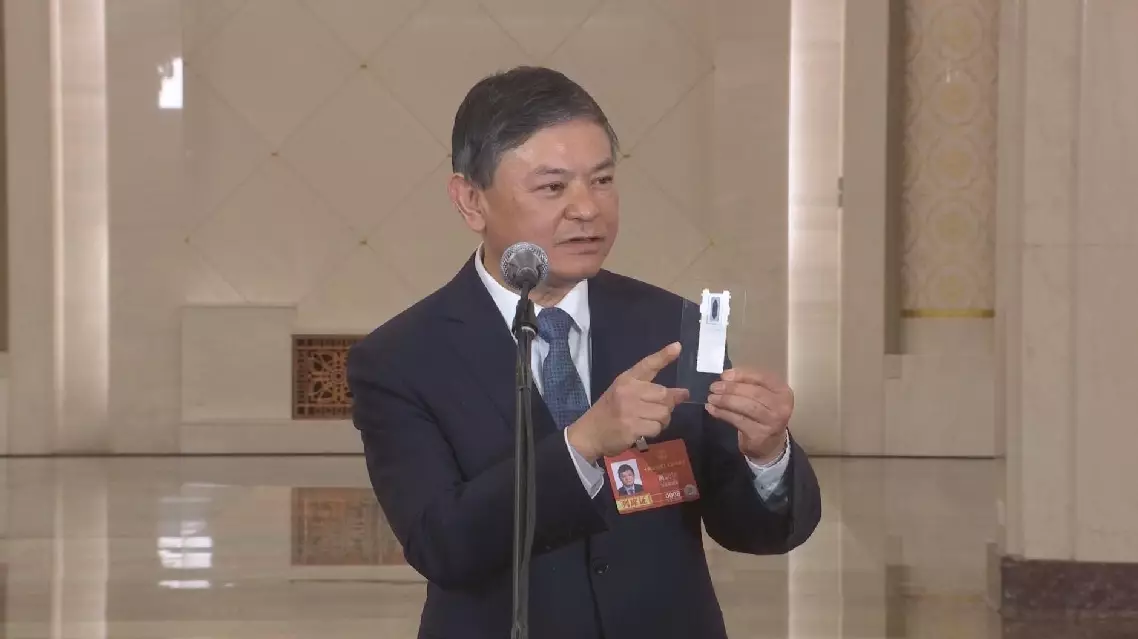
"The number of vehicles, goods and people under customs supervision has increased significantly at the 'first line' ports. All the facilitation measures introduced by customs have already been implemented, and the efficiency of clearance at the 'first line' ports has improved compared with before. At the same time, we have streamlined declaration requirements for goods leaving the island through the 'second-line' ports. Compared with traditional customs declarations, we have reduced declaration items by more than 60 percent, which has greatly cut down the time and content required for enterprises to file declarations," said He Bin, director at Haikou Customs' free trade and special zones department.

Hainan also saw a surge of offshore duty-free shopping in the past month.

From Dec 18 to early January, the number of offshore duty-free shoppers reached 585,000, with total spending amounting to 3.89 billion yuan, up 32.4 percent and 49.6 percent year-on-year, respectively. The figures indicate that the island received an average of 24,000 duty-free shoppers daily, with an average daily spend of 160 million yuan (about 22.96 million U.S. dollars).

The number of duty-free product categories in Hainan has been expanded from 45 to 47, adding products such as musical instruments, pet supplies, digital cameras and drones.

Meanwhile, foreign travelers departing directly from Hainan are newly eligible for duty-free purchases, a change from previous rules.

"Customer traffic has increased compared with before. There are 15 major product categories in total, and some new ones have been added, such as musical instruments and pet supplies. It's very convenient. You can buy and take the items right away. For cosmetics and fragrances, customers can immediately pick up five items on the spot, and after finishing one purchase, they can start another. It's very easy," said Gu Huan, a sales assistant.

In the past month, Hainan's ports have processed 180,000 foreign passenger entries and exits, up 46.5 percent year-on-year. Visa-free entries by foreigners reached 80,000, up 64 percent from the same period last year. Tourism remains the primary purpose for foreign visitors entering Hainan, with the majority coming from Russia, Malaysia, and Indonesia.

The customs closure has spurred investment.

Statistics show that from the launch of the island-wide special customs operations to early January, Hainan registered 4,709 new foreign trade enterprises in a 24-day period, equaling the total for an entire quarter in 2024. In the past month, the province has added approximately 22,000 new business entities.

Authorities say infrastructure upgrades are underway to support faster growth and a more complete industrial chain.
Hainan's free trade port sees business, consumption growth after launch of special customs operations

Hainan's free trade port sees business, consumption growth after launch of special customs operations

The return capsule of the debris-hit Shenzhou-20 spaceship landed safely back on Earth on Monday, with ground search teams overcoming the unique challenges of locating and retrieving the unmanned craft as China's first emergency space mission came to a successful conclusion.

The China Manned Space Agency (CMSA) confirmed the capsule touched down safely at the Dongfeng Landing Site in north China's Inner Mongolia Autonomous Region at 09:34 local time on Monday morning, bringing an end to the extraordinary mission.

Launched from the Jiuquan Satellite Launch Center last April, Shenzhou-20's return was postponed in early November due to concerns over damage caused by a suspected space debris impact, after the CMSA said tiny cracks were found in the Shenzhou-20 return capsule's viewport window.

An alternative spacecraft was later used to transport the three Chinese astronauts of the Shenzhou-20 mission safely back to Earth.

Monday's return began shortly after midnight Beijing time, when the spaceship undocked from the Tiangong space station and began its descent.

Despite sustaining damage, the capsule withstood temperatures of thousands of degrees Celsius during the re-entry process and successfully returned to Earth after in-orbit reinforcement and sealing work carried out by the Shenzhou-21 astronauts, who arrived to take over duties from the Shenzhou-20 crew in November.

Xu Peng, the on-site commander at the Dongfeng Landing Site, said that this particular unmanned landing represented a whole new set of challenges to the search and recovery teams on the ground.

He said the ground search forces made targeted adjustments in order to better cope with the extreme weather conditions in the area, with frigid temperatures and strong winds posing further difficulties to retrieving the return capsule.

"This marks the first time the Dongfeng Landing Site has carried out a spaceship recovery mission during the coldest season of the year, with cold weather posing a test for both our search and rescue teams and equipment. We made special cold-protection preparations in advance to ensure that both personnel and the equipment remained in good condition throughout the mission," Xu said.

Xu also noted another unique factor of this unmanned return which put extra pressure on the ground teams to respond quickly to its touchdown.

"As the Shenzhou-20 return capsule was unmanned, there was no astronaut to manually separate the parachute. As a result, the main parachute did not automatically detach upon landing, and in strong winds, it could have dragged the return capsule along the ground. This requires our ground personnel to reach the landing point and cut the parachute as quickly as possible. ," Xu said.

Ground teams were keen to secure the spacecraft as quickly as possible so that a comprehensive assessment can be made on the damage it sustained in space which necessitated the emergency response operation.

On-site personnel promptly took steps to protect the damaged porthole on the return capsule upon its landing, which will provide essential data for the optimization of key spaceship components in the future.

Additionally, Xu said the ground teams deployed new methods, such as drones and other high-tech equipment, to assist in this unprecedented recovery operation.

"Adjustments were made to our recovery forces. The helicopter unit did not participate in this mission, and the drone and unmanned ground vehicle units made their debut. This new model, combining unmanned search equipment with ground personnel, was applied in the recovery of the uncrewed capsule," he said.

Though without any crew members, the return capsule was instead carrying several space application system items from the space station, including a well-used spacesuit which had far exceeded its service life while supporting some 20 extravehicular activities during space missions.

Monday's mission came after the three Shenzhou-20 crew members jointly met with the press in Beijing on Friday after completing their standard isolation period following their delayed return in November, with experienced mission commander Chen Dong hailing the calm and methodical response to the debris incident and the coordination with teams on the ground which ensured the trio got home safely.

Ground teams overcome challenges as unmanned Shenzhou-20 return capsule touches down

Ground teams overcome challenges as unmanned Shenzhou-20 return capsule touches down

Recommended Articles