BOISE, Idaho--(BUSINESS WIRE)--Jan 19, 2026--
Boise Cascade Company (“Boise Cascade” or the “Company”) (NYSE: BCC) today announced two executive leadership promotions.
This press release features multimedia. View the full release here: https://www.businesswire.com/news/home/20260119157592/en/
Dennis Fringuelli was named Vice President of Sales and Marketing for the Company’s Building Materials Distribution (BMD) division. Jeff Dracup was named Vice President of Sales and Marketing for Engineered Wood Products (EWP). Both promotions are effective January 19, 2026.
Dennis began his career in the building materials industry in 1994. He joined Boise Cascade in 1999 as national account manager when the Company acquired his previous employer, Furman Lumber. Dennis went on to serve in a series of roles with increasing responsibility, including BMD national account sales manager. Before this promotion, Dennis was the director of BMD sales and marketing. Dennis earned a bachelor’s degree in marketing from the University of Louisiana, Lafayette.
Jeff joined Boise Cascade in 2004. His began his career in sales and product management roles at the Company’s BMD facility in Phoenix, Arizona. After three years, he was promoted to national account manager. From there, he held a series of progressive sales and marketing positions, including BMD national account sales manager. He then moved to the Company’s Wood Products division and served as the sales manager for the EWP Western Region. Before this promotion, Jeff was the director of EWP sales and marketing. Jeff earned a bachelor’s degree in psychology with a minor in business administration from the University of Arizona.
“Developing and advancing talent from within our organization is fundamental to our long-term success,” said Nate Jorgensen, CEO. “These promotions are the result of a thoughtful and intentional succession planning process and recognize two leaders who embody our values and have demonstrated exceptional performance over the years.”
“Dennis and Jeff have earned the trust of their colleagues and the respect of our customers,” said Jeff Strom, COO and CEO-elect. “Both leaders have a proven ability to deliver results, build strong teams, and lead in a way that reflects our values and supports our long-term strategy. We look forward to their continued impact in their expanded roles.”
Tom Carlile, Board Chair, added: “I appreciate the strategic focus our management team places on leadership development and succession planning. I am confident that Boise Cascade is well positioned for continued success.”
About Boise Cascade
Boise Cascade is one of the largest U.S. wholesale distributors of building materials and a leading manufacturer of engineered wood products and plywood in North America. Our integrated model and national distribution footprint position us to deliver outstanding service to our customers across a broad range of industry-leading products, including key structural products that we produce. Headquartered in Boise, Idaho, we operate more than 60 distribution and manufacturing facilities strategically located across the U.S. and Canada. Our work is powered by a dedicated team of over 7,500 people. Learn more at www.bc.com.

Dennis Fringuelli, Vice President of Sales and Marketing, Building Materials Distribution, Boise Cascade

Jeff Dracup, Vice President of Sales and Marketing, Engineered Wood Products, Boise Cascade
When Kevin Ketels bought an electric 2026 Chevrolet Blazer last year, he wasn't thinking about the cost of gas. He just thought EVs were better and “wanted to be part of the future.” Now that the Iran war is spiking prices at the pump, the Detroit man is happy he is no longer filling up his 11-year-old gas-powered SUV.
“Electricity can go up, but it won’t go up nearly as much as gas will and it won’t go up nearly as fast, either,” said Ketels, 55, an assistant professor of global supply chain management at Wayne State University.
Experts say prolonged high gas prices may drive some EV interest and sales, especially if drivers assume their electricity prices won't be affected by the crises.
But many factors influence consumer EV purchases — and electricity rates.
Drivers of gas-powered vehicles are much more vulnerable to fluctuating prices that result from global conflict than those who charge their cars. The national average for a gallon of regular gas this week was $3.57, up from $2.94 a month ago, according to AAA.
Meanwhile, “residential electricity prices are regulated and are much less volatile than gasoline prices,” said University of California, Davis economics professor Erich Muehlegger. “As a result, EV owners are largely unaffected by oil price shocks.”
But experts say electricity prices have been increasing nationally for a variety of reasons, including surging power demand from new data centers.
“This is an inflationary event,” Holt Edwards, principal in Bracewell’s Policy Resolution Group, said of the war. “Is this the driver in electricity prices? I think probably not. But it’s certainly a contributing factor.”
To what extent oil and gas conflicts could translate to the electricity sector is yet to be seen.
When it comes to the electricity an EV owner is tapping, much of the cost depends on which sources of electricity are in a local grid's power mix, experts say.
Because regulators set residential electricity prices annually, most households are sheltered from month-to-month changes in natural gas costs. Though experts say higher natural gas prices can increase the cost of generating electricity, natural gas prices haven’t risen as quickly or as much as oil prices have recently.
Those are just two of many energy sources — including coal, nuclear and renewables — that power the electric grid.
“The energy component varies depending on the energy you’re using and the price of the energy that you’re using to generate electricity,” said Pierpaolo Cazzola, an energy expert at Columbia University’s Center on Global Energy Policy. “What happens is that in the U.S., the variation of the price of the energy component is smaller than it is elsewhere.”
The experts said persistent war could affect electricity bills in the future. And that is all the more reason for countries to transition to clean power, they said.
“Clean power and electrification combined is what provides the most security,” said Euan Graham, an analyst at energy think tank Ember.
Michael B. Klein, a 56-year-old software developer in Evanston, Illinois, has driven EVs for the past eight years to save on fuel costs and because of environmental concerns.
Every time electrical grid efficiency improves — especially as renewables are added — “I get that benefit no matter what,” said Klein, who drives a Chevy Bolt. “They can improve the efficiency of gas engines, but you have to get a new car in order to reap the benefit of that.”
Several experts say high gasoline prices are a strong driver of EV sales, particularly if high prices persist. Drivers also consider more gasoline-efficient hybrid vehicles during these times.
Car-shopping resource Edmunds analyzed consumer shopping data for the week starting March 2, after the Iran war had begun. They found that interest in hybrids, plug-in hybrids and battery EVs accounted for 22.4% of all vehicle research activity on their site that week, up from 20.7% the previous week. Analysts also looked back at the last major nationwide fuel price surges in 2022, and they saw that consideration of electrified vehicles rose sharply then, too.
But whether this means more EV purchases depends on whether buyers expect to save not just now but in the future, experts say.
Adding to the complexity: A sudden increase in EV demand could drive up prices, Graham said.
“I think the real step change would be in whether this causes governments to shift tax, tariff policies around EVs,” Graham said. Doing so would help reduce fossil fuel dependence, he said.
Pretty much.
People who buy EVs have a “really substantial” gas savings over the life of their vehicles even without government tax credits, said Peter Zalzal, an attorney with Environmental Defense Fund.
“We’re talking about thousands and thousands of dollars” in savings, Zalzal said. “And as gas prices increase, those savings are only greater. Fuel costs are a big piece of overall vehicle costs, and increases in fuel prices have significant impacts on people.”
However, the upfront cost of a new EV is still more than that of a gasoline-powered vehicle; new EVs sold for an average of $55,300 last month, while new vehicles overall sold for an average $49,353, according to auto-buying resource Kelley Blue Book. Some experts also expressed national security concerns with EVs because China dominates significant parts of the EV supply chain.
Ketels, the EV owner and professor, said he believes EVs and renewable energy should be a strategic priority for individuals and the U.S. because they could be produced domestically “and we don’t have those fluctuations and those worries.”
But because the federal government has withdrawn many incentives for both, “it puts us at a disadvantage globally,” Ketels said. “I think it’s been a terrible mistake to withdraw these incentives and to attack the sustainable energy industry,” and the war “is just making it that much more obvious.”
Read more of AP’s climate coverage.
The Associated Press’ climate and environmental coverage receives financial support from multiple private foundations. AP is solely responsible for all content. Find AP’s standards for working with philanthropies, a list of supporters and funded coverage areas at AP.org.
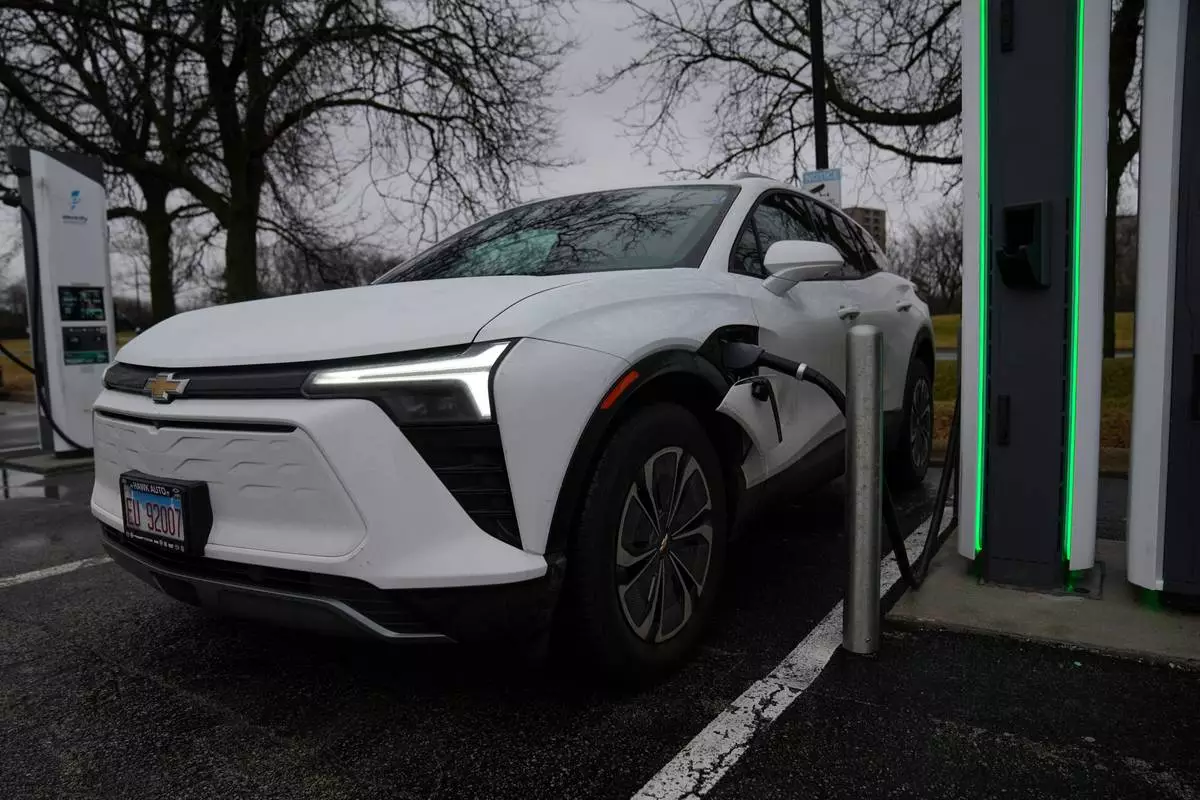
An electric vehicle charges at a station Wednesday, March 11, 2026, in Lincolnwood, Ill. (AP Photo/Erin Hooley)
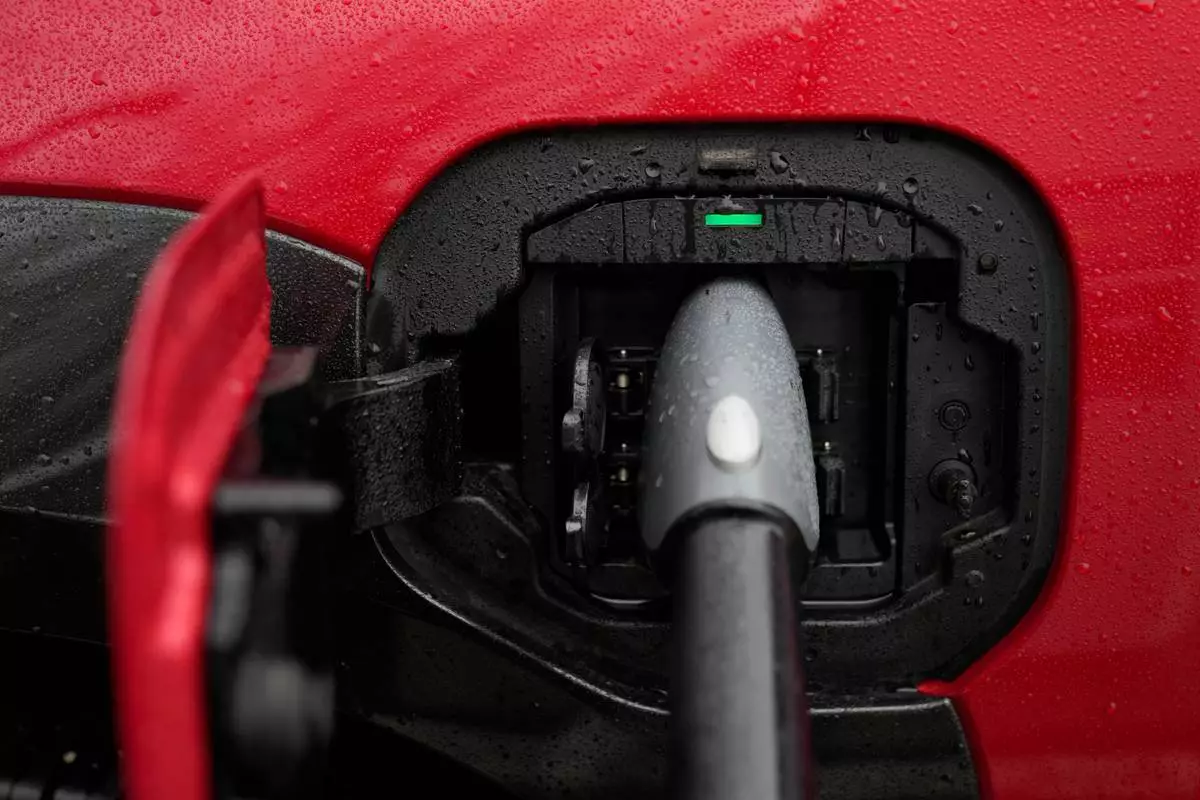
An electric vehicle charges at a station Wednesday, March 11, 2026, in Lincolnwood, Ill. (AP Photo/Erin Hooley)
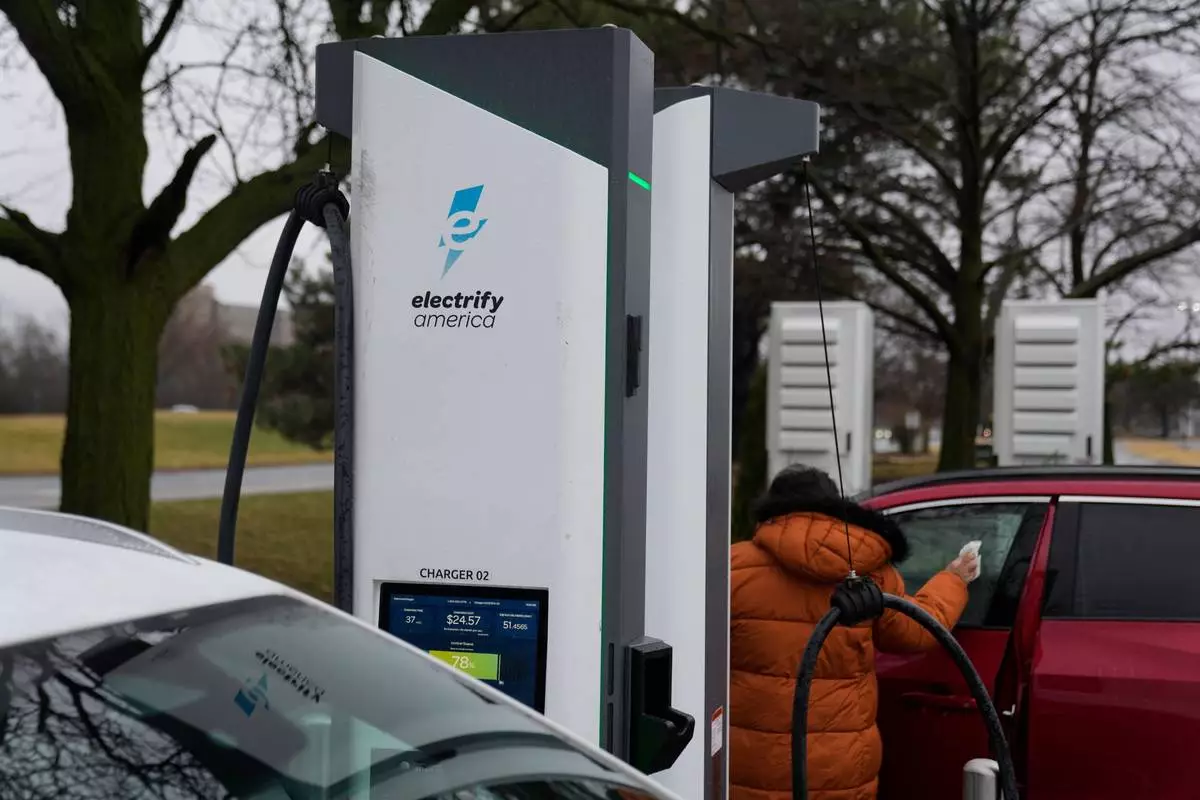
Electric vehicles charge at a station Wednesday, March 11, 2026, in Lincolnwood, Ill. (AP Photo/Erin Hooley)