Japanese Prime Minister Sanae Takaichi's decision to dissolve the lower house for a snap general election has drawn strong criticism from opposition lawmakers and citizens, who accuse her of avoiding key policy debates.
Takaichi on Monday announced her plan to dissolve the House of Representatives on January 23, with official campaigning for a snap general election beginning January 27 and voting set for February 8.
At a press conference, Takaichi said the 465-member lower house will be dissolved on Friday, the same day the ordinary parliamentary session is due to open. The election will be the first national vote held since she took office on October 21, with more than two years still remaining in the current lower house term.
Last week, Takaichi informed senior members of the ruling Liberal Democratic Party (LDP) and its coalition partner, the Japan Innovation Party, of her decision to call early elections.
In response, opposition parties, including the Constitutional Democratic Party of Japan and the Komeito Party, a former longtime LDP ally, have agreed to form a new alliance, the Centrist Reform Alliance, to challenge the ruling bloc.
However, the snap election announcement has sparked public anger and protests.
On Monday, demonstrators gathered in front of the office building for members of the House of Representatives in Tokyo to voice strong opposition. Many questioned the legitimacy of holding early elections, saying the decision has cast uncertainty over crucial livelihood issues such as the national budget and price control.
"Since becoming prime minister, Takaichi talked about addressing inflation. She even campaigned on revising the consumption tax, but we've seen no action. If she wants to do something, then do it. Why dissolve the lower house instead? Just as everyone has been saying, I believe there is absolutely no legitimate reason for this dissolution," said a protester.
Lawmakers also criticized the timing of the announcement, made just as the regular Diet session was set to begin.
"Right before the Diet was supposed to open, she suddenly calls for dissolution. What is this? They haven't done any work yet. With soaring prices, we need urgent policies. What happened to the supplementary budget proposal? It's all up in the air now," said Kishi Makiko, a member of the House of Councilors.
Some protesters argued that real leadership means focusing on policies that support people's livelihoods instead of rushing into elections.
"The government hasn't done what urgently needs to be done. What Takaichi should be doing now is not dissolving lower house, but truly supporting the lives of ordinary people," said a citizen.
The protests also extended concerns over the ruling party's reported discussions about revising Japan's long-standing Three Non-Nuclear Principles of not possessing, not producing and not allowing introduction of nuclear weapons into Japanese territory.
"The Three Non-Nuclear Principles must be strictly upheld. We have Article 9. Why is the government even considering a change like this? It's not normal. The LDP is constantly doing things it shouldn't, deliberately stirring up tension in East Asia. That kind of action should never be taken," said another protester.
"Japan has Article 9 of the Constitution, established 80 years ago based on deep postwar reflection which declares we will never wage war again. As Japan's prime minister, she should rise up to defend peace. Can Takaichi really do that?" said a citizen.
"The Three Non-Nuclear Principles are a deeply rooted national policy that must never be compromised. And yet, Takaichi seems eager to change them without hesitation. I strongly oppose this. It's something that should absolutely never happen," said a protester.
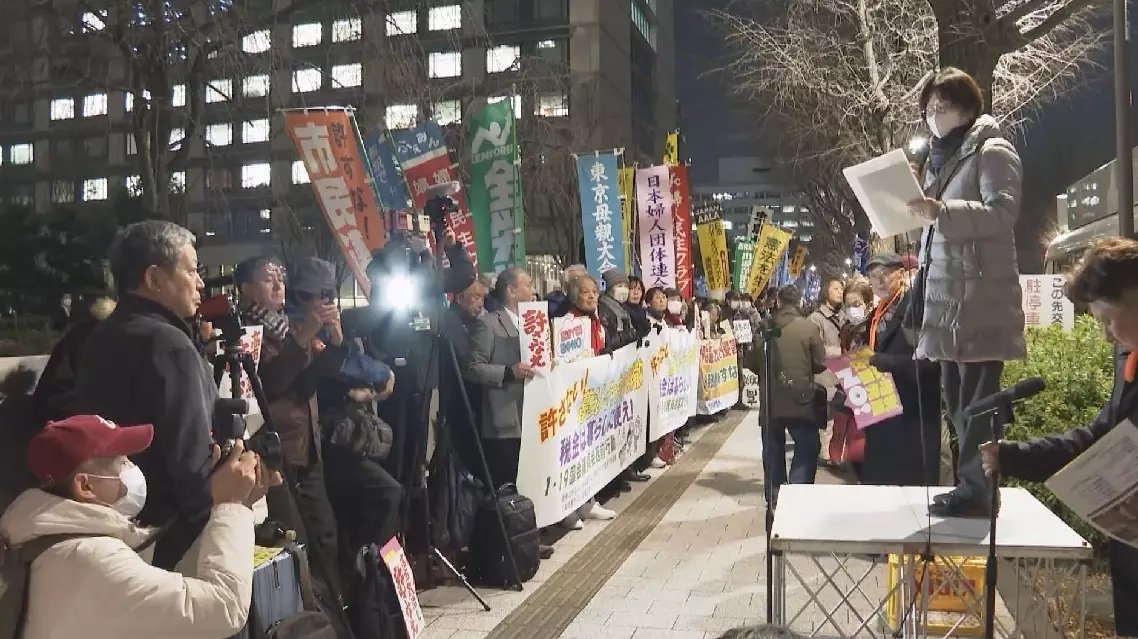
Protests erupt over Takaichi's snap election plan
Protests erupt over Takaichi's snap election plan