Skip to Content Facebook Feature Image

Magnachip Targets Solar and Energy Storage Systems Markets with New Generation of High-Efficiency IGBT Series

Business

Magnachip Targets Solar and Energy Storage Systems Markets with New Generation of High-Efficiency IGBT Series
Business

Business

Magnachip Targets Solar and Energy Storage Systems Markets with New Generation of High-Efficiency IGBT Series

2026-01-20 19:55 Last Updated At:01-23 00:06

SEOUL, South Korea--(BUSINESS WIRE)--Jan 20, 2026--

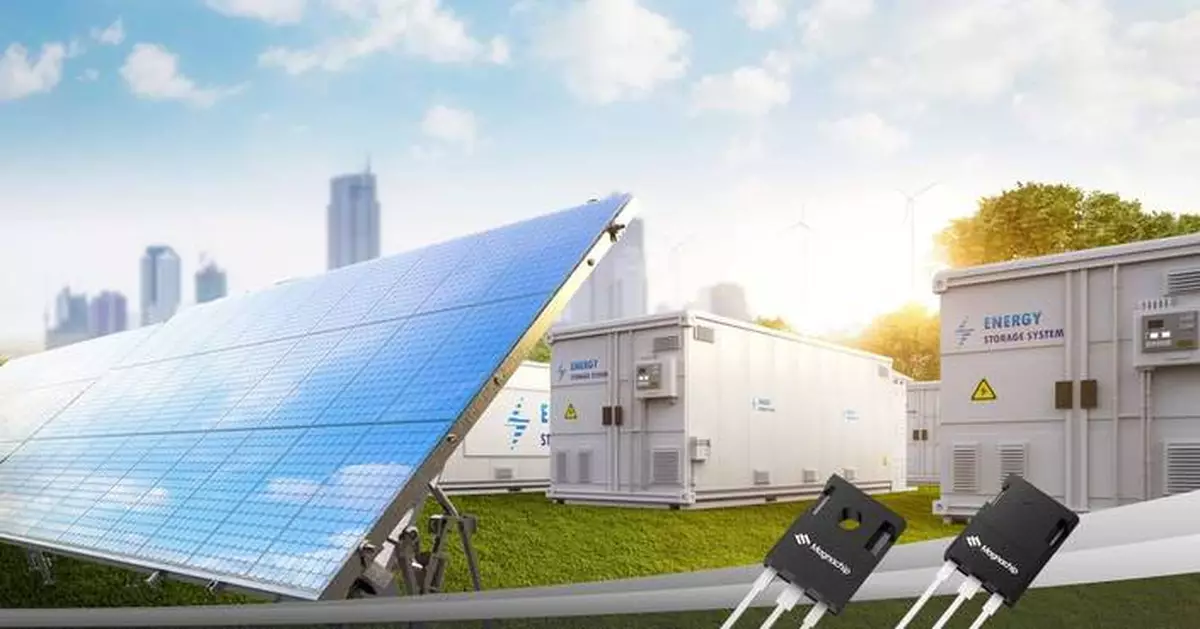
Magnachip Semiconductor Corporation (NYSE: MX, “Magnachip”) today announced the launch of its new series of Insulated Gate Bipolar Transistors (IGBTs) designed for solar inverters and industrial Energy Storage Systems (ESS), further strengthening its position in the high-efficiency power semiconductor market.

This press release features multimedia. View the full release here: https://www.businesswire.com/news/home/20260120005721/en/

The newly introduced 650V and 1200V new Generation Discrete IGBT products are designed for use in solar inverters and ESS applications. By significantly reducing the cell pitch from the previous generation, Magnachip has achieved a substantial increase in current capacity. In addition, the improved Reverse Bias Safe Operating Area (RBSOA) helps to ensure stable and reliable performance under harsh high-voltage and high-current conditions. The products are available in both standard TO-247 and high-capacity TO-247 Plus packages, providing customers with design flexibility for a wide range of applications.

According to market research firm Omdia, the global solar inverter and ESS market is expected to grow from approximately $1.4 billion in 2024 to $2.7 billion in 2029, representing a compound annual growth rate (CAGR) of approximately 10.6%. With global carbon-neutrality initiatives accelerating, energy efficiency and high power density have become key performance metrics in inverter design.

Magnachip already supplies IGBT products to major domestic and international solar inverter manufacturers, earning recognition for high product quality and advanced technology. With this new product launch, the company is expanding its portfolio to cover a wide capacity range — ­­­from residential inverters to industrial systems up to 150 kW — allowing customers to select suitable products for their operating environment.

The new generation IGBTs leverage Advanced Field Stop Trench technology, with enhanced design and refined process technology compared to the previous generation. Specifically, the cell pitch has been reduced by approximately 40%, significantly increasing current capacity within the same die area. Furthermore, RBSOA, which defines the semiconductor's safe operating limits, has been enhanced by over 30%, ensuring robust stability under high-voltage and high-current conditions. This makes it suitable for a wider range of power applications.

Magnachip plans to further expand its product lineup in the first half of 2026 by introducing a high-current series rated up to 650V 150A, as well as new 750V products. The company also plans to add the ‘TO-247-4Lead’ package, featuring a Kelvin pin for improved switching efficiency, further enhancing its IGBT lineup. This will enable Magnachip to offer a broader range of design options for customers in the solar and ESS markets, which are trending toward higher capacity and efficiency.

"This new generation IGBT series enhances efficiency and reliability through refined process technologies," said Hyuk Woo, CTO of Magnachip. "Building on our market-proven technology and production capabilities, we will continue to expand our solution lineup to better address diverse customer needs."

Related Links

Power Solutions > Discrete IGBTs > 650V

Power Solutions > Discrete IGBTs > 1200V

Related Articles

Magnachip Unveils a New 650V IGBT for Solar Inverters

Magnachip Launches Two New Gen6 650V IGBTs to Expand Its Solar Energy Power Product Lineup

About Magnachip Semiconductor

Magnachip is a designer and manufacturer of analog and mixed-signal power semiconductor platform solutions for various applications, including industrial, automotive, communication, consumer and computing. The Company provides a broad range of standard products to customers worldwide. Magnachip, with about 45 years of operating history, owns a portfolio of approximately 1,000 registered patents and pending applications, and has extensive engineering, design and manufacturing process expertise. For more information, please visit www.magnachip.com. Information on or accessible through Magnachip’s website is not a part of, and is not incorporated into, this release.
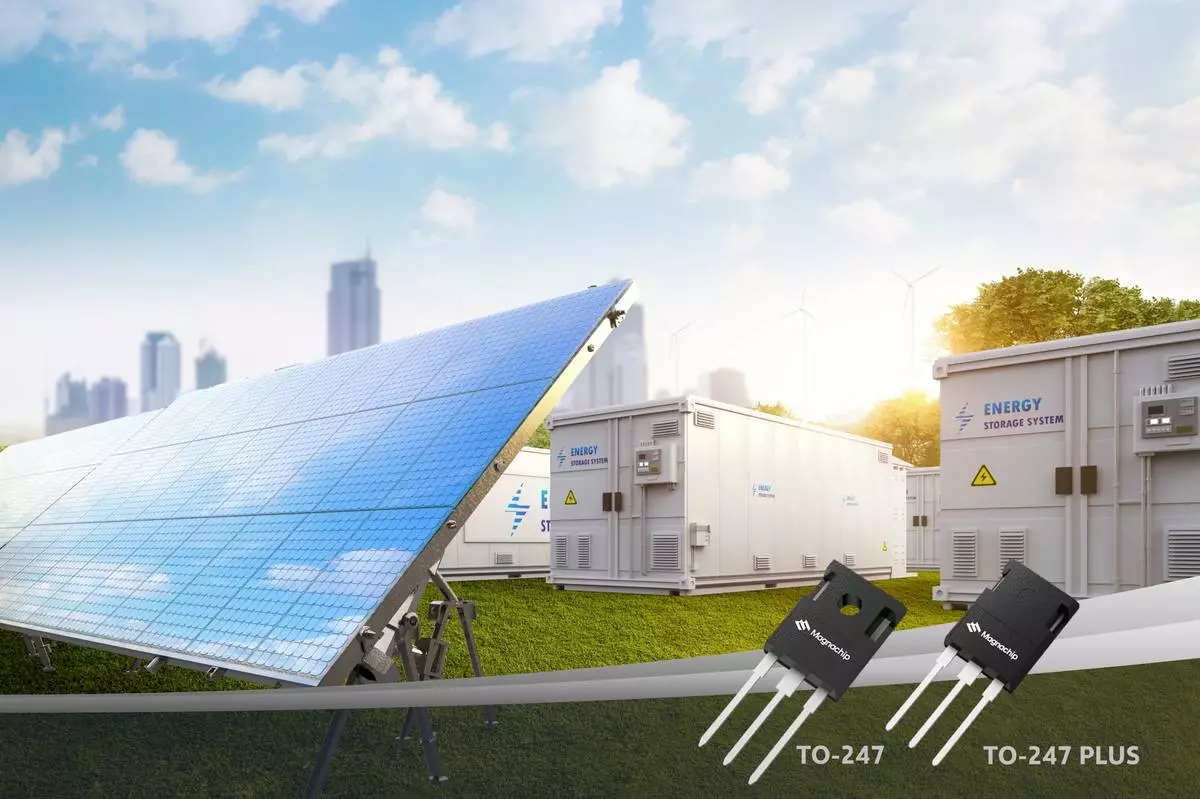
Magnachip targets solar and energy storage systems markets with new generation of high-efficiency Insulated Gate Bipolar Transistors (IGBTs).
Magnachip targets solar and energy storage systems markets with new generation of high-efficiency Insulated Gate Bipolar Transistors (IGBTs).
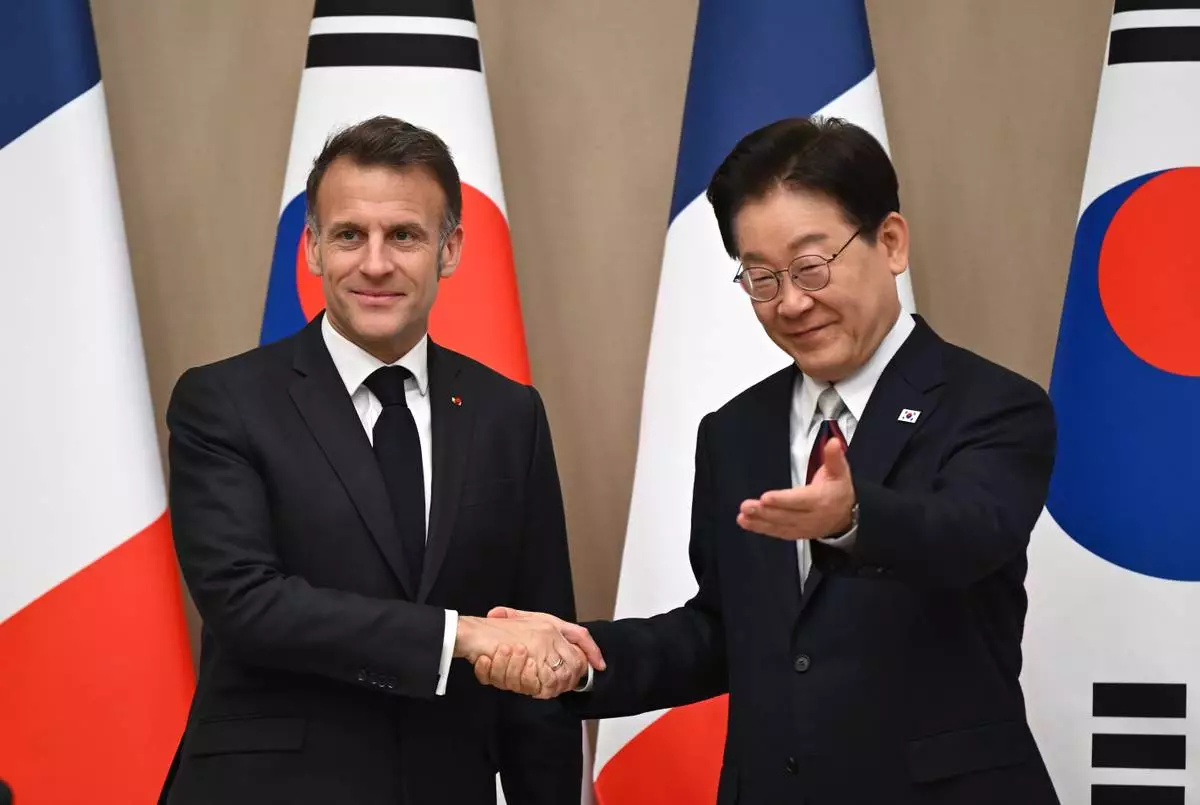
SEOUL, South Korea (AP) — French President Emmanuel Macron and South Korean President Lee Jae Myung agreed Friday to work together to help reopen the Strait of Hormuz and ease global economic uncertainties caused by the war in the Middle East.

Their summit in Seoul came as U.S. President Donald Trump slammed allies for not supporting the U.S. and Israeli war against Iran. Macron was making his first visit to South Korea since taking office in 2017, as part of an Asian tour that already has taken him to Japan.

Macron told Lee at the start of the meeting that the two countries can play a role in helping to stabilize the situation in the Middle East, including Iran’s chokehold on the Strait of Hormuz, which has unleashed shock on global energy markets.

At a joint televised briefing afterward, Macron underscored the need for France and South Korea to cooperate to help reopen the strait and deescalate Middle East animosities, while Lee said the two affirmed “their resolves to cooperate to secure the safe shipping route in the Strait of Hormuz.”

The two leaders did not take questions and did not elaborate on how they would help reopen the strait — the narrow waterway between Iran and Oman through which about one-fifth of the world’s oil usually passes.

“We need to clearly define, at the international level, the conditions for a process to ease the crisis and conflict in the Middle East,” Macron said. “We need to ensure that the Strait of Hormuz is reopened.”

Lee said he and Macron agreed to expand cooperation in technology, energy and other areas. South Korean and French officials also signed agreements to cooperate on nuclear fuel supply chains, jointly invest in an offshore wind project in southern South Korea and to collaborate on critical minerals. South Korea has moved to increase output at its nuclear reactors to mitigate the energy crunch and Lee has also called for a faster transition to renewable energy, saying the war has exposed the country’s heavy reliance on fossil fuel imports.

Macron’s Asia trip comes as Trump has ramped up his frustration with allies. In a speech Wednesday, Trump said Americans “don’t need” the strait but the countries who do “must grab it and cherish it.”

In an earlier Easter event at the White House, Trump called for his allies in Asia and China to get involved in reopening the waterway.

“Let South Korea, you know, we only have 45,000 soldiers in harm’s way over there, right next to a nuclear force — let South Korea do it,” Trump said. “Let Japan do it. They get 90% of their oil from the strait. Let China do it.”

The United States stations about 28,000 troops in South Korea, not the 45,000 stated by Trump. The U.S. troops’ deployment in South Korea is meant to deter potential aggressions from North Korea.

Macron has said reopening the Strait of Hormuz through a military operation is unrealistic.

South Korean officials have said they are in contact with Washington on the issue and that Seoul isn’t considering paying Iran transit fees to secure fuel shipments through the strait.

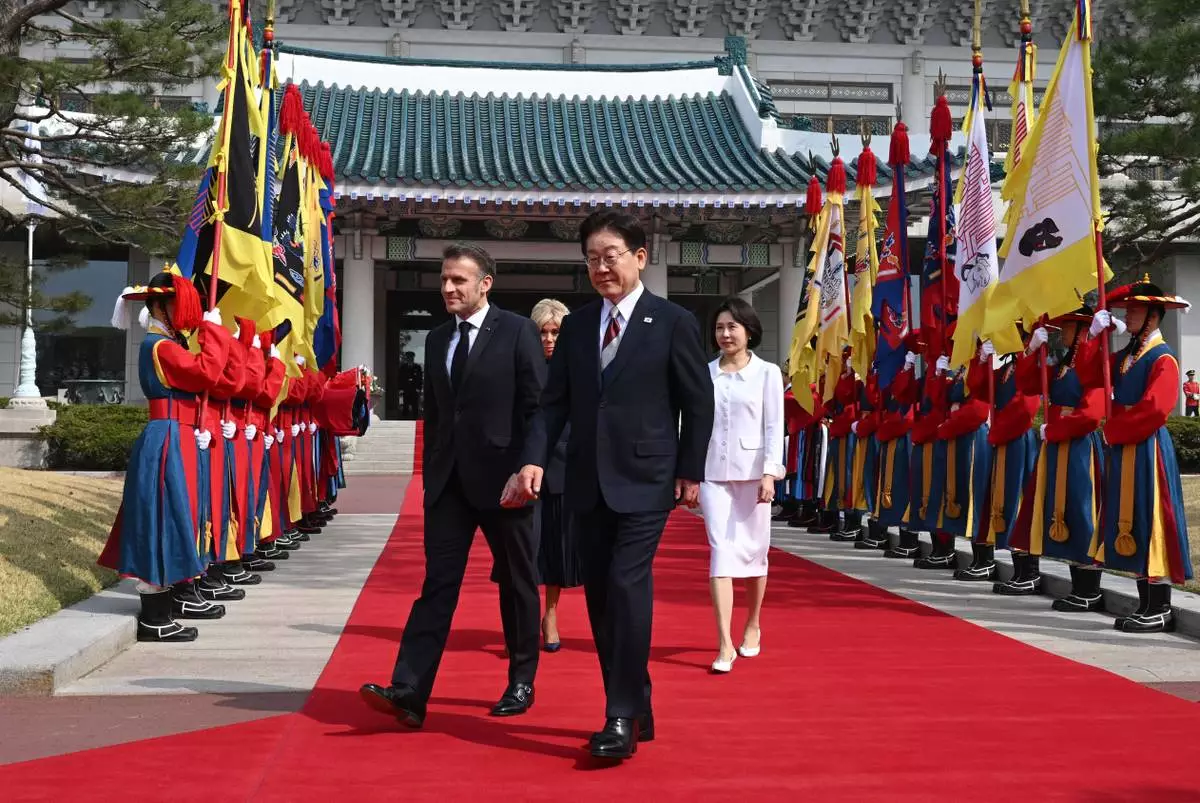
French President Emmanuel Macron, front left, his wife Brigitte Macron, back center, and South Korean President Lee Jae Myung, front right, and his wife Kim Hea Kyung, right, attend the welcome ceremony at the presidential Blue House in Seoul Friday, April 3, 2026. (Jung Yeon-je /Pool Photo via AP)

French President Emmanuel Macron, front left, his wife Brigitte Macron, back center, and South Korean President Lee Jae Myung, front right, and his wife Kim Hea Kyung, right, attend the welcome ceremony at the presidential Blue House in Seoul Friday, April 3, 2026. (Jung Yeon-je /Pool Photo via AP)

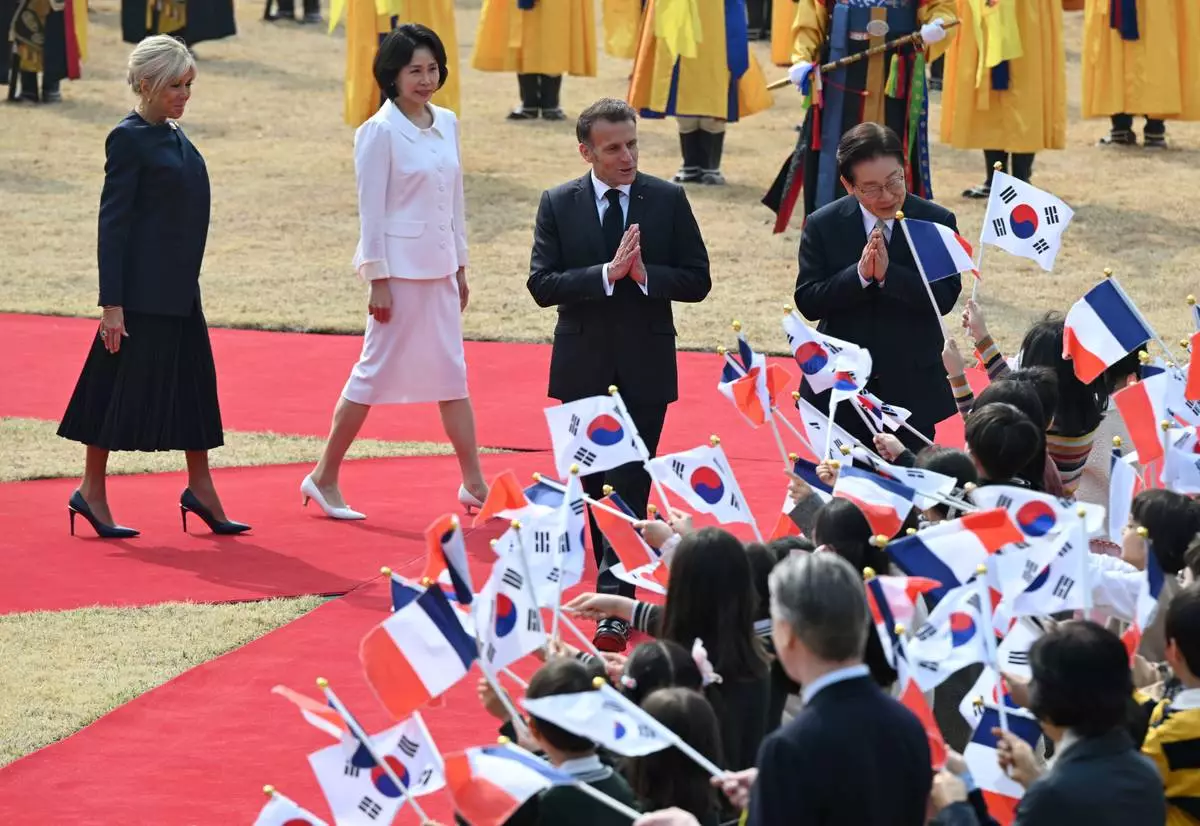
French President Emmanuel Macron, center, his wife Brigitte Macron, left, and South Korean President Lee Jae Myung, right, and his wife Kim Hea Kyung, second left, attend the welcome ceremony at the presidential Blue House in Seoul Friday, April 3, 2026. (Jung Yeon-je /Pool Photo via AP)

French President Emmanuel Macron, center, his wife Brigitte Macron, left, and South Korean President Lee Jae Myung, right, and his wife Kim Hea Kyung, second left, attend the welcome ceremony at the presidential Blue House in Seoul Friday, April 3, 2026. (Jung Yeon-je /Pool Photo via AP)

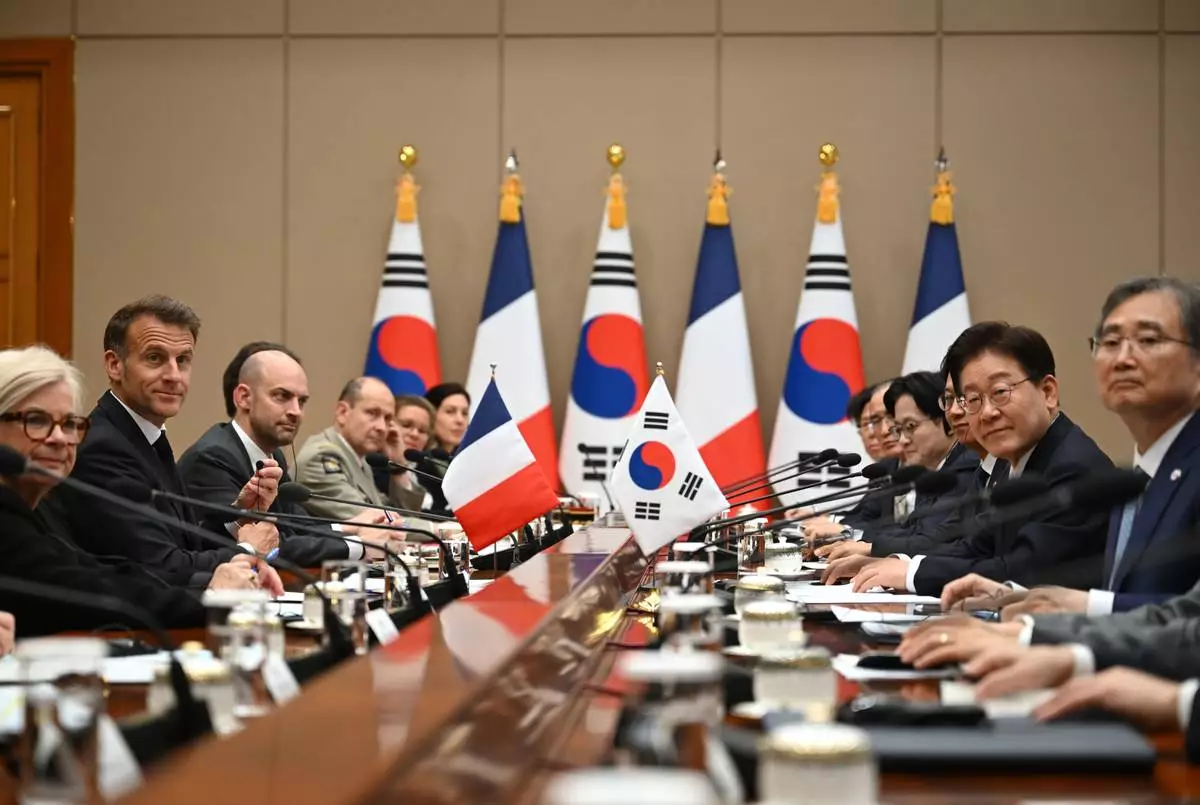
French President Emmanuel Macron, second left, talks with South Korean President Lee Jae Myung, second right, during their meeting at the Blue House in Seoul, South Korea, Friday, April 3, 2026. (Jung Yeon-je/Pool Photo via AP)

French President Emmanuel Macron, second left, talks with South Korean President Lee Jae Myung, second right, during their meeting at the Blue House in Seoul, South Korea, Friday, April 3, 2026. (Jung Yeon-je/Pool Photo via AP)

French President Emmanuel Macron shakes hands with South Korean President Lee Jae Myung during their meeting at the Blue House in Seoul, South Korea, Friday, April 3, 2026. (Jung Yeon-je/Pool Photo via AP)

French President Emmanuel Macron shakes hands with South Korean President Lee Jae Myung during their meeting at the Blue House in Seoul, South Korea, Friday, April 3, 2026. (Jung Yeon-je/Pool Photo via AP)

Recommended Articles