CAPE CANAVERAL, Fla. (AP) — The astronauts evacuated last week from the International Space Station say a portable ultrasound machine came in “super handy” during the medical crisis.
During their first public appearance since returning to Earth, the four astronauts refused Wednesday to say which one of them needed medical attention and for what reason. It was NASA's first medical evacuation in 65 years of human spaceflight.
NASA’s Mike Fincke said the crew used the onboard ultrasound machine once the medical problem arose Jan. 7, the day before a planned spacewalk that was abruptly canceled. The astronauts had already used the device a lot for routine checks of their body changes while living in weightlessness, “so when we had this emergency, the ultrasound machine came in super handy.”
It was so useful that Fincke said there should be one on all future spaceflights. “It really helped,” he said.
“Of course, we didn't have other big machines that we have here on planet Earth,” he added. “We do try to make sure that everybody before we fly are really, really not prone to surprises. But sometimes things happen and surprises happen, and the team was ready ... preparation was super important."
The space station is set up as well as it can be for medical emergencies, said NASA's Zena Cardman, who commanded the crew's early return flight with SpaceX. She said NASA “made all the right decisions” in canceling the spacewalk, which would have been her first, and prioritizing the crew's well-being.
Japanese astronaut Kimiya Yui said he was surprised how well all the preflight training paid off in dealing with the health concerns.
“We can handle any kind of difficult situation,” Yui said. “This is actually very, very good experience for the future of human spaceflight.”
Joining them on what turned out to be a 5 1/2-month mission — more than a month shorter than planned — was Russia's Oleg Platonov. They launched last August from Florida and splashed down in the Pacific off the San Diego coast last week.
Welcoming them back to Houston were their replacements, who aren't due to launch until mid-February. NASA and SpaceX are working to move up the flight.
“We were hoping to give them hugs in space, but we gave them hugs on Earth,” Fincke said.
The Associated Press Health and Science Department receives support from the Howard Hughes Medical Institute’s Department of Science Education and the Robert Wood Johnson Foundation. The AP is solely responsible for all content.

Roscosmos cosmonaut Oleg Platonov, left, NASA astronauts Mike Fincke, Zena Cardman, and JAXA (Japan Aerospace Exploration Agency) astronaut Kimiya Yui are seen inside the SpaceX Dragon Endeavour spacecraft onboard the SpaceX recovery ship SHANNON shortly after having landed in the Pacific Ocean off the coast of Long Beach, Calif., Thursday, Jan. 15, 2026. (NASA via AP)
NEW DELHI (AP) — With a massive population, a rapidly growing economy and already the global powerbroker in cricket, India is preparing to expand its influence in international sport.
The 2030 Commonwealth Games are already locked in for Ahmedabad, and there's high expectations for India's bid to host the 2036 Olympics.
Prime Minister Narendra Modi has envisioned a developed India by 2047, and the government is focused on improving living standards, transport infrastructure, education and becoming a global hub for tech and innovation.
And that's the bedrock of India’s aspirations for the Olympics and beyond.
“India today reflects a confident and aspirational mindset, ready to lead and shape the future of global sport,” Dr. Mansukh Mandaviya, Union Minister of Youth Affairs and Sports, said in an interview with The Associated Press. “Our growing capability to host major international sporting events is a testament to how far we've progressed.
“At the same time, our athletes continue to make the nation proud, signaling the steady rise of India as a formidable sporting force.”
On Thursday, Mandaviya was due to preside over a national sports conclave in Delhi, where India’s preparedness for the 2026 Asian Games and Commonweath Games, as well as the 2028 Olympics in Los Angeles, will be measured.
Discussion topics also included compliance to the National Sports Governance Act that was introduced last year, pertaining to transparency of national sports federations, and the hosting of and participation in international events.
So far in 2026, India has hosted three high-profile cricket events — the men’s Twenty20 World Cup, the Women’s Premier League and currently the Indian Premier League, one of the richest and most followed franchise leagues in international sport.
New Delhi is hosting the badminton world championships, Bhubaneshwar is slated to host a World Athletics Continental Tour meet and Ahmedabad is set to host the Asian weightlifting championships.
Indian authorities are also considering ways of bringing Formula 1 back to the country for the first time since 2013. Influential sports officials have already helped get cricket back into the Olympics for Los Angeles in 2028.
Outside of cricket, the Commonwealth Games are the biggest barometer for India’s developing sport story.
New Delhi hosted the Asian Games in 1982 and 1951, and also the 2010 Commonwealth Games that was fraught with logistics problems. Long delays in getting facilities ready and a list of scandals overshadowed the event.
Indian officials expect Ahmedabad to put those problems into the distant past. The Sardar Patel Sports Enclave is marked as a key hub for the 2030 Games, which bring together thousands of athletes from 74 Commonwealth nations and territories.
The complex also houses the biggest cricket stadium in the world – the Narendra Modi Stadium – and it can be optimized to host different sports.
But this is a tale growing beyond infrastructure alone. There is a genuine push toward attaining success on the field as well, and sustained efforts have been made over the past decade to develop a robust sports ecosystem.
There are more than fifteen professional leagues across sports actively nurturing talent and creating future opportunities.
The Sports Authority of India has established sports-specific centers of excellence across the country, designed to provide world-class infrastructure and scientific training with the aim of producing Olympic and international medalists.
The results are showing – India recorded its best-ever showing at the Asian Games with 107 medals in the last edition staged in 2023. It won the Thomas Cup (badminton) in 2022, a first squash World Cup title, earned 29 medals — including seven gold — at the 2024 Paralympics in Paris, and 20 medals at the World Boxing Cup finals.
Olympic and world champion javelin thrower Neeraj Chopra is among the standout individual performers.
Sports backers say the individual success stories matter in sending out a message of fitness and participation through society.
Hari Ranjan Rao, Sports Secretary, Government of India, said while the infrastructure is put in place, “we are also working on our messaging.”
The Khelo India — or Play India — program has grown since 2018 at the youth and university level, winter and para games, beach and water sports, and even tribal games.
“The aim is to draw out the masses into an active lifestyle,” Rao said, “As well as into participation.”
And with extra participation, India is hoping for greater success.
“As we prepare to host the 2030 Commonwealth Games and advance our bid for the 2036 Olympic Games, India stands ready to take center stage,” Mandaviya said. “We are determined to emerge as a global sporting powerhouse, both in producing champions and in hosting world class events.”
AP sports: https://apnews.com/sports
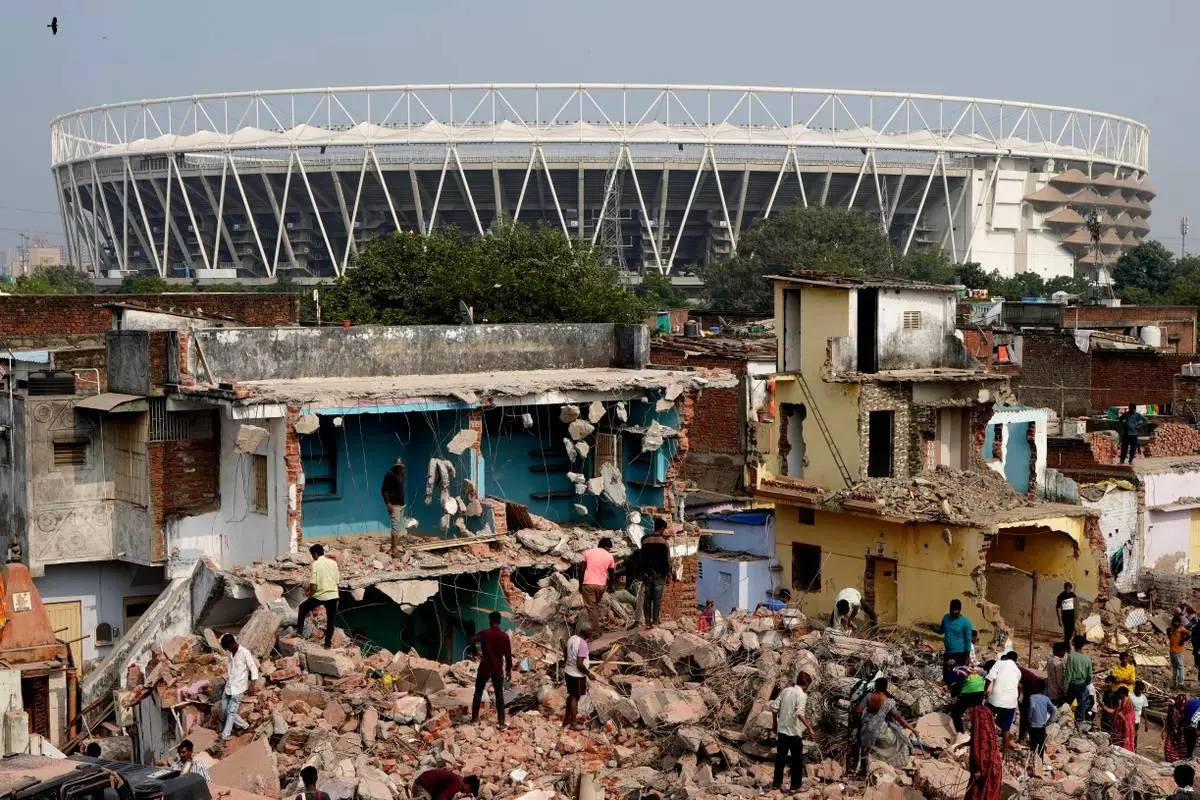
FILE - People search in the rubble after authorities demolished various structures near the Narendra Modi stadium, seen behind, as part of the preparations for the 2030 Commonwealth Games in Ahmedabad, India, Saturday, Nov. 29, 2025. (AP Photo/Ajit Solanki,File)
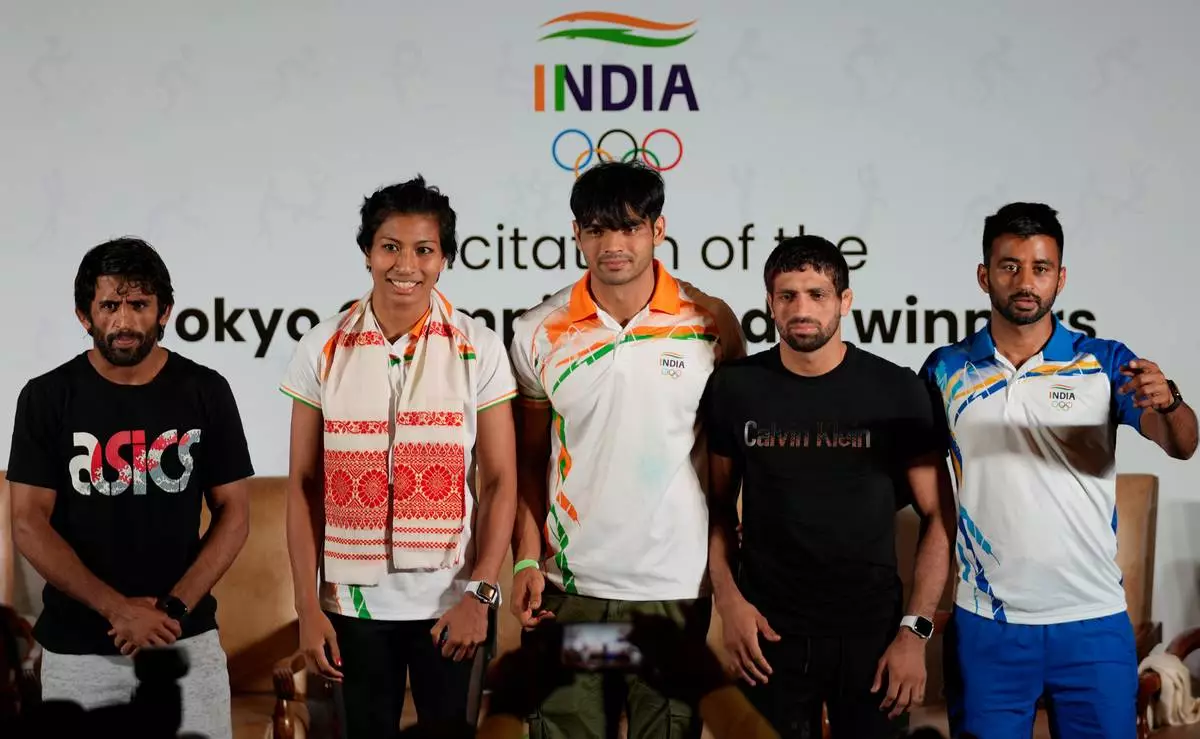
FILE - From left, Olympic Bronze medallist in wrestling Bajarng Punia, Olympic Bronze medallists in boxing, Lovlina Borgohain, Olympic Gold medallist in javelin throw Neeraj Chopra, Olympic Silver medallist in wrestling Ravi Dahiya and captain of Indian men's hockey team who won bronze medal, Manpreet Singh at Tokyo Olympic games, stand for a photographs during a felicitation function in New Delhi, India, Monday, Aug. 9 2021. (AP Photo/Manish Swarup.File)
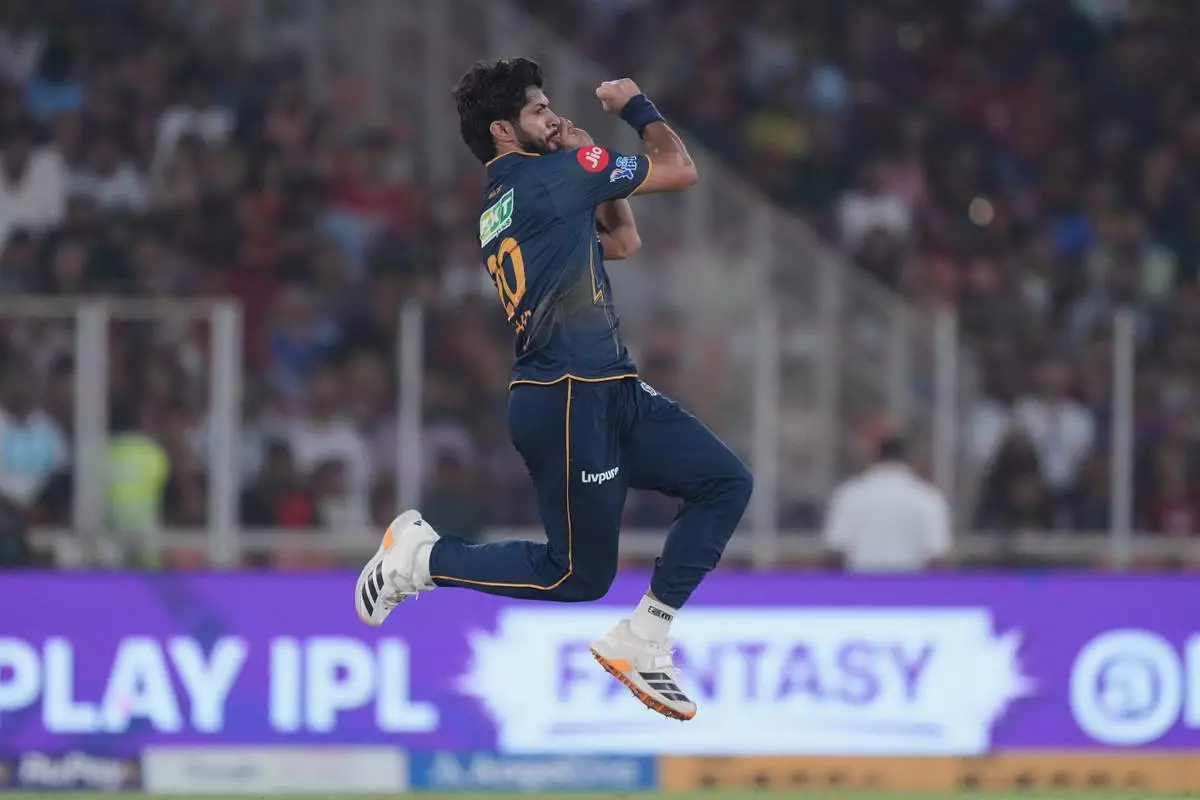
Gujarat Titans' Arshad Khan bowls a delivery during the Indian Premier League cricket match between Gujarat Titans and Royal Challengers Bengaluru in Ahmedabad, India, Thursday, April 30, 2026. (AP Photo/Ajit Solanki)
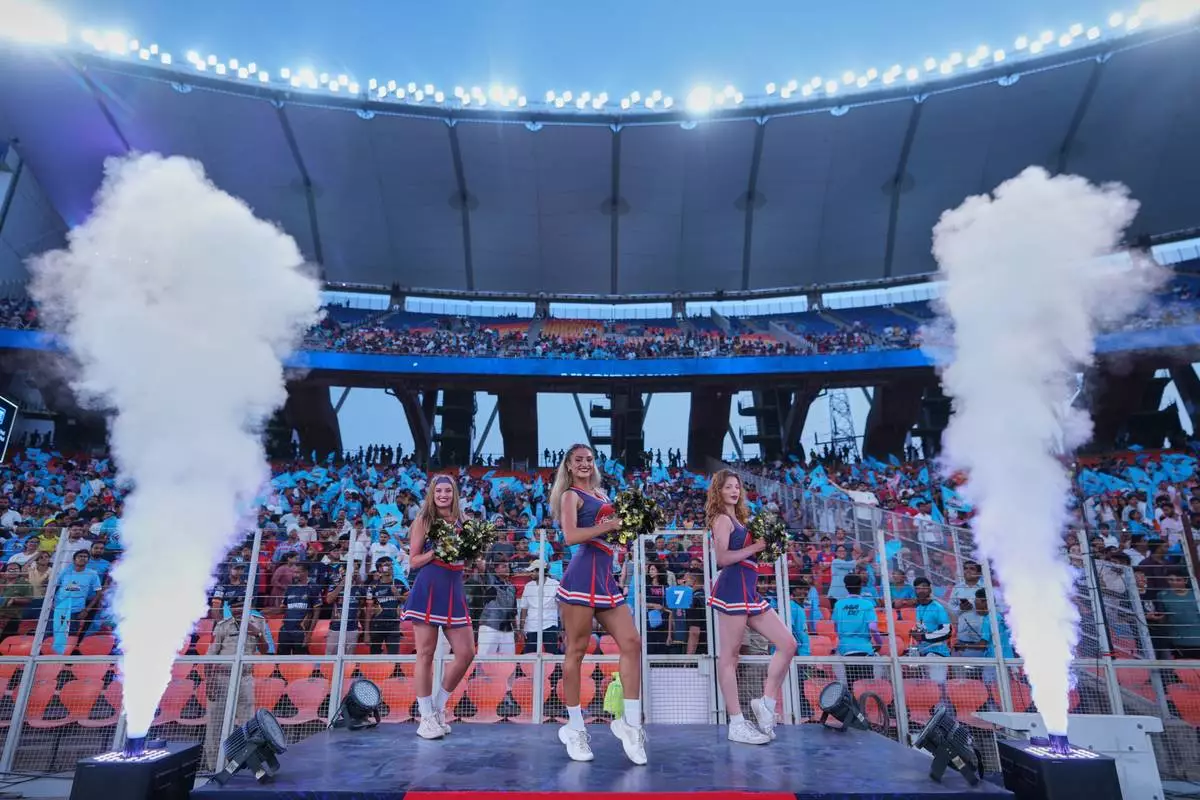
Cheer leaders dance before the Indian Premier League cricket match between Gujarat Titans and Punjab Kings in Ahmedabad, India, Sunday, May 3, 2026. (AP Photo/Ajit Solanki)