Skip to Content Facebook Feature Image

Immigration officers assert sweeping power to enter homes without a judge's warrant, memo says

News

Immigration officers assert sweeping power to enter homes without a judge's warrant, memo says
News

News

Immigration officers assert sweeping power to enter homes without a judge's warrant, memo says

2026-01-22 10:27 Last Updated At:10:30

WASHINGTON (AP) — Federal immigration officers are asserting sweeping power to forcibly enter people’s homes without a judge’s warrant, according to an internal Immigration and Customs Enforcement memo obtained by The Associated Press, marking a sharp reversal of longstanding guidance meant to respect constitutional limits on government searches.

The memo authorizes ICE officers to use force to enter a residence based solely on a more narrow administrative warrant to arrest someone with a final order of removal, a move that advocates say collides with Fourth Amendment protections and upends years of advice given to immigrant communities.

The shift comes as the Trump administration dramatically expands immigration arrests nationwide, deploying thousands of officers under a mass deportation campaign that is already reshaping enforcement tactics in cities such as Minneapolis.

For years, immigrant advocates, legal aid groups and local governments have urged people not to open their doors to immigration agents unless they are shown a warrant signed by a judge. That guidance is rooted in Supreme Court rulings that generally prohibit law enforcement from entering a home without judicial approval. The ICE directive directly undercuts that advice at a time when arrests are accelerating under the administration’s immigration crackdown.

The memo itself has not been widely shared within the agency, according to a whistleblower complaint, but its contents have been used to train new ICE officers who are being deployed into cities and towns to implement the president’s immigration crackdown. New ICE hires and those still in training are being told to follow the memo’s guidance instead of written training materials that actually contradict the memo, according to the whistleblower disclosure.

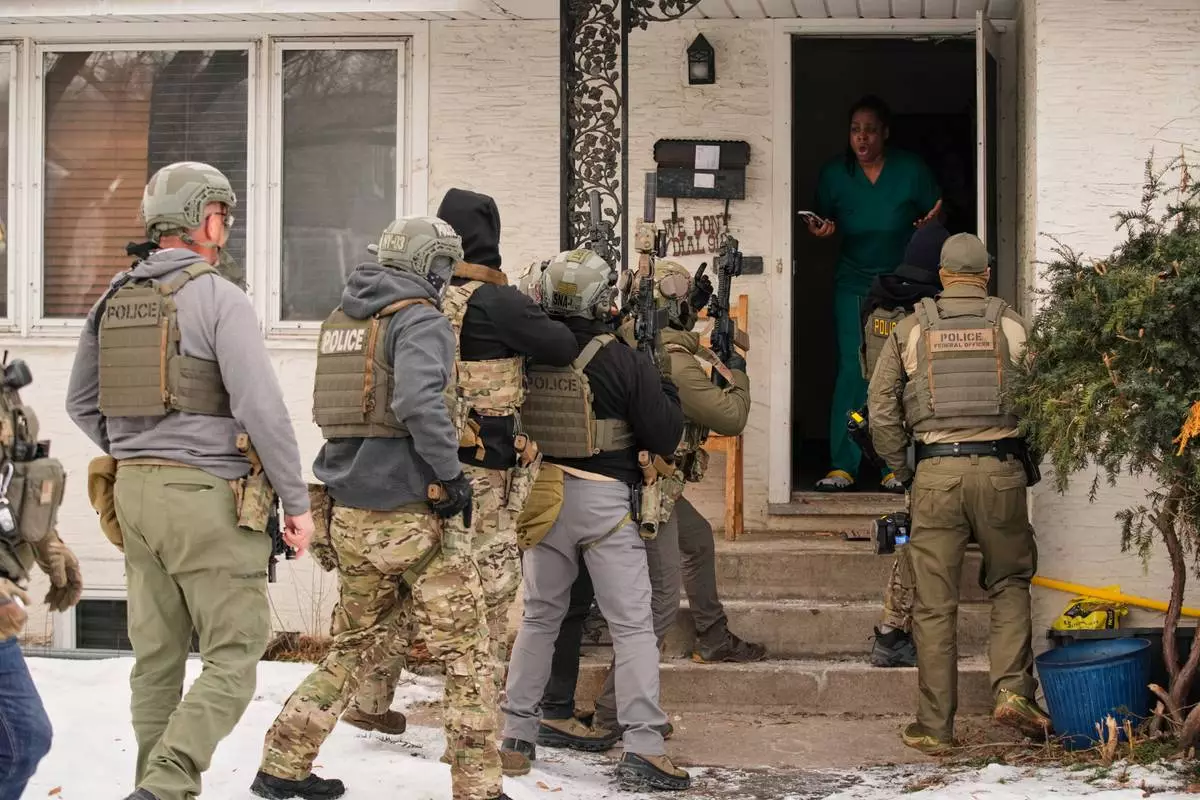
It is unclear how broadly the directive has been applied in immigration enforcement operations. The Associated Press witnessed ICE officers ramming through the front door of the home of a Liberian man, Garrison Gibson, with a deportation order from 2023 in Minneapolis on Jan. 11, wearing heavy tactical gear and with their rifles drawn.

Documents reviewed by The AP revealed that the agents only had an administrative warrant — meaning there was no judge who authorized the raid on private property.

The change is almost certain to meet legal challenges and stiff criticism from advocacy groups and immigrant-friendly state and local governments that have spent years successfully urging people not to open their doors unless ICE shows them a warrant signed by a judge.

The Associated Press obtained the memo and whistleblower complaint from an official in Congress, who shared it on condition of anonymity to discuss sensitive documents. The AP verified the authenticity of the accounts in the complaint.

The memo, signed by the acting director of ICE, Todd Lyons, and dated May 12, 2025, says: “Although the U.S. Department of Homeland Security (DHS) has not historically relied on administrative warrants alone to arrest aliens subject to final orders of removal in their place of residence, the DHS Office of the General Counsel has recently determined that the U.S. Constitution, the Immigration and Nationality Act, and the immigration regulations do not prohibit relying on administrative warrants for this purpose.”

The memo does not detail how that determination was made nor what its legal repercussions might be.

Homeland Security spokeswoman Tricia McLaughlin said in an e-mailed statement to the AP that everyone the department serves with an administrative warrant has already had “full due process and a final order of removal.”

She said the officers issuing those warrants have also found probable cause for the person’s arrest. She said the Supreme Court and Congress have “recognized the propriety of administrative warrants in cases of immigration enforcement,” without elaborating. McLaughlin did not respond to questions about whether ICE officers entered a person’s home since the memo was issued, relying solely on an administrative warrant and if so, how often.

Whistleblower Aid, a nonprofit legal organization that assists workers exposing wrongdoings, said in the whistleblower complaint obtained by The Associated Press that it represents two anonymous U.S. government officials “disclosing a secretive — and seemingly unconstitutional — policy directive.”

A wave of recent high-profile arrests, many unfolding at private homes and businesses and captured on video, has placed a spotlight on immigration arrest tactics, including officers’ use of proper warrants.

Most immigration arrests are carried out under administrative warrants, internal documents issued by immigration authorities that authorize the arrest of a specific individual but do not permit officers to forcibly enter private homes or other non-public spaces without consent. Only warrants signed by judges carry that authority.

All law enforcement operations — including those conducted by ICE and Customs and Border Protection — are governed by the Fourth Amendment of the Constitution, which protects all people in the country from unreasonable searches and seizures.

People can legally refuse federal immigration agents entry into private property if the agents only have an administrative warrant, with some limited exceptions.

The memo says ICE officers can forcibly enter homes and arrest immigrants using just a signed administrative warrant known as an I-205 if they have a final order of removal issued by an immigration judge, the Board of Immigration Appeals or a district judge or magistrate judge.

The memo says officers must first knock on the door and share who they are and why they’re at the residence. They’re limited in the hours they can go into the home — after 6 a.m. and before 10 p.m. The people inside must be given a “reasonable chance to act lawfully.” But if that doesn’t work, the memo says, they can use force to go in.

“Should the alien refuse admittance, ICE officers and agents should use only a necessary and reasonable amount of force to enter the alien’s residence, following proper notification of the officer or agent’s authority and intent to enter,” the memo reads.

The memo is addressed to all ICE personnel. But it has been shown only to “select DHS officials” who then shared it with some employees who were told to read it and return it, Whistleblower Aid wrote in the disclosure.

One of the two whistleblowers was allowed to view the memo only in the presence of a supervisor and then had to give it back. That person was not allowed to take notes. A whistleblower was able to access the document and lawfully disclose it to Congress, Whistleblower Aid said.

Although the memo was issued in May, David Kligerman, senior vice president and special counsel at Whistleblower Aid, said it took time for its clients to find a “safe and legal path to disclose it to lawmakers and the American people.”

ICE has been rapidly hiring thousands of new deportation officers to carry out the president’s mass deportation agenda. They’re trained at the Federal Law Enforcement Training Center in Brunswick, Georgia.

During a visit there by The Associated Press in August, ICE officials said repeatedly that new officers were being trained to follow the Fourth Amendment.

But according to the whistleblowers’ account, newly hired ICE officers are being told they can rely solely on administrative warrants to enter homes to make arrests, even though that conflicts with written Homeland Security training materials.

Lindsay Nash, a law professor at Yeshiva University’s Cardozo School of Law in New York, said the memo “flies in the face” of what the Fourth Amendment protects against and what ICE itself has historically said are its authorities.

She said there's an “enormous potential for overreach, for mistakes and we've seen that those can happen with very, very serious consequences.”
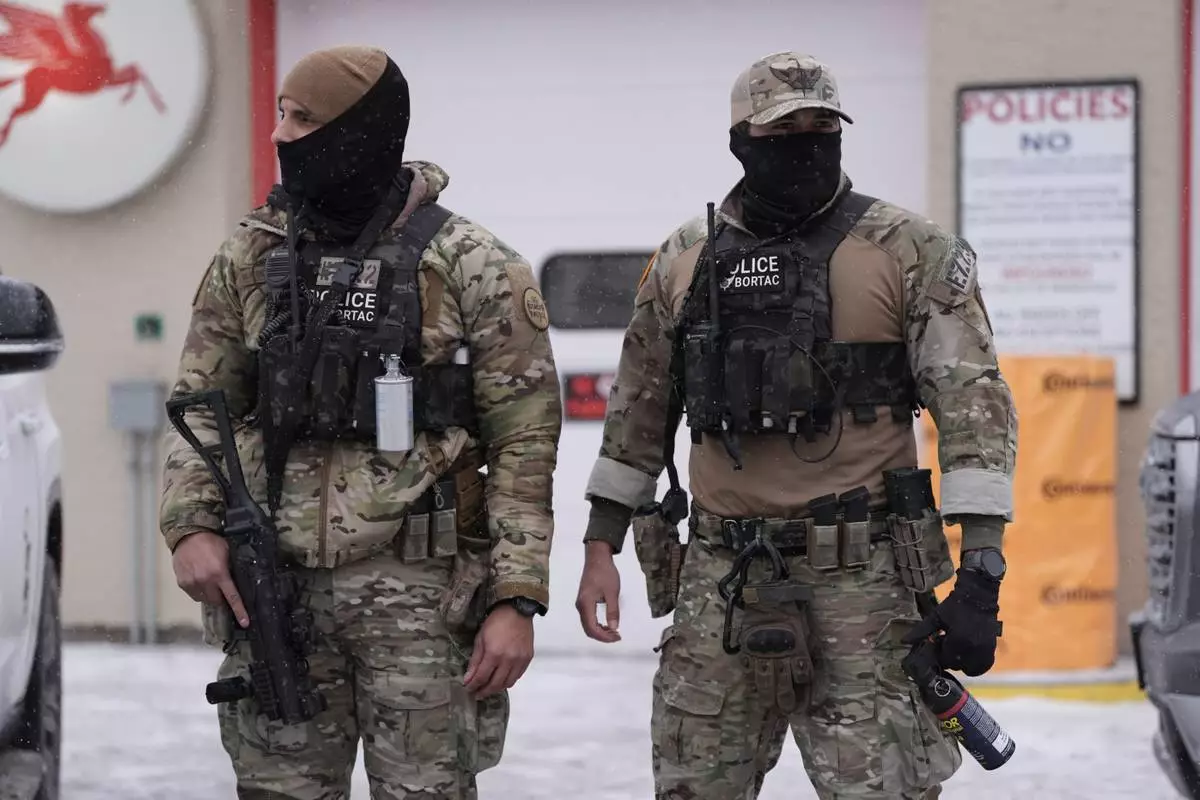
Federal agents stand outside a convenience store on Wednesday, Jan. 21, 2026, in Minneapolis. (AP Photo/Angelina Katsanis)
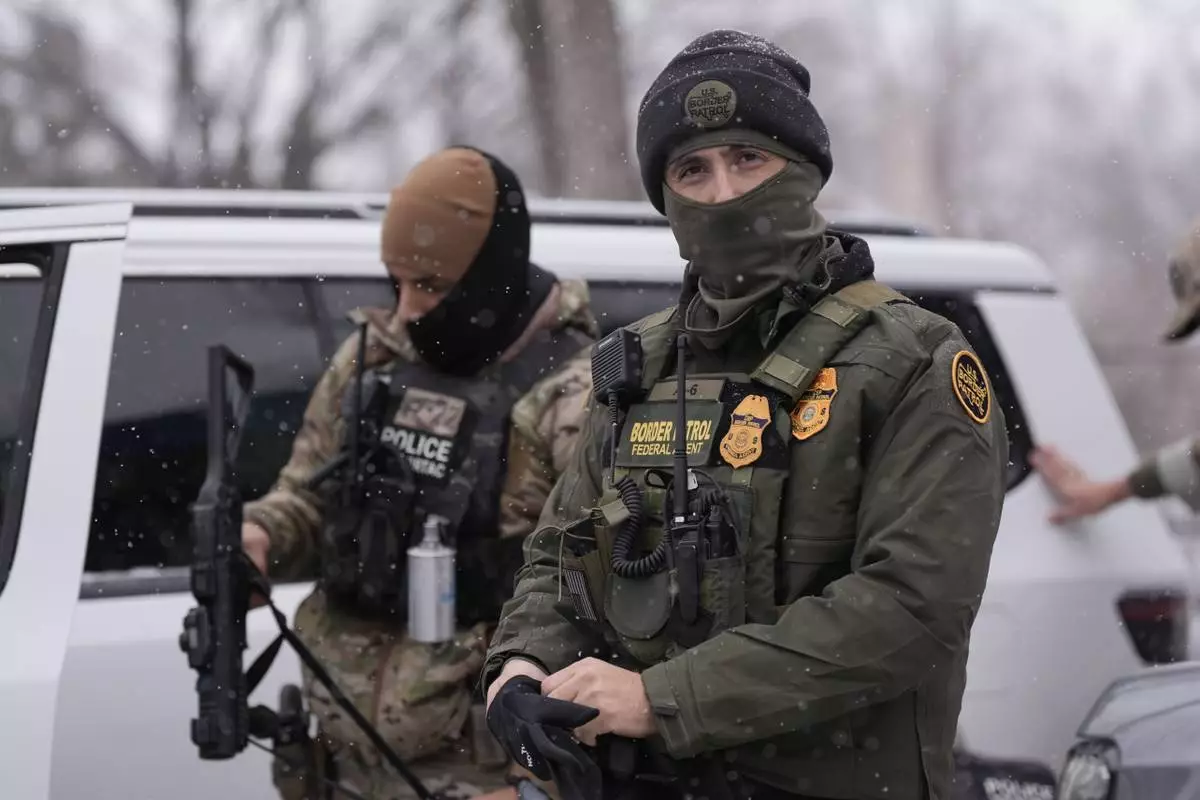
Federal agents stand outside a convenience store on Wednesday, Jan. 21, 2026, in Minneapolis. (AP Photo/Angelina Katsanis)
Federal agents stand outside a convenience store on Wednesday, Jan. 21, 2026, in Minneapolis. (AP Photo/Angelina Katsanis)

Federal agents stand outside a convenience store on Wednesday, Jan. 21, 2026, in Minneapolis. (AP Photo/Angelina Katsanis)

ADDS IDENTIFICATION: Teyana Gibson Brown, second from right, wife of Garrison Gibson, reacts after a federal immigration officer used a battering ram to break down a door before arresting Garrison Gibson, Sunday, Jan. 11, 2026, in Minneapolis. (AP Photo/John Locher)
ADDS IDENTIFICATION: Teyana Gibson Brown, second from right, wife of Garrison Gibson, reacts after a federal immigration officer used a battering ram to break down a door before arresting Garrison Gibson, Sunday, Jan. 11, 2026, in Minneapolis. (AP Photo/John Locher)
CORPUS CHRISTI, Texas (AP) — A former Uvalde police officer was acquitted Wednesday of charges that he failed in his duties to confront the gunman at Robb Elementary during the critical first minutes of one of the deadliest school shootings in U.S. history.

Jurors deliberated for more than seven hours before finding Adrian Gonzalez, 52, not guilty in the first trial over the hesitant law enforcement response to the 2022 attack, which killed 19 children and two teachers.

Gonzales appeared to close his eyes and take a deep breath as he stood to hear the verdict in a Corpus Christi courtroom hundreds of miles from Uvalde, where Gonzales' attorneys argued that he could not receive a fair trial. After the verdict was read, he hugged one of his lawyers and appeared to be fighting back tears.

“Thank you for the jury for considering all the evidence,” Gonzales told reporters. Asked if he wanted to say anything to the families, he declined.

Moments after the verdict was read, several members of families of the victims sat in silence, some crying or wiping away tears.

“Faith is fractured, but you never lose faith," said Jesse Rizo, whose 9-year-old niece Jackie Cazares was killed. He said he was frustrated by the verdict and hopes the state will press ahead with the trial of former Uvalde schools Police Chief Pete Arredondo, the only other officer who has been charged over the police response.

“Those children in the cemetery can’t speak for themselves,” Rizo said.

Arredondo’s trial has not yet been set.

Jurors declined to speak to reporters while leaving the courthouse.

The nearly three-week trial was a rare case in the U.S. of an officer facing criminal charges on accusations of failing to stop a crime and protect lives. Gonzales had faced the possibility of up to two years in prison if convicted.

The proceedings included emotional testimony from teachers who were shot and survived. Prosecutors argued that Gonzales abandoned his training and did nothing to stop or interrupt the teenage gunman before he entered the school.

“We’re expected to act differently when talking about a child that can’t defend themselves,” special prosecutor Bill Turner said during closing arguments Wednesday. “If you have a duty to act, you can’t stand by while a child is in imminent danger.”

At least 370 law enforcement officers rushed to the school, where 77 minutes passed before a tactical team finally entered the classroom to confront and kill the gunman. Gonzales was one of just two officers indicted, angering some victim’s relatives who said they wanted more to be held accountable.

Gonzales was charged with 29 counts of child abandonment and endangerment — each count representing the 19 students who were killed and 10 others who were injured.

During the trial jurors heard a medical examiner describe the fatal wounds to the children, some of whom were shot more than a dozen times. Several parents told of sending their children to school for an awards ceremony and the panic that ensued as the attack unfolded.

Gonzales’ lawyers said he arrived upon a chaotic scene of rifle shots echoing on school grounds and never saw the gunman before the attacker went inside the school. They also insisted that three other officers who arrived seconds later had a better chance to stop the gunman.

Gonzales’ attorney, Jason Goss, told jurors before they began deliberating that his client was not responsible for the attack.

“The monster that hurt those kids is dead,” Goss said. “It is one of the worst things that ever happened.”

A conviction would tell police they have to be “perfect” when responding to a crisis and could make them even more hesitant in the future, Goss said.

Some victims’ families made the long drive to watch Gonzales' trial. Early on the sister of one of the teachers killed was removed from the courtroom after an angry outburst following one officer’s testimony.

Gonzales’ trial was tightly focused on his actions in the early moments of the attack, but prosecutors also presented the graphic and emotional testimony as the result of police failures.

State and federal reviews of the shooting cited cascading problems in law enforcement training, communication, leadership and technology, and questioned why officers waited so long.

Prosecutors faced a high bar to win a conviction. Juries are often reluctant to convict law enforcement officers for inaction, as seen after the 2018 school massacre in Parkland, Florida. A sheriff’s deputy was acquitted after being charged with failing to confront the shooter in that attack — the first such prosecution in the U.S. for an on-campus shooting.

Vertuno reported from Austin, Texas.

Jesse Rizo and his wife Juanita Cazares-Rizo listen to the prosecution and defense deliver their closing statements to the jury on the 11th day of the trial for former Uvalde school district police officer Adrian Gonzales at the Nueces County Courthouse on Wednesday, Jan. 21, 2026, in Corpus Christi, Texas. T (Sam Owens /The San Antonio Express-News via AP, Pool)

Jesse Rizo and his wife Juanita Cazares-Rizo listen to the prosecution and defense deliver their closing statements to the jury on the 11th day of the trial for former Uvalde school district police officer Adrian Gonzales at the Nueces County Courthouse on Wednesday, Jan. 21, 2026, in Corpus Christi, Texas. T (Sam Owens /The San Antonio Express-News via AP, Pool)

Special prosecutor Bill Turner delivers a closing statement to the jury on the 11th day of the trial for former Uvalde school district police officer Adrian Gonzales at the Nueces County Courthouse on Wednesday, Jan. 21, 2026, in Corpus Christi, Texas. (Sam Owens /The San Antonio Express-News via AP, Pool)

Special prosecutor Bill Turner delivers a closing statement to the jury on the 11th day of the trial for former Uvalde school district police officer Adrian Gonzales at the Nueces County Courthouse on Wednesday, Jan. 21, 2026, in Corpus Christi, Texas. (Sam Owens /The San Antonio Express-News via AP, Pool)

Defense attorney Nico LaHood mimics a police officer responding to a threat inside a classroom while delivering a closing statement to the jury on the 11th day of the trial for former Uvalde school district police officer Adrian Gonzales at the Nueces County Courthouse on Wednesday, Jan. 21, 2026, in Corpus Christi, Texas. (Sam Owens /The San Antonio Express-News via AP, Pool)

Defense attorney Nico LaHood mimics a police officer responding to a threat inside a classroom while delivering a closing statement to the jury on the 11th day of the trial for former Uvalde school district police officer Adrian Gonzales at the Nueces County Courthouse on Wednesday, Jan. 21, 2026, in Corpus Christi, Texas. (Sam Owens /The San Antonio Express-News via AP, Pool)

Former Uvalde school district police officer Adrian Gonzales listens to closing statements on the 11th day of his trial at the Nueces County Courthouse on Wednesday, Jan. 21, 2026, in Corpus Christi, Texas. (Sam Owens /The San Antonio Express-News via AP, Pool)

Former Uvalde school district police officer Adrian Gonzales listens to closing statements on the 11th day of his trial at the Nueces County Courthouse on Wednesday, Jan. 21, 2026, in Corpus Christi, Texas. (Sam Owens /The San Antonio Express-News via AP, Pool)

Police officers escort Velma Lisa Duran of the courtroom as she yells at witness Joe Vasquez, a Zavala County Sheriff's Office deputy, during a trial for former Uvalde school district police officer Adrian Gonzales at the Nueces County Courthouse in Corpus Christi, Texas, on Tuesday, Jan. 13, 2026. Duran's sister Irma Garcia was one of two teachers who were killed in the Robb Elementary mass shooting. (Sam Owens/The San Antonio Express-News via AP, Pool)

Police officers escort Velma Lisa Duran of the courtroom as she yells at witness Joe Vasquez, a Zavala County Sheriff's Office deputy, during a trial for former Uvalde school district police officer Adrian Gonzales at the Nueces County Courthouse in Corpus Christi, Texas, on Tuesday, Jan. 13, 2026. Duran's sister Irma Garcia was one of two teachers who were killed in the Robb Elementary mass shooting. (Sam Owens/The San Antonio Express-News via AP, Pool)

Javier Cazares listens to testimony during the 10th day of the trial of former Uvalde school district police officer Adrian Gonzales at the Nueces County Courthouse in Corpus Christi, Texas, Tuesday, Jan. 20, 2026. Cazares is the father of Robb Elementary shooting victim Jackie Cazares, one of the 19 children killed by an 18-year-old gunman. (Sam Owens/The San Antonio Express-News via AP, Pool)

Javier Cazares listens to testimony during the 10th day of the trial of former Uvalde school district police officer Adrian Gonzales at the Nueces County Courthouse in Corpus Christi, Texas, Tuesday, Jan. 20, 2026. Cazares is the father of Robb Elementary shooting victim Jackie Cazares, one of the 19 children killed by an 18-year-old gunman. (Sam Owens/The San Antonio Express-News via AP, Pool)

Defense attorney Nico LaHood cross-examines the prosecution's witness Nick Hill, a Texas Ranger lieutenant with the Texas Department of Public Safety, during the 10th day of the trial for former Uvalde school district police officer Adrian Gonzales at Nueces County Courthouse in Corpus Christi, Texas, Tuesday, Jan. 20, 2026. (Sam Owens/The San Antonio Express-News via AP, Pool)

Defense attorney Nico LaHood cross-examines the prosecution's witness Nick Hill, a Texas Ranger lieutenant with the Texas Department of Public Safety, during the 10th day of the trial for former Uvalde school district police officer Adrian Gonzales at Nueces County Courthouse in Corpus Christi, Texas, Tuesday, Jan. 20, 2026. (Sam Owens/The San Antonio Express-News via AP, Pool)

Former Uvalde school district police officer Adrian Gonzales, left, talks to his defense attorney Nico LaHood during a break on the 10th day of his trial at Nueces County Courthouse in Corpus Christi, Texas, Tuesday, Jan. 20, 2026. (Sam Owens/The San Antonio Express-News via AP, Pool)

Former Uvalde school district police officer Adrian Gonzales, left, talks to his defense attorney Nico LaHood during a break on the 10th day of his trial at Nueces County Courthouse in Corpus Christi, Texas, Tuesday, Jan. 20, 2026. (Sam Owens/The San Antonio Express-News via AP, Pool)

Recommended Articles