Ombudsman joins Education & Careers Expo 2026 and launches Summer Internship Programme
The following is issued on behalf of the Office of The Ombudsman:
Click to Gallery
Ombudsman joins Education & Careers Expo 2026 and launches Summer Internship Programme Source: HKSAR Government Press Releases
Ombudsman joins Education & Careers Expo 2026 and launches Summer Internship Programme Source: HKSAR Government Press Releases
Ombudsman joins Education & Careers Expo 2026 and launches Summer Internship Programme Source: HKSAR Government Press Releases
Ombudsman joins Education & Careers Expo 2026 and launches Summer Internship Programme Source: HKSAR Government Press Releases
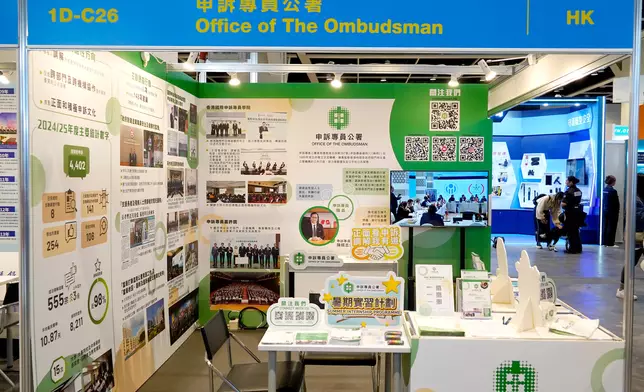
The Office of The Ombudsman is operating a booth at the Education & Careers Expo 2026 from today (January 22) for four consecutive days to introduce the Office's functions, powers, work ambit and results, as well as recruitment information. In particular, the Office will launch its first ever Summer Internship Programme to attract tertiary students to gain deeper insights into its work and hands-on experience in public service.
The Ombudsman, Mr Jack Chan, led the Office's directorate to browse the booth and engage with visitors and job seekers at the venue. Mr Chan said, "Fair and efficient public administration is a cornerstone of stable social development. As the watchdog of public administration in Hong Kong, the Office aspires to encourage more young people to actively participate in public affairs and understand the importance of good governance, and to promote a positive complaint culture. Working together, we will build a better, higher-quality society and contribute to the development of the motherland and Hong Kong."
The Office's booth features a wide range of content. In addition to the Office's functions and the Ombudsman's three strategic focuses, it also showcases the key figures of the previous reporting year, major direct investigation operations, the establishment of the Hong Kong International Ombudsman Academy and various work results, offering a comprehensive overview of the Office's efforts and achievements in promoting good public administration and fostering a positive complaint culture. Already, the booth has been bustling with staff members interacting with visitors who want to learn more about the requirements of different job positions, career pathways and work experiences.
Mr Chan said that the Office's work is very meaningful, having made a positive and significant impact on the public and society. He welcomed young people with a commitment to serve Hong Kong and take on challenges to join the Office. He added, "This year we are launching our first ever Summer Internship Programme, with the aim of enabling tertiary students' preparation for entering the workforce to gain in depth understanding and hands on experience of the Office's work. It presents a great opportunity for them to make the most of the summer break to learn, accumulate experience and lay a foundation for future career development."
The Education & Careers Expo 2026 runs from today until January 25 at the Exhibition Hall of the Hong Kong Convention and Exhibition Centre. Admission is free. The Office's booth number is 1D C26 in Hall 1D. Moreover, the Office will hold a themed seminar at the Careers Forum in the Exhibition Hall on January 24 from 1.30pm to 2pm. From January 26 to 30, the Office will also take part in the University of Hong Kong Spring Career Fair to engage with students and alumni who are interested in joining the Office.

Ombudsman joins Education & Careers Expo 2026 and launches Summer Internship Programme Source: HKSAR Government Press Releases

Ombudsman joins Education & Careers Expo 2026 and launches Summer Internship Programme Source: HKSAR Government Press Releases

Ombudsman joins Education & Careers Expo 2026 and launches Summer Internship Programme Source: HKSAR Government Press Releases

Ombudsman joins Education & Careers Expo 2026 and launches Summer Internship Programme Source: HKSAR Government Press Releases
FEHD releases fourth batch of gravidtrap indexes for Aedes albopictus in May
The Food and Environmental Hygiene Department (FEHD) today (May 21) released the fourth batch of gravidtrap indexes and density indexes for Aedes albopictus in May, covering 12 survey areas, as follows:
District |
Survey Area |
May 2026 |
First Phase Gravidtrap Index |
First Phase Density Index |
Eastern |
Shau Kei Wan and Sai Wan Ho |
9.1% |
1.4 |
Islands |
Tung Chung |
2.0% |
1.0 |
Kowloon City |
Hung Hom and To Kwa Wan |
6.7% |
1.5 |
Tai Po |
Tai Po East |
2.2% |
2.0 |
Tai Po West |
15.5% |
1.0 |
Tuen Mun |
Tuen Mun South |
9.1% |
1.4 |
District |
Survey Area |
May 2026 |
Area Gravidtrap Index |
Area Density Index |
Central and Western |
Kennedy Town and Shek Tong Tsui |
16.8% |
1.3 |
Eastern |
Chai Wan |
15.4% |
1.0 |
North Point and Quarry Bay |
18.9% |
1.4 |
Southern |
Aberdeen and Ap Lei Chau |
20.8% |
1.7 |
Sha Tin |
Sha Tin Town Centre and Fo Tan |
18.3% |
1.4 |
Tsuen Wan |
Tsuen Wan Town |
6.9% |
2.3 |
The fourth batch of gravidtrap indexes for Aedes albopictus in May includes First Phase Gravidtrap Indexes covering six survey areas and Area Gravidtrap Indexes covering six survey areas. Among which, six survey areas recorded gravidtrap indexes above 10 per cent, while Aberdeen and Ap Lei Chau in Southern District recorded a gravidtrap index above 20 per cent. Meanwhile, the gravidtrap indexes of six survey areas, namely Kennedy Town and Shek Tong Tsui in Central and Western District; North Point and Quarry Bay in Eastern District; Shau Kei Wan and Sai Wan Ho in Eastern District; Aberdeen and Ap Lei Chau in Southern District; Tai Po East in Tai Po District; and Tuen Mun South in Tuen Mun District, have recorded a decrease as compared to the indexes recorded in the last survey period, reflecting the progress of relevant mosquito control work.
With reference to the data from the past few years, the gravidtrap indexes start to rise from April or May every year. The actual timing and extent of the rise are affected by factors like weather conditions and rainfall. The average temperature and rainfall recorded in April this year were higher than those in the same period last year, creating favourable conditions for mosquito growth and breeding. As a result, the rise in gravidtrap indexes occurred earlier this year. With the increase in rainfall in May, the gravidtrap indexes are expected to rise further.
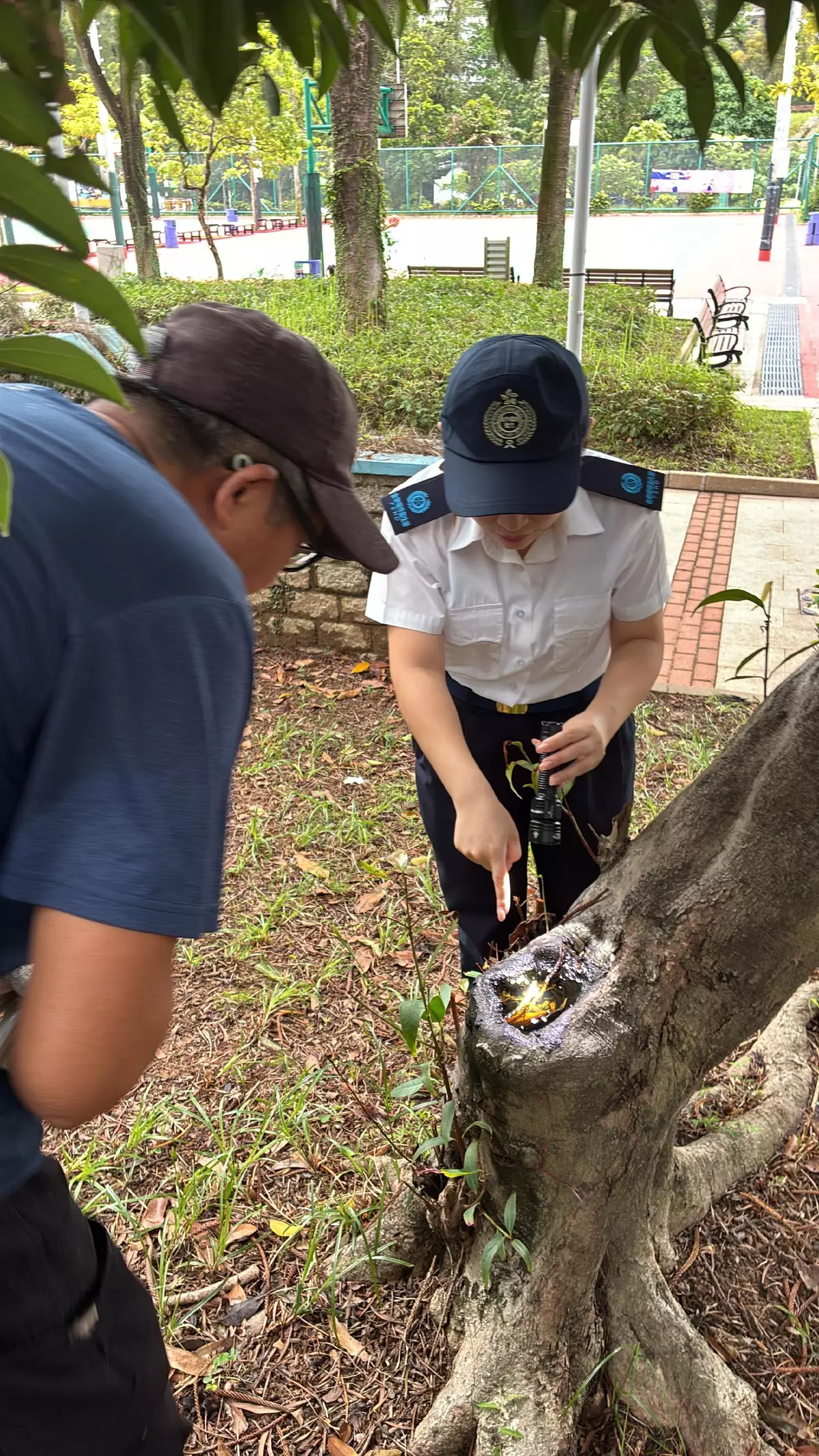
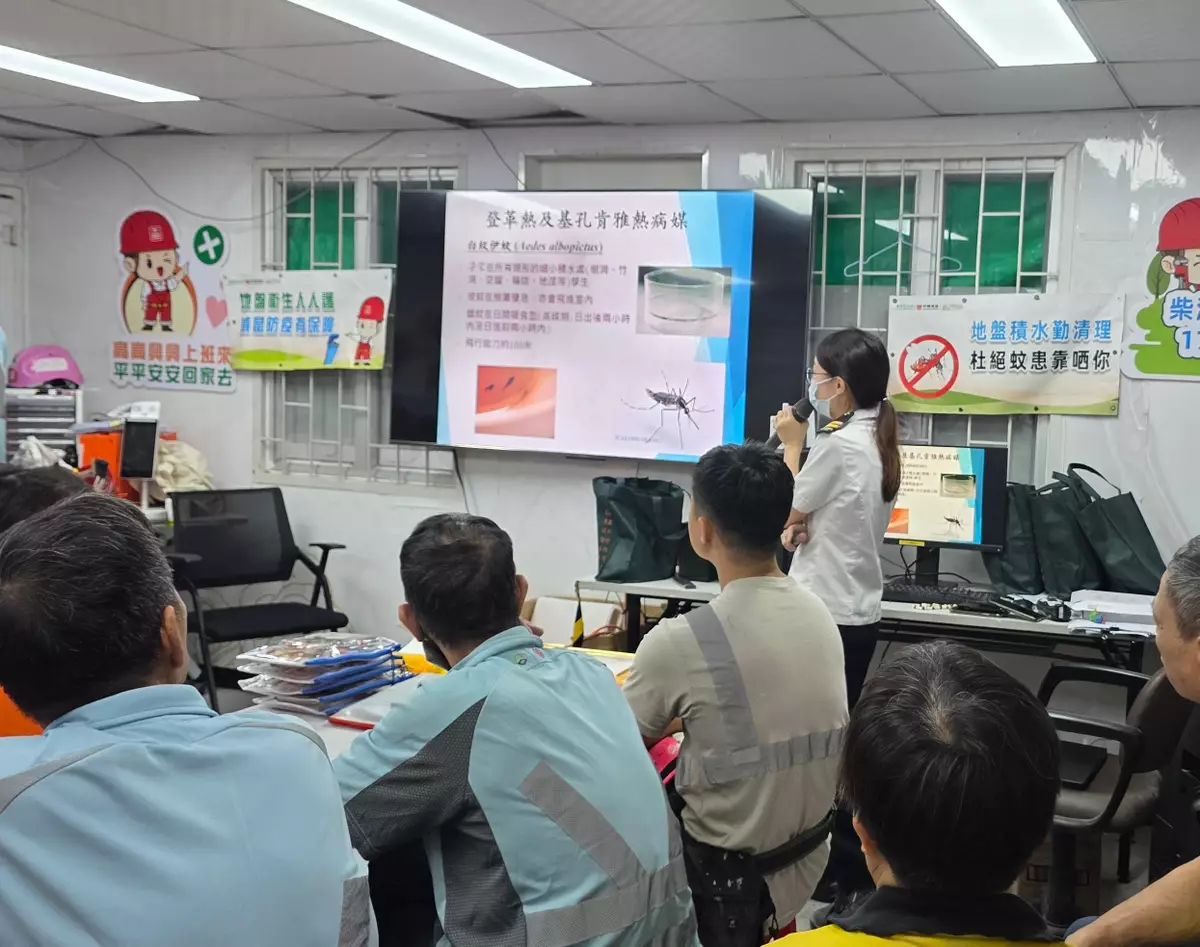
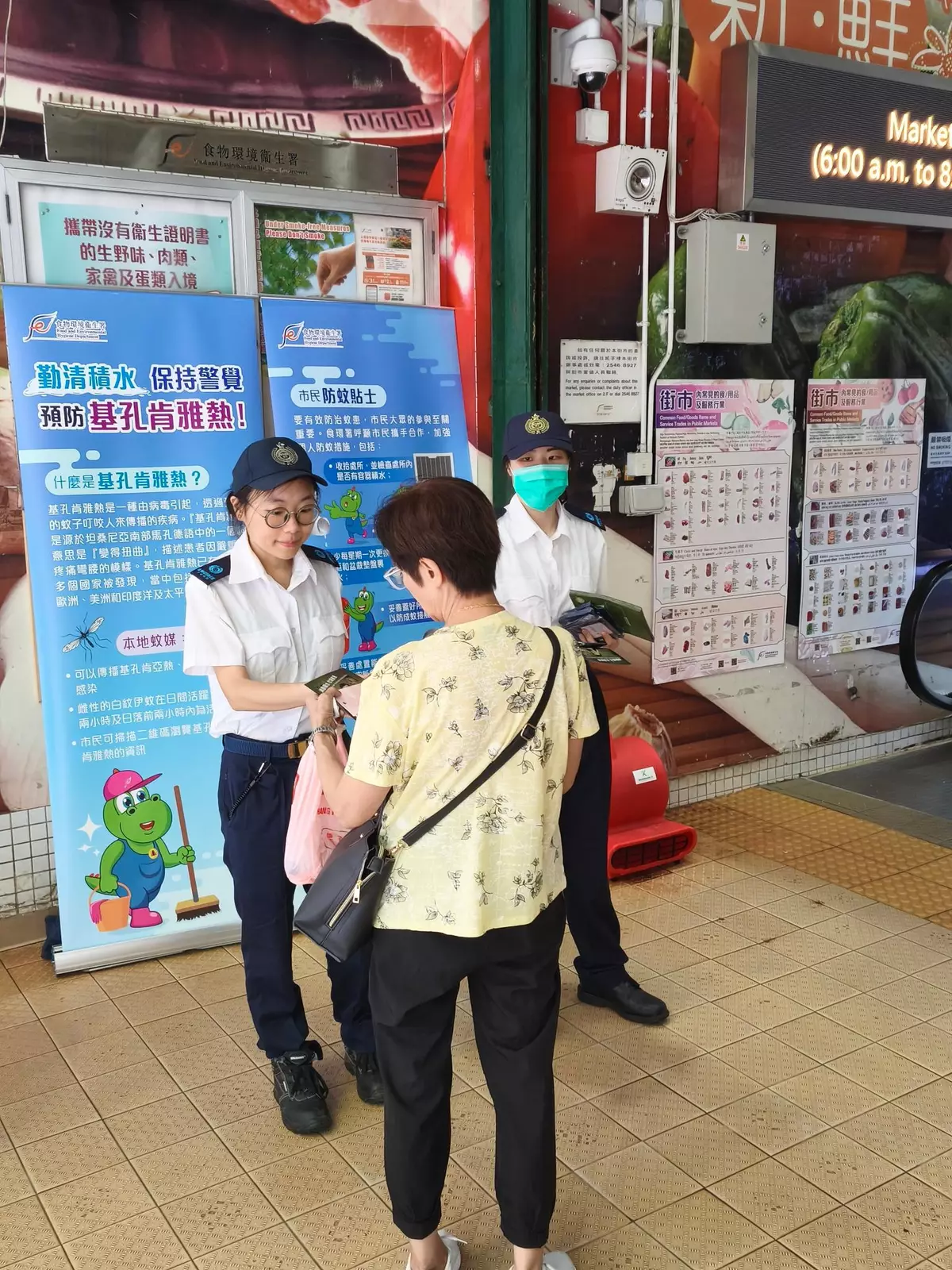
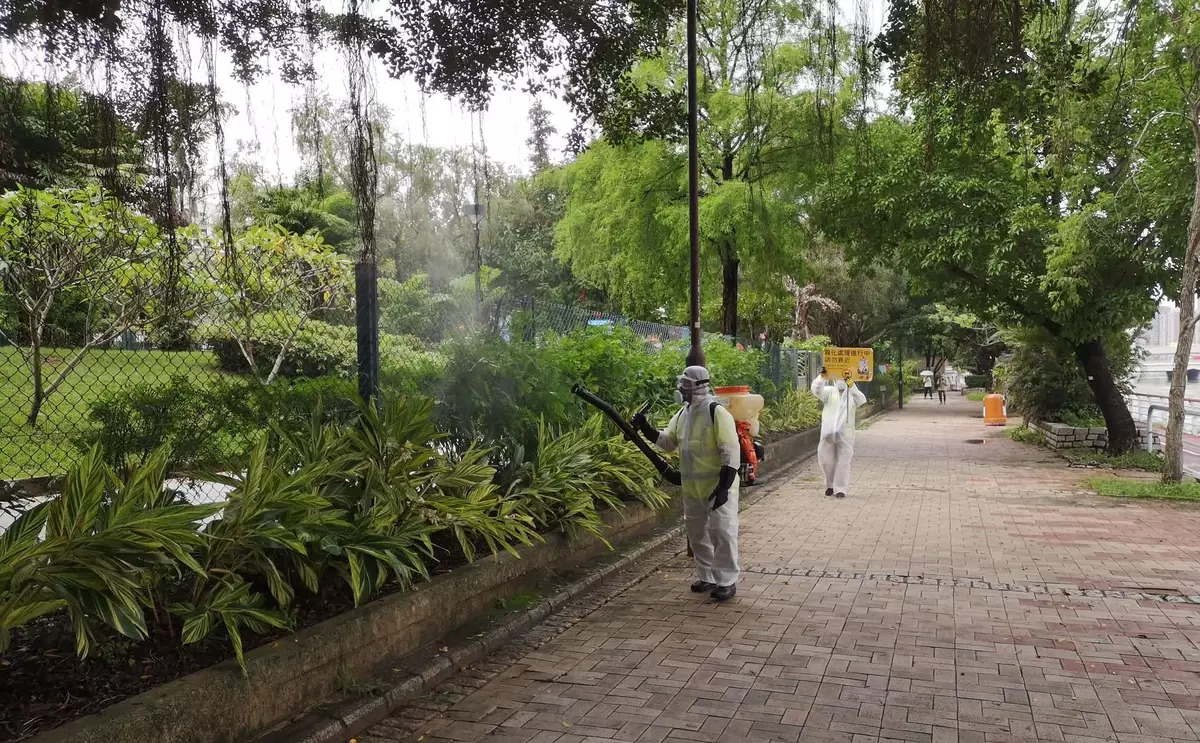
For survey areas which recorded indexes exceeding 10 per cent, in accordance with the mechanism implemented by the FEHD in response to the chikungunya fever (CF) situation (i.e. strengthening mosquito control work in areas with a gravidtrap index between 10 per cent and 20 per cent, instead of 20 per cent or above under the original mechanism), the FEHD is collaborating with relevant departments and stakeholders to identify locations with high mosquito infestations and carry out intensive and targeted mosquito control measures. The FEHD has initiated two prosecutions against the relevant construction site contractors following the discovery of mosquito breeding at construction sites in Tai Po District and Southern District. Moreover, following the discovery of stagnant water or stagnant water containers in a park, a construction site, a private housing estate, a clinic and a private premises in Tai Po District, Central and Western District, as well as Southern District, the FEHD has issued five statutory notices to the responsible persons-in-charge, requiring the clearance of such items within a specified timeframe. The FEHD, the relevant departments and stakeholders are following up on the mosquito control work, and will also organise exhibitions, distribute leaflets and posters, and notify residential estates that have subscribed to the gravidtrap Rapid Alert System, advising property management agents and residents to stay vigilant and work together in taking mosquito prevention and elimination measures. In addition, the FEHD will strengthen the monitoring of the gravidtrap index in the areas to review the effectiveness of the mosquito control work.
Public participation is crucial to the effective control of mosquito problems. The FEHD appeals to members of the public to continue to work together in strengthening personal mosquito control measures, including:
tidy up their premises and check for any accumulation of water inside the premises;
remove all unnecessary water collections and eliminate the sources;
check household items (those placed in outdoor and open areas in particular), such as refuse containers, vases, air conditioner drip trays, and laundry racks to prevent stagnant water;
change water in flower vases and scrub their inner surfaces thoroughly, and remove water in saucers under potted plants at least once a week;
properly cover all containers that hold water to prevent mosquitoes from accessing the water;
properly dispose of articles that can contain water, such as disposable meal boxes and empty cans; and
scrub drains and surface sewers with alkaline detergent at least once a week to remove any mosquito eggs.
Starting in August 2025, following the completion of the surveillance of individual survey areas, and once the latest gravidtrap index and the density index are available, the FEHD has been disseminating relevant information through press releases, its website and social media. It aims to allow members of the public to quickly grasp the mosquito infestation situation and strengthen mosquito control efforts, thereby reducing the risk of CF transmission.
Following recommendations from the World Health Organization and taking into account the local situation in Hong Kong, the FEHD sets up gravidtraps in districts where mosquito-borne diseases have been recorded in the past, as well as in densely populated places such as housing estates, hospitals and schools to monitor the breeding and distribution of Aedes albopictus mosquitoes, which can transmit CF and dengue fever. At present, the FEHD has set up gravidtraps in 62 survey areas of the community, with a surveillance period of two weeks. During the surveillance period, the FEHD will collect the gravidtraps once a week. After the first week of surveillance, the FEHD will immediately examine the glue boards inside the retrieved gravidtraps for the presence of adult Aedine mosquitoes to compile the Gravidtrap Index (First Phase) and Density Index (First Phase). At the end of the second week of surveillance, the FEHD will instantly check the glue boards for the presence of adult Aedine mosquitoes. Data from the two weeks of surveillance will be combined to obtain the Area Gravidtrap Index and the Area Density Index. The gravidtrap and density indexes for Aedes albopictus in different survey areas, as well as information on mosquito prevention and control measures, are available on the department's webpage (www.fehd.gov.hk/english/pestcontrol/dengue_fever/Dengue_Fever_Gravidtrap_Index_Update.html#).
FEHD releases fourth batch of gravidtrap indexes for Aedes albopictus in May Source: HKSAR Government Press Releases
FEHD releases fourth batch of gravidtrap indexes for Aedes albopictus in May Source: HKSAR Government Press Releases
FEHD releases fourth batch of gravidtrap indexes for Aedes albopictus in May Source: HKSAR Government Press Releases
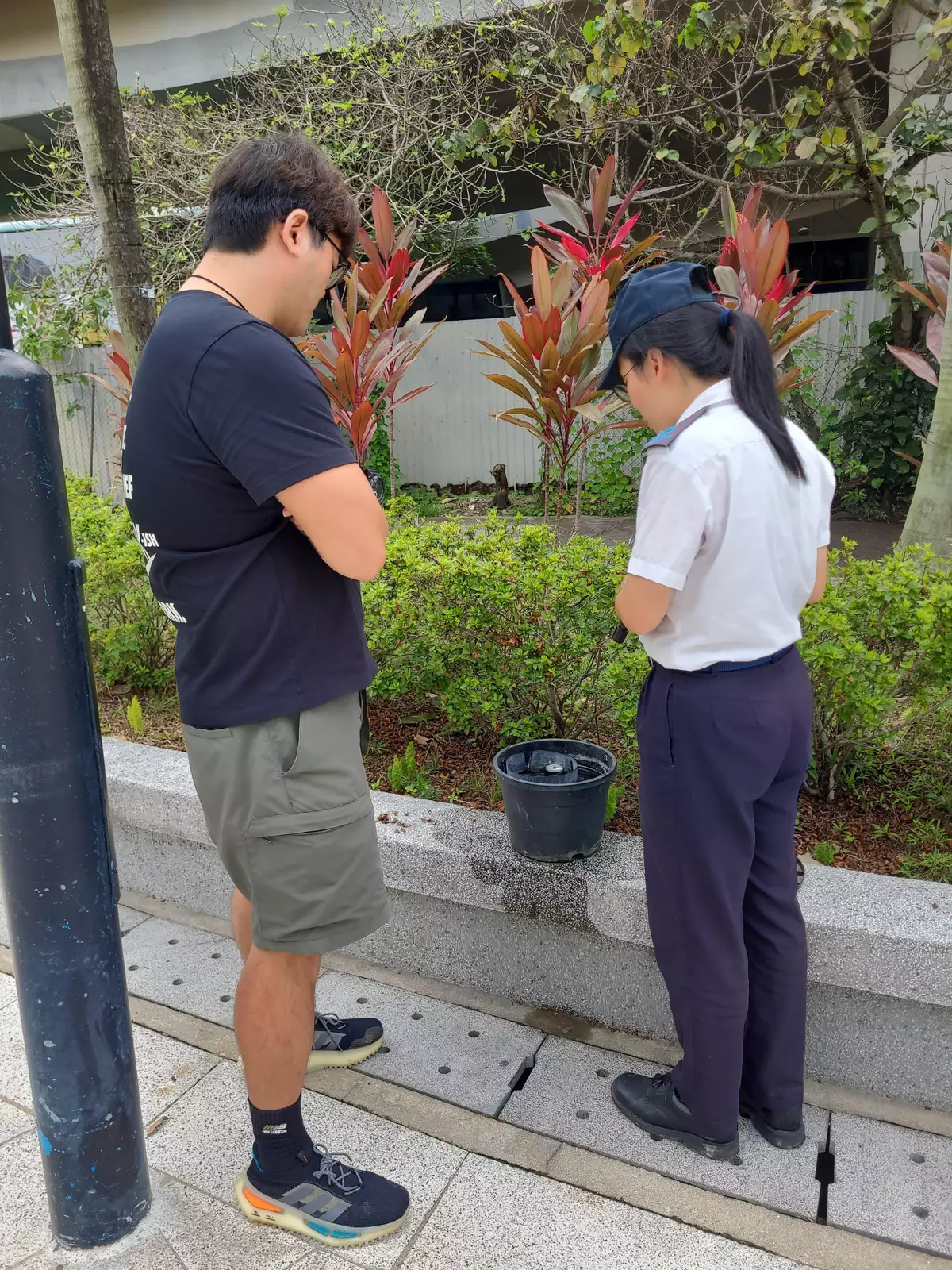
FEHD releases fourth batch of gravidtrap indexes for Aedes albopictus in May Source: HKSAR Government Press Releases
FEHD releases fourth batch of gravidtrap indexes for Aedes albopictus in May Source: HKSAR Government Press Releases