China's digital industry revenues have exceeded 38.3 trillion yuan (approximately 5.5 trillion U.S. dollars) by the end of 2025, marking a nearly 40-percent increase since 2020, an official from the Ministry of Industry and Information Technology (MIIT) announced on Wednesday.
This rapid growth highlights the country's accelerated innovation in digital technology since the start of the 14th Five-Year Plan period (2021-2025), said Zhang Yunming, the ministry's vice minister, at a press conference held in Beijing.
"According to preliminary calculations, by the end of 2025, our country's digital industry has yielded revenues of approximately 38.3 trillion yuan, with a profit of 3.1 trillion yuan. Compared to the end of the 13th Five-Year Plan period (2020), these figures represent cumulative increases of about 39.5 percent and 48.4 percent, respectively," said Zhang.
The minister pointed out that the digital industry serves as a key pillar for promoting the deep integration of the real economy and the digital economy, as well as an important tool for developing new quality productive forces.
He noted that the integrated application of China's industrial internet now covers all major industrial categories. A multi-level and systematic industrial internet platform has been initially established, with the number of industrial devices connected to key national platforms exceeding 100 million units (sets).
Furthermore, China has established 100 high-level 5G factories that have attained world-leading standards, delivering an average productivity increase of 25 percent, a product quality improvement of 21 percent, and an operational cost reduction of 19 percent. The MIIT, in collaboration with the Ministry of Finance, has supported digital transformation initiatives in 101 pilot cities, enabling the digital upgrading of 45,000 small and medium-sized enterprises, according to Zhang.
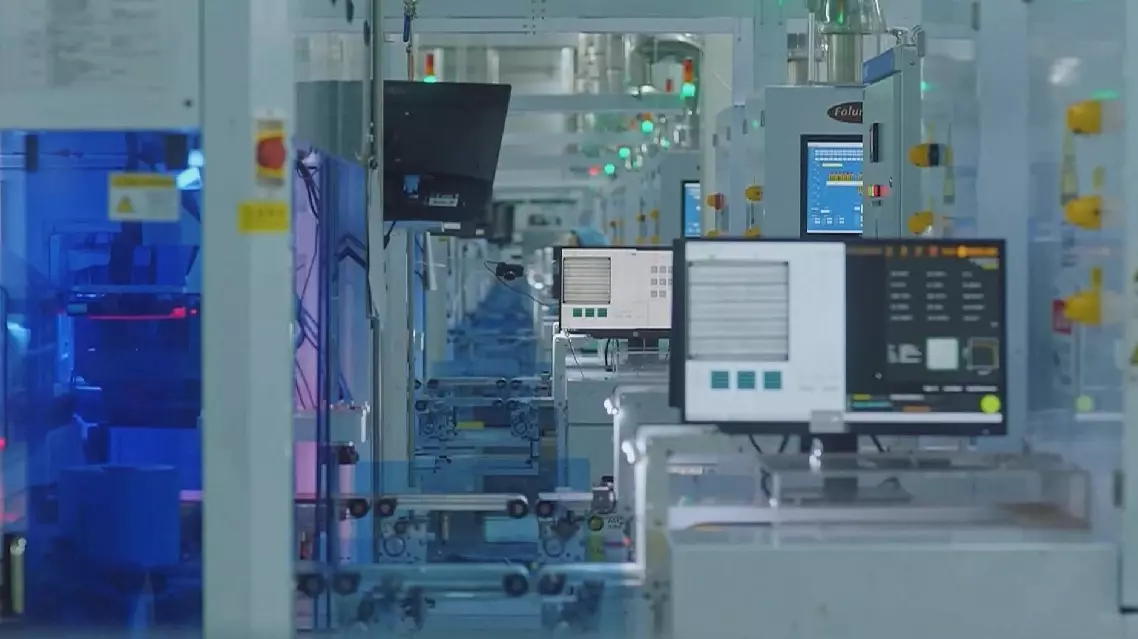
China's digital industry sees 40 pct growth in revenues since 2020: ministry