BOGOTA, Colombia (AP) — Colombia announced Thursday that it will apply a 30% tax on a group of products from Ecuador and will suspend the sale of energy to that country, in response to a matching tariff announced the previous day by the government of Ecuadorian Daniel Noboa.
The escalating trade dispute between the South American neighbors follows a public protest by Noboa regarding a more than $850 million trade deficit with Colombia. Noboa also cited a lack of reciprocity in securing their shared border, which remains a stronghold for criminal organizations and international drug trafficking.
Click to Gallery

Ecuadorian soldiers stand guard the Rumichaca international bridge in Rumichaca, Colombia, Thursday, Jan. 22, 2026. (AP Photo/Leonardo Castro)
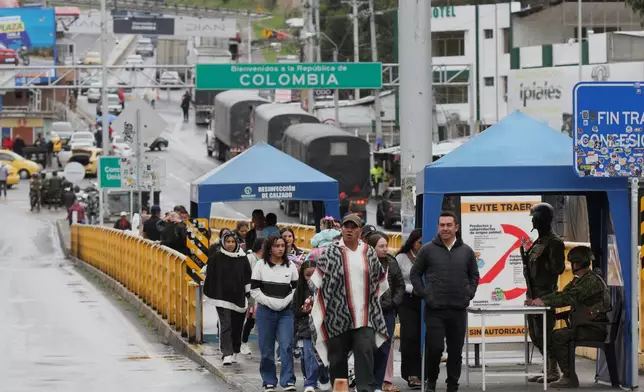
Pedestrians cross the Rumichaca international bridge from Colombia to Ecuador in Rumichaca, Colombia, Thursday, Jan. 22, 2026. (AP Photo/Leonardo Castro)

Vehicles cross from Ecuador to Colombia using the Rumichaca international bridge in Rumichaca, Colombia, Thursday, Jan. 22, 2026. (AP Photo/Leonardo Castro)

Vehicles cross from Ecuador to Colombia using the Rumichaca international bridge in Rumichaca, Colombia, Thursday, Jan. 22, 2026. (AP Photo/Leonardo Castro)
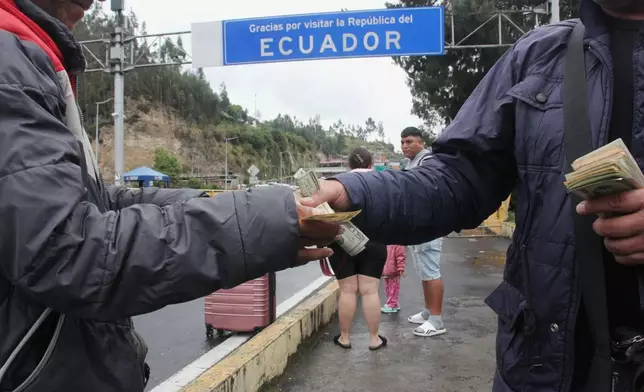
People exchange currencies at the Rumichaca international bridge between Colombia and Ecuador in Rumichaca, Colombia, Thursday, Jan. 22, 2026. (AP Photo/Leonardo Castro)
The Colombian government expressed surprise at Ecuador’s unilateral tariffs, noting that bilateral cooperation remains active through established binational mechanisms, including joint military and anti-narcotics operations.
From January to November 2024, Ecuadorian exports to Colombia totaled $760 million against $1.8 billion in imports, according to Ecuador's ministry of production. Building on this trend, the Ecuadorian Federation of Exporters reported that the trade deficit with Colombia reached $852 million during the same period in 2025.
The 30% tariff announced Thursday by Colombia covers 20 unspecified Ecuadorian products, with authorities noting “the possibility of extending the measure to a broader group.”
Colombia's ministry of commerce said that these specific exports represent approximately $250 million, highlighting the significant impact on bilateral trade conditions. However, Commerce Minister Diana Marcela Morales noted that the tariffs are temporary and remains open to a diplomatic, negotiated solution.
Business leaders in Colombia and Ecuador are warning of immediate economic fallout if their governments fail to resolve the current tariff dispute.
“Since yesterday, member companies have been contacting us in a state of high concern,” Oliva Diazgranados, executive director of the Bogotá-based Colombian-Ecuadorian Chamber of Commerce, told The Associated Press. “This situation directly impacts corporate development and sales projections; it may even threaten jobs.”
Diazgranados said that while the business community is bearing the brunt of the tension, the root of the conflict lies with security agencies, not trade.
Meanwhile, Colombia's ministry of mines and energy announced an indefinite suspension of all international electricity sales to Ecuador. The ministry framed the move as a “preventive measure” essential to safeguarding Colombia’s own energy sovereignty and security.
The decision follows a sharp rebuke from Colombian Energy Minister Edwin Palma, who condemned Ecuador’s tariffs as “economic aggression” that undermines regional integration.
Palma highlighted the irony of the current friction, noting that during Ecuador’s severe energy crisis in late 2024, Colombia consistently provided roughly 90% of its exportable power — totaling approximately 450 megawatts — to stabilize its neighbor’s grid.
Follow AP’s coverage of Latin America and the Caribbean at https://apnews.com/hub/latin-america

Ecuadorian soldiers stand guard the Rumichaca international bridge in Rumichaca, Colombia, Thursday, Jan. 22, 2026. (AP Photo/Leonardo Castro)

Pedestrians cross the Rumichaca international bridge from Colombia to Ecuador in Rumichaca, Colombia, Thursday, Jan. 22, 2026. (AP Photo/Leonardo Castro)
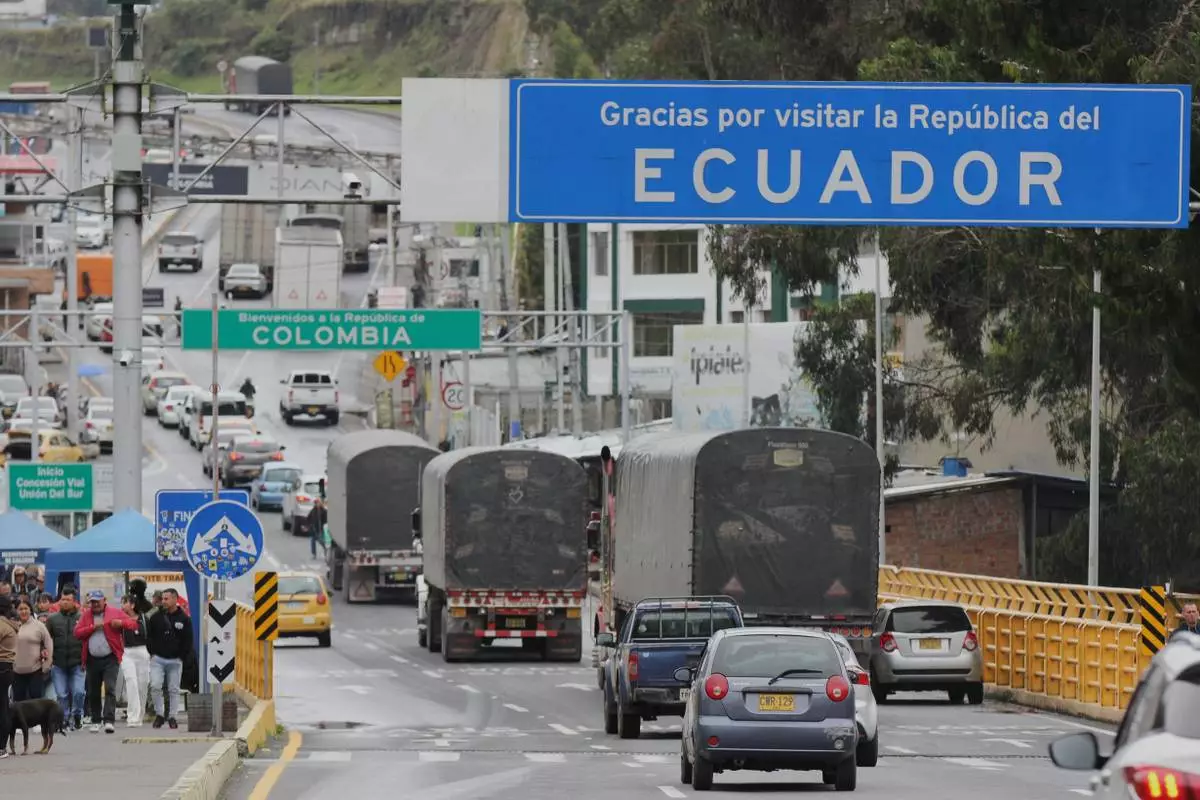
Vehicles cross from Ecuador to Colombia using the Rumichaca international bridge in Rumichaca, Colombia, Thursday, Jan. 22, 2026. (AP Photo/Leonardo Castro)

Vehicles cross from Ecuador to Colombia using the Rumichaca international bridge in Rumichaca, Colombia, Thursday, Jan. 22, 2026. (AP Photo/Leonardo Castro)

People exchange currencies at the Rumichaca international bridge between Colombia and Ecuador in Rumichaca, Colombia, Thursday, Jan. 22, 2026. (AP Photo/Leonardo Castro)