Skip to Content Facebook Feature Image

At 21, Laila Edwards is considered the future of the US women's hockey team

Sport

At 21, Laila Edwards is considered the future of the US women's hockey team
Sport

Sport

At 21, Laila Edwards is considered the future of the US women's hockey team

2026-01-25 00:51 Last Updated At:01:00

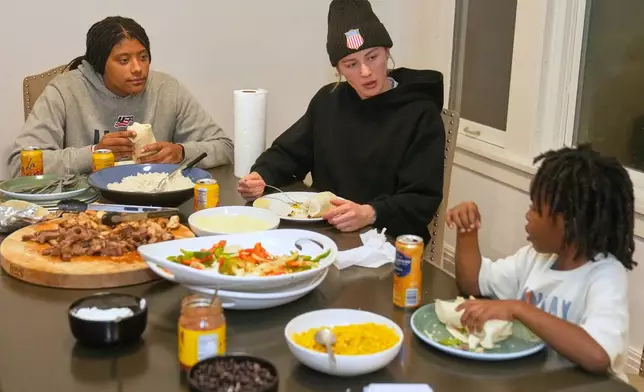
CLEVELAND HEIGHTS, Ohio (AP) — It was fajita night to celebrate Laila Edwards’ hockey homecoming when an excited shriek pierced the casual gathering in the brightly lit early 20th Century colonial she grew up in on a quiet, tree-lined street.

Four generations of the Edwards family turned to see a dumbstruck Laila and long-time friend and teammate Caroline Harvey huddled over a cell phone, breathlessly giggling, one “Oh, my God” after another.

More Images
Laila Edwards, left, the first Black woman to suit up for Team USA women's Olympic hockey, teammate Caroline Harvey, center, and Laila's nephew Shiloh Stewart, right, talk during a family dinner at her childhood home in Cleveland Heights, Ohio, Wednesday, Nov. 5, 2025. (AP Photo/Sue Ogrocki)
Laila Edwards, left, the first Black woman to suit up for Team USA women's Olympic hockey, teammate Caroline Harvey, center, and Laila's nephew Shiloh Stewart, right, talk during a family dinner at her childhood home in Cleveland Heights, Ohio, Wednesday, Nov. 5, 2025. (AP Photo/Sue Ogrocki)

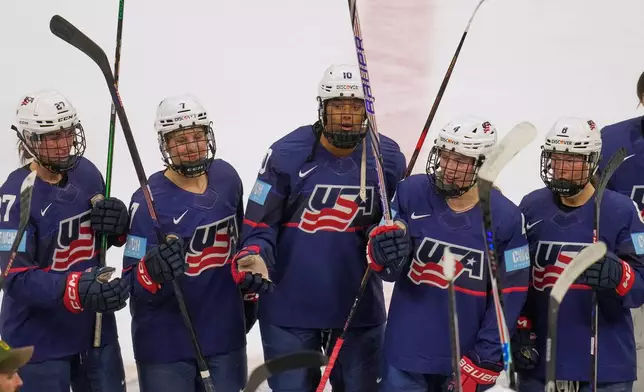
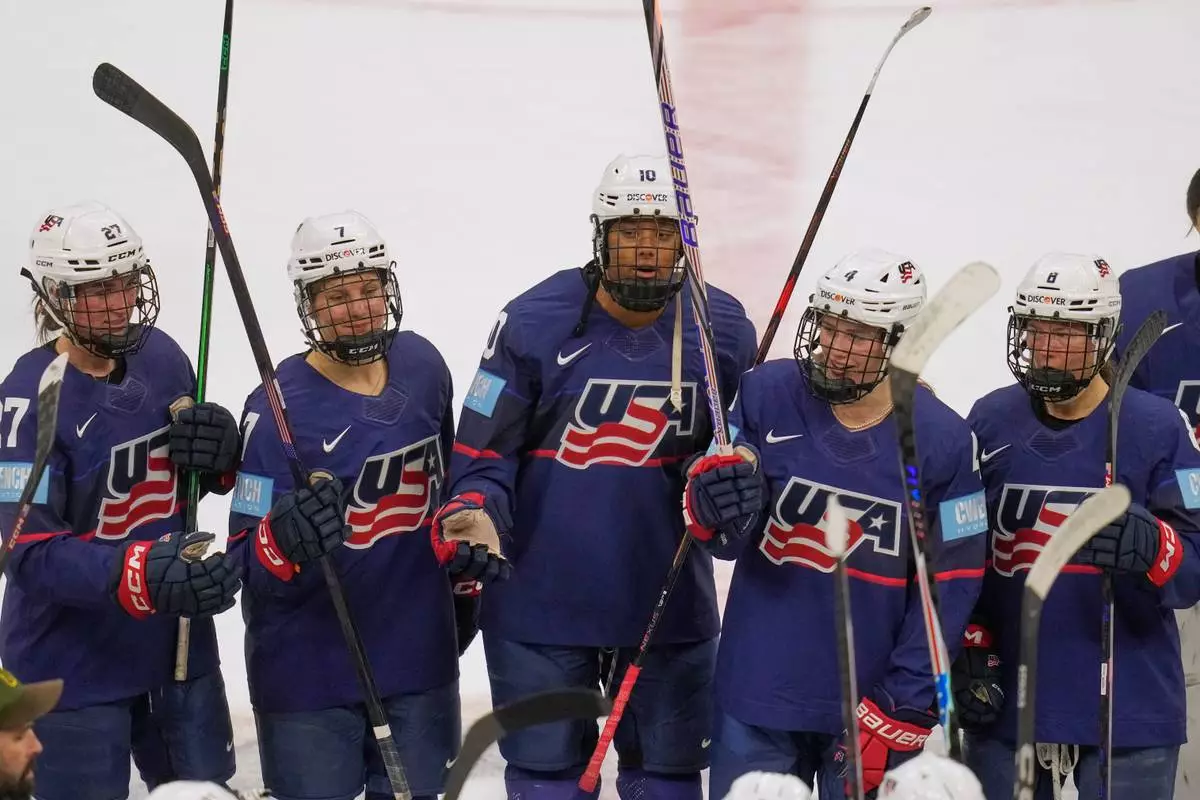
FILE - US's Taylor Heise (27), Lacey Eden (7), Laila Edwards (10) Caroline Harvey (4) and Haley Winn (8) celebrate with teammates after the US defeated Canada in a Rivalry Series women's hockey game Thursday, Nov. 6, 2025, in Cleveland. (AP Photo/Sue Ogrocki, File)
FILE - US's Taylor Heise (27), Lacey Eden (7), Laila Edwards (10) Caroline Harvey (4) and Haley Winn (8) celebrate with teammates after the US defeated Canada in a Rivalry Series women's hockey game Thursday, Nov. 6, 2025, in Cleveland. (AP Photo/Sue Ogrocki, File)

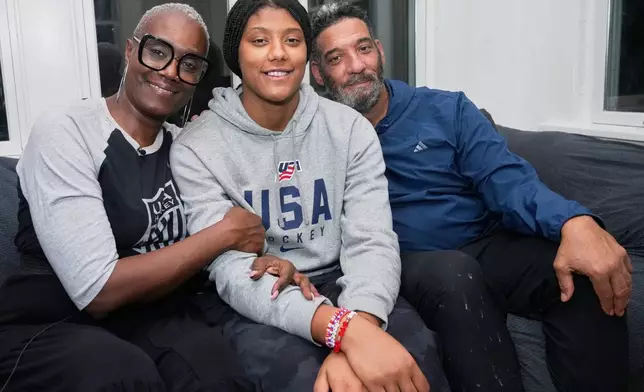
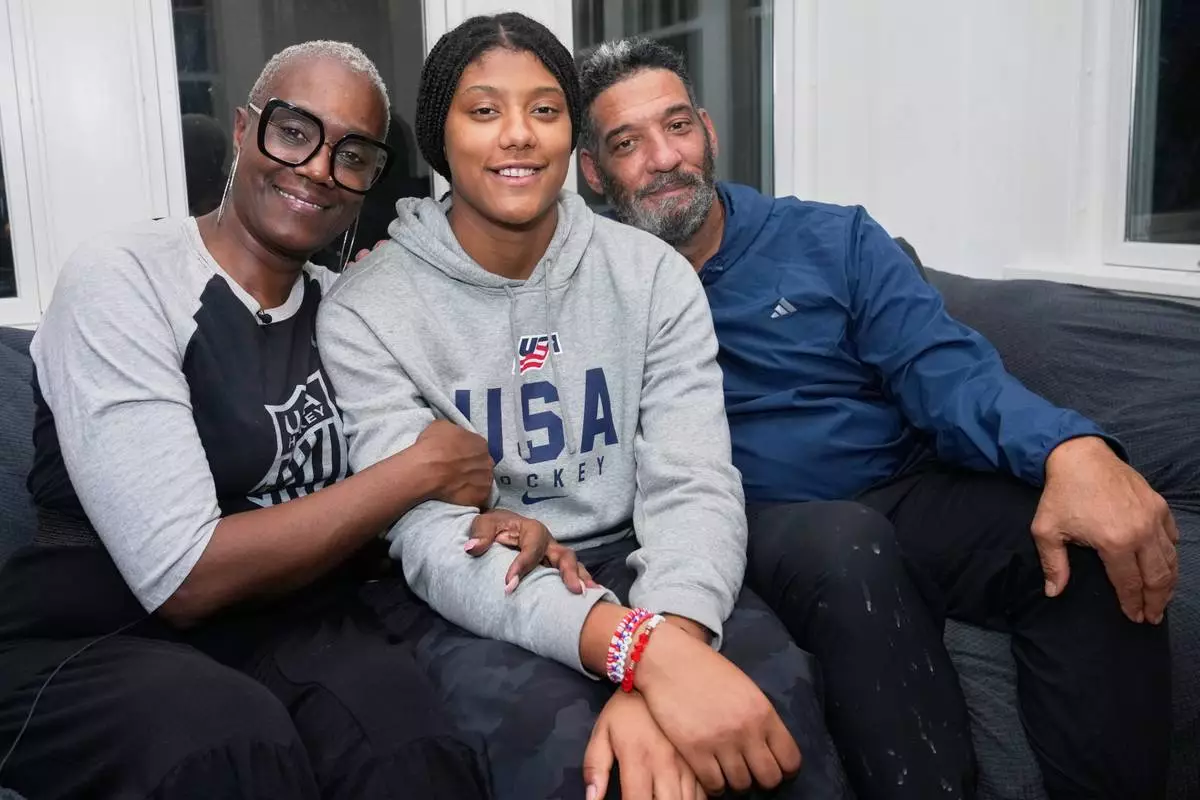
Laila Edwards, center, the first Black woman to suit up for Team USA women's Olympic hockey, poses for a photo with her parents, Charone Gray-Edwards, left, and Robert Edwards, right, in her childhood home in Cleveland Heights, Ohio, Wednesday, Nov. 5, 2025. (AP Photo/Sue Ogrocki)
Laila Edwards, center, the first Black woman to suit up for Team USA women's Olympic hockey, poses for a photo with her parents, Charone Gray-Edwards, left, and Robert Edwards, right, in her childhood home in Cleveland Heights, Ohio, Wednesday, Nov. 5, 2025. (AP Photo/Sue Ogrocki)

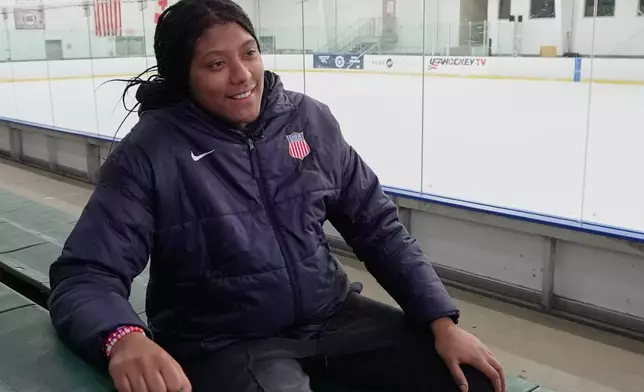
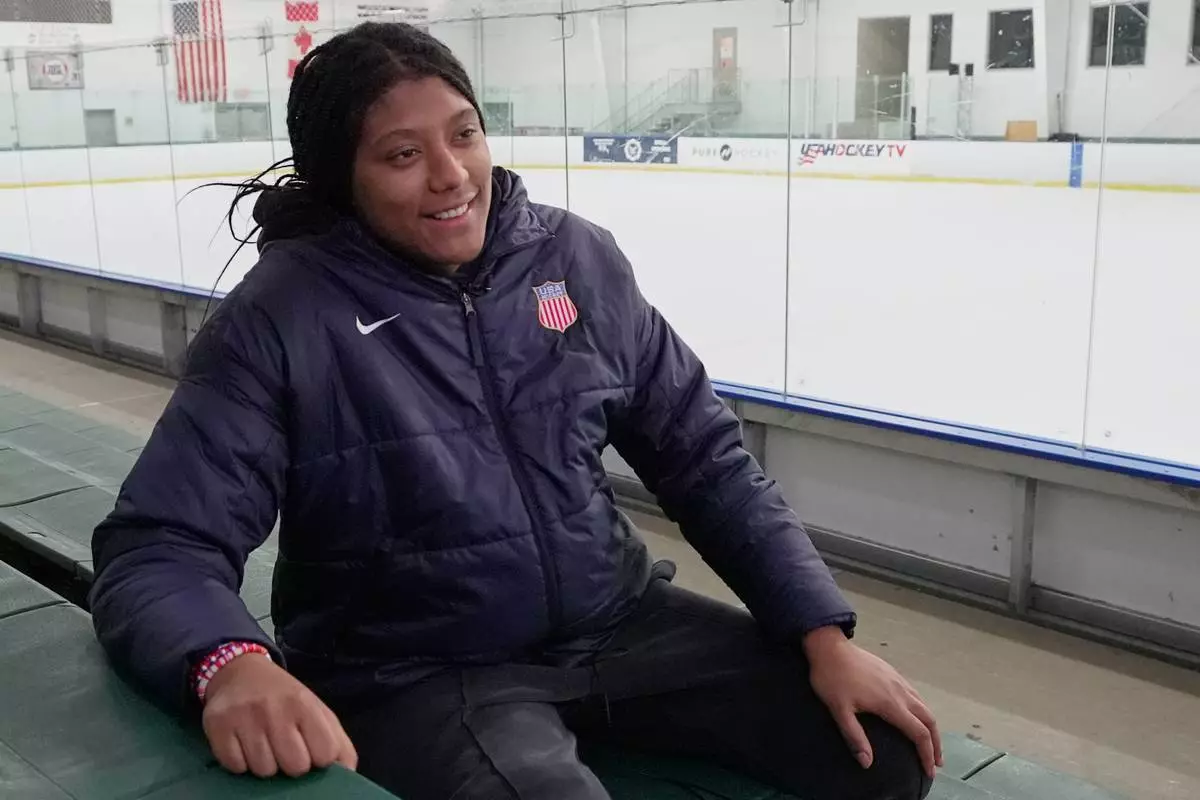
Laila Edwards, the first Black woman to suit up for Team USA women's Olympic hockey, is pictured during an interview following practice in a rink where she played youth hockey in the past, in Strongsville, Ohio, Tuesday, Nov. 4, 2025. (AP Photo/Sue Ogrocki)
Laila Edwards, the first Black woman to suit up for Team USA women's Olympic hockey, is pictured during an interview following practice in a rink where she played youth hockey in the past, in Strongsville, Ohio, Tuesday, Nov. 4, 2025. (AP Photo/Sue Ogrocki)

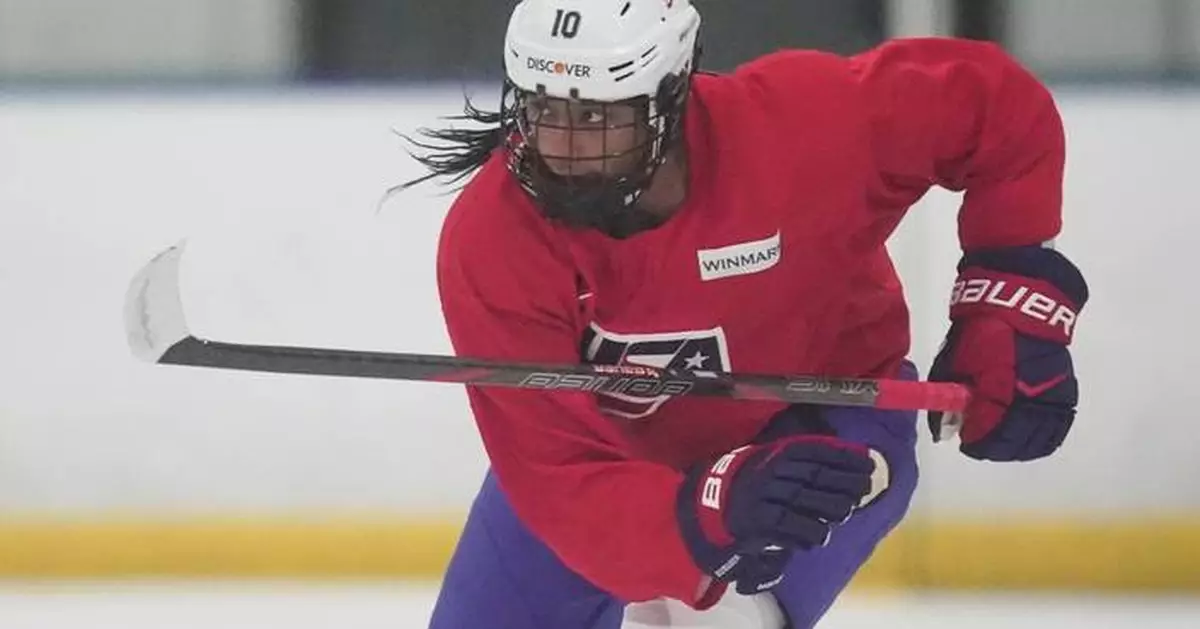
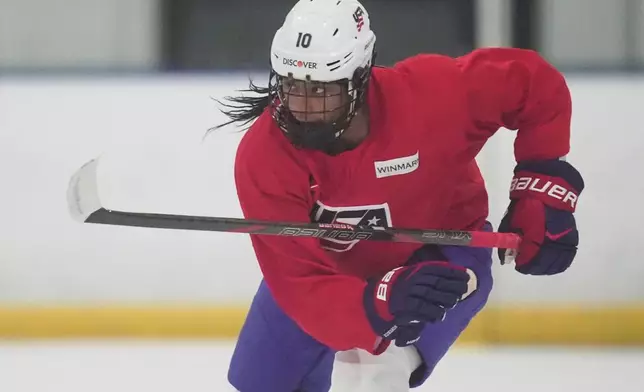
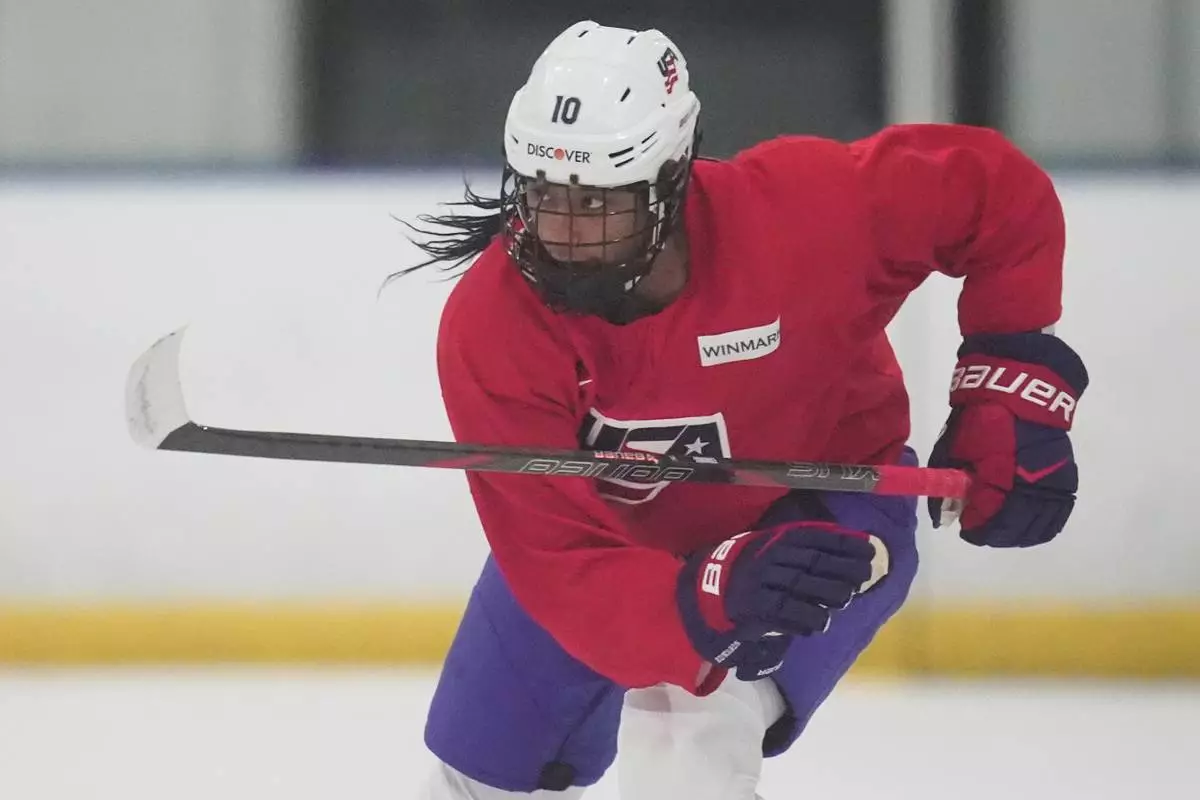
Laila Edwards, the first Black woman to suit up for Team USA women's Olympic hockey, participates in a practice, in a rink where she played youth hockey in the past, in Strongsville, Ohio, Tuesday, Nov. 4, 2025. (AP Photo/Sue Ogrocki)

Laila Edwards, the first Black woman to suit up for Team USA women's Olympic hockey, participates in a practice, in a rink where she played youth hockey in the past, in Strongsville, Ohio, Tuesday, Nov. 4, 2025. (AP Photo/Sue Ogrocki)

There, for all the world to see, was a picture Cleveland Cavaliers forward Larry Nance Jr. had posted on social media of him arriving for an NBA game wearing Edwards' No. 10 U.S. hockey jersey.

“Whoa,” said Edwards, well-versed in the city’s sports history even though she long ago left Cleveland to pursue a career in hockey.

“He’s born in Ohio. His dad played for the Cavs. Legend,” Edwards said. “I thought it was super cool for him to do that, when he didn’t have to.”

A day later in November, Edwards hit the ice at the same downtown arena, where she took the ceremonial opening face off and had an assist in a 4-1 Rivalry Series win over Canada.

Soon enough, Nance might not be the only one hopping aboard the Edwards bandwagon as she prepares to make her Olympic debut at the Milan Cortina Games next month. She will become the first Black female to represent the U.S. at the Olympics in hockey, and at 6-foot-1 (185 centimeters) and 195 pounds (88 kilograms), she is an imposing defender with a rare combination of having a hard shot, speed and deft play-making ability.

“Laila is the future of the sport,” said Hilary Knight, team captain and the face of U.S. women’s hockey. “I think you’re seeing someone who’s coming into her skill set and just scratching the surface.”

Edwards is so highly regarded that USA Hockey made a point to play in Cleveland in what served as a coming out party for the player completing her senior college season at top-ranked Wisconsin. She is only 21.

It was a four-day visit with practices at a rink Edwards knew well when she was growing up. It was also a chance to reconnect with her family, who have watched much of her development from afar. Edwards left Cleveland to play for an elite girls team in Pittsburgh, and spent high school at the Bishop Kearney Selects Academy in Rochester, New York, before moving on to Wisconsin.

“The idea of going from a 400-seat rink to the biggest sporting event in the world, it’s like, wow,” Edwards said. “It feels like a full-circle moment to be starting the launch of my Olympic career here in Cleveland with my family.”

Edwards got into hockey at 3, courtesy of her father, Robert. Her older brother, Bobby, first played, and she was joined by older sister Chayla, who also played at Wisconsin.

She developed at such a rapid pace that by 11, coaches suggested Edwards begin playing with girls two- and three years older. That prompted the decision to have her play for more established developmental programs, including Kearney, which has produced numerous high-caliber players including fellow Olympic teammates in Harvey, Haley Winn, Kristen Simms and Ava McNaughton.

“We thought she was ready because she was mature for her age. She was very solid educationally,” Robert Edwards said.

“The thing that we didn’t expect was to miss her as much as we did, and the loss of not seeing her grow up,” he added. “I don’t regret doing that, but that is something that I feel was not the best part of her going away.”

Edwards faced her share of challenges away from home, too. There were growth spurts — some five inches at Kearney — and there were sacrifices, such as having to skip her graduation to compete at the Under-18 world championships.

And there was being a Black athlete in a sport predominantly played by white players.

“To get through some of the things you have to get through in this sport, you’ve got to be strong,” Edwards said.

“There’s a lot that goes on in the locker room, outside, coaches, practice, fans,” she added, declining to go into details. “You definitely have to be strong. And I think it’s huge in terms of representation and being a role model.”

Little has fazed Edwards, a quality U.S. coach John Wroblewski called the player’s strength in whatever she's faced, including making the switch from forward to defender.

“She’s an inspiring person to be around,” Wroblewski said. “I think it’s just innate. It’s just Laila. She’s a gamer. She’s the real deal.”

In her U.S. national team debut at forward, Edwards was named MVP at the 2024 world championships in which the Americans lost the gold medal game to Canada. At worlds this past year, Edwards struggled making the transition to defense, though she still finished with a goal and three assists and won gold.

“I didn’t have my best tournament, but to me that wasn’t what it was all about. We won, and I learned a lot, so that was a win as well,” she said. “I think my expectations are a little higher now.”

Edwards has thrived on adversity.

“The word ‘challenge’ is fine because I don’t look at it as a negative. I see it as something that I can learn from,” she said. “So I’m always trying to push myself to be a great athlete and player. But more importantly, a good person, role model, teammate.”

Edwards sat squeezed between her two parents on a couch in the family’s den. In the living room, bookshelves displayed numerous plaques, trophies and medals she's won, with many more likely to come.

The future, however, could wait. On this night, what mattered to Robert and Charone Gray-Edwards was enjoying a few precious moments with their suddenly grown-up daughter set to step onto the world stage.

“We tell her we love her regardless. You’re not going to be perfect. You’re not always going to win. You’re not always going to be the top scorer,” Charone said. “But you’re always our Laila.”

AP Olympic coverage: https://apnews.com/hub/milan-cortina-2026-winter-olympics
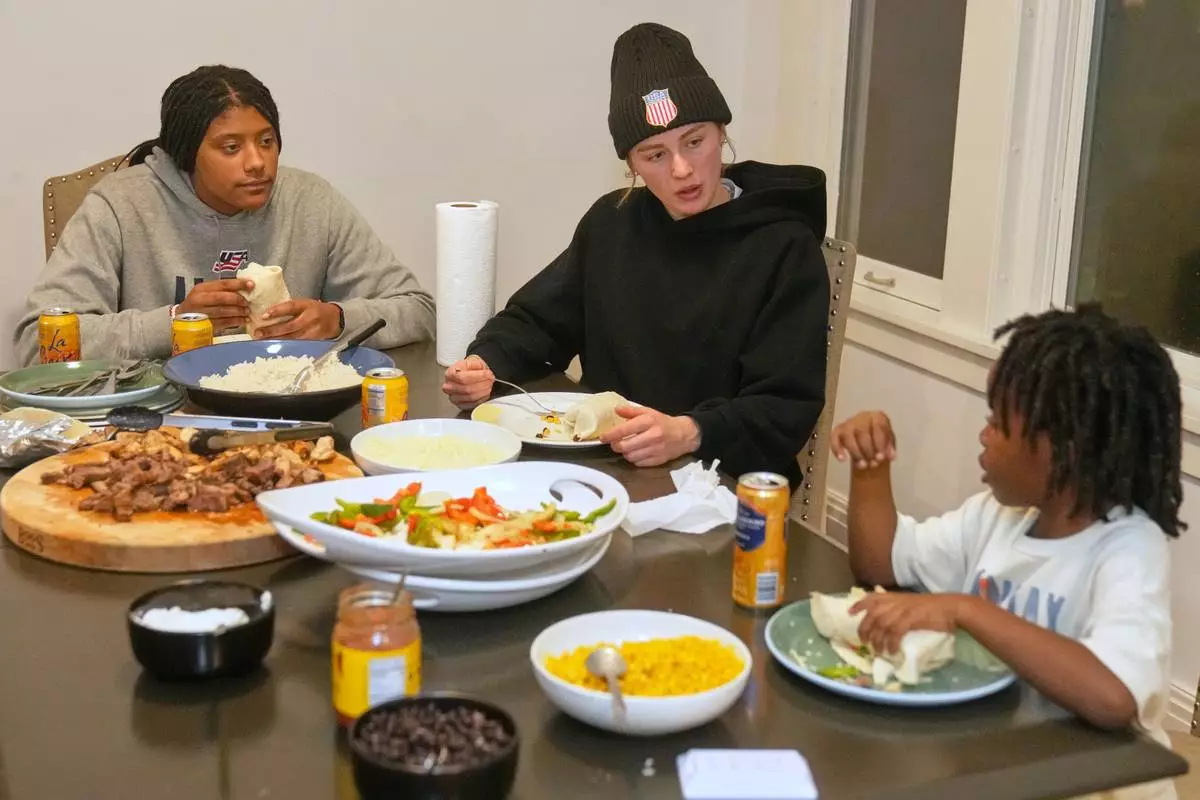
Laila Edwards, left, the first Black woman to suit up for Team USA women's Olympic hockey, teammate Caroline Harvey, center, and Laila's nephew Shiloh Stewart, right, talk during a family dinner at her childhood home in Cleveland Heights, Ohio, Wednesday, Nov. 5, 2025. (AP Photo/Sue Ogrocki)
Laila Edwards, left, the first Black woman to suit up for Team USA women's Olympic hockey, teammate Caroline Harvey, center, and Laila's nephew Shiloh Stewart, right, talk during a family dinner at her childhood home in Cleveland Heights, Ohio, Wednesday, Nov. 5, 2025. (AP Photo/Sue Ogrocki)

FILE - US's Taylor Heise (27), Lacey Eden (7), Laila Edwards (10) Caroline Harvey (4) and Haley Winn (8) celebrate with teammates after the US defeated Canada in a Rivalry Series women's hockey game Thursday, Nov. 6, 2025, in Cleveland. (AP Photo/Sue Ogrocki, File)
FILE - US's Taylor Heise (27), Lacey Eden (7), Laila Edwards (10) Caroline Harvey (4) and Haley Winn (8) celebrate with teammates after the US defeated Canada in a Rivalry Series women's hockey game Thursday, Nov. 6, 2025, in Cleveland. (AP Photo/Sue Ogrocki, File)

Laila Edwards, center, the first Black woman to suit up for Team USA women's Olympic hockey, poses for a photo with her parents, Charone Gray-Edwards, left, and Robert Edwards, right, in her childhood home in Cleveland Heights, Ohio, Wednesday, Nov. 5, 2025. (AP Photo/Sue Ogrocki)
Laila Edwards, center, the first Black woman to suit up for Team USA women's Olympic hockey, poses for a photo with her parents, Charone Gray-Edwards, left, and Robert Edwards, right, in her childhood home in Cleveland Heights, Ohio, Wednesday, Nov. 5, 2025. (AP Photo/Sue Ogrocki)

Laila Edwards, the first Black woman to suit up for Team USA women's Olympic hockey, is pictured during an interview following practice in a rink where she played youth hockey in the past, in Strongsville, Ohio, Tuesday, Nov. 4, 2025. (AP Photo/Sue Ogrocki)
Laila Edwards, the first Black woman to suit up for Team USA women's Olympic hockey, is pictured during an interview following practice in a rink where she played youth hockey in the past, in Strongsville, Ohio, Tuesday, Nov. 4, 2025. (AP Photo/Sue Ogrocki)

Laila Edwards, the first Black woman to suit up for Team USA women's Olympic hockey, participates in a practice, in a rink where she played youth hockey in the past, in Strongsville, Ohio, Tuesday, Nov. 4, 2025. (AP Photo/Sue Ogrocki)

Laila Edwards, the first Black woman to suit up for Team USA women's Olympic hockey, participates in a practice, in a rink where she played youth hockey in the past, in Strongsville, Ohio, Tuesday, Nov. 4, 2025. (AP Photo/Sue Ogrocki)

WASHINGTON (AP) — Facing jittery global markets and drooping poll numbers since launching a war on Iran, President Donald Trump has cycled from calls for “unconditional surrender” to sounding amenable to an end state in which Iran trades one hard-line ayatollah for another.

Shifting comments from the Republican president and his top aides are adding to the precariousness of the 12-day-old conflict, which is impacting nearly every corner of the Middle East and causing economic tremors around the globe. With neither side budging, the war is now on an unpredictable path — one in which a credible endgame is still unclear.

Defense Secretary Pete Hegseth on Tuesday told reporters it's up to Trump “whether it’s the beginning, the middle or the end” of the war. Trump, during the course of one speech at a House Republican gathering on Monday, went from calling the war a “short-term excursion” that could end soon to proclaiming “we haven’t won enough."

The vacillation has fueled criticism from those who say Trump lacks a clear goal. “They didn’t have a plan," Sen. Mark Kelly, D-Ariz., told reporters. "They have no timeline. And because of that, they have no exit strategy.”

Since ordering the Iran bombardment, Trump has continually shifted his timelines and goals for his war against Iran, a crosscurrent of rhetoric that has delivered more questions than answers.

Over the last few days, Trump has called for the “unconditional surrender" of Iran's leaders, while suggesting he's already succeeded in achieving his objective of decimating Iran’s military.

At the same time, Trump's team has sought to soothe anxious Americans that this won't be a long, drawn-out conflict, even as the president has insisted he hasn't ruled out the option of putting U.S. troops on the ground.

The U.S. military says that it has effectively destroyed the Iranian navy and made huge strides in defanging Iran’s ability to launch missiles and drones at its neighbors throughout the region. And yet, the critical Strait of Hormuz, through which roughly 20% of the world’s oil passes on a typical day, remains effectively closed to business, and Iranian leaders remain unbowed.

The Revolutionary Guard vowed Iran would not allow “a single liter of oil” through the vital waterway until the United States stops its bombing campaign. And Ali Larijani, Iran’s top national security official, offered a menacing message on Tuesday after Trump had threatened to attack Iran “TWENTY TIMES HARDER” if Tehran stopped oil flowing through the strait.

“The sacrificial nation of Iran doesn’t fear your empty threats,” Larijani wrote on X. “Even those bigger than you couldn’t eliminate Iran. Be careful not to get eliminated yourself.”

Trump has struggled to make his case to Americans about why preemptive action against Iran was necessary and how it squares with his pledge to keep America out of the “forever wars” of the last two decades that he's bemoaned for costing too much money and too many American lives. Thus far, eight U.S. troops have been killed and about 140 injured in the retaliatory salvos from Iran throughout the region.

One of several reasons Trump has offered to justify launching the war is that he had a “feeling” that Iran was getting set to attack the United States.

White House press secretary Karoline Leavitt slightly amended that position, telling reporters that the president “had a feeling” that was “based on fact.”

However, Pentagon officials in private briefings have told congressional staffers that the U.S. does not have intelligence indicating that Iran was planning to preemptively attack the U.S.

Recent polling shows Trump's decision to attack Iran hasn't come with the rallying-around-the-flag effect that has typically accompanied the start of recent U.S. wars.

About half of voters in Quinnipiac and Fox News polls said the U.S. military action in Iran makes the U.S. “less safe,” while only about 3 in 10 in each poll said it made the country safer. A CNN poll found about half of U.S. adults thought the military action would make Iran “more of a threat” to the U.S., while only about 3 in 10 thought it would lessen the danger.

In that CNN poll, about 6 in 10 U.S. adults said they trusted Trump “not much” or “not at all” to make the right decisions about the U.S. use of force in Iran.

European allies are treading carefully after British Prime Minister Keir Starmer and Spain's Prime Minister Pedro Sánchez faced the wrath of Trump, who deemed them not sufficiently supportive in backing his war of choice.

But even German Chancellor Friedrich Merz, who has been broadly supportive of the U.S.-Israeli campaign against Iran, said on Tuesday that “more questions arise with every day of war.”

“Above all, we’re concerned that there is apparently no joint plan for how this war can be brought quickly to a convincing end,” Merz said.

Merz stressed that “Germany and Europe have no interest in an endless war” or in Iran’s territorial integrity disintegrating.

The president has chosen to deflect responsibility for the bombing of a girls' school in southern Iran on the first day of the conflict, a strike that killed at least 165 people.

Trump on Saturday blamed the attack on Iran, saying its security forces are "very inaccurate" with munitions.

On Monday, after the investigative group Bellingcat posted verified video that showed a U.S. Tomahawk cruise missile hitting a Revolutionary Guard facility near the school, causing the explosion, Trump again insisted it could have been Iran's fault but said that he would accept whatever an ongoing U.S. investigation into the matter might find.

The president erroneously claimed that Tehran had access to Tomahawks, a U.S.-manufactured weapon system that is only available to the U.S. and a few close allies.

Asked by a reporter, Leavitt didn’t directly answer why Trump falsely asserted that Iran has access to the U.S.-made missile.

Instead, she responded in part that “the president has a right to share his opinions with the American public” while noting “he has said he’ll accept the conclusion of that investigation.”

Senate Minority Leader Chuck Schumer, D-N.Y., told reporters that Trump's claim “is beyond asinine.”

“Again, he says whatever pops into his head no matter what the truth is," Schumer said. “And we all know he lies, but on something as formidable as this, it’s appalling.”

Sen. Kevin Cramer, a North Dakota Republican, was among Trump allies gently making the case that it was important for the Trump administration to clarify what happened to the school.

Cramer said the military must “do everything you can to eliminate those mistakes going forward.”

“But you also can’t undo it," he added.

Associated Press writers Joey Cappelletti, Ben Finley and Linley Sanders in Washington and Geir Moulson in Berlin contributed reporting.

White House press secretary Karoline Leavitt speaks with reporters in the James Brady Press Briefing Room at the White House, Tuesday, March 10, 2026, in Washington. (AP Photo/Julia Demaree Nikhinson)

White House press secretary Karoline Leavitt speaks with reporters in the James Brady Press Briefing Room at the White House, Tuesday, March 10, 2026, in Washington. (AP Photo/Julia Demaree Nikhinson)

Mark Kelly, D-Ariz., leaves after a closed door briefing on the Iran war before the Senate Armed Services Committee at the Capitol Tuesday, March 10, 2026, in Washington. (AP Photo/Jose Luis Magana)

Mark Kelly, D-Ariz., leaves after a closed door briefing on the Iran war before the Senate Armed Services Committee at the Capitol Tuesday, March 10, 2026, in Washington. (AP Photo/Jose Luis Magana)

Defense Secretary Pete Hegseth listens as President Donald Trump speaks to reporters while traveling aboard Air Force One en route from Dover Air Force Base, Del., to Miami, Saturday, March 7, 2026. (AP Photo/Mark Schiefelbein)

Defense Secretary Pete Hegseth listens as President Donald Trump speaks to reporters while traveling aboard Air Force One en route from Dover Air Force Base, Del., to Miami, Saturday, March 7, 2026. (AP Photo/Mark Schiefelbein)

President Donald Trump speaks at the Republican Members Issues Conference, Monday, March 9, 2026, at Trump National Doral Miami in Doral, Fla. (AP Photo/Mark Schiefelbein)

President Donald Trump speaks at the Republican Members Issues Conference, Monday, March 9, 2026, at Trump National Doral Miami in Doral, Fla. (AP Photo/Mark Schiefelbein)

Recommended Articles