The technology sector delivered a standout performance in China's capital markets in 2025, with hard technology becoming the core weighting for capital valuations, reflecting the innovative essence of the Chinese economy.
This trend traces back to a historic moment in the A-share market: at 13:38 on August 27, 2025, the share price of China's leading AI chipmaker Cambricon surged to 1,462 yuan (about 210 U.S. dollars) per share intraday, making it the new "stock king" of the A-share market.
This breakthrough was not merely a surge in capital market for a single company -- it signified a structural shift where the core of capital market valuations tilted decisively towards hard technology.
"Hard technology has become the core driving force of China's economic growth, which will motivate more companies to throw themselves into the research, development, and advancement of hard core technologies," said Qian Jun, executive dean of the Fanhai International School of Finance (FISF) at Fudan University.
Behind the change in the "stock king" title lies the intense competition in hard technology and a deep restructuring of capital allocation.
On October 28, 2025, the first batch of newly registered companies of the sci-tech innovation board's sci-tech growth tier -- Healthgen Biotech, Xi'an ESWIN Material Technology, and BeBetter Med Inc. -- were officially listed, marking the first listing of unprofitable companies on the A-share market in over two years.
To date, the STAR Market has supported the listings of 60 unprofitable companies, of which 22 have since made profits and had their special identifier "U" removed. This "U-removal" not only signifies financial improvement but also reflects technological breakthroughs by these companies and their increased market recognition.
"The restart of listings for unprofitable companies of the sci-tech growth tier signals an upgrade in the A-share market's support for hard tech enterprises, moving from mere tolerance to precise empowerment. This institutional innovation alleviates the pains of hard tech firms, such as high research and development inputs and long profitability cycles, and is conducive to directing capital flow towards the country's strategically critical areas of core technology," said Lei Zhiyong, director of equity investment of Morgan Stanley Investment Management.
In 2025, more than 600 companies were listed on the A-share STAR Market, with total market capitalization exceeding 10 trillion yuan (about 1.44 trillion U.S. dollars), forming a comprehensive "hard tech" industrial chain cluster covering integrated circuits, biopharmaceuticals, and new energy.
Of them, high-tech companies in manufacturing, and scientific research and technology services saw the most pronounced changes in market value, with total capitalization increasing by 33.3 percent and 32.1 percent, respectively, from the beginning of 2025.
Experts say precise top-level policy guidance played an instrumental role in facilitating the transformation in the market value landscape. A series of measures, including the establishment of the STAR Market, reforms to the ChiNext board, and the optimization of delisting mechanisms, have progressively facilitated a high-level circulation between technology, capital, and the real economy.
"Reform measures like the establishment of the sci-tech growth tier provide crucial capital support for enterprises, while allowing investors to share the dividends of technological progress, and cultivate a culture of patient capital that champions innovation and tolerates failure. This will offer robust financial support for fostering new quality productive forces," said Guan Tao, chief economist with BOC International.
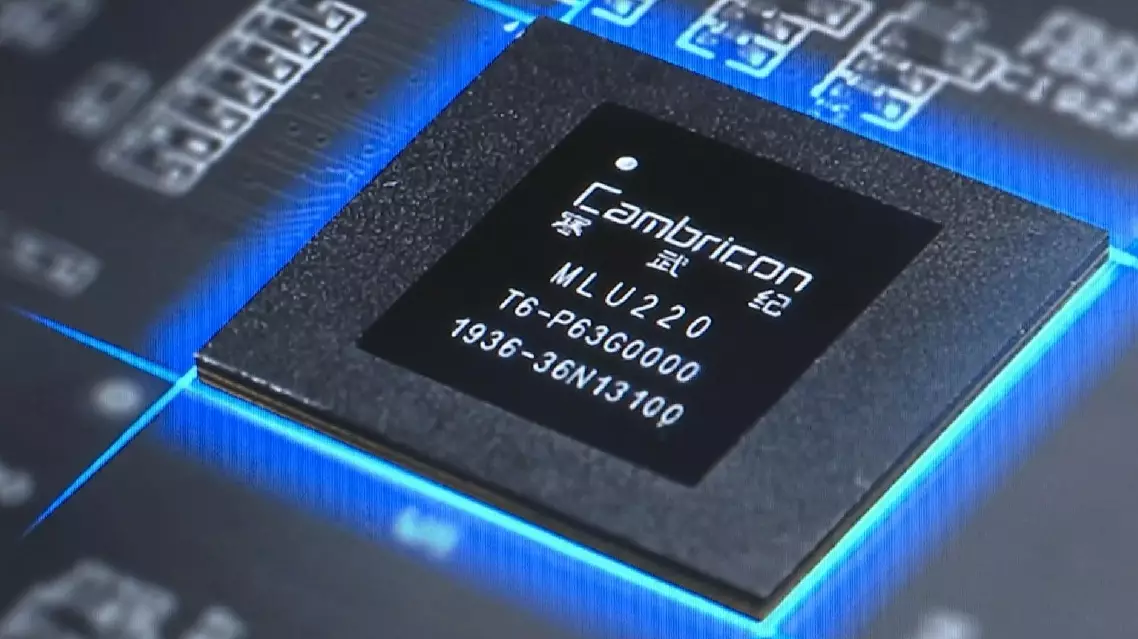
China's A-share market valuation inclines to hard tech