Skip to Content Facebook Feature Image

A TV show about the NYPD is now a legal drama starring the city and Dr. Phil’s son

ENT

A TV show about the NYPD is now a legal drama starring the city and Dr. Phil’s son
ENT

ENT

A TV show about the NYPD is now a legal drama starring the city and Dr. Phil’s son

2026-01-23 11:01 Last Updated At:01-24 12:54

NEW YORK (AP) — A reality TV series meant to spotlight the New York Police Department has spawned a real-life legal drama involving the city and the show’s producer, Jordan McGraw — the son of TV’s “Dr. Phil” McGraw.

The city sued the younger McGraw and his production company this week for breach of contract and obtained a court order that blocks them, at least temporarily, from selling or disseminating any footage from the unfinished and unaired show, tentatively titled “Behind the Badge.”

More Images
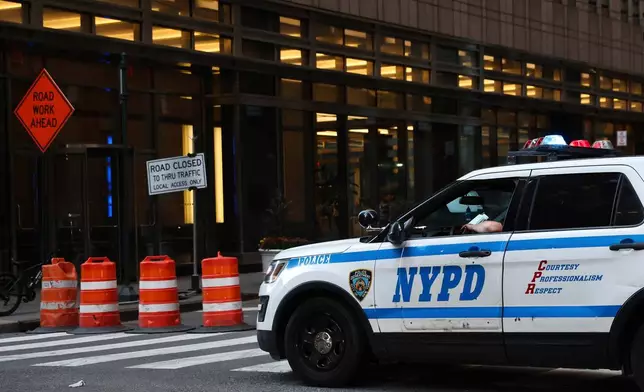
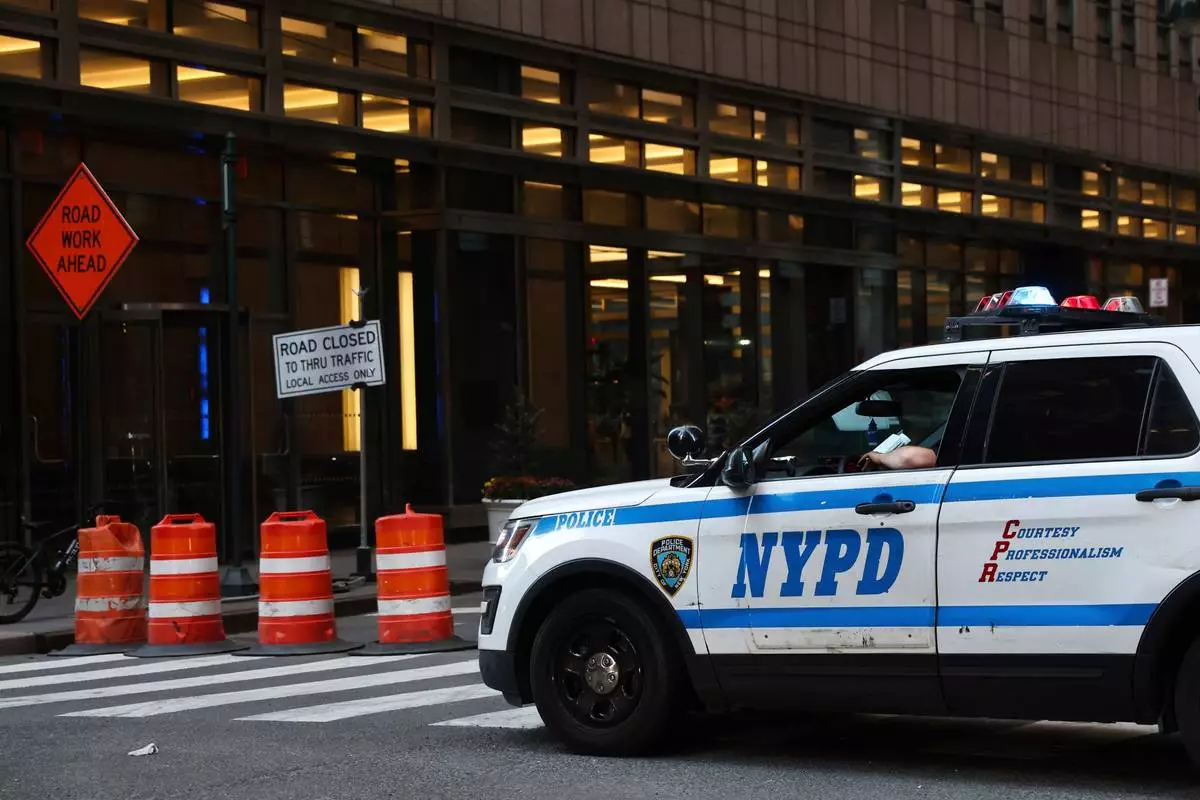
FILE - An NYPD cruiser sits at the intersection of a Midtown street closed due to construction, Nov. 7, 2024, in New York. (AP Photo/Heather Khalifa, File)
FILE - An NYPD cruiser sits at the intersection of a Midtown street closed due to construction, Nov. 7, 2024, in New York. (AP Photo/Heather Khalifa, File)

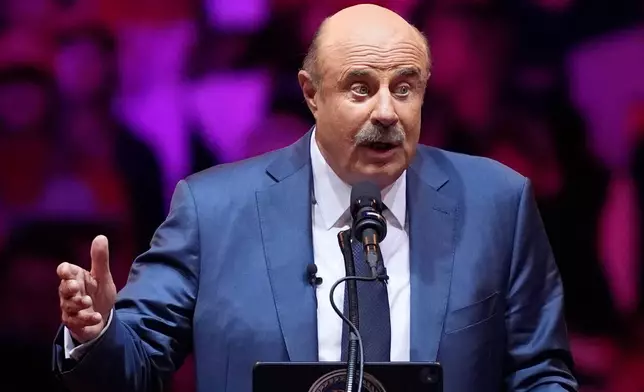
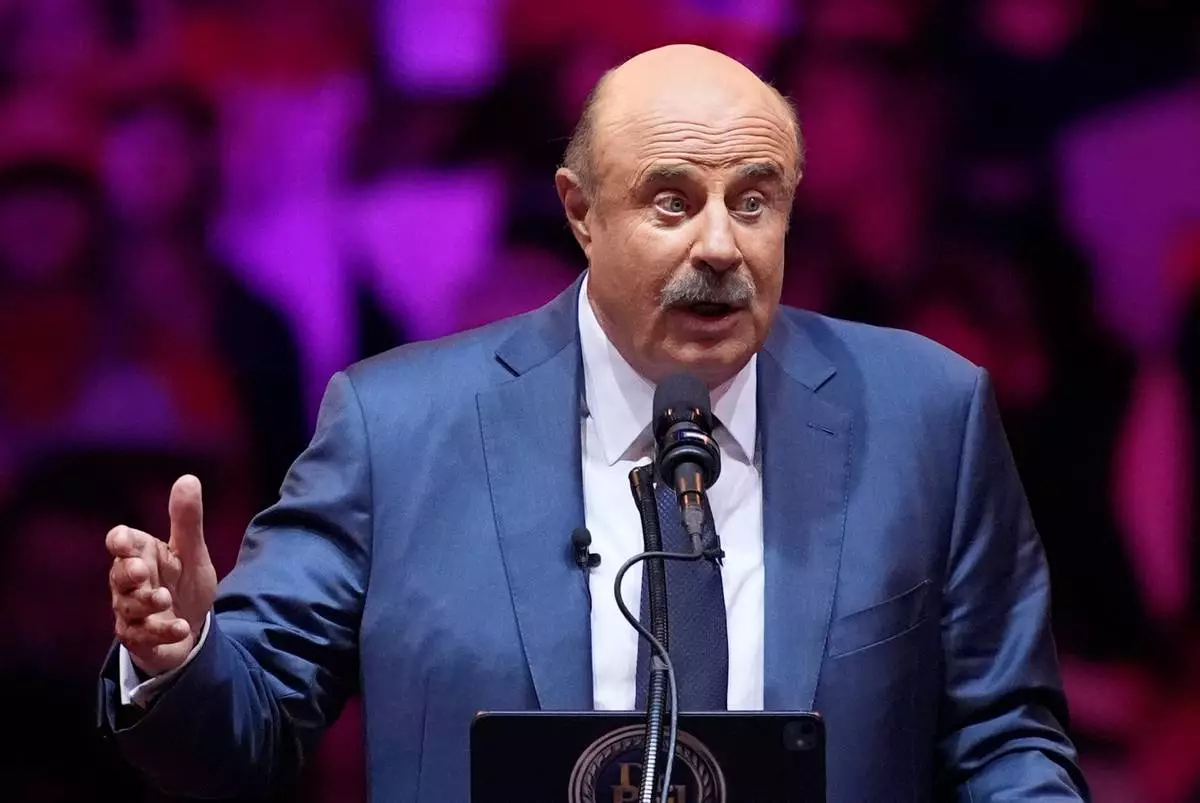
FILE - Dr. Phil speaks before Republican presidential nominee former President Donald Trump at a campaign rally at Madison Square Garden, Oct. 27, 2024, in New York. (AP Photo/Evan Vucci, File)
FILE - Dr. Phil speaks before Republican presidential nominee former President Donald Trump at a campaign rally at Madison Square Garden, Oct. 27, 2024, in New York. (AP Photo/Evan Vucci, File)

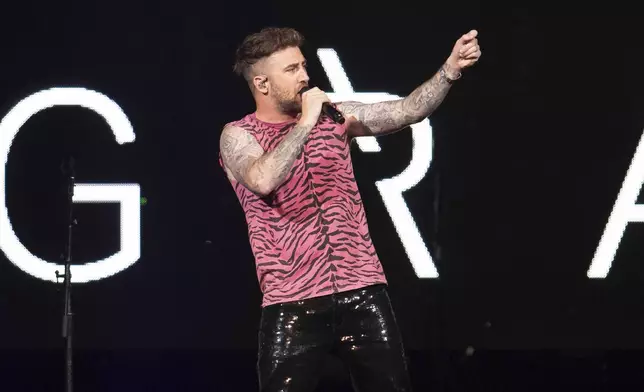
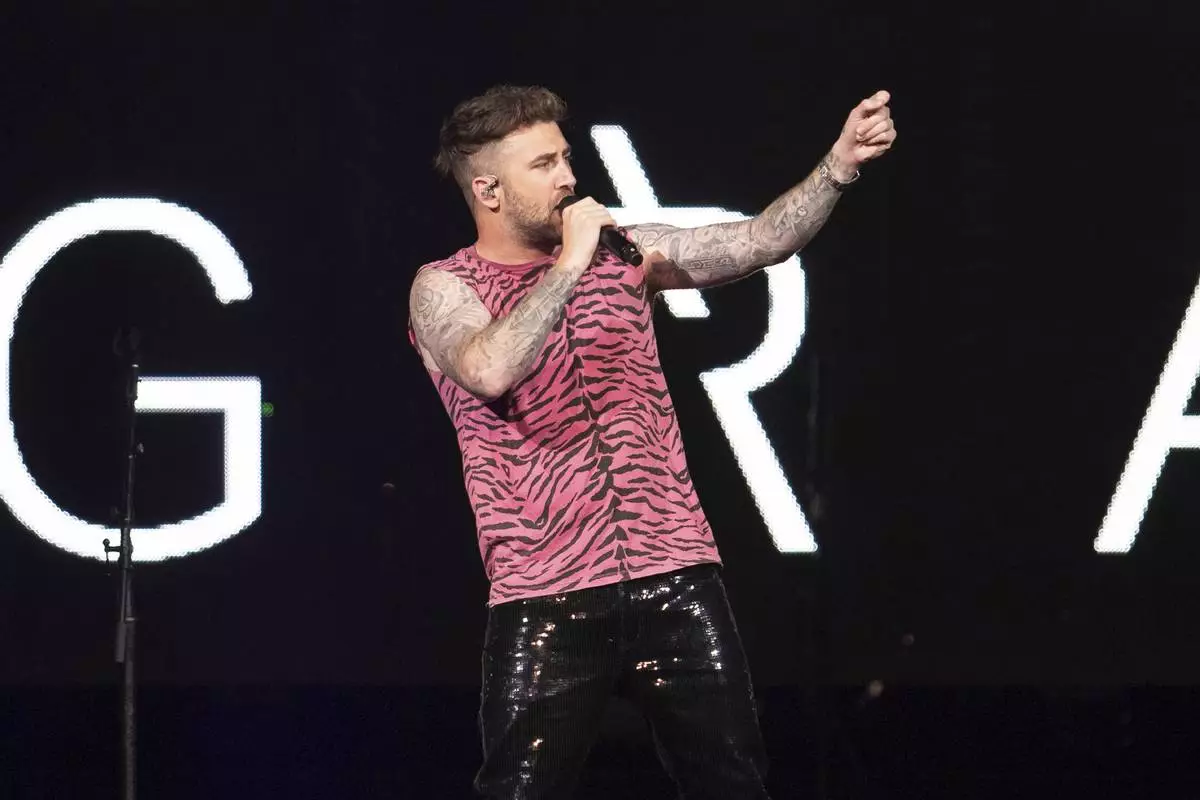
FILE - Singer Jordan McGraw performs on stage as an opening act for The Jonas Brothers "Happiness Begins" tour at the Capitol One Arena, Aug. 15, 2019, in Washington. (Photo by Brent N. Clarke/Invision/AP, File)
FILE - Singer Jordan McGraw performs on stage as an opening act for The Jonas Brothers "Happiness Begins" tour at the Capitol One Arena, Aug. 15, 2019, in Washington. (Photo by Brent N. Clarke/Invision/AP, File)

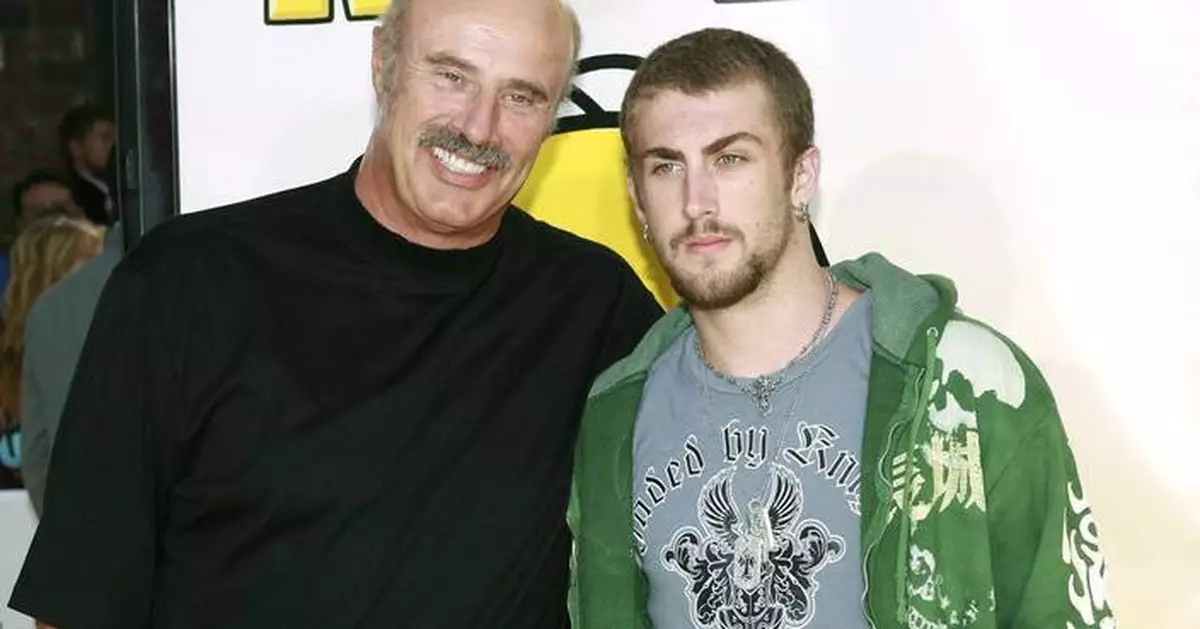
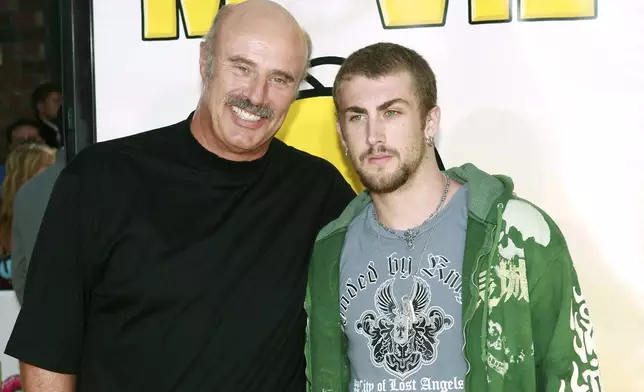
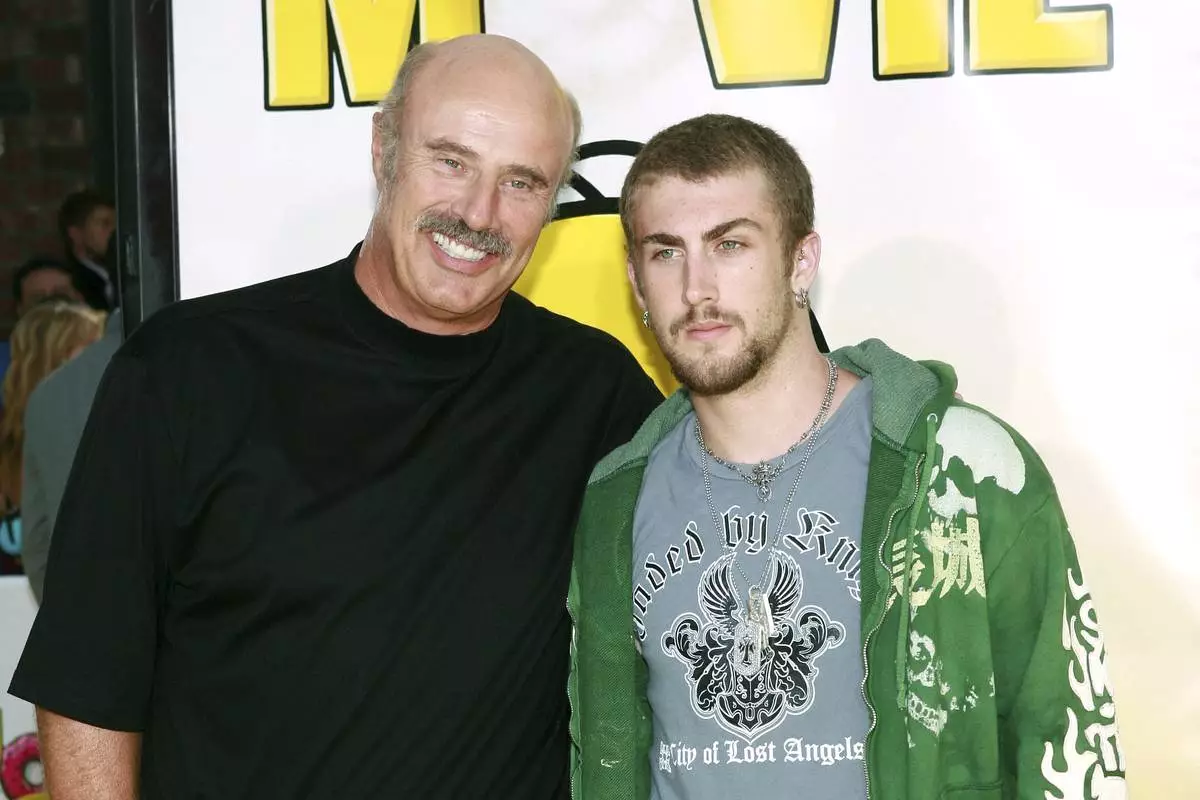
FILE - Dr. Phil McGraw, left, and his son, Jordan McGraw, arrive at the premiere of 'The Simpsons Movie' in Los Angeles, July 24, 2007. (AP Photo/Matt Sayles, File)

FILE - Dr. Phil McGraw, left, and his son, Jordan McGraw, arrive at the premiere of 'The Simpsons Movie' in Los Angeles, July 24, 2007. (AP Photo/Matt Sayles, File)

"Dr. Phil" McGraw— a clinical psychologist turned TV personality — hosted the series, interviewing officials and showing up to crime scenes. Episodes were slated to air on his MeritTV cable and streaming channels, where he'd previously done segments featuring the police department.

On Thursday, McGraw’s lawyers filed to move the case from New York state court to federal court.

The city abandoned “Behind the Badge” late last year, hours before then-Mayor Eric Adams ceded City Hall to Zohran Mamdani, after saying that it had expressed concerns to McGraw about the documentary-style show’s quality and content.

Episode “rough cuts” provided to the city by McGraw’s company, McGraw Media, were mostly “unedited footage” dumps and included material not allowed under McGraw’s production agreement with the city, such as discussions of sensitive operations and the identities of undercover officers, crime victims and witnesses, the lawsuit said.

“Intended to highlight the extraordinary work of the NYPD” with special behind-the-scenes access, “Behind the Badge” at times portrayed the nation’s largest police force negatively, violating the agreement, the lawsuit said.

Jordan McGraw and McGraw Media have since “disavowed their obligations” and attempted to wrest editorial control over the project from the city, “risking immediate and irreparable harm” to the city, the lawsuit said.

Chip Babcock, a lawyer for Jordan McGraw and McGraw Media, said the lawsuit came as a surprise “as publication of any programming was not imminent." McGraw Media, he said, “had worked with the city to address the edits requested" and is willing to continue to do so. The company will seek to remove the court order as soon as possible, Babcock said, calling it a presumptively unconstitutional prior restraint.

New York City partnered with McGraw Media on “Behind the Badge” last April, inking a three-year contract a day after a federal judge dismissed federal corruption charges against Adams. The case went away, in part, because the Justice Department had wanted the mayor’s help with President Donald Trump’s immigration crackdown.

Last week, WNBC-TV reported that Adams' campaign paid $500,000 for another Jordan McGraw company, Fairfax Digital, to produce social media ads.

Adams defended Jordan McGraw’s work on “Behind the Badge," writing in a social media post on Wednesday that he “brought exceptional talent in revealing the inside story of the dangers NYPD officers face every day.”

“He and his team meticulously addressed every concern raised by City Hall,” Adams wrote. “I’m proud that the work they did tells the real story of our brave police officers. Heroes don’t wear capes, they wear blue uniforms. I understood that. I hope America will get to see that too.”

“Dr. Phil” McGraw, who hosted a “Behind the Badge” segment on his daytime talk show, made waves last year when he and a camera crew embedded with U.S. Immigration and Customs Enforcement agents for raids in Chicago and Los Angeles.

In a precursor to a show now pitting the city against his son, he went on a ride-along with the NYPD in 2024 for a segment on his MeritTV show “Dr. Phil Primetime.” In it, he spoke with officers at police headquarters and interviewed two top officials, including former Deputy Mayor for Public Safety Kaz Daughtry and former Chief of Department John Chell. Dr. Phil’s company, Merit Street Media, filed for bankruptcy last July.

The “Behind the Badge” contract, a five-page production agreement signed by Jordan McGraw and Adams’ chief of staff Camille Joseph Varlack, called for McGraw Media to produce up to 17 episodes per year, but gave the city the right to opt-out by Dec. 31, 2025, the last day of Adams’ term.

On that date, Varlack told McGraw in a letter that the city was “no longer able to fulfill its obligations” to the project. She outlined concerns with the production process, including shoddy editing and the inclusion of content that the city had found objectionable in “rough cuts.”

Under the production agreement, the city reserved the right to nix what it deemed “Non-Usable Content,” including inaccurate or confidential material, footage that revealed investigative techniques and anything that could compromise public safety or public trust.

Among other things, the lawsuit said, the show contained footage of an officer inputting a security code at a police station entrance, discussions of encrypted police communications and the unblurred faces of people who were arrested by police but who have not yet been tried or convicted of crimes.

In her letter, Varlack warned McGraw that releasing any such footage would violate the contract.

According to the lawsuit, McGraw Media indicated that it would not accept any of the city’s edits and that it intended to distribute the flagged material and was looking for a buyer to air the show.
FILE - An NYPD cruiser sits at the intersection of a Midtown street closed due to construction, Nov. 7, 2024, in New York. (AP Photo/Heather Khalifa, File)
FILE - An NYPD cruiser sits at the intersection of a Midtown street closed due to construction, Nov. 7, 2024, in New York. (AP Photo/Heather Khalifa, File)

FILE - Dr. Phil speaks before Republican presidential nominee former President Donald Trump at a campaign rally at Madison Square Garden, Oct. 27, 2024, in New York. (AP Photo/Evan Vucci, File)
FILE - Dr. Phil speaks before Republican presidential nominee former President Donald Trump at a campaign rally at Madison Square Garden, Oct. 27, 2024, in New York. (AP Photo/Evan Vucci, File)

FILE - Singer Jordan McGraw performs on stage as an opening act for The Jonas Brothers "Happiness Begins" tour at the Capitol One Arena, Aug. 15, 2019, in Washington. (Photo by Brent N. Clarke/Invision/AP, File)
FILE - Singer Jordan McGraw performs on stage as an opening act for The Jonas Brothers "Happiness Begins" tour at the Capitol One Arena, Aug. 15, 2019, in Washington. (Photo by Brent N. Clarke/Invision/AP, File)

FILE - Dr. Phil McGraw, left, and his son, Jordan McGraw, arrive at the premiere of 'The Simpsons Movie' in Los Angeles, July 24, 2007. (AP Photo/Matt Sayles, File)

FILE - Dr. Phil McGraw, left, and his son, Jordan McGraw, arrive at the premiere of 'The Simpsons Movie' in Los Angeles, July 24, 2007. (AP Photo/Matt Sayles, File)

CAIRO (AP) — The Iranian security agents came at 2 a.m., pulling up in a half-dozen cars outside the home of the Nakhii family. They woke up the sleeping sisters, Nyusha and Mona, and forced them to give the passwords for their phones. Then they took the two away.

The women were accused of participating in the nationwide protests that shook Iran a week earlier, a friend of the pair told The Associated Press, speaking on condition of anonymity for her security as she described the Jan. 16 arrests.

Such arrests have been happening for weeks following the government crackdown last month that crushed the protests calling for the end of the country’s theocratic rule. Reports of raids on homes and workplaces have come from major cities and rural towns alike, revealing a dragnet that has touched large swaths of Iranian society. University students, doctors, lawyers, teachers, actors, business owners, athletes and filmmakers have been swept up, as well as reformist figures close to President Masoud Pezeshkian.

They are often held incommunicado for days or weeks and prevented from contacting family members or lawyers, according to activists monitoring the arrests. That has left desperate relatives searching for their loved ones.

The U.S.-based Human Rights Activists News Agency has put the number of arrests at more than 50,000. The AP has been unable to verify the figure. Tracking the detainees has been difficult since Iranian authorities imposed an internet blackout, and reports leak out only with difficulty.

Other activist groups outside Iran have also been working to document the sweeps.

“Authorities continue to identify people and detain them,” said Shiva Nazarahari, an organizer with one of those groups, the Committee for Monitoring the Status of Detained Protesters.

So far, the committee has verified the names of more than 2,200 people who were arrested, using direct reports from families and a network of contacts on the ground. The arrestees include 107 university students, 82 children as young as 13, as well as 19 lawyers and 106 doctors.

Nazarahari said authorities have been reviewing municipal street cameras, store surveillance cameras and drone footage to track people who participated in the protests to their homes or places of work, where they are arrested.

The protests began in late December, triggered by anger over spiraling prices, and quickly spread across the country. They peaked on Jan. 8 and 9, when hundreds of thousands of people in more than 190 cities and towns across the country took to the streets.

Security forces responded by unleashing unprecedented violence. The Human Rights Activists News Agency has so far counted more than 7,000 dead and says the true number is far higher. Iran’s government offered its only death toll on Jan. 21, saying 3,117 people were killed. The theocracy has undercounted or not reported fatalities from past unrest.

Gholamhossein Mohseni Ejehi, a hard-line cleric who heads Iran’s judiciary, became the face of the crackdown, labeling protesters “terrorists” and calling for fast-tracked punishments.

Since then, “detentions have been very widespread because it’s like a whole suffocation of society,” said one protester, reached by the AP in Gohardasht, a middle-class area outside the Iranian capital. He said two of his relatives and three of his brother’s friends were killed in the first days of the crackdown, as well as several neighbors. The protester spoke on condition of anonymity for fear of being targeted by authorities.

The Nakhii sisters, 37-year-old Nyusha and 25-year-old Mona, were first taken to Tehran’s notorious Evin prison, where they were allowed to contact their parents, their friend said. Later, she said, they were moved to Qarchak, a women’s prison on the outskirts of Tehran where rights groups reported conditions that included overcrowding and lack of hygiene even before the crackdown.

Other people whose arrests were documented by the detainees committee have disappeared into the prisons. The family of Abolfazl Jazbi has not heard from him since his Jan. 15 arrest at a factory in the southern city of Isfahan. Jazbi suffers from a severe blood disorder that requires medication, according to the committee.

Atila Sultanpour, 45, has not been heard from since he was taken from his home in Tehran on Jan. 29 by security agents who beat him severely, according to Dadban, a group of Iranian lawyers based abroad who are also documenting detentions.

Authorities have also moved to suspend bank accounts, block SIM cards and confiscate the property of protesters' relatives or people who publicly express support for them, said Musa Barzin, an attorney with Dadban, citing reports from families.

In past crackdowns on protests, authorities sometimes adhered to a veneer of due process and rule of law, but not this time, Barzin said. Authorities are increasingly denying detainees access to legal counsel and often holding them for days or weeks before allowing any phone calls to family. Lawyers representing arrested protesters also have faced court summons and detention, according to Dadban.

“The following of the law is in the worst situation it has ever been,” Barzin said.

Despite the crackdown, many civic groups continue to issue defiant statements.

The Writers’ Association of Iran, an independent group with a long tradition of dissent, issued a statement describing the protests as an uprising against “47 years of systemic corruption and discrimination.”

It also announced that two of its members had been detained, including a member of its secretariat.

A national council representing schoolteachers urged families to speak out about detained children and students. “Do not fear the threats of security forces. Refer to independent counsel. Make your children’s names public,” it said in a statement.

A spokesman for the council said Sunday that it has documented the deaths of at least 200 minors who were killed in the crackdown. That figure is up several dozen from the count just days before.

“Every day we tell ourselves this is the last list,” Mohammad Habibi wrote on X. “But the next morning, new names arrive again.”

Bar associations and medical groups have also spoken out, including Iran’s state-sanctioned doctors council, which called on authorities to stop harassing medical staff.

Anger over the bloodshed now adds to the bitterness over the economy, which has been hollowed out by decades of sanctions, corruption and mismanagement. The value of the currency has plunged, and inflation has climbed to record levels.

The Iranian government has announced gestures such as launching a new coupon program for essential goods. Labor and trade groups, including a national retirees syndicate, have issued statements condemning the economic and political crisis.

Meanwhile, U.S. President Donald Trump has moved an aircraft carrier and other military assets to the Persian Gulf and suggested the U.S. could attack Iran over the killing of peaceful demonstrators or if Tehran launches mass executions over the protests. A second American aircraft carrier is on its way to the Mideast.

Iran’s theocracy has faced down protests and U.S. threats in the past, and the crackdown showed the iron grip it holds over the country. This week, authorities organized pro-government rallies with hundreds of thousands of people to mark the anniversary of the 1979 Islamic Revolution.

Still, Barzin said, he sees the ferocity of the crackdown as a sign that Iran’s leadership “for the first time is afraid of being overthrown.”

Associated Press Writer Kareem Chehayeb in Beirut contributed to this report.

FILE - In this image from video obtained by the AP outside Iran, a masked demonstrator holds a picture of Iran's Crown Prince Reza Pahlavi during a protest in Tehran, Iran, on Jan. 9, 2026. (UGC via AP, File)

FILE - In this image from video obtained by the AP outside Iran, a masked demonstrator holds a picture of Iran's Crown Prince Reza Pahlavi during a protest in Tehran, Iran, on Jan. 9, 2026. (UGC via AP, File)

FILE - In this image from video circulating on social media, protesters dance and cheer around a bonfire as they take to the streets of Tehran, Iran, on Jan. 9, 2026. (UGC via AP, File)

FILE - In this image from video circulating on social media, protesters dance and cheer around a bonfire as they take to the streets of Tehran, Iran, on Jan. 9, 2026. (UGC via AP, File)

FILE - In this image from video made by an individual not employed by The Associated Press and obtained by the AP outside Iran, people block an intersection during a protest in Tehran, Iran, on Jan. 8, 2026. (UGC via AP, File)

FILE - In this image from video made by an individual not employed by The Associated Press and obtained by the AP outside Iran, people block an intersection during a protest in Tehran, Iran, on Jan. 8, 2026. (UGC via AP, File)

Recommended Articles