Skip to Content Facebook Feature Image

Vietnam leader To Lam consolidates power with reelection as country targets 10% growth

News

Vietnam leader To Lam consolidates power with reelection as country targets 10% growth
News

News

Vietnam leader To Lam consolidates power with reelection as country targets 10% growth

2026-01-23 21:17 Last Updated At:21:30

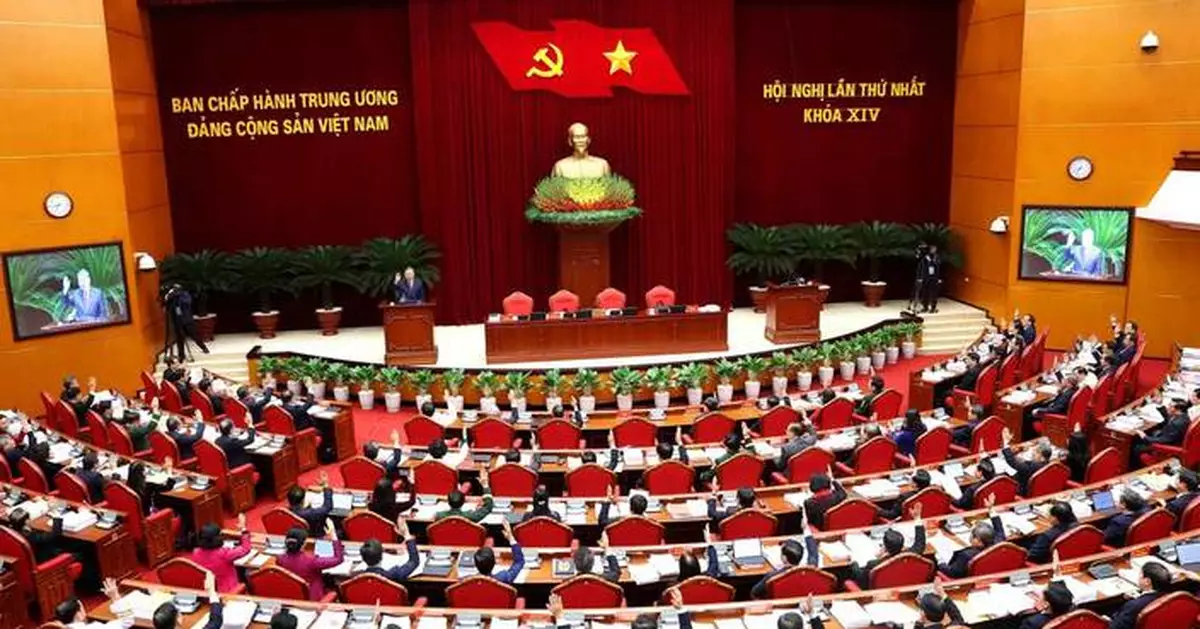
HANOI, Vietnam (AP) — To Lam was reelected Friday as general secretary of Vietnam’s ruling Communist Party and appears poised to become the country’s most powerful figure in decades, with analysts expecting him to assume the presidency in a break from Vietnam’s tradition of collective leadership.

Lam, 68, pledged to accelerate economic growth and was reappointed unanimously by the 180-member Central Committee at the conclusion of the National Party Congress that ran from Monday through Friday.

More Images
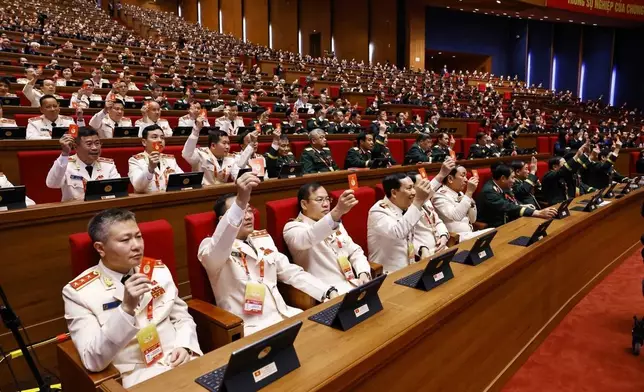
Delegates hold up Communist Party member cards as a vote during a meeting in preparation for the opening of the National Congress in Hanoi, Vietnam, Monday, Jan. 19, 2026. (Bui Cuong Quyet/VNA via AP)
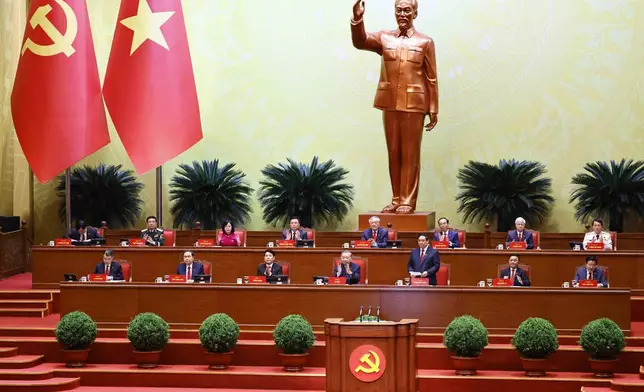
Delegates hold up Communist Party member cards as a vote during a meeting in preparation for the opening of the National Congress in Hanoi, Vietnam, Monday, Jan. 19, 2026. (Bui Cuong Quyet/VNA via AP)

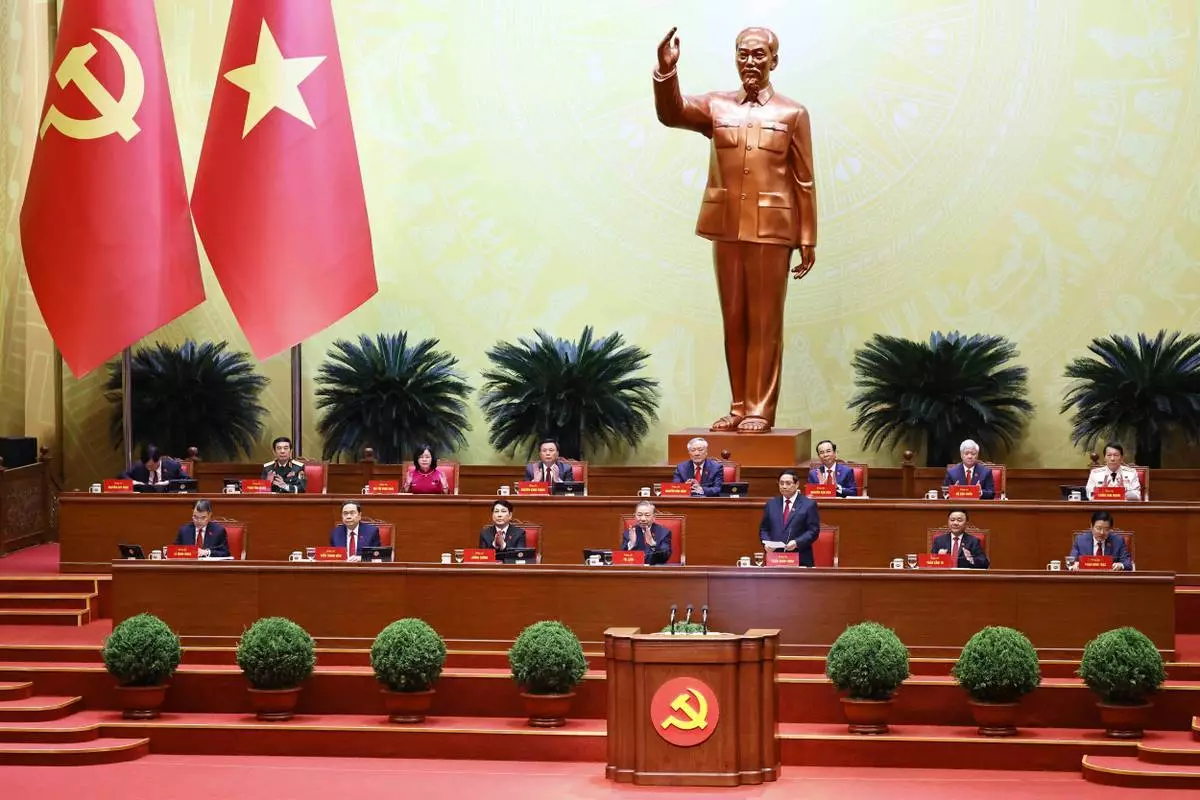
Vietnam's Prime Minister Pham Minh Chinh, third right in front, addresses the National Congress in Hanoi, Vietnam, Tuesday, Jan. 20, 2026. (Bui Cuong Quyet/VNA via AP)
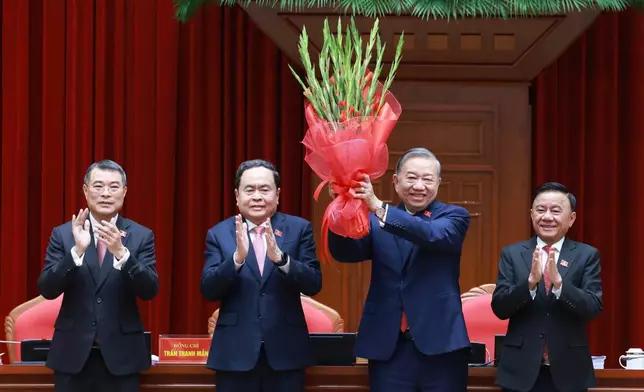
Vietnam's Prime Minister Pham Minh Chinh, third right in front, addresses the National Congress in Hanoi, Vietnam, Tuesday, Jan. 20, 2026. (Bui Cuong Quyet/VNA via AP)

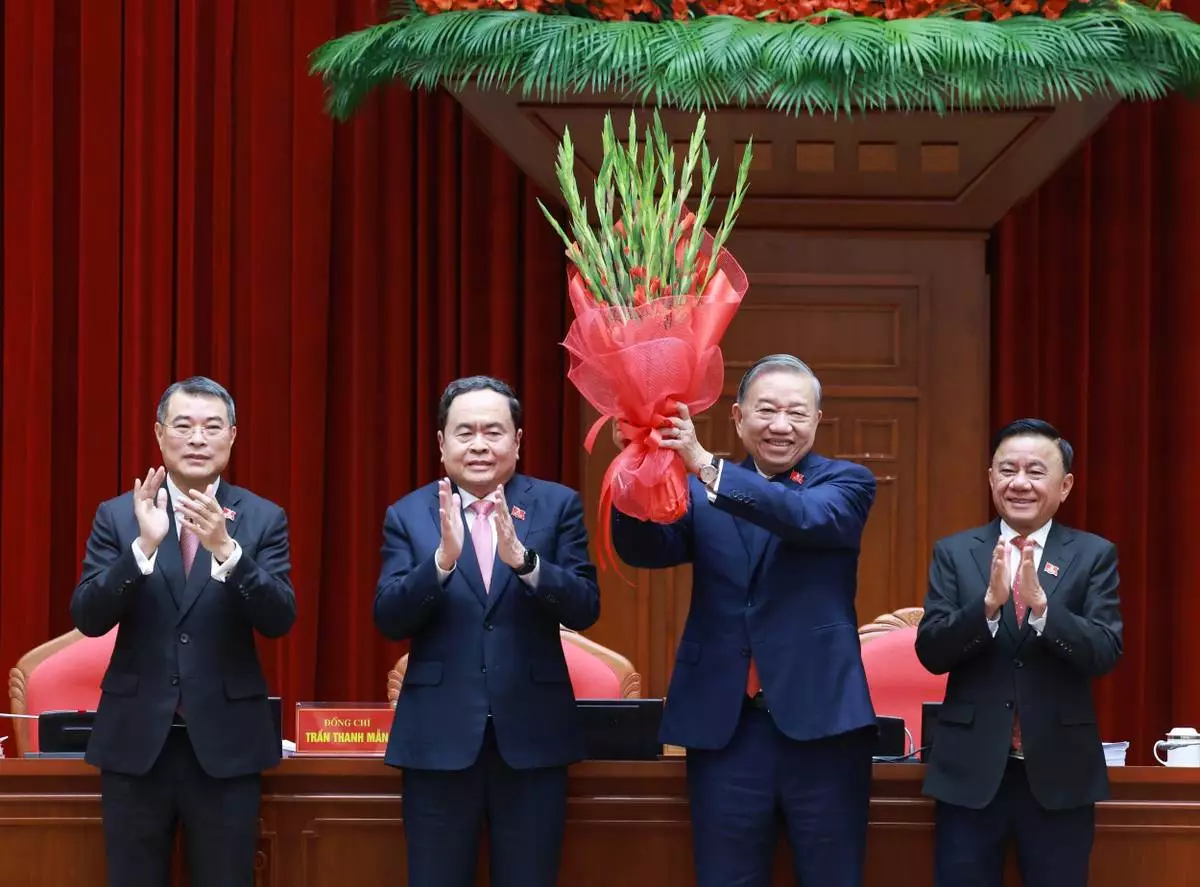
Vietnam's General Secretary of the Communist Party To Lam, second right, holds up a bouquet after being re-elected to the position following a National Congress in Hanoi, Vietnam, Friday, Jan. 23, 2026. (Hoang Thong Nhat/VNA via AP)
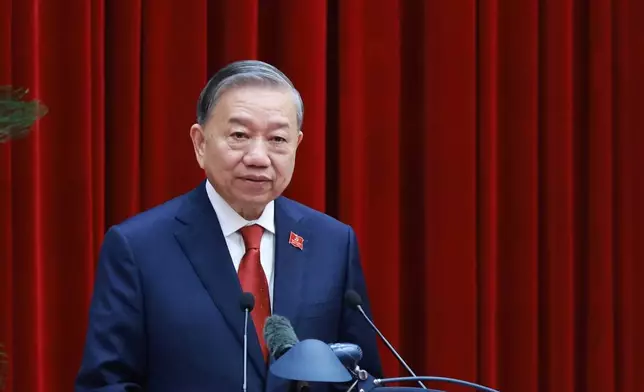
Vietnam's General Secretary of the Communist Party To Lam, second right, holds up a bouquet after being re-elected to the position following a National Congress in Hanoi, Vietnam, Friday, Jan. 23, 2026. (Hoang Thong Nhat/VNA via AP)
Vietnam's General Secretary of the Communist Party To Lam speaks after being re-elected to the position following a National Congress in Hanoi, Vietnam, Friday, Jan. 23, 2026. (Hoang Thong Nhat/VNA via AP)

Vietnam's General Secretary of the Communist Party To Lam speaks after being re-elected to the position following a National Congress in Hanoi, Vietnam, Friday, Jan. 23, 2026. (Hoang Thong Nhat/VNA via AP)

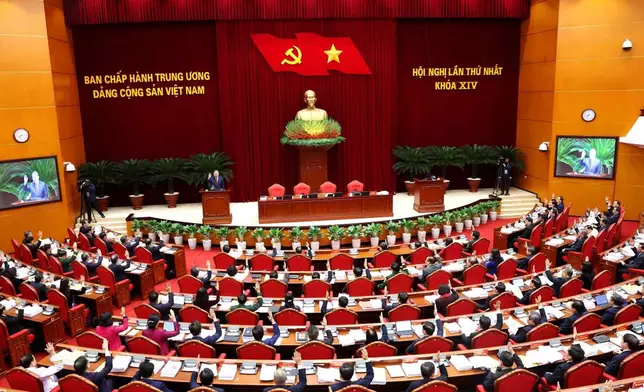
Vietnam's Central Committee of the Communist Party holds a meeting to elect top leaders in Hanoi, Vietnam, Friday, Jan. 23, 2026. (Hoang Thong Nhat/VNA via AP)

Vietnam's Central Committee of the Communist Party holds a meeting to elect top leaders in Hanoi, Vietnam, Friday, Jan. 23, 2026. (Hoang Thong Nhat/VNA via AP)

No formal announcement was made about the presidency. But the composition of the newly elected 19-member Politburo, the party’s top decision-making body, “strongly suggests” Lam will further concentrate his power with the presidency, said Le Hong Hiep, a fellow at Singapore’s ISEAS–Yusof Ishak Institute.

Such consolidation could speed decisions and push through reforms, he said, but risks weakening intra-party checks and complicating succession. The model mirrors power structures in China under Xi Jinping and neighboring Laos.

The Congress was shaped by the central question of whether Vietnam can transform itself into a high-income economy by 2045, setting a target of 10% or higher annual growth from 2026 to 2030.

Party leaders say this will require moving beyond cheap labor and export-led growth toward productivity, technology and a stronger private sector.

“We must achieve double-digit growth to reach the set goals,” Lam said.

Lam’s reappointment caps the rise of a career policeman who climbed from the security services to the apex of Vietnam’s political system.

His ascent was propelled by a sweeping anti-corruption campaign launched under his predecessor, Nguyen Phu Trong, which Lam oversaw as head of the powerful Ministry of Public Security. That sidelined or removed dozens of senior officials including two former presidents and Vietnam’s parliamentary head, dramatically reshaping the party's balance of power.

Lam oversaw Vietnam’s most ambitious bureaucratic overhaul since the late 1980s, cutting tens of thousands of public-sector jobs, merging ministries, redrawing provincial boundaries and pushing through major infrastructure projects.

Unlike his predecessor Nguyen Phu Trong, an ideologue who prioritized party discipline, Lam has focused on economic performance and repeatedly emphasized the need to empower the private sector and move Vietnam beyond a growth model built on cheap labor, exports and foreign investment. The model saw Vietnam becoming a manufacturing hub, lifted millions out of poverty and fueled a growing middle class.

But challenges loom including the need for deeper reforms, an aging population, climate risks, weak institutions and U.S. pressure over its trade surplus. Hanoi also is balancing ties with major powers including China, its largest trading partner and rival claimant in the South China Sea.

“He is a pragmatic reformer,” said Nguyen Khac Giang of Singapore’s ISEAS–Yusof Ishak Institute.

He noted Lam's near-immediate acceptance of U.S. president Donald Trump’s offer to join the Board of Peace, an unusually fast decision for Vietnam, where foreign policy moves are typically calibrated with an eye on Beijing's possible interpretation.

“We are ready to contribute even more as mediators and bridges to build peace,” Lam said at a post-Congress news conference.

That pragmatism has unsettled the party’s conservative faction, led by the military, which is wary of his reform agenda and intent on preserving socialist discipline.

Lam’s expansion of the state security apparatus with broader police authority over legislation and businesses also has sharpened a long-running rivalry with the military, which controls extensive commercial interests, analysts said.

His expected power consolidation also heightens human rights concerns in a nation that has intensified crackdowns on activists, journalists and environmental advocates.

Vietnam has set an ambitious target of 10% or higher annual economic growth over the next five years, placing the private sector at the center of its development strategy in a notable shift for the communist state.

The country fell short of its earlier aim of 6.5% to 7% growth in the first half of the decade, despite posting a robust 8% expansion in 2025. Policymakers are recalibrating the growth model to give a leading role to private enterprise and emphasize higher-value industries, modernized production and greater use of science, technology and digital tools.

“What stands out this cycle is not just the direction, which is broadly consistent, but the sense of urgency,” said Richard McClellan, founder of consultancy RMAC Advisory. “Vietnam’s window of strategic opportunity won’t stay open forever.”

Policy documents adopted at the Congress describe the private sector as one of the economy's “most important driving forces” and elevate foreign affairs and international integration alongside national defense and security, highlighting dependence on global trade, investment and geopolitics.

The shift could give major private conglomerates a bigger role in infrastructure, energy and industrial projects long dominated by the state. Critics warn it risks further entrenching powerful business groups.

Those firms seek to diversify away from the U.S. market amid tariff uncertainty, with companlies including Vingroup, Hoa Phat and Masan increasingly looking to Southeast Asia, the Middle East and Europe.

The party's updated platform also raised environmental protection to a “central” task alongside economic and social development, a notable shift in Vietnam where rapid growth has fueled worsening air pollution and other environmental pressures.

“The environmental shift is significant in intent, but uneven in impact so far,” said McClellan, who noted Vietnam has stepped up its rhetoric on green growth but faces a challenge in translating that intent into concrete policy trade-offs.

To Lam's reliance on state security creates other tensions. Efforts to formalize the economy, expand the tax base and curb informal payments collide with entrenched practices at the local level, where corruption has long lubricated everyday commerce.

Hoa, a Hanoi cafe owner who used one name for fear of government reprisal, said her business relies on allowing customers to park motorbikes on the pavement outside, which is technically illegal but permitted through bribes. Stricter tax enforcement without addressing those practices, she warned, would be damaging.

“I support the party’s reforms," she said. "But businesses don’t just run on paperwork.”

Hiep, the analyst, said Lam’s continued leadership would preserve Vietnam’s political stability and signal economic and foreign policy continuity.

But he cautioned the 10% growth target for the next five years will be “tremendously challenging” given Vietnam’s limited new growth engines and continued reliance on exports, foreign investment and infrastructure spending in a hostile global environment.

“If Vietnam isn’t careful, the country may face significant economic problems within the next few years,” he said.
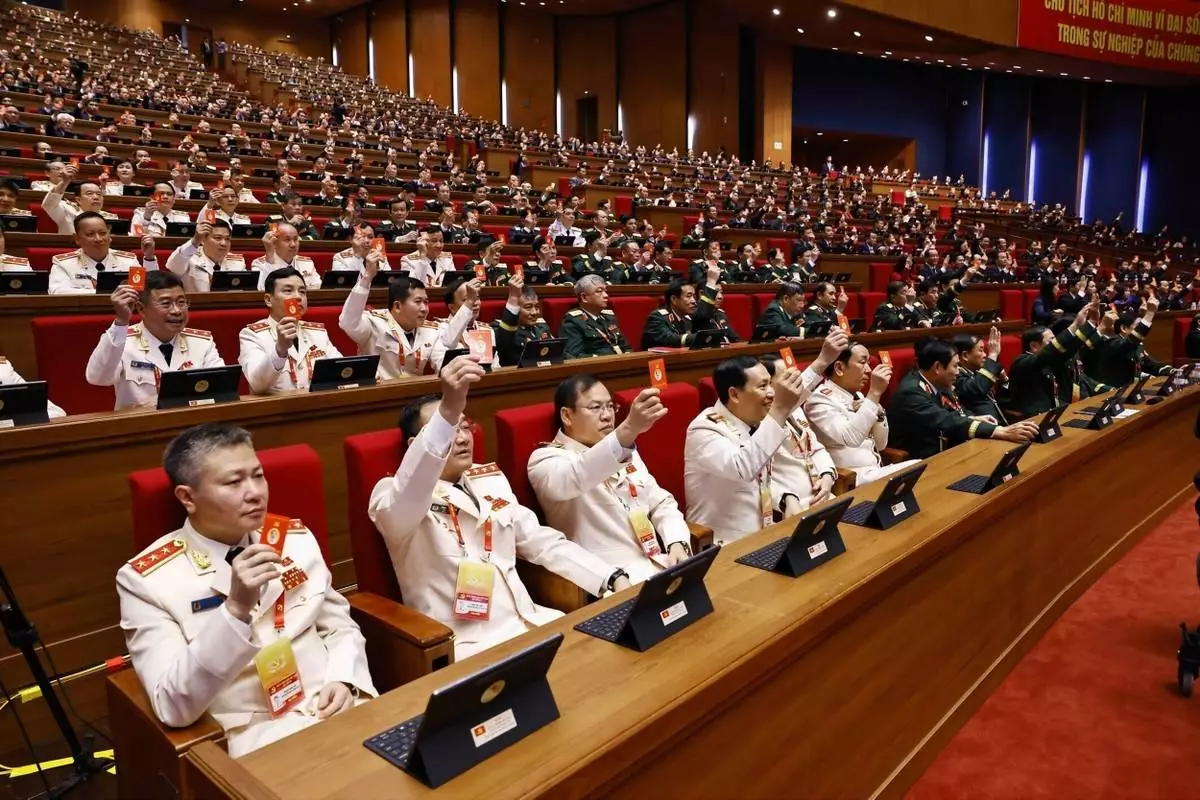
Delegates hold up Communist Party member cards as a vote during a meeting in preparation for the opening of the National Congress in Hanoi, Vietnam, Monday, Jan. 19, 2026. (Bui Cuong Quyet/VNA via AP)
Delegates hold up Communist Party member cards as a vote during a meeting in preparation for the opening of the National Congress in Hanoi, Vietnam, Monday, Jan. 19, 2026. (Bui Cuong Quyet/VNA via AP)

Vietnam's Prime Minister Pham Minh Chinh, third right in front, addresses the National Congress in Hanoi, Vietnam, Tuesday, Jan. 20, 2026. (Bui Cuong Quyet/VNA via AP)
Vietnam's Prime Minister Pham Minh Chinh, third right in front, addresses the National Congress in Hanoi, Vietnam, Tuesday, Jan. 20, 2026. (Bui Cuong Quyet/VNA via AP)

Vietnam's General Secretary of the Communist Party To Lam, second right, holds up a bouquet after being re-elected to the position following a National Congress in Hanoi, Vietnam, Friday, Jan. 23, 2026. (Hoang Thong Nhat/VNA via AP)
Vietnam's General Secretary of the Communist Party To Lam, second right, holds up a bouquet after being re-elected to the position following a National Congress in Hanoi, Vietnam, Friday, Jan. 23, 2026. (Hoang Thong Nhat/VNA via AP)
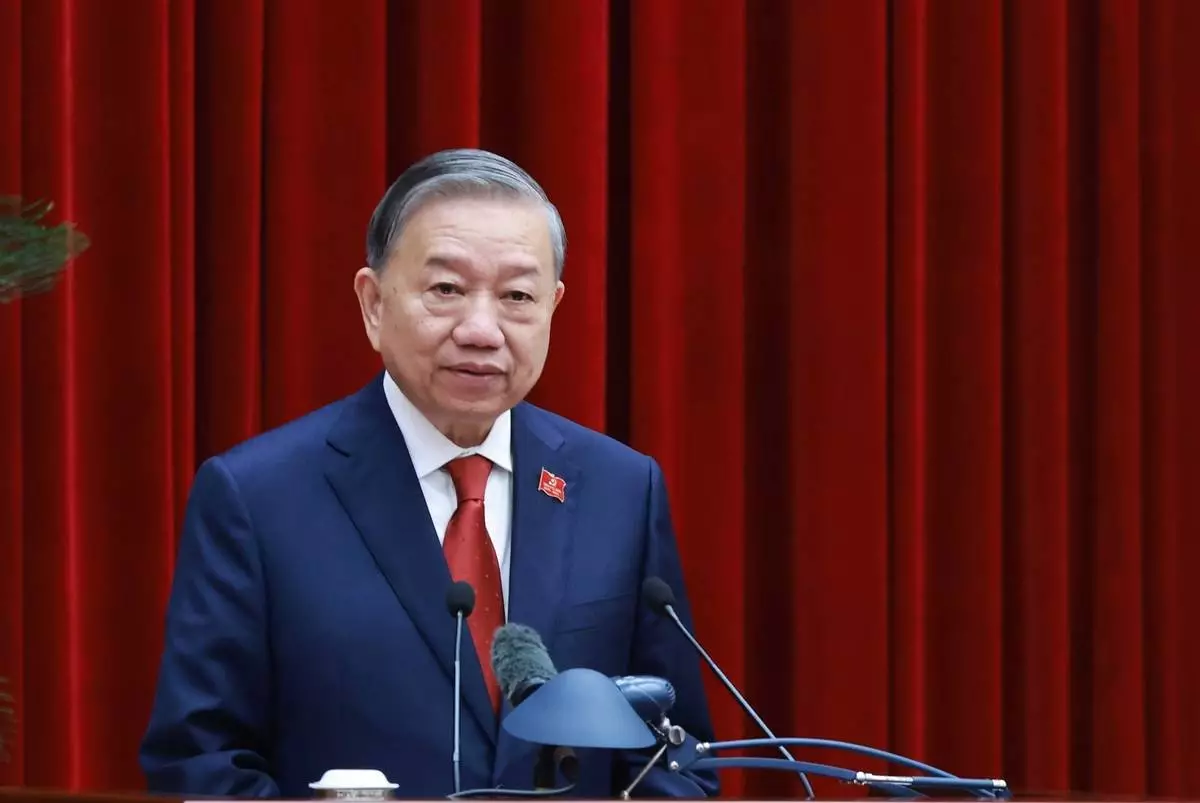
Vietnam's General Secretary of the Communist Party To Lam speaks after being re-elected to the position following a National Congress in Hanoi, Vietnam, Friday, Jan. 23, 2026. (Hoang Thong Nhat/VNA via AP)

Vietnam's General Secretary of the Communist Party To Lam speaks after being re-elected to the position following a National Congress in Hanoi, Vietnam, Friday, Jan. 23, 2026. (Hoang Thong Nhat/VNA via AP)

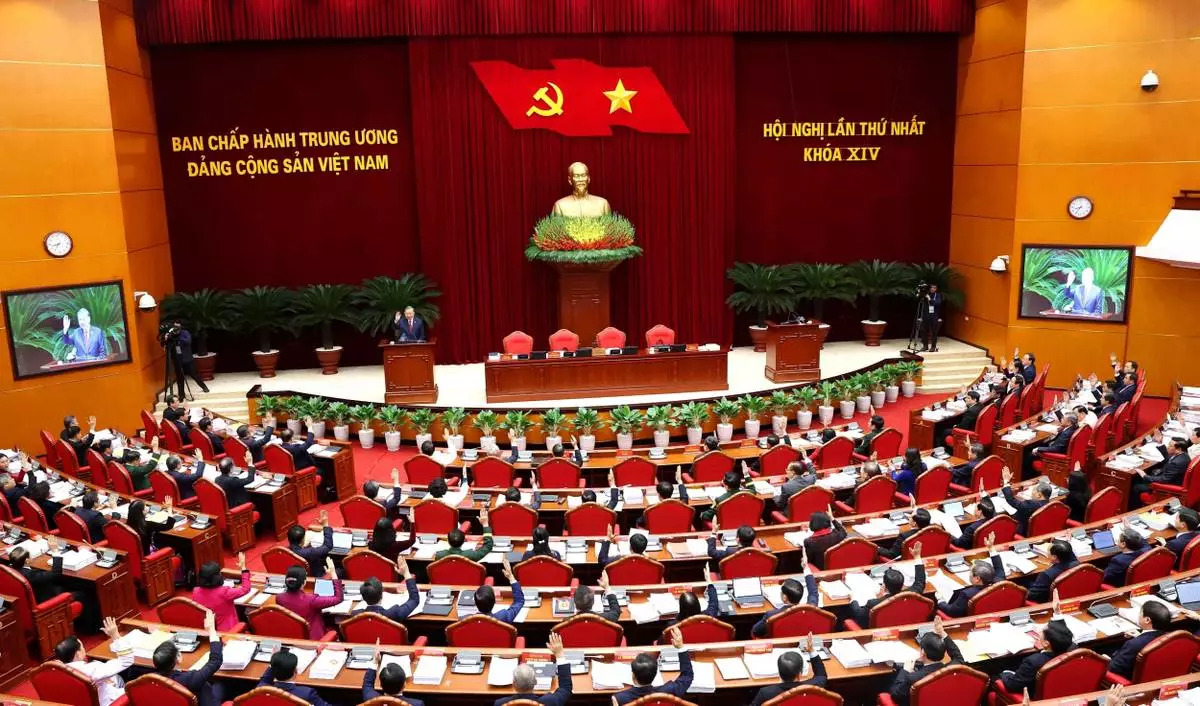
Vietnam's Central Committee of the Communist Party holds a meeting to elect top leaders in Hanoi, Vietnam, Friday, Jan. 23, 2026. (Hoang Thong Nhat/VNA via AP)
Vietnam's Central Committee of the Communist Party holds a meeting to elect top leaders in Hanoi, Vietnam, Friday, Jan. 23, 2026. (Hoang Thong Nhat/VNA via AP)
DUBAI, United Arab Emirates (AP) — Iran’s top prosecutor on Friday called U.S. President Donald Trump’s repeated claims that he halted the hangings of 800 detained protesters there “completely false.” Meanwhile, the overall death toll from a bloody crackdown on nationwide demonstrations rose to at least 5,002, activists said.

Activists fear many more are dead. They struggle to confirm information as the most comprehensive internet blackout in Iran's history has crossed the two-week mark.

Tensions remain high between the United States and Iran as an American aircraft carrier group moves closer to the Middle East, something Trump likened to an “armada” in comments to journalists late Thursday.

Analysts say a military buildup could give Trump the option to carry out strikes, though so far he's avoided that despite repeated warnings to Tehran. The mass execution of prisoners had been one of his red lines for military force — the other being the killing of peaceful demonstrators.

“While President Trump now appears to have backtracked, likely under pressure from regional leaders and cognizant that airstrikes alone would be insufficient to implode the regime, military assets continue to be moved into the region, indicating kinetic action may still happen,” New York-based think tank the Soufan Center said in an analysis Friday.

Trump has repeatedly said Iran halted the execution of 800 people detained in the protests, without elaborating on the source of the claim. On Friday, Iran’s top prosecutor Mohammad Movahedi strongly denied that in comments carried by the judiciary’s Mizan news agency.

“This claim is completely false; no such number exists, nor has the judiciary made any such decision,” Movahedi said.

His remarks suggested Iran’s Foreign Ministry, led by Abbas Araghchi, may have offered that figure to Trump. Araghchi has had a direct line to U.S. envoy Steve Witkoff and conducted multiple rounds of negotiations over Iran’s nuclear program with him.

“We have a separation of powers, the responsibilities of each institution are clearly defined, and we do not, under any circumstances, take instructions from foreign powers,” Movahedi said.

Judiciary officials have called some of those being held “mohareb” — or “enemies of God.” That charge carries the death penalty. It had been used along with others to carry out mass executions in 1988 that reportedly killed at least 5,000 people.

Meanwhile, Mohammad Javad Haji Ali Akbari, the Friday prayer leader in Tehran, mocked Trump as a “yellow-faced, yellow-haired and disgraced man" who is "like a dog that only barks.”

“That foolish man has resorted to threatening the nation, especially over what he said about Iran’s leader,” the cleric said in comments aired by Iranian state radio. ”If any harm were to occur, all your interests and bases in the region would become clear and precise targets of Iranian forces.”

Iran's foreign ministry lashed out at a European Parliament resolution adopted Thursday which slammed “repression and mass murders being perpetrated by the Iranian regime against protesters in Iran.” The resolution called for the release of those detained and urged the European Council to designate Iran's paramilitary Revolutionary Guard, which was key in putting down the nationwide protests, as a terrorist organization.

The foreign ministry expressed “its strong revulsion at the insulting assertions” of the resolution. In a statement issued Friday, it stressed that "any illegal or interventionist decision or position concerning the armed forces of the Islamic Republic of Iran and the country’s security defenders will be met with reciprocal action by Iran, and responsibility for the consequences will rest with those who initiate such actions.”

The latest death toll was given by the U.S.-based Human Rights Activists News Agency, which reported that 4,716 of the dead were demonstrators, 203 were government-affiliated, 43 were children and 40 were civilians not participating in the protests. It added that more than 26,800 people had been detained in a widening arrest campaign.

The group's figures have been accurate in previous unrest in Iran and rely on a network of activists in Iran to verify deaths. That death toll exceeds that of any other round of protest or unrest in Iran in decades, and recalls the chaos surrounding Iran's 1979 Islamic Revolution.

Iran’s government offered its first death toll Wednesday, saying 3,117 people were killed. It added that 2,427 of the dead in the demonstrations that began Dec. 28 were civilians and security forces, with the rest being “terrorists.” In the past, Iran’s theocracy has undercounted or not reported fatalities from unrest.

The Associated Press has been unable to independently assess the death toll, in part because of authorities cutting access to the internet and blocking international calls into the country.

The American military meanwhile has moved more military assets toward the Mideast, including the aircraft carrier USS Abraham Lincoln and associated warships traveling with it from the South China Sea.

A U.S. Navy official, who spoke on condition of anonymity to discuss military movements, said Thursday the Lincoln strike group is in the Indian Ocean.

Trump said Thursday aboard Air Force One that the U.S. is moving the ships toward Iran “just in case” he wants to take action.

“We have a massive fleet heading in that direction and maybe we won’t have to use it,” Trump said.

Trump also mentioned the multiple rounds of talks American officials had with Iran over its nuclear program prior to Israel launching a 12-day war against the Islamic Republic in June, which saw U.S. warplanes bomb Iranian nuclear sites. He threatened Iran with military action that would make earlier U.S. strikes against its uranium enrichment sites “look like peanuts.”

“They should have made a deal before we hit them,” Trump said.

The U.K. Defense Ministry separately said its joint Eurofighter Typhoon fighter jet squadron with Qatar, 12 Squadron, “deployed to the (Persian) Gulf for defensive purposes noting regional tensions.”

Iran commemorated “the Day of the Guardian” on Friday, an annual event for its Revolutionary Guard.

To mark the day, an Iranian state television channel aired a typically religious talk show Thursday night that instead saw its cleric and prayer singers look at Iranian military drones. They fired up the engines of several of the Shahed drones, one version of which has been used extensively by Russia in its war on Ukraine.

A man identified as a member of the security forces, who wore a surgical mask and sunglasses during the telecast to hide his identity, also made a threat in mangled Hebrew toward Israel, trying to say: “We are closer to you than you think.”

Konstantin Toropin in Washington, and Melanie Lidman in Tel Aviv, Israel, contributed to this report.

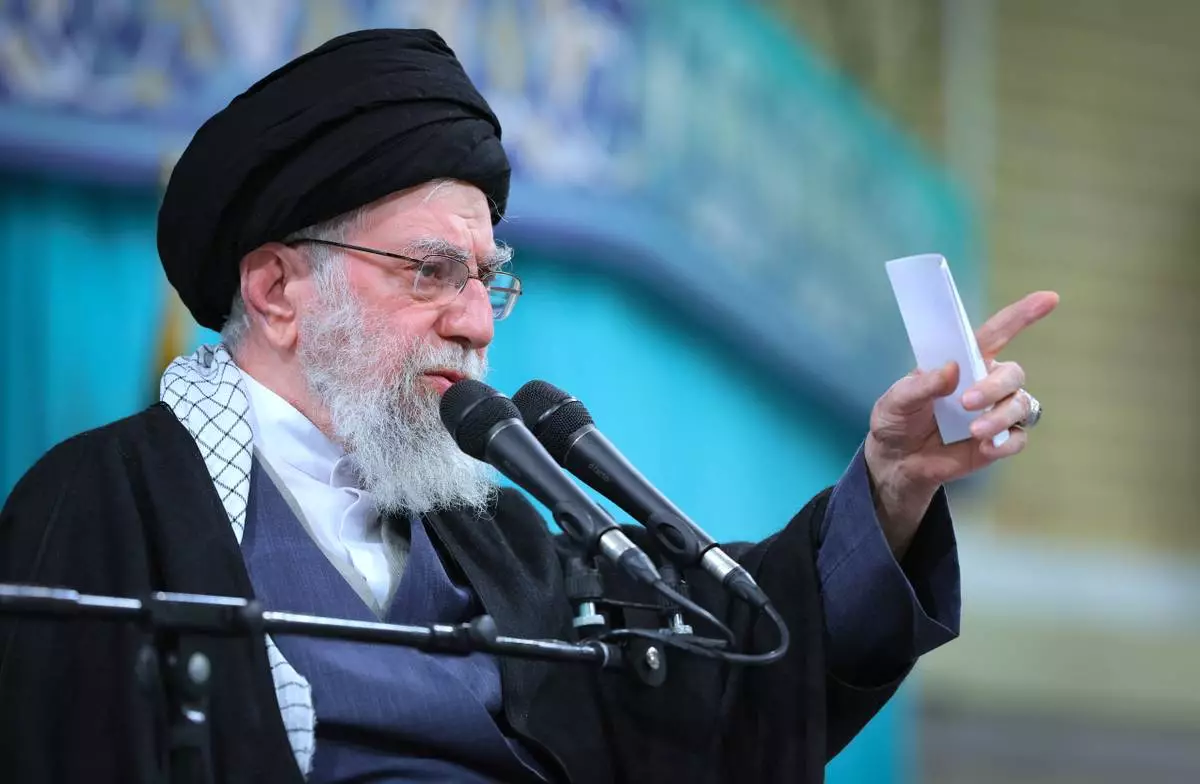
In this photo released by an official website of the office of the Iranian supreme leader, Supreme Leader Ayatollah Ali Khamenei speaks in a meeting, in Tehran, Iran, Saturday, Jan. 17, 2026. (Office of the Iranian Supreme Leader via AP)

In this photo released by an official website of the office of the Iranian supreme leader, Supreme Leader Ayatollah Ali Khamenei speaks in a meeting, in Tehran, Iran, Saturday, Jan. 17, 2026. (Office of the Iranian Supreme Leader via AP)

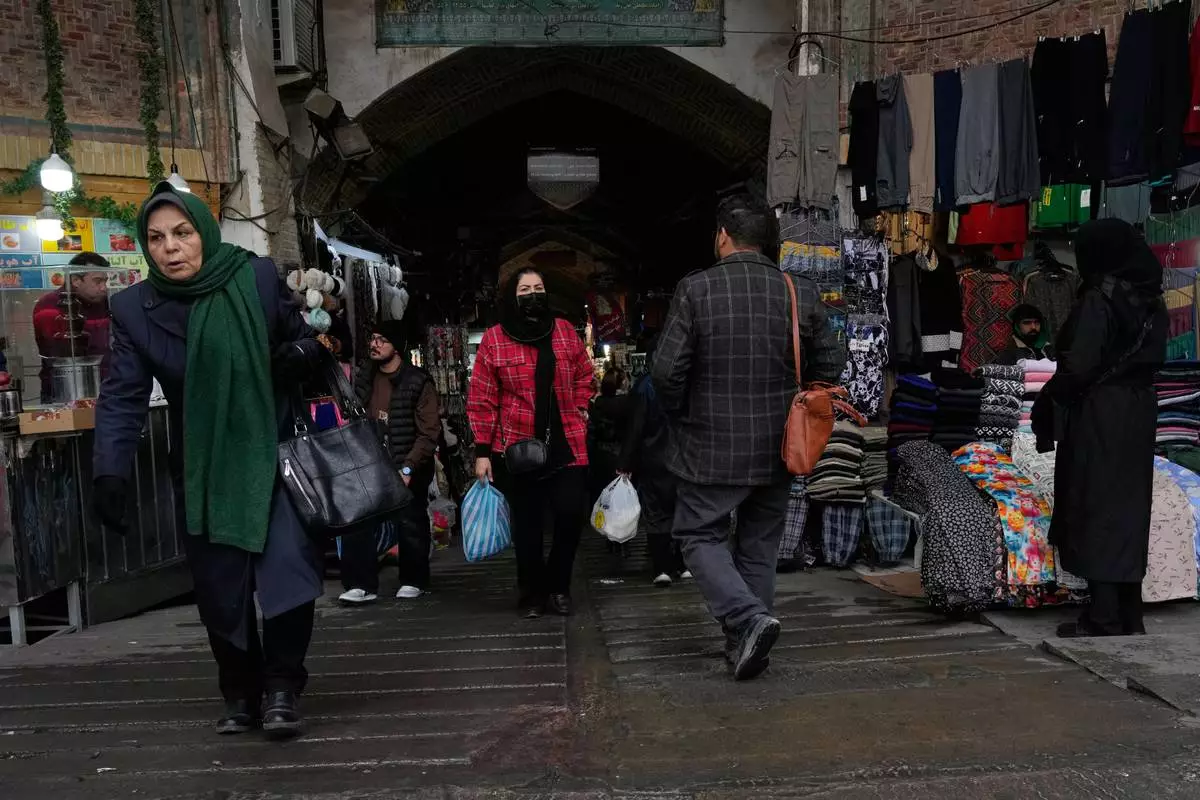
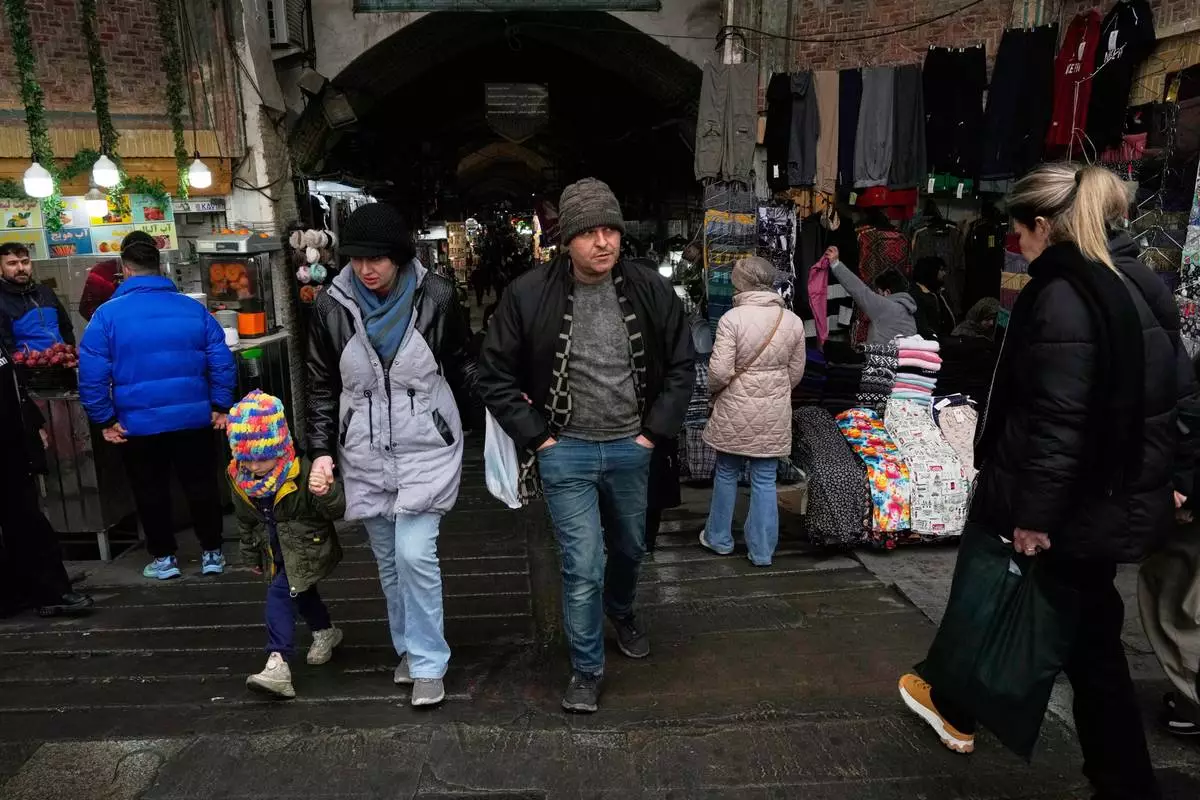
People walk at Tehran's historic Grand Bazaar, Tuesday, Jan. 20, 2026, in Iran. (AP Photo/Vahid Salemi)

People walk at Tehran's historic Grand Bazaar, Tuesday, Jan. 20, 2026, in Iran. (AP Photo/Vahid Salemi)

People walk at Tehran's historic Grand Bazaar, Tuesday, Jan. 20, 2026, in Iran. (AP Photo/Vahid Salemi)

People walk at Tehran's historic Grand Bazaar, Tuesday, Jan. 20, 2026, in Iran. (AP Photo/Vahid Salemi)

Recommended Articles