Sea ice covered more than 40 percent of Liaodong Bay in the Bohai Sea on Friday amid a sustained cold wave, disrupting maritime operations and prompting authorities to step up ice management to safeguard vital supplies.
According to satellite data from the Ministry of Natural Resources, sea ice spans approximately 12,953 square kilometers of the bay, extending up to 58 nautical miles from the coastline.
At Jinzhou Port in northeast China's Liaoning Province, a major hub in the region, temperatures have dropped to -15 degrees Celsius, and ice has nearly covered the surface waters within the port area. Ice thickness ranges from 5-10 centimeters near the docks to over 30 centimeters in narrow channels where ice has accumulated.
Despite the conditions, port operations continue. Jinzhou Port, which handled over 100 million tons of cargo in 2025, including more than 21 million tons of essential goods such as grain and coal, is maintaining loading activities. Measures such as heating key loading equipment have been adopted to ensure efficiency.
To safeguard the transport of grain and coal from northern to southern China, local maritime authorities have activated an ice-period joint response mechanism. This includes issuing regular ice condition updates, organizing vessels into convoys for entry and exit, and deploying dozens of high-power icebreaking tugs to provide 24-hour escort services.
With cold weather expected to persist in the coming days, authorities remain on alert to monitor ice conditions and keep shipping lanes operational.
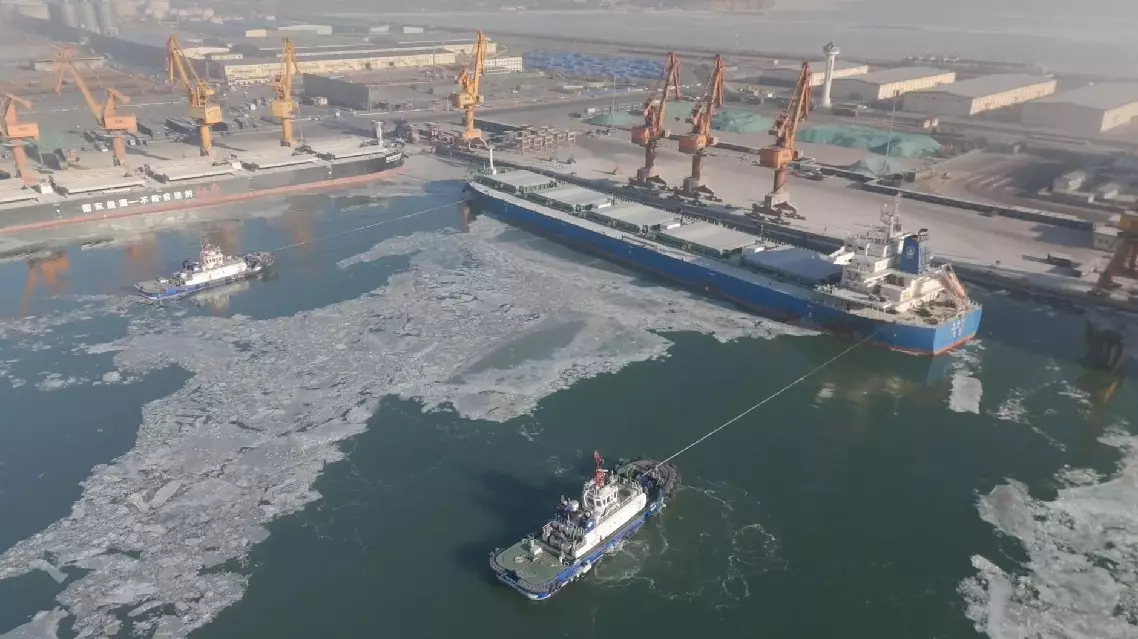
Sea ice covers over 40 pct of China's Liaodong Bay amid cold wave