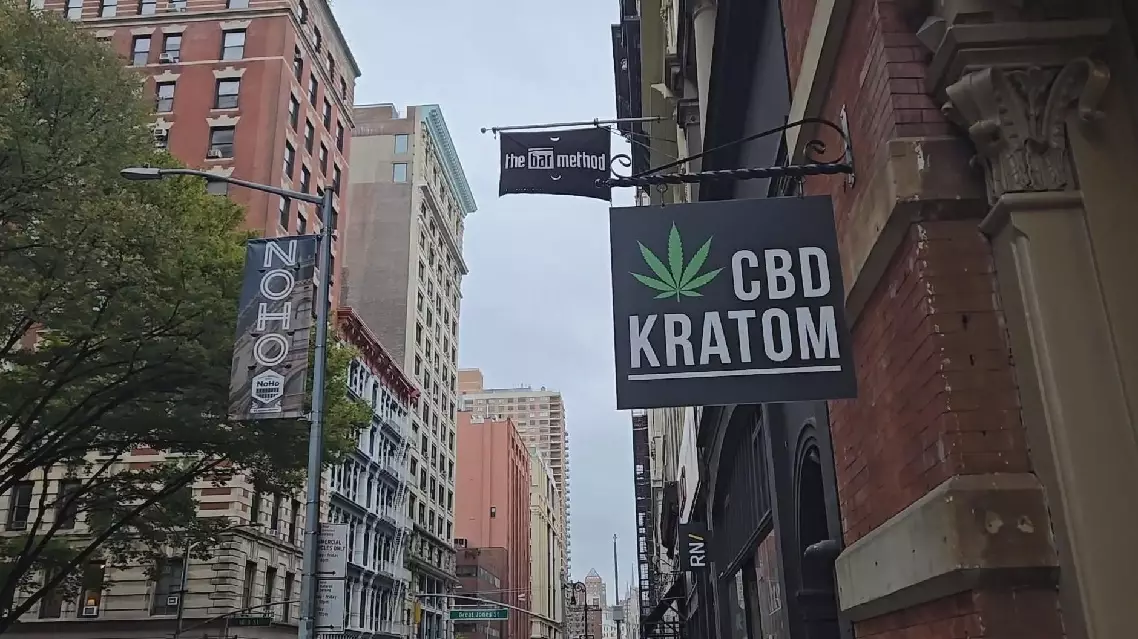
A public health professional has warned that Cannabis products designed to resemble candy are fueling a surge in child poisonings across the United States, calling the trend a looming crisis for adolescents and toddlers.
Jeffrey L. Reynolds, president and chief executive officer of the Family and Children's Association in Long Island, New York, made the remarks in an interview with China Global Television Network (CGTN). He pointed to a sharp rise in toddlers landing in emergency rooms after ingesting cannabis edibles, blaming the industry for marketing products that "look like candy" and are "packaged in fluorescent colors."
"I think that does the industry and certainly it does families an incredible disservice, because it confuses people. It makes it look like cannabis is fun. Again, for adults it might be, but it shouldn't be packaged in a way that appeals to young people," he said.
Reynolds warned that widespread cannabis use among adolescents risks triggering a public health crisis, with regular exposure to tetrahydrocannabinol (THC) impairing brain development.
"The brain doesn't stop developing until someone is 25 and sometimes even older. That means that you're taking a potentially problematic substance and introducing it into the brain at a really critical time. And we know that when cannabis is introduced to the adolescent brain, there's a loss of learning ability, there's a potential loss of IQ points, there's a loss in grades. I mean, it's clear that kids who use cannabis regularly suffer some pretty significant consequences," said Reynolds.
"The industry, if anything, needs to rethink where they put cannabis, the amounts of THC they put into products. And look, we are involved in a THC arms race now where if you can make the most potent products, you win the day commercially. That has negative implications when it comes to public health," he added.
He stressed the need to educate parents on safe storage of cannabis products to prevent young children from accessing high-THC concentrates that could cause serious harm.
"Young people are getting cannabis because their parents are leaving it around. There's very little education about safe storage. And so, the same way, we've tried to educate parents about opioids and not leaving them in your medicine cabinet. The same way we've educated parents about firearms and said lock it up, get a safe. The same kind of education should happen with parents, particularly around gummies and other products that are high THC concentrates, but also might look like candy to the average kids. So, if you have a couple of parents that are using, everybody wraps up for the night, everything stays on the coffee table. That toddler gets up before you do, and guess what? That toddler is winding up in the emergency room," he said.
Reynolds also emphasized that cannabis product companies, communities, and parents should also work together to protect children from the harm of cannabis.
Reports of cannabis poisoning among children soared from 930 in 2009 to more than 22,000 in 2024 – and more than 75 percent of all cannabis poisonings involved children and teens in 2024, according to America's Poison Centers.
In 2022, the U.S. House of Representatives passed legislation to decriminalize marijuana at the federal level, with a partisan divide.
US health expert warns candy-like cannabis fuels child poisoning surge