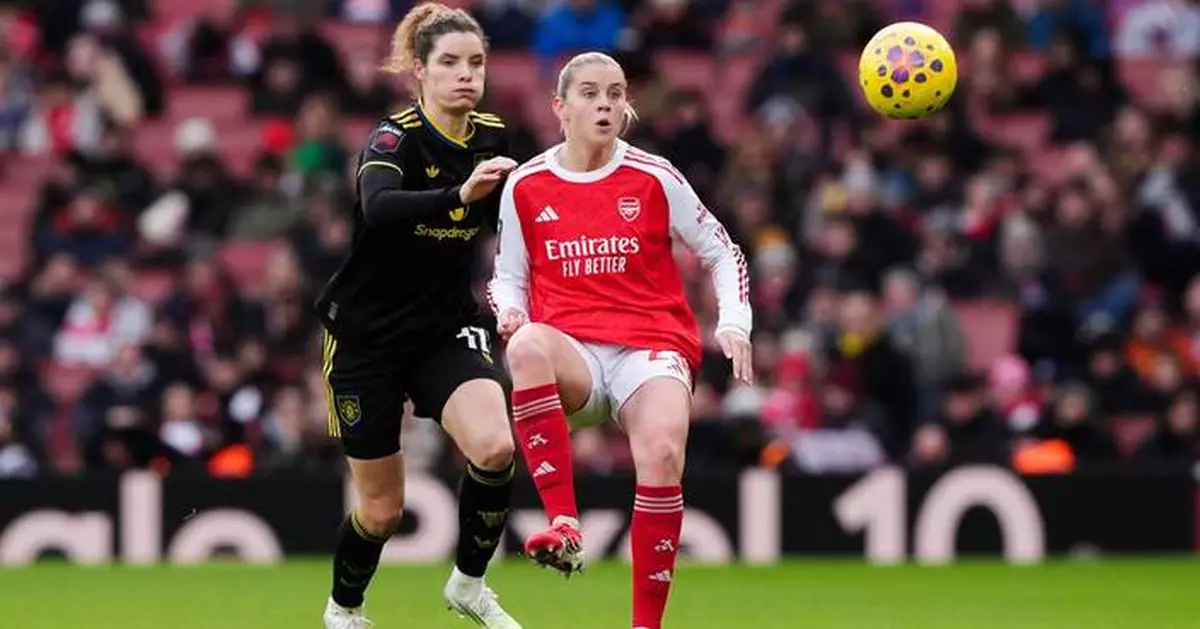
ZURICH (AP) — FIFA will pay $2.3 million in prize money to the club that wins the first Women’s Champions Cup at Arsenal’s stadium next week.
The total fund detailed on Friday by FIFA will share $3.9 million among the six continental champions. The final stages in London are a warmup for a planned full Women’s Club World Cup in 2028.
European champion Arsenal will play ASFAR of Morocco after Gotham from the United States plays Corinthians of Brazil in back-to-back semifinals on Wednesday at the home of Premier League club Brentford.
The final at Arsenal’s stadium on Feb. 1 will follow a third-place game at the same venue.
The champion gets $2.3 million and the beaten finalist $1 million, with $200,000 paid to each of the losing semifinalists.
Two continental champions already eliminated in earlier rounds — Auckland United from Oceania and Wuhan Chegu Jiangda representing Asia — each get $100,000.
The prize money is “a clear statement of the belief in women’s club football and the players, teams and competitions driving its continued rise,” FIFA secretary general Mattias Grafström said in a statement.
Arsenal got more than 1.5 million euros ($1.8 million) in prize money for winning the UEFA Women’s Champions League last season.
FIFA paid $1 billion among 32 teams in the men’s 2025 Club World Cup. That tournament in the United States was backed by Saudi Arabian money to ensure influential European clubs got the prize money they sought to agree to take part.
AP soccer: https://apnews.com/hub/soccer
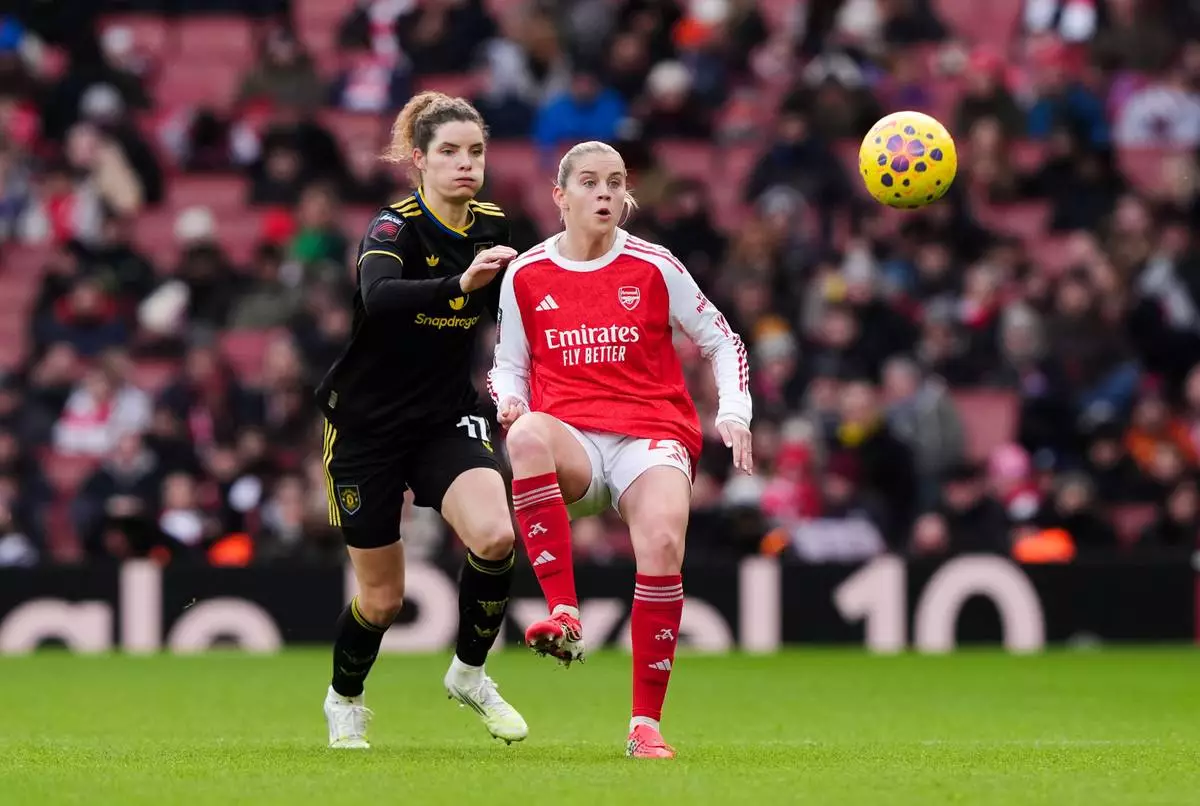
Arsenal's Alessia Russo and Manchester United's Dominique Janssen vie for the ball, during the Women's Super League soccer match between Arsenal Women and Manchester United Women, at the Emirates Stadium, London, Saturday, Jan. 10, 2026. (Jonathan Brady/PA via AP)
NEW YORK (AP) — With no clear end in sight, the war with Iran is sending oil prices back to $100 per barrel, and stocks are sinking worldwide on Thursday.
The S&P 500 fell 1.2% and is returning to big swings following a couple days of relative calm. The Dow Jones Industrial Average was down 607 points, or 1.3%, as of 11 a.m. Eastern time, and the Nasdaq composite was 1.7% lower.
The center of action was again the oil market, where the price of a barrel of Brent crude, the international standard, got as high as $101.59 overnight before pulling back to $100.44, a 9.2% rise. Worries are worsening that the war could block the production of oil in the Persian Gulf for a long time and cause a debilitating surge of inflation for the global economy.
Iran's new supreme leader released his first statement Thursday since succeeding his late father, saying his country would keep up attacks on Gulf Arab neighbors and use the effective closure of the Strait of Hormuz as leverage against the United States and Israel. A fifth of the world’s oil typically sails through the strait, and oil producers in the region are cutting production because their crude has nowhere to go.
Countries around the world are trying to make up for that, and the International Energy Agency said Wednesday that its members would release a record amount of oil, 400 million barrels, from their stockpiles built for such emergencies.
But such moves are short-term fixes, and they do not clear the long-term risks. Analysts have said that if the Strait of Hormuz remains closed, oil prices could jump to $150.
To be sure, the U.S. stock market has a history of bouncing back relatively quickly from military conflicts in the Middle East and elsewhere, as long as oil prices don't stay too high for too long. Even with all the up- and- down swings of the last couple weeks, many rocking markets hour to hour, the S&P 500 is still just roughly 4% below its all-time high set in January.
What’s made this jump for oil prices frightening is not only the degree — prices jumped near $120 earlier this week to their highest level since 2022 — but that they’re also occurring during an uncertain time for the economy.
Last month’s report on hiring by U.S. employers was surprisingly weak, which raised worries about a possible worst-case scenario for the economy called “stagflation.” That’s one where economic growth stagnates while inflation remains high. And it's a miserable mix that the Federal Reserve has no good tools to fix.
A more encouraging signal arrived Thursday. A report said that the number of U.S. workers applying for unemployment benefits inched lower last week. That’s a sign that layoffs are potentially remaining low around the country.
Dollar General, meanwhile, reported better profit and revenue for the latest quarter than analysts expected. But the retailer with relatively low prices, whose customers often have the least cushion to absorb higher gasoline prices, gave forecasts for revenue this upcoming year that indicated a slowdown in growth. Its stock fell 5.8%.
Some of the worst losses on Wall Street again hit companies with big fuel bills. United Airlines sank 3.9%, and cruise-ship operator Carnival fell 5.7%.
Worries about the private-credit industry continued to hurt the market. Investors have been rushing to pull their money out of some funds and companies that have lent to businesses whose profits are potentially under threat. Many of the worries are focused on business that could be made obsolete by new AI-powered rivals and may not pay back their loans.
Morgan Stanley fell 4% after its North Haven Private Income fund said it allowed investors to redeem only 5% of its total shares instead of the nearly 11% they had requested. That 5% cap is the advertised limit.
In stock markets abroad, indexes fell across Europe and Asia.
Japan’s Nikkei 225 dropped 1%, and France’s CAC 40 sank 0.9% for two of the world’s bigger moves.
In the bond market, Treasury yields continued to climb because of upward pressure from rising oil prices. The yield on the 10-year Treasury rose to 4.24% from 4.21% late Wednesday and from just 3.97% before the war started.
Higher yields help make all kinds of borrowing more expensive, such as mortgages for potential U.S. homebuyers and bond offerings for companies looking to expand. They also push down on prices for all kinds of investments, from stocks to crypto.
Because of the spike for oil prices, traders have pushed back forecasts for when the Fed could resume its cuts to interest rates. President Donald Trump has been angrily calling for such cuts, which would give the economy and job market a boost but also potentially worsen inflation.
A barrel of benchmark U.S. crude rose 10.1% to $96.12.
AP Business Writers Matt Ott and Elaine Kurtenbach contributed.
An earlier version of the story incorrectly reported the percentage drop for United Airlines’ stock.

Gregg Maloney works on the floor at the New York Stock Exchange in New York, Tuesday, March 10, 2026. (AP Photo/Seth Wenig)
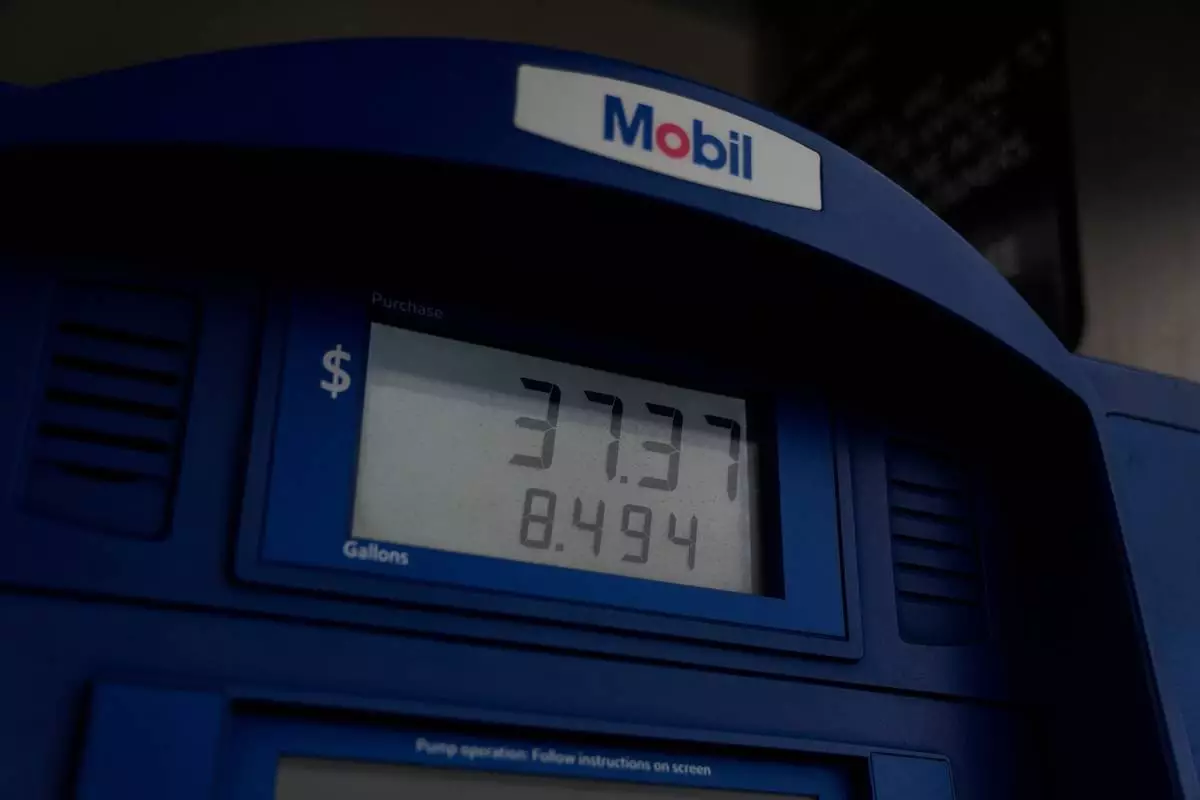
Gas prices are displayed at a station Wednesday, March 11, 2026, in Evanston Ill. (AP Photo/Erin Hooley)
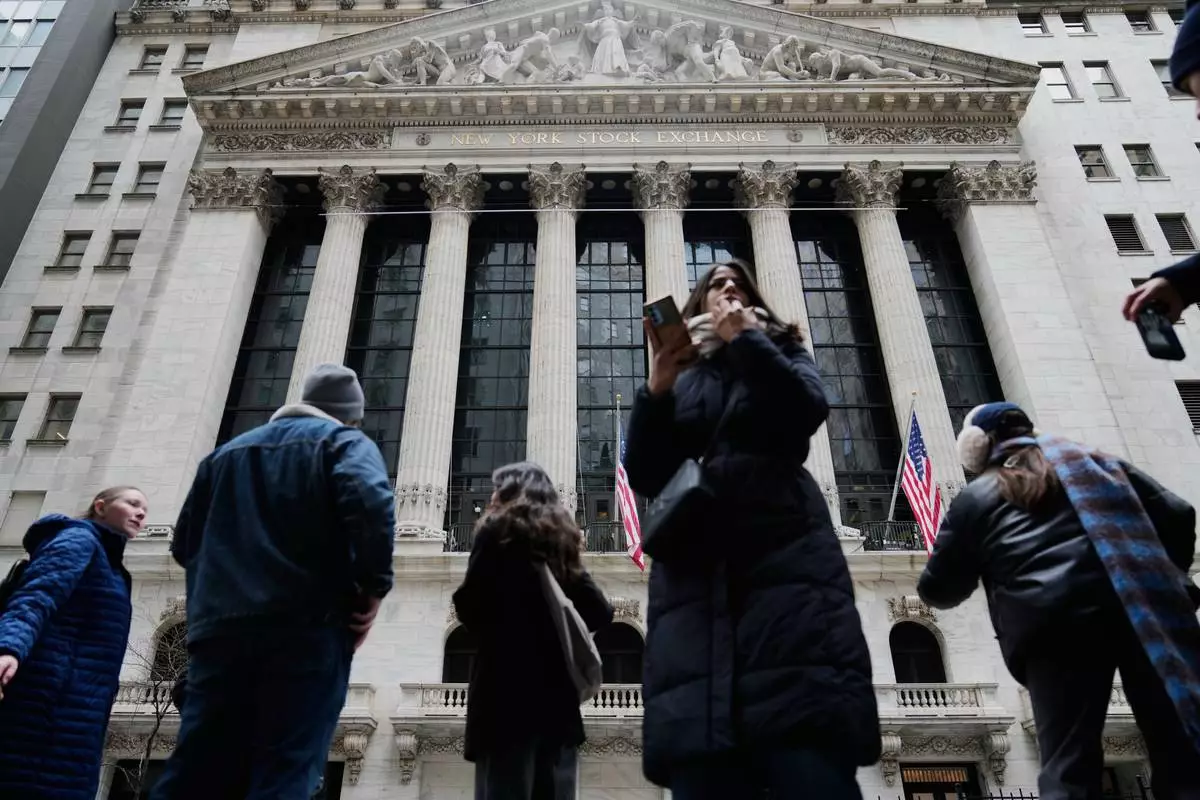
Pedestrians mill about outside the New York Stock Exchange in New York, Friday, March 6, 2026. (AP Photo/Seth Wenig)
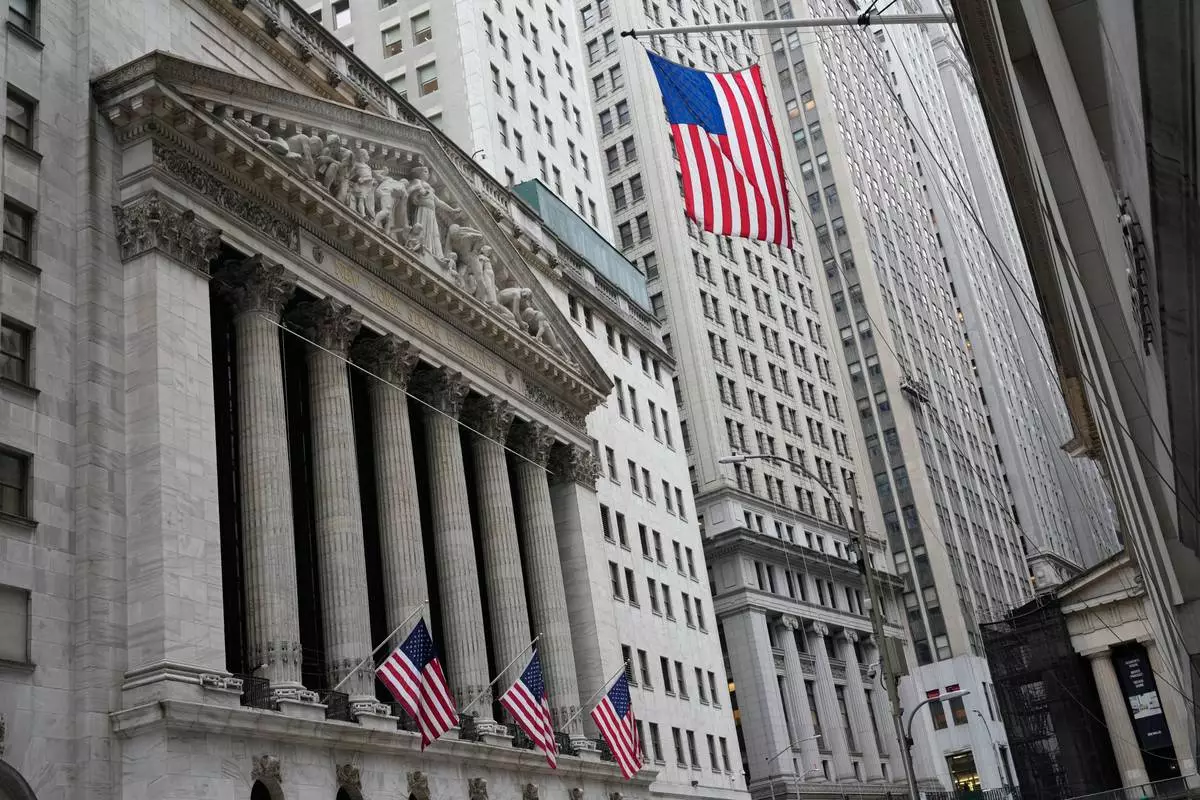
The New York Stock Exchange is seen in New York, Friday, March 6, 2026. (AP Photo/Seth Wenig)

Traders work on the floor at the New York Stock Exchange in New York, Tuesday, March 10, 2026. (AP Photo/Seth Wenig)