LONDON (AP) — Can it be that, like many baby boomers, King Charles III feels misunderstood?
That might sound like a strange question for a man with his own public relations team and easy access to any journalist in the realm. But 16 years after he wrote a book explaining his vision for saving the planet, the king has teamed up with Amazon Prime to make a film spelling out that philosophy.
The documentary delves into Charles’ concept of “harmony,” the idea that restoring the balance between the human and natural worlds is crucial to combatting global warming and many other major problems facing humanity.
Along the way, the king also confronts his critics, who have lampooned him as a dilettante flitting aimlessly from one cause to another with no rhyme or reason. Charles believes that climate change, urban planning, sustainable agriculture, traditional crafts and fostering understanding between religions — causes to which he has devoted much of his adult life — are inter-related issues that must be dealt with to create more liveable communities.
“I think we need to follow harmony if we are going to ensure that this planet can support so many,’’ he said in a trailer for the film. “It’s unlikely there’s anywhere else.’’
To help explain these ideas, experts including Tony Juniper, the former head of Friends of the Earth in England, Wales and Northern Ireland, and Emily Shuckburgh, a University of Cambridge climate scientist, appear with Charles in “Finding Harmony: A King’s Vision,” available on Amazon from Feb. 6. The narrator is Kate Winslet.
The king wants people to recognize that humans are as much a part of the natural world as the birds and the trees, something that can be obscured as we rush to work in air-conditioned offices, then drive to the supermarket to buy food wrapped in plastic, Juniper told The Associated Press.
The “cycles and loops” of nature are still what govern human society, Juniper said, and reconnecting with that is critical as we confront global warming, soil erosion, ocean plastics and the chemicals building up in our food chains.
“All of that is reversible, all of that fixable,” he said. “But it’s going to require more of us to understand that we are not outside nature, we are in it.”
Juniper believes Charles is uniquely qualified to deliver this message because he has been campaigning on these issues for decades and continues to do so even as other world leaders shun environmental protection.
“If there’s one person in the world who is literally a globally recognized figure, who has authenticity derived from an incredible track record on these subjects, it is King Charles III,” Juniper said.
Charles addressed the idea of restoring balance in the natural world in his 2010 book “Harmony: A New Way of Looking at Our World,” written with Juniper and Ian Skelly, a former BBC presenter.
So why return to the subject now?
Part of it may be the hope of reaching a new audience through a streaming service with global reach. Prince William, Charles’ heir, ventured into the same space last year when he revealed his plans for the monarchy on comedian Eugene Levy’s Apple TV show “The Reluctant Traveler.”
But the king also wants to shift the focus back to an issue he hopes will define his legacy after two years in which the media, and the public, were distracted by other matters, said Ed Owens, author of “After Elizabeth: Can the Monarchy Save Itself?”
First there was Charles’ cancer diagnosis, which forced him to step away from public duties for several months in early 2024 and raised nagging questions about his health. Then there were the continuing tensions with his younger son, Prince Harry, and the scandal surrounding his brother Andrew’s links to the convicted sex offender Jeffrey Epstein.
With Charles apparently past the worst of his cancer treatmen t, and Andrew stripped of his titles, now may be the time to turn the page.
“Let us not be in any in any doubt, that this is a very deliberate attempt to rebrand monarchy after a couple of very difficult years,” Owens said.
Even so, the king can’t be accused of only taking up these issues recently.
Charles gave his first speech on the environment in February 1970, when he was just 21 and still a student at Cambridge.
In 1990, he founded Dumfries House, the flagship project of the King’s Foundation, to promote sustainable agriculture, traditional arts and crafts, health and well-being.
The house and surrounding 2,000-acre estate in southwestern Scotland operate as a laboratory of sorts for the philosophy of harmony, offering courses that seek to teach the principles of nature while preparing students to work on farms, in hotels and restaurants — and on construction sites.
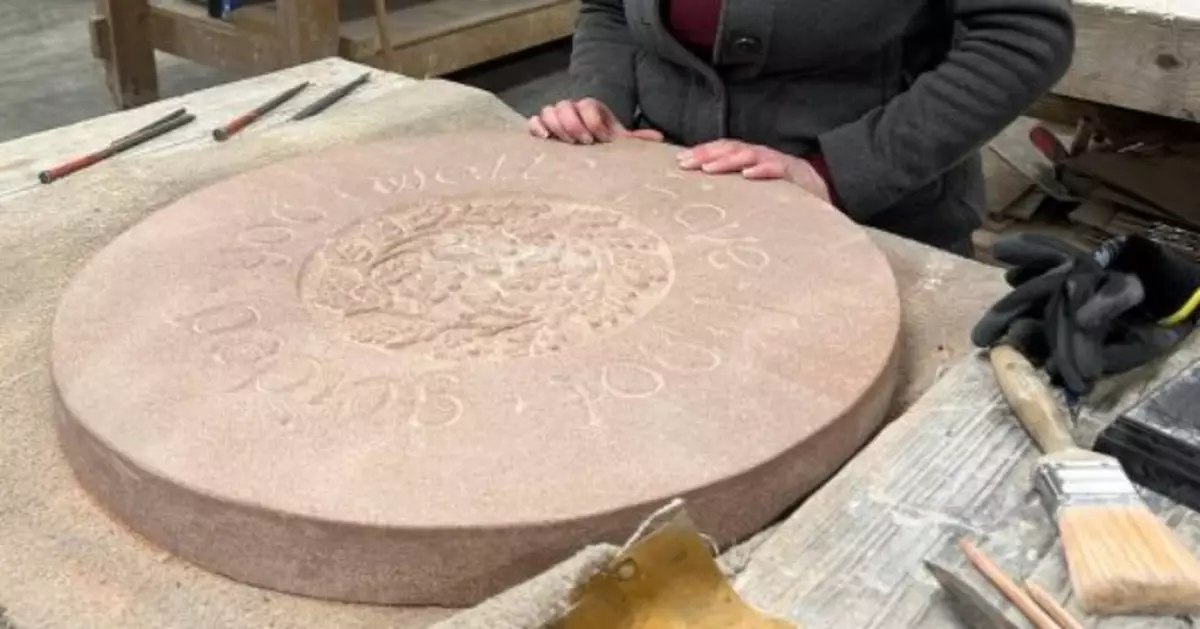
Among those who is attending a course at Dumfries House is Jennie Regan, 45, who is training to be a stonemason after 15 years as a university administrator.
On a recent afternoon, Regan stood proudly behind a carving she created bearing the inscription “Have I not guided you well?” — a nod to the story of the benevolent Scottish fairy Ghillie Dhu who led a lost child to safety.
The carving, which will adorn the floor of a wildlife hide, a hidden woodland shelter for observing nature, is an example of what attracted her to stonemasonry: the ability to combine her love of nature with the goal of making something that will last for years.
“Things need to be sustainable,″ Regan said. “Building sites have so much waste.’′
Shuckburgh, who collaborated with the king on a children’s book about climate change, said the documentary offers a hopeful vision for addressing the challenges facing the world.
“It feels as though we’re living through difficult times,’’ said Shuckburgh, director of Cambridge Zero, the university’s effort to address the climate crisis. “Having something that provides that sense of hope and optimism is really, really important."
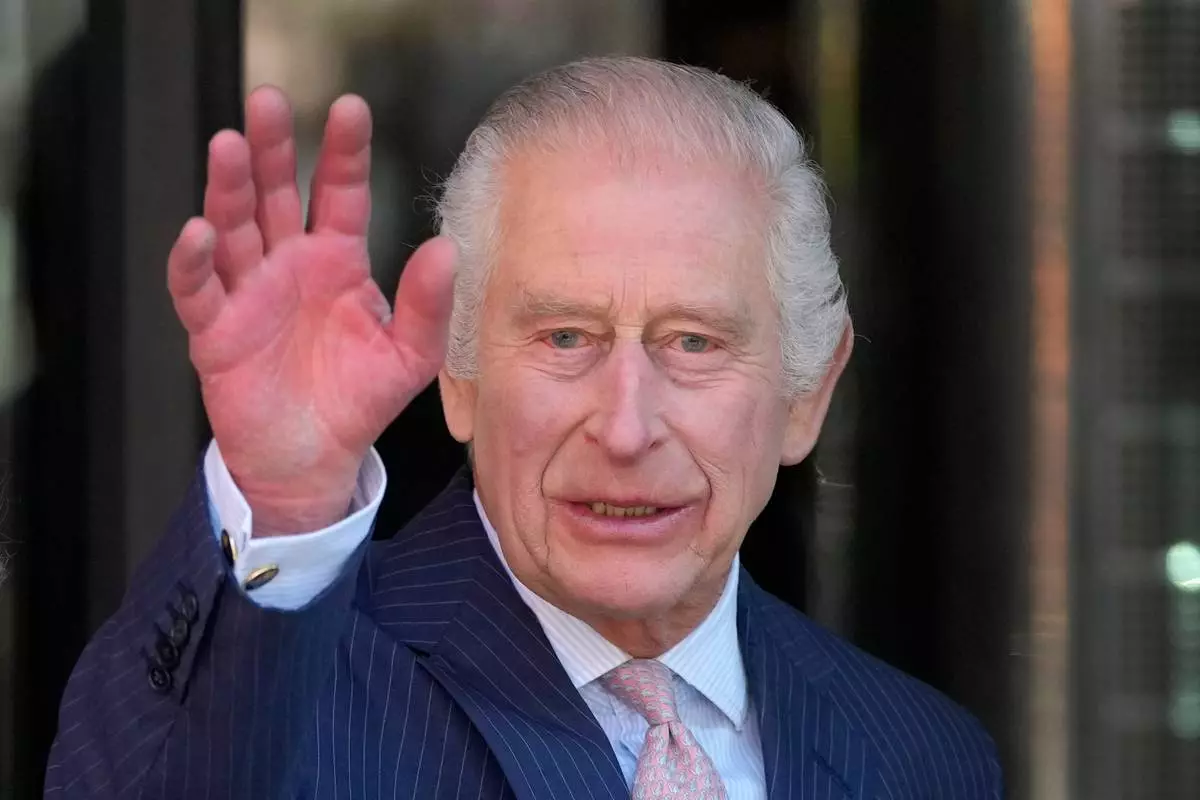
FILE -Britain's King Charles III waves as he arrives for a visit to University College Hospital Macmillan Cancer Centre in London, Tuesday, April 30, 2024. (AP Photo/Kin Cheung, File)
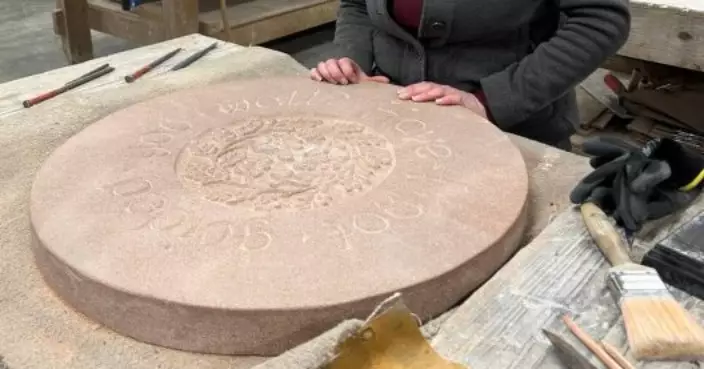

Jennie Regan stands beside the stone she carved with an inscription from a Scottish fairy tale at Dumfries House in Cumnock, Scotland, Nov. 26, 2025. (AP Photo/Danica Kirka)
WASHINGTON (AP) — When acting Attorney General Todd Blanche signed off on a nearly $1.8 billion fund meant to compensate President Donald Trump's allies for alleged political prosecution, he may have pleased his boss.
But the eyebrow-raising move — the latest in his push to prove his loyalty to Trump — has agitated the same Republican lawmakers he would need to secure the permanent job.
Blanche insists he’s not auditioning for the job of attorney general. But a succession of splashy steps the Justice Department has taken under his watch since he took the position on an acting basis last month, including an indictment of former FBI Director James Comey, has left no doubt about the impression he’s hoping to make on the president who appointed him.
The fund in particular has put Blanche at the center of a Republican firestorm at a time when he aims to establish himself as the perfect person for the job for the remainder of Trump’s term. And it sharpened concerns from Democrats and other Blanche critics that he has not shed his mantle as the president’s personal attorney.
“So the nation’s top law enforcement official is asking for a slush fund to pay people who assault cops? Utterly stupid, morally wrong — Take your pick,” Republican Sen. Mitch McConnell of Kentucky, the former majority leader, said in a statement.
A former federal prosecutor in New York, Blanche came to public prominence for his lead role on Trump's defense team, including during the Republican's hush money trial in New York. That perch afforded him, he has said, a firsthand look at what he contends was the weaponization of the criminal justice system against Trump.
He was brought into the Justice Department as deputy attorney general, the No. 2 job, then was elevated last month after Trump ousted Pam Bondi.
Now he finds himself the latest Trump-appointed attorney general to simultaneously confront expectations from subordinates to uphold institutional norms and demands from the president to do his bidding.
Trump's first attorney general, Jeff Sessions, was forced out after the 2018 midterms after infuriating the president over his recusal from an investigation into ties between Russia and the 2016 presidential campaign. Another, William Barr, resigned after their relationship fizzled over Barr's refusal to back Trump's baseless claims of massive election fraud. Bondi was removed after struggling to bring successful prosecutions against Trump's political opponents.
Two weeks after becoming acting attorney general, Blanche announced the appointment of Joseph diGenova, an 81-year-old former Justice Department prosecutor from the Reagan administration, to a special position inside the department. He'll oversee a Florida-based investigation into whether former law enforcement and intelligence officials conspired over the last decade to undermine Trump.
“At some point, at the right time, that will be made public and the American people will see exactly what happened to this administration and President Trump over the past decade," Blanche told Fox News.
Prior government reviews of the FBI's Trump-Russia investigation, a centerpiece of the current conspiracy investigation, have failed to produce criminal charges against senior officials or evidence of criminal conduct by them. It's not clear what, if any, new information the continuing investigation has developed.
The Justice Department also last month obtained an indictment charging Comey, a Trump foe whose prosecution the president has long called for, with threatening Trump through a social media photo of seashells in the numerical arrangement of “86 47" — a case legal experts say will be challenging for prosecutors. Comey has said he wouldn't be surprised if the Justice Department pursues additional indictments.
In other moves, Blanche announced an indictment of the Southern Poverty Law Center, a nonprofit that has been the target of conservative outrage, with misleading donors about its activities, and has publicly defended a Justice Department crackdown on leaks to the news media, including subpoenas to reporters.
Arguably the most audacious demonstration of loyalty to Trump came this week when the Justice Department announced the creation of a $1.776 billion fund to compensate people who feel they've been unjustly investigated and prosecuted, coupled with a guarantee of immunity from tax audits for Trump and his eldest sons.
As Republican concerns grew, Blanche held a tense meeting with GOP lawmakers Thursday. Shortly afterward, Senate Republicans abruptly left Washington without voting on a roughly $70 billion bill to fund immigration enforcement agencies.
Blanche, who defended the fund at a congressional hearing this week, has said anyone who believes they've been persecuted can apply for compensation regardless of political affiliation. But the fund has been widely understood as a boon to Trump allies investigated during the Biden administration.
“It’s pretty clear that he’s not the attorney general for the United States as much as he's the attorney general for President Trump,” said Stephen Saltzburg, a George Washington University law professor and senior Justice Department official in the 1980s. He said Blanche would get an A+ if report cards were issued for fealty to Trump.
David Laufman, a former chief of staff to the deputy attorney general in President George W. Bush's administration, said that rather than protecting the Justice Department's independence, Blanche has been a “willing and ardent accomplice for carrying out any partisan or corrupt scheme the White House may devise.”
Blanche’s supporters dismiss the suggestion he is trying to curry favor with Trump to secure the permanent job.
“What he is doing is he is seeking justice based on facts and the law,” said Jay Town, who served as a U.S. attorney in Alabama during the first Trump administration. “And I don’t think that will ever change about him, whether he is the attorney general going forward or doesn’t spend another day in the administration. He is an honorable man and anybody that knows him knows that to be true.”
Blanche also says he is not angling to keep his job or feeling pressure to placate Trump.
He has told reporters he would be honored to be nominated but, "if he chooses to nominate somebody else and asks me to go do something else, I will say, ‘Thank you very much. I love you, sir.’ I don’t have any goals or aspirations beyond that.”
In recent days, he's functioned as the fund's public face and most visible defender, a role consistent with his comfort in the spotlight. He sometimes holds multiple press conferences a week and grants interviews to a variety of news outlets, a contrast to Bondi, who largely stuck to Fox News appearances.
His defenders say his experience as a federal prosecutor has made him a more sophisticated communicator for the department than Bondi, but his statements have at times invited backlash, including his refusal to rule out that violent Jan. 6 rioters could be eligible for payouts.
Though Blanche will appoint the five commissioners tasked with processing claims, his precise role in the fund’s implementation is unclear. He told CNN it was developed through negotiations with Trump’s private lawyers, not him.
For some Democrats, that's a difference without a distinction.
“Mr. Attorney General, you are acting today like the president's personal attorney," Sen. Chris Van Hollen, a Maryland Democrat, told Blanche during a combative exchange in a Senate hearing, "and that's the whole problem."
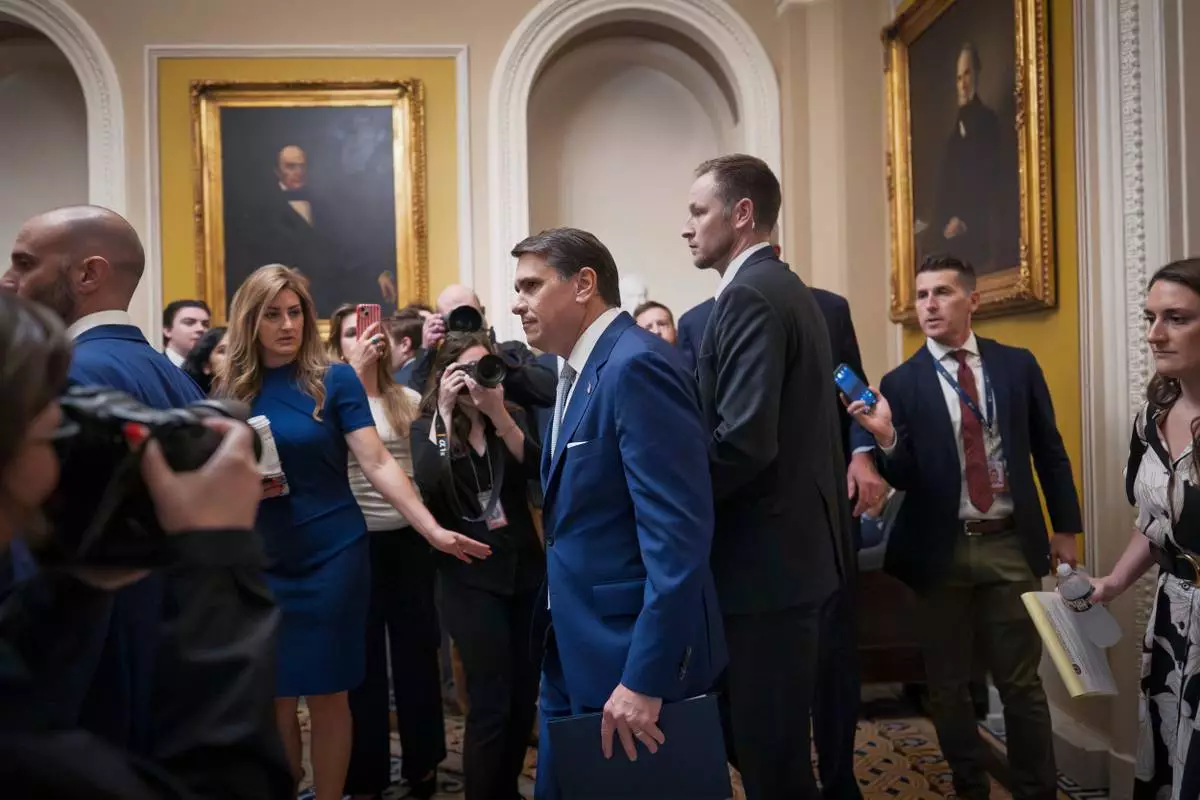
Acting Attorney General Todd Blanche arrives for a closed-door meeting with Republican senators who are expected to abandon a proposal for $1 billion in security money for the White House complex and President Donald Trump's ballroom after it has failed to win enough party support, at the Capitol in Washington, Thursday, May 21, 2026. (AP Photo/J. Scott Applewhite)
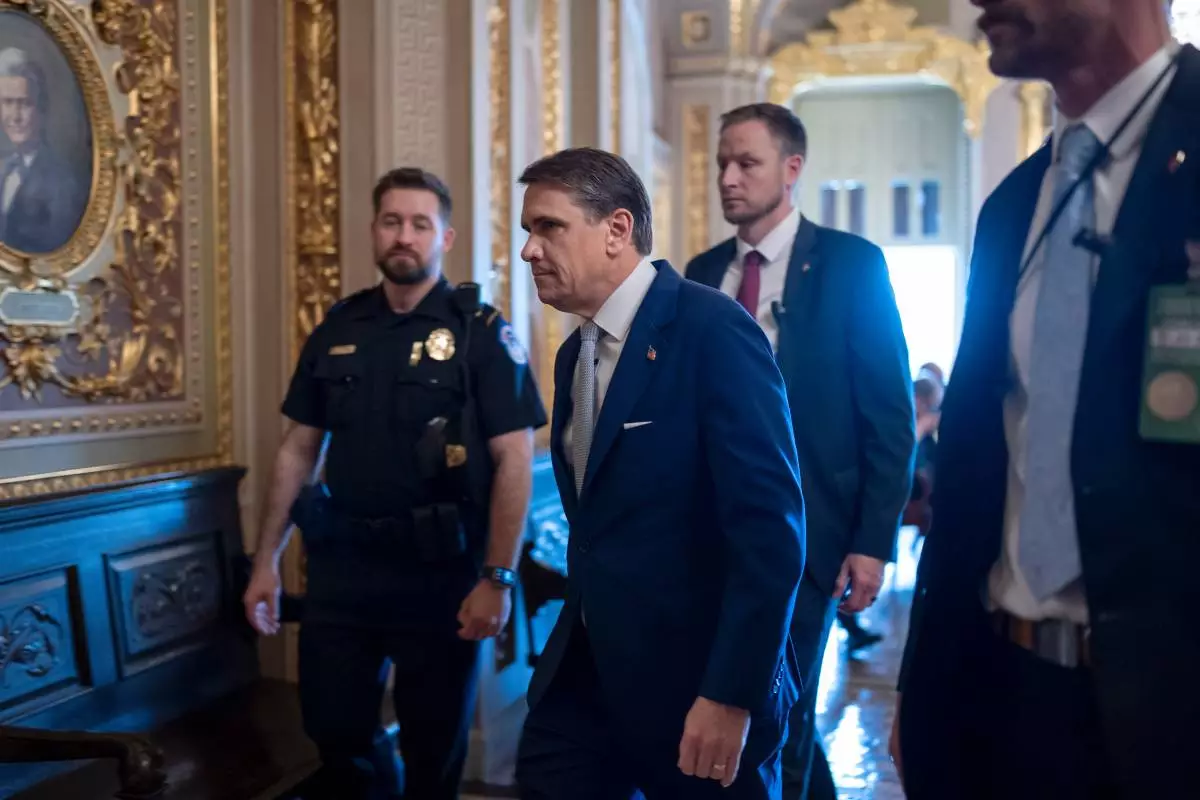
Acting Attorney General Todd Blanche arrives for a closed-door meeting with Republican senators who are expected to abandon a proposal for $1 billion in security money for the White House complex and President Donald Trump's ballroom after it has failed to win enough party support, at the Capitol in Washington, Thursday, May 21, 2026. (AP Photo/J. Scott Applewhite)