Cameron Boozer scored 32 points to lead fifth-ranked Duke's dominating interior play that helped the Blue Devils beat Wake Forest 90-69 on Saturday.
The star freshman big man made 11 of 20 shots to go with nine rebounds and four assists, controlling large stretches with his scoring and his playmaking ability to passing out of oncoming double teams.
And with the 6-foot-9, 250-pound forward in charge, Duke (18-1, 7-0 Atlantic Coast Conference) outscored its longtime instate league foe 48-16 in the paint. The Blue Devils also outrebounded the Demon Deacons by 21 and finished with a 18-7 edge in second-chance points.
It marked Boozer's fourth output of at least 30 points this season, while Duke shot 50% overall.
Patrick Ngongba II added 13 points and seven rebounds for Duke, which was coming off a two-game sweep in its first cross-country league trip — winning by 15 at California and 30 at Stanford.
Juke Harris scored 20 of his 23 points after halftime for the Demon Deacons (11-9, 2-5), who have lost six of eight. Wake Forest led for the first 13-plus minutes and made 14 3-pointers, but a 13-0 burst pushed Duke to a double-digit lead late in the first half and Wake Forest got no closer than nine in the opening minute of the second half.
Wake Forest shot 40.7% for the game.
The Demon Deacons have lost 27 straight games at Duke's Cameron Indoor Stadium since their last win in 1997 during program great and eventual longtime NBA star Tim Duncan's senior season.
The game tipped off at noon, moved up from a scheduled 5:45 p.m. start time, due to concerns about the forecast of an approaching winter storm.
Wake Forest: The Demon Deacons visit Pittsburgh on Tuesday.
Duke: The Blue Devils host No. 23 Louisville on Monday.
Get poll alerts and updates on the AP Top 25 throughout the season. Sign up here. AP college basketball: https://apnews.com/hub/ap-top-25-college-basketball-poll and https://apnews.com/hub/college-basketball
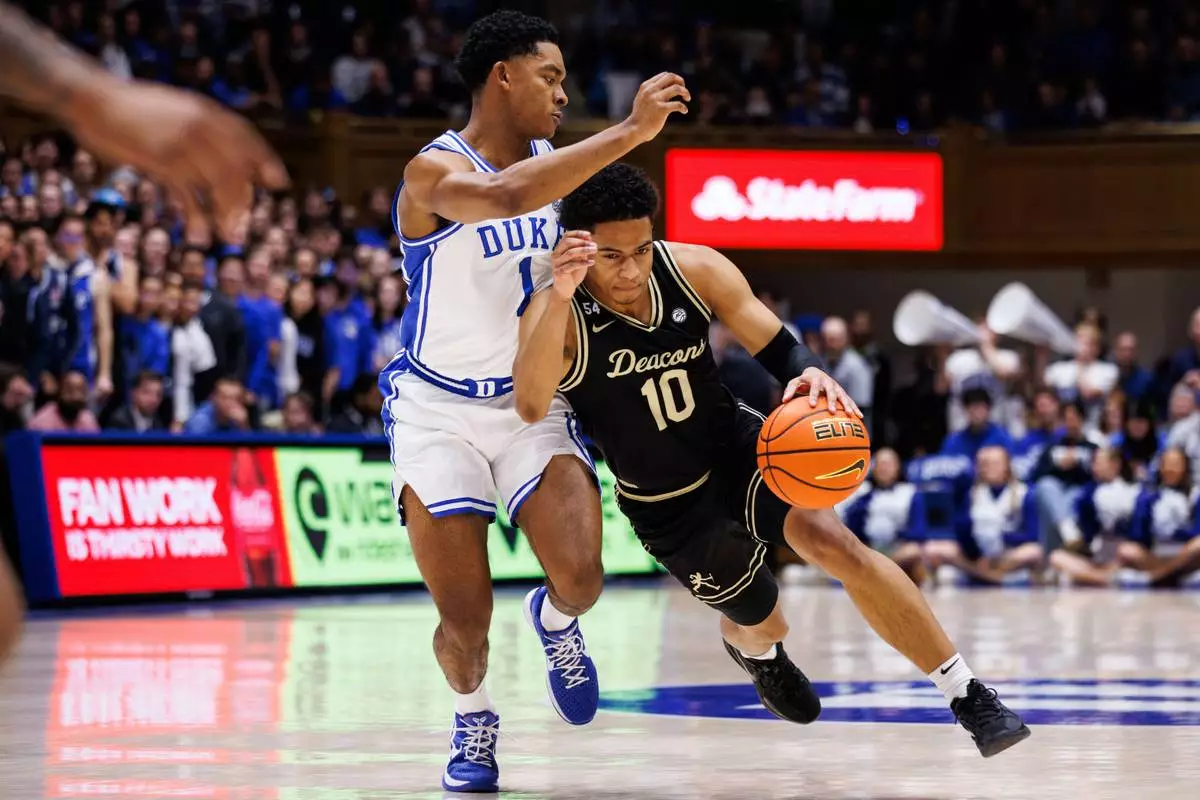
Wake Forest's Sebastian Atkins (10) handles the ball as Duke's Caleb Foster (1) defends during the first half of an NCAA college basketball game in Durham, N.C., Saturday, Jan. 24, 2026. (AP Photo/Ben McKeown)
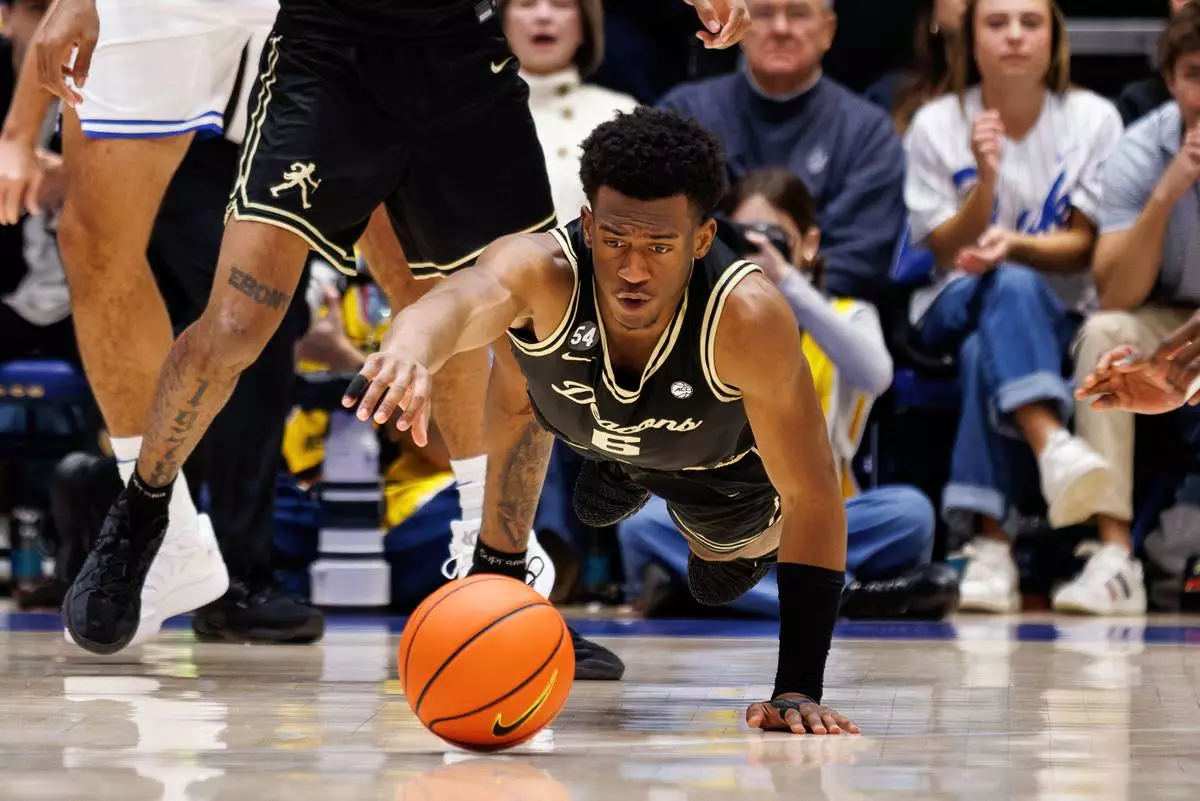
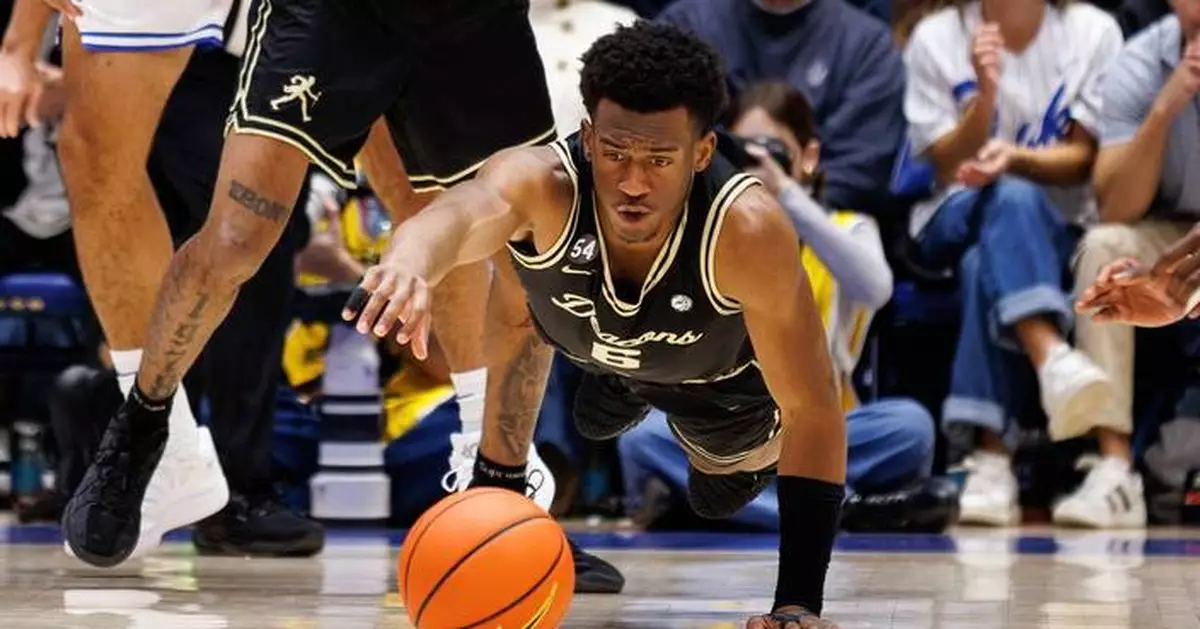
Wake Forest's Myles Colvin (6) dives for a loose ball during the first half of an NCAA college basketball game against Duke in Durham, N.C., Saturday, Jan. 24, 2026. (AP Photo/Ben McKeown)
PHOENIX (AP) — Madison Booker has a midrange jumper that's almost unblockable, beats defenders off the dribble, plays in the post when she wants, shoots the 3 if she needs to.
The Texas junior has great court vision, is an adept passer and is a menace defensively, bullying smaller guards on the ball, jumping into passing lanes off it.
Had it been an earlier era in women's college basketball, Booker would have been a back-to-the-basket player.
But this is a new age, one where 6-footers are everywhere at this year's Final Four and Booker is a guard — at 6-foot-1.
“You look at Madison Booker and, I mean, she’s like a mini-KD (Kevin Durant),” Kentucky coach Kenny Brooks said after Booker had 17 points, eight rebounds and five assists against his team in the Sweet 16.
The average height for an American woman is 5-3, according to the CDC.
Women's college basketball has become the oversized outlier above the median, towering players spread across the Division I landscape, many of whom do more than just park under the basket.
This year's repeat Final Four has a large collection of large players, UConn, South Carolina, UCLA and Texas arriving with a combined 36 players 6-0 or taller — 55.6% of all the players in Phoenix.
UCLA's Lauren Betts is the tallest among the regular contributors at 6-7, anchoring a team with eight players at least 6-0.
The two-time AP All-American is a matchup nightmare, using her height and skill to score in a variety of ways — mainly shooting over smaller defenders. Betts is just as dominant on the defensive end, swatting shots, altering many more, deterring opponents from even thinking about going into the lane.
Betts averaged 18.5 points and 7.6 rebounds while shooting 60.1% from the field and leading the Bruins (35-1) with 71 blocked shots.
“It's just really hard to defend her an entire game,” Duke coach Kara Lawson said after Betts scored 15 of her 23 points in UCLA's 70-58 comeback win over the Blue Devils in the Elite Eight.
Betts and the Bruins will face pair of Texas bigs in Friday's second Final Four game.
Kyla Oldacre is 6-6, Breya Cunningham 6-4 and the pair helped shut down Betts when the teams met in November in Las Vegas.
They've been doing it all season on a team that features nine players 6-0 or taller.
Behind the towering presence of Oldacre and Cunningham, Texas (35-3) was one of the nation's best defensive teams, holding teams to 55.9 points per game and 38% shooting from the field.
The two biggest Longhorns are a handful on offense as well, both shooting at least 59% from the floor while combining to score 18.3 points and grab 11.8 rebounds per game.
“You can win a lot of games with just good guard play, no question, but you've got to have size to go with it,” Texas coach Vic Schaefer said.
The first Final Four game doesn't get any smaller.
Reigning national champion UConn (38-0) has two All-Americans in Azzi Fudd and Sarah Strong — also The Associated Press player of the year — as they've gone nearly untested through an undefeated season.
Fudd is 5-11, but Strong is a 6-2 forward who fits the mold of today's bigs on a team with 10 players 6-0 or taller.
Strong is a superb post player, yet can also beat defenders off the dribble and shoots 41% from 3. Like Booker, she also has great court vision and is a great passer.
Strong averaged 18.8 points on 60% shooting, 7.7 rebounds and 3.8 assists on a front line that includes 6-4 Serah Williams with 6-5 Jana El-Alfy coming off the bench.
“She is such a hard guard,” North Carolina coach Courtney Banghart said after Strong had 21 points and 10 rebounds and five steals against her team in the Sweet 16. “She's so unselfish. If she wants to score 40 the next game, she can.”
South Carolina (35-3) got manhandled by UConn in last year's title game, but coach Dawn Staley retooled her roster to add versatility.
Second-team All-American Joyce Edwards played for Staley last season, but took a big jump this season, boosting her scoring average seven points to 19.7 per game. The 6-3 sophomore can play inside or out, has a strong midrange game and can guard multiple positions.
Madina Okot is 6-6, but is far more than a back-to-the-basket big.
The Kenyan center is an elite finisher at the rim, was the SEC's leading rebounder at 10.8 per game and shot 48% from 3 (58% overall). Her size and timing combined to make her a super interior defender, leading the team with 55 blocks while altering many more.
The pair anchor a team that has nine players 6-0 or taller and held its first four NCAA Tournament opponents to 32% shooting.
“They’re a much better team than they were last year, really hard to prepare for," UConn coach Geno Auriemma said. “They’ve shot the ball exceptionally well this year. They’ve added the size that is hard to match up with.”
Size can be found all across women's basketball these days, particularly at this year's Final Four.
AP March Madness bracket: https://apnews.com/hub/ncaa-womens-bracket and coverage: https://apnews.com/hub/march-madness
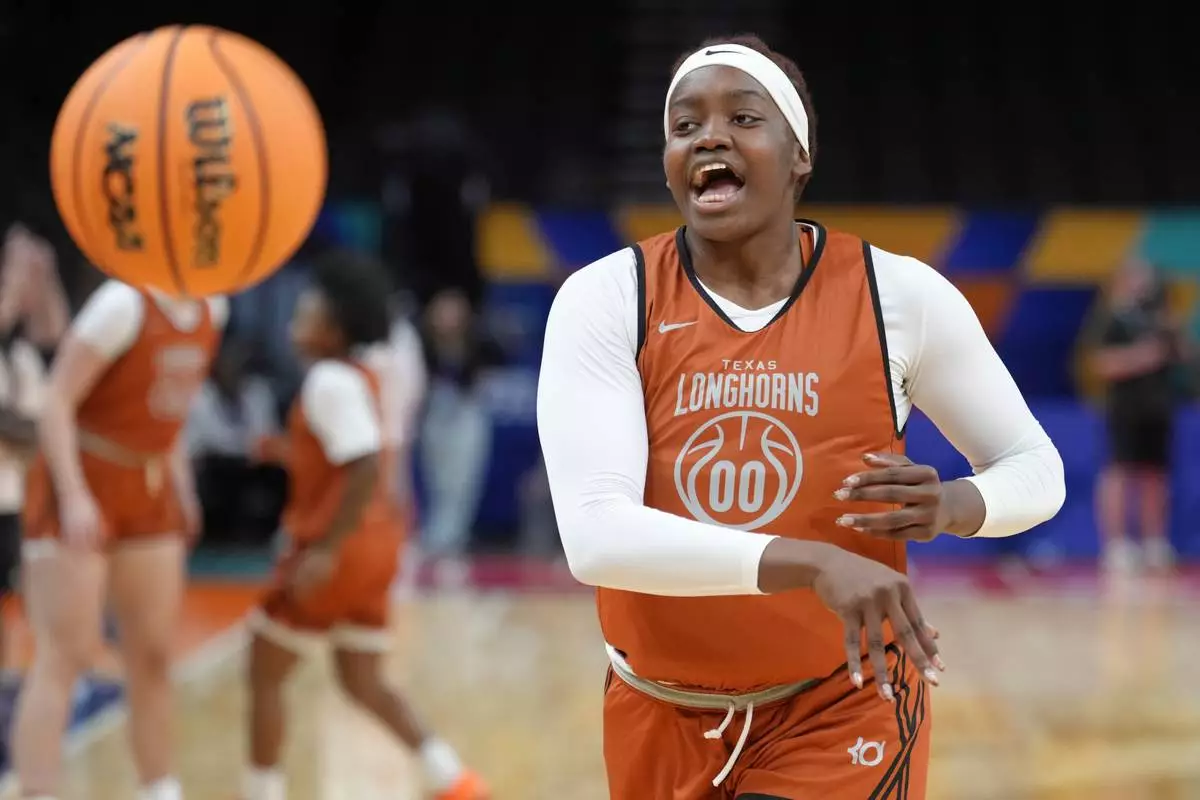
Texas center Kyla Oldacre passes the ball during practice prior to the national semifinals Women's Final Four of the NCAA college basketball tournament, Thursday, April 2, 2026, in Phoenix. (AP Photo/Ross D. Franklin)
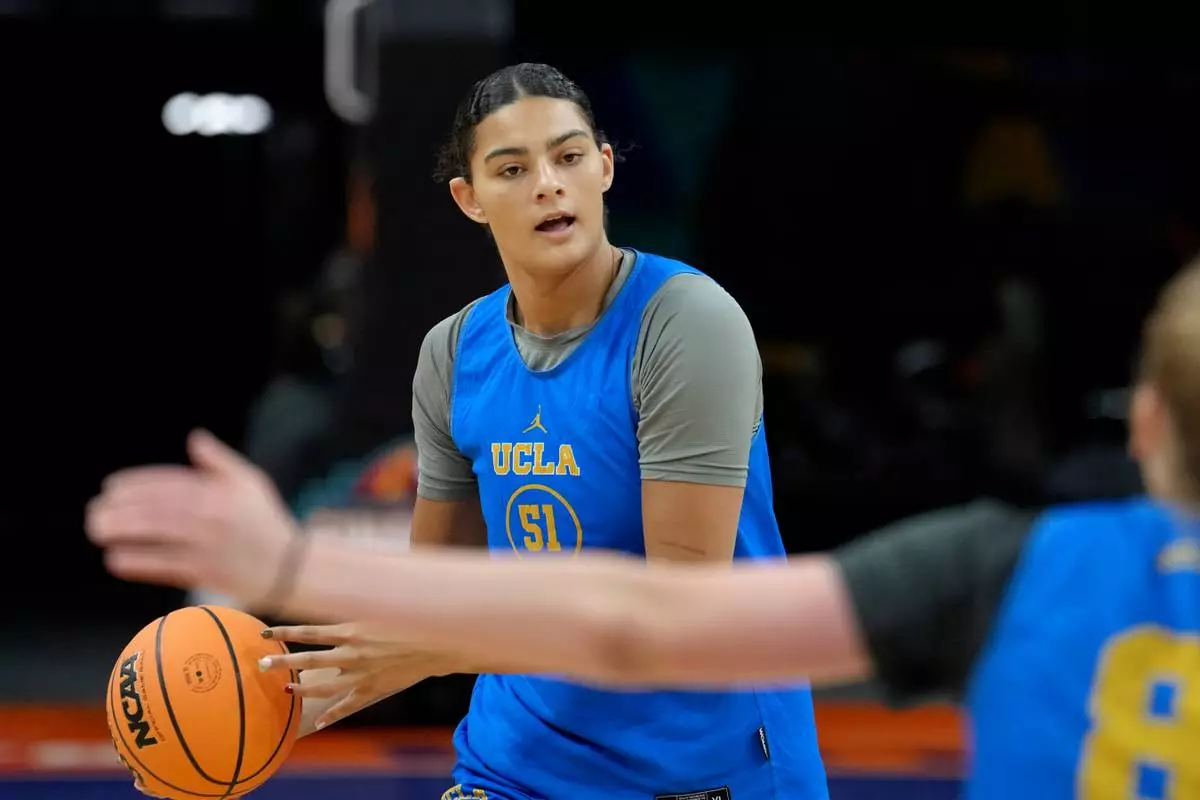
UCLA center Lauren Betts passes the ball during practice prior to the national semifinals at the Women's Final Four of the NCAA college basketball tournament, Thursday, April 2, 2026, in Phoenix. (AP Photo/Ross D. Franklin)
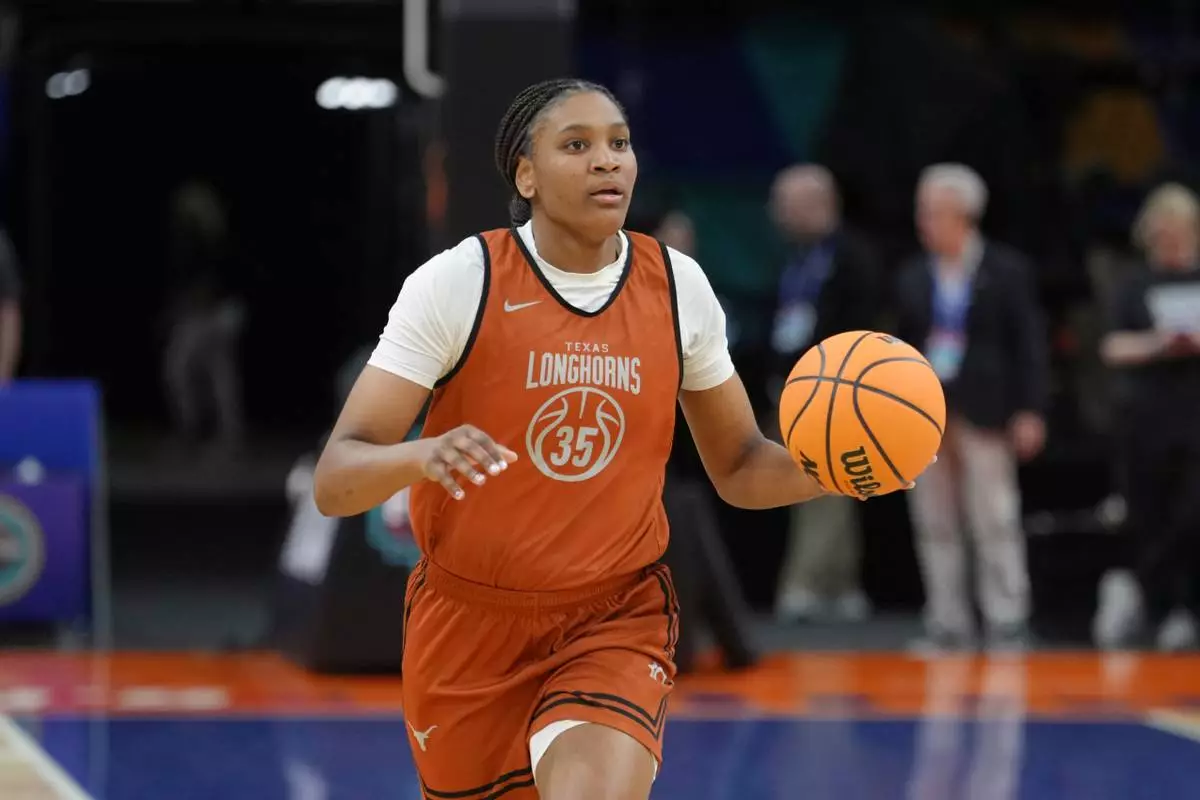
Texas forward Madison Booker dribbles the ball during practice prior to the national semifinals Women's Final Four of the NCAA college basketball tournament, Thursday, April 2, 2026, in Phoenix. (AP Photo/Ross D. Franklin)