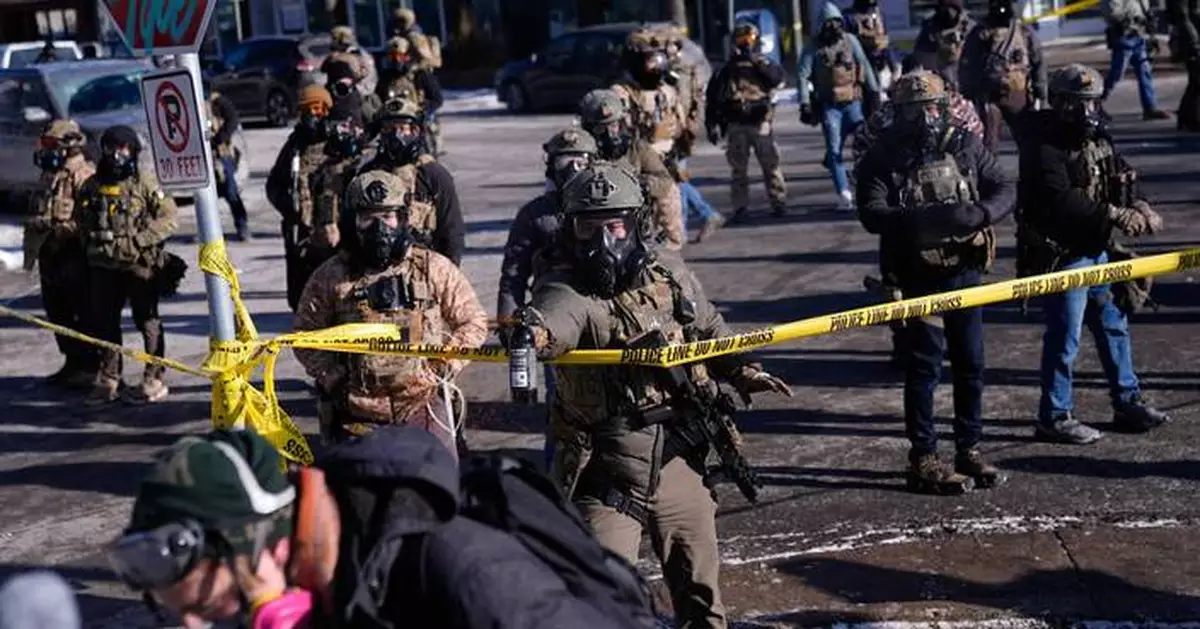
MINNEAPOLIS (AP) — The Trump administration's immigration crackdown on the Minneapolis area has been drawing heated daily protests, particularly since a U.S. Border Patrol officer shot and killed demonstrator Alex Pretti.
This is a photo gallery curated by AP photo editors.
Click to Gallery

People attend a vigil where Alex Pretti was shot and killed by federal immigration enforcement in Minneapolis, on Wednesday, Jan. 28, 2026. (AP Photo/Adam Gray)
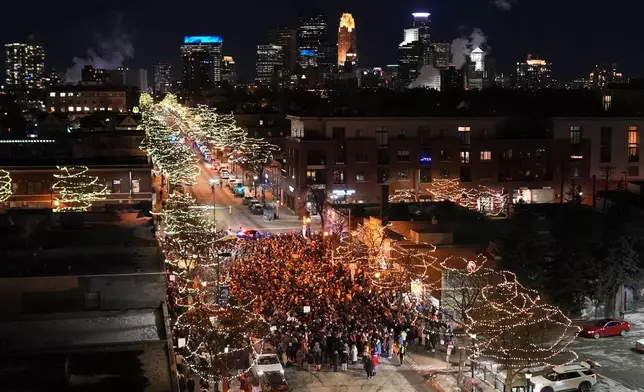
People gather during a vigil where Alex Pretti was shot and killed by federal immigration enforcement in Minneapolis, on Wednesday, Jan. 28, 2026. (AP Photo/Adam Gray)
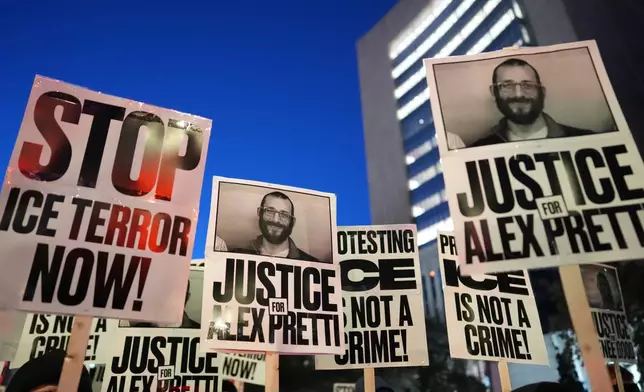
Demonstrators hold signs during a rally against federal immigration enforcement at Federal Courthouse Plaza on Tuesday, Jan. 27, 2026, in Minneapolis. (AP Photo/Adam Gray)
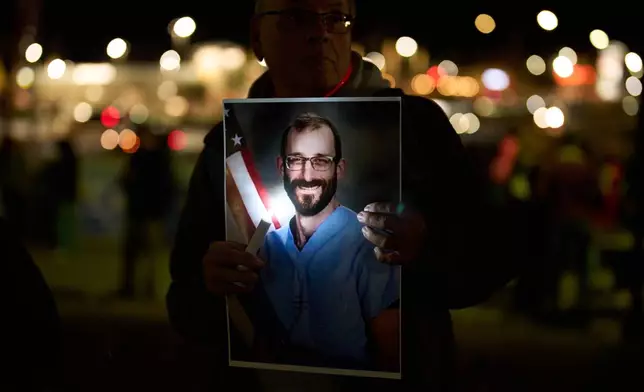
A person holds a picture during a vigil for Alex Pretti, who was shot and killed by federal immigration enforcement in Minneapolis, Wednesday, Jan. 28, 2026, in Henderson, Nev. (AP Photo/John Locher)
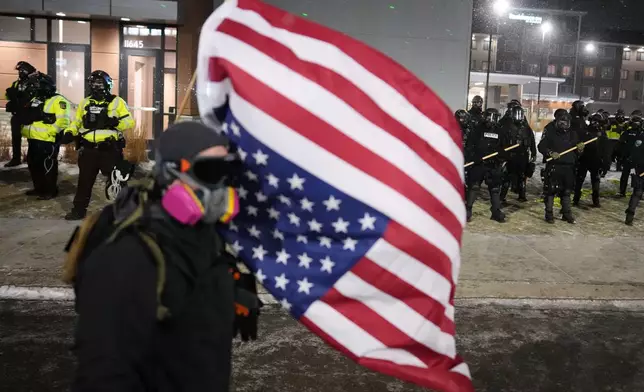
A demonstrator holds an upside-down American flag as law enforcement stand during a protest outside SpringHill Suites and Residence Inn by Marriott hotels on Monday, Jan. 26, 2026, in Maple Grove, Minn. (AP Photo/Adam Gray)
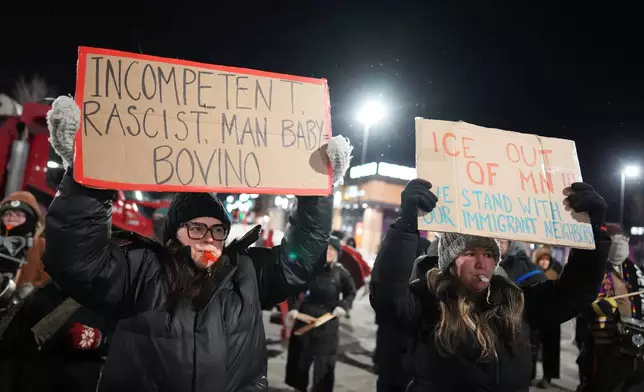
Demonstrators make noise during a protest outside a SpringHill Suites and Residence Inn by Marriott hotels on Monday, Jan. 26, 2026, in Maple Grove, Minn. (AP Photo/Adam Gray)

A demonstrator holds a sign reading "ICE OUT" during a protest outside the office of Sen. Amy Klobuchar, D-Minn., on Monday, Jan. 26, 2026, in Minneapolis. (AP Photo/Adam Gray)
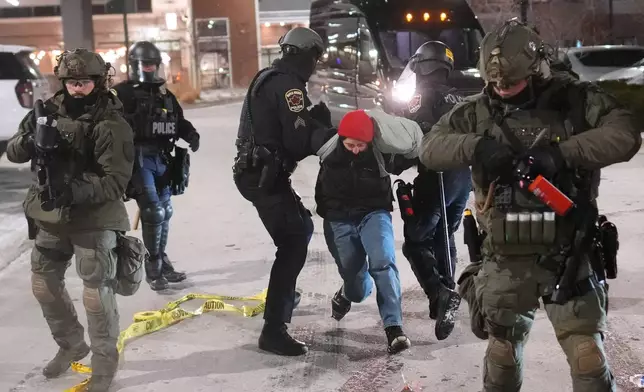
Law enforcement officers detain a demonstrator during a protest outside SpringHill Suites and Residence Inn by Marriott hotels on Monday, Jan. 26, 2026, in Maple Grove, Minn. (AP Photo/Adam Gray)

People inside a SpringHill Suites by Marriott hotel watch as law enforcement clash with protesters outside the hotel on Monday, Jan. 26, 2026, in Maple Grove, Minn. (AP Photo/Adam Gray)
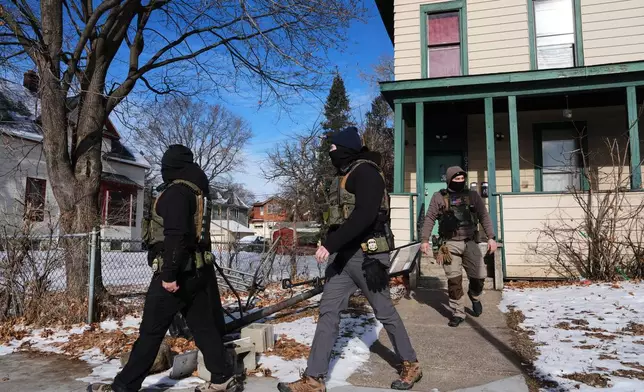
Federal immigration officers walk away after knocking on a door Monday, Jan. 26, 2026, in St. Paul, Minn. (AP Photo/Adam Gray)
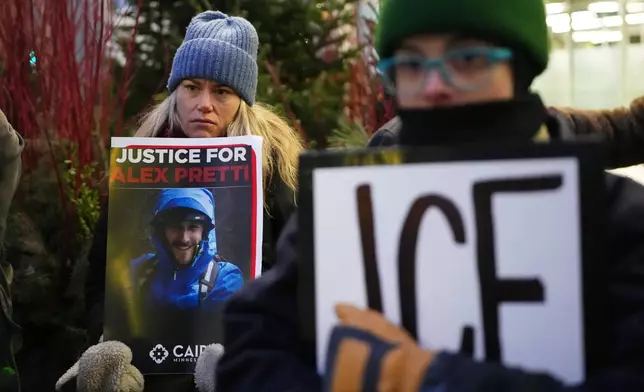
Demonstrator holds signs during a protest outside the office of Sen. Amy Klobuchar, D-Minn., on Monday, Jan. 26, 2026, in Minneapolis, after Alex Pretti was fatally shot by a U.S. Border Patrol officer over the weekend. (AP Photo/Adam Gray)
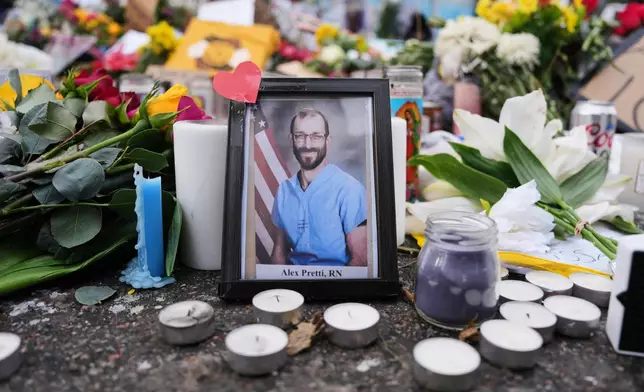
A photo of 37-year-old Alex Pretti, who was fatally shot by a U.S. Border Patrol officer over the weekend, is displayed at the shooting scene Monday, Jan. 26, 2026, in Minneapolis. (AP Photo/Adam Gray)
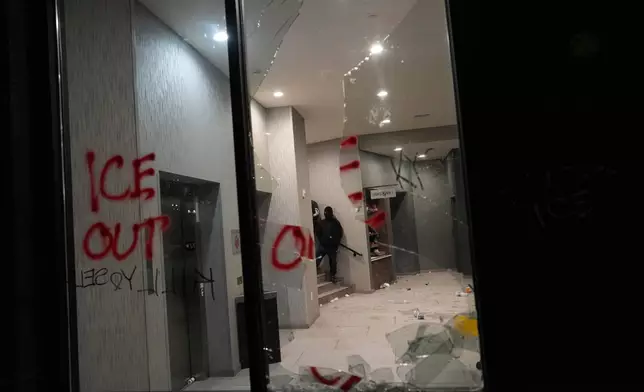
A smashed window is seen at a hotel during a noise demonstration protest in response to federal immigration enforcement operations in the city Sunday, Jan. 25, 2026, in Minneapolis. (AP Photo/Adam Gray)
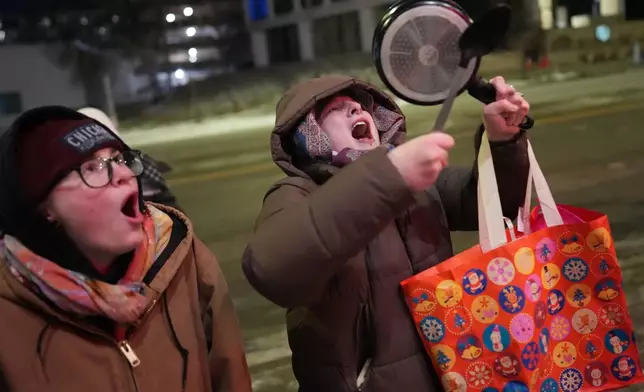
People take part in a noise demonstration protest in response to federal immigration enforcement operations in the city Sunday, Jan. 25, 2026, in Minneapolis. (AP Photo/Adam Gray)
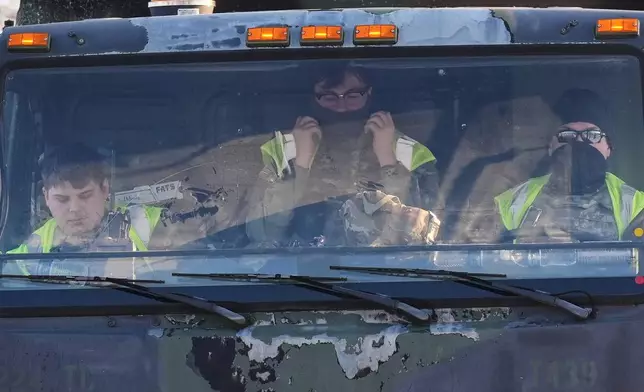
Minnesota National Guard members sit inside their vehicle outside the Bishop Henry Whipple Federal Building, Sunday, Jan. 25, 2026, in Minneapolis. (AP Photo/Adam Gray)
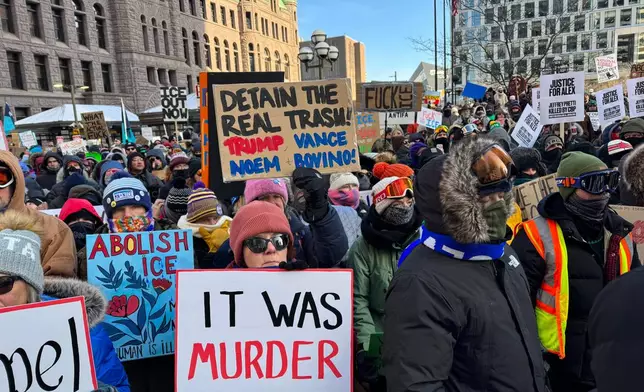
People participate in an anti-ICE rally Sunday, Jan. 25, 2026, in Minneapolis. (AP Photo/Jack Brook)
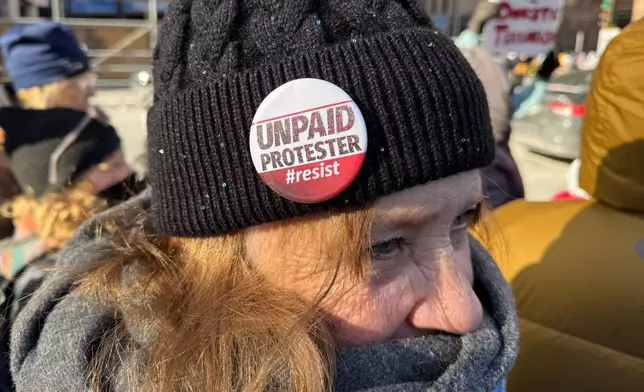
People participate in an anti-ICE rally Sunday, Jan. 25, 2026, in Minneapolis. (AP Photo/Jack Brook)

EDS NOTE: OBSCENITY - People protest against ICE (Immigration and Customs Enforcement) in downtown Minneapolis, Sunday, Jan. 25, 2026. (AP Photo/Adam Gray)
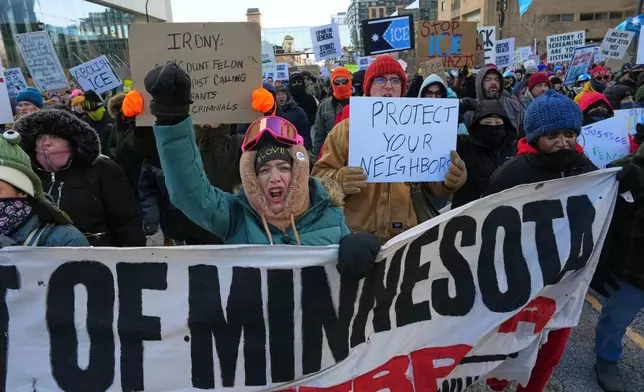
People protest against ICE (Immigration and Customs Enforcement) in downtown Minneapolis, Sunday, Jan. 25, 2026. (AP Photo/Adam Gray)
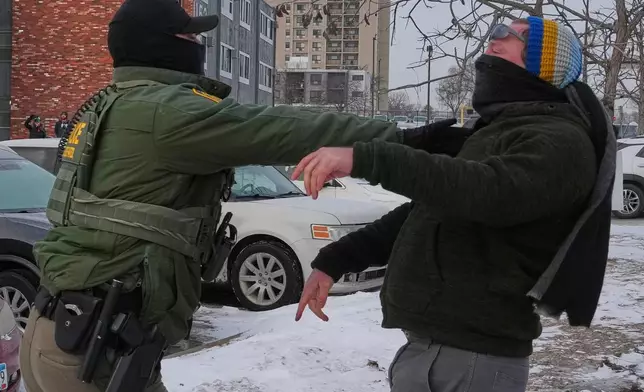
A person is pushed back by a federal agent working on the scene in Minneapolis, Sunday, Jan. 25, 2026. (AP Photo/Adam Gray)
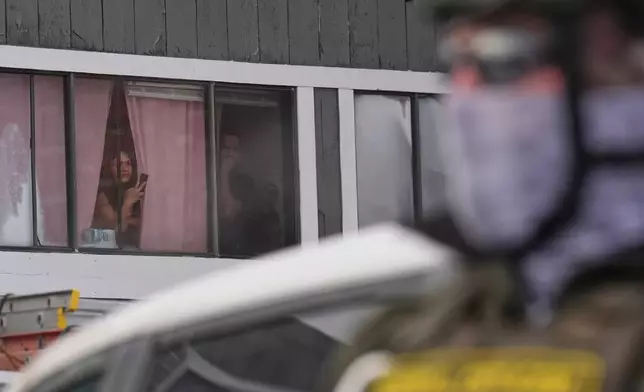
People glance out of their window as federal immigration agents work on the scene in Minneapolis, Sunday, Jan. 25, 2026. (AP Photo/Adam Gray)
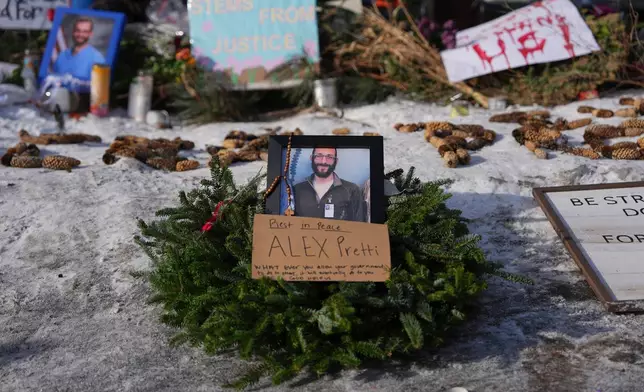
A makeshift memorial is placed where Alex Pretti was fatally shot by a U.S. Border Patrol officer yesterday, in Minneapolis, Sunday, Jan. 25, 2026. (AP Photo/Adam Gray)
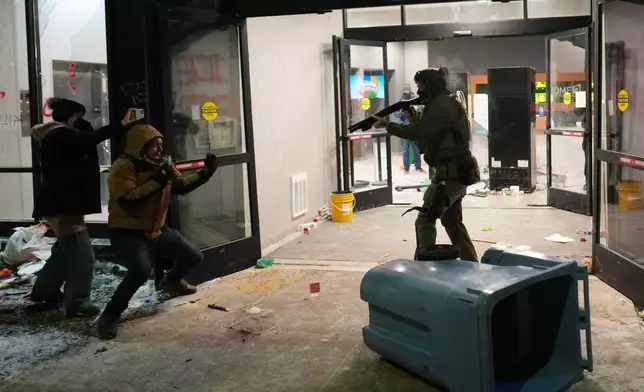
A federal agent points a weapon at a person outside a hotel during a noise demonstration protest in response to federal immigration enforcement operations in the city Sunday, Jan. 25, 2026, in Minneapolis. (AP Photo/Adam Gray)

Federal agents try to clear demonstrators near a hotel, using tear gas during a noise demonstration protest in response to federal immigration enforcement operations in the city Sunday, Jan. 25, 2026, in Minneapolis. (AP Photo/Adam Gray)
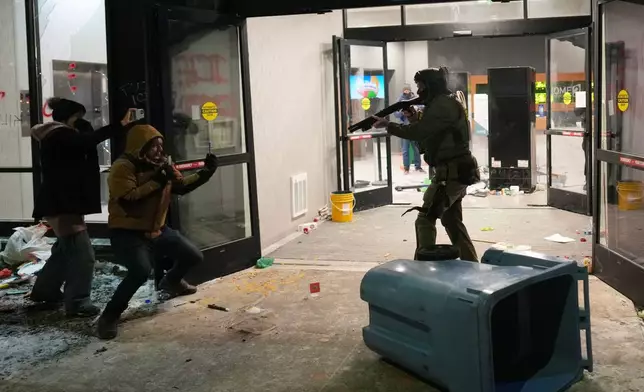
A federal agent points a weapon at a person outside a hotel during a noise demonstration protest in response to federal immigration enforcement operations in the city Sunday, Jan. 25, 2026, in Minneapolis. (AP Photo/Adam Gray)
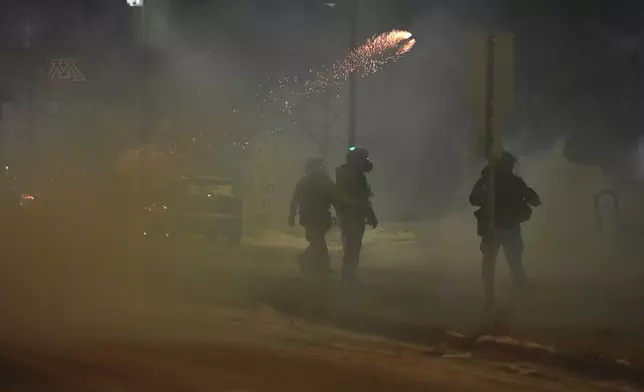
Flares are seen as federal agents try to clear the demonstrators near a hotel, using tear gas during a noise demonstration protest in response to federal immigration enforcement operations in the city Sunday, Jan. 25, 2026, in Minneapolis. (AP Photo/Adam Gray)
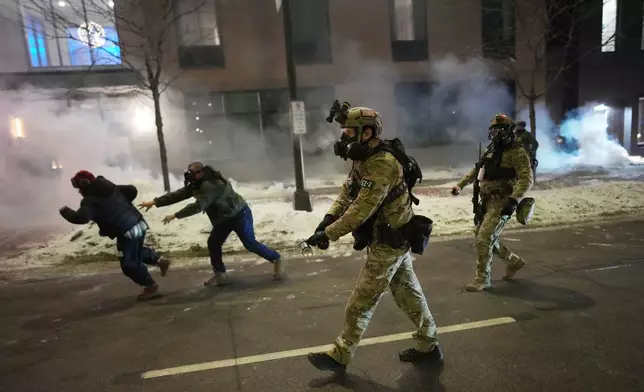
Federal agents try to clear the demonstrators near a hotel, using tear gas during a noise demonstration protest in response to federal immigration enforcement operations in the city Sunday, Jan. 25, 2026, in Minneapolis. (AP Photo/Adam Gray)
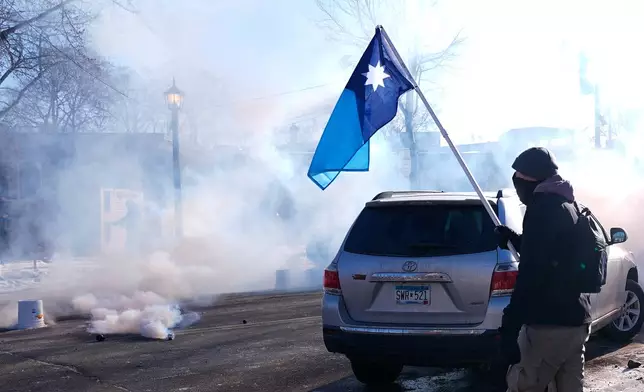
A person holds a Minnesota state flag as federal immigration officers deploy tear gas Saturday, Jan. 24, 2026, in Minneapolis. (AP Photo/Abbie Parr)
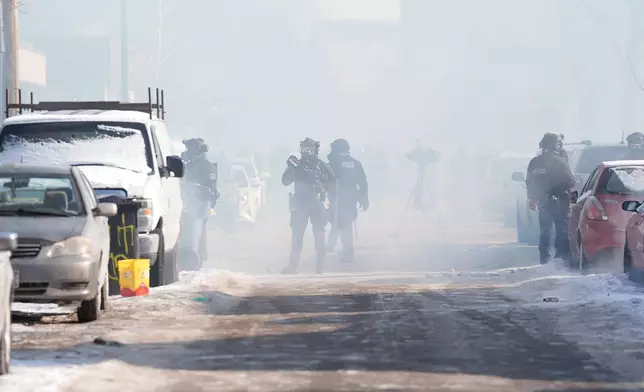
Federal immigration officers deploy tear gas at protesters after a shooting Saturday, Jan. 24, 2026, in Minneapolis. (AP Photo/Abbie Parr)
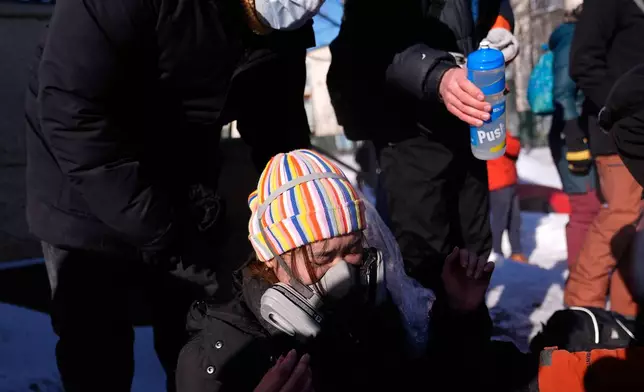
A person is tended to after federal immigration officers deploy tear gas Saturday, Jan. 24, 2026, in Minneapolis. (AP Photo/Abbie Parr)
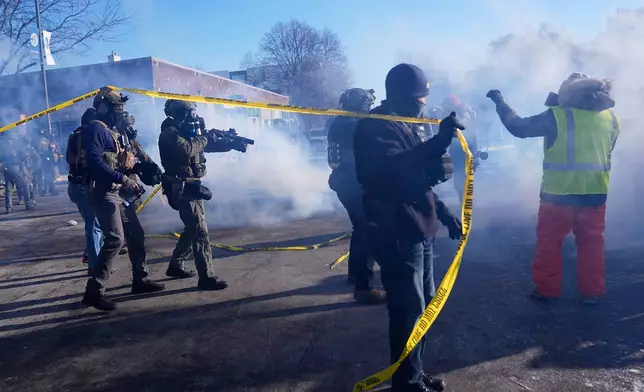
Federal immigration officers deploy tear gas at protesters after a shooting Saturday, Jan. 24, 2026, in Minneapolis. (AP Photo/Abbie Parr)
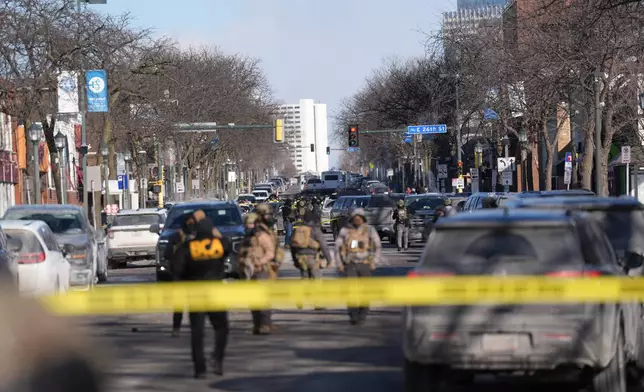
Federal agents stand near the site of a shooting Saturday, Jan. 24, 2026, in Minneapolis. (AP Photo/Abbie Parr)
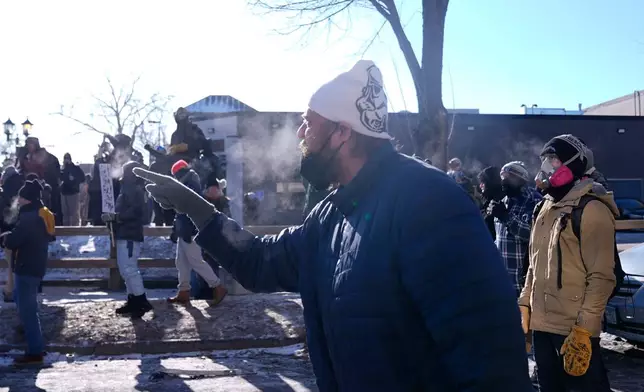
A person yells at federal immigration officers, Saturday, Jan. 24, 2026, in Minneapolis. (AP Photo/Abbie Parr)
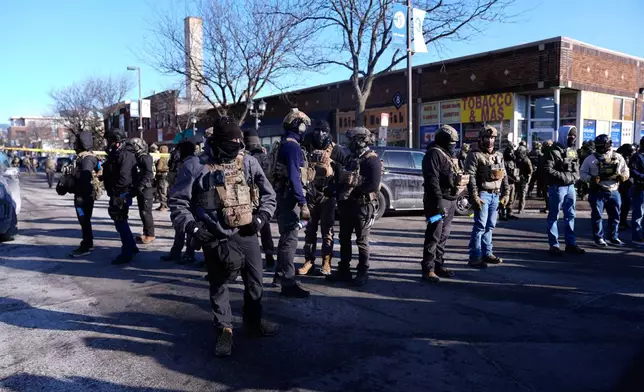
Federal agents stand near the site of a shooting Saturday, Jan. 24, 2026, in Minneapolis. (AP Photo/Abbie Parr)
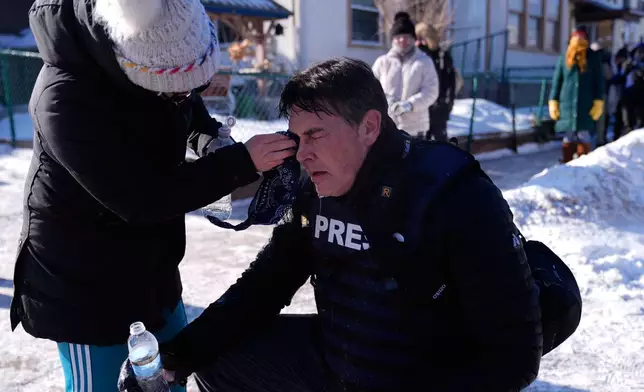
Photographer John Autey gets medial attention on Saturday, Jan. 24, 2026, in Minneapolis. (AP Photo/Abbie Parr)
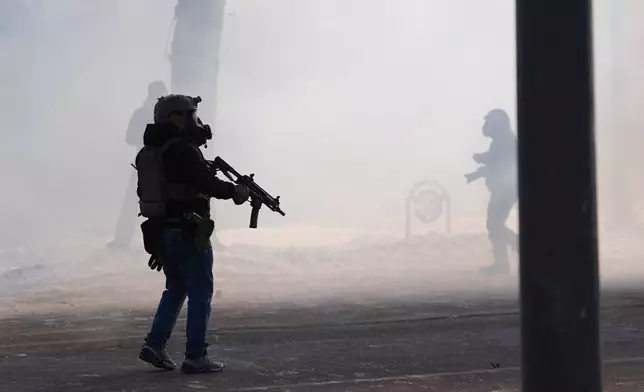
Federal immigration officers deploy tear gas after a shooting in Minneapolis, on Saturday, Jan. 24, 2026. (AP Photo/Abbie Parr)
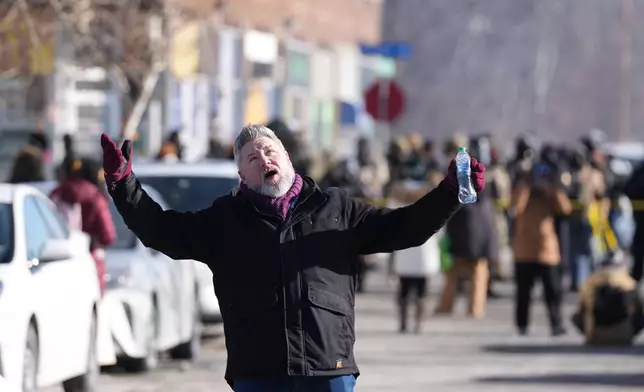
A person reacts to federal immigration officers after a shooting Saturday, Jan. 24, 2026, in Minneapolis. (AP Photo/Abbie Parr)
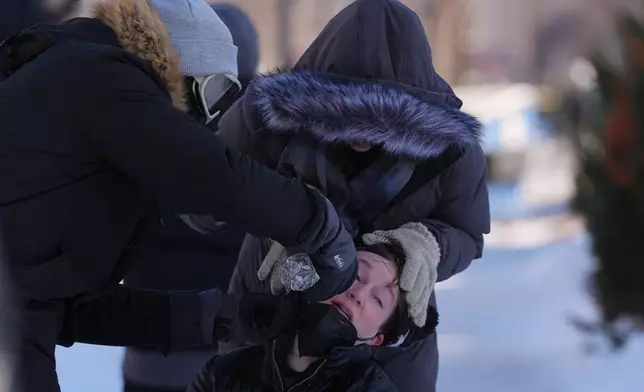
A person gets their eyes washed out after federal immigration officers deploy pepper spray Saturday, Jan. 24, 2026, in Minneapolis. (AP Photo/Abbie Parr)
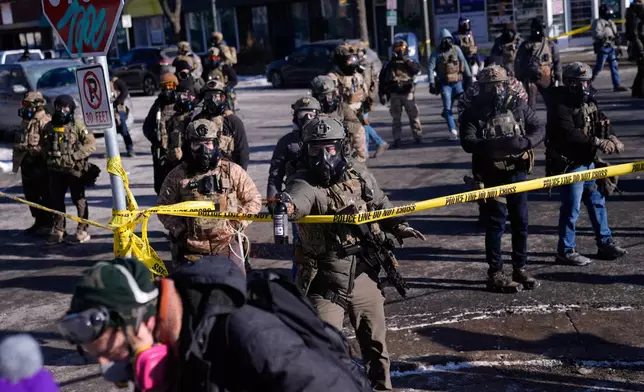
Federal immigration officers deploy pepper spray at protesters after a shooting Saturday, Jan. 24, 2026, in Minneapolis. (AP Photo/Abbie Parr)
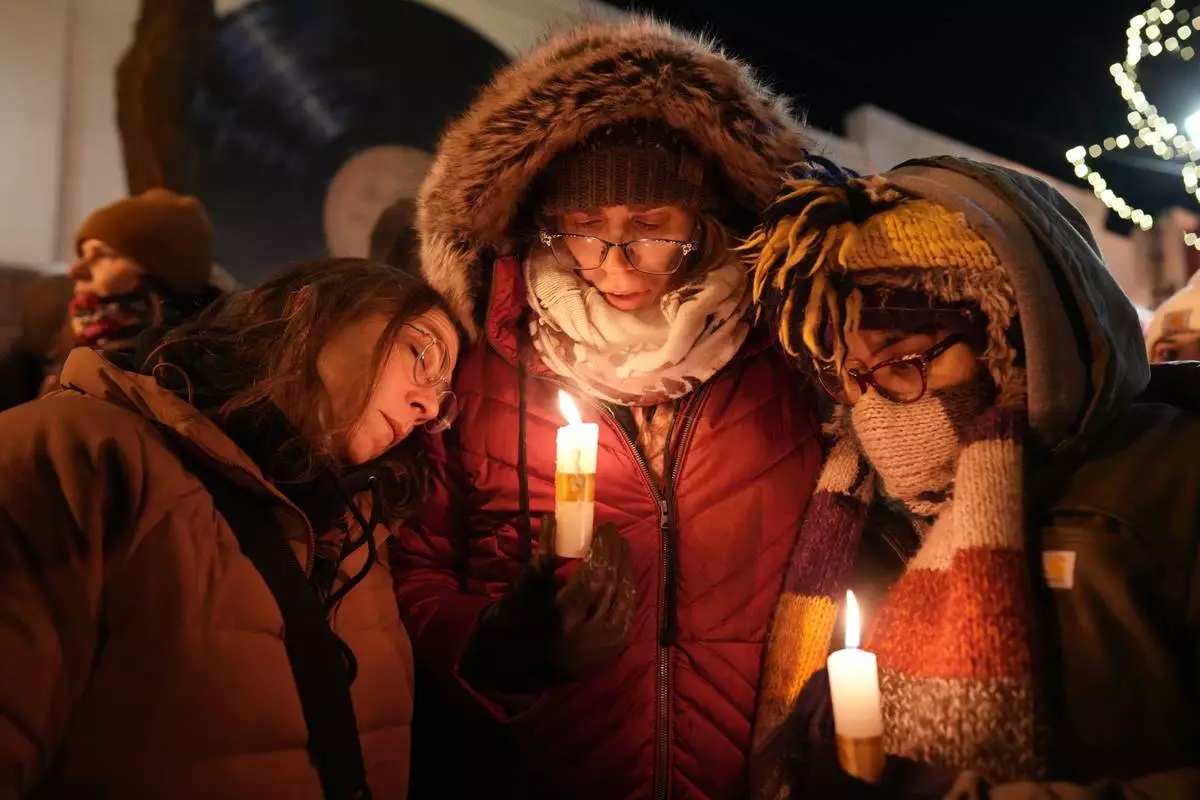
People attend a vigil where Alex Pretti was shot and killed by federal immigration enforcement in Minneapolis, on Wednesday, Jan. 28, 2026. (AP Photo/Adam Gray)
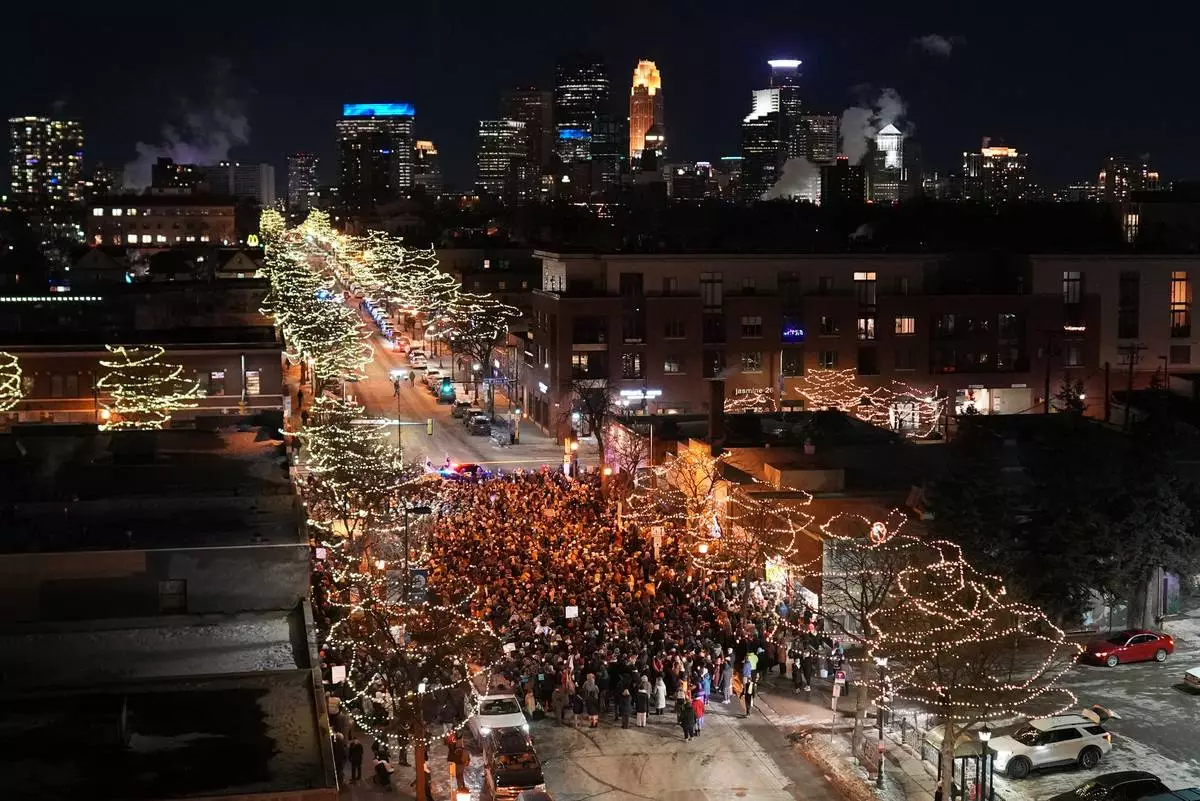
People gather during a vigil where Alex Pretti was shot and killed by federal immigration enforcement in Minneapolis, on Wednesday, Jan. 28, 2026. (AP Photo/Adam Gray)
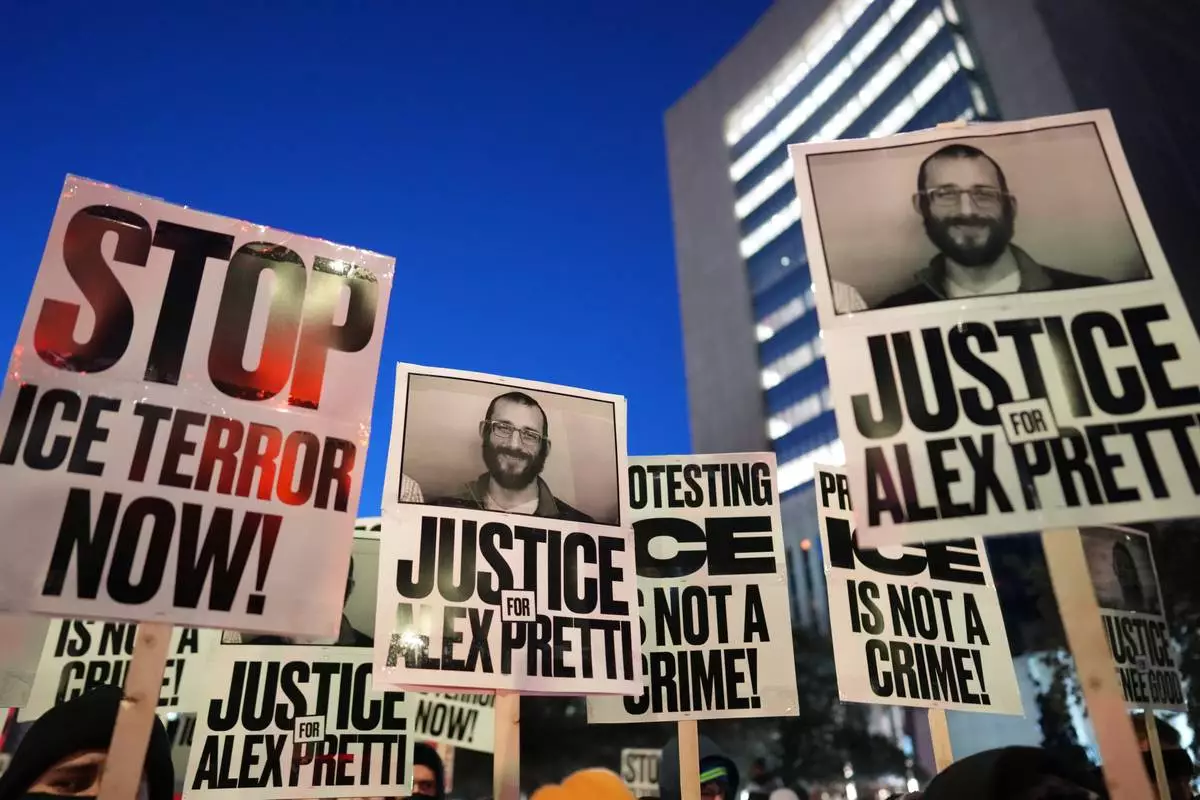
Demonstrators hold signs during a rally against federal immigration enforcement at Federal Courthouse Plaza on Tuesday, Jan. 27, 2026, in Minneapolis. (AP Photo/Adam Gray)
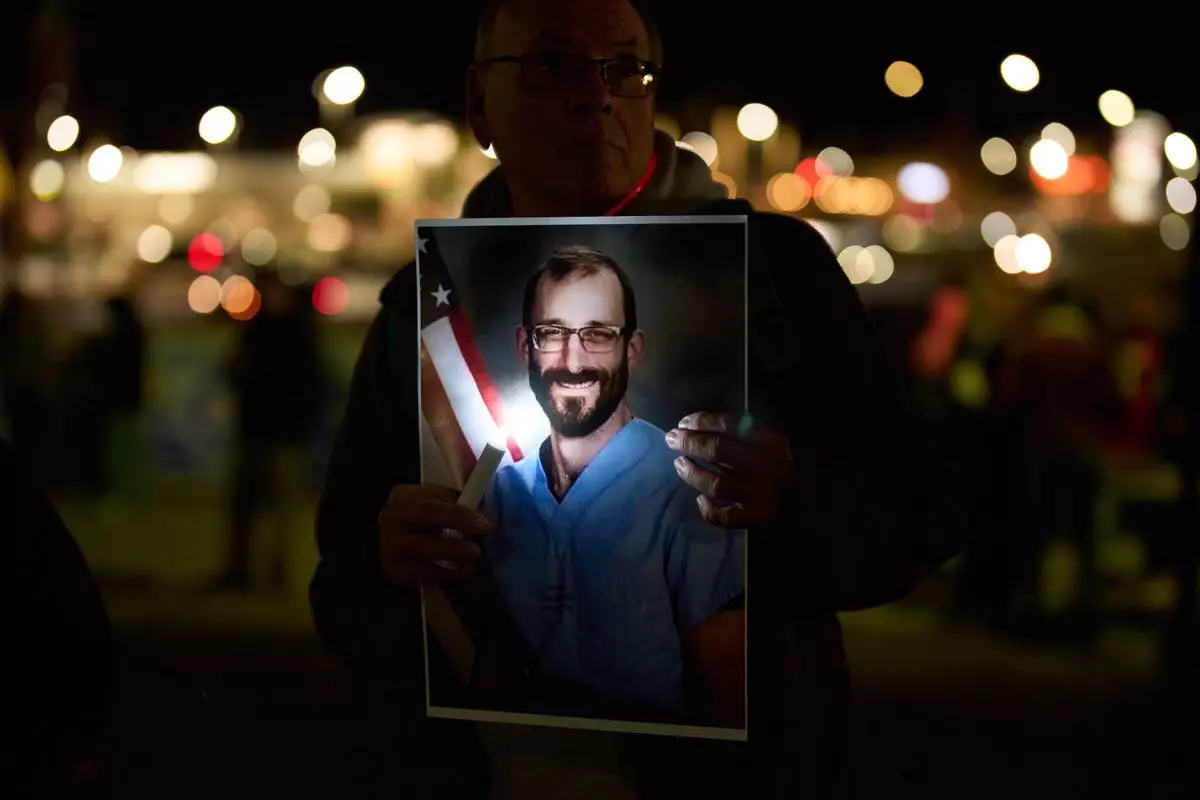
A person holds a picture during a vigil for Alex Pretti, who was shot and killed by federal immigration enforcement in Minneapolis, Wednesday, Jan. 28, 2026, in Henderson, Nev. (AP Photo/John Locher)
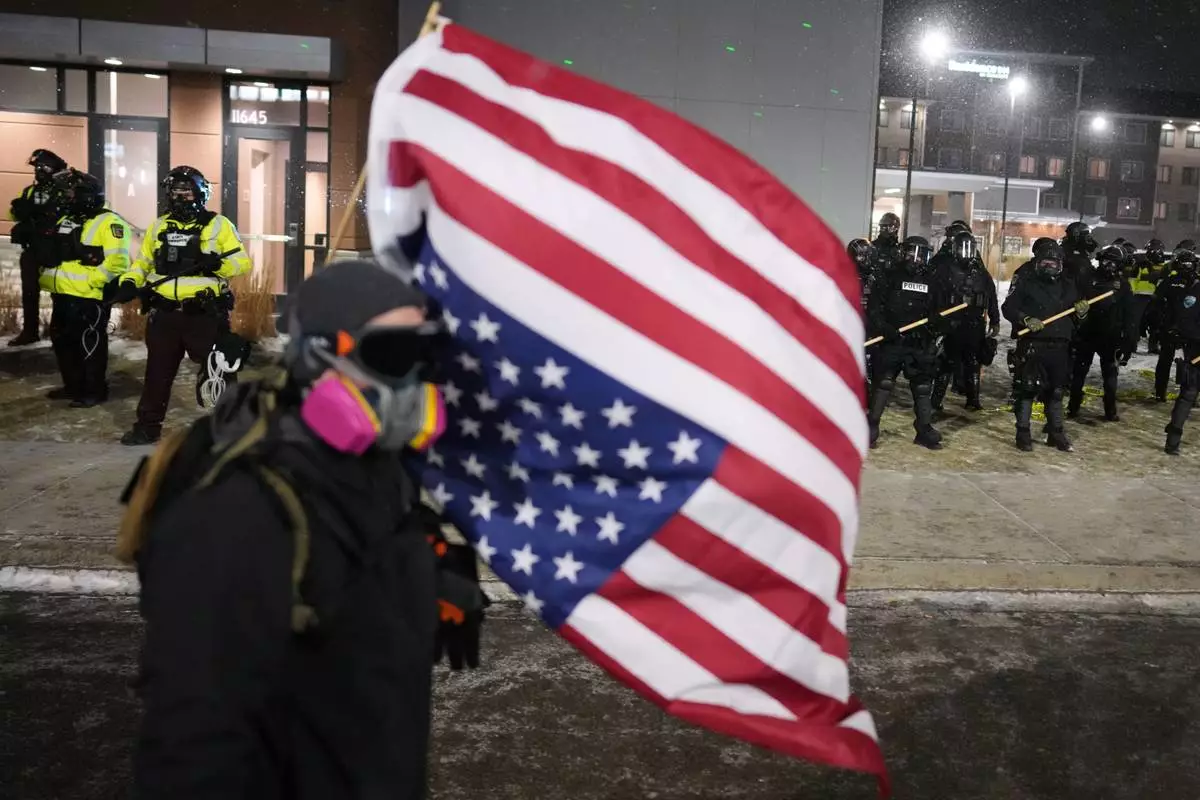
A demonstrator holds an upside-down American flag as law enforcement stand during a protest outside SpringHill Suites and Residence Inn by Marriott hotels on Monday, Jan. 26, 2026, in Maple Grove, Minn. (AP Photo/Adam Gray)
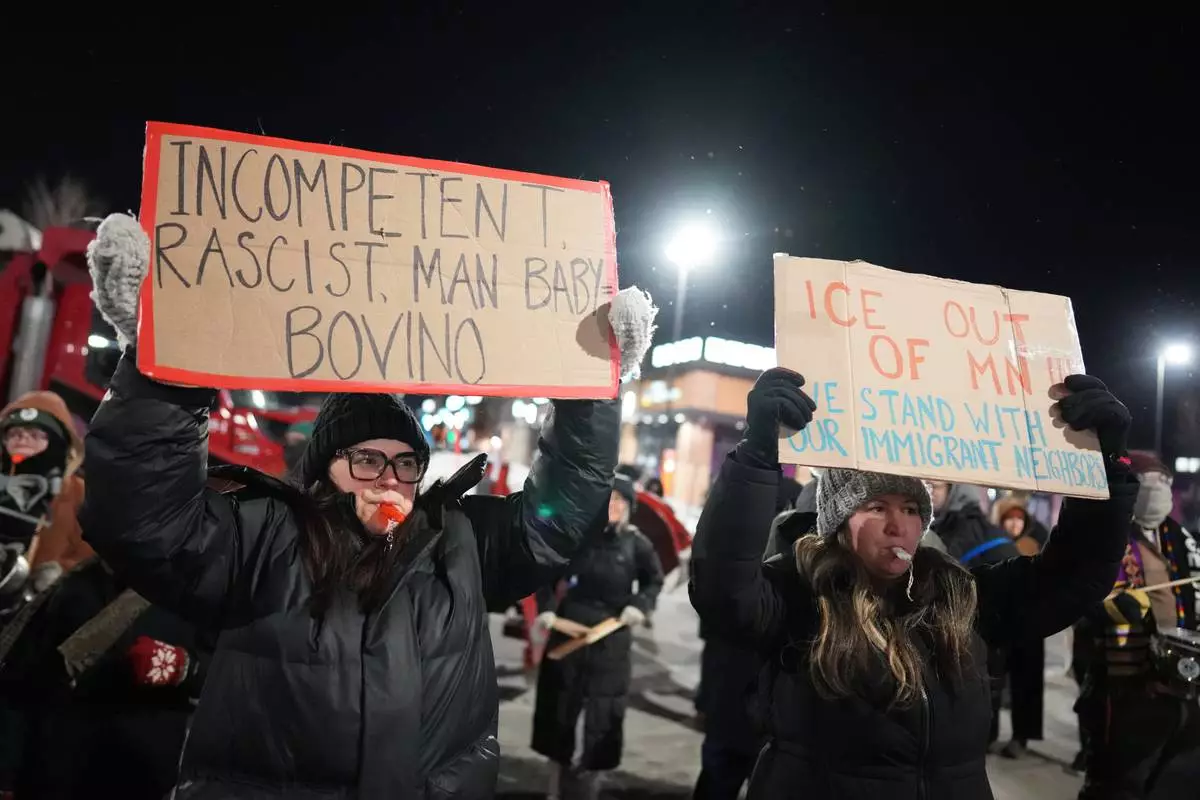
Demonstrators make noise during a protest outside a SpringHill Suites and Residence Inn by Marriott hotels on Monday, Jan. 26, 2026, in Maple Grove, Minn. (AP Photo/Adam Gray)

A demonstrator holds a sign reading "ICE OUT" during a protest outside the office of Sen. Amy Klobuchar, D-Minn., on Monday, Jan. 26, 2026, in Minneapolis. (AP Photo/Adam Gray)
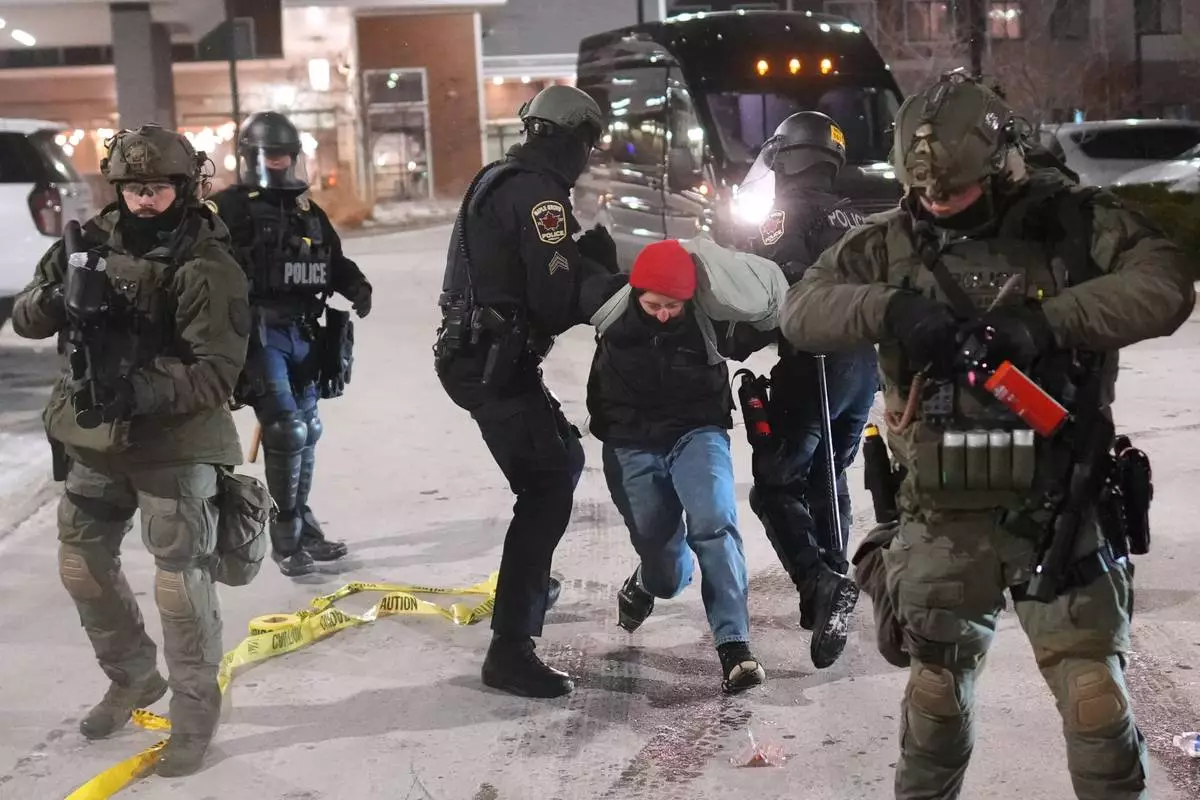
Law enforcement officers detain a demonstrator during a protest outside SpringHill Suites and Residence Inn by Marriott hotels on Monday, Jan. 26, 2026, in Maple Grove, Minn. (AP Photo/Adam Gray)
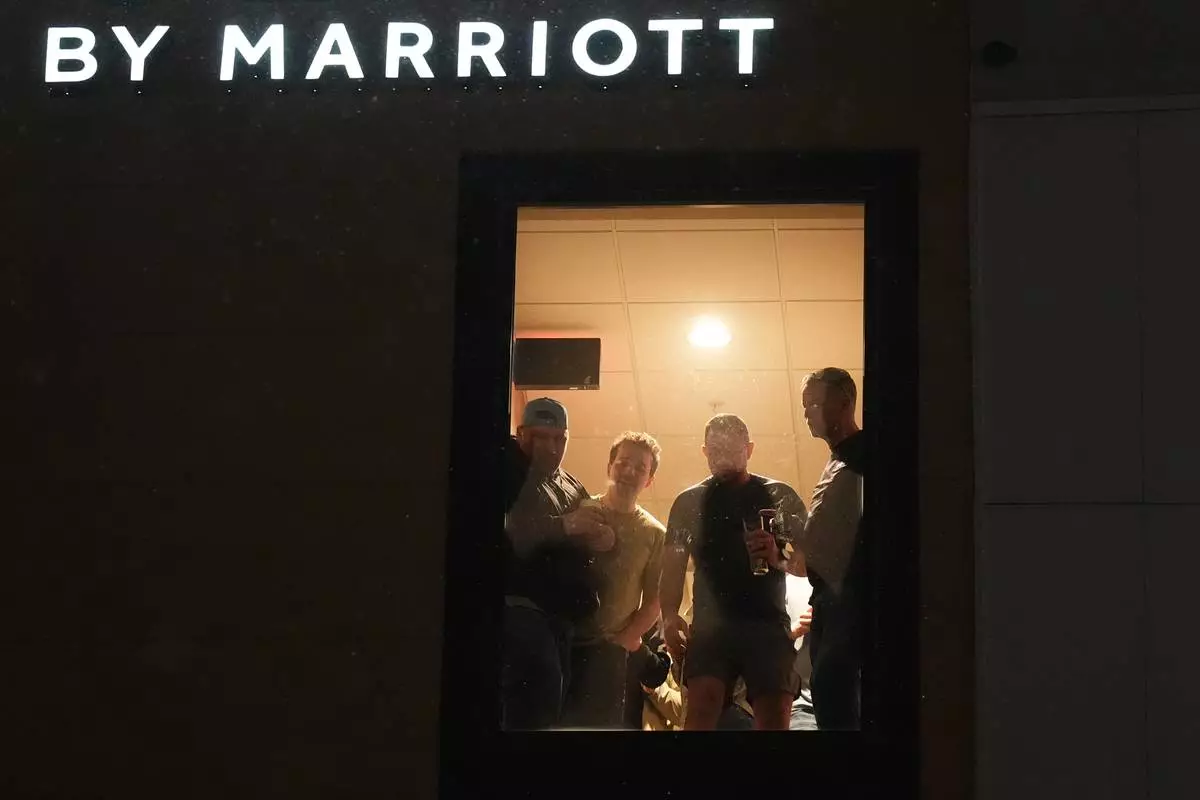
People inside a SpringHill Suites by Marriott hotel watch as law enforcement clash with protesters outside the hotel on Monday, Jan. 26, 2026, in Maple Grove, Minn. (AP Photo/Adam Gray)
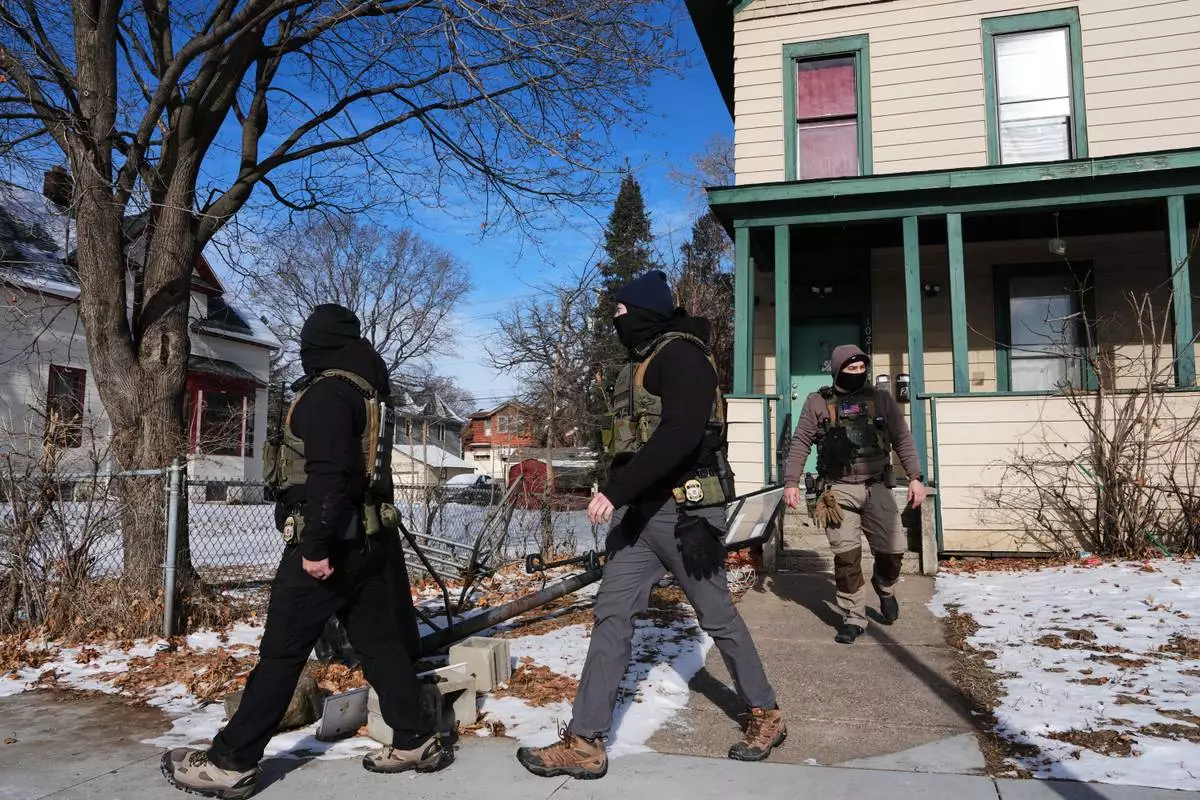
Federal immigration officers walk away after knocking on a door Monday, Jan. 26, 2026, in St. Paul, Minn. (AP Photo/Adam Gray)
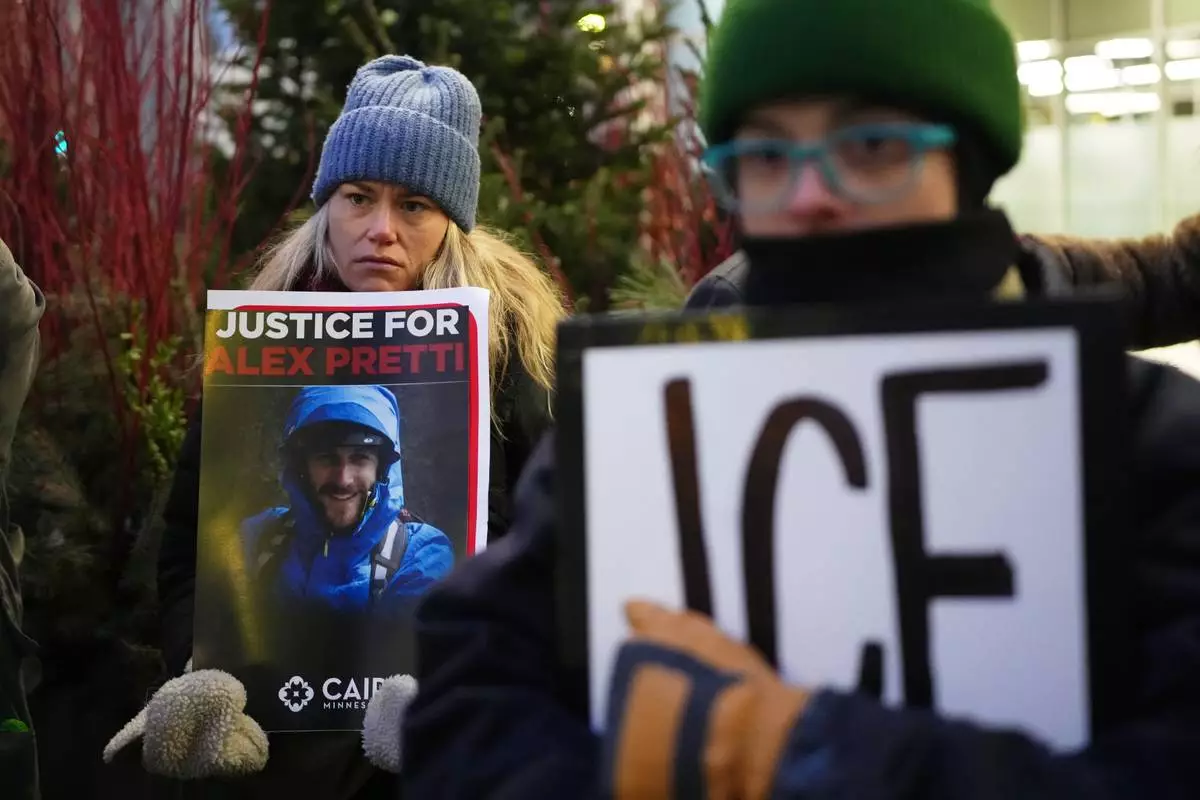
Demonstrator holds signs during a protest outside the office of Sen. Amy Klobuchar, D-Minn., on Monday, Jan. 26, 2026, in Minneapolis, after Alex Pretti was fatally shot by a U.S. Border Patrol officer over the weekend. (AP Photo/Adam Gray)
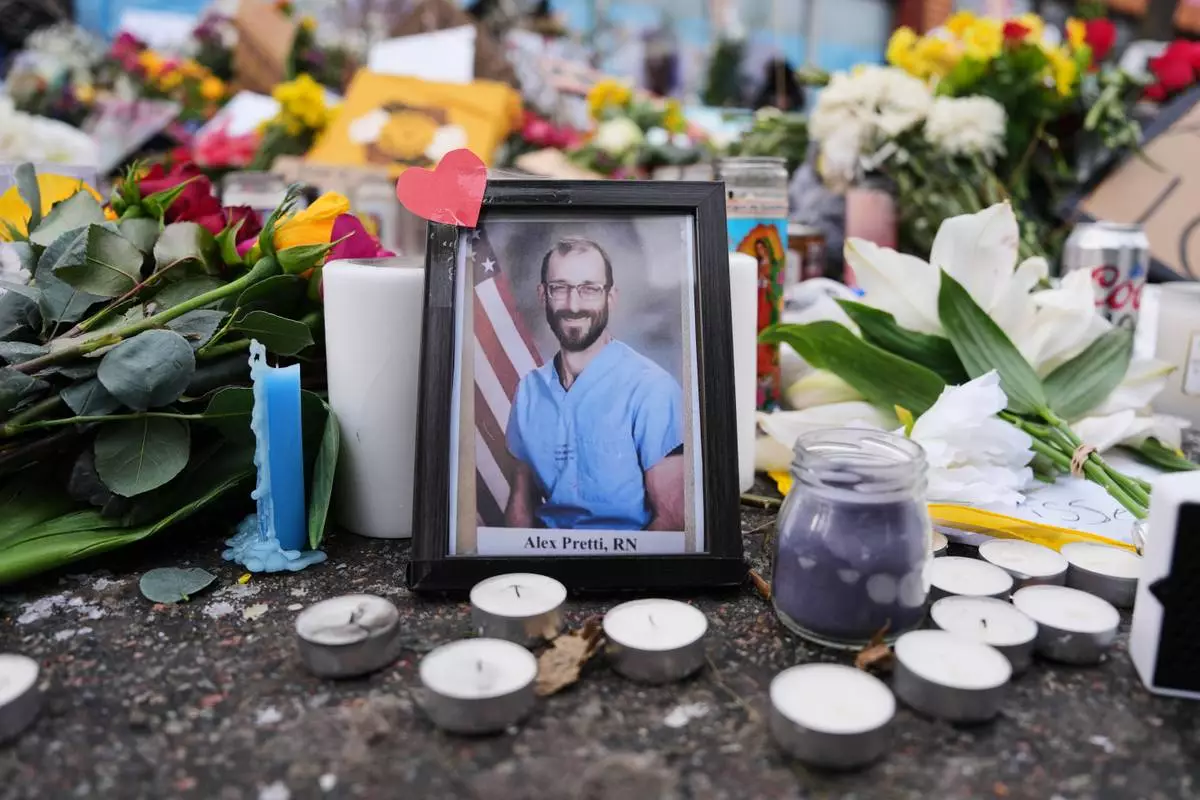
A photo of 37-year-old Alex Pretti, who was fatally shot by a U.S. Border Patrol officer over the weekend, is displayed at the shooting scene Monday, Jan. 26, 2026, in Minneapolis. (AP Photo/Adam Gray)
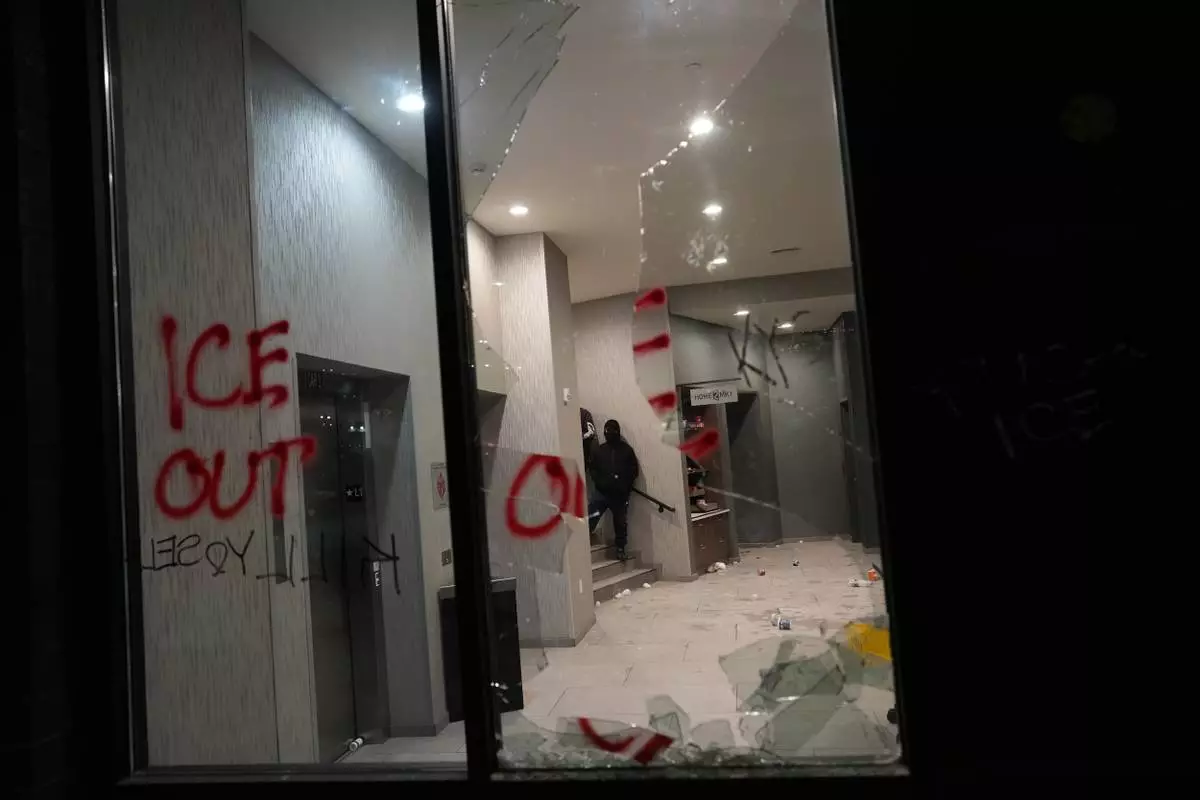
A smashed window is seen at a hotel during a noise demonstration protest in response to federal immigration enforcement operations in the city Sunday, Jan. 25, 2026, in Minneapolis. (AP Photo/Adam Gray)
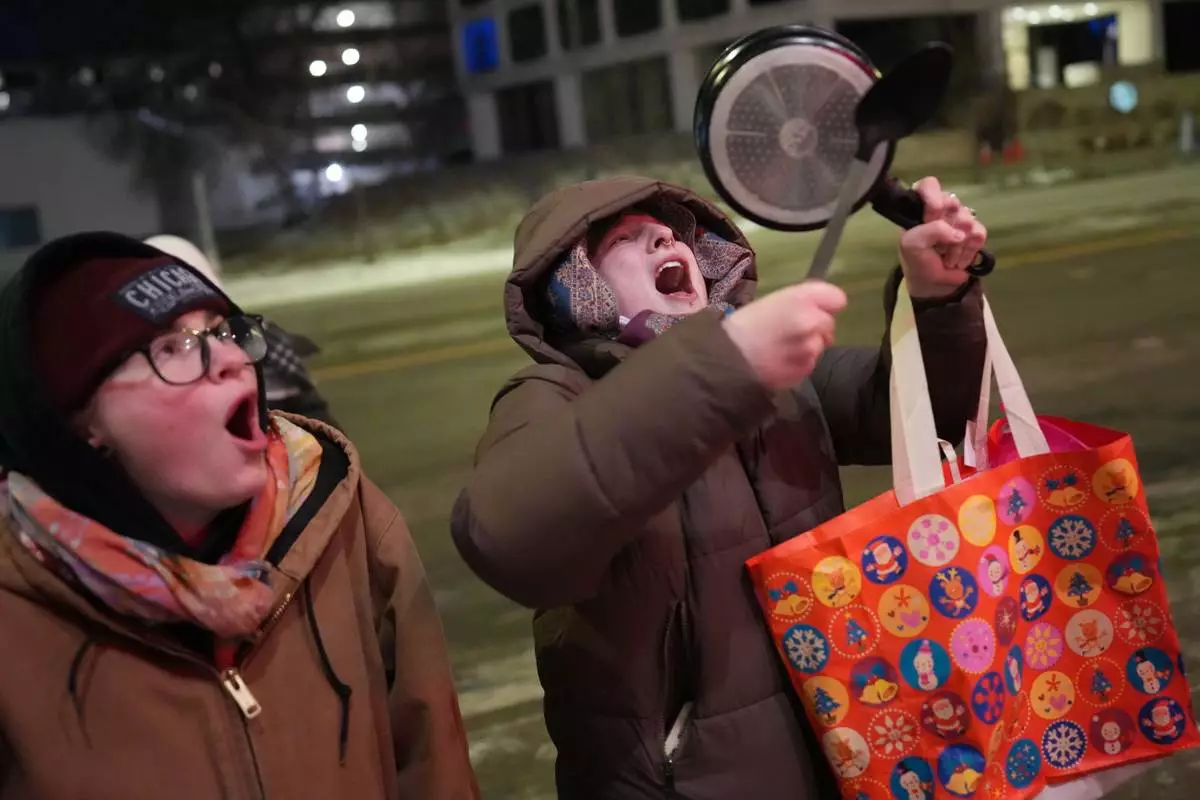
People take part in a noise demonstration protest in response to federal immigration enforcement operations in the city Sunday, Jan. 25, 2026, in Minneapolis. (AP Photo/Adam Gray)
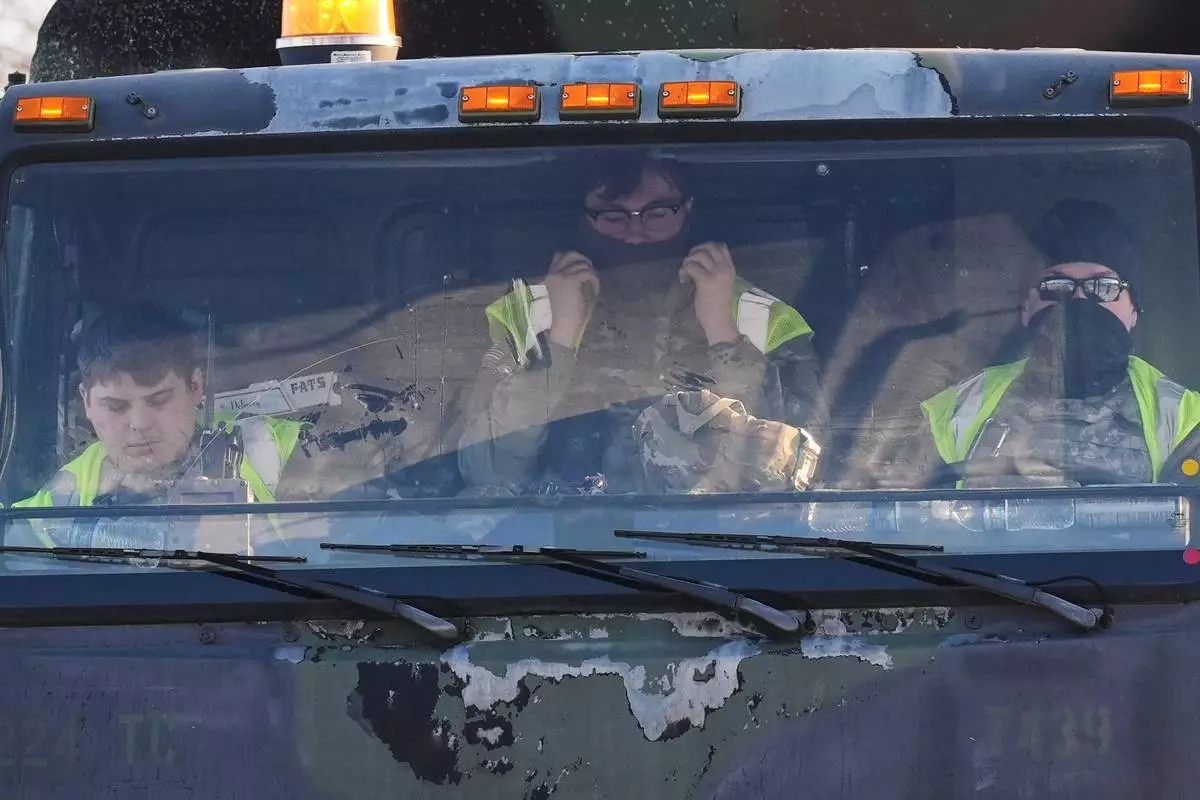
Minnesota National Guard members sit inside their vehicle outside the Bishop Henry Whipple Federal Building, Sunday, Jan. 25, 2026, in Minneapolis. (AP Photo/Adam Gray)
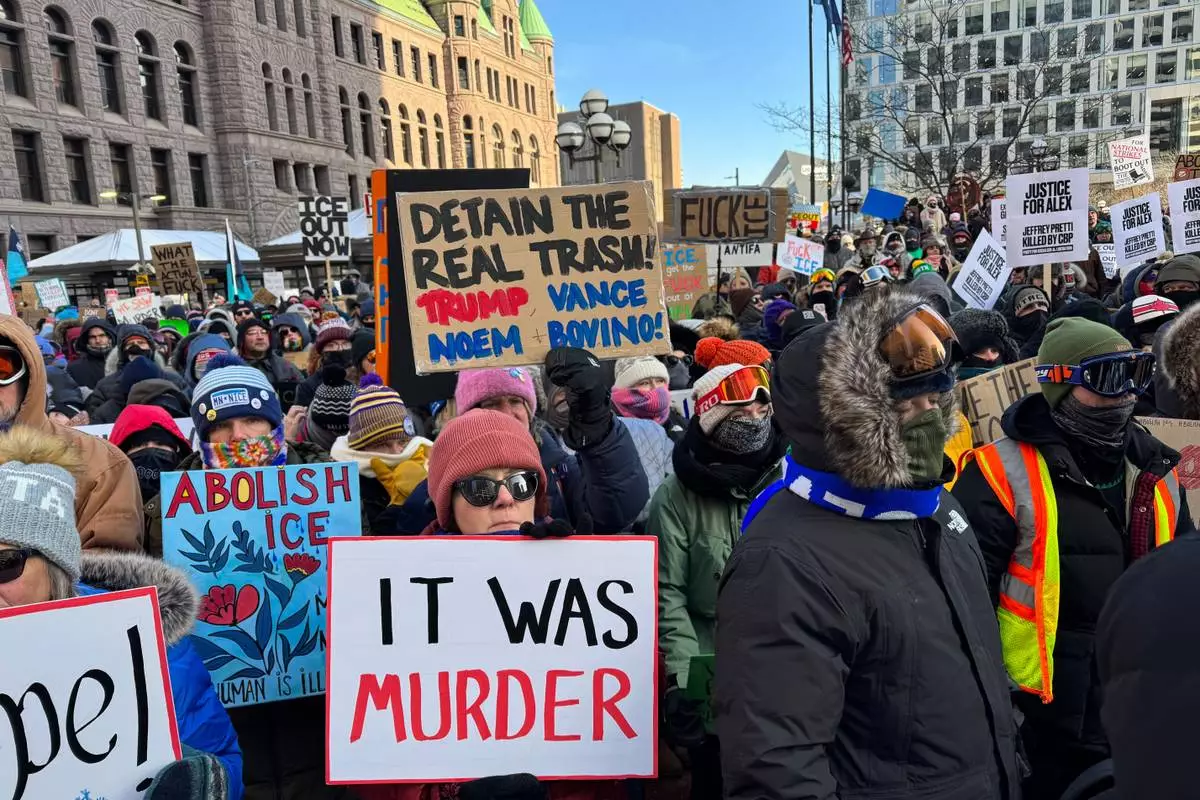
People participate in an anti-ICE rally Sunday, Jan. 25, 2026, in Minneapolis. (AP Photo/Jack Brook)
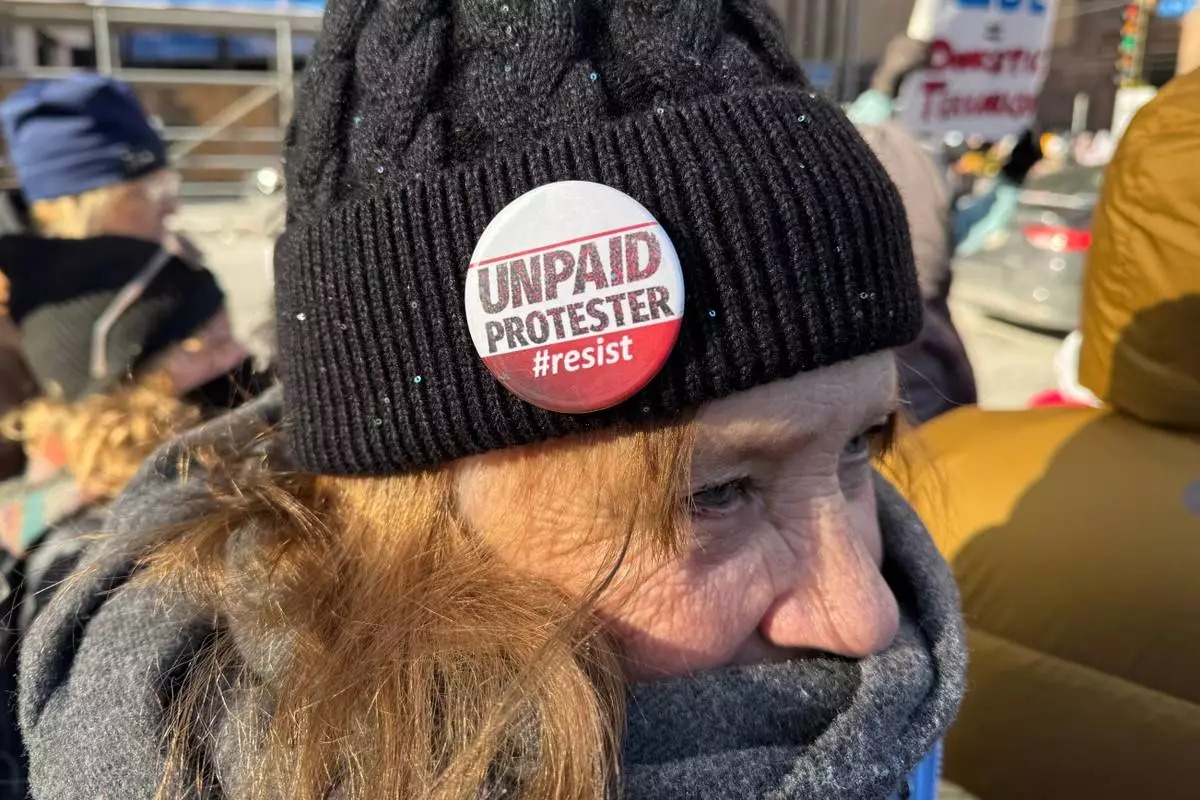
People participate in an anti-ICE rally Sunday, Jan. 25, 2026, in Minneapolis. (AP Photo/Jack Brook)

EDS NOTE: OBSCENITY - People protest against ICE (Immigration and Customs Enforcement) in downtown Minneapolis, Sunday, Jan. 25, 2026. (AP Photo/Adam Gray)
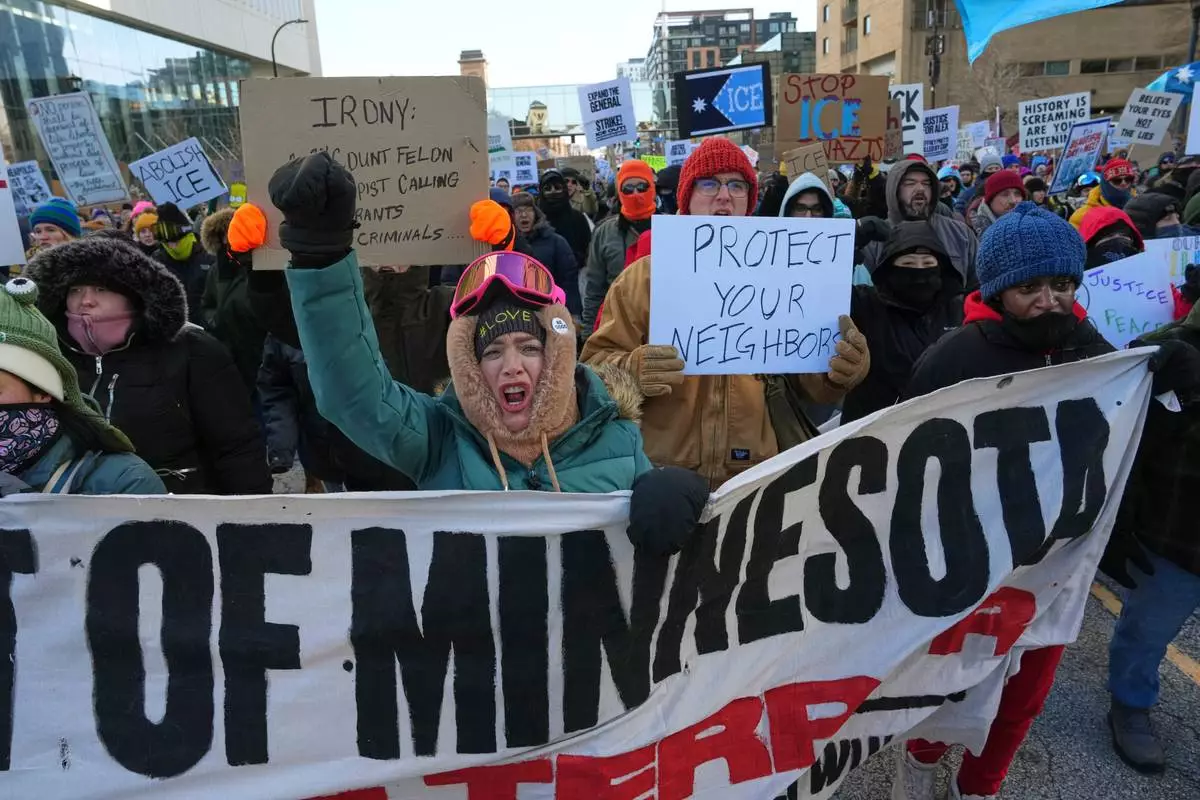
People protest against ICE (Immigration and Customs Enforcement) in downtown Minneapolis, Sunday, Jan. 25, 2026. (AP Photo/Adam Gray)
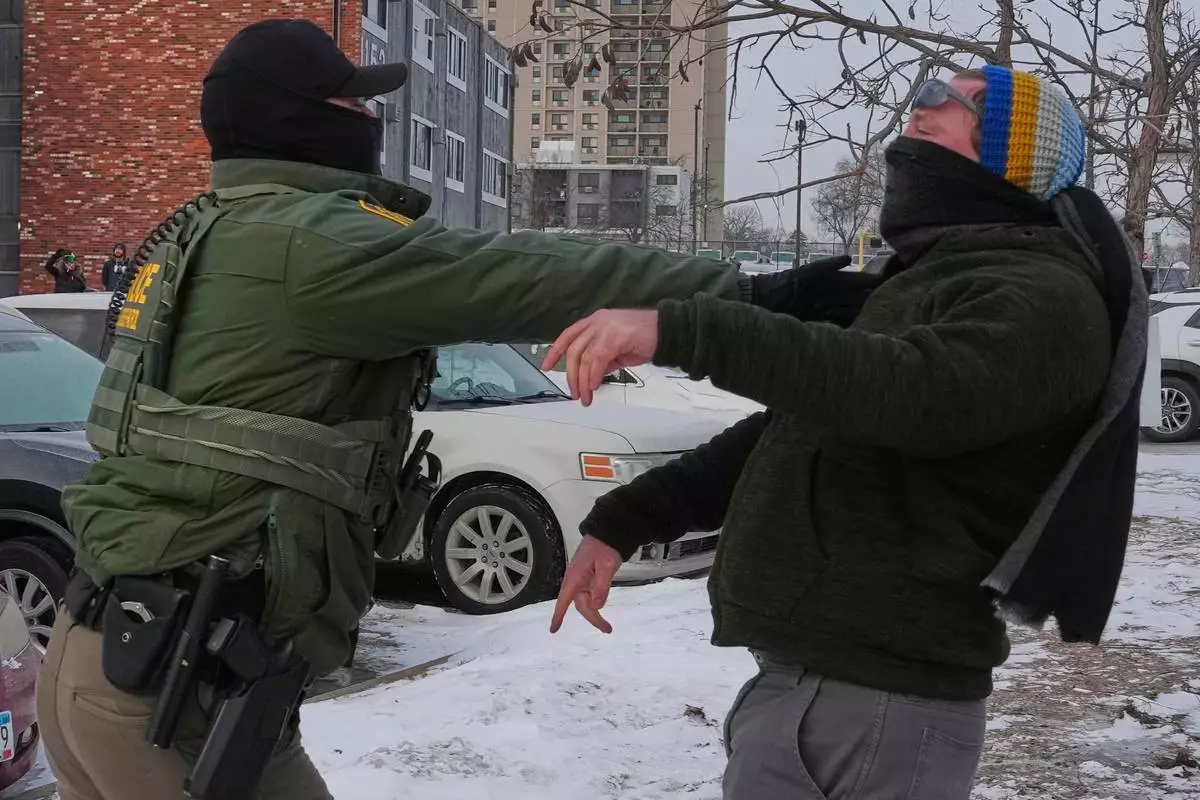
A person is pushed back by a federal agent working on the scene in Minneapolis, Sunday, Jan. 25, 2026. (AP Photo/Adam Gray)
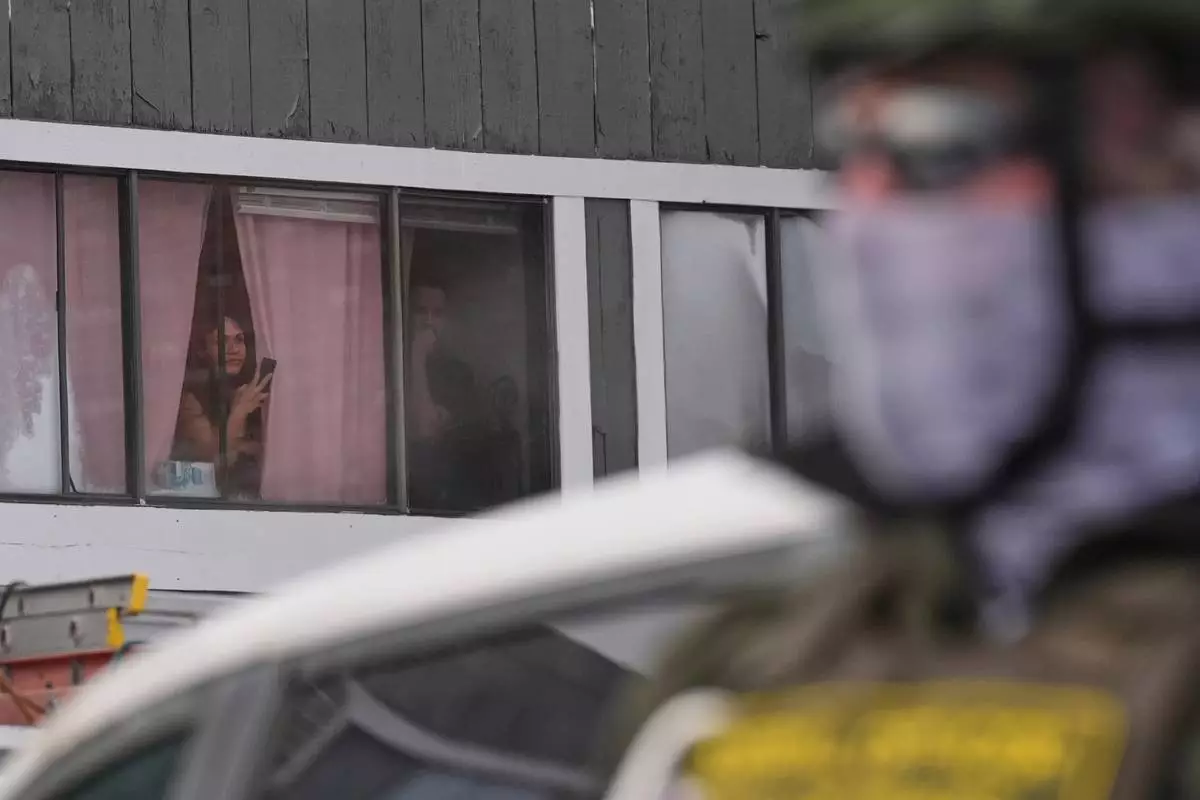
People glance out of their window as federal immigration agents work on the scene in Minneapolis, Sunday, Jan. 25, 2026. (AP Photo/Adam Gray)
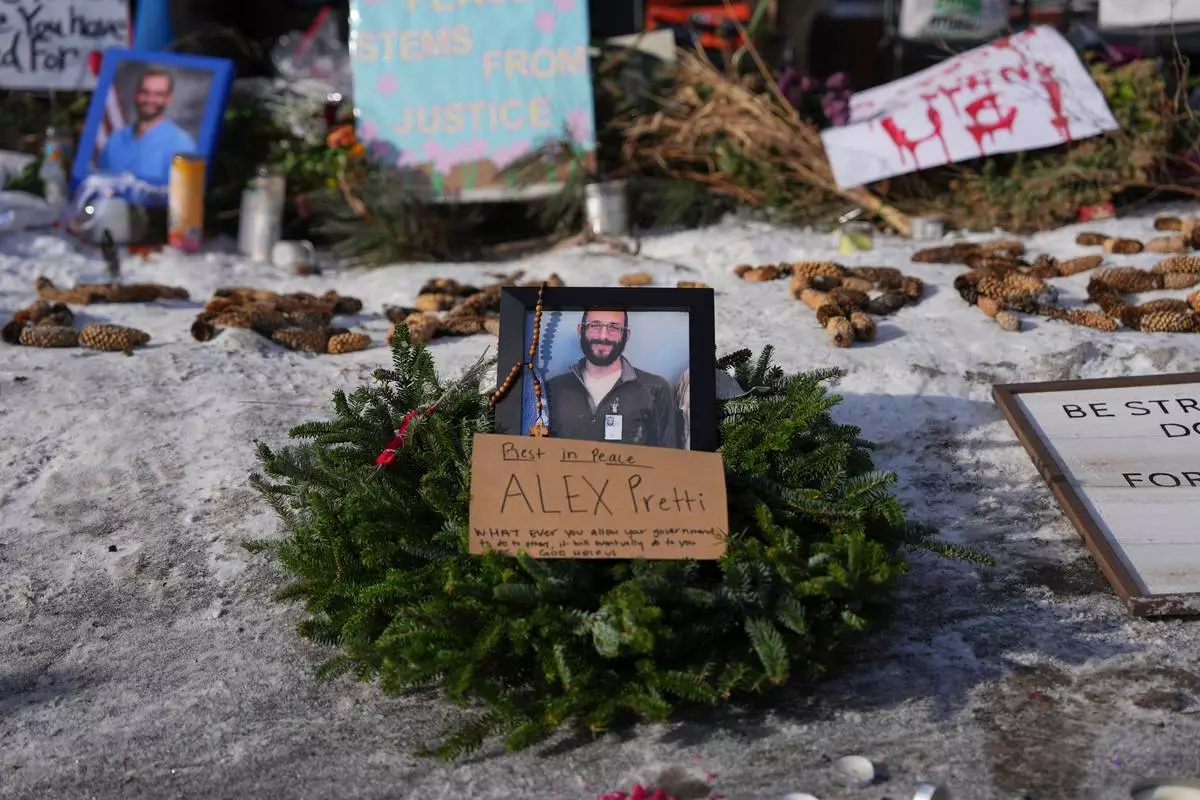
A makeshift memorial is placed where Alex Pretti was fatally shot by a U.S. Border Patrol officer yesterday, in Minneapolis, Sunday, Jan. 25, 2026. (AP Photo/Adam Gray)
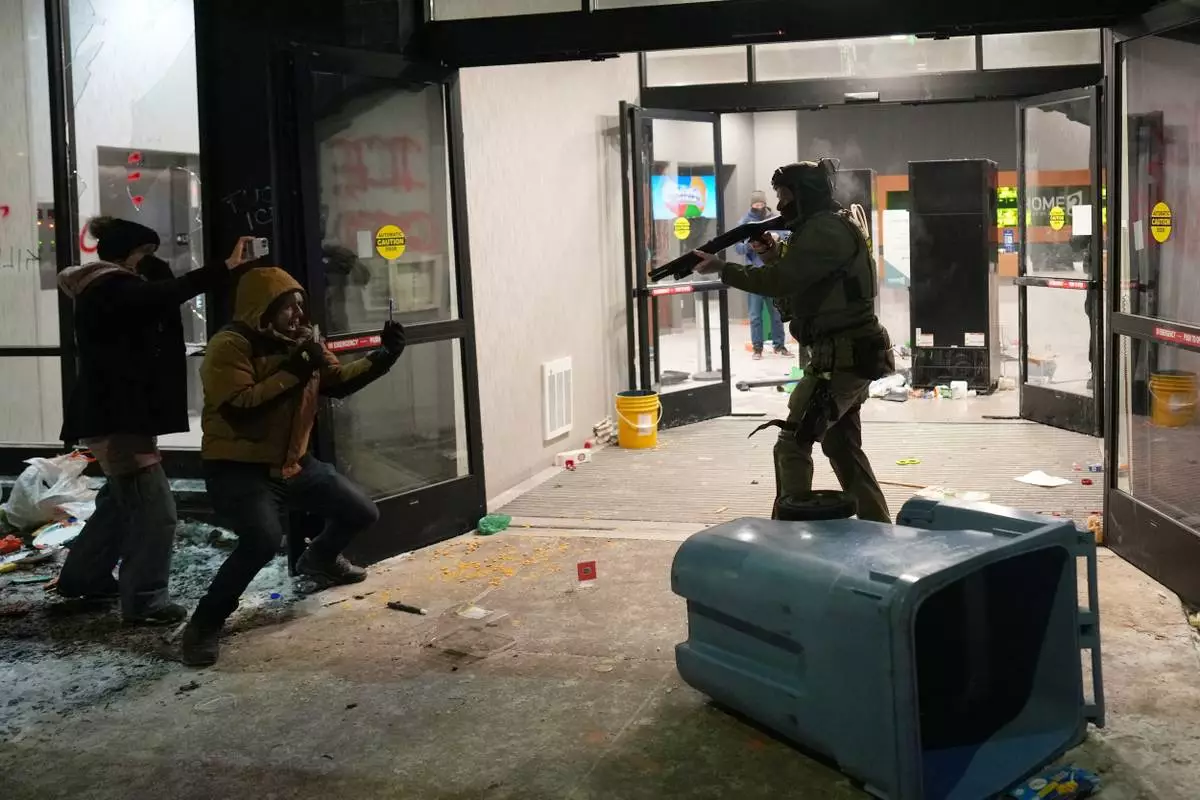
A federal agent points a weapon at a person outside a hotel during a noise demonstration protest in response to federal immigration enforcement operations in the city Sunday, Jan. 25, 2026, in Minneapolis. (AP Photo/Adam Gray)
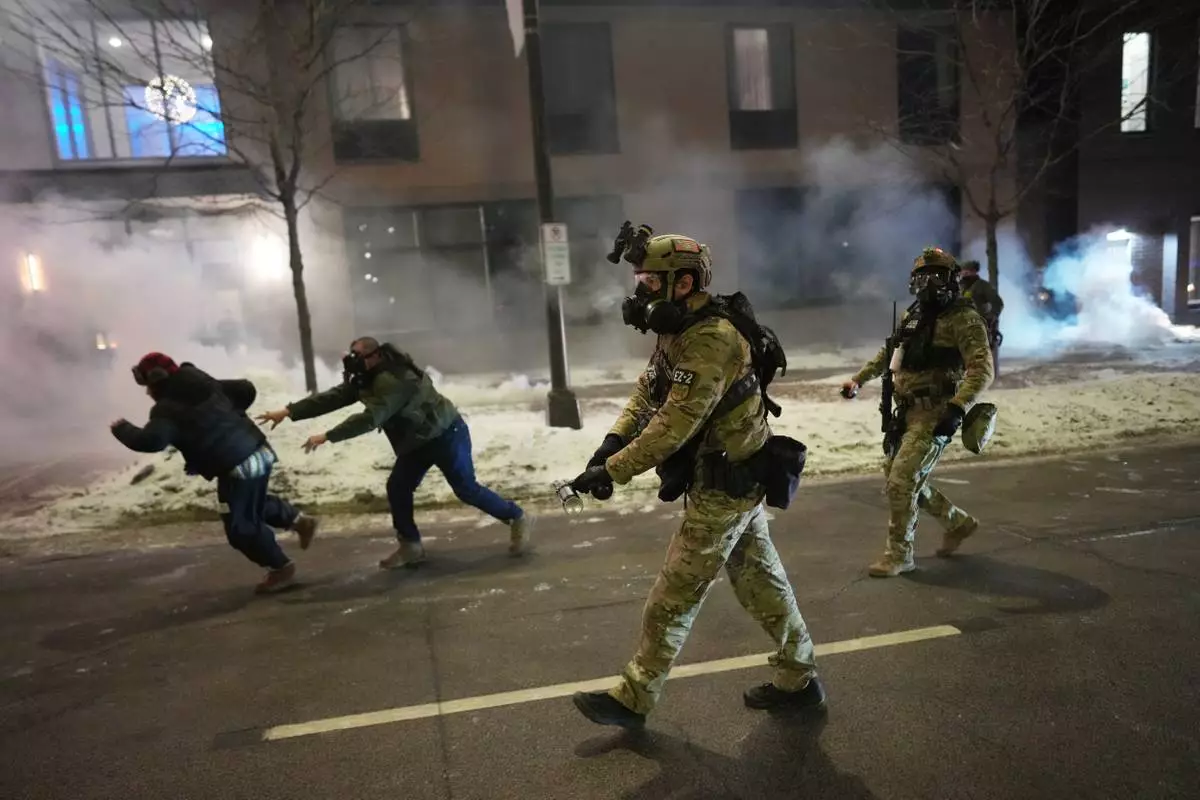
Federal agents try to clear demonstrators near a hotel, using tear gas during a noise demonstration protest in response to federal immigration enforcement operations in the city Sunday, Jan. 25, 2026, in Minneapolis. (AP Photo/Adam Gray)
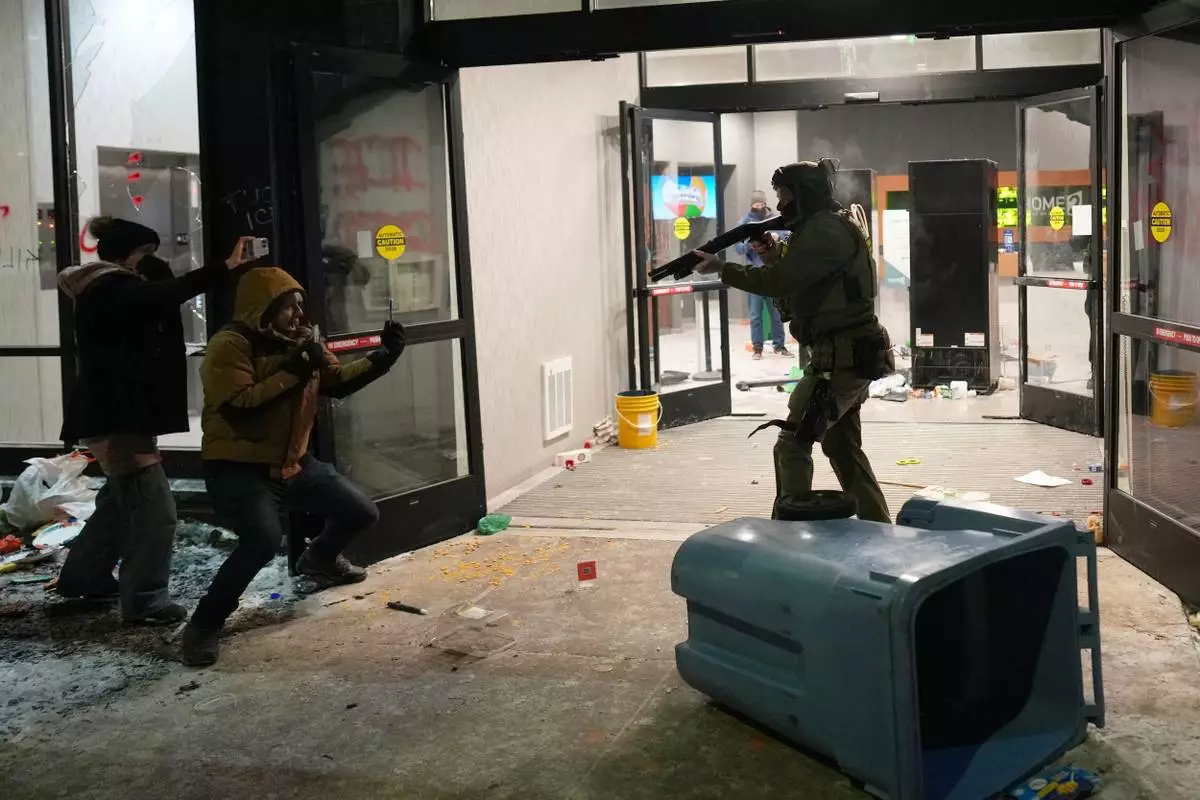
A federal agent points a weapon at a person outside a hotel during a noise demonstration protest in response to federal immigration enforcement operations in the city Sunday, Jan. 25, 2026, in Minneapolis. (AP Photo/Adam Gray)
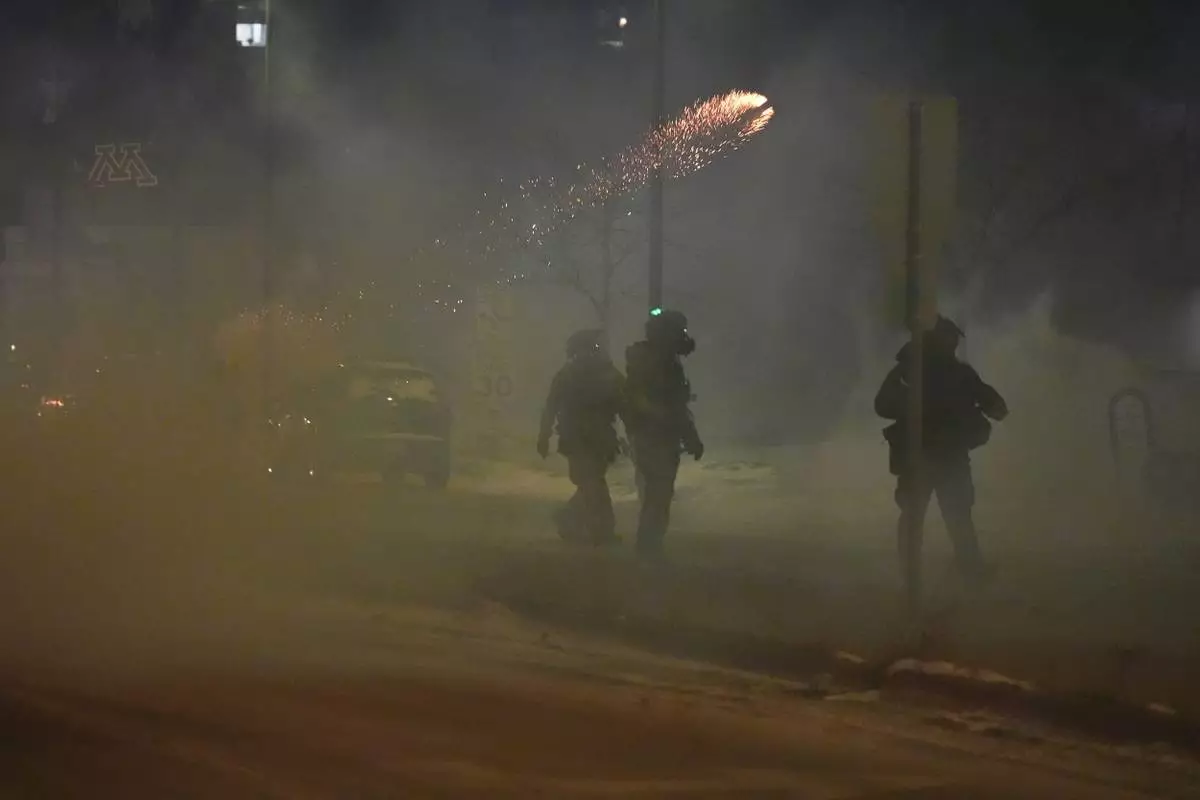
Flares are seen as federal agents try to clear the demonstrators near a hotel, using tear gas during a noise demonstration protest in response to federal immigration enforcement operations in the city Sunday, Jan. 25, 2026, in Minneapolis. (AP Photo/Adam Gray)
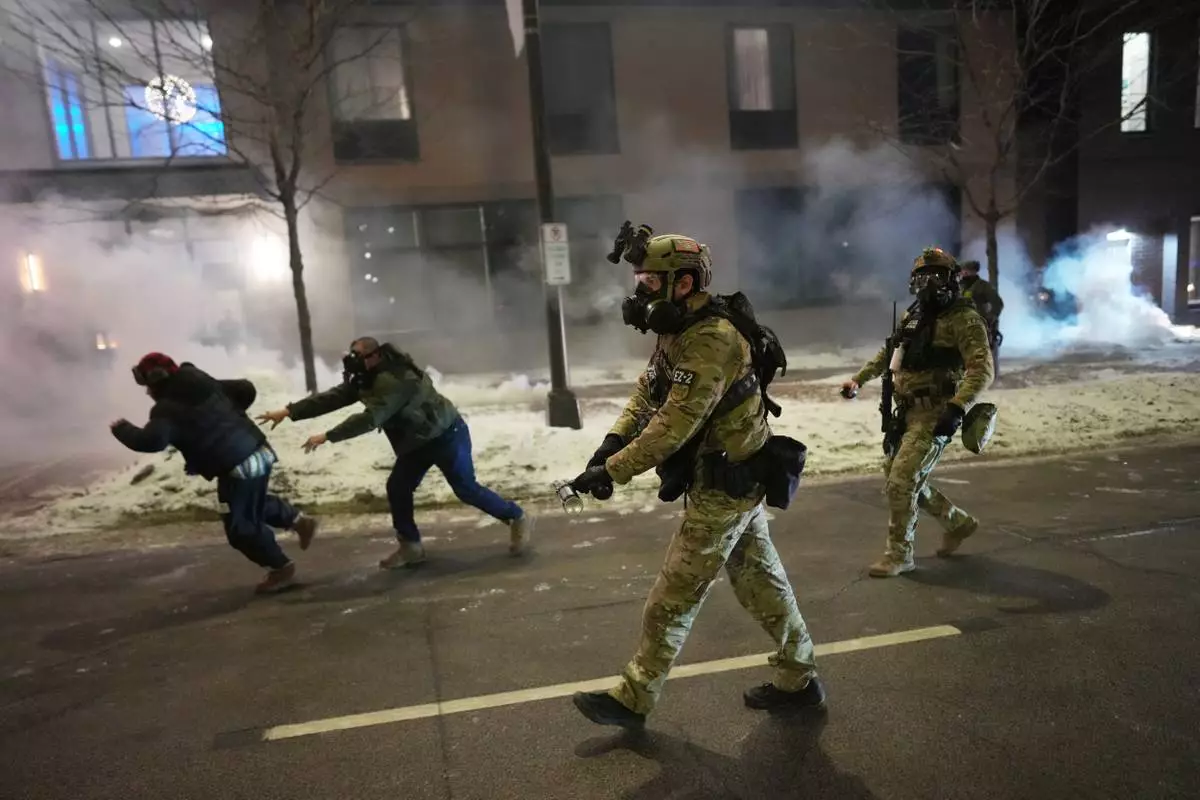
Federal agents try to clear the demonstrators near a hotel, using tear gas during a noise demonstration protest in response to federal immigration enforcement operations in the city Sunday, Jan. 25, 2026, in Minneapolis. (AP Photo/Adam Gray)
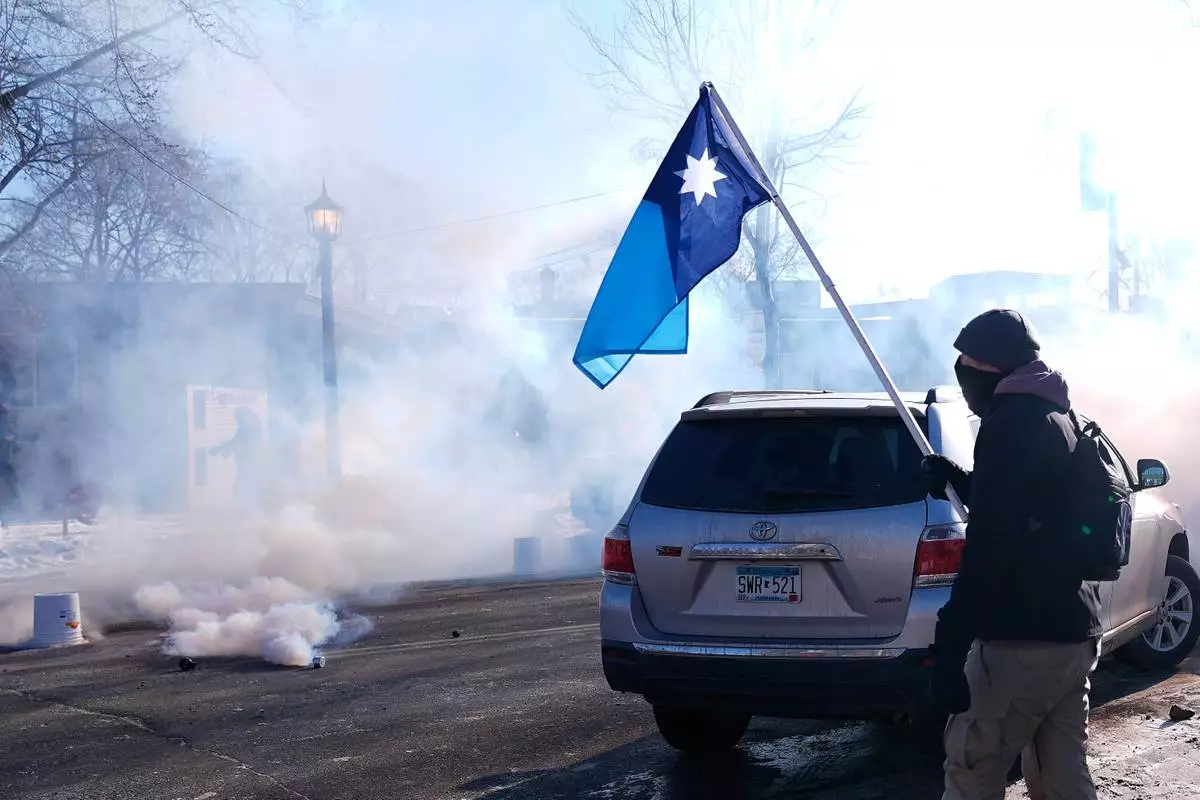
A person holds a Minnesota state flag as federal immigration officers deploy tear gas Saturday, Jan. 24, 2026, in Minneapolis. (AP Photo/Abbie Parr)
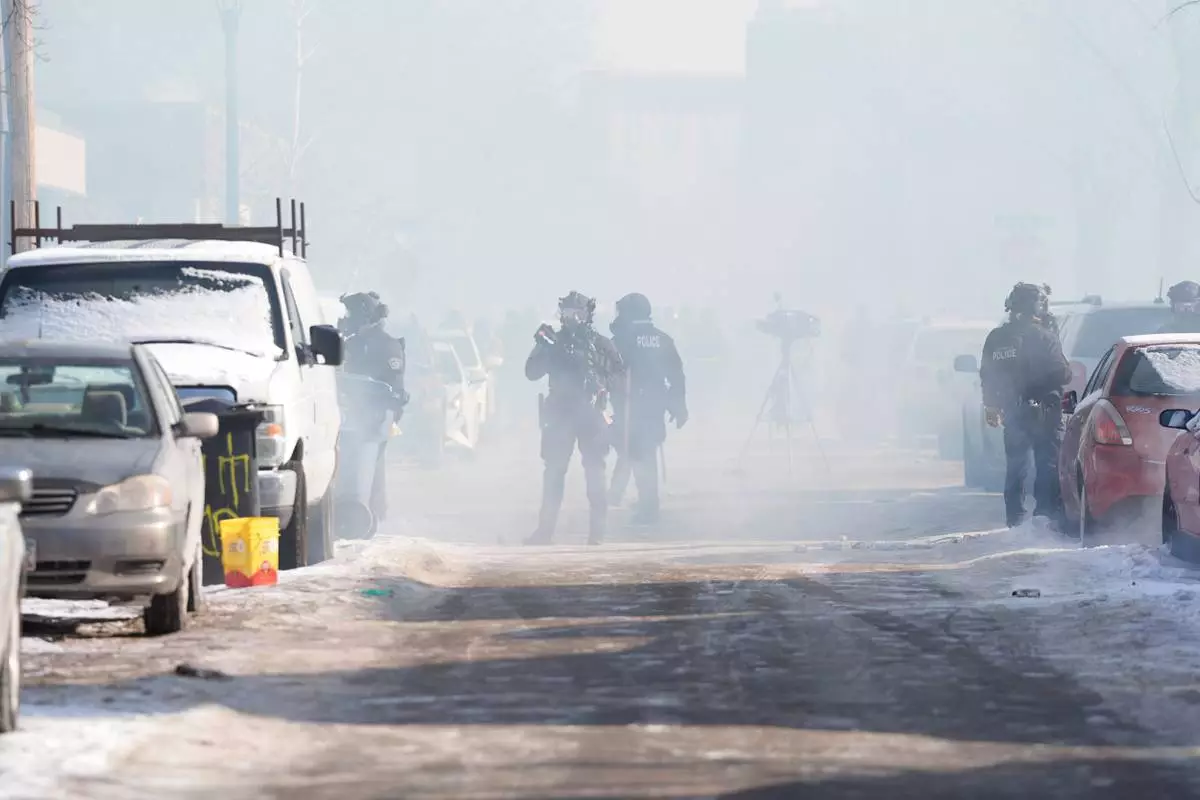
Federal immigration officers deploy tear gas at protesters after a shooting Saturday, Jan. 24, 2026, in Minneapolis. (AP Photo/Abbie Parr)
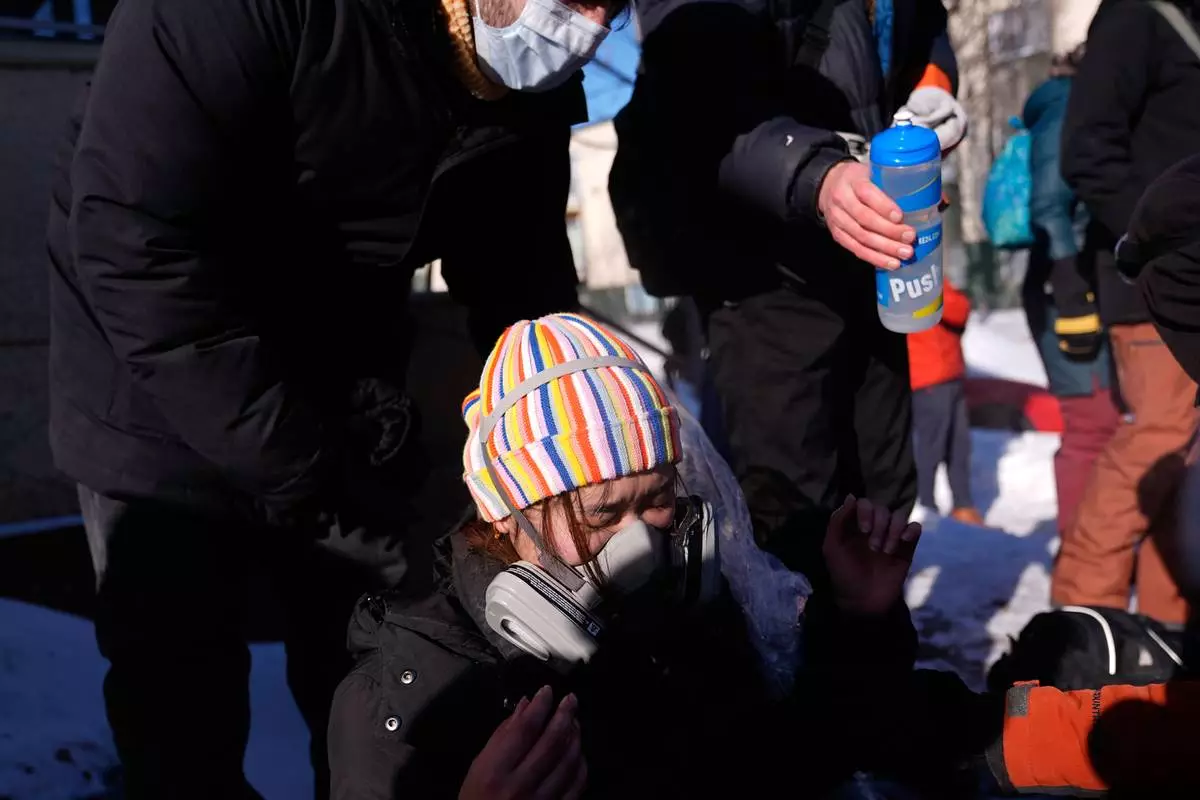
A person is tended to after federal immigration officers deploy tear gas Saturday, Jan. 24, 2026, in Minneapolis. (AP Photo/Abbie Parr)
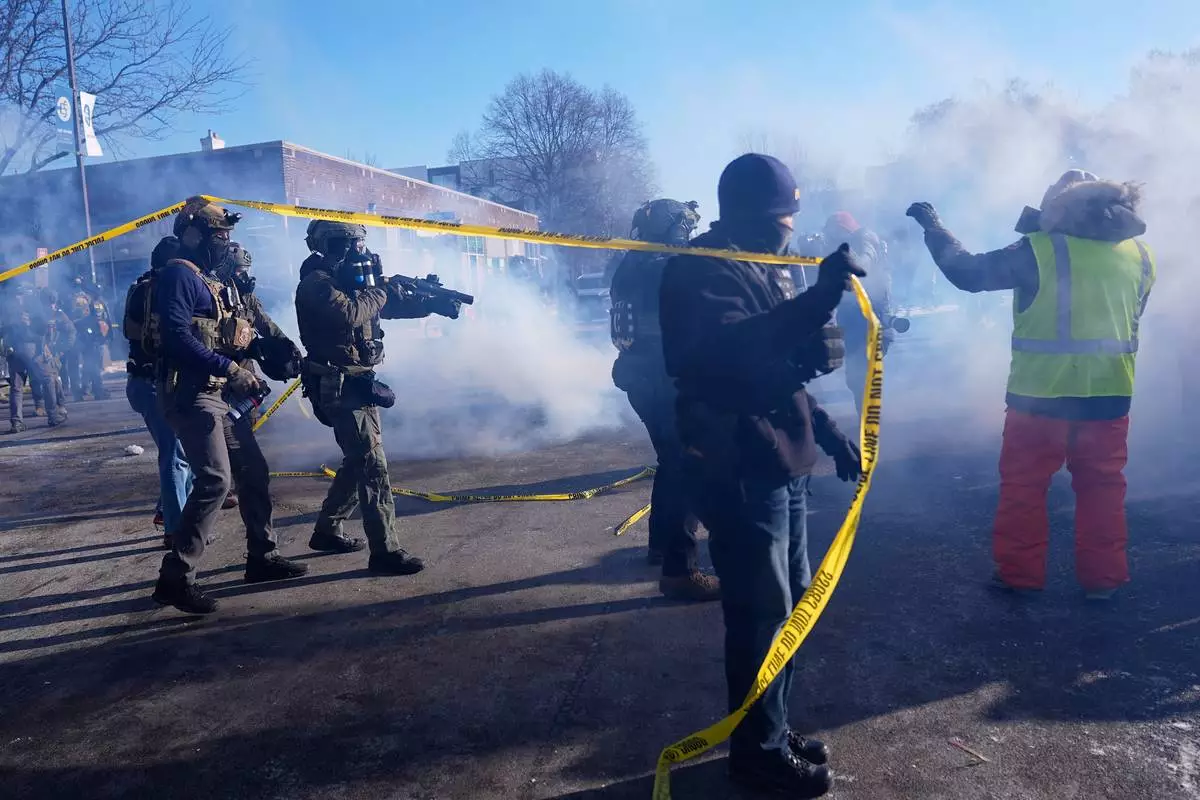
Federal immigration officers deploy tear gas at protesters after a shooting Saturday, Jan. 24, 2026, in Minneapolis. (AP Photo/Abbie Parr)
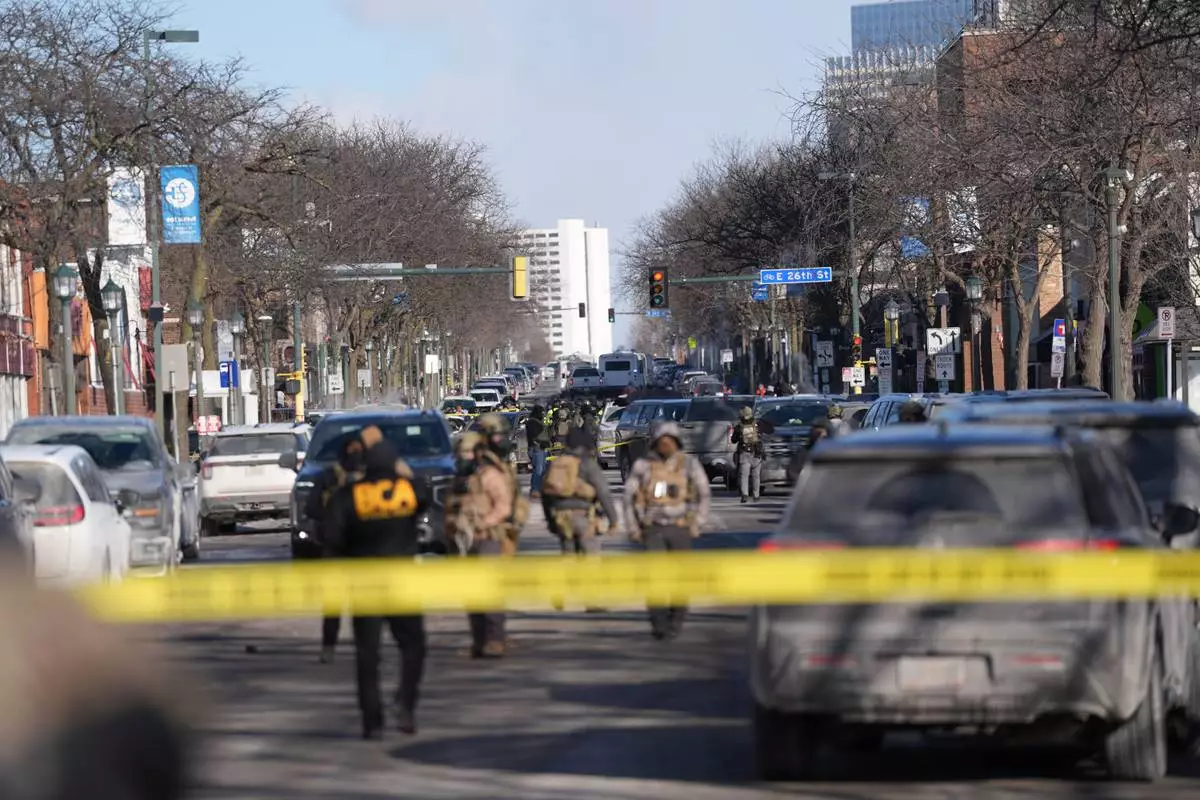
Federal agents stand near the site of a shooting Saturday, Jan. 24, 2026, in Minneapolis. (AP Photo/Abbie Parr)
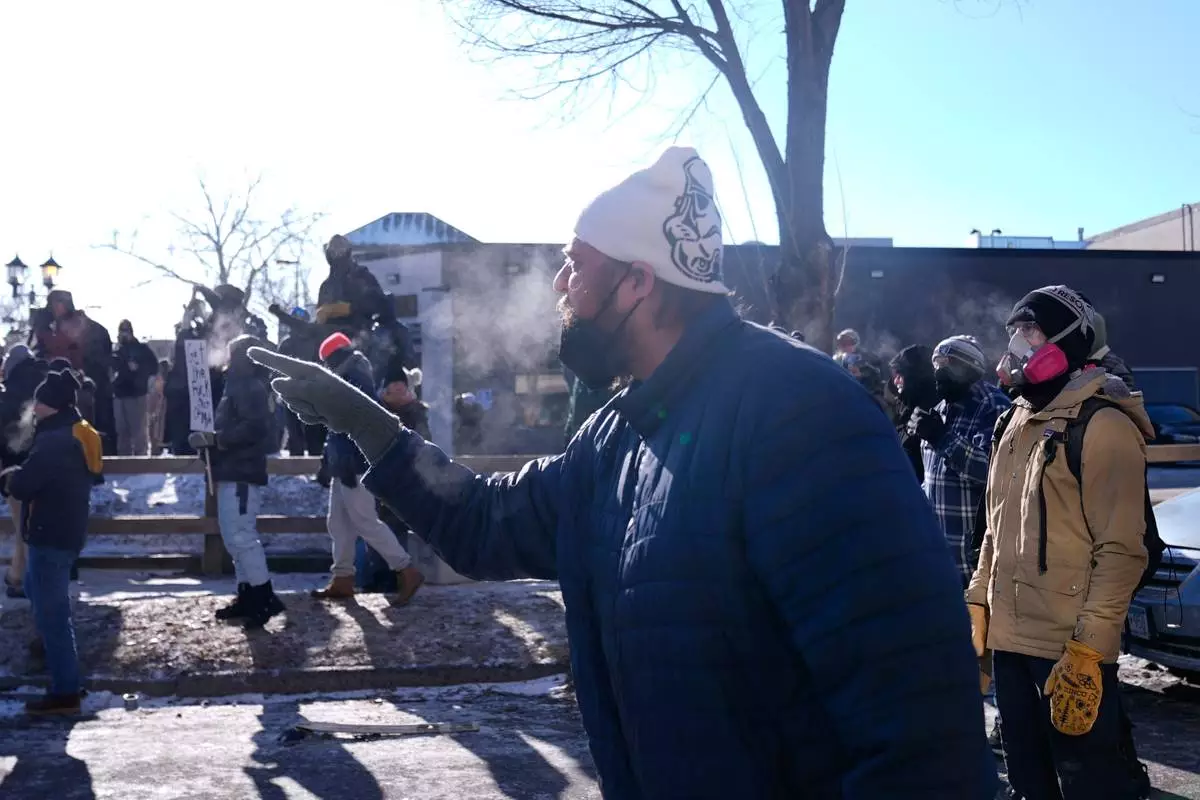
A person yells at federal immigration officers, Saturday, Jan. 24, 2026, in Minneapolis. (AP Photo/Abbie Parr)
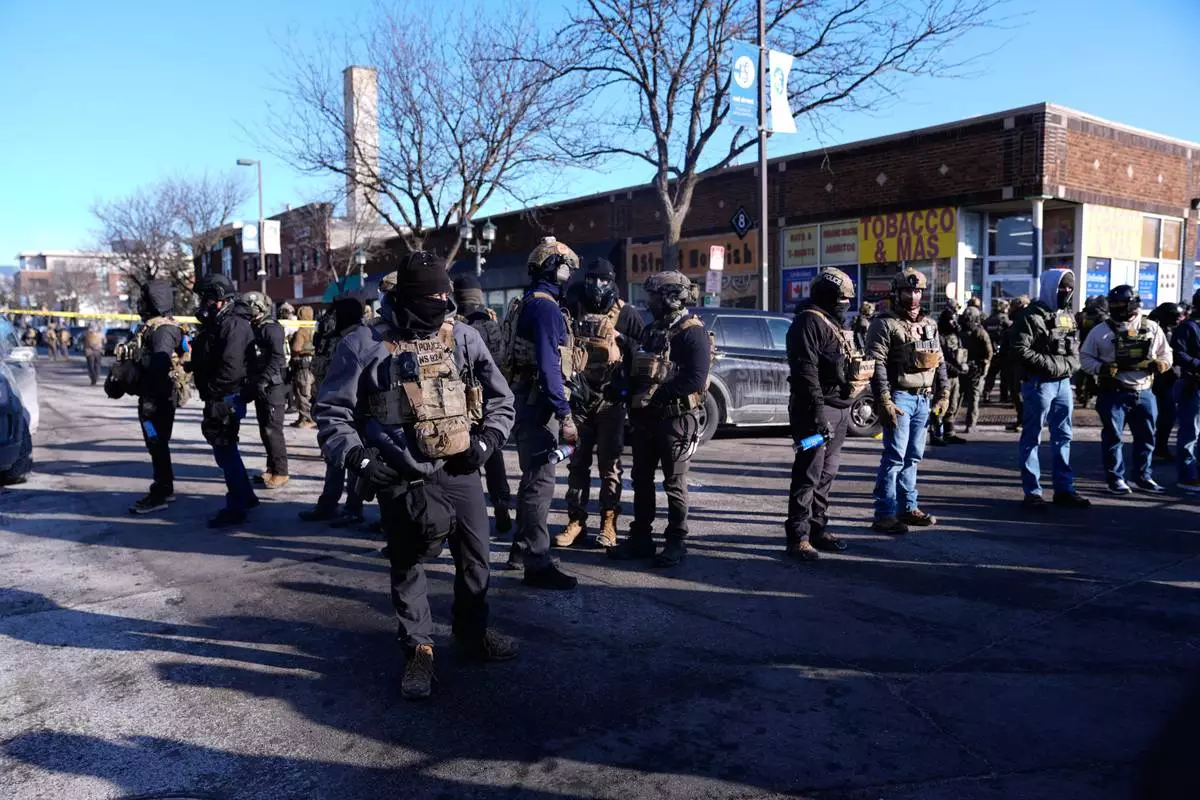
Federal agents stand near the site of a shooting Saturday, Jan. 24, 2026, in Minneapolis. (AP Photo/Abbie Parr)
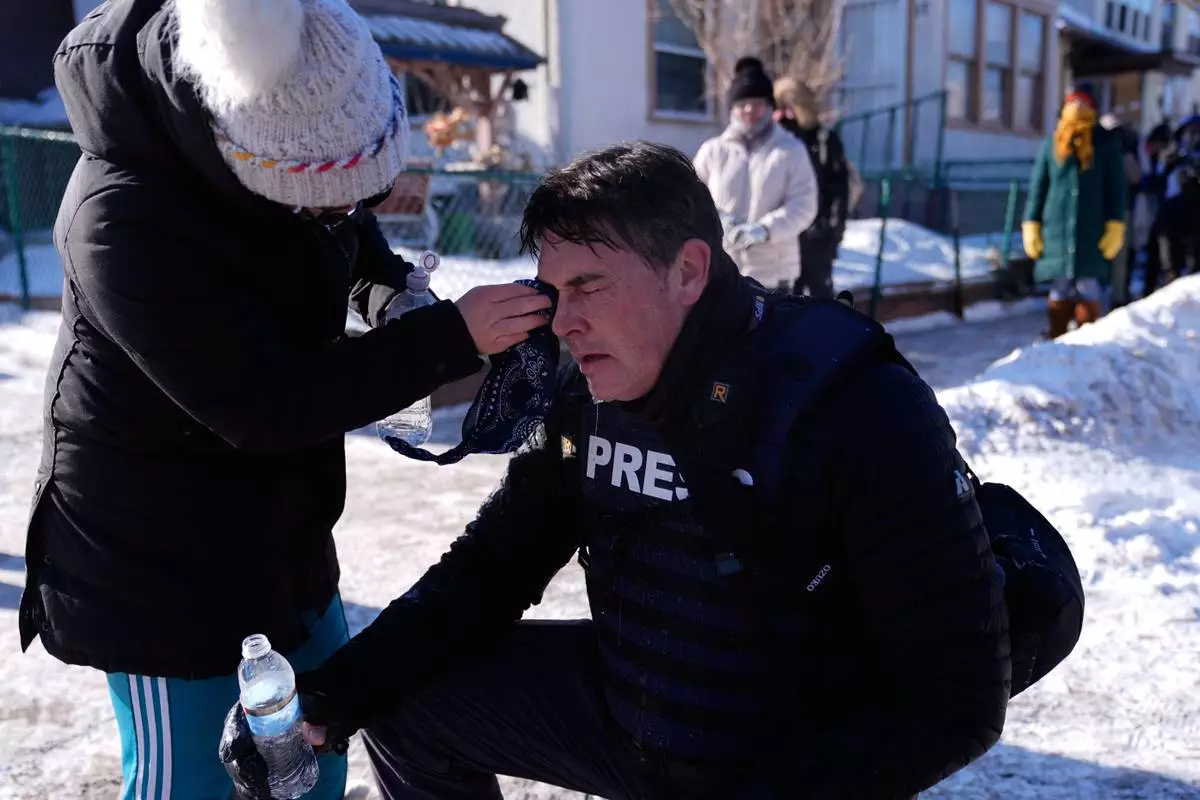
Photographer John Autey gets medial attention on Saturday, Jan. 24, 2026, in Minneapolis. (AP Photo/Abbie Parr)
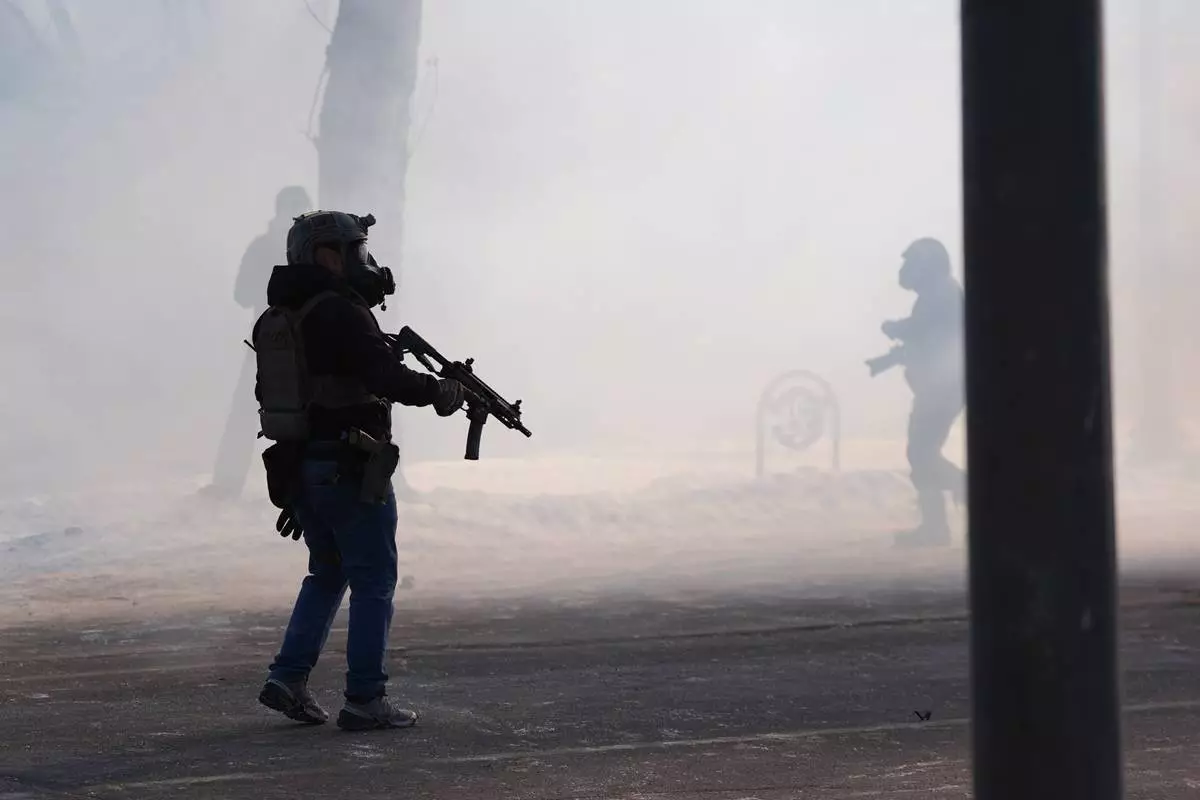
Federal immigration officers deploy tear gas after a shooting in Minneapolis, on Saturday, Jan. 24, 2026. (AP Photo/Abbie Parr)
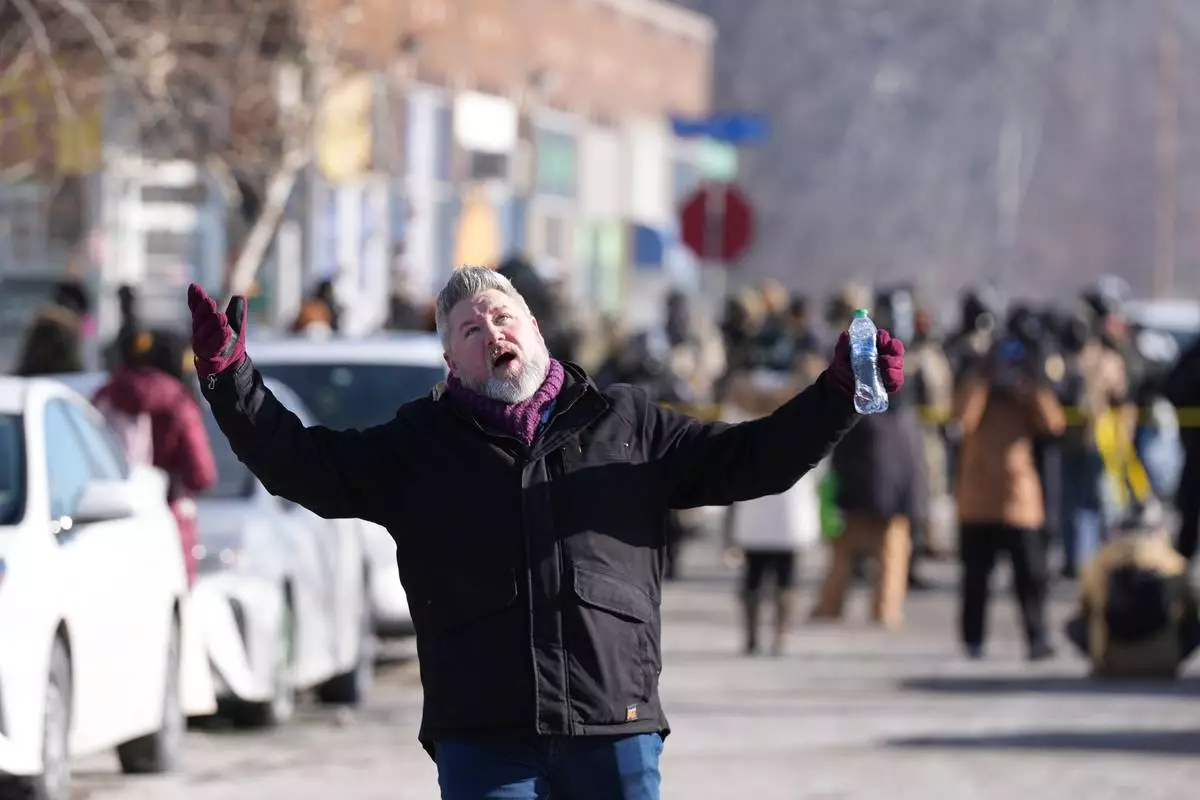
A person reacts to federal immigration officers after a shooting Saturday, Jan. 24, 2026, in Minneapolis. (AP Photo/Abbie Parr)
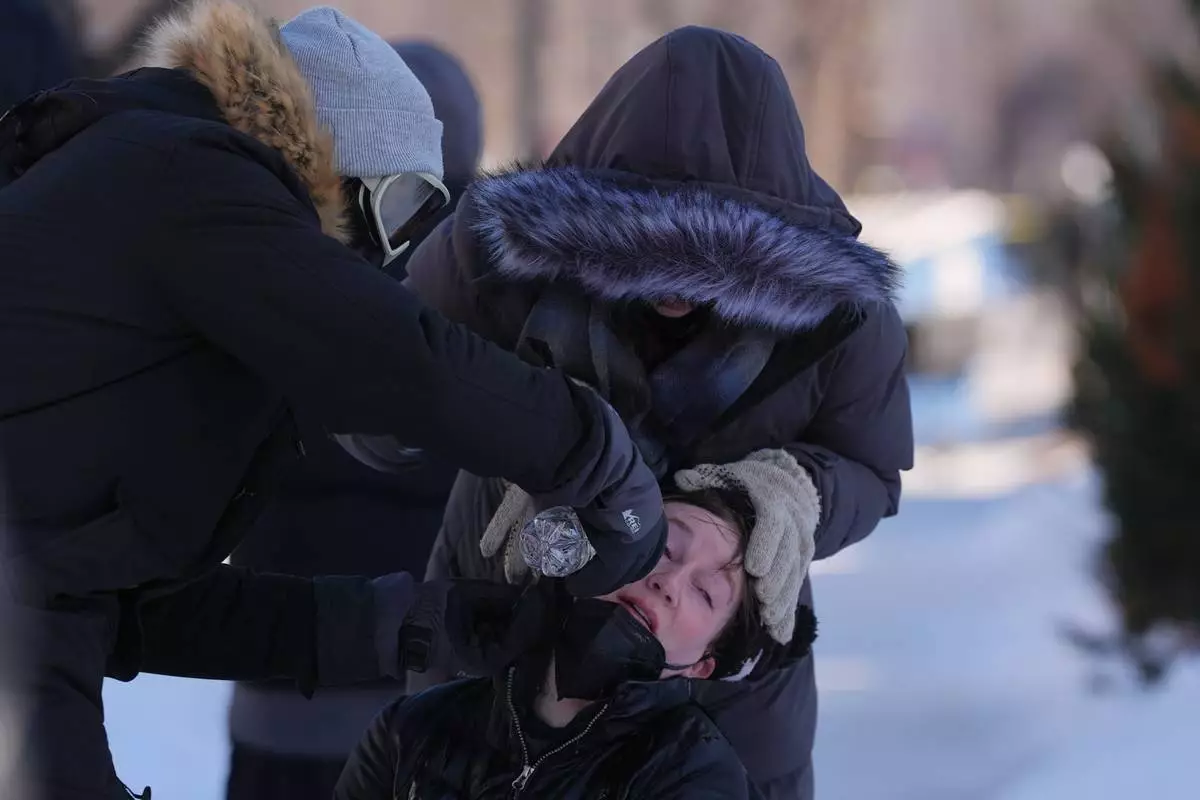
A person gets their eyes washed out after federal immigration officers deploy pepper spray Saturday, Jan. 24, 2026, in Minneapolis. (AP Photo/Abbie Parr)
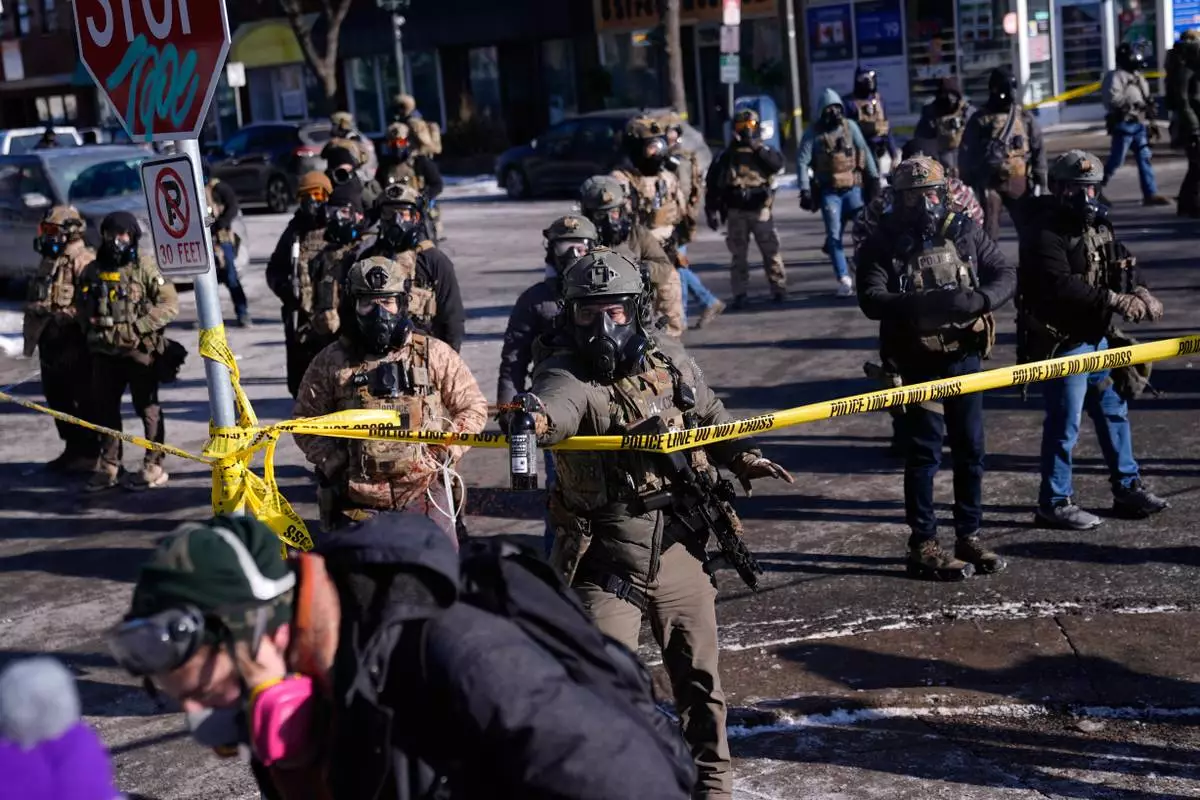
Federal immigration officers deploy pepper spray at protesters after a shooting Saturday, Jan. 24, 2026, in Minneapolis. (AP Photo/Abbie Parr)