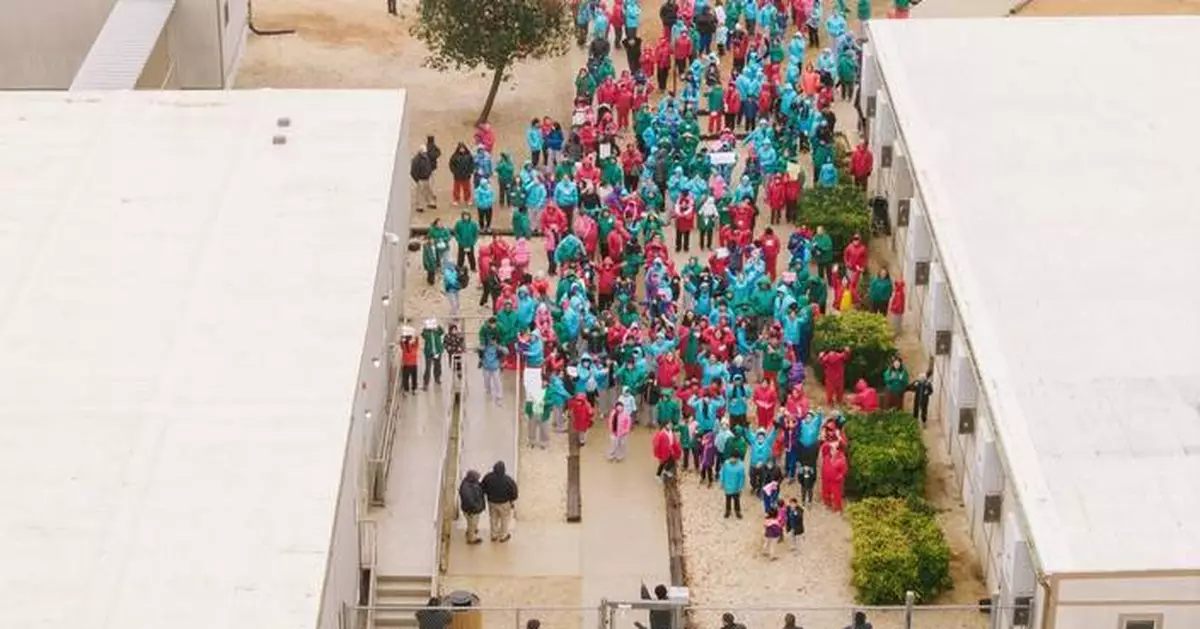
Dozens of immigrant families protested Saturday behind the fences of a Texas detention facility where a 5-year-old Ecuadorian boy and his father were sent this week after being detained in Minnesota.
Aerial photos taken by The Associated Press showed children and parents at the South Texas Family Residential Center clad in jackets and sweaters, some of them holding signs that included “Libertad para los niños," or “Liberty for the kids."
Families could also be heard outside chanting “Libertad!" or “Let us go," said Eric Lee, an immigration attorney who was there to visit a client at the facility in the town of Dilley.
“The message we want to send is for them to treat us with dignity and according to the law. We’re immigrants, with children, not criminals,” Maria Alejandra Montoya Sanchez, 31, told the AP in a phone interview from the facility after the demonstration. She and her 9-year-old daughter have been held at Dilley since October.
The detention of 5-year-old Liam Conejo Ramos and his father, Adrian Alexander Conejo Arias, in Minnesota on Tuesday has become another lightning rod for America’s divisions on immigration under the Trump administration. Versions offered by government officials and the family’s attorney and neighbors offer contradictory versions of whether the parents were given adequate opportunity to leave the child with someone else.
Earlier Saturday in Minneapolis, a federal immigration officer shot and killed a man, drawing hundreds of protesters onto the frigid streets and ratcheting up tensions in a city already shaken by another fatal shooting weeks earlier.
Montoya Sanchez said she saw the father and son outside for a few minutes during the protest. Marc Prokosch, an attorney for the family, did not immediately return messages seeking comment.
A spokesperson for the Department of Homeland Security did not immediately comment Saturday.
Montoya Sanchez said the protest was organized internally by the families exhausted by the long detention and conditions that advocates say have included food with worms, constant illness and insufficient medical access. Lee said he later heard from his clients inside that the demonstration was related to Liam Conejo Ramos' case.
Lee, an attorney from Michigan, said was in the waiting room for a scheduled client visit when guards walked in and ordered everyone out.
“That children and their parents would risk retribution under these conditions to speak up is a testament both to how courageous they are and how abysmal the conditions of this place is," he said.
Hundreds of children have been held at the facility beyond the court-mandated limit, according to a report filed December by U.S. Immigration and Customs Enforcement in an ongoing federal lawsuit.

Detainees held at the South Texas Family Residential Center wave signs during a demonstration in Dilley, Texas, Saturday, Jan. 24, 2026. (AP Photo/Brenda Bazán)
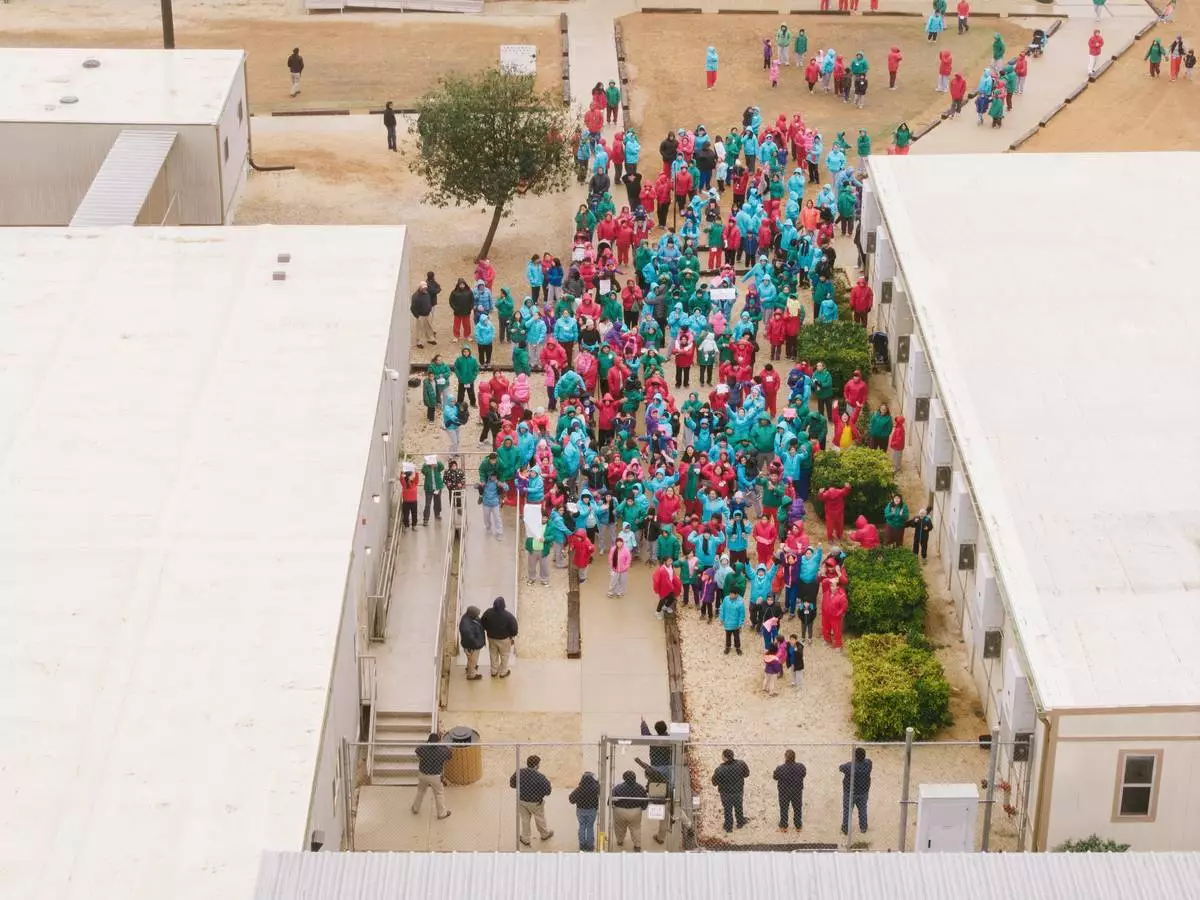
Detainees held at the South Texas Family Residential Center wave signs during a demonstration in Dilley, Texas, Saturday, Jan. 24, 2026. (AP Photo/Brenda Bazán)
Shoveling in single-digit temperatures after the colossal winter storm this weekend, I dumped mounds of snow onto my garden beds, knowing it would protect my trees, shrubs and dormant perennials.
When the ground repeatedly freezes and thaws, as it does over winter in cold climates, that can squeeze roots, seeds, bulbs, tubers and rhizomes right out of the earth. Once exposed, they can be killed off by cold, drying winds.
But snow cover provides a heavy blanket of winter mulch that insulates the soil, prevents heat from escaping and keeps soil temperatures from seesawing. And as it melts, snow will not only water your garden but fertilize it with plant-boosting nitrogen absorbed from the air on its way to earth.
It’s a perfect display of nature taking care of itself.
On the downside, the same heavy blanket that keeps plants warmly tucked in can spell disaster for evergreen trees like arborvitae and Leyland cypress. When wet snow accumulates on trees, its weight can bend, buckle or snap branches. And if you don’t remove it, it can permanently disfigure them.
We can help by gently knocking snow off branches with a long-handled broom. Under normal circumstances, I do this after the storm ends. But during extended snowfalls, I go out during the storm, as well, to keep on top of the accumulation. Trees are expensive, so I’d rather brave the elements than have to replace them.
When water or accumulated snow freezes into ice, however, it’s best to leave the branches be. Attempts to crack or knock ice off plants risk further damaging bark and other delicate plant parts. All we can do is allow it to melt naturally and hope for the best.
After removing snow from walkways and driveways, it’s good practice to apply rock salt to prevent ice from forming. But choosing a product can be confusing.
Magnesium chloride is the best choice, as it dissolves quickly to coat and melt ice, works in temperatures as cold as 10 degrees below zero Fahrenheit and is less likely to burn pets’ paws. It’s also the safest for your plants, which become exposed to the product via wind, soil runoff, melting snow and splashing slush, as well as deliberate snow dumping.
One drawback, however, is that magnesium chloride is also the most expensive of the commonly available ice-melt products. If your coverage area is so large that using it exclusively becomes too expensive, consider using it in areas adjacent to plants and where pets will be exposed. Then, opt for my second choice, calcium chloride, in less-trafficked areas and those away from lawns and gardens.
You’ll often see calcium chloride marketed as pet- and plant-safe, but it still can damage plants and irritate pets’ (and your own) paws. Wear gloves when handling it. If you must use it near plants, apply sparingly. And rinse pets’ paws after exposure.
As a gardener, you might recognize the chemical name of another type of rock salt, potassium chloride. Although it’s also a component of balanced fertilizers (the K in N-P-K ratios), the amounts needed to melt ice can actually harm or kill plants, so avoid using it as a deicer.
Sodium chloride is the cheapest of the bunch, but the worst choice for plants, pets and the environment. It can corrode cars, crack concrete, and poison wildlife, plants and trees.
When applying any ice-melt product, always use the least amount necessary, as they all have some potential to damage masonry. Applying a waterproofing sealant to driveways and walkways during warmer weather will help protect against ice-related cracks for several years.
Jessica Damiano writes weekly gardening columns for the AP and publishes the award-winning Weekly Dirt Newsletter. You can sign up here for weekly gardening tips and advice.
For more AP gardening stories, go to https://apnews.com/hub/gardening.
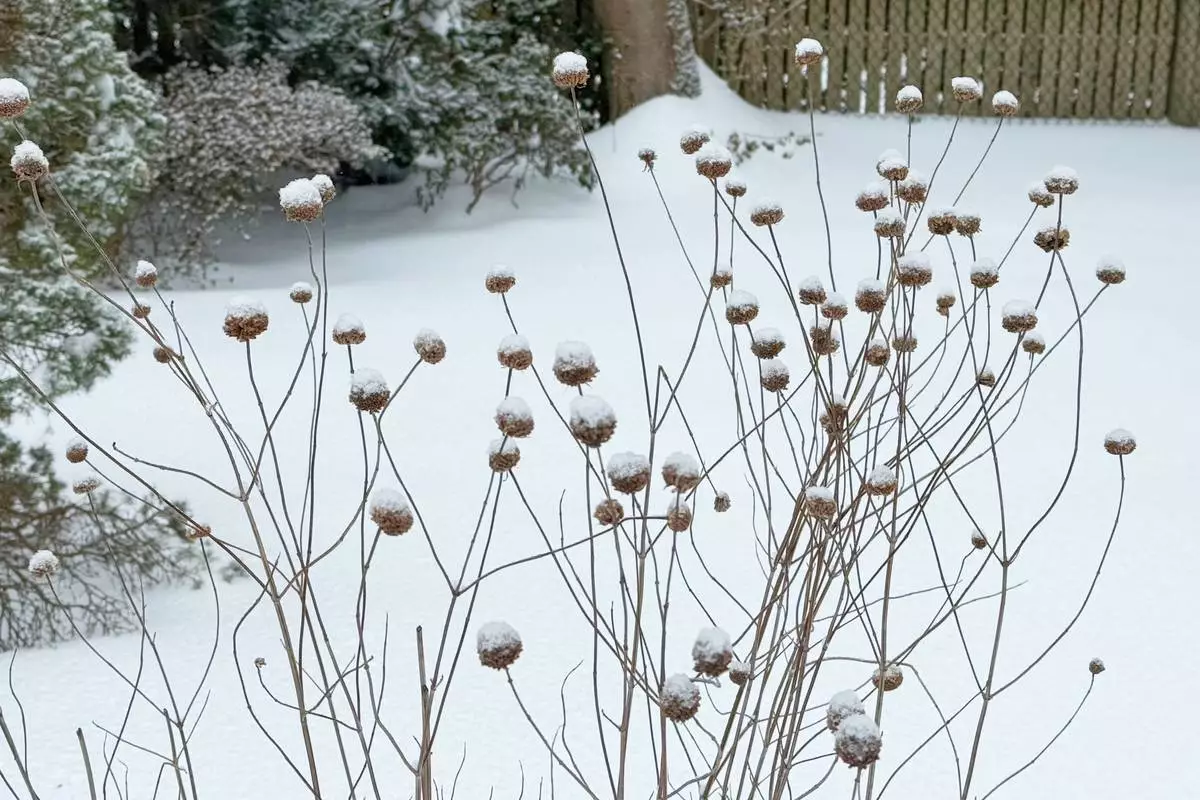
Snow covers bergamot stalks in a garden after a winter storm in Westchester County, N.Y.,, on Jan 26, 2026. (AP Photo/Julia Rubin)

Snow covers bergamot stalks in a garden after a winter storm in Westchester County, N.Y.,, on Jan 26, 2026. (AP Photo/Julia Rubin)
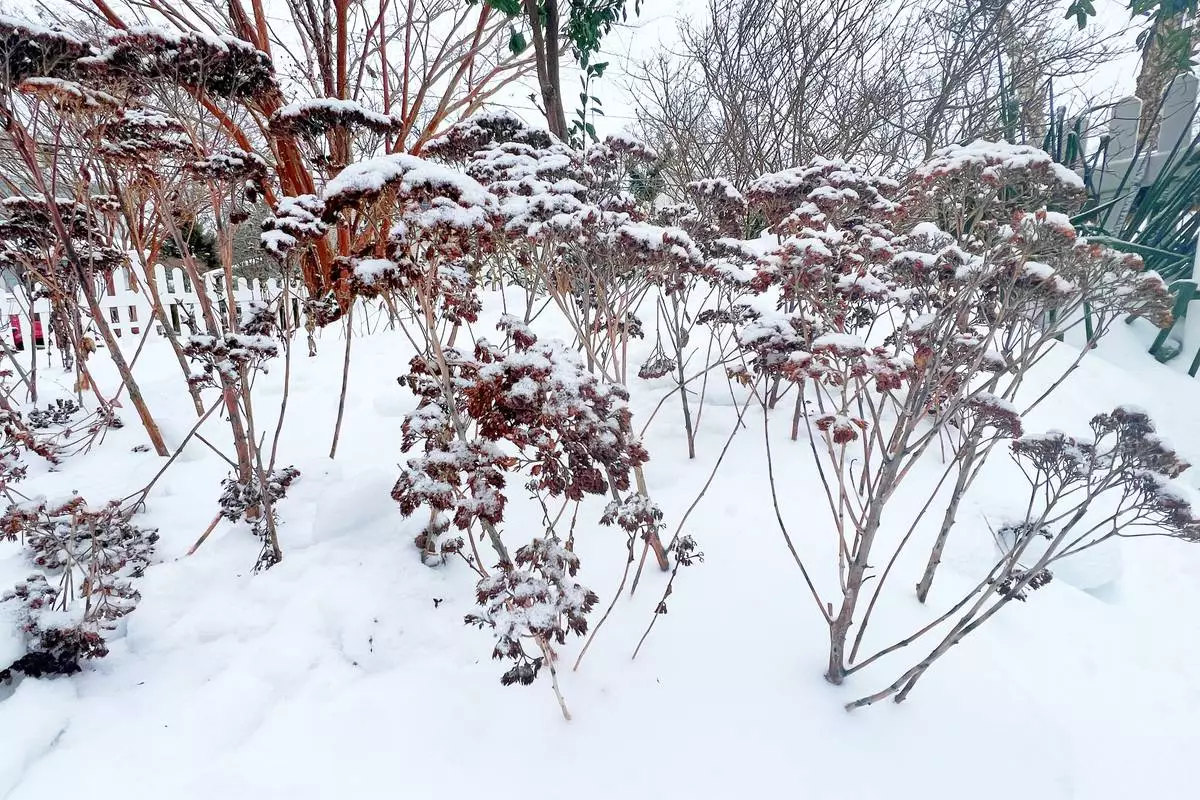
A mound of snow insulates dormant sedums in a garden bed in Long Island, N.Y., after a winter storm. (Jessica Damiano via AP)
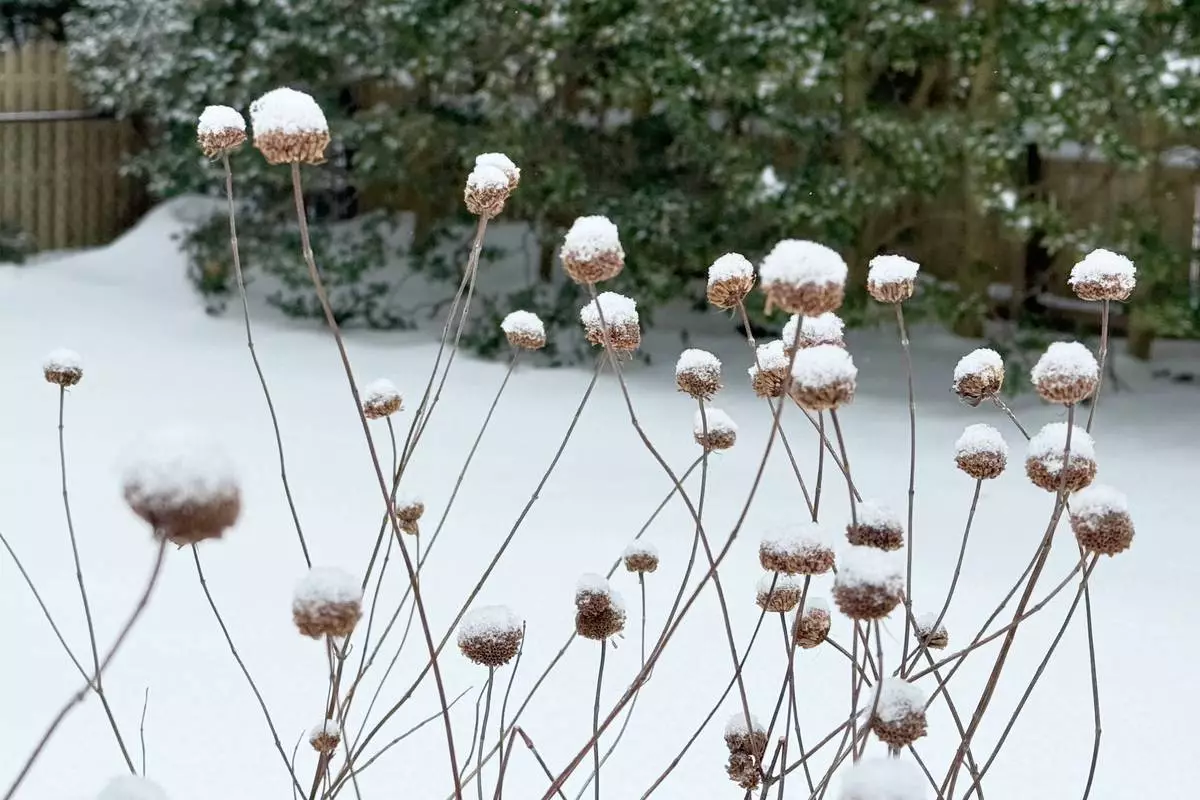
Snow covers bergamot stalks in a garden after a winter storm in Westchester County, N.Y.,, on Jan 26, 2026. (AP Photo/Julia Rubin)